

A random orbital sander is one of the most versatile tools you can own, whether you are refinishing a dining table, smoothing cabinet doors before painting, or stripping old finish from hardwood floors. Unlike a standard sheet sander that moves in fixed loops, a random orbital sander spins and oscillates simultaneously in an unpredictable elliptical pattern. That combination means the disc never retraces the same path twice, which virtually eliminates the swirl marks and cross-grain scratches that plague other sanders. The result is a surface that is noticeably smoother and ready for stain or paint with far less effort. If you already own a capable set of cordless drills, adding a random orbital sander is the logical next step for tackling nearly any finishing project around the house.
At HomeThru, our editorial team independently researched and evaluated 15 random orbital sanders across a wide range of price points, from budget-friendly picks under forty dollars to professional-grade machines from Festool and Bosch. We analyzed motor specs, dust collection systems, pad size, variable speed ranges, ergonomics, and long-term user feedback to build a list that genuinely serves woodworkers, DIYers, and remodelers alike. Below you will find our full rankings followed by a detailed buying guide covering everything you need to know before choosing.
Top Random Orbital Sanders

Pros
- Excellent dust collection system keeps your work area cleaner and protects your lungs
- Low vibration and comfortable grip reduce hand and arm fatigue during extended use
- Variable speed gives you control and precision across different sanding applications
- Compact footprint makes it perfect for detail work and reaching tight spaces
- Solid motor power handles both fine finishing and more aggressive material removal
Cons
- Limited online customer feedback available, so real-world durability over years of heavy use remains unclear
- 5-inch plate size is smaller than full-size sanders, meaning larger projects require more time and passes
The SKIL SR211601 random orbital sander brings practical engineering to a tool that homeowners and serious DIYers actually use regularly. With a 2.8 amp motor spinning at 13,000 orbits per minute, it delivers the power needed for everything from smoothing rough lumber to preparing furniture for finishing. The variable speed control is a smart inclusion, allowing you to dial down power for delicate work or crank it up when tackling tougher surfaces. This flexibility makes the sander adaptable across your project range without forcing you to compromise.
What really sets this model apart is its dust management system. The cyclonic dust collector uses centrifugal force to separate dust and debris into a transparent, easy-to-empty container. This design keeps your workshop cleaner and reduces the amount of fine particles floating in the air while you work. The sealed on/off switch is a thoughtful detail that prevents accidental startup and keeps dust from infiltrating the electrical components. Combined with the compact 5-inch sanding plate, you get a tool that's both practical and considerate of your comfort and workspace.
The ergonomic design shines during extended work sessions. The soft rubber grip and counterweight balance work together to reduce vibration and hand fatigue, which matters when you're spending hours refining a project. At just 3.44 pounds, it's light enough to handle overhead work without your arms tiring quickly. The compact footprint also means you can navigate tight corners, edges, and confined spaces where larger random orbital sanders simply won't fit. For DIYers who value comfort and control, this sander checks the right boxes.
| Specification | Details |
|---|---|
| Brand | SKIL |
| Model | SR211601 |
| Sanding Plate Size | 5 inches |
| Motor | 2.8 amps |
| Orbits Per Minute | 13,000 |
| Speed Control | Variable |
| Dust Collection | Cyclonic with transparent container |
| Weight | 3.44 pounds |
| Dimensions | 7.87 x 4.8 x 5.51 inches |
| Included Accessories | 3-piece sanding sheet set |
| Color | Multi |
Setup and Safety: Before plugging in, inspect the sanding plate and dust container. Ensure the sanding sheet is properly attached to the 5-inch plate and that the dust container is securely seated. Always wear safety glasses and a dust mask, especially if not using the dust collector attachment.
Basic Technique: Let the sander do the work. Apply gentle, even pressure and move the sander smoothly across the surface in overlapping passes. Never force the tool or press down hard, as this can gouge the material and wear out the motor faster. The variable speed control should be adjusted based on material: softer woods and delicate surfaces benefit from lower speeds, while hardwoods and aggressive material removal may require higher speeds.
Dust Management: Empty the dust container regularly, especially on larger projects. A full container reduces suction and makes the tool work harder. Check the transparent container visually and empty it before it reaches the fill line. After finishing, allow the sander to run for a few seconds to clear any remaining dust from internal passages.
Maintenance: Keep the sanding plate clean and free of dust buildup. Replace sanding sheets when they become clogged or worn. Store the tool in a dry location and periodically inspect the power cord for damage.
Start with Lower Grit, Finish with Higher: Begin sanding with a coarser grit (60-80) to remove old finishes or rough surfaces quickly, then progress to medium (120) and fine grits (150-220) for a smooth final result. This approach saves time and delivers better results than jumping straight to fine grits.
Let the Dust Collector Work: The cyclonic system is most effective when the container has airflow. Don't let it fill completely before emptying. A partially full container maintains better suction and reduces strain on the motor.
Use the Compact Size to Your Advantage: This sander excels in tight spaces. Use it for detail work on edges, corners, and intricate surfaces where full-size sanders can't reach. For large flat areas, consider alternating with a larger orbital sander if you have access to one, to speed up the work.
Control Speed for Different Materials: Delicate woods and veneers benefit from lower speeds to prevent tearout and burning. Hardwoods and painted surfaces can handle higher speeds. Experiment on scrap material first to find the sweet spot for your specific project.
Maintain Consistent Pressure: Avoid pressing down hard. Let the sander's weight and the motor's power do the work. Consistent, light pressure produces even, professional-looking results and extends tool life.
Personal Protective Equipment: Always wear safety glasses to protect your eyes from dust and debris. A dust mask or respirator is essential, especially when sanding finishes containing harmful chemicals. Hearing protection is recommended for extended use, as the motor generates noise around 80-90 decibels.
Secure Your Workpiece: Clamp or secure the material you're sanding. Never hold a small piece by hand while sanding, as the rotating plate can catch clothing or skin. Use a workbench or vise to stabilize larger pieces.
Inspect Before Use: Check the power cord for cuts or damage before plugging in. Inspect the sanding plate for cracks or missing sections. Ensure the dust container is properly attached and the sanding sheet is securely fastened.
Avoid Pinch Points: Keep hands and fingers away from the rotating sanding plate. Never reach under or around the sander while it's running. Always wait for the plate to stop completely before changing sanding sheets or emptying the dust container.
Use Proper Ventilation: Work in a well-ventilated area or use a shop vacuum connected to the dust collector port. Poor ventilation allows fine dust to accumulate in your lungs and workspace. If sanding old finishes, ensure adequate airflow to disperse fumes.
Electrical Safety: Use a grounded outlet and avoid using the tool in wet conditions. If the sander makes unusual noises or vibrates excessively, stop immediately and inspect for damage. Never leave the tool running unattended.

Pros
- Effective dust collection keeps your workspace cleaner and improves visibility during sanding
- Variable speed dial lets you match RPM to material type, reducing risk of burn marks or damage
- Lightweight and compact design makes it comfortable for overhead and detail work
- Hook-and-loop attachment system is fast and hassle-free compared to screw-on pads
- Includes carrying bag and accessories, offering good value for a complete sanding solution
Cons
- 2.5-amp motor is less powerful than larger industrial models, limiting effectiveness on heavy material removal
- 5-inch pad size means longer project times on large, flat surfaces compared to 6-inch or larger sanders
The Bosch ROS20VSC delivers reliable performance for homeowners and DIYers tackling finishing work, refinishing furniture, and preparing surfaces for staining or painting. Its variable-speed motor ranges from 7,500 to 12,000 orbits per minute, allowing you to slow down for delicate veneer work or increase speed for aggressive material removal on hardwoods. The 2.5-amp motor provides steady, consistent power without the heft of larger commercial models.
Dust management is a standout feature. The integrated vacuum dust collector with a microfilter system traps fine particles down to 1/2-micron in size, significantly reducing airborne dust and keeping your work area cleaner. The detachable canister shows dust level at a glance and twists off easily for quick emptying without mess. For users who connect a shop vacuum, the vacuum adapter provides an additional layer of dust control. The pad dampening system is engineered to minimize swirl marks, which is especially valuable when finishing visible surfaces where orbital patterns would otherwise show through stain or finish.
The hook-and-loop disc attachment system with over 35,000 hooks ensures pads stay firmly secured during operation. The 5-inch pad size makes this sander ideal for detail work, edges, and contoured surfaces, though it requires more passes on large, flat areas. At 3.5 pounds, the tool remains comfortable to use for extended periods. The included carrying bag, multiple sanding discs, dampening ring, and vacuum adapter make this a complete kit ready to use out of the box, adding practical value for new users.
| Specification | Details |
|---|---|
| Brand | Bosch |
| Model | ROS20VSC |
| Motor | 2.5 Amp |
| Speed Range | 7,500-12,000 OPM (orbits per minute) |
| Pad Size | 5 inches |
| Speed Control | Variable speed dial |
| Dust Collection | Integrated vacuum dust collector with microfilter |
| Filter Efficiency | Captures particles down to 1/2-micron |
| Pad Attachment | Hook-and-loop (Velcro-style) with 35,000+ hooks |
| Dimensions | 9 x 5 x 6 inches |
| Weight | 3.5 pounds |
| Color | Blue |
| Included Accessories | Sanding pad, sanding disc, dampening ring, dust canister, vacuum adapter, carrying bag |
Setup and Preparation: Unpack the sander and familiarize yourself with the variable speed dial. Attach the hook-and-loop sanding pad to the sanding plate using firm, even pressure. Connect the dust canister by twisting it onto the collection port, or attach the vacuum adapter if using a shop vacuum. Plug in the power cord.
Basic Technique: Start with a lower speed setting when beginning a new task. Turn on the sander and let it reach full speed before contacting the workpiece. Apply gentle, even pressure across the surface, allowing the orbital motion to do the work. Move the sander in overlapping passes, working with the wood grain when possible. Avoid pressing down hard, as this can create swirl marks and slow the pad. Increase speed gradually for different materials and grit levels.
Dust Management: Check the dust canister level periodically during use. When full, twist off the canister and empty it into a trash bin. For finer dust control, consider connecting a shop vacuum to the vacuum adapter port. After each use, inspect the microfilter for clogging and gently tap or brush it clean to maintain suction. Replace sanding discs when worn by peeling off the old disc and pressing a new one firmly onto the hook-and-loop pad.
Personal Protection: Always wear safety glasses to protect your eyes from dust and debris. Use a dust mask or respirator, especially when sanding materials that produce fine particles. Wear hearing protection if operating the sander for extended periods. Avoid loose clothing or jewelry that could catch on the rotating pad.
Operational Safety: Inspect the sanding pad and power cord for damage before each use. Never reach under the sanding pad while it is running. Keep both hands on the sander at all times during operation. Do not sand near water or use the tool in wet conditions. Always disconnect the power cord before changing sanding discs or emptying the dust canister.
Work Environment: Ensure your work surface is stable and secure before beginning. Remove nails, staples, or foreign objects from the workpiece that could damage the pad or cause kickback. Use clamps or a vise to hold smaller pieces. Keep the work area well-lit and clear of tripping hazards. Allow the sander to cool for a few minutes if you notice the motor slowing or the pad becoming warm to the touch.
Achieving the Best Finish: Start with a coarser grit (80-120) to remove old finishes or rough surfaces, then progress to finer grits (150-220) for a smooth final surface. The pad dampening system works best when you avoid pressing down hard; let the sander's weight and motion do the work. For furniture or fine woodwork, use medium speed settings to minimize swirl marks that could show through stain. Always sand with the grain direction when possible to reduce splintering and surface tearout.
Maximizing Dust Collection: Empty the dust canister before it reaches full capacity to maintain suction and filter efficiency. If you're sanding for extended periods, consider connecting a shop vacuum to the vacuum adapter for superior dust control and to extend the life of the microfilter. Clean the microfilter regularly by gently tapping it or using a soft brush to remove accumulated dust buildup.
Extending Tool Life: Store the sander in its carrying bag to protect it from dust and damage. Keep the hook-and-loop pad clean by occasionally wiping it with a dry brush to remove embedded dust particles. Replace sanding discs when they become clogged or worn rather than continuing to use them, as this reduces effectiveness and can damage the pad. Check the power cord for fraying and replace it if damaged before the next use.

Pros
- Low vibration and ergonomic grip make this sander comfortable for multi-hour sessions
- Variable speed lets you slow down for delicate surfaces and ramp up for aggressive material removal
- Superior dust collection keeps your work area cleaner and protects the motor
- Compact footprint gives you better access to tight spaces and edge work
- Dust-sealed switch design means longer durability and fewer maintenance headaches
Cons
- Corded design limits mobility and requires a nearby power outlet or extension cord
- No reviews currently available, so buyer feedback on real-world durability is limited
The DEWALT DWE6423 is a workhorse random orbit sander designed for homeowners and DIYers who demand both power and control. With its 3-amp motor spinning at 8,000 to 12,000 orbits per minute, the variable-speed feature lets you dial in the right aggression level for your project, whether you're smoothing delicate veneer or stripping old finishes from hardwood floors.
What sets this sander apart is its thoughtful engineering around comfort and longevity. The separate counterweight design noticeably reduces vibration, which matters when you're spending hours sanding a deck or refinishing furniture. The dust-sealed switch is a smart touch that keeps fine particles out of the electrical components, extending the tool's service life. The improved dust collection system with a one-handed locking bag means less mess and better air quality in your workshop.
The compact, low-profile design is particularly useful for edge work and getting into corners where taller sanders can't reach. The rubber overmold grip feels secure and comfortable even when your hands are sweaty or dusty. If you have a DEWALT dust collector system, this sander integrates seamlessly, though it also works with universal 1.25-inch hose adapters for other vacuum systems.
| Specification | Details |
|---|---|
| Brand | DEWALT |
| Model | DWE6423 |
| Sander Type | Random Orbit |
| Pad Size | 5 inches |
| Motor | 3-amp corded electric |
| Speed Range | 8,000-12,000 OPM (variable) |
| Dimensions | 10.25 x 5.44 x 6.38 inches |
| Weight | 3.4 pounds |
| Dust Port | 1.25 inches (fits DWV010, DWV012, or universal adapter) |
| Color | Black and yellow |
Setup: Attach your preferred sanding pad and grit to the 5-inch backing pad. Connect a dust collection system to the 1.25-inch dust port for optimal dust control. Secure the one-handed locking dust bag if not using a dedicated vacuum.
Operation: Plug in the corded sander and power on. Use the variable-speed dial to select your operating speed: lower speeds (8,000 OPM) for delicate work like finish sanding, higher speeds (12,000 OPM) for aggressive material removal. Let the sander do the work; apply light pressure and move it smoothly across the surface in overlapping passes.
Best Practices: Always sand with the grain on wood surfaces. Keep the sander moving to avoid creating divots. Check your sanding pad regularly for clogging and replace it when it becomes less effective. Empty the dust bag frequently to maintain suction and motor cooling.
Personal Protection: Always wear safety glasses to protect your eyes from dust and debris. Use a dust mask or respirator, especially when sanding materials that create fine particles. Wear hearing protection if sanding for extended periods, as the motor can reach loud levels.
Electrical Safety: Inspect the power cord before each use for damage. Use a properly grounded outlet or extension cord rated for the tool's amperage. Keep the sander away from water and wet conditions.
Tool Operation: Never force the sander or apply excessive pressure. Allow the motor to reach full speed before contacting the workpiece. Keep your hands clear of the sanding pad at all times. Secure your workpiece so it won't shift during sanding. Turn off and unplug the sander before changing pads or performing maintenance.
Material Selection: Use 60-80 grit for initial material removal on rough surfaces. Progress to 120-150 grit for smoothing, and finish with 220+ grit for final finishing. Different materials may require different grit sequences, so adjust based on your results.
Technique: Let the tool's orbital motion do the work; excessive downward pressure actually slows the sanding process and can create swirl marks. Move the sander in a steady, overlapping pattern, and avoid dwelling in one spot. The variable speed is your friend: slow down when approaching edges or working on veneer to prevent blow-out.
Dust Management: A clean dust collection system is essential for both air quality and tool performance. Clogged filters reduce suction, which means more dust in your breathing space and less cooling airflow for the motor. Empty bags frequently and replace filters as recommended.

Pros
- Lightweight at 4 pounds, reducing user fatigue during extended sanding sessions
- Vibration-dampening counterweight design provides superior comfort and control
- Efficient dust collection system keeps the work area cleaner and improves visibility
- Rugged rubber over-molded grips and housing protect against drops and wear
- Compact footprint allows access to tight corners and edge work that larger sanders cannot reach
Cons
- Corded design limits mobility and requires proximity to a power outlet, unlike cordless alternatives
- No reviews available yet, so real-world user feedback and long-term durability data are limited
The DEWALT DWE6421K brings professional-grade performance to DIY workshops and job sites. The 3.0 amp motor runs at a consistent 12,000 OPM, delivering smooth, uniform sanding across wood surfaces without the chattering or uneven marks that plague cheaper models. The compact, low-profile design is a game-changer for detail work, letting you sand right up to edges, corners, and intricate areas where full-size sanders simply won't fit.
Comfort and control are standout features. The separate counterweight system dramatically reduces vibration, which means less hand fatigue and steadier results during long sanding sessions. The rubber over-molded grip areas feel secure and durable, and the improved dust-sealed switch keeps fine particles out of the motor, extending the tool's working life. The one-handed locking dust bag is intuitive and practical for quick changes between projects.
Dust collection is thoughtfully engineered. The dust port fits directly into DEWALT's DWV010 or DWV012 collectors, and for other vacuum systems, the included universal quick connector makes adaptation straightforward. Whether you're prepping furniture, smoothing cabinet doors, or finishing hardwood floors, this sander handles the job efficiently without requiring a separate dust management investment.
| Specification | Detail |
|---|---|
| Brand | DEWALT |
| Model | DWE6421K |
| Motor Amps | 3.0 |
| Orbits Per Minute (OPM) | 12,000 |
| Pad Size | 5 inches |
| Power Type | Corded Electric |
| Weight | 4 pounds |
| Dimensions | 10.38 x 7.25 x 6.18 inches |
| Color | Yellow |
| Dust Port Size | 1.25 inches |
| Dust Collection | One-handed locking dust bag included |
Setup and Safety: Always unplug the sander before changing sandpaper or attaching dust collection. Connect your dust bag or vacuum hose before powering on. Ensure the work surface is secure and stable.
Sanding Technique: Let the sander do the work. Move it slowly and evenly across the surface in the direction of the wood grain. Avoid pressing down hard; the tool's weight and motor speed provide adequate cutting power. Overlap each pass slightly to ensure even coverage and avoid creating ridges.
Dust Management: Empty the dust bag frequently to maintain suction and prevent clogging. For heavy-duty jobs, connect to a DEWALT dust collector or shop vacuum for superior dust capture. Check the dust-sealed switch periodically to ensure no debris has accumulated.
Sandpaper Selection: Start with coarser grits (60-80) for rough surfaces and progress to finer grits (120-220) for finishing. The 5-inch pad accommodates standard hook-and-loop sanding discs available at any hardware store.
Personal Protective Equipment: Always wear a dust mask or respirator, especially when sanding indoors or without dust collection. Wear safety glasses to protect against flying debris. Hearing protection is recommended for extended use.
Electrical Safety: Inspect the power cord for damage before each use. Use a properly grounded outlet or GFCI extension cord. Never operate the sander with wet hands or in damp conditions.
Operational Safety: Keep your hands clear of the sanding pad at all times. Never reach under the sander while it's running. Wait for the pad to stop completely before setting it down. Keep the cord away from the sanding area to prevent accidental cutting.
Maintenance: Unplug the tool before cleaning or performing any maintenance. Keep ventilation holes clear of dust buildup. Store in a dry location away from moisture, which can damage the motor and electrical components.
Choose the Right Grit Progression: For best results, start with 60 or 80 grit for heavy stock removal, move to 120 grit for smoothing, and finish with 180 or 220 grit for a polished surface ready for stain or paint. Skipping grits leaves visible scratches that are hard to remove later.
Sand with the Grain: When possible, sand in the direction of the wood grain. This prevents splintering and creates a smoother, more professional finish. If grain direction is unclear, sand diagonally first, then finish with straight passes.
Use Dust Collection from the Start: Connecting to a vacuum or dust bag immediately improves visibility, reduces cleanup time, and protects your lungs. Dust buildup also reduces sanding efficiency, so keeping the pad and work area clear is essential.
Avoid Sanding Edges Flat: The compact design makes edge work easy, but be careful not to oversand edges and corners. Light, steady passes prevent rounding over sharp edges on furniture and trim work.
Inspect Sandpaper Regularly: Replace worn or clogged sanding discs promptly. Dull paper requires more pressure and produces inferior results. Keep extra discs on hand to avoid downtime during projects.

Pros
- Brushless motor provides excellent efficiency and longer runtime on a single charge
- Variable-speed capability gives you precision control for different sanding applications
- Compact, low-profile design fits into corners and tight work areas other sanders can't reach
- Dust-sealed switch and one-handed bag system keep your workspace cleaner
- Compatible with DEWALT's ecosystem of batteries and dust collection systems
Cons
- Battery and charger sold separately, which adds to initial investment cost
- No customer reviews available yet, so real-world performance data is limited
The DEWALT 20V MAX Orbital Sander (DCW210B) is a brushless random-orbit sander designed for homeowners and DIYers tackling finishing work on furniture, cabinetry, trim, and other fine surfaces. The brushless motor delivers efficient power with minimal maintenance, while the variable-speed control from 8,000 to 12,000 OPM allows you to adjust performance based on your material and desired finish quality. This flexibility makes it suitable for everything from aggressive stock removal to delicate final sanding on stained wood.
What sets this model apart is its thoughtful engineering for user comfort and cleanliness. The low-profile height brings the sanding pad closer to your work surface, giving you better visibility and control when working near edges and in tight spaces. The dust-sealed switch protects internal components from debris, extending the tool's lifespan, while the one-handed locking dust bag makes containment and disposal straightforward. The 8-hole hook-and-loop pad system allows tool-free paper changes, keeping you working without downtime.
This sander integrates well into the DEWALT 20V ecosystem, though it requires a separate battery and charger purchase. The dust port connects directly to DEWALT's DWV010 or DWV012 dust collectors, or you can adapt it to other vacuum systems with the optional DWV9000 Universal Quick Connector. For DIYers who value precision, dust control, and a compact footprint, this orbital sander delivers solid performance at a reasonable price point.
| Specification | Details |
|---|---|
| Brand | DEWALT |
| Model | DCW210B |
| Power Type | 20V MAX Cordless (Battery Not Included) |
| Motor Type | Brushless |
| Speed Range | 8,000 to 12,000 OPM (Variable) |
| Sanding Pad | 8-hole Hook-and-Loop (Replaceable) |
| Pad Size | 5 inches (Standard) |
| Dimensions | 8.8 x 5.7 x 6.3 inches |
| Weight | 2.16 pounds |
| Dust Collection | One-handed Locking Bag; Compatible with DWV010/DWV012 Collectors |
| Grip | Texturized Rubber Overmold |
| Color | Black and Yellow |
Getting Started: Install a fully charged 20V MAX battery into the handle until you hear it click. Attach your sanding pad by pressing the 8-hole hook-and-loop pad firmly onto the sanding head. Apply your choice of adhesive-backed sandpaper (or hook-and-loop paper) to the pad.
Basic Sanding Technique: Hold the sander with both hands, keeping it flat against your work surface. Start with a lower speed setting (around 8,000 OPM) for delicate finishes or hardwoods, and increase speed for more aggressive material removal. Let the sander do the work—don't apply excessive downward pressure. Move the sander in smooth, overlapping passes across the grain for the smoothest finish.
Dust Management: Connect the dust bag to the dust port before starting. For better dust capture, attach the optional DEWALT dust collector via the compatible dust port. Empty the dust bag frequently to maintain suction and visibility. Always wear a dust mask when sanding, even with dust collection enabled.
Before You Start: Always wear safety glasses and a dust mask or respirator rated for fine wood dust. Secure your workpiece firmly in a vise or clamp so it won't shift during sanding. Check that the sanding pad is properly attached and the dust bag is secure before powering on. Never operate the sander near loose clothing, hair, or jewelry.
During Operation: Keep both hands on the sander at all times and maintain a firm, controlled grip. Never reach underneath the sander or touch the sanding pad while it's running. Use only recommended sanding papers and pads designed for orbital sanders. Avoid sanding over knots, nails, or other hard objects that could damage the pad or cause the sander to kick.
After Sanding: Allow the sander to come to a complete stop before setting it down. Remove the battery before changing sandpaper or performing maintenance. Store the sander in a clean, dry location away from moisture. Regularly inspect the power cord and dust bag for damage, and replace worn components promptly.
Is This Sander Right for You? The DEWALT DCW210B is ideal if you're a homeowner or DIYer who tackles finishing work on furniture, trim, doors, and cabinetry. Its compact size and variable speed make it excellent for precision sanding in tight spaces and on delicate surfaces. If you already own DEWALT 20V MAX tools and batteries, this sander integrates seamlessly into your collection.
What You'll Need to Buy Separately: This is a tool-only model, so you'll need to purchase a 20V MAX battery and charger if you don't already own them. DEWALT offers various battery capacities (1.5Ah to 5.0Ah) depending on your needs and budget. For optimal dust control, consider investing in a DEWALT DWV010 or DWV012 dust collector, or use the universal connector for compatibility with your existing shop vacuum.
Budget Considerations: Factor in the cost of batteries, charger, and dust collection when planning your purchase. Replacement sanding pads and papers are inexpensive and widely available. This sander represents a solid mid-range investment for serious DIYers who value cordless convenience and the ability to work without a power cord in confined spaces.

Pros
- Produces smooth, swirl-free finishes that rival more expensive orbital sanders
- Compact size and lightweight design make it easy to maneuver in tight spaces and overhead work
- Efficient dust collection system keeps your work area cleaner and reduces airborne particles
- Hook-and-loop sandpaper system saves time and frustration when switching between grits
- Affordable entry point for homeowners new to power sanding
Cons
- Corded design limits mobility and requires proximity to electrical outlets or extension cords
- No reviews available to assess long-term durability and real-world performance from actual users
The BLACK+DECKER BDERO100 is a solid choice for homeowners and DIYers who want a dependable orbital sander without premium pricing. With 12,000 orbits per minute and a 2.0-amp motor, this corded sander handles common tasks like refinishing furniture, preparing decks for stain, and smoothing painted surfaces effectively. The random-orbit action minimizes swirl marks that can plague cheaper sanders, giving you results closer to what you'd expect from professional-grade equipment.
What sets this model apart is its thoughtful design for the home workshop. The 5-inch sanding pad is small enough to navigate tight corners and edges while still covering ground efficiently on flat surfaces. The built-in dust collection bag significantly reduces the mess compared to dustless sanders, and the hook-and-loop sandpaper system means you can swap grits in seconds without fumbling with clamps. At just 3.16 pounds, it won't tire your arms during longer sanding sessions, and the comfort grip handle provides the stability you need for controlled, even pressure.
The main trade-off is the power cord, which limits where you can work and may require an extension cord for larger projects. For most homeowners tackling typical DIY sanding jobs in or near a garage or workshop, this limitation is manageable. If you're new to power sanding or upgrading from hand-sanding, this BLACK+DECKER delivers the performance and reliability you need to tackle projects with confidence.
| Specification | Detail |
|---|---|
| Brand | BLACK+DECKER |
| Model | BDERO100 |
| Motor | 2.0 Amp Corded Electric |
| Speed | 12,000 OPM (Orbits Per Minute) |
| Sanding Pad Size | 5 Inches |
| Weight | 3.16 Pounds |
| Dimensions | 7 x 5 x 6 Inches |
| Color | Black and Red |
| Action Type | Random Orbital |
| Paper System | Hook and Loop |
| Dust Collection | Built-in Dust Bag |
| Switch Type | Dust-Sealed |
| Included Accessories | 1 Sandpaper Sheet, Dust Bag |
Setup: Attach the dust collection bag to the designated port on the sander. Install sandpaper by pressing the grit sheet firmly onto the hook-and-loop pad, ensuring it's centered and flat with no wrinkles or air bubbles.
Sanding Technique: Let the sander do the work. Move it slowly and evenly across the surface in overlapping passes, applying light to moderate pressure. Do not force the sander or press down hard, as this reduces efficiency and can create gouges. Always sand in the direction of the wood grain when possible.
Grit Progression: Start with coarser grits (80-120) for heavy material removal and paint stripping. Progress to medium grits (150-180) for smoothing, then finish with fine grits (220+) for a polished final surface. Change sandpaper when it becomes clogged or worn.
Workspace: Work in a well-ventilated area or outdoors when possible. Empty the dust bag regularly to maintain suction and motor efficiency. Allow the sander to reach full speed before contacting the work surface, and release the trigger to let it stop completely before setting it down.
Personal Protective Equipment: Always wear safety glasses to protect against dust and debris. Use a dust mask or respirator when sanding indoors or in enclosed spaces, especially when working with old paint that may contain lead. Wear hearing protection if sanding for extended periods, as the motor generates noise around 80-90 decibels.
Electrical Safety: Inspect the power cord for damage before each use. Use a properly grounded outlet or a grounded extension cord rated for the tool's amperage. Never use the sander in wet conditions or with wet hands. Keep the cord away from the sanding pad and work surface.
Operational Safety: Keep long hair and loose clothing away from the moving sanding pad. Never reach under or over the sander while it's running. Always unplug the tool before changing sandpaper, adjusting the dust bag, or performing maintenance. Wait for the pad to stop completely before setting the sander down. Never leave a running sander unattended.
Work Surface: Secure your workpiece firmly with clamps or a vise to prevent movement. Check for nails, screws, or foreign objects embedded in the work surface before sanding, as these can damage the sandpaper and create safety hazards. Sand on a stable, level work surface to maintain balance and control.
Dust Management: Empty the dust bag before it becomes completely full to maintain consistent suction. For fine finishing work, consider using a shop vacuum connected to the dust port for superior collection. Dust buildup reduces motor cooling, so regular cleaning extends tool life.
Sandpaper Selection: Invest in quality sandpaper grits rather than cheap bulk options. Premium papers last longer and produce smoother results with less clogging. Keep several grits on hand so you can progress smoothly through your project without waiting for sandpaper delivery.
Surface Preparation: Fill large gouges, cracks, or holes with wood filler before sanding. Sand filler flush once dry. For painted surfaces, inspect for lead paint before sanding old furniture, and use appropriate containment methods if present.
Finishing Touches: After reaching your target grit (usually 220 for staining, 320+ for painting), hand-sand with the finest grit in the direction of the grain for a silky final texture. This removes any swirl marks the orbital sander may have left and prepares the surface perfectly for stain or finish.
Maintenance: Keep the motor cooling vents clear of dust. Store sandpaper flat and dry to prevent warping. Check the hook-and-loop pad periodically and clean with a soft brush if it becomes clogged with dust, which reduces paper adhesion.

Pros
- Multiple speed settings let you match power to the task, from aggressive material removal to delicate finishing
- Generous accessory bundle with 16 sandpaper discs saves money and covers most common grit needs
- Low vibration design and comfortable grip reduce hand strain during extended sanding sessions
- Effective dust collection keeps your work area cleaner and improves visibility
- Reasonably priced entry point for homeowners wanting orbital sander performance
Cons
- No customer reviews available yet, so real-world durability and long-term reliability remain unproven
- Dust bag capacity and filter quality are not detailed, which may require frequent emptying on larger projects
The DEKOPRO 5" Random Orbital Sander combines a powerful 2.5-amp motor with variable speed control to handle a wide range of sanding tasks. With speeds reaching 14,000 RPM and six adjustable settings, you can dial in the right power for everything from stripping paint off deck boards to achieving a silky-smooth finish on fine furniture. The 5-inch pad size strikes a practical balance, small enough for detail work and tight corners yet large enough to cover ground efficiently on flat surfaces.
What sets this sander apart is the thoughtful ergonomic design. The rubber-grip handle and counterweight system work together to reduce vibration and hand fatigue, which matters when you're spending hours on a refinishing project. The hook-and-loop disc system eliminates fumbling with tools to swap sandpapers, and the included 16-piece assortment spanning 60 to 1000 grit gives you flexibility for multiple stages of work without additional purchases. The detachable dust bag helps keep your shop cleaner and makes it easier to see your work surface.
The ventilation design shows attention to motor longevity, with air channels designed to dissipate heat and prevent overload during sustained use. For homeowners and DIYers tackling occasional to moderate sanding projects, this tool offers solid performance and versatility at a competitive price point. The main unknown is long-term durability in real-world conditions, since field data from owners is still limited.
| Specification | Detail |
|---|---|
| Brand | DEKOPRO |
| Sanding Pad Size | 5 inches (orbital) |
| Motor Power | 2.5 Amps |
| Max Speed | 14,000 RPM |
| Speed Settings | 6 variable speeds |
| Included Sandpaper Discs | 16 pieces (60, 80, 120, 240, 400, 1000 grit) |
| Disc Attachment | Hook-and-loop system |
| Dust Collection | Detachable dust bag |
| Weight | 3.6 lbs |
| Color | Yellow |
| Grip Type | Ergonomic rubber |
| Features | Counterweight design for vibration reduction, ventilation system for heat dissipation |
Setup: Plug the sander into a grounded outlet. Select a sanding disc appropriate for your task from the included assortment. Press the disc firmly onto the sanding pad, using the hook-and-loop system to ensure it's secure and centered.
Operation: Turn on the sander and allow it to reach full speed before contacting your work surface. Set the speed dial to a lower setting (4-6 grit range) for initial rough sanding, then increase speed for medium and fine finishing work. Always move the sander in the direction of the wood grain or in circular motions; avoid pressing hard as the sander's orbital motion does the work. Let the tool's weight and motion do the sanding rather than forcing it.
Dust Management: Empty the dust bag regularly, especially when working with fine grits, to maintain airflow and suction. Check that the bag is properly attached before starting. After use, allow the motor to cool before storing, and periodically inspect the sanding pad and ventilation ports for dust buildup.
Before You Start: Always wear a dust mask or respirator rated for fine particles, especially when sanding pressure-treated wood, paint, or finishing materials. Safety glasses protect your eyes from flying dust and debris. Secure your workpiece firmly to a bench or clamp it down so it won't shift during sanding.
During Operation: Keep hands and loose clothing away from the spinning pad. Never reach underneath or around the sanding pad while it's running. Be aware of the power cord and keep it away from the work area. Use proper stance and grip to maintain control, and avoid sudden jerking motions that could cause the sander to skip or bind.
After Use: Always unplug the sander before changing discs, cleaning, or performing any maintenance. Allow the motor to stop completely before setting the tool down. Store in a dry location away from moisture and extreme temperatures, and keep the power cord coiled neatly to prevent tripping hazards.
Grit Progression: Start with 60 or 80 grit for heavy material removal or paint stripping, move to 120-240 grit for smoothing, and finish with 400-1000 grit for a polished surface. This staged approach saves time and produces better results than jumping straight to fine grits.
Speed Selection: Lower speeds (1-3) work better on delicate materials or when using fine grits to avoid clogging. Higher speeds (4-6) suit coarse grits and aggressive stock removal. Experiment to find the sweet spot for your material and grit combination.
Sanding Technique: On flat surfaces, use overlapping circular or figure-eight motions rather than straight lines to avoid creating visible scratch patterns. For grain-sensitive wood, sand with the grain direction whenever possible. Keep the sander moving constantly to avoid creating flat spots or uneven wear on your workpiece.
Disc Longevity: Tap clogged discs gently against a hard surface or use a disc cleaning stick to restore cutting ability and extend disc life. Replace discs when they become noticeably less aggressive or when the hook-and-loop backing begins to wear smooth.
Pros
- Powerful motor and variable speeds handle diverse materials from fine woodworking to metal prep
- Efficient dust management keeps your workspace cleaner and extends motor life
- Lightweight, well-balanced design reduces hand and arm fatigue on longer projects
- Hook-and-loop pad system saves time switching between grits without downtime
- Complete accessory package with sandpaper and bag provides immediate usability
Cons
- No customer reviews available yet, so real-world durability and long-term reliability remain unconfirmed
- Dong Cheng brand recognition is limited in North America, which may affect warranty support or parts availability
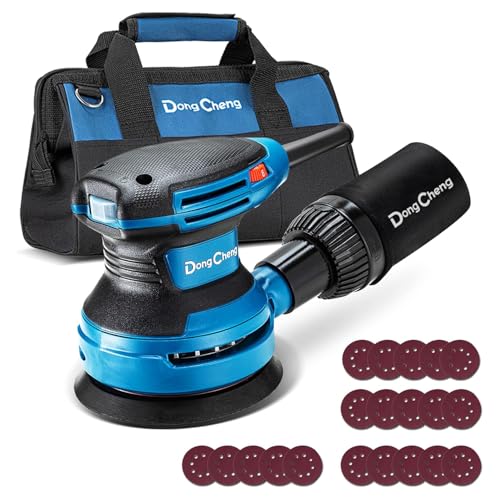
The Dong Cheng 5-inch random orbital sander brings professional-grade capability to home workshops at an accessible price point. Its 380W copper motor generates speeds from 8000 to 12,800 OPM across six variable settings, giving you the flexibility to match power output to your material and desired finish quality. Whether you're prepping hardwood for stain, smoothing metal edges, or polishing surfaces, the speed range covers both aggressive stock removal and delicate finishing work without requiring multiple tools.
Practical design choices enhance usability during real work sessions. The 5-inch hook-and-loop sanding pad accommodates standard abrasive sheets and swaps them in seconds, while the internal ventilation system pulls dust efficiently into either the included detachable box or an external vacuum (32mm OD connection). The sander weighs just 3.1 pounds with a balanced grip design that distributes weight evenly, reducing fatigue when working overhead or at awkward angles. An ergonomic rubber handle provides secure control whether you're sanding horizontally or vertically.
This package arrives ready to work, bundled with 20 assorted sandpaper sheets covering grits 80 through 320, carbon brush replacements, a heavy-duty nylon tool bag, and full documentation. The comprehensive accessory set means you can begin projects immediately without hunting for compatible supplies. For homeowners and DIYers who need dependable sanding performance across multiple material types, this sander delivers the versatility and included tools to tackle both renovation work and fine craftsmanship.
| Motor Power | 380W Copper Motor |
|---|---|
| Speed Range | 8000-12800 OPM |
| Speed Settings | 6 Variable Gears |
| Sanding Pad Size | 5 inches (125mm) |
| Weight | 3.1 lbs |
| Dimensions | 5.4 x 5 x 5.4 inches |
| Color | Blue |
| Dust Collection | Detachable Box + Vacuum Ready (32mm OD) |
| Pad Design | Hook-and-Loop for Quick Changes |
| Included Accessories | 20 Sandpaper Sheets (Grits 80/120/180/240/320), Carbon Brushes, Tool Bag, Manual |
Setup and Safety: Before first use, review the user manual and ensure the power cord is properly grounded. Inspect the sanding pad for damage and confirm the detachable dust box is securely attached or a vacuum hose (32mm OD) is connected. Always wear safety glasses and a dust mask when sanding, especially with the detachable box system.
Selecting Speed and Starting: Choose your speed setting based on material and desired finish. Start with lower speeds (8000-10000 OPM) for delicate work or final finishing; use higher speeds (11000-12800 OPM) for aggressive stock removal or metal prep. Allow the motor to reach full speed before contacting the work surface.
Sanding Technique: Apply light to moderate pressure and let the sander do the work. Move the sander in overlapping circular motions, avoiding concentrated pressure in one spot to prevent gouging. For large surfaces, work systematically from one area to the next. The 5-inch pad covers significant area, so avoid excessive downforce. Periodically check the dust box fullness and empty as needed to maintain suction and cooling.
Changing Sandpaper: The hook-and-loop pad allows tool-free sheet changes. Simply peel off the used sheet and press a fresh one firmly onto the pad, ensuring full contact around all edges. The included assortment provides grits 80 through 320 for progression from rough to fine finishing.
Material Progression: Work through sandpaper grits progressively. Start with 80 or 120 grit for rough surfaces or paint removal, move to 180 for intermediate smoothing, and finish with 240 or 320 for final prep before staining or painting. Skipping grits often requires rework and wastes time.
Dust Management: For extended sanding sessions, connect the sander to a shop vacuum rather than relying on the detachable box alone. This maintains consistent suction, keeps your workspace cleaner, and extends the motor's service life by improving cooling airflow.
Speed Selection by Task: Use lower speeds (8000-9000 OPM) on delicate woods or veneer to avoid tearout; reserve higher speeds (12000+ OPM) for metal prep, paint removal, or aggressive stock removal on hardwoods. Variable speed control is your efficiency advantage.
Pressure and Control: Excessive downforce doesn't speed work and increases vibration, causing fatigue and uneven surfaces. Let the sander's weight and motor power handle material removal. Light, steady pressure with smooth overlapping strokes yields the best results.
Personal Protective Equipment: Always wear ANSI-rated safety glasses to protect against dust and debris ejection. Use a dust mask or respirator rated for fine sanding particles, especially when working indoors. Consider hearing protection if operating for extended periods, as orbital sanders can reach 80+ decibels.
Electrical Safety: Inspect the power cord before each use for cuts or damage. Use a properly grounded outlet or extension cord rated for the tool's amperage. Keep the tool dry and never operate with wet hands or in damp conditions. Unplug before changing sandpaper or performing maintenance.
Work Surface Preparation: Secure your workpiece firmly using clamps or a vise to prevent movement or kickback. Clear the work area of loose objects, fasteners, or debris that could catch on the sanding pad. Ensure adequate lighting so you can see the surface condition clearly.
Motor and Cooling: Allow the motor to cool between extended use periods. Do not block ventilation ports or run the sander continuously without breaks. Empty the dust box regularly to maintain airflow and prevent motor overheating. Replace carbon brushes as indicated in the manual to maintain optimal performance.

Pros
- Lightweight and maneuverable design makes it easy to control on vertical surfaces and overhead work
- Excellent dust collection system reduces cleanup time and keeps fine particles out of your lungs
- Pad control startup feature prevents jarring jolts that can damage your workpiece
- Comes fully equipped with accessories, eliminating separate purchases for basic operation
- Reliable Makita build quality backed by the brand's reputation for durability
Cons
- 5-inch pad size is smaller than larger 6-inch models, requiring more passes on large flat surfaces
- No variable speed control, so you're limited to the fixed 12,000 OPM setting for all applications
The Makita BO5030K is a well-designed random orbit sander that strikes a solid balance between power and control. The 3.0 AMP motor spins at 12,000 orbits per minute, which is plenty of speed for tackling medium-duty sanding jobs on wood, drywall, and composite materials. The pad control system is a thoughtful addition that reduces the initial jolt when you power on the tool, protecting both your hands and your workpiece from sudden movement.
What sets this model apart is its dust collection efficiency. The through-the-pad system draws dust directly from the work surface, keeping your work area cleaner and your visibility better than sanders with less effective collection. The included dust bag captures most particles, though connecting it to a shop vacuum will give you even better results. The rubberized grip is comfortable for extended use, and the compact 5-inch pad makes it excellent for detail work, edges, and corners where larger sanders simply won't fit.
This sander is particularly well-suited for furniture refinishing, deck preparation, and general woodworking. The included carrying case protects your investment and makes storage and transport convenient. It's a reliable workhorse for homeowners and DIYers who need consistent, smooth results without the complexity or cost of professional-grade equipment.
| Brand | Makita |
| Model | BO5030K |
| Pad Size | 5 inches |
| Motor | 3.0 AMP |
| Orbits Per Minute | 12,000 OPM |
| Orbital Action | 1/8 inch random orbit |
| Color | Teal |
| Weight | 2.9 pounds |
| Dimensions | 15 x 7 x 10 inches |
| Included Accessories | Abrasive disc (#120), dust bag, plastic carrying case |
| Dust Collection | Through-the-pad system |
| Grip Type | Rubberized |
Setup and Safety: Always unplug the sander before changing abrasive discs or adjusting settings. Wear a dust mask or connect the tool to a shop vacuum for better dust control. Ensure your workpiece is secure and won't move during sanding.
Basic Operation: Attach the appropriate grit abrasive disc to the pad. Position the sander flat against your workpiece before turning it on. The pad control system will prevent harsh startup torque. Move the sander in slow, overlapping strokes across the surface. Let the tool do the work—don't apply excessive downward pressure, as this will slow the motor and reduce effectiveness.
Best Practices: Use lower grits (60-80) for heavy material removal and higher grits (120-220) for finishing. Keep the sander moving to avoid creating flat spots or gouges. Empty the dust bag regularly to maintain suction and motor efficiency. For large flat areas, work in sections and check your progress frequently to ensure even sanding.
Maximize Dust Collection: While the included dust bag works, connecting the sander to a shop vacuum with an adapter will dramatically improve dust capture and reduce airborne particles. This also keeps your work area cleaner and extends the life of your abrasive discs.
Disc Selection Matters: Stock multiple grit levels—start with 80 or 120 for most jobs, then move to 150 or 180 for final finishing. Using the right grit from the start saves time and produces better results than trying to fix heavy scratches with fine grits.
Pad Maintenance: Clean the sanding pad regularly with a soft brush to remove dust and debris. A clogged pad reduces effectiveness and can cause uneven sanding. Replace abrasive discs when they become dull or clogged rather than trying to squeeze extra life out of worn discs.
Technique Refinement: Keep the sander flat and move it in a circular or figure-eight pattern on large surfaces. For edges and corners, use the side of the pad carefully. Avoid tilting the sander, as this can create uneven surfaces and wear the pad unevenly.
Who Should Buy This Sander? The BO5030K is ideal for homeowners and DIYers who tackle occasional to moderate sanding projects. It's perfect if you refinish furniture, prepare decks for staining, sand drywall repairs, or work on woodworking projects. The compact size and included accessories make it an excellent entry point for those new to power sanders.
When This Sander Excels: Use it for detail work, edges, corners, and medium-sized surfaces. It's particularly effective on vertical surfaces and overhead applications where maneuverability matters. The efficient dust collection makes it suitable for indoor work with proper ventilation.
Consider Alternatives If: You regularly sand large, flat surfaces (like entire floors or large tabletops), you need variable speed control for different materials, or you work with very coarse or very fine abrasives exclusively. A 6-inch sander covers more area per pass, though it's less maneuverable in tight spaces.
Value Assessment: This sander offers excellent value when you factor in the included case, dust bag, and starter abrasive disc. The Makita brand reputation for reliability means you're investing in a tool that will last through years of homeowner use with proper maintenance.

Pros
- Excellent value package with sandpapers and dust collection accessories included, no extra purchases needed
- Variable speed control gives you precision on delicate surfaces and power for aggressive material removal
- Dual pad sizes eliminate the need to buy a separate sander for different project scales
- Brushless motor technology ensures longer tool life and quieter operation compared to brushed alternatives
- Symmetrical ergonomic design works equally well for left and right-handed users
Cons
- No customer reviews available yet, so real-world durability and long-term reliability remain unproven
- Compact size makes it better suited for detail and medium projects rather than large commercial sanding jobs
The VEVOR random orbital sander stands out as a practical, feature-rich option for homeowners and serious DIYers who need versatility without breaking the bank. The dual 5 and 6-inch pad system addresses a real pain point for many users: the ability to switch between detailed work on trim and larger surface sanding without owning multiple tools. The brushless 350W motor delivers solid performance across wood, metal, drywall, and painted surfaces, while the 6-speed variable control gives you genuine precision rather than forcing you to choose between one fixed speed.
What makes this sander particularly appealing is the thoughtful kit design. Rather than selling you a bare tool, VEVOR includes 20 sandpaper grits ranging from 80 to 320, a dust collection hose, and a connector ready to pair with your shop vacuum. This means you can unbox the tool and start your project immediately without hunting for accessories or making additional purchases. The instant stop safety feature provides peace of mind during operation, and the low-vibration design genuinely matters during longer sanding sessions where hand fatigue becomes a real concern.
The compact, lightweight construction makes this sander accessible for extended overhead work and detail sanding where a heavier tool would tire you out quickly. The symmetrical grip design works equally well whether you're left or right-handed, removing another common frustration with single-orientation tools. For homeowners refinishing furniture, smoothing drywall patches, or preparing surfaces for paint or stain, this sander delivers professional-quality results at a price point that won't make you hesitate to add it to your tool collection.
| Specification | Details |
|---|---|
| Motor Type | Brushless |
| Motor Power | 350W |
| Maximum Speed | 10,000 RPM |
| Speed Settings | 6 variable speeds (4,000-10,000 RPM) |
| Orbit Diameter | 5mm |
| Sanding Pad Sizes | 5-inch and 6-inch (interchangeable) |
| Included Sandpapers | 20 pieces, grits 80-320 |
| Dust Collection | Connector and hose included |
| Safety Features | Instant stop function |
| Weight | 4.41 pounds |
| Dimensions | 10.04 x 5.91 x 4.33 inches |
| Design | Symmetrical ergonomic grip, low vibration |
Setup & Pad Selection: Choose your sanding pad size based on your project. The 5-inch pad works best for detail work, trim, and tight spaces. The 6-inch pad covers larger flat surfaces more efficiently. Attach your chosen pad securely before powering on.
Speed Selection: Start with a lower speed (4,000-6,000 RPM) for delicate surfaces, final finishing passes, and softer materials. Use higher speeds (8,000-10,000 RPM) for aggressive material removal and tougher surfaces like hardwood or metal. Always let the sander reach full speed before contacting the work surface.
Dust Management: Connect the included hose to your shop vacuum or dust collector before starting. This keeps your workspace clean and improves visibility. Never operate without dust collection, as the sander generates significant dust.
Sanding Technique: Keep the sander moving in smooth, overlapping passes. Don't apply excessive downward pressure; let the tool do the work. Move with the wood grain when possible. Check your progress frequently by running your hand over the surface.
Safety Practices: Always wear safety glasses and a dust mask. Use the instant stop feature by releasing the handle when you need to pause. Never reach under or around the sanding pad while the motor is running. Allow the tool to come to a complete stop before setting it down.
Match Grit to Your Goal: Use 80-120 grit for heavy material removal and stripping old finishes. Progress to 150-180 grit for general smoothing. Finish with 220-320 grit for final surface preparation before staining or painting. Skipping grits creates visible scratches; always work up gradually.
Optimize Speed for Material: Softer woods benefit from moderate speeds (6,000-7,000 RPM) to avoid tearout. Hardwoods and metal handle higher speeds better. If you hear chattering or see burn marks, reduce speed immediately. The variable control lets you dial in the sweet spot for each material.
Extend Sandpaper Life: Tap the sanding pad gently against a trash can to dislodge clogged dust rather than replacing papers prematurely. Keep backup grits on hand so you're never caught mid-project. Store sandpaper flat and dry to prevent curling.
Reduce Vibration Fatigue: Take breaks during extended sessions to let your hands rest. Loosen your grip slightly; you don't need to squeeze hard since the tool's weight provides adequate contact pressure. Proper dust collection also reduces vibration by keeping the pad clean.
Vacuum Connection Tips: Use a shop vacuum with adequate suction rather than household vacuums, which can clog quickly. Check your vacuum filter frequently when sanding, as fine dust loads it faster than other tasks. A larger diameter hose improves airflow and dust removal efficiency.
Who Should Buy This Sander: DIYers and homeowners tackling furniture refinishing, floor preparation, drywall finishing, or general woodworking projects will find this sander hits the sweet spot between capability and price. It's ideal if you want one versatile tool rather than owning multiple sanders. Beginners appreciate the variable speed control, which eliminates guesswork. Professionals using it for supplementary work or detail tasks will value the dual pad sizes and included accessories.
What Projects Does It Handle: This sander excels at refinishing wood furniture, smoothing rough lumber, preparing drywall patches for paint, sanding between coats, removing old paint or stain, and detail work on trim and edges. It works on wood, MDF, metal, and painted surfaces. It's less ideal for very large commercial projects or continuous heavy-duty industrial use, though it handles occasional professional-grade work admirably.
Key Advantages Over Budget Alternatives: The brushless motor outlasts traditional brushed motors and runs cooler and quieter. Variable speed control is a genuine advantage that fixed-speed sanders don't offer. The dual pad system eliminates the need to buy a second tool. Including 20 sandpapers and dust collection components means you start projects immediately without additional purchases.
Comparison Considerations: If you only sand large flat surfaces occasionally, a cheaper fixed-speed sander might suffice. If you need industrial-grade durability for daily professional use, premium brands offer heavier-duty construction. However, for the typical homeowner who wants versatility, reliability, and a complete kit at a reasonable price, this VEVOR sander delivers excellent value.
Long-Term Ownership: Brushless motors are known for extended lifespans, making this a tool you'll likely use for years. Keep the dust collection system clean and store the sander in a dry location. The included sandpapers will eventually run out, but replacement grits are inexpensive and widely available. Occasional lubrication of the pad mechanism keeps everything running smoothly.

Pros
- Speed control dial lets you adjust from 4,000 to 12,000 OPM, giving you flexibility for different materials and finishes
- Lightweight and well-balanced design reduces hand and arm strain during longer sanding jobs
- Comfortable rubberized grip improves control and reduces vibration fatigue
- Compact 5-inch pad is easier to maneuver than larger sanders and works well in confined spaces
- Makita's proven track record means solid construction and reliable performance
Cons
- No reviews currently available, so long-term durability feedback from real users is limited
- Dust collection system not prominently featured in specifications, which may require a separate dust bag or shop vacuum attachment
The Makita BO5041K is a 5-inch random orbital sander built for homeowners and DIYers who need versatility without excess weight. Its 3.0 AMP motor provides enough power to handle both aggressive stock removal on rough surfaces and gentle finishing work on delicate wood. The variable speed control dial is the standout feature here, allowing you to dial in anywhere from 4,000 to 12,000 orbits per minute. This flexibility means you can use one tool for multiple applications, from sanding down old paint to achieving a smooth final finish on furniture.
Comfort and control are evident in the design. The tool weighs just over 3 pounds and features an ergonomic rubberized palm grip and handle that reduces fatigue during extended use. The compact 5-inch pad makes it easy to navigate tight corners, edges, and curved surfaces that larger sanders struggle with. Whether you're refinishing a dresser, smoothing drywall patches, or preparing cabinets for staining, this sander handles the job with manageable control and minimal vibration.
Makita's reputation for building durable tools stands behind this model. The straightforward design focuses on essential features without unnecessary complexity, making it accessible for beginners while still satisfying experienced DIYers. If you're looking for a dependable, lightweight sander that won't break the bank and covers most household sanding needs, the BO5041K deserves serious consideration.
| Specification | Details |
|---|---|
| Model | BO5041K |
| Brand | Makita |
| Sanding Pad Size | 5 inches |
| Motor | 3.0 AMP |
| Speed Range | 4,000 - 12,000 OPM (variable) |
| Weight | 3.09 pounds |
| Dimensions | 7.5 x 16.3 x 10.3 inches |
| Type | Random Orbital Sander |
Setup and Preparation: Before starting, attach your preferred sanding sheet to the 5-inch pad. Ensure your work surface is secure and stable. Plug the sander into a grounded outlet and position yourself comfortably with a firm stance.
Speed Selection: Use the variable speed dial to select your starting speed. Begin with lower speeds (4,000-6,000 OPM) for coarse sanding and material removal, or higher speeds (8,000-12,000 OPM) for fine finishing work. Adjust based on how the sander feels and the results you're seeing.
Sanding Technique: Let the sander do the work. Use light to moderate pressure and move the sander smoothly across your work surface in a controlled manner. Avoid pressing down hard, as this can clog the sandpaper and reduce effectiveness. Work with the wood grain when possible for the best finish. Keep the sander moving to avoid creating flat spots or uneven surfaces.
Safety Reminders: Always wear a dust mask or use a dust collection system, as sanding creates fine particles. Wear eye protection and hearing protection if using for extended periods. Never reach under the sanding pad while it's running, and always unplug before changing sandpaper or making adjustments.
Personal Protective Equipment: Always wear a dust mask rated for fine woodworking dust (N95 or better) or use the sander with a connected dust collection system. Wear safety glasses to protect your eyes from airborne particles. Consider hearing protection if sanding for extended periods, as the tool can reach moderate noise levels.
Operational Safety: Ensure your work surface is stable and secure before starting. Keep your hands and fingers clear of the sanding pad at all times. Never reach under or around the pad while the sander is running. Always unplug the tool before changing sandpaper, adjusting settings, or performing any maintenance.
Work Environment: Sand in a well-ventilated area or outdoors when possible to minimize dust inhalation. Keep the power cord away from the sanding area and clear of your work surface. Do not use the sander on wet wood or in damp conditions. Allow the tool to come to a complete stop before setting it down or making any adjustments.
Maintenance and Care: Regularly inspect the power cord for damage and replace if necessary. Keep the ventilation vents clear of dust buildup. Store the sander in a dry location away from moisture. Follow Makita's user manual for specific maintenance intervals and procedures.
Choose the Right Grit: Start with a coarser grit (60-80) for heavy material removal or old finishes, move to medium grit (120-150) for general smoothing, and finish with fine grit (180-220) for a smooth final surface. Skipping grits can leave visible scratches.
Master Speed Control: Lower speeds work better on softer woods and delicate finishes to prevent over-sanding. Higher speeds are ideal for harder woods and aggressive removal. Experiment on scrap wood first to find the sweet spot for your specific project.
Dust Management: Attach a dust collection bag or connect to a shop vacuum for cleaner work and better visibility. Clogged sandpaper reduces efficiency and can overheat the motor. Tap or replace sandpaper frequently during extended use.
Pressure and Motion: Use light, consistent pressure and let the orbital motion do the work. Heavy pressure doesn't sand faster and can damage your work surface or create uneven results. Move the sander in smooth, overlapping passes for even coverage.
Edge Work: The compact 5-inch pad is excellent for edges and tight spaces. Tilt the sander slightly to use just the edge of the pad for detailed work around curves, corners, and trim.

Pros
- Variable speed control adapts to different materials and grit levels
- Low vibration and ergonomic design reduce hand fatigue on longer jobs
- Excellent dust collection keeps your workspace clean and protects your lungs
- Compact footprint reaches edges and corners other sanders cannot
- Durable construction backed by DeWalt's reputation for professional-grade tools
Cons
- No customer reviews available yet, so real-world performance feedback is limited
- Requires separate dust collector or compatible vacuum system for optimal dust management
The DeWalt DWE6423K stands out as a serious workhorse for homeowners and DIYers who tackle finishing projects regularly. The 3.0-amp motor delivers consistent power across its 8,000-12,000 OPM range, giving you the flexibility to dial in the right speed for everything from aggressive stock removal with coarse grits to fine finishing work. The variable-speed feature is particularly valuable because different materials and sanding grits perform best at different speeds, and this sander puts that control directly in your hands.
What really sets this model apart is its engineering for comfort and control. The counterweight design actively reduces vibration, which matters enormously during multi-hour sanding sessions where hand fatigue can compromise both safety and finishing quality. The compact, low-profile body is a genuine advantage for detail work and edge access that larger sanders simply cannot reach. The rubber over-molded grip areas feel substantial and secure, and the dust-sealed switch is a thoughtful design choice that extends the tool's lifespan by keeping fine particles out of electrical contacts.
Dust management is handled intelligently here. The one-handed locking dust bag makes it quick and easy to empty without fumbling, and the optimized dust port connects seamlessly to DeWalt's own dust collectors. If you're using a standard shop vacuum with a 1.25-inch hose, the DWV9000 universal connector (sold separately) bridges that gap. Effective dust collection is non-negotiable for both workspace cleanliness and respiratory health, and this sander makes it straightforward.
| Specification | Detail |
|---|---|
| Brand | DeWalt |
| Model | DWE6423K |
| Sanding Pad Size | 5 inches |
| Motor Amperage | 3.0 amps |
| Speed Range | 8,000 - 12,000 OPM (variable) |
| Dimensions | 10.38 x 7.25 x 6.2 inches |
| Color | Multi |
| Dust Port Compatibility | DeWalt DWV010, DWV012, or universal 1.25-inch hose with DWV9000 connector |
| Key Features | Counterweight vibration reduction, dust-sealed switch, one-handed dust bag lock, rubber over-molded grip |
Setup and Safety: Before plugging in, install your choice of sandpaper grit on the 5-inch pad, ensuring it's centered and adhered smoothly with no bubbles or wrinkles. Attach your dust collection system to the dust port. Always wear a dust mask or use respiratory protection, safety glasses, and hearing protection if working in a loud environment.
Operating Technique: Start with the speed dial set to a lower setting, then power on the sander. Let it reach full speed before contacting the work surface. Move the sander in smooth, overlapping strokes with light to moderate pressure. Never force the sander into the material; let the motor do the work. The variable speed allows you to increase RPM for lighter finishing passes and decrease it for aggressive stock removal. Always sand with the grain when possible to minimize scratches and tearout.
Dust Management: Check the dust bag frequently during work and empty it before it becomes completely full, as a clogged bag reduces collection efficiency and motor cooling. If using a shop vacuum, ensure the vacuum is running before you start the sander and keep it running until the sander pad stops spinning to capture any remaining dust clouds.
Speed Selection: Use lower speeds (8,000-9,000 OPM) for fine finishing, veneers, and delicate materials. Mid-range speeds (9,500-10,500 OPM) work well for general-purpose sanding of hardwoods. Reserve higher speeds (11,000-12,000 OPM) for aggressive material removal and softwoods where you want faster stock removal.
Grit Progression: Start with 80 or 100 grit for heavy material removal, progress to 150-180 for intermediate smoothing, and finish with 220-320 grit for final finishing before staining or finishing. Skipping grits results in longer sanding times overall because you'll be fighting previous scratch patterns.
Pad Care: Replace sandpaper when it becomes clogged or loses cutting ability; worn paper forces the motor to work harder and generates excessive heat. Keep the pad clean and inspect it regularly for damage or uneven wear. A worn or damaged pad will create swirl marks and uneven surfaces.
Dust Collection Optimization: If you notice dust escaping, check that all connections are tight and that your dust bag or vacuum filter isn't clogged. A clean dust collection system improves both air quality and motor cooling, extending tool life.
Who Should Buy This Sander: The DWE6423K is ideal for homeowners and DIYers who sand regularly enough to justify a quality tool but may not run a professional shop. It's perfect for furniture refinishing, deck and patio preparation, cabinet work, and any project requiring smooth, professional-quality surfaces. If you're tired of renting sanders or working with low-end models, this tool offers genuine value.
What You Need to Know Before Buying: This is a corded electric tool, so you'll need convenient access to a power outlet. The kit includes the sander and dust bag but requires a separate dust collection system (shop vacuum or DeWalt dust collector). You'll also need to budget for sandpaper, which wears out with use. Variable-speed sanders are more versatile than fixed-speed models, particularly if you work with different materials.
Dust Collection Compatibility: If you already own a DeWalt dust collector (DWV010 or DWV012), this sander integrates seamlessly. For standard shop vacuums with 1.25-inch hose ports, you'll need to purchase the DWV9000 universal quick connector separately. This is a small investment that makes setup and switching between tools much easier.
Long-Term Value: DeWalt tools are known for durability and parts availability. The dust-sealed switch and quality construction suggest this sander will outlast budget alternatives. If you plan to sand multiple projects over years, the better ergonomics and dust control justify the investment compared to cheaper options.

Pros
- Variable speed dial lets you dial in the right pace for delicate finishes or aggressive material removal
- Adjustable front handle makes sanding in corners, edges, and tight spots significantly easier
- Lightweight and well-balanced design reduces operator fatigue on longer projects
- Rubberized palm grip and ergonomic handle design provide superior comfort and control
- Quick-change abrasive system saves time between grit changes
Cons
- No reviews currently available to validate real-world durability and long-term performance
- Limited to 5-inch pad size, which may require multiple passes on larger flat surfaces
The Makita BO5041 is a well-engineered random orbit sander built for homeowners and DIYers who want professional results without excessive bulk or weight. The 3.0 AMP motor provides consistent power across the full 4,000 to 12,000 OPM speed range, allowing you to match sanding intensity to your material and finish requirements. Whether you're smoothing rough lumber, preparing surfaces for stain, or performing final finishing work, the variable speed control gives you the flexibility to optimize results for each task.
The adjustable front handle is a standout feature that sets this model apart. Unlike fixed-handle sanders, the ability to reposition the front grip means you can access corners, edges, and confined spaces that would otherwise require hand-sanding or secondary tools. Combined with the ergonomic rubberized palm grip and two-finger trigger design, the sander feels balanced and controlled during both overhead and horizontal work. The lock-on button is particularly useful for extended sanding sessions, eliminating hand strain from continuous trigger pressure.
The quick-change 5-inch hook-and-loop abrasive system is straightforward and reliable, allowing fast swaps between grit sizes without fumbling. At just over 3 pounds, the sander remains maneuverable on vertical surfaces and won't tire your arm during a full day of work. This combination of power, control, and user-focused design makes the BO5041 a solid choice for general woodworking, furniture refinishing, and surface preparation tasks around the home workshop.
| Specification | Details |
|---|---|
| Motor | 3.0 AMP |
| Sanding Speed Range | 4,000 - 12,000 OPM (variable) |
| Pad Size | 5 inches (8-hole hook-and-loop) |
| Weight | 3.1 pounds |
| Dimensions | 10.8 x 4.8 x 6 inches |
| Handle Type | Adjustable front handle with rubberized palm grip |
| Trigger | Two-finger with lock-on button |
| Product Group | Power Tools |
Setup and Safety: Before plugging in, install the appropriate grit abrasive to the 5-inch pad using the hook-and-loop system. Ensure the work surface is secure and free of nails or foreign objects that could damage the pad or sander. Always wear a dust mask or use a dust collection system, as random orbit sanders generate significant fine dust.
Speed Selection: Start with a moderate speed setting (around 8,000 OPM) for general sanding. Use lower speeds (4,000-6,000 OPM) for delicate finishes, veneers, or when you need more control. Increase speed (10,000-12,000 OPM) for aggressive material removal on raw wood or heavy stock. Let the sander do the work; avoid excessive downward pressure, which can gouge the surface or wear out the motor prematurely.
Technique and Adjustments: Move the sander in slow, overlapping passes, working with the grain when possible. Use the adjustable front handle to reach edges, corners, and confined areas. For flat surfaces, maintain light contact and let the orbital motion provide the sanding action. After each grit progression, vacuum or wipe the surface thoroughly before moving to finer abrasive to avoid scratching from residual particles.
Grit Progression: Start with coarser grits (60-80) for rough surfaces or stock removal, progress to medium grits (120-150) for general smoothing, and finish with fine grits (180-220) for stain-ready surfaces. This progression minimizes scratches and saves time compared to jumping between distant grit sizes.
Dust Management: Connect a shop vacuum to your dust collection port for cleaner work and better visibility. Clogged abrasive reduces efficiency and heat buildup can damage both the sander and your workpiece. Empty the vacuum frequently to maintain suction.
Abrasive Selection: Invest in quality hook-and-loop abrasives that match the sander's specifications. Premium abrasives last longer, cut more efficiently, and produce better surface finishes than budget alternatives. Keep several grits on hand to avoid workflow interruptions.
Speed Matching: Softer woods and delicate finishes benefit from lower speeds to prevent tear-out and reduce dust. Hardwoods and aggressive stock removal can handle higher speeds. Experiment with speed settings on scrap pieces to dial in the best results for your specific material.
Who Should Buy This Sander: The Makita BO5041 is ideal for DIYers, hobbyists, and semi-professional woodworkers who regularly tackle furniture refinishing, surface prep, and general woodworking projects. If you spend time in a home workshop and value control, comfort, and access to tight spaces, this sander delivers solid value and performance.
What to Consider: The 5-inch pad size is standard for random orbit sanders and works well for most projects, but larger flat surfaces may require more passes. If you frequently sand large panels or tabletops, you might consider a larger 6-inch model for faster coverage. However, the BO5041's adjustable handle and lighter weight make it superior for detail work and vertical surfaces.
Complementary Tools: Pair this sander with a quality dust collection system, a selection of hook-and-loop abrasives in multiple grits, and a shop vacuum. A sanding block or detail sander can handle areas the orbital sander cannot reach. Consider safety equipment including a dust mask or respirator, eye protection, and hearing protection for extended use.
Maintenance and Longevity: Keep the sander clean and free of dust buildup around the motor vents. Store in a dry location and check the cord and plug regularly for damage. With proper care and reasonable use, this sander should provide years of reliable service in a home workshop.
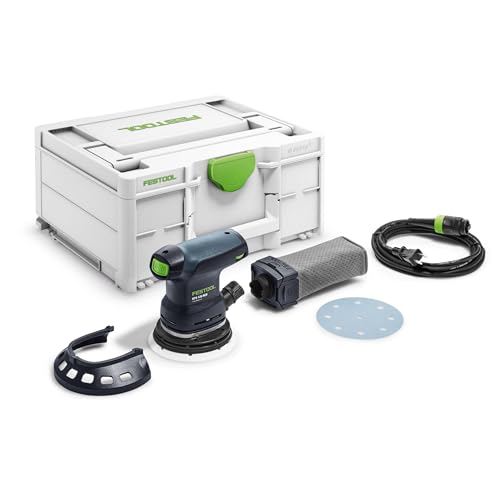
Pros
- Exceptional dust collection keeps your workspace cleaner and protects your lungs
- Variable speed control lets you match RPM to the material, preventing damage and burns
- Remarkably balanced and lightweight for overhead work without arm strain
- Festool's reputation for durability and precision engineering backs this tool
- Systainer compatibility integrates seamlessly into organized workshop systems
Cons
- Premium pricing reflects professional-grade quality, making it a significant investment for casual users
- Requires Festool-compatible abrasive pads and accessories, limiting budget-friendly alternatives
The Festool ETS 125 REQ-Plus random orbital sander stands out in a crowded market due to its exceptional engineering and attention to dust control. The Jetstream dust removal system is genuinely impressive, delivering highly efficient particle capture that translates to cleaner air, better visibility while working, and extended abrasive pad life. This isn't just marketing speak; efficient dust removal directly impacts your finish quality and workspace health.
What makes this sander particularly appealing is its stepless variable speed control, allowing you to dial in the exact RPM your project demands. Whether you're sanding delicate veneer or aggressive material removal, you can adjust from 2,000 to 5,000 RPM without interrupting your workflow. Combined with the balanced vibration stop design, the tool delivers smooth operation that reduces fatigue during extended sessions, making it genuinely comfortable for overhead and vertical applications where other sanders would leave your arms exhausted.
The ergonomic form fits naturally in any hand size, and at just over 8 pounds, it won't wear you down during all-day sanding jobs. Its inclusion in Festool's SysGen3 Systainer ecosystem means you can organize and transport your tool setup professionally. This is a premium tool built for users who prioritize finish quality, dust management, and long-term reliability over budget constraints.
| Specification | Details |
|---|---|
| Model | Festool ETS 125 REQ-Plus (ASIN: B084DVBHSB) |
| Sanding Pad Size | 5 inches (125mm) |
| Weight | 8.23 lbs |
| Dimensions | 15.59 x 11.65 x 7.36 inches |
| Variable Speed Range | 2,000 - 5,000 RPM (stepless) |
| Key Features | Jetstream dust collection, Vibration Stop (VS) technology, ergonomic grip |
| Storage | Includes SysGen3 Systainer |
| Category | Random-Orbit Sanders |
Dust Collection Matters: Connect this sander directly to a shop vacuum with Festool's CT Dust Extractor for maximum efficiency. The Jetstream system works best when paired with proper extraction, turning your sanding into a nearly dust-free operation.
Speed Selection: Start at lower speeds (2,000-3,000 RPM) for fine finishes and delicate surfaces, then increase speed for aggressive material removal. This flexibility prevents burn marks and swirl marks that plague fixed-speed sanders.
Pad Pressure: Let the sander's weight do the work. Pressing down too hard reduces dust collection efficiency and wears pads faster. Light, even pressure with the tool's natural weight produces the best results.
Systainer Organization: Keep your abrasive pads, backing pads, and accessories in the included Systainer. This keeps everything organized and makes your sander portable between rooms or job sites.
Who Should Buy This Sander? The ETS 125 REQ-Plus is ideal for homeowners and DIYers who regularly tackle finishing projects, furniture restoration, or cabinet work where surface quality matters. It's also suitable for professionals who value dust control and tool durability.
When to Choose This Model: If you spend significant time sanding overhead or vertically (drywall, walls, ceilings), this sander's lightweight design and vibration control are game-changers. If dust allergies or air quality concerns you, the Jetstream system justifies the investment. If you already own Festool tools, the Systainer compatibility makes this a natural addition.
Budget Considerations: This is a premium tool with a premium price. If you sand occasionally and budget is tight, entry-level orbital sanders may suffice. However, if you value finish quality, dust management, and long-term durability, the ETS 125 REQ-Plus pays dividends over years of use.
Accessories You'll Need: Plan to invest in Festool-compatible abrasive pads, a dust extractor connection, and backing pads. While these add to total cost, they're optimized for this sander's performance.
Setup and Safety: Before starting, ensure your dust collection is connected and functioning properly. Check that the abrasive pad is securely attached to the backing pad. Always wear eye protection and a dust mask, even with dust collection running. Review the manual for proper grip and technique.
Operating the Sander: Start the tool before placing it on the work surface. Begin with a lower speed setting appropriate to your material. Move the sander in smooth, overlapping circular motions without pressing down hard. Let the tool's weight provide the pressure needed for effective sanding. Adjust speed up or down based on the material and desired finish.
Maintaining Optimal Performance: Regularly check and empty the dust collection system to maintain suction and efficiency. Inspect the backing pad and abrasive pad for wear, replacing them as needed. Clean the tool's vents after each use to prevent dust buildup. Store in the included Systainer to protect it from damage and keep accessories organized.

Pros
- Two distinct sanding modes give you flexibility to switch between gentle finishing and aggressive material removal without tool swaps
- Variable speed control lets you match RPM and orbit speed to your material and desired finish quality
- Compact, lightweight design reduces fatigue during extended sanding sessions while maintaining power
- Compatible with standard 5-inch sanding discs, keeping consumable costs reasonable and availability high
- Solid construction and proven Bosch reliability backed by a reputable brand in power tools
Cons
- Requires a separate shop vacuum and compatible hose (sold separately) to function effectively, adding to total system cost
- No onboard dust collection means you'll need to manage vacuum hose placement and connections during use
The Bosch GET65-5N stands out as a genuinely versatile sanding solution for homeowners and serious DIYers who want performance without committing to multiple specialized tools. The dual-mode design is the real strength here: random orbit mode handles everyday sanding and fine finishing work smoothly, while turbo mode engages a direct-drive eccentric orbit that removes material three times faster than standard random orbit mode. This makes it a legitimate alternative to owning both a random orbit sander and a belt sander, saving money and shop space.
The variable speed motor (290 to 640 RPM) and adjustable orbit speed (3300 to 7300 OPM) give you genuine control over the sanding process. You can dial in the perfect speed for delicate furniture finishing or crank it up for aggressive floor prep work. The multi-hole pad system accepts any standard 5-inch abrasive disc, which means you're not locked into proprietary supplies. At 5.3 pounds with a removable front handle, the sander feels balanced and manageable during longer jobs without creating fatigue or loss of control.
The passive dust collection system integrates with standard shop vacuums, which is practical for most home workshops. Just plan on having a compatible hose and vacuum on hand. The included accessories are useful: a medium backing pad, sanding disc, hex wrench, front handle, and vacuum adapter. Build quality is solid throughout, with the kind of durability Bosch tools are known for. This is a sander that will handle years of weekend projects and occasional professional-level work.
| Specification | Details |
|---|---|
| Brand | Bosch |
| Model | GET65-5N |
| Sanding Pad Size | 5 inches |
| Motor | 6.5 amp variable speed |
| No-Load Speed (RPM) | 290 to 640 |
| No-Load Orbit Speed (OPM) | 3300 to 7300 |
| Sanding Modes | Random orbit + turbo eccentric orbit |
| Weight | 5.3 pounds |
| Dimensions | 13.7 x 5.8 x 5.5 inches |
| Color | Solid black |
| Dust Collection | Passive system (requires external vacuum) |
| Compatible Hoses | Bosch VAC001, VAC009, VAC010 (adapter included) |
| Included Accessories | Medium backing pad, sanding disc, hex wrench, removable front handle, vacuum hose adapter |
Getting Started
Attach the appropriate sanding disc to the medium backing pad using the multi-hole system. Connect your shop vacuum to the dust collection port using a compatible Bosch hose (VAC001, VAC009, VAC010) or the included VAC002 adapter. Secure the removable front handle if you prefer added control. Power on the sander and select your desired speed using the variable speed dial.
Random Orbit Mode
Use this mode for general stock removal, smoothing surfaces, and fine finishing work. Start at medium speed and adjust based on the material and desired finish. Let the tool do the work without pressing hard. This mode is ideal for furniture, woodwork, and final finishing before staining or painting.
Turbo Mode
Engage turbo mode for aggressive material removal on rough surfaces, floor preparation, or heavy stock removal. This eccentric orbit mode works much faster than standard random orbit sanding. Use firm, controlled pressure and keep the sander moving to avoid gouging. Turbo mode is your alternative to a belt sander for demanding prep work.
Best Practices
Always wear a dust mask or respirator and ensure your vacuum is running before starting. Work in overlapping passes to ensure even sanding. Check your work frequently, especially when switching between modes. Allow the sander to reach full speed before contacting the work surface. Maintain steady, even pressure throughout each pass.
Match Speed to Material: Start at lower speeds for delicate finishes and fine woods. Use higher speeds for aggressive stock removal on hardwoods and painted surfaces. Experiment to find the sweet spot for your specific project.
Use Turbo Mode Strategically: Reserve turbo mode for heavy prep work where you need fast material removal. Switch back to random orbit mode for finishing passes to avoid creating swirl marks or over-sanding.
Disc Selection Matters: Stock multiple grit options (60, 80, 120, 150, 220) so you can progress through grits efficiently. The multi-hole pad system means you can switch discs quickly without tool changes.
Vacuum Setup is Critical: Use a high-quality shop vacuum with adequate suction. A weak vacuum system forces you to work slower and creates dust clouds. Position the hose so it doesn't tangle or restrict your movement.
Maintain the Backing Pad: Keep the multi-hole pad clean and inspect it regularly for wear. A worn pad reduces contact and sanding effectiveness. Replace it when you notice reduced performance.
Control Dust at the Source: Position the dust collection port to capture debris before it becomes airborne. This reduces cleanup time and keeps your workspace cleaner throughout the job.
Who Should Buy This Sander?
The Bosch GET65-5N is ideal for homeowners and DIYers who tackle multiple sanding projects: floor refinishing, furniture restoration, cabinet prep, and general woodworking. It's also a smart choice if you want the versatility of both a random orbit and belt sander without buying two separate tools. If you already own a shop vacuum, you're ready to work immediately.
What to Consider Before Buying
Vacuum Requirement: This sander requires a shop vacuum and compatible hose. If you don't already own one, factor that cost into your decision. The included adapter helps with compatibility, but verify your vacuum's hose size before purchasing.
Dust Collection Performance: The passive dust collection system works well but isn't as efficient as active collection systems. Expect some dust to escape, especially at higher speeds. A quality vacuum with good suction is essential.
Learning Curve: Switching between modes and managing variable speed takes practice. New users should start in random orbit mode at medium speeds to build confidence before attempting turbo mode work.
Warranty and Support
Bosch tools typically include a manufacturer's warranty covering defects in materials and workmanship. Check the product documentation for specific terms. Bosch has reliable customer service and parts availability through authorized dealers and online retailers.
Budget Considerations
This is a mid-range investment for a dual-mode sander. It costs more than basic random orbit sanders but less than buying separate random orbit and belt sanders. If sanding is a regular part of your DIY work, the versatility and performance justify the cost. For occasional light sanding, a basic random orbit sander might suffice.
Buying Guide: How to Choose a Random Orbital Sander
Picking the right random orbital sander comes down to matching the tool’s capabilities to the work you actually do. A weekend DIYer smoothing furniture once or twice a year has very different needs from a contractor sanding dozens of cabinet doors per week. Use the sections below to zero in on the features that matter most for your situation.
Corded vs. Cordless
Corded random orbital sanders deliver consistent power for the full duration of a project. Because they draw electricity directly from the wall, there is no performance drop-off as a battery depletes. That makes them the preferred choice for long sessions such as refinishing a large tabletop, sanding multiple cabinet doors in sequence, or tackling any job where stopping to recharge would break your workflow. Models from DeWalt, Bosch, and Makita in the corded category, including the DeWalt DWE6423 and the Bosch ROS20VSC, sit in the mid-range price tier and cover the vast majority of home improvement needs.
Cordless models offer freedom of movement and are ideal for quick touch-ups, outdoor projects, or any workspace with limited outlets. The trade-off is runtime. The DeWalt DCW210B runs on the popular 20V MAX battery platform, so it shares batteries with other DeWalt tools you may already own. The VEVOR brushless orbital sander is a cordless option with a 350W brushless motor that maintains torque efficiently. If you are building out a cordless tool collection, pairing your sander with cordless power drills on the same battery platform saves money and storage space.
Motor Power and Orbits Per Minute
Motor power is measured in amps for corded tools and watts for cordless brushless models. For most woodworking and furniture finishing tasks, a motor in the 2.0- to 3.0-amp range is sufficient. The BLACK+DECKER BDERO100 runs on a 2.0-amp motor and reaches 12,000 orbits per minute, which is more than capable for light sanding and refinishing jobs. Step up to the DeWalt DWE6423K with its variable-speed 3-amp motor for heavier material removal.
Orbits per minute, or OPM, indicates how quickly the pad oscillates. Higher OPM generally means faster material removal, but too much speed on fine finishing work can introduce micro-scratches. Variable speed control solves this by letting you dial down for delicate surfaces and crank up for aggressive stock removal. Any sander you buy for general use should offer at least a basic variable speed dial.
Pad Size
Five-inch pads are the standard for most random orbital sanders and represent the best balance of speed, maneuverability, and sandpaper availability. Virtually every model in this roundup uses a 5-inch pad, from the budget-priced DEKOPRO palm sander all the way up to the premium Festool ETS 125 REQ-Plus. Six-inch pads remove material faster and are favored for large flat surfaces like floors and countertops. The Bosch GET65-5N offers a dual-mode design that bridges the gap between aggressive removal and fine finishing on larger pads. For tight corners and smaller furniture pieces, a 5-inch pad gives you better control without sacrificing meaningful coverage.
Dust Collection
Sanding generates an enormous amount of fine dust that is both a health hazard and a finishing problem. Wood dust inhaled over time causes respiratory issues, and dust particles that settle back onto a freshly sanded surface create imperfections in your topcoat. Every sander worth considering includes some form of dust management. On the budget end, a simple fabric dust bag like the one on the BLACK+DECKER BDERO100 catches a reasonable amount of debris. Mid-range corded models like the Bosch ROS20VSC include a vacuum dust collector that attaches directly to the sander for cleaner operation.
At the professional level, the Festool ETS 125 REQ-Plus is engineered to pair with Festool’s CT dust extractor for near-zero-dust sanding. The VEVOR brushless sander includes a dust connector and hose for connecting to a shop vacuum, which is one of the most practical dust-management solutions for home workshops. If dust control is a priority, budget for a shop vacuum with a fine-dust filter alongside your sander purchase.
Variable Speed and Orbital Diameter
Variable speed is one of the most important features to look for. A single-speed sander is fine for basic material removal, but a model with six adjustable speeds, like the Dong Cheng palm sander or the DEKOPRO, gives you the flexibility to work on delicate veneers at low speed and blast through rough stock at high speed without swapping tools. Orbital diameter, typically 3/32 of an inch or 5/32 of an inch, affects aggressiveness. A larger orbit removes material faster but can leave more visible patterns on very fine finishes. Most 5-inch sanders in this category use a 3/32-inch orbit, which is a sensible default for mixed use.
Ergonomics and Build Quality
A sander you use for extended sessions needs to be comfortable to hold. Look for a low-profile, palm-grip design with soft rubber overmolding that absorbs vibration. The Makita BO5030K and the Makita BO5041K are well regarded for their ergonomic bodies and low vibration, making them favorites among woodworkers who sand for long periods. Cheaper models from brands like DEKOPRO and SKIL are serviceable for occasional use but may transmit more vibration to your hand over time.
Build quality separates tools that last five years from those that fail after a single project. Premium brands like Festool and Bosch use higher-grade internal components and tighter tolerances that justify their price tags for professional users. For the occasional home project, mid-range options from Makita, DeWalt, and Bosch deliver excellent durability without a premium-tier investment.
Budget Considerations
The good news is that genuinely capable random orbital sanders are available at every price tier. The SKIL SR211601 and the DEKOPRO sit at the budget end and are solid choices for occasional light sanding. The Dong Cheng lands in the affordable mid-range and adds six variable speeds plus twenty sandpaper sheets, making it an outstanding value for a beginner building out a home workshop.
Mid-range corded models from DeWalt and Bosch, priced in the moderate tier, are appropriate for regular use and will handle the broadest variety of home improvement tasks without complaint. If you are a professional or a dedicated woodworker who sands daily, the Festool ETS 125 REQ-Plus and the Bosch GET65-5N dual-mode sander represent the upper end of the market and deliver performance that justifies every dollar of their premium price.
Why Trust HomeThru
HomeThru is an independent editorial platform. We do not sell products, fulfill orders, or provide customer support on behalf of any brand or retailer. Our recommendations are based on independent research, specifications analysis, and aggregated user feedback from verified purchasers. For this roundup, our editors evaluated 15 random orbital sanders across categories including budget picks, mid-range corded models, professional-grade tools, and cordless options. We assessed each model on motor power, dust collection effectiveness, build quality, variable speed range, and overall value for the intended use case. No manufacturer paid for placement in this guide.
Final Thoughts
No matter your budget or skill level, there is a random orbital sander in this lineup that will make your next finishing project easier and the results noticeably better. Here are our standout picks by category:
- Best Overall: DeWalt DWE6423 Variable Speed Random Orbit Sander, A high-rated corded variable-speed sander from one of the most trusted names in power tools, offering reliable performance across a wide range of finishing tasks.
- Best Budget Pick: BLACK+DECKER BDERO100 Orbital Sander, Delivers impressive performance at an entry-level price point, with a high orbit speed and a dust bag included, making it perfect for beginners and light home use.
- Best for Professionals: Festool ETS 125 REQ-Plus Random Orbital Sander, Premium build quality, superior dust extraction compatibility, and precision engineering make this the go-to choice for finishers who demand flawless results on every project.
- Best Heavy-Duty Corded Pick: Bosch GET65-5N Dual-Mode Random Orbit Sander, A dual-mode design switches between fine finishing and aggressive material removal, covering tasks that would otherwise require two separate tools.
- Best Cordless Option: DeWalt DCW210B 20V MAX Orbital Sander, Battery compatibility with the wider DeWalt 20V MAX ecosystem makes this the logical cordless choice for anyone already invested in that platform.
Whether you are smoothing furniture for a first coat of stain or prepping an entire room of woodwork before painting, a random orbital sander is one of the most rewarding tool investments you can make. Pair it with a quality dust collection setup and the right grit progression, and the finishes you produce will speak for themselves.
Frequently Asked Questions
What Is the Difference Between a Random Orbital Sander and a Sheet Sander?
A sheet sander, also called a finishing sander, moves in small fixed orbits in one direction. A random orbital sander moves its pad in a randomized elliptical pattern simultaneously with a spinning motion, which prevents the pad from ever repeating the same path. The result is virtually no swirl marks or cross-grain scratches, making random orbital sanders the better choice for fine finishing work on wood.
What Grit Sandpaper Should I Start With?
For bare wood with rough surfaces or old finish removal, start with 80-grit. Progress to 120-grit to remove the scratches left by the coarser paper, then finish with 180- or 220-grit for a surface ready for stain or paint. Skipping grits wastes time because each step is removing the scratch pattern from the previous one. Most random orbital sanders use hook-and-loop pads, so swapping grits takes only a few seconds.
Can a Random Orbital Sander Be Used for Paint Removal?
Yes, but with realistic expectations. A random orbital sander with a coarse grit disc, around 60- to 80-grit, can remove paint from flat surfaces effectively. It is not ideal for thick, layered paint or for intricate profiles and edges where a detail sander or manual scraping would be more efficient. For heavy paint removal over large areas, a belt sander may be a more aggressive option worth considering alongside your orbital sander.
How Do I Prevent Swirl Marks When Sanding?
Keep the sander moving at a slow, steady pace and avoid pressing down hard. Let the weight of the tool do the work. Progress through grits sequentially without skipping. Always finish with a light pass using fine grit, 180 or 220, before applying stain or paint. Sand with the grain on the final pass if doing any hand sanding afterward. Keeping your sandpaper clean and replacing worn discs promptly also reduces the chance of swirl marks appearing in the finish.






Write Your Review
No reviews yet. Be the first to share your experience!