
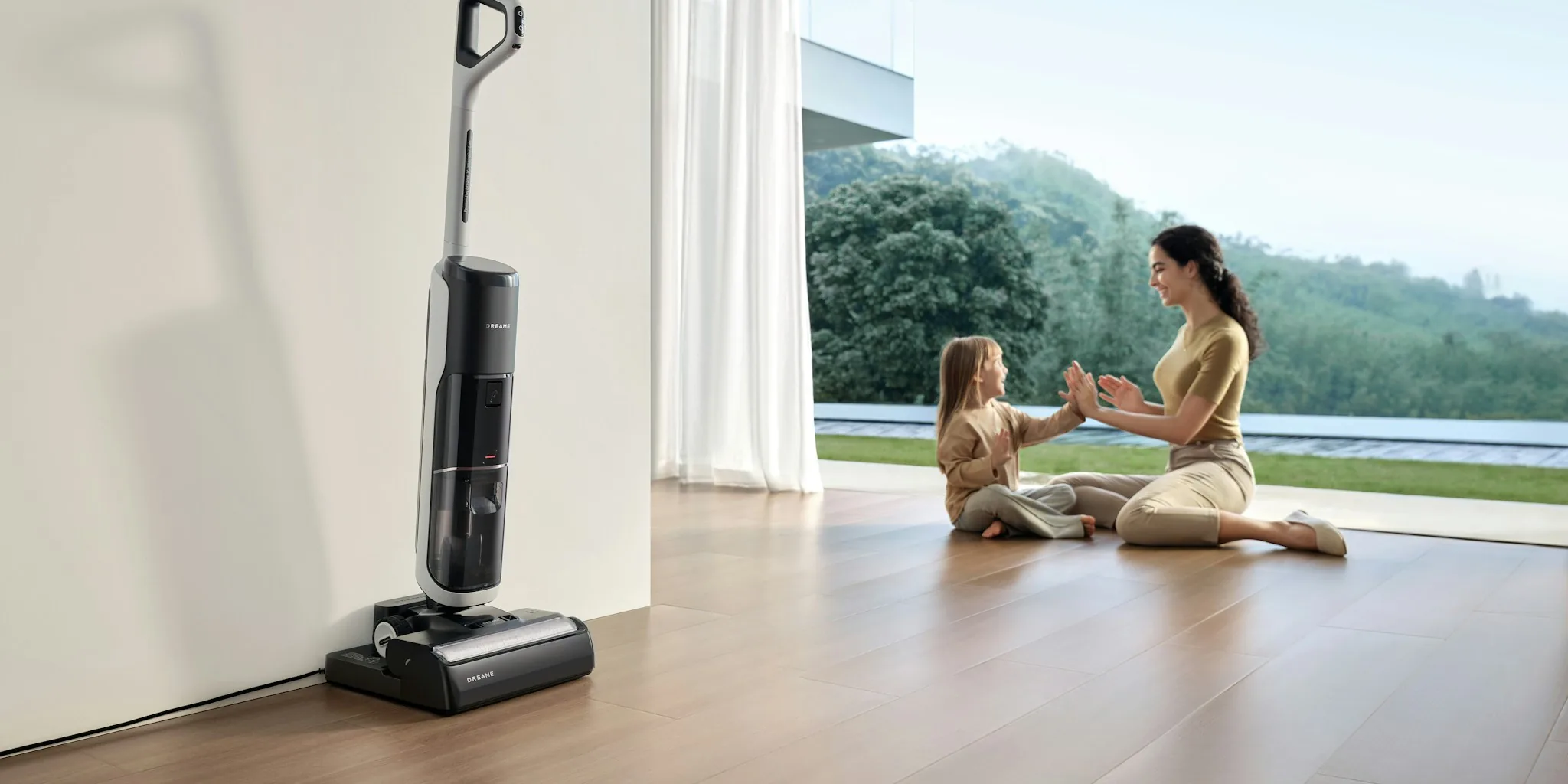

Dreame has unveiled a world-first innovation in the robot vacuum market: the Aqua20 Pro Ultra Roller X Complete, a bot equipped with heated steam technology. Shown at IFA 2026, this device represents an ambitious leap toward closing the gap between robotic cleaners and traditional manual steam cleaners. However, early hands-on impressions suggest the feature may come with significant trade-offs that buyers should understand before considering a purchase.
What Makes This Robot Vacuum Different
The standout feature is Dreame’s integrated steam system, which heats water to 356 degrees Fahrenheit (180 degrees Celsius) and releases it through four outlets positioned along the cleaning roller. The steam is designed to loosen stubborn, baked-on stains, which the roller then scrubs away using hot water. This marks the first time any manufacturer has embedded active steam generation directly into a robot vacuum during operation, rather than relying on a separate dock-based system.
Beyond steam, the Aqua20 Pro includes several hardware upgrades. The redesigned ‘Proleap’ threshold system now clears double steps up to 3.9 inches, making it the highest step-clearing capability Dreame has demonstrated. The side sweeper arm extends an additional 3 inches further than previous models to reach walls more effectively, and both the main roller and side brush can lift when needed: 5mm during mopping, and 15mm when crossing carpet to prevent water damage.
Battery Life and Practical Limitations

The trade-off is substantial. With steam activated, runtime drops dramatically from approximately four hours to just 30 to 40 minutes. Users must manually toggle the steam function on and off through the mobile app, and it operates only on zones smaller than 10 square meters, making it strictly a spot-cleaning tool for addressing problem areas rather than a whole-home solution.
Dreame’s product leadership confirmed that the steam feature was designed exclusively for tackling dried-on, stubborn stains in targeted spots. This limitation means most households would need to choose between running the robot as a normal vacuum-and-mop system for extended sessions, or switching on the steam function for brief, focused cleaning tasks. Attempting both in a single pass remains impractical given the battery constraints.
Engineering Challenges Revealed
Creating an on-bot steam system required Dreame’s engineers to overcome two major obstacles. The first involved limescale buildup: converting water to steam generates mineral deposits that can clog pipes and reduce efficiency. Dreame’s solution was to integrate limescale-removal agents directly into the robot’s water pathway, though the long-term reliability of this approach remains unproven in real-world use.
The second challenge was heat management. Embedding a heating element inside the robot’s body creates intense internal temperatures that can damage sensitive electronics. To solve this, engineers had to completely redesign the robot’s internal structure, adding thermal insulation throughout while preserving the compact external form factor. This kind of fundamental redesign raises durability questions that only extended testing will answer.
How It Compares to Competing Approaches
iRobot’s new Roomba Max 875 takes a different path, using warm mist rather than steam and heating the water in the dock instead of on-bot. In direct comparison, iRobot’s mist cloud appeared denser, and because the robot itself isn’t generating heat, misting has minimal battery impact. Roomba’s newer models demonstrate how manufacturers are rethinking mopping performance, though each brand is pursuing distinct engineering philosophies.
The real measure of success will come only after independent testing, when cleaning results can be directly compared across devices. Theoretical capability and actual performance often diverge in the robot vacuum market.
What Shoppers Should Know
Dreame is set to launch the Aqua20 Pro in Germany, Austria, Spain, Portugal, and Switzerland beginning September 21, with broader European availability planned before year-end. UK availability is confirmed for 2024, though US launch remains unconfirmed due to FCC regulatory considerations.
For potential buyers, the key questions are worth asking: Does the 30 to 40-minute steam runtime fit your cleaning needs? Modern robot vacuums increasingly offer specialized cleaning modes, each with different performance profiles and power consumption. Are you mainly interested in routine cleaning, or do you genuinely have frequent dried-on stain problems that justify the added complexity?
Dreame’s steam innovation pushes the category forward, but innovation alone doesn’t guarantee practicality. This product represents an interesting experiment in solving a real problem, though whether it solves it in a way that works for most households remains an open question. Shoppers should wait for detailed reviews comparing steam performance, battery impact, and long-term durability before making a decision.



Write Your Review
No reviews yet. Be the first to share your experience!