
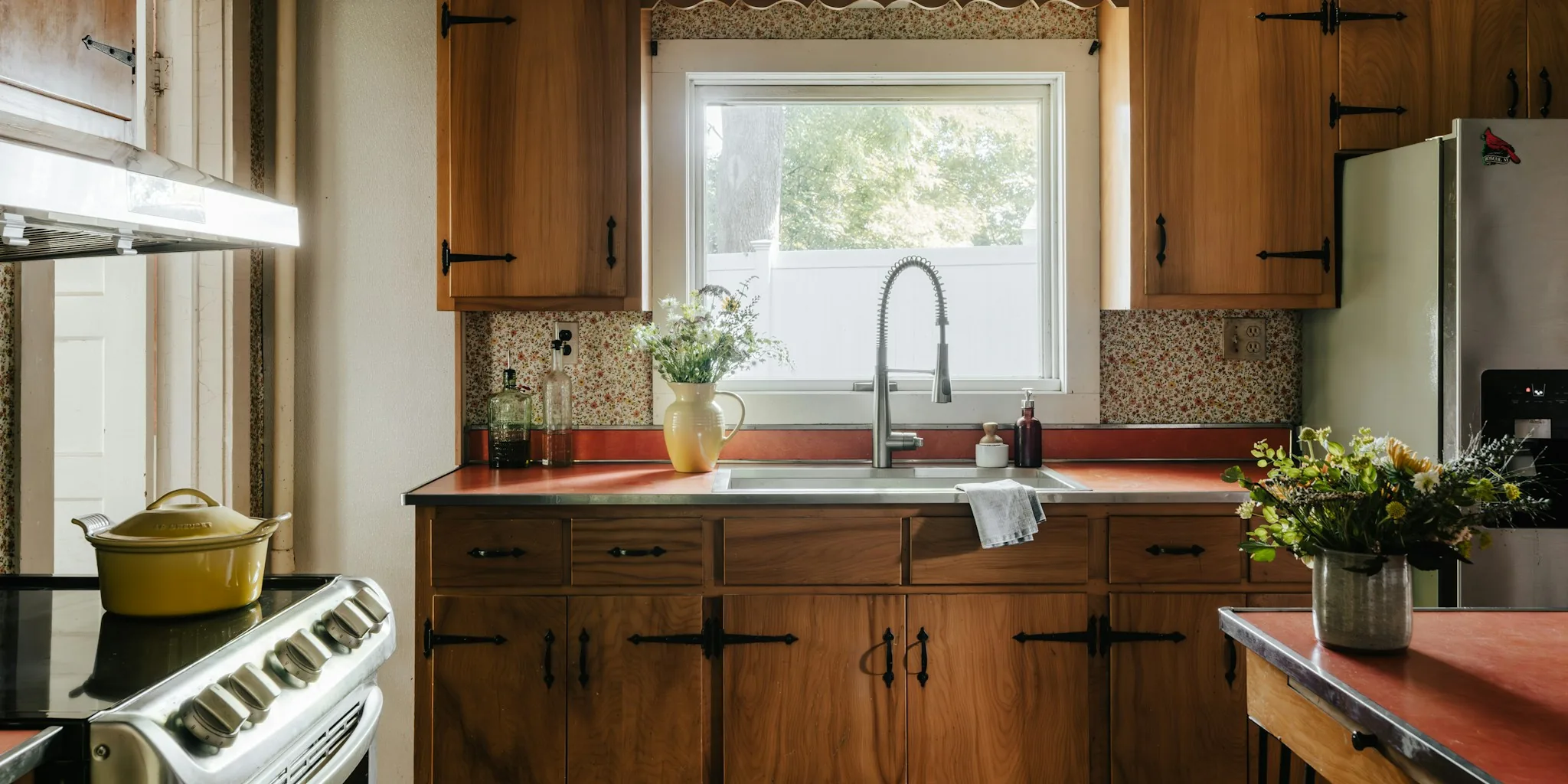

When a homeowner purchased a 1909 house, she discovered a kitchen frozen in time. Beneath decades of neglect sat 60-year-old carpet, outdated appliances, and systems that hadn’t been touched since the 1960s. What began as a simple flooring replacement evolved into a complete kitchen restoration that teaches an important lesson for shoppers tackling historic home updates: sometimes honoring the past requires investing in professional help and thoughtful design choices.
What Changed in This Historic Kitchen
The original kitchen presented significant challenges. Multiple layers of linoleum covered the subfloor after the carpet was removed. The ceiling had been dropped roughly two feet in a previous renovation, making the space feel cramped and inauthentic. The cabinets were in an awkward configuration that couldn’t be salvaged. Instead of cutting corners, the homeowners brought in professionals to completely overhaul the plumbing, HVAC, and electrical systems because the home’s original infrastructure was over 100 years old and unsafe to modify without expert guidance.
The renovation also had to accommodate practical constraints. The kitchen had no room for a traditional pantry or full-size island, yet it needed to house both a washer and dryer since there was nowhere else to place them. These limitations forced creative solutions that ultimately made the final design stronger and more personalized.
Design Choices That Honor Original Character
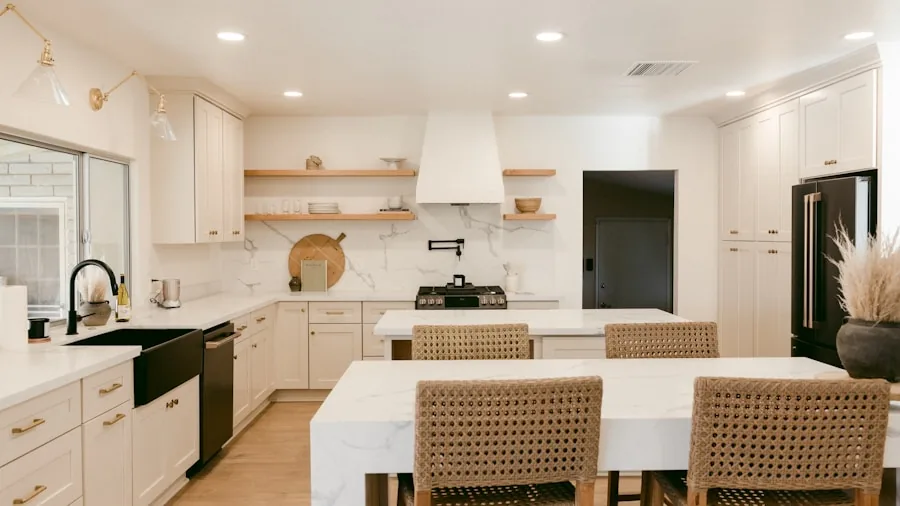
Rather than modernize aggressively, the homeowners committed to restoration over replacement. Workers removed the dropped ceiling to restore the original height. Original trim work discovered in the attic was reinstalled around doorways and windowsills. A custom back door with a transom window was handcrafted to match the home’s architectural style, and walls were painted in historically appropriate cream tones inspired by yellow paint discovered beneath later layers.
The kitchen cabinets were remade in a recessed-panel style and painted in a bright, fresh finish that felt period-correct without looking dated. A large cabinet adjacent to the refrigerator was customized to hide a stacked washer and dryer combination, solving the space problem while maintaining the traditional aesthetic. One of the most striking choices was adding an antique French butcher block work table as the kitchen island, which became a conversation piece and visual anchor for the entire room.
Beyond built-ins, the homeowners used budget cabinet painting and thoughtful styling choices to deliver major visual transformation. Copper cookware collections and china displays were arranged throughout the kitchen, creating colorful, authentic accents that felt appropriate to the home’s era. This approach proves that renovation doesn’t require replacing everything if you’re intentional about what stays and what gets updated.
Key Lessons for Shoppers Considering Similar Projects

This kitchen renovation offers several takeaways for anyone buying products and materials for a historic home update. First, invest in professional help for systems you cannot safely replace yourself. Electrical, plumbing, and HVAC work in homes over 50 years old often requires licensed contractors who understand outdated infrastructure.
Second, plan for surprises. Hidden structural issues, multiple flooring layers, and unexpected configurations are common in older homes. Budget additional time and funds for the unexpected. The cabinet order in this project was delayed seven months, yet the homeowners stayed committed to quality rather than rushing to cheaper alternatives.
Third, consider whether all-new appliances truly fit your design goals. The homeowners wished they had chosen panel-ready models that would have blended with their custom cabinetry, but budget constraints and timeline pressures forced different choices. This experience suggests evaluating kitchen appliance options early in your planning process, not after cabinets have been ordered.
Fourth, think about functional solutions that honor the home’s character. You can incorporate smart organization strategies within period-appropriate design, such as custom cabinet configurations that hide modern laundry appliances or work surfaces that double as both kitchen prep areas and style statements.
Finally, research the home’s original design whenever possible. Documents, old photos, and architectural details hidden in attics often reveal how spaces were originally intended to function. Using these clues allows modern updates to feel authentic rather than imposed.
What This Means for Buyers Today
If you’re shopping for materials or planning a kitchen renovation in a home built before 1970, this project demonstrates that authentic restoration commands respect and investment. The goal isn’t to erase history but to make history functional. That philosophy shapes which products you choose, which professionals you hire, and how much you budget for the unexpected.
Historic kitchens can compete with modern ones when thoughtfully updated. The character, craftsmanship, and unique details of older homes create spaces that feel special in ways new construction rarely matches. The challenge for shoppers is accepting that this approach requires patience, professional guidance, and a willingness to make decisions based on authenticity rather than speed or lowest cost.





Write Your Review
No reviews yet. Be the first to share your experience!