

A bench grinder is one of those workshop tools that quietly earns its keep every single day. Whether you’re sharpening chisels and drill bits, reshaping metal stock, cleaning up welds, or buffing a surface to a mirror finish, a quality bench grinder delivers speed and precision that hand tools simply cannot match. Our independent research team at HomeThru spent considerable time analyzing the most popular models, comparing motor power, wheel size, RPM range, build quality, and real-world user feedback to put together this guide. The result is a curated shortlist of eight bench grinders worth your money, ranging from capable budget picks to professional-grade machines built for the demanding workshop. Whether you’re a weekend DIYer or a full-time fabricator, you’ll find a solid pick here.
Top Bench Grinders at a Glance

Pros
- Powerful 3/4 HP motor delivers smooth, consistent grinding performance across a wide range of materials
- Durable cast iron construction minimizes vibration and extends machine lifespan in heavy-use environments
- Larger 12.5-inch wheel spacing allows grinding of longer tools and larger workpieces than standard grinders
- Precision tool rests provide repeatable accuracy for sharpening and detail work
- Industrial-grade build quality justifies the investment for serious workshop users
Cons
- No customer reviews available to assess real-world durability and long-term reliability feedback
- Heavier weight and larger footprint may require dedicated bench space in smaller workshops
The DEWALT DW758 is engineered for homeowners and DIYers who take their workshop seriously. Its 3/4 HP induction motor spins at 3,600 RPM, providing the power needed to quickly sharpen dull tools, grind metal edges, and handle metalworking projects with confidence. The motor delivers consistent performance without bogging down, even when working with tougher materials.
Build quality is where this grinder truly shines. The rugged cast iron base and motor housing absorb vibration, keeping the machine stable during operation and reducing fatigue during extended grinding sessions. The precision-machined aluminum tool rests allow you to position your work with accuracy, which is essential for achieving consistent results on sharpening tasks and detail work. The 12.5-inch distance between wheels is a practical advantage, letting you work with longer tools and larger workpieces that standard 6-inch grinders simply cannot accommodate.
The rear exhaust ports in the wheel guards are a thoughtful design feature that improves airflow and helps keep grinding dust from recirculating back toward your workspace. This is a machine built for serious workshop use, whether you're maintaining hand tools, sharpening drill bits, or tackling metalworking projects. It's a solid investment for anyone who grinds regularly enough to justify the bench space.
| Specification | Detail |
|---|---|
| Motor | 3/4 HP Induction Motor |
| Speed | 3,600 RPM |
| Wheel Size | 8 Inches |
| Wheel Separation | 12.5 Inches |
| Tool Rests | Precision-Machined Aluminum |
| Base Material | Rugged Cast Iron |
| Motor Housing | Cast Iron |
| Dimensions | 17.75 x 12.63 x 10.75 Inches |
| Colors Available | Yellow, Black, Gray |
| Product Category | Bench Grinders |
Setup and Safety: Place the grinder on a sturdy, level workbench. Ensure the wheel guards are properly positioned and the exhaust ports are unobstructed. Always wear safety glasses and work gloves when operating the grinder.
Adjusting the Tool Rest: Loosen the aluminum tool rest and position it so the work surface is just 1/8 inch from the grinding wheel. This gap prevents the work from being pinched or caught. Tighten securely before operating.
Basic Grinding: Start the motor and allow it to reach full speed. Gently guide your workpiece against the wheel using steady, even pressure. Let the wheel do the work - forcing the material against the wheel creates heat and can damage both the tool and the wheel. For sharpening, maintain a consistent angle throughout the stroke.
Material-Specific Tips: For steel tools, use moderate pressure and allow the wheel to cool the work periodically. For softer metals, lighter pressure prevents overheating. Always work in a well-ventilated area to manage dust and fumes.
Personal Protective Equipment: Always wear ANSI-rated safety glasses to protect against flying debris. Work gloves are recommended, but avoid loose clothing that could catch on the spinning wheel. Consider a dust mask or respirator when grinding for extended periods.
Wheel Guard Positioning: Keep wheel guards in place at all times during operation. The rear exhaust ports help direct dust away from your face, but never remove guards to improve visibility. Position yourself to the side of the wheel, never directly in line with it.
Before Each Use: Inspect wheels for cracks or damage before starting. Spin the grinder at full speed for 30 seconds without applying work to ensure safe operation. Never touch a spinning wheel, and always wait for it to stop completely before removing your work.
Workpiece Control: Maintain firm grip and stable positioning. Never reach over a spinning wheel. Keep the work rest properly adjusted to prevent the workpiece from being pulled into the wheel. Stop the motor immediately if you feel vibration or hear unusual sounds.
Wheel Selection Matters: The DW758 performs best with quality grinding wheels matched to your material. Use coarser grits (36-60) for fast material removal and sharpening, and finer grits (80-120) for finishing and detail work. Keep wheels dressed regularly to maintain cutting efficiency and extend wheel life.
Sharpening Technique: For tool sharpening, maintain a consistent angle against the wheel by using the aluminum tool rest as a guide. Multiple light passes produce better results than forcing material removal in one pass. This approach generates less heat and preserves the temper of your tools.
Dust Management: Position a shop vacuum near the rear exhaust ports to capture airborne dust. This improves visibility and keeps your workspace cleaner. A clean workspace reduces fire risk and makes it easier to see your work clearly.
Motor Longevity: Allow the motor to reach full speed before applying work. The induction motor is durable, but running at full RPM before load extends its service life. Avoid prolonged heavy grinding without breaks - let the motor cool periodically during extended work sessions.
Pros
- Dual-speed operation gives you flexibility to choose the right grinding speed for your specific task and material
- Included 80 and 120 grit wheels reduce heat buildup, protecting tool edges and extending wheel life
- Sturdy cast iron base with mounting holes prevents vibration and movement during use
- Adjustable tool rests allow you to maintain proper grinding angles as wheels wear down over time
- Buffing wheel attachment adds polishing capability without needing a separate tool
Cons
- No customer reviews currently available, so you cannot verify long-term durability or real-world performance from actual users
- 0.5 HP motor is adequate for hobby and light professional work but may feel underpowered for heavy-duty industrial grinding applications
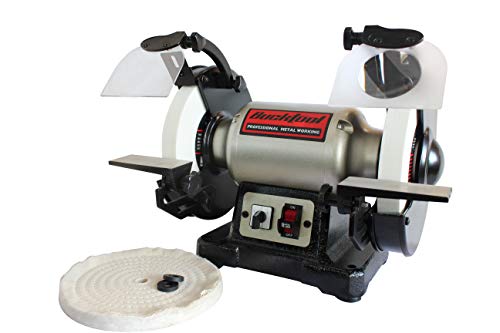
The Bucktool TDS-200DS dual-speed bench grinder combines practical features for both sharpening and material removal in a compact footprint. The 0.5 HP induction motor delivers steady torque at both low and high speeds, with the slower setting ideal for precision work like sharpening woodworking tool edges and the higher setting suited for quicker metal removal and deburring tasks. This dual-speed approach eliminates the need to purchase two separate machines and adapts to your specific grinding needs.
The included 80 and 120 grit white aluminum oxide wheels are engineered to reduce heat buildup during grinding, which protects tool edges from thermal damage and extends wheel life. The independently adjustable cast aluminum tool rests allow you to compensate for natural wheel wear and set custom grinding angles, ensuring consistent results as you use the grinder over time. The heavy cast iron base with integrated mounting holes prevents the common problem of bench grinders walking or vibrating during operation, keeping your work accurate and safe.
Beyond grinding, the included buffing wheel expands functionality for light polishing and finishing work. The grinder also accepts standard 8-inch wheels and brush attachments, so you can customize it for different applications as your workshop needs evolve. For homeowners and DIYers who sharpen tools regularly and appreciate versatility in one compact unit, this grinder delivers solid value and reliable performance for typical home workshop demands.
| Specification | Details |
|---|---|
| Motor | 0.5 HP Dual-Speed Induction Motor |
| Wheel Size | 8 Inches |
| Included Wheels | 80 Grit and 120 Grit White Aluminum Oxide |
| Additional Attachment | Buffing Wheel for Polishing |
| Tool Rests | Two Independently Adjustable Cast Aluminum |
| Base | Cast Iron with Mounting Holes |
| Dimensions | 16.93 x 10.63 x 16.54 Inches |
| Weight | 45 Pounds |
| Compatible Attachments | 8 Inch Wheels and Brushes (5/8 Inch Shaft) |
Setup and Safety: Place the grinder on a sturdy, level workbench and secure it using the mounting holes in the cast iron base. Always wear safety glasses and work gloves. Let the wheels spin freely for a few seconds before bringing your workpiece into contact to ensure proper balance.
Selecting the Right Speed: Use low speed for precision sharpening of woodworking tools like chisels, plane blades, and knives where heat control matters. Switch to high speed for aggressive grinding tasks like metal deburring, removing rust, or quick material removal where speed is more important than precision.
Adjusting Tool Rests: Position the adjustable tool rests close to the wheel (typically 1/8 inch gap) before grinding. As wheels wear down, adjust the rests forward to maintain proper distance. Always support your workpiece against the rest to prevent binding and ensure safe, controlled grinding.
Using the Buffing Wheel: The included buffing wheel is ideal for light polishing and finishing work. Apply buffing compound sparingly and let the wheel do the work without forcing your workpiece into it. Keep the workpiece moving to avoid overheating.
Personal Protective Equipment: Always wear ANSI-approved safety glasses or a full face shield to protect against flying debris and sparks. Wear work gloves and avoid loose clothing that could catch on rotating wheels. Consider hearing protection during extended grinding sessions.
Wheel Inspection: Before each use, visually inspect the wheels for cracks, chips, or damage. A damaged wheel can shatter during operation and cause serious injury. Replace wheels that show signs of wear or damage according to manufacturer guidelines.
Proper Technique: Never force your workpiece into the wheel or allow it to bind. Maintain firm contact with the tool rest and let the wheel do the grinding work at its own pace. Keep your hands clear of the wheel path and never reach across a spinning wheel. Always turn off the grinder and allow wheels to stop completely before removing your workpiece or making adjustments.
Work Area and Maintenance: Keep the work area well-lit and free of clutter. Regularly clean accumulated dust and debris from the grinder base and motor vents to prevent overheating. Store the grinder in a dry location and check that all mounting bolts remain tight before each use.
Heat Management: The white aluminum oxide wheels are formulated to reduce heat buildup, but you can enhance this by dipping your workpiece in water frequently during sharpening. This prevents the tool edge from overheating and losing its temper, which is especially important for fine woodworking tools.
Wheel Selection: The included 80 grit wheel removes material quickly and is best for initial sharpening or heavy grinding. The 120 grit wheel provides a finer finish and is ideal for final sharpening and edge refinement. Consider having both wheels mounted simultaneously if your workflow alternates between coarse and fine grinding.
Tool Rest Positioning: For consistent results, mark your preferred tool rest angles with a marker or tape. This saves time if you frequently sharpen the same tools to the same angle. A small angle gauge helps you dial in precise angles for specialized tools.
Extending Wheel Life: Dress your wheels periodically using a wheel dresser or dressing stone to maintain their cutting efficiency. A properly dressed wheel cuts faster, generates less heat, and lasts longer than a glazed or worn wheel. This simple maintenance task pays dividends in performance and safety.

Pros
- Heavy 54-pound cast iron base provides excellent stability and minimal vibration during use
- Totally enclosed pre-lubricated bearings require minimal maintenance and extend equipment lifespan
- Dual wheels eliminate the need to swap equipment for different grinding and wire-brushing jobs
- Quick-adjusting safety features make it easy to set up properly before each use
- Compact footprint at 22 x 14 x 13 inches fits most workshop benches without dominating space
Cons
- 115V single-phase motor limits this model to standard household circuits, not ideal for shops with 220V service
- No reviews available yet, so real-world user feedback on long-term durability and performance is limited
The JET JBG-8W bench grinder is engineered for the homeowner or DIYer who wants professional-grade performance without industrial overkill. The 1-HP motor delivers consistent 3450 RPM power, making quick work of sharpening tools, grinding welds, and removing rust or paint with the included wire wheel. The dual-wheel design means you can switch between precision grinding and aggressive brushing without changing equipment, saving time and keeping your workflow smooth.
Build quality stands out as a key strength. The cast iron base and wheel guards feel substantial and well-made, while the totally enclosed, pre-lubricated ball bearings are designed to run reliably for years with minimal fussing. The adjustable tool rests and quick-adjusting spark guards reflect thoughtful engineering for both safety and usability, letting you position your work precisely and protect your eyes without fumbling with tools.
This grinder suits DIYers tackling metalworking projects, tool maintenance, or general shop work. The 115V requirement keeps it compatible with standard household circuits, though shops with 220V service may prefer a larger model. At 54 pounds, it's heavy enough to stay put during use but still manageable for moving around your workshop when needed.
| Specification | Details |
|---|---|
| Brand | JET |
| Model | JBG-8W |
| Wheel Size | 8 inches |
| Motor Power | 1 HP |
| RPM | 3450 |
| Voltage | 115V, Single Phase |
| Color | Gray |
| Weight | 54 pounds |
| Dimensions | 22.24 x 14.37 x 13.1 inches |
| Included Wheels | 36-grit vitrified aluminum oxide wheel, crimped wire wheel |
| Bearings | Totally enclosed, pre-lubricated ball bearings |
| Safety Features | Quick-adjusting spark guards, large eye shields, adjustable tool rests |
| Certification | UL-listed |
Always wear eye protection. The JET JBG-8W comes with large eye shields, but safety glasses or a full face shield add an extra layer of protection against sparks and debris. Keep your face and body to the side of the wheel, never directly in front of it.
Secure your workpiece firmly. Use the adjustable tool rests to support your work and maintain control. Never hold small items freehand near a spinning wheel, and keep loose clothing, hair, and jewelry away from rotating parts.
Check wheels before use. Inspect both wheels for cracks or damage before starting the grinder. Damaged wheels can shatter during operation, creating a serious hazard. Let the grinder run for a few seconds without touching the wheels to ensure smooth operation.
Allow proper cool-down time. Wheels and workpieces can become extremely hot during grinding. Let them cool before handling, and never touch the wheels while they're spinning or immediately after use.
Match the wheel to your task. The included 36-grit aluminum oxide wheel handles general grinding, sharpening, and deburring well. The crimped wire wheel excels at rust removal, paint stripping, and surface cleaning. Keep both wheels in good condition by using them appropriately and replacing them when worn.
Position your tool rest correctly. Set the tool rest about 1/8 inch from the wheel surface to prevent your workpiece from getting pinched or caught. Adjust it before starting the grinder, and check it periodically as wheels wear down slightly over time.
Use light pressure and let the wheel do the work. Forcing your workpiece against the wheel doesn't speed up the job and can overheat both the wheel and your work. Apply steady, moderate pressure and let the spinning wheel's momentum handle the grinding.
Keep the workspace organized. The cast iron wheel guards with dust chutes help contain debris, but wear an apron or work clothes that won't catch sparks. Position your grinder away from flammable materials and ensure good ventilation, especially if grinding materials that produce metal dust.
Who should buy this grinder? The JET JBG-8W suits DIYers, hobbyists, and small shop owners who need reliable, versatile grinding and wire-brushing capability. It's ideal if you sharpen tools regularly, work with metal, or maintain equipment. The 8-inch wheel size and 1-HP motor hit a sweet spot between power and practicality for home and small shop use.
Is this the right size for you? The 8-inch wheel is the most popular bench grinder size. It's large enough to handle most sharpening and grinding tasks efficiently, yet compact enough to fit on a standard workbench. If you work with very large tools or do heavy industrial grinding, consider a 10-inch model instead. For light-duty use, a 6-inch grinder may suffice.
Power requirements matter. This model runs on 115V single-phase, standard in most homes and shops. If your workspace has only 220V three-phase power, you'll need a different model. Verify your electrical setup before purchasing.
Consider your workflow. The dual-wheel design is a major advantage if you alternate between grinding and wire-brushing tasks. If you primarily do one type of work, you might get by with a single-wheel grinder, but the flexibility here justifies the investment for most DIYers.

Pros
- Variable speed capability lets you slow down for delicate work and speed up for aggressive grinding
- Integrated work light eliminates shadows and improves visibility during detailed sharpening tasks
- Comes ready to work with two grinding wheels and tool rests, no additional purchases needed
- Compact footprint makes it ideal for smaller workshops, garages, or portable tool collections
- Solid construction and two-year warranty provide dependable performance for regular DIY use
Cons
- No customer reviews currently available to assess long-term durability and real-world performance
- 6-inch wheel size limits the maximum length of items you can sharpen compared to larger bench grinders
The WEN BG625V brings professional-grade grinding capability to home workshops in a package that won't dominate your bench space. The variable speed motor is the standout feature here, allowing you to dial in anywhere from 2000 to 3400 RPM depending on what you're sharpening. This flexibility matters when you're working with different materials and tool types, from hardened steel bits to softer metals that can overheat if ground too aggressively.
What sets this grinder apart for everyday users is the integrated flexible work light and thoughtful design touches like adjustable eye guards and pivoting tool rests. The light alone is a practical addition that many competitors skip, and it genuinely improves your ability to see exactly what you're grinding. The dual-wheel setup (80-grit and 36-grit) covers most common sharpening needs, whether you're reviving dull kitchen knives, restoring old chisels, or touching up drill bits.
The 15-inch footprint keeps this grinder from consuming valuable workshop real estate, making it suitable for garages, basements, or even mobile work setups. The two-year warranty reflects WEN's confidence in the build quality. For homeowners and DIYers who need reliable tool sharpening without investing in a heavy-duty industrial model, this variable-speed bench grinder delivers practical performance at an accessible price point.
| Brand | WEN |
| Model | BG625V |
| Motor Amperage | 2.5 amps |
| Speed Range | 2000 to 3400 RPM (variable) |
| Wheel Size | 6 inches |
| Included Wheels | One 80-grit wheel, one 36-grit wheel |
| Color | Black |
| Dimensions | 15.35 x 9.65 x 17.32 inches |
| Included Accessories | Flexible work light, pivoting tool rests, adjustable eye guards |
| Warranty | 2 years |
| Product Category | Tools & Home Improvement |
Setup and Safety: Place the grinder on a stable, level work surface away from your body. Ensure the eye guard is properly adjusted before operation. Always wear safety glasses and a dust mask when grinding, and tie back long hair or loose clothing.
Operating the Grinder: Plug in the unit and use the speed control dial to set your desired RPM (start lower for unfamiliar materials). Allow the wheel to reach full speed before bringing your tool to the grinding surface. Use light, steady pressure against the wheel and maintain contact with the pivoting tool rest to ensure consistent results and prevent binding.
Wheel Selection: Use the 36-grit wheel for aggressive grinding and initial sharpening on dull tools. Switch to the 80-grit wheel for fine finishing and polishing. Let the work light guide your positioning, and check your progress frequently by stepping back from the grinder to assess the edge or surface.
Before You Start: Inspect both grinding wheels for cracks or damage before each use. Verify that the eye guard is securely positioned and the tool rests are properly adjusted. Never operate the grinder with the guard removed or repositioned unsafely.
During Operation: Always wear ANSI-approved safety glasses and a dust mask to protect against metal particles and airborne debris. Keep your hands and fingers clear of the spinning wheel at all times. Use the tool rest to support your work, never freehand grinding. Avoid loose clothing, jewelry, and gloves that could catch on the wheel.
After Use: Allow the wheels to come to a complete stop before removing your workpiece. Never reach toward a spinning wheel to remove metal shavings or debris. Keep the work light functional and clean so you maintain visibility. Store the grinder in a dry location and cover it when not in use to protect from dust and moisture.
Speed Selection Matters: Lower RPMs (2000-2500) work better for high-carbon steel and delicate sharpening where heat buildup is a concern. Higher speeds (3000-3400 RPM) suit softer metals and aggressive material removal. Experiment with speed settings on scrap material first to develop a feel for what works best with your tools.
Wheel Maintenance: Keep your grinding wheels clean by gently brushing away metal buildup with a soft brush during extended sessions. This prevents glazing (where the wheel surface becomes polished and less effective) and improves grinding performance. Replace wheels when they become significantly worn or show visible damage.
Consistent Results: Mark your tool rest position for repeated sharpening angles, or use a simple angle guide if you're new to grinding. The flexible work light can be repositioned to eliminate shadows from different work angles. Take breaks to let both the grinder and your workpiece cool, preventing heat damage to tool edges and extending motor life.

Pros
- Delivers consistent, sharp edges on chainsaw chains with minimal learning curve
- All necessary accessories included: grinding wheels, dressing brick, profile guide, and depth gauge disc
- Flexible mounting options allow placement on workbench or wall to suit your workspace
- Heavy-duty construction at 17 pounds provides stability during operation
- Pays for itself quickly by eliminating ongoing professional sharpening fees
Cons
- No customer reviews available yet, so real-world user feedback is limited
- Requires some practice and technique to master proper grinding angles for optimal chain sharpening
The Oregon 410-120 Professional Compact Bench Grinder addresses a real pain point for chainsaw owners: the cost and inconvenience of professional chain sharpening. This unit brings that capability directly to your workshop, allowing you to maintain sharp, efficient cutting edges whenever you need them. The universal design works with .404" pitch chains from major manufacturers including Oregon, Stihl, and Husqvarna, making it a practical investment for anyone with multiple saws or a single saw they rely on regularly.
The grinder's compact footprint and flexible mounting system make it a smart fit for home workshops and garages where space is at a premium. At 17 pounds, it sits solidly on a bench without excessive vibration, and the one-way motor rotation adds a meaningful safety layer for operators. The inclusion of two grinding wheels (3.2mm and 4.7mm), a dressing brick, profile guide, and depth gauge disc means you have everything needed to handle full chain maintenance right out of the box.
Success with this tool depends on developing proper technique and understanding the correct grinding angles for your specific chain type. Homeowners who invest time in learning the fundamentals will find themselves saving significant money over time, especially if they own multiple saws or use chainsaws frequently for property maintenance or firewood processing.
| Specification | Details |
|---|---|
| Brand | Oregon |
| Model | 410-120 |
| Type | Professional Compact Bench Grinder |
| Voltage | 120V |
| Color | Red |
| Dimensions | 15.25 x 11.8 x 8.6 inches |
| Weight | 17 pounds |
| Mounting | Bench or wall mounted with included bolts |
| Chain Compatibility | Up to .404" pitch chains |
| Included Accessories | Grinder unit, two grinding wheels (3.2mm & 4.7mm), 6.0mm flat profile disc, dressing brick, profile guide, manual chain clamping vice, operator instructions |
| Safety Feature | One-way motor rotation |
Setup: Mount the grinder securely to your workbench or wall using the two included bolts. Ensure the unit is stable and won't shift during operation. Familiarize yourself with the manual chain clamping vice and how to position your chainsaw chain for sharpening.
Sharpening Your Chain: Clamp your chainsaw chain firmly in the vice. Select the appropriate grinding wheel based on your chain type and pitch. Lower the spinning wheel gently to the cutting tooth at the correct angle, allowing the wheel to do the work without forcing. Sharpen each tooth consistently, maintaining uniform pressure and angle throughout the chain.
Depth Gauge Maintenance: After sharpening all cutting teeth, use the 6.0mm flat profile disc to maintain proper depth gauges. This step is crucial for safe and efficient cutting performance. Always consult your chainsaw manufacturer's specifications for proper depth gauge height.
Maintenance: Use the dressing brick to clean and dress the grinding wheels periodically, ensuring they remain effective. Keep the unit clean and dry between uses.
Before Operation: Always read the complete operator instructions provided with the grinder. Wear appropriate personal protective equipment, including safety glasses and hearing protection. Tie back long hair and avoid loose clothing that could catch on the spinning wheel.
During Operation: Keep hands and fingers clear of the spinning grinding wheel at all times. Use the manual chain clamping vice to hold your chain securely in place. Never attempt to sharpen a chain while wearing gloves or with wet hands. The one-way motor rotation is designed for safety, so never attempt to reverse it.
Safe Practices: Allow the grinding wheel to come to a complete stop before removing your chain or making adjustments. Keep the work area well-lit and free of distractions. Never leave the grinder running unattended. Store the unit in a dry location and inspect it regularly for any signs of damage or wear before each use.
Master Your Angles: The most critical skill is maintaining consistent grinding angles for each tooth. Different chain types may require slightly different angles, so take time to research your specific chain's specifications. Marking your first tooth as a reference point can help you maintain consistency across the entire chain.
Dress Your Wheels Regularly: A clean, properly dressed grinding wheel produces better results and requires less pressure. Use the included dressing brick frequently to maintain wheel condition, especially if you sharpen multiple chains in a session.
Keep Records: Track how many sharpenings each chain receives before replacement becomes necessary. This helps you understand when chains are reaching the end of their useful life and prevents you from over-sharpening worn chains.
Invest in Learning: Watch manufacturer tutorials and practice on an older chain before working on your primary saw's chain. The time invested in technique pays dividends in sharper chains and safer cutting performance.

Pros
- Robust 1/2-HP motor runs cool and quiet with enclosed, pre-lubricated bearings requiring minimal upkeep
- Comes ready to work with both a grinding wheel and wire wheel, eliminating need for separate purchases
- Solid cast iron base and construction minimize vibration, delivering smooth, controlled grinding action
- Adjustable safety features including eye shields and spark guards provide excellent operator protection
- Pre-drilled base mounting holes make secure installation on any workbench or stand straightforward
Cons
- No reviews currently available, so real-world user feedback on long-term durability and performance is limited
- 6-inch wheel size is modest compared to larger bench grinders, making it better suited for detail work than heavy stock removal
The JET JBG-6W bench grinder is engineered for homeowners and DIYers who demand reliable performance in their workshop. Its 1/2-HP motor spins at a steady 3,450 RPM, providing enough power to handle tool sharpening, metal deburring, and surface preparation without bogging down. The dual-wheel setup—a 36-grit vitrified aluminum oxide wheel paired with a crimped wire wheel—means you can switch between grinding and wire brushing tasks without changing equipment, making this a versatile addition to any home shop.
Build quality stands out immediately. The heavy-duty cast iron construction absorbs vibration and resists wear, while totally enclosed, pre-lubricated ball bearings keep maintenance minimal. The adjustable eye shields and spark guards aren't afterthoughts; they're thoughtfully integrated to protect you during extended work sessions. Dust ports help contain debris, and the pre-drilled base accepts bolts for secure mounting on a workbench or stand, eliminating wobble that could affect grinding accuracy.
This grinder excels at detail and precision work typical of home workshops. The 6-inch wheels are ideal for sharpening chisels, plane blades, and small tools, as well as cleaning up welds and removing rust. While it's not designed for aggressive stock removal on large projects, it's perfectly proportioned for the tasks most DIYers encounter regularly. The combination of solid engineering and practical safety features makes it a dependable choice for anyone serious about maintaining their tools and tackling metalworking projects at home.
| Specification | Detail |
|---|---|
| Motor Power | 1/2 HP |
| Wheel Speed | 3,450 RPM |
| Wheel Size | 6 inches |
| Grinding Wheel | 36-grit vitrified aluminum oxide |
| Wire Wheel | Crimped steel |
| Voltage | 115V, single phase |
| Bearings | Totally enclosed, pre-lubricated ball bearings |
| Construction | Heavy-duty cast iron |
| Dimensions | 19.68 x 12.2 x 11.69 inches |
| Weight | 31 pounds |
| Color | Black |
| Base | Pre-drilled for mounting |
| Safety Features | Adjustable eye shields, spark guards, dust ports, wheel guards |
Setup and Mounting
Before first use, secure the grinder to your workbench or stand using the pre-drilled base holes. Use bolts appropriate for your surface to ensure the grinder sits solid and level. Check that both wheels spin freely and are properly seated. Adjust the eye shields and spark guards to your comfort level.
Grinding Wheel Operation
The 36-grit aluminum oxide wheel is your primary grinding tool for sharpening tools and edges. Always wear safety glasses and adjust the tool rest so it's close to the wheel (about 1/8 inch). Feed the tool gently into the wheel—don't force it. Let the wheel do the work. For chisels and plane blades, maintain a consistent angle and move the tool side to side to avoid creating a groove in the wheel.
Wire Wheel Operation
The crimped wire wheel excels at removing rust, cleaning welds, and deburring edges. Use it at full speed for best results. Hold the workpiece firmly and apply steady, even pressure. The wire wheel throws sparks and debris, so keep your hands clear of the wheel's path and wear appropriate protective gear. Never allow loose clothing or jewelry near the spinning wheel.
General Safety
Always wear safety glasses and a face shield. Keep the area around the grinder clear of clutter. Never reach across a spinning wheel. Turn off the grinder and let wheels come to a complete stop before adjusting tool rests or guards. Check wheels regularly for cracks or damage before starting.
Personal Protective Equipment
Always wear ANSI-certified safety glasses and a full face shield when operating this grinder. Consider wearing a dust mask or respirator if you're working in a confined space or grinding materials that produce fine dust. Hearing protection is recommended for extended use. Avoid loose clothing, ties, and dangling jewelry that could catch on the spinning wheels.
Wheel and Machine Inspection
Before each use, visually inspect both wheels for cracks, chips, or damage. Spin the grinder briefly without touching the wheels to ensure they run true and don't wobble. Never operate a damaged wheel. Check that all guards are properly positioned and that the tool rest is secure. Ensure the grinder is firmly mounted and doesn't rock or shift during operation.
Safe Operating Practices
Keep your hands at least 3 inches away from the spinning wheels. Never reach across or over a running wheel. Use the tool rest to support your workpiece—don't hold small items by hand. Feed tools and workpieces into the wheel slowly and steadily; forcing them causes kickback and wheel damage. Allow the grinder to reach full speed before beginning work. Always turn off the machine and wait for wheels to stop completely before making adjustments or leaving the work area.
Workspace Safety
Keep the area around your grinder clean and organized. Secure the grinder firmly to your workbench with bolts to prevent movement during use. Maintain good lighting so you can see the wheel and your work clearly. Keep a fire extinguisher nearby when grinding. Never grind materials that could produce hazardous dust without proper ventilation and respiratory protection.
Wheel Selection and Maintenance
The 36-grit aluminum oxide wheel is ideal for tool sharpening and general grinding. If you find you need finer finishing, consider having a 60-grit or 80-grit wheel on hand for swapping. Keep wheels clean by occasionally running a dressing stone across them to remove glazing and restore cutting action. A properly dressed wheel runs cooler and produces a better finish. Store spare wheels in a dry location to prevent rust.
Sharpening Technique
When sharpening chisels or plane blades, mark the back of the tool with a marker to track material removal. Maintain a consistent angle—typically 25 to 30 degrees for chisels—and move the tool side to side across the wheel to avoid creating a groove. Work in short intervals and dunk the tool in water frequently to keep it cool; overheating draws the temper from the steel. The goal is a hair-shaving edge, not aggressive stock removal.
Wire Wheel Best Practices
The crimped wire wheel is excellent for rust removal and weld cleaning, but it throws sparks and debris aggressively. Wear a full face shield and keep your hands clear. For delicate surfaces, use lighter pressure. The wire wheel also works well for texturing or roughening surfaces before painting or coating. Don't use it on hardened steel or cast iron that's prone to spalling; stick to mild steel and softer metals.
Vibration Control
Even a well-built grinder can vibrate if the mounting isn't solid. Use heavy bolts and washers when securing to your bench, and consider adding rubber isolation pads under the mounting feet to dampen vibration. A solid setup improves both safety and grinding quality. If you notice unusual vibration, stop immediately and check that wheels are balanced and the grinder is level.

Pros
- LED work light eliminates shadows and reduces eye strain during precision grinding work
- Built-in water cooling system prevents overheating of tools and materials without extra setup
- Compact 8-inch size fits well in home workshops and garages without dominating space
- Dual grit wheels provide versatility for sharpening, grinding, and polishing tasks
- Sturdy construction and adjustable tool rests deliver accurate, controlled grinding results
Cons
- No customer reviews available yet, so real-world reliability and durability feedback is limited
- 3.0 amp motor is modest in power, making it better suited for light to medium grinding rather than heavy-duty industrial applications
The Skil BI9502-00 bench grinder is designed with the home workshop in mind. Its 8-inch wheels and 3.0 amp motor provide enough power for routine tool sharpening, blade maintenance, and light metal grinding without the bulk or cost of industrial-grade equipment. The dual wheels (medium and coarse grit) give you flexibility to handle different materials and finishing requirements, from rough grinding to fine sharpening.
What sets this model apart is its thoughtful feature set for a compact grinder. The built-in LED work light is a genuine convenience that eliminates the need for separate task lighting, keeping both wheels and your workpiece clearly visible. The integrated water cooling tray allows you to quickly dunk and cool tools during grinding, extending their life and improving the quality of your work. The magnified eye shields provide both protection and magnification, which is helpful when working on smaller tools or detailed jobs.
The adjustable V-grooved tool rests and pre-drilled mounting base indicate solid engineering for a bench tool at this price point. This grinder is ideal for homeowners, DIYers, and hobbyists who sharpen drill bits, chisels, plane blades, and small tools regularly. It's not intended for heavy industrial grinding, but for typical home workshop needs, it delivers practical value and solid performance.
| Specification | Detail |
|---|---|
| Motor Power | 3.0 Amp |
| Wheel Size | 8 Inches |
| Wheel Types | Medium and Coarse Grit |
| Weight | 28.9 pounds |
| Color | Red and Black |
| Special Features | LED Work Light, Water Cooling Tray, Magnified Eye Shields |
| Tool Rests | Adjustable V-Grooved |
| Mounting | Pre-Drilled Base for Workbench or Stand |
Setup and Mounting: Place the grinder on a sturdy workbench or bolt it down using the pre-drilled base for maximum stability. Ensure adequate clearance on both sides of the wheels for safe operation and material handling.
Before You Start: Fill the built-in water cooling tray with water. Check that both wheel guards and eye shields are properly positioned. Inspect the wheels for cracks or damage. Plug in and run the grinder for a few seconds with no load to confirm smooth operation.
Grinding Technique: Place your tool or material against the adjustable tool rest at the desired angle. Let the wheel do the work; don't force the material into the wheel. For sharpening, use light, even pressure. Use the water tray frequently to cool your tool and prevent overheating. Always wear safety glasses and keep your hands clear of the spinning wheels.
Wheel Selection: Use the coarse wheel for initial grinding and heavy stock removal. Switch to the medium wheel for finishing work and fine sharpening. Keep the wheels clean to maintain efficiency and prevent material buildup.
Personal Protective Equipment: Always wear safety glasses or a face shield when operating the grinder. The magnified eye shields on this model provide some protection, but additional eyewear is recommended. Wear hearing protection if you'll be grinding for extended periods, as bench grinders produce noise.
Clothing and Hair: Avoid loose clothing, ties, or long hair that could get caught in the spinning wheels. Tie back long hair and roll up loose sleeves. Remove jewelry from your hands and wrists.
Hand and Material Control: Keep your hands away from the sides of the wheels where they spin fastest. Never reach across a spinning wheel. Use the tool rests to control your material; never freehand against the wheel. Secure small items with a vise or clamp rather than holding them by hand.
Maintenance and Inspection: Check wheels regularly for cracks or damage before use. Replace damaged wheels immediately. Keep the water cooling tray filled and clean to prevent splashing. Ensure the grinder is unplugged before performing any maintenance or adjustments.
Sharpening Drill Bits: Use the V-grooved tool rest to maintain the correct angle for your drill bit. A 118-degree point angle works well for most materials. Cool the bit frequently in the water tray to prevent tempering and loss of hardness. Make light passes and let the wheel do the work.
Maintaining Your Wheels: Keep wheels clean by brushing away metal dust regularly. A clogged wheel loses efficiency and generates excess heat. If a wheel becomes glazed or shiny, gently dress it with a wheel dresser to restore the cutting surface and extend wheel life.
Cooling Strategy: Don't wait until your tool is too hot to handle. Dip it in the water tray every 10-15 seconds during sharpening. This prevents heat damage that can ruin the temper of cutting tools and keeps your work accurate and consistent.
Workspace Setup: Position your grinder at a comfortable height so you're not hunching over. Ensure good lighting from the LED light and your shop. Keep the work area clear of clutter and distractions. A stable, vibration-free bench improves grinding accuracy and reduces fatigue.

Pros
- Brake resistor technology stops the wheels quickly, reducing accident risk and downtime
- Variable speed gives you control over aggressive stock removal versus fine finishing
- Substantial weight and cast iron construction eliminate vibration during operation
- Dual dust collection system keeps your workspace cleaner and improves work visibility
- Pre-lubricated sealed bearings mean less maintenance and longer component life
Cons
- At 66 pounds and 23 inches wide, this grinder demands a sturdy bench and isn't portable
- No reviews available online make it harder to learn from real-world user experiences before buying
The JET IBG-8VS brings industrial-grade performance to the home shop or small business workspace. Its 1 HP motor and variable speed capability let you dial in the right RPM for your task, whether you're sharpening drill bits at higher speeds or performing delicate finishing work at lower speeds. The brake resistor is a genuine safety feature that brings the wheels from full speed to a complete stop in under 20 seconds, significantly reducing the risk of accidental contact with spinning abrasives.
Build quality stands out immediately. The 66-pound cast iron construction absorbs vibration and provides the stability serious grinding demands. The dual 2.5-inch dust ports with a single collection outlet keep grinding dust under control while maintaining clear sightlines to your work. Large eye shields and cast iron wheel guards add multiple layers of protection, and the CSA/CUS certification confirms this unit meets strict electrical and safety standards for North American use.
This grinder arrives ready to work, pre-lubricated and equipped with both 36-grit and 60-grit wheels. The sealed ball bearings require minimal maintenance, and the variable speed feature extends wheel life by letting you avoid unnecessary high-speed operation for lighter tasks. If you're serious about maintaining cutting tools or doing metal finishing work, the JET IBG-8VS delivers the performance and durability expected from an industrial-grade bench grinder.
| Specification | Detail |
|---|---|
| Brand | Jet |
| Model | IBG-8VS |
| Wheel Size | 8 inches |
| Motor Power | 1 HP |
| Electrical | 115/230V, 1 Phase |
| Max RPM | 3,600 |
| Speed Control | Variable |
| Brake Feature | Resistor brake (0 RPM in under 20 seconds) |
| Dust Collection | Dual 2.5-inch ports, single outlet hose |
| Included Wheels | 36-grit and 60-grit grinding wheels |
| Bearings | Totally enclosed, pre-lubricated ball bearings |
| Safety Features | Large eye shields, cast iron wheel guards |
| Certifications | CSA/CUS certified |
| Dimensions | 23.42 x 8.15 x 9.45 inches |
| Weight | 66 pounds |
| Color | Gray |
Before You Start Always wear appropriate personal protective equipment: safety glasses or a full face shield, and hearing protection. Tie back long hair and remove loose jewelry. Inspect both grinding wheels for cracks or damage before operation, and ensure the eye shields and wheel guards are properly positioned.
During Operation Position your workpiece below the horizontal centerline of the wheel to use gravity in your favor. Maintain a firm grip and never force material into the wheel. Let the grinder do the work. Keep your hands clear of the spinning wheel at all times, and never reach across an operating wheel. The quick-stop brake is a safety feature, not a reason to be careless around moving parts.
After Grinding Always allow the wheels to come to a complete stop before walking away. Use the brake resistor feature to speed this process. Store grinding wheels in a dry location to prevent rust and degradation. Keep the dust collection system clear of blockages to maintain visibility and prevent dust buildup in your workspace.
Choosing the Right Speed The variable speed control is your biggest advantage. Use higher RPM (2,500-3,600) for aggressive stock removal with coarser wheels, and drop to 1,500-2,000 RPM for fine finishing and delicate tool sharpening. Lower speeds also reduce heat buildup on tool steel, which helps preserve hardness during sharpening.
Wheel Maintenance Dress your wheels regularly with a dressing stone to maintain cutting efficiency and flatness. A dull wheel generates heat and requires more pressure, which wastes time and risks overheating your tools. Keep one wheel dedicated to coarse work and reserve the other for fine finishing to maximize wheel life.
Dust Management Connect the dual dust ports to a shop vacuum or dust collector for cleaner air and better visibility. A clear view of your work prevents mistakes and keeps you safer. The single outlet hose means you can route collection to a central system, keeping your bench organized and your lungs healthier.
Is This the Right Grinder for You? The JET IBG-8VS suits homeowners and DIYers who sharpen tools regularly, maintain garden equipment, or do metalworking projects. It's also ideal for small shops that need a reliable, stationary grinder. If you only sharpen tools once or twice a year, a smaller bench grinder might meet your needs. If you're a professional machinist running heavy production, look for industrial-grade models with higher horsepower.
Space and Installation This grinder needs a solid, stationary workbench. At 66 pounds and 23 inches wide, it's not portable. Ensure your bench can handle the weight and vibration, and position it where dust collection is manageable. The dual voltage option (115/230V) gives you flexibility depending on your shop's electrical setup, but you'll need appropriate wiring for the 230V option.
Long-Term Value The sealed, pre-lubricated bearings and cast iron construction are built for years of service with minimal maintenance. Budget for replacement grinding wheels as they wear, and consider investing in a dressing stone to extend wheel life. The quick-stop brake and variable speed features reduce wear on components and help you work more safely, making this a smart long-term investment for serious DIYers.
Bench Grinder Buying Guide
Picking the right bench grinder comes down to matching the tool’s capabilities to your actual workload. A hobbyist sharpening kitchen knives and garden tools has very different needs from a metalworker grinding weld seams all day. Use the sections below to zero in on the specifications that matter most for your situation.
Wheel Size: 6-Inch vs. 8-Inch
The grinding wheel diameter is the single biggest factor shaping a bench grinder’s versatility. Six-inch models are compact, lighter, and friendlier to smaller shops or benches with limited footprint. They handle most sharpening tasks, including drill bits, chisels, and scissors, without any trouble. Eight-inch models carry more grinding surface, run cooler per pass because the workpiece contacts a larger circumference, and remove material faster. For most homeowners and serious DIYers, an 8-inch grinder is worth the modest step up in bench space. Professionals doing heavy stock removal or shaping will almost always prefer the 8-inch format. Pairing a capable bench grinder with other reciprocating saws and cutting tools rounds out a complete metalworking or carpentry station.
Motor Power and RPM
Motor power is rated in horsepower or amps. For light sharpening, a motor in the 2.1-amp to 2.5-amp range is adequate. For grinding harder steel or removing material quickly, look for at least 0.75 HP. The JET IBG-8VS, for example, packs a full 1 HP, which puts it firmly in the industrial category.
RPM determines how aggressively the wheel cuts. Most bench grinders spin at a fixed 3,450 RPM. Variable-speed models, like the WEN BG625V and the JET IBG-8VS, let you dial back speed when working with heat-sensitive steel or fine blades where overheating can ruin a temper in seconds. Low-speed operation, sometimes around 1,725 RPM, is especially valuable for sharpening woodworking tools like plane blades and chisels. Just as you’d look for variable speed on cordless drills for precision control, the same logic applies to grinders when fine work is on the bench.
Build Quality and Base Material
A cast iron base is the gold standard for bench grinders. It absorbs vibration, resists flex, and keeps the grinder anchored to the bench at high RPM. Vibration is not just annoying; it accelerates wheel wear and reduces grinding precision. The DEWALT DW758 and JET models all ship with heavy cast iron bases for this reason. Budget grinders sometimes use steel or reinforced polymer bases, which can work acceptably for light use but may develop wobble issues over time. Always bolt the grinder to a sturdy workbench before use regardless of base material. A solid spirit level is useful for ensuring the bench surface itself is flat before mounting.
Wheel Guards, Eye Shields, and Safety Features
Grinding produces sparks and fine metal particles at high velocity. Full-wrap wheel guards, adjustable spark deflectors, and clear eye shields are non-negotiable safety features. Look for models that include these out of the box rather than requiring after-market upgrades. The SKIL BI9502-00 adds a built-in water cooling tray, which is a clever detail that lets you quench tools mid-session without hunting for a separate container. The WEN BG625V includes a flexible work light, which greatly reduces eyestrain during precision sharpening work. Good lighting at a workbench matters as much as good under cabinet lights in a kitchen.
Arbor Size and Wheel Compatibility
Most bench grinders use a 5/8-inch arbor for standard aluminum oxide wheels. Some specialty wheels, including CBN (cubic boron nitride) wheels for sharpening high-speed steel, require a specific arbor size to mount correctly. If you plan to upgrade to premium wheels later, verify compatibility before purchasing. Most of the grinders on this list use the industry-standard 5/8-inch arbor, giving you a wide selection of aftermarket wheels.
Wire Wheel Capability
Several grinders on this list come configured with a wire wheel on one side and a grinding wheel on the other. Wire wheels are indispensable for cleaning rust, removing old paint, deburring metal edges, and polishing surfaces. The JET JBG-8W and JET JBG-6W both ship with a wire wheel as part of the standard configuration, which adds practical versatility without requiring a separate tool. The BUCKTOOL TDS-200DS is marketed as a grinder and buffer, featuring dual-speed operation that makes it well suited for polishing tasks where precise speed control prevents burning softer metals.
Specialty Grinders: Chain Sharpeners and Industrial Models
Not every bench grinder is a general-purpose unit. The Oregon 410-120 is purpose-built as a chainsaw chain sharpener, with geometry and attachments designed specifically for saw chains. It is compact, 120-volt, and works with all major chain types. If you regularly maintain chainsaws, this dedicated sharpener is significantly more efficient than adapting a standard bench grinder. At the other end of the spectrum, the JET IBG-8VS is an industrial variable-speed unit with a 1 HP motor, built for demanding shop environments where the grinder runs for hours. Its premium price reflects industrial construction and the flexibility of variable speed across the full RPM range. Just as impact drivers serve a more targeted purpose than general drills, specialty grinders are worth the investment when they match your specific task perfectly.
Price Tiers and What to Expect at Each Level
Budget-friendly bench grinders typically offer fixed-speed operation and lighter construction. They are perfectly serviceable for occasional sharpening and light grinding. Mid-range grinders, such as the DEWALT DW758 and the SKIL BI9502-00, step up to heavier motors, better build quality, and useful extras like cooling trays and work lights. Premium models from JET and Oregon deliver professional-grade performance, extended duty cycles, and specialty features that justify their higher price points for serious users. Understanding where a tool sits in this range helps set realistic expectations about longevity and performance under continuous use. Similar price-tier thinking applies when shopping for circular saws and other stationary power tools.
Why Trust HomeThru
HomeThru is an independent review platform with no financial relationship to any manufacturer or retailer listed in this article. Our editorial team researched and evaluated each grinder on this list by analyzing motor specifications, build materials, safety features, user feedback from verified purchasers, and comparisons against competing models in the same price and performance tier. We do not accept sponsored placements or free product samples in exchange for favorable coverage. Our recommendations are based solely on merit relative to a buyer’s likely use case. We apply the same rigorous, independent approach whether we’re evaluating jigsaws, bench grinders, or any other workshop tool. When you read a HomeThru recommendation, you’re reading the conclusion of unbiased research, not a paid placement.
Final Thoughts
After carefully evaluating every model on this list, a few clear standouts emerge depending on your priorities. Here are our top picks by category:
- Best Overall: DEWALT DW758 8-Inch Bench Grinder, A heavy-duty cast iron base, strong 3/4 HP induction motor, and wide wheel spacing make this the most balanced choice for home shops and serious DIYers who want a grinder that simply works without fuss.
- Best Variable-Speed Pick: WEN BG625V 6-Inch Variable Speed Bench Grinder, Adjustable speed control and a built-in flexible work light make this an excellent choice for anyone who sharpens woodworking or fine-edge tools and needs precise heat management.
- Best for Chainsaw Maintenance: Oregon Professional Compact Bench Grinder and Chain Sharpener, Purpose-built for saw chain sharpening, this model handles every major chain type with accuracy and ease that general bench grinders cannot replicate.
- Best Industrial-Grade Option: JET 8-Inch Industrial Bench Grinder IBG-8VS, A full 1 HP motor with true variable-speed control and industrial construction designed for continuous professional use across the widest possible range of grinding tasks.
- Best Grinder and Buffer Combo: BUCKTOOL 8-Inch Dual Speed Bench Grinder and Buffer TDS-200DS, Dual-speed operation and a buffing wheel configuration make this a versatile shop tool for both material removal and surface polishing at a mid-range price point.
Whichever model fits your workflow, investing in a well-built bench grinder will pay dividends across hundreds of future shop sessions. Pairing it with quality hand tools like a reliable tape measure and other precision instruments keeps your entire workflow accurate and efficient. If you’re building out a full power tool setup, also consider adding cordless drills and a capable cutting saw to complement your new grinder.
Frequently Asked Questions
What Is the Difference Between a 6-Inch and an 8-Inch Bench Grinder?
The primary difference is grinding surface area and material removal speed. An 8-inch wheel covers more surface per revolution, removes stock faster, and runs cooler on the workpiece because heat dissipates over a larger contact arc. Six-inch models are lighter, take up less bench space, and are more than capable for sharpening tasks. If you have the room, most experienced users recommend the 8-inch format for its versatility. Compact workshops or dedicated sharpening stations are the main cases where a 6-inch model makes more practical sense. A proper spirit level ensures your bench mount is flat regardless of which size you choose.
Do I Need a Variable-Speed Bench Grinder?
Variable speed is most valuable when sharpening heat-sensitive tools like woodworking plane blades, carving tools, or high-speed steel drill bits. At standard speeds of 3,450 RPM or higher, friction can quickly draw the temper out of fine-edge tools, softening them and ruining the heat treatment. Dialing down to around 1,725 RPM gives you more control and significantly reduces the risk of overheating. For general metalworking, deburring, and shaping tasks, a fixed-speed grinder is usually sufficient and more affordable. The WEN BG625V and the JET IBG-8VS are the variable-speed options on this list for anyone who prioritizes that control.
What Safety Precautions Should I Take When Using a Bench Grinder?
Always wear ANSI-rated safety glasses or a full face shield, even if the grinder has built-in eye shields. Make sure wheel guards are fully in place before starting the machine. Inspect the grinding wheel for cracks before each use by performing a ring test: tap the wheel gently with a non-metallic object and listen for a clear ring rather than a dull thud. A cracked wheel can shatter at operating speed. Keep the tool rest adjusted to within 1/8 inch of the wheel surface to prevent workpieces from being caught and pulled in. Never grind on the side of a standard wheel unless the wheel is specifically rated for that use. Proper lighting at your workstation, similar to good under cabinet lights in a workspace, reduces eyestrain during long sessions.



Write Your Review
No reviews yet. Be the first to share your experience!