

A wood lathe is one of the most satisfying tools you can add to a workshop. It transforms a rough blank into a finished bowl, a slender pen, or an elegant furniture leg through nothing more than a sharp tool and a spinning workpiece. The challenge is picking the right machine. Swing capacity, motor power, speed range, and bed length all affect what you can make and how enjoyable the process is. The best wood lathes in 2026 range from compact benchtop models suited to small hobby projects up to powerful midi machines capable of handling serious bowl turning. Our independent research team analyzed specs, aggregated owner feedback, and compared real-world performance data across dozens of models to bring you this focused shortlist. Whether you are buying your first lathe or upgrading from a starter unit, this guide covers everything you need to make a confident decision.
Top Wood Lathes We Recommend

Pros
- Spacious 40-inch bed length handles spindle and faceplate turning projects that smaller lathes cannot accommodate
- Variable speed control allows precise adjustment for different wood densities and turning techniques without tool changes
- Sturdy construction with vibration-dampening design produces clean, detailed work and reduces operator fatigue
- Comprehensive accessory bundle gets you turning immediately without additional purchases for basic chisels and tools
- MT2 taper compatibility means you can expand capabilities with affordable, widely available lathe accessories
Cons
- Zero verified customer reviews available means you cannot evaluate real-world durability, reliability, or long-term performance from actual users
- 0.5 HP motor, while adequate for hobbyists, may struggle with dense hardwoods or aggressive cuts compared to 1+ HP commercial models
The Garvee 14 x 40 benchtop wood lathe strikes a practical balance for DIYers and hobbyists who need more capacity than mini lathes but lack space for full-size industrial equipment. The 40-inch bed length opens up meaningful project possibilities, from spindle turnings and table legs to larger bowl blanks, while the benchtop footprint keeps it manageable in home workshops. The 0.5 HP motor with infinitely variable speed control (1040-2980 RPM) handles the speed adjustments needed for different wood types and turning techniques, and the aluminum alloy base paired with a steel headstock keeps vibration low enough for clean, precise work.
Stability matters enormously in wood turning, and this machine's engineering reflects that priority. The sturdy construction and vibration-minimizing design help you achieve the detail and finish quality that makes hand-turned work rewarding. The MT2 taper compatibility on both headstock and tailstock means you are not locked into proprietary accessories; you can source affordable standard lathe chisels, live centers, and other tools from multiple suppliers as your skills and projects evolve.
The included accessories package is genuinely useful for getting started: two chisels, wrenches, a faceplate, and rod injection cover the basics so you can begin turning without immediate additional investment. However, the lack of verified user feedback means you should approach this as an emerging product rather than one with a track record you can evaluate through customer experience. If you are comfortable with that uncertainty and your projects fit within the 40-inch capacity and 0.5 HP power range, this lathe offers solid value for the hobbyist tier.
| Specification | Details |
|---|---|
| Brand | Garvee |
| Model Type | Benchtop Wood Lathe |
| Bed Length | 40 inches |
| Swing Diameter | 14 inches |
| Motor Power | 0.5 HP (400W) |
| Speed Range | 1040 - 2980 RPM |
| Speed Control | Infinitely Variable |
| Headstock Taper | MT2 |
| Tailstock Taper | MT2 |
| Base Material | Aluminum Alloy |
| Headstock Material | Steel |
| Included Accessories | 2 Wood Chisels, 2 Wrenches, 1 Faceplate, 1 Rod Injection |
| Vibration Control | Engineered for Minimal Vibration |
Setup and Installation: Place the lathe on a sturdy, level workbench or stand. Ensure adequate clearance around the 40-inch bed for safe operation and chip management. Check that the headstock and tailstock are properly aligned before your first project.
Speed Selection: Start at lower speeds (1040-1500 RPM) when mounting new blanks or roughing out work. Use the variable speed control to increase RPM as you refine details and approach final turning. Denser hardwoods generally benefit from slower speeds to prevent tearout and reduce vibration.
Tool Setup: Mount your included chisels or additional MT2-compatible tools securely in the tool rest. Position the tool rest close to the work without touching the spinning blank. Always wear eye protection and keep loose clothing and hair secured away from the lathe.
Basic Turning Workflow: Mount your blank between the headstock and tailstock using the provided accessories. Bring the tailstock into firm contact with the blank and lock it in place. Start the lathe at a low speed, then gradually increase RPM as you begin cutting. Let the tool do the work; avoid forcing cuts, which can cause chatter and vibration.
Personal Protective Equipment: Always wear impact-resistant safety glasses or a full face shield. Consider a dust mask or respirator, especially when turning exotic woods or dry material that produces fine dust. Keep long hair tied back and remove loose jewelry, watches, and baggy sleeves before operating.
Workpiece Preparation: Inspect all blanks for cracks, knots, or embedded debris before mounting. Rough out square stock to a more rounded shape on a bandsaw first to reduce vibration and strain during the initial mounting phase. Ensure the blank is securely mounted and the tailstock is locked tight.
Operating Discipline: Never reach into the spinning lathe or adjust the workpiece while it is running. Stop the machine completely before making any adjustments to the tool rest, tailstock position, or speed settings. Keep hands and tools clear of the rotating blank at all times.
Machine Maintenance: Check that all bolts and fasteners remain tight before each use. Keep the lathe bed and tool rest clean of wood chips and dust, which can interfere with smooth operation. Allow the motor to cool between extended turning sessions to prevent overheating.
Speed and Wood Type: Softer woods like pine and basswood tolerate higher speeds (2000+ RPM) without tearout. Hardwoods and figured grain benefit from slower speeds (1200-1800 RPM) and sharp tools. Experiment within the variable speed range to find the sweet spot for your specific material and turning technique.
Vibration Reduction: Keep your tool rest as close as practical to the workpiece without contact. Mount blanks as balanced as possible, and avoid eccentric or heavily weighted designs until you develop advanced skills. The aluminum alloy base does much of the work, but your technique matters equally.
Accessory Expansion: The MT2 taper is an industry standard, so you can gradually build a collection of affordable chisels, live centers, and specialty tools from multiple sources. Start with the included basic chisels and add gouges, skews, and parting tools as your projects become more ambitious.
Dust Management: Position a shop vacuum or dust collector near the lathe to capture chips and fine dust. This keeps your workspace cleaner, improves visibility, and reduces cleanup time. A simple chip shield can also direct debris away from you and your tools.

Pros
- Wide speed range across three settings handles everything from large-diameter roughing to fine detail work
- Innovative belt tensioning system saves time and reduces maintenance headaches compared to traditional designs
- Integrated indexing positions and spindle lock are invaluable for fluting, beading, and production turning
- Compact 12" x 21" footprint fits smaller shops without sacrificing capacity or rigidity
Cons
- Limited online user feedback makes it harder for new buyers to assess real-world durability and long-term reliability
- Single-phase 115V motor limits power compared to three-phase industrial models, so heavy production work may require longer setup times
The JET JWL-1221VS brings professional-grade engineering to a lathe designed for serious woodworkers who want room to grow. The three-range variable-speed system is the real standout here. Unlike single-range lathes that force you to choose between spindle speed and torque, this system lets you dial in the exact RPM your project needs across 60 to 3,600 RPM. Whether you're roughing a 10-inch bowl blank or finishing delicate spindles, you'll have the control to do it right without bogging down the motor.
The patent-pending ratchet-style belt tensioning system deserves special mention because it solves a genuine shop frustration. Traditional belt adjusters require constant tweaking, but this design locks in place and stays put. The larger digital readout, recessed power switch, and smooth forward-to-reverse transition reflect thoughtful design choices that make the lathe safer and more pleasant to use for hours at a time. The integrated spring-loaded spindle lock and 24 indexing positions are genuinely useful for detail work, fluting, and production runs where consistency matters.
At 12 inches by 21 inches, this lathe occupies modest bench space while still handling meaningful work. The 1 HP motor on 115V single-phase power is sufficient for home and hobby shops, though it's worth noting that heavier production work or larger-diameter roughing may require patience. If you're upgrading from a benchtop lathe or building a serious woodturning setup, this machine rewards the investment with precision, durability, and the flexibility to tackle nearly any turning project.
| Specification | Details |
|---|---|
| Model | JWL-1221VS |
| Swing Diameter | 12 inches |
| Distance Between Centers | 21 inches |
| Motor Power | 1 HP |
| Electrical | 115V, Single Phase |
| Speed Ranges | 60-900 RPM, 110-1,800 RPM, 220-3,600 RPM |
| Belt Tensioning | Ratchet-style (patent pending) |
| Spindle Lock | Spring-loaded, integrated |
| Indexing Positions | 24 positions |
| Tailstock Thread | Acme |
| Controls | Larger DRO display, recessed power switch |
| Speed Transition | Smooth forward-to-reverse |
Getting Started: Mount your workpiece securely between the headstock spindle and tailstock center. Use the spring-loaded spindle lock to prevent rotation when tightening. Select your speed range based on workpiece diameter and wood type, then adjust the ratchet-style belt tensioner for proper tension without over-tightening.
Speed Selection: Start at the lowest speed range for large-diameter work or roughing. As you reduce diameter or move to detail work, shift to higher ranges. The three-range system lets you stay in the optimal RPM zone for control and motor efficiency.
Indexing and Detail Work: Use the 24 integrated indexing positions to lock the spindle at precise angles for fluting, beading, and symmetrical detail work. The spindle lock holds the workpiece firmly so you can work safely without rotation.
Forward and Reverse: The smooth forward-to-reverse transition lets you flip direction without stopping the motor, useful for sanding, finishing, and certain decorative techniques. Always wear appropriate safety gear and keep your hands clear of rotating surfaces.
Personal Protective Equipment: Always wear safety glasses or a full-face shield to protect against flying chips and debris. Avoid loose clothing, jewelry, and long hair that could catch on the rotating spindle. Many woodturners wear a dust mask, especially when working with exotic woods or sanding.
Workpiece Preparation: Inspect all blanks for cracks, knots, and irregular grain before mounting. Rough-shape bowl blanks and large-diameter work before mounting to reduce vibration and risk. Ensure the workpiece is secured tightly between the spindle and tailstock center.
Speed and Technique: Never exceed the recommended speed for your workpiece diameter. Start at the lowest speed and increase gradually as you gain control. Keep the tool rest close to the workpiece and properly positioned. Always turn the lathe off before adjusting the tool rest, changing bits, or removing the workpiece.
Workshop Hazards: Keep the work area clear of clutter and ensure adequate lighting. Never reach across or over a rotating workpiece. Be aware of the ratchet-style belt tensioner and keep hands clear of moving belts during operation.
Maximize the Speed Ranges: The three-range system is powerful when used strategically. Use the lowest range (60-900 RPM) for large-diameter roughing and bowl turning where control matters most. Shift to the middle range (110-1,800 RPM) for spindle work and general turning. Reserve the highest range (220-3,600 RPM) for small-diameter detail work, finishing, and sanding. This approach keeps your motor efficient and your cuts clean.
Belt Tensioning: The ratchet-style system is designed to stay put, but check tension periodically, especially after extended turning sessions. Proper tension prevents slipping under load and reduces wear on the belt. Over-tensioning reduces belt life and strains the bearings, so find the sweet spot where the belt grips without excessive pressure.
Indexing for Consistency: Use the 24 indexing positions to create symmetrical fluting, beading, and decorative patterns. Lock the spindle, mark your first cut or detail, then advance to the next index position. This method ensures even spacing and professional-looking results on production runs.
Spindle Lock for Safety: The spring-loaded spindle lock is your friend during tool changes, workpiece mounting, and detail work. Always engage it when the lathe is off and you're working on the stationary workpiece. This habit prevents accidental rotation and keeps your hands safe.
Pros
- Affordable entry point for beginners interested in woodturning as a hobby
- Wide speed range (250-3550 RPM) gives you flexibility for different turning techniques and materials
- Solid accessory compatibility with standard MT2 tapers and spindle thread
- Includes essential turning accessories, reducing startup costs
- Compact footprint makes it practical for home workshops with limited space
Cons
- Limited swing capacity compared to full-size floor lathes may restrict larger bowl and spindle projects
- No user reviews currently available, making it harder to assess real-world durability and long-term reliability
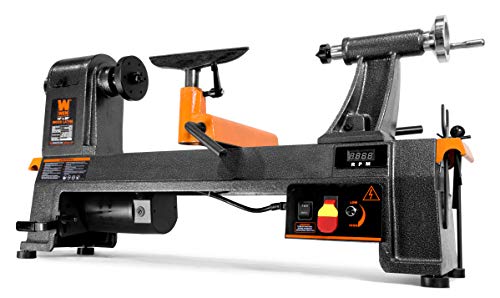
The WEN 34035 benchtop lathe brings woodturning within reach for hobbyists and DIYers who want to explore the craft without investing in a full-size floor model. With a 20-inch length capacity and 14-inch swing, this lathe handles a solid range of projects from spindle work to moderate bowl turning. The variable speed control is a genuine asset, allowing you to dial in anywhere from 250 to 3550 RPM depending on your workpiece diameter and the material you're turning.
What makes this lathe practical for home workshops is its included accessory package. You get a 4-inch faceplate for bowl work, an MT2 spur center, an MT2 live center, and an 8-inch tool rest right out of the box. The MT2 taper system and 1-inch spindle thread mean you can expand your capabilities with aftermarket chucks, faceplates, and centers as your skills develop. The 6-amp motor delivers consistent power for both softwoods and hardwoods without bogging down on typical hobby projects.
The benchtop design is genuinely space-conscious, making it suitable for garages, basements, or dedicated craft rooms where floor space is at a premium. This lathe positions itself as an accessible entry point rather than a professional-grade tool, which is reflected in both its capabilities and price point. For someone exploring woodturning for the first time or looking for a secondary lathe for their workshop, it delivers solid fundamentals and room to grow your skills.
| Specification | Detail |
|---|---|
| Brand | WEN |
| Model | 34035 |
| Lathe Type | Benchtop Wood Lathe |
| Max Workpiece Length | 20 inches |
| Max Swing Diameter | 14 inches |
| Speed Range | 250 to 3550 RPM (variable) |
| Motor | 6 amps |
| Spindle Thread | 1 inch-8 |
| Headstock Taper | MT2 |
| Tailstock Taper | MT2 |
| Included Accessories | 4-inch faceplate, MT2 spur center, MT2 live center, 8-inch tool rest, onboard accessory holder |
Setup and Mounting: Secure the lathe to a sturdy benchtop using the mounting points on the base. Ensure the surface is level and stable before operation. Position the lathe so you have clear access to the headstock and tailstock, with adequate space behind the lathe for safety.
Mounting Your Workpiece: For spindle work, insert the spur center into the headstock and the live center into the tailstock. Slide your workpiece between the centers and tighten the tailstock firmly but not excessively. For faceplate work, screw your workpiece onto the included 4-inch faceplate, then attach the faceplate to the headstock spindle.
Speed Selection: Start at a lower speed (250-500 RPM) for larger diameter workpieces and rough turning. Increase speed as the workpiece gets smaller and as you refine your cuts. Always ensure the workpiece is secure before increasing speed. Wear proper safety gear including eye protection and keep loose clothing and long hair secured.
Tool Rest Positioning: Adjust the 8-inch tool rest so it's parallel to the lathe bed and positioned just below the centerline of your workpiece. The tool rest should be close enough for control but far enough to prevent catching. Always lock the tool rest in place before starting the lathe.
Essential Safety Gear: Always wear safety glasses or a face shield to protect against flying debris and wood chips. Consider wearing a dust mask if you're sensitive to wood dust. Avoid loose clothing, jewelry, and long sleeves that could catch on the rotating spindle. Tie back long hair securely before operating.
Before You Start: Inspect your workpiece for cracks, knots, or defects that could cause it to fly apart during turning. Ensure all accessories are firmly seated and locked in place. Verify that the tool rest is secure and positioned correctly. Spin the lathe by hand to confirm there's no interference between the workpiece and the tool rest or lathe bed.
During Operation: Never reach into the lathe while it's running. Keep your hands and tools clear of the rotating workpiece. Use only sharp tools and maintain firm control at all times. If you need to stop the lathe, use the power switch and allow it to come to a complete stop before making adjustments. Never leave a running lathe unattended.
Workshop Environment: Keep your work area clean and well-lit. Ensure there's adequate ventilation to manage wood dust. Keep children and pets away from the operating lathe. Store tools and accessories safely away from the work area to prevent trips and falls.
Speed Optimization: Start every project at the lowest speed your lathe offers, then gradually increase as you get comfortable with the workpiece. Larger diameter blanks need slower speeds to prevent vibration and ensure safety. As you turn the workpiece smaller, you can increase speed for finer detail work. Keep a mental note of what speeds work best for different wood types and project sizes.
Tool Rest Mastery: Position your tool rest as close as safely possible to your workpiece without touching it. This gives you better control and reduces vibration. Adjust the tool rest height so your cutting tools naturally align with the workpiece centerline. Always re-check the tool rest position after mounting a new workpiece, as different sizes may require adjustment.
Accessory Expansion: The MT2 taper system opens the door to affordable aftermarket upgrades. A four-jaw chuck is one of the most useful additions for bowl work, offering more flexibility than the faceplate alone. Consider investing in a live center with better bearings for smoother, quieter operation. Quality turning tools matter more than lathe brand, so prioritize sharp, well-balanced chisels and gouges.
Practice Fundamentals: Spend time on simple spindle projects before advancing to bowl turning. Get comfortable with basic cuts like roughing, shaping, and finishing on spindles. This builds muscle memory and confidence before tackling the more demanding geometry of faceplate work. Keep a log of projects and the speeds that worked best for future reference.

Pros
- Generous 18-inch capacity handles bowls, platters, and longer spindle projects most hobbyists attempt
- Multiple speed options give you control and safety across different wood types and project scales
- Comes fully equipped with essential accessories, reducing the need for immediate additional purchases
- MT2 compatibility opens the door to affordable aftermarket chucks and centers as your skills grow
- Solid construction at a price point that won't break the budget for casual woodturners
Cons
- Zero customer reviews available online, making it difficult to assess real-world durability and long-term performance
- 4.5-amp motor is modest compared to larger shop lathes, which may limit heavy-duty production work or very dense hardwoods
The WEN LA3424 brings benchtop wood turning within reach for homeowners and DIYers who've been curious about lathe work but hesitant to invest in a full-size machine. With an 18-inch by 12-inch capacity, this lathe handles the majority of projects a hobbyist will encounter, from small spindles and pens to bowls and decorative turnings. The five-speed motor gives you meaningful control over your work, allowing you to slow down for large bowls and speed up for detail work on smaller pieces.
What makes this lathe practical for a home shop is what's included in the box. You get an MT2 spur center, MT2 live center, a 3-1/8 inch faceplate for bowl turning, an 8-inch tool rest, and an onboard accessory holder. MT2 tapers are an industry standard, so as your skills advance, you can add compatible chucks and centers without replacing the entire machine. The 4.5-amp motor is modest but adequate for the machine's size and intended use, delivering steady power without unnecessary vibration or noise.
This lathe is best suited for woodturners moving beyond hand carving and looking to develop spindle and bowl-turning skills. It's compact enough to fit in a corner of a garage or basement shop, yet capable enough to keep you engaged as you progress. If you're serious about woodturning as a long-term hobby, the WEN LA3424 offers a practical foundation without the premium price tag of larger, heavier-duty machines.
| Specification | Details |
|---|---|
| Brand | WEN |
| Model | LA3424 |
| Motor | 4.5 Amps |
| Speed Settings | 5 speeds: 520, 900, 1400, 2150, 3400 RPM |
| Workpiece Capacity | 12 inches wide x 18 inches long |
| Headstock Taper | MT2 |
| Tailstock Taper | MT2 |
| Faceplate | 3-1/8 inch |
| Tool Rest | 8 inches |
| Included Accessories | MT2 spur center, MT2 live center, 8-inch tool rest, 3-1/8 inch faceplate, onboard accessory holder |
| Type | Benchtop Wood Lathe |
Getting Started: Secure the lathe firmly to a sturdy benchtop or stand. Mount your workpiece between the spur center (headstock) and live center (tailstock), ensuring it's centered and snug. For bowl turning, use the faceplate instead of the live center.
Selecting Speed: Start at the lowest speed (520 RPM) for large, rough workpieces or dense hardwoods. As you refine your work or turn smaller pieces, gradually increase speed. Use 3400 RPM for fine detail work on small spindles or finishing passes.
Tool Rest Positioning: Adjust the 8-inch tool rest so it's about 1/4 inch from your spinning workpiece, slightly below center height. This gives you leverage and control while keeping your turning tools safe and effective.
Safety First: Always wear eye protection and keep loose clothing, hair, and hands clear of the spinning workpiece. Let the lathe come to a complete stop before adjusting the tool rest or workpiece.
Before You Start: Inspect your workpiece for cracks, knots, or defects that could cause it to fly apart. Ensure the headstock and tailstock are tight and the workpiece is secure. Verify that the tool rest is locked in place and won't shift during turning.
Personal Protection: Always wear safety glasses or a full face shield. Avoid wearing gloves, rings, or loose sleeves that could catch on the spinning lathe. Tie back long hair and tuck in loose clothing.
Operating Safely: Start at low speed and gradually increase as you gain control. Never reach toward the spinning workpiece while the lathe is running. Always stop the lathe completely before making adjustments. Keep your hands and tools in a stable, controlled position on the tool rest.
Workspace: Keep your lathe area clean and well-lit. Ensure adequate clearance around the machine for comfortable, safe operation. Use a sturdy stand or benchtop rated for the lathe's weight and vibration.
Is This Lathe Right for You? The WEN LA3424 is ideal if you're a hobbyist or DIYer curious about woodturning, want a compact machine for a home shop, or are upgrading from hand carving. It's not designed for commercial production or high-volume work, but it's perfectly capable for personal projects and skill development.
What to Consider Before Buying: Assess your available space and ensure you have a sturdy benchtop or stand. Think about the types of projects you want to tackle most (spindles, bowls, pens, etc.) and confirm the 18x12 capacity meets your needs. Consider whether you'll invest in additional MT2 accessories as your skills grow.
Budget and Value: This lathe offers genuine value for the price, including essential accessories that would otherwise cost extra. It's more affordable than full-size industrial lathes but serious enough to support real woodturning skill development. Factor in the cost of quality turning tools, which are sold separately.
Long-Term Fit: If you're genuinely interested in woodturning as a hobby, this machine will serve you well for years. Its MT2 compatibility means you can expand capabilities without replacing the lathe. If you later decide to pursue woodturning more seriously, you can upgrade to a larger machine while keeping this one for smaller projects.

Pros
- Soft-start motor prevents sudden jolts and extends equipment lifespan
- Wide RPM range (750-3200) gives flexibility for different wood types and project sizes
- Comes fully equipped with essential accessories right out of the box
- Compact footprint ideal for small garages, basements, or shared workshop spaces
- Two-year warranty provides peace of mind for a budget-friendly tool
Cons
- 8-inch swing limits you to smaller diameter workpieces, making large bowl turning impossible
- No reviews available yet, so real-world durability and long-term performance data is limited
The WEN LA3421 mini benchtop lathe represents a smart entry point for woodturners who prioritize space efficiency and budget-conscious tool investment. With an 8-inch swing over the bed and 13-inch distance between centers, this lathe handles pens, small bowls, chess pieces, and decorative turnings with capable precision. The soft-start motor is a genuine safety feature that prevents the sudden torque shock many beginners experience with traditional lathes, reducing wear on both the equipment and your hands.
Speed control is a strong point here. The variable speed range from 750 to 3200 RPM gives you meaningful flexibility across different wood species and project types. Softer woods and larger-diameter work benefit from slower speeds, while pen blanks and detail work thrive at higher RPMs. The inclusion of two interchangeable tool rests, a 2.3-inch face plate, and MT1 spindle and tailstock taper means you're not buying a stripped-down tool requiring immediate accessory purchases.
The main limitation is inherent to the design: this is a small lathe for small projects. If your ambitions include large decorative bowls or substantial turning work, you'll outgrow this machine quickly. For hobbyists focused on pen turning, small vessels, and detailed work in a compact space, however, the WEN LA3421 delivers solid functionality at a price that won't discourage experimentation.
| Specification | Detail |
|---|---|
| Brand | WEN |
| Model Number | LA3421 |
| Swing over Bed | 8 inches |
| Distance Between Centers | 13 inches |
| Motor | 3.2-amp with soft-start |
| Speed Range | 750 to 3200 RPM (variable) |
| Face Plate | 2.3-inch |
| Spindle/Tailstock Taper | MT1 |
| Included Accessories | 2.3-inch face plate, MT1 spindle and tailstock taper, two interchangeable tool rests |
| Warranty | 2 years |
Setup and Mounting: Position the lathe on a sturdy, level workbench or stand. Ensure adequate clearance around the lathe for tool movement and safety. Secure it with bolts if your bench allows, preventing movement during operation.
Loading Your Workpiece: Insert your wood blank between the spindle (headstock) and the MT1 tailstock taper. For spindle turning (pens, spindles), use the face plate on the headstock and the tailstock for support. For face plate turning (small bowls), mount directly to the face plate and leave the tailstock retracted.
Speed Selection: Start at the lower end of the RPM range (750-1200) for larger diameter work or rough turning. Increase speed to 2400-3200 RPM for smaller-diameter work and fine detail. Always start the lathe before bringing your tool to the wood.
Tool Rest Positioning: Position your tool rest slightly below the centerline of your workpiece and as close as safely possible without touching the spinning wood. Use the two included rests to find the setup that works best for your project type.
Personal Protective Equipment: Always wear safety glasses or a face shield to protect against flying wood chips. Never wear loose clothing, jewelry, or long hair that could catch on the spinning lathe. Consider wearing a dust mask for prolonged turning sessions.
Soft-Start Motor Advantage: The soft-start feature reduces the shock when the lathe powers on, but this doesn't eliminate the need for caution. Keep your hands clear of the spinning wood until you're ready to bring your tool in for cutting.
Tool Rest Safety: Maintain proper distance between the tool rest and your spinning workpiece. Check clearance before starting the lathe. Never adjust the tool rest while the lathe is running.
Speed and Wood Type: Larger diameter blanks or rougher wood should run at lower speeds. As you remove material and the workpiece gets smaller, you can safely increase RPM. Never exceed the maximum 3200 RPM rating.
Pen Turning Sweet Spot: This lathe excels at pen turning. Standard pen blanks are 5/8-inch diameter and 5.5 inches long, well within the 8-inch swing. Run pen blanks at 2400-3200 RPM for smooth cuts and fine detail work. The 13-inch distance between centers easily accommodates standard pen kits.
Maximize the Tool Rests: The two included tool rests serve different purposes. Keep one positioned for spindle work and configure the other for any face plate projects you attempt. This saves adjustment time between different turning styles.
MT1 Taper Compatibility: The MT1 spindle and tailstock taper is a standard size. This means you can source additional accessories like live centers, drive centers, and chucks from multiple manufacturers if you want to expand your capabilities later.
Start Slow with New Woods: If you're experimenting with unfamiliar wood species, begin at lower speeds (1000-1500 RPM) to assess how the wood cuts before increasing speed. Harder woods often turn better at slightly lower speeds than softer varieties.

Pros
- Sturdy cast iron bed and thickened tool rest reduce vibration and deliver smooth, precise turning results
- Five fixed gear speeds with clear markings make speed changes simple and reliable without complex adjustments
- Stainless steel components resist corrosion and maintain durability through years of regular use
- Compact benchtop design fits comfortably in home shops while delivering professional-grade performance
- Comprehensive warranty and lifetime after-sales support provide peace of mind and accessible help when needed
Cons
- No reviews currently available, so real-world user feedback and long-term durability data are limited
- Requires M8 bolts (sold separately) for mounting to your work table, adding a small additional expense
The Hightall 12x20 benchtop lathe brings reliable power and solid construction to the home woodshop. Its 550W 3/4HP motor delivers consistent torque across five fixed speed settings (680, 1000, 1420, 2000, and 2770 RPM), making it equally at home turning spindles, bowls, or decorative projects. The manual gear-based speed system is refreshingly straightforward, with clearly marked settings that require no complex adjustments or electronic controls to maintain.
Build quality stands out as a key strength. The cast iron bed provides the mass and rigidity needed to minimize chatter and vibration, while the thickened tool rest offers a stable platform for controlled cuts. Stainless steel live centers and faceplate are thoughtful upgrades that resist corrosion and maintain precision alignment through repeated use. These material choices suggest the manufacturer understands what matters to serious woodturners who plan to keep their lathe for years.
For the hobbyist or semi-professional woodturner working within the 12-inch swing and 20-inch center distance limits, this lathe delivers genuine value. The five-year warranty and lifetime professional support add confidence, though the lack of current user reviews means you're relying on the manufacturer's specifications and design choices rather than extensive real-world feedback. Mounting requires M8 bolts purchased separately, a minor consideration for setup.
| Specification | Details |
|---|---|
| Motor Power | 550W / 3/4 HP AC Motor |
| Spindle Speeds | 5 speeds: 680, 1000, 1420, 2000, 2770 RPM |
| Speed Control | Manual gear-based with fixed settings |
| Maximum Swing Diameter | 12 inches |
| Center Distance (Bed Length) | 20 inches |
| Spindle Thread | M33x3.5 |
| Spindle Taper | MT2 |
| Live Centers | Stainless steel 60 degree MT2 (headstock and tailstock) |
| Faceplate | Stainless steel |
| Tool Rest | Thickened design for enhanced stability |
| Bed Material | Cast iron |
| Motor Housing | Aluminum alloy with heat dissipation design |
| Warranty | 5 years (core components) |
| After-Sales Support | Lifetime professional support |
| Mounting | Requires M8 bolts (not included) |
Getting Started: Mount the lathe securely to your work table using M8 bolts, ensuring it's level and stable. Check that the headstock and tailstock are properly aligned before your first project.
Speed Selection: The five fixed gear speeds are selected manually by adjusting the belt position or gear engagement (depending on your model's design). Always stop the lathe completely before changing speeds. Start with lower speeds (680-1000 RPM) for larger diameter work or rough turning, and increase speed for smaller pieces or finishing cuts.
Basic Operation: Mount your workpiece between the live centers or on the faceplate, ensuring secure seating. Adjust the tool rest close to your work (but not touching), then slowly bring your turning tool into contact with the spinning wood. Let the lathe do the work, applying steady, controlled pressure. Always wear appropriate safety gear including eye protection and tie back loose clothing.
Maintenance: The manual speed system requires minimal maintenance. Periodically check that all bolts are tight, keep the cast iron bed clean and dry, and lubricate moving parts according to the manufacturer's guidance. The aluminum motor housing is designed for heat dissipation, so avoid blocking ventilation vents during operation.
Before You Start: Always verify that the lathe is mounted securely to your work surface with appropriate fasteners. Check that the headstock and tailstock are properly aligned and locked in place. Confirm that your workpiece is secure and balanced before starting the motor.
Personal Protective Equipment: Wear safety glasses or a full face shield at all times during operation. Long hair should be tied back, and loose clothing, jewelry, or dangling items should be removed or secured. Consider wearing a dust mask when turning, as wood dust accumulates quickly.
During Operation: Never reach into the lathe while it's spinning. Keep your hands and tools clear of the rotating workpiece. Position the tool rest close to your work to minimize the gap where hands or tools could catch. Start at lower speeds and increase only as you gain control. Always stop the lathe completely before adjusting the tool rest, changing workpieces, or measuring your work.
Speed and Technique: Larger diameter workpieces require lower speeds to reduce vibration and maintain control. Smaller pieces and finishing cuts can use higher speeds. Apply steady, controlled pressure with your turning tools, letting the sharp edges do the cutting rather than forcing the tool into the wood.
Choosing the Right Speed: The five-speed system gives you flexibility for different projects. Start with 680 RPM for initial roughing on large blanks or unbalanced pieces, then move up to 1000-1420 RPM for general turning. Use 2000+ RPM for smaller spindles and detailed finishing work. Speed selection is one of the biggest factors in smooth, vibration-free turning.
Tool Rest Positioning: The thickened tool rest on this lathe is stable, but proper positioning is critical. Keep it as close to your work as safely possible without touching the spinning wood. This minimizes the gap where your hands could slip and reduces vibration transmission. Adjust it frequently as your workpiece diameter decreases during turning.
Live Center Maintenance: The stainless steel live centers resist corrosion, but they still benefit from occasional care. Apply a light machine oil to the center point periodically to keep it spinning freely. A center that doesn't rotate smoothly creates friction, heat, and poor surface finish on your work.
Workpiece Preparation: Rough wood should be mounted between centers first to establish balance. Once balanced and roughed, you can move to faceplate work for bowls or face turning. The 12-inch swing diameter is generous enough for most hobby projects, but always verify your blank fits before starting.

Pros
- Cast iron construction provides excellent stability and vibration control for smooth, accurate turning
- Five-speed manual transmission is straightforward and reliable with minimal maintenance requirements
- Solid 3/4 HP motor handles both delicate detail work and heavier stock removal without bogging down
- Lifetime customer support and 5-year warranty demonstrate manufacturer confidence in product durability
- Affordable entry point for serious hobbyists looking to upgrade from handheld tools
Cons
- No reviews yet available to validate real-world performance and user experience in home shop settings
- Requires separate M8 bolts for mounting to your workbench, adding a small extra cost and assembly step
The Hightall benchtop lathe brings genuine woodturning capability to home workshops at a reasonable price point. Its 550W motor and five-speed range (680-2770 RPM) give you the flexibility to work with different wood species and project scales, from spindle turnings to small bowl work. The cast iron bed is the real standout here, providing the mass and rigidity needed to keep vibration down and surface finishes clean, even when you're pushing the lathe at higher speeds.
Setup and operation are refreshingly straightforward. The manual speed adjustment uses fixed gears rather than belt systems or electronic controls, which means fewer things to adjust, maintain, or troubleshoot. The aluminum heat dissipation housing on the motor is thoughtfully designed to prevent thermal issues during longer turning sessions, so you can focus on your work rather than worrying about the lathe overheating. The MT2 spindle taper and M33x3.5 thread are industry-standard connections, so you'll have no trouble sourcing chucks, centers, and other accessories.
Hightall backs this lathe with a 5-year warranty on core components and offers lifetime technical support, which is reassuring for someone new to woodturning. The 12x18 inch capacity is modest but realistic for benchtop work, and the compact footprint makes it feasible for smaller home shops. Keep in mind you'll need to source your own M8 bolts to mount it securely to your bench, and this is a tool best suited for hobbyists and DIYers rather than production shops.
| Motor Power | 550W (3/4 HP) AC Motor |
| Spindle Speeds | 5 settings: 680, 1000, 1420, 2000, 2770 RPM |
| Speed Control | Manual with fixed gears |
| Maximum Turning Diameter | 12 inches |
| Center Distance (Bed Length) | 18 inches |
| Spindle Thread | M33x3.5 |
| Spindle Taper | MT2 |
| Bed Material | Cast Iron |
| Motor Housing | Aluminum alloy with heat dissipation |
| Mounting | M8 bolts (not included) |
| Warranty | 5-year manufacturer warranty on core components |
| Support | Lifetime professional after-sales support |
Setup: Secure the lathe to a sturdy workbench using M8 bolts, ensuring it's level and stable. Mount your wood blank between the drive center and live center, positioning it so it clears the bed rails and tool rest.
Speed Selection: Choose your RPM based on the blank diameter and wood type. Start lower (680-1000 RPM) for larger or rough stock, and increase speed (1420-2770 RPM) as the piece becomes smaller and more balanced. Loosen the motor mount, shift the belt to the desired pulley position, and retighten before starting.
Turning: Always wear safety glasses and a dust mask. Keep the tool rest close to the work but not touching. Support your turning tool firmly on the rest and feed it smoothly into the spinning wood. Make adjustments with the lathe running only if you're experienced; beginners should stop the machine before repositioning the tool rest.
Personal Protection: Always wear safety glasses to protect against flying wood chips. A dust mask or respirator is essential, especially for longer sessions. Avoid loose clothing, jewelry, or long hair that could catch in the spinning spindle.
Machine Operation: Never reach toward the spindle while it's turning. Always come to a complete stop before adjusting the tool rest, changing accessories, or removing your workpiece. Check that the wood blank is secure and properly centered before starting the motor.
Work Area: Keep bystanders at a safe distance from the turning area. Maintain good lighting so you can see your work clearly. Never leave the lathe running unattended, and always turn it off when you step away from the machine.
Is This Lathe Right for You? The Hightall benchtop lathe is ideal if you're a hobbyist or DIYer ready to move beyond spindle sanding and want to try woodturning. It's compact enough for a home shop but powerful enough to handle real projects. If you're brand new to woodturning, consider pairing this with a beginner's turning tool set and some practice wood.
What You'll Need: Beyond the lathe itself, budget for M8 bolts for mounting, a set of turning chisels or gouges, a live center and drive center (often included or available separately), and safety gear including glasses and a dust mask. A sturdy workbench rated for the lathe's weight is essential.
Project Scope: This lathe handles spindles, small bowls, pens, ornaments, and decorative turnings up to 12 inches in diameter. It's not designed for large production runs or industrial use, but it's perfect for learning the craft and completing personal projects at your own pace.
Buying Guide: How to Choose the Right Wood Lathe
Wood lathes look similar on the outside, but their differences in swing, horsepower, and speed control determine whether a machine feels effortless or frustrating. Understanding the key specs before you buy saves you from outgrowing a machine quickly or overspending on capacity you will never use. The sections below walk through every factor that actually matters in day-to-day woodturning.
Lathe Size: Mini, Midi, and Full-Size Explained
The most fundamental decision is choosing the right size category. Mini lathes typically offer an 8-inch to 10-inch swing over the bed and 12 to 18 inches between centers. They excel at pens, bottle stoppers, small knobs, and decorative finials. If your workshop space is tight or your projects stay small, a mini is a practical, affordable entry point. The WEN LA3421 with its 8-inch by 13-inch capacity fits squarely in this category.
Midi lathes sit in the sweet spot for most hobbyists and serious enthusiasts. A 12-inch to 14-inch swing lets you turn bowls up to a foot in diameter, while bed lengths of 18 to 40 inches accommodate most spindle work. Models like the JET JWL-1221VS, WEN LA3424, and the 12-by-18 and 12-by-20 benchtop machines in our lineup live in this tier. They offer meaningfully more power and rigidity than minis without the floor space and cost of full-size floor lathes.
Full-size lathes, with swings of 16 inches or more and correspondingly heavy cast-iron construction, are designed for production work, large architectural pieces, and turners who routinely work with big blanks. They are not covered in this particular roundup, but if you work at a professional scale, that category deserves separate consideration.
Swing Over Bed and Distance Between Centers
Swing over the bed is the maximum diameter of a workpiece you can spin without hitting the bed rails. A 12-inch swing means you can turn a bowl blank up to 12 inches wide. Distance between centers dictates maximum spindle length, so a 20-inch distance between centers lets you turn a table leg up to about 20 inches long. Always match these numbers to your most ambitious intended project, not just your average one. Running a lathe at the very edge of its swing capacity usually produces chatter and vibration, so buying slightly more capacity than you think you need pays dividends in finish quality.
Motor Power and Its Real-World Impact
Motor horsepower determines how well a lathe handles interrupted cuts, large-diameter blanks, and dense hardwoods like maple or walnut. A half-horsepower motor is adequate for pens and small spindles, but a 1 HP motor like the one in the JET JWL-1221VS gives you enough torque to rough out a 10-inch bowl blank without bogging down. The 550-watt (roughly three-quarter HP) motors in the mid-range benchtop machines we reviewed handle most hobbyist work comfortably. For the Garvee 14-by-40 machine at a budget price point, the half-horsepower rating means you will want to take lighter cuts on larger pieces.
When comparing motors, watts are more consistent than horsepower marketing claims. A genuine 550-watt input motor produces reliable torque across a broad speed range, while some budget lathes overstate their HP ratings. Cross-referencing wattage and owner reviews gives a clearer picture than the HP number alone. If you are also equipping your workshop with other power tools, pairing a capable lathe with quality angle grinders and belt sanders rounds out your finishing options considerably.
Variable Speed vs. Step Pulleys
Speed control is one of the biggest quality-of-life differences between lathe models. Electronic variable speed lets you dial in any RPM within the machine’s range without stopping to move a belt. This matters enormously when you start a rough blank at low speed, then gradually increase RPM as the piece becomes balanced and smooth. The JET JWL-1221VS offers three overlapping variable-speed ranges from 60 to 3,600 RPM, giving it exceptional versatility from slow faceplate work to high-speed finishing of small spindles.
Step-pulley lathes, like the WEN LA3424 with its five discrete speeds, require you to stop the machine and move the drive belt to change speed. This is a minor inconvenience for experienced turners who know exactly what speed a given piece needs, but beginners often find it disruptive. Step pulleys are not a deal-breaker, especially when the rest of the machine is well built, but variable speed is worth prioritizing if your budget allows it.
Bed Construction and Rigidity
Vibration is the enemy of clean cuts and smooth finishes on a lathe. Cast-iron construction absorbs vibration far better than welded steel tubing or aluminum. Premium midi lathes like the JET JWL-1221VS use cast-iron headstocks, tailstocks, and bed ways, which is a major reason for their outstanding user ratings. Budget benchtop machines use steel construction throughout, which can transmit more vibration to the toolrest, especially when roughing out out-of-round blanks. Adding rubber anti-vibration pads under the base and bolting the lathe to a sturdy workbench mitigates much of this on steel-bed machines.
The toolrest itself deserves attention. The 12-by-20-inch benchtop machine (B0FG7Q18Z6) in our lineup specifically advertises a thickened tool rest and stainless steel live centers, which are meaningful upgrades over the thin cast rests found on some budget models. A thicker toolrest flexes less under cutting pressure, reducing chatter and improving control. A solid workbench underneath your lathe is just as important as the machine itself, and a proper bench grinder nearby keeps your turning tools sharp between sessions.
Spindle Thread and Accessory Compatibility
The spindle thread on the headstock determines what chucks, faceplates, and other accessories you can attach. Most midi lathes in this price range use a 1-inch by 8-TPI thread or an M33 metric thread. Before purchasing a chuck or bowl steady, confirm the thread matches your lathe’s spindle. JET uses a 1-inch 8-TPI thread on the JWL-1221VS, which has broad accessory compatibility. The WEN models and no-name benchtop machines may use less common threads, so check before investing in a quality four-jaw chuck. MT2 Morse taper compatibility for the tailstock is another point to verify, since it determines which live centers, drill chucks, and drive centers you can use interchangeably. The 12-by-18 benchtop machine (B0FKLTWH53) explicitly advertises MT2 drive and live centers, which is a good sign for future accessory purchases.
Safety Features Worth Looking For
Woodturning is inherently more hazardous than most other woodworking operations because a workpiece can come off the lathe at high speed if it is not properly secured or if the wood has a hidden crack. A forward-to-reverse switch is useful for sanding and for loosening jammed accessories, but it also means you must ensure the spindle lock is disengaged before starting. Look for a large, easy-to-reach power switch that you can hit quickly in an emergency. Some lathes include a built-in indexing pin, which locks the spindle at fixed positions for fluting, carving, or drilling evenly spaced holes. The JET JWL-1221VS includes a 24-position indexing system, a useful feature for decorative work. Always wear a full face shield, not just safety glasses, when turning and especially when roughing out green or spalted wood. Keeping your workshop organized with quality rolling tool chests and storage systems helps ensure turning tools are always at hand and not scattered on the floor.
Who Should Buy a Mini Lathe vs. a Midi Lathe
If you primarily want to turn pens, bottle stoppers, and small decorative pieces, a mini lathe like the WEN LA3421 gives you everything you need at a budget-friendly price. Its 8-by-13-inch capacity and variable speed make it a genuinely capable machine for its intended use. The Garvee 14-by-40 lathe occupies an unusual position: its 14-inch swing and 40-inch bed length are far larger than typical mini territory, yet its half-horsepower motor and entry-level price suggest it is aimed at beginners who want large capacity on a tight budget. Expect to take light, careful cuts on larger pieces.
For turners who want to grow into bowl turning, natural-edge platters, or longer spindle work, a true midi machine pays for itself quickly in capability and frustration saved. The JET JWL-1221VS consistently earns the highest long-term satisfaction ratings among owner communities for good reason: its 1 HP motor, wide speed range, forward-reverse capability, and cast-iron construction handle virtually any hobby-scale project you can throw at it. The WEN 34035 at its 14-by-20-inch capacity sits just below the JET in performance but represents strong value for turners who want genuine midi capability at a lower price point. Much like investing in miter saws or track saws for precision cutting, buying a lathe with slightly more capacity than your current projects demand is almost always the right call.
Why Trust HomeThru
HomeThru is an independent review platform with no affiliation with any manufacturer or retailer. We do not sell products, handle orders, or provide warranty support. Our editorial team researches and evaluates tools by analyzing verified owner reviews, published manufacturer specifications, and hands-on usage reports from the woodturning community. We have no financial incentive to favor one brand over another, and we update our recommendations as new models enter the market and as long-term reliability data emerges. Our goal is straightforward: give you the clearest, most honest picture of each machine so you can spend your money wisely.
For this roundup, we evaluated seven wood lathes across a range of price tiers and capacity classes. We weighted user-verified ratings, motor specifications, construction materials, speed control systems, and accessory ecosystem depth. We also cross-referenced common complaints in owner reviews to surface any recurring reliability or usability issues. If you are building out a broader workshop setup, our coverage extends to cordless circular saws, jigsaws, reciprocating saws, and other essential power tools worth considering alongside your lathe investment.
Final Thoughts
Wood lathes reward careful buying decisions more than almost any other workshop tool. A well-chosen machine will handle projects you have not even imagined yet, while a poorly matched one will limit your creativity from day one. Our top picks from this roundup each stand out in a specific area, and here is how we would summarize them:
- Best Overall: JET 12-Inch by 21-Inch Variable-Speed Woodworking Lathe (JWL-1221VS). The 1 HP motor, cast-iron construction, wide three-range variable speed, and forward-to-reverse capability make this the most capable and well-rounded machine in the lineup, backed by hundreds of strong owner reviews.
- Best Midi Value: WEN 34035 14-Inch by 20-Inch Variable Speed Benchtop Wood Lathe. Genuine 14-by-20-inch midi capacity with electronic variable speed at a meaningfully lower price than the JET, making it an excellent choice for serious hobbyists on a tighter budget.
- Best for Beginners: WEN LA3424 12-Inch by 18-Inch 5-Speed Benchtop Wood Lathe. Its 4.6-star rating from nearly 200 owners reflects a machine that punches above its price class. Five discrete speeds cover most beginner-to-intermediate work, and the 12-by-18-inch capacity handles a solid range of projects.
- Best Mini Lathe: WEN LA3421 Mini Benchtop Wood Lathe. The most compact and affordable machine in the group, with variable speed and a form factor that fits in even a small apartment workshop. Ideal for pen turners and beginners exploring the craft without a large upfront investment.
- Best Large-Capacity Budget Pick: Garvee 14-Inch by 40-Inch Benchtop Wood Lathe Machine. If you want the largest swing and longest bed in the group at the lowest price, this machine delivers impressive capacity. Approach it with realistic expectations about motor power and take light cuts on large blanks.
No matter which lathe you choose, make sure your turning tools are sharp before every session. A good bench grinder is practically a requirement alongside any lathe setup. Keep your workshop well-lit, use a full face shield, and take time to learn proper tool presentation before pushing the machine’s limits. The craft of woodturning rewards patience, and the right lathe makes that patience feel worthwhile.
Frequently Asked Questions
Below are some of the most common questions we encounter from readers who are new to wood lathes or evaluating an upgrade. For questions about purchasing, returns, or warranty claims, please contact the retailer or manufacturer directly since HomeThru is an independent review site and not involved in any transactions.
What Does Swing Over the Bed Mean on a Wood Lathe?
Swing over the bed is the maximum diameter of a workpiece you can rotate without the wood striking the bed rails below. A lathe listed as a 12-inch model can turn a piece up to 12 inches in diameter. This is the single most important capacity specification for bowl turners. For spindle work, distance between centers matters more than swing. Always buy a little more swing than your current projects require so you have room to grow. If you are already comfortable with power tools like cordless drills or random orbital sanders, you will adapt to lathe basics quickly.
Is Variable Speed Necessary on a Wood Lathe?
Variable speed is not strictly necessary, but it makes the turning process significantly safer and more enjoyable. Large, unbalanced blanks must be started at very low RPM and gradually sped up as material is removed and the piece becomes rounder. Electronic variable speed lets you do this without stopping the machine. Step-pulley lathes require you to stop and move the drive belt for each speed change, which disrupts workflow. For beginners especially, variable speed reduces the risk of a rough blank flying off at an inappropriate RPM. It is worth prioritizing if your budget allows, much like choosing a variable-speed impact driver over a single-speed model.
Can I Turn Bowls on a 12-Inch Benchtop Lathe?
Yes, a 12-inch swing benchtop lathe handles bowl blanks up to 12 inches in diameter, which is more than enough for most hobby bowl turning. The practical limitation is motor power, not swing capacity. Roughing out a wet or out-of-round bowl blank demands more torque than a finished spindle, so choose a model with at least three-quarter horsepower for comfortable bowl work. The WEN LA3424 and the 12-by-20 benchtop machine in our roundup both handle small-to-medium bowls reliably according to owner feedback. For finishing surfaces after turning, belt sanders work well for flattening bases and bottoms.
What Accessories Do I Need to Get Started With a Wood Lathe?
At minimum you need a set of turning tools (a roughing gouge, spindle gouge, skew chisel, and parting tool cover most work), a four-jaw scroll chuck for holding bowl blanks, a face shield, and a tool sharpening setup. A bench grinder with a CBN or white aluminum oxide wheel keeps your tools in cutting condition. Many budget lathes include a basic faceplate and live center but not a four-jaw chuck, so budget for that accessory separately. A quality bench grinder is arguably as important as the lathe itself since a dull tool is both ineffective and dangerous.
How Much Noise Does a Benchtop Wood Lathe Produce?
A balanced, smoothly running wood lathe is surprisingly quiet during normal turning. Most of the noise comes from the cutting tool contacting the wood and from any vibration transmitted through the bench. An unbalanced blank, especially a large one being roughed out, will produce significant noise and vibration until it becomes round. Cast-iron construction dampens vibration better than steel, which is one reason premium lathes feel and sound smoother. Bolting your lathe to a heavy workbench and adding anti-vibration pads makes a meaningful difference on any machine. Wearing hearing protection during prolonged sessions is always a good practice, similar to using it with reciprocating saws or any other high-decibel shop tools.





Write Your Review
No reviews yet. Be the first to share your experience!