

A reliable hand saw belongs in every toolbox, whether you are a weekend DIYer trimming door casings or a seasoned carpenter making precise finish cuts. Unlike circular saws or reciprocating saws, a hand saw needs no battery, no cord, and no warm-up time. You pick it up, mark your line, and cut. That simplicity is exactly why hand saws have never gone out of style despite the explosion of power tools on the market.
The challenge is choosing the right one. Walk into any hardware store and you will find panel saws, Japanese pull saws, folding pruning saws, and everything in between. TPI (teeth per inch), blade length, tooth geometry, and handle material all affect how a saw performs on a given material. Our independent editorial team researched and analyzed dozens of hand saws, cross-referencing verified buyer feedback, manufacturer specifications, and real-world use cases to build a shortlist you can trust. The 8 models below cover every major cutting scenario, from rough framing to delicate woodworking joinery to trail-side branch clearing.
Top Hand Saws We Recommend

Pros
- Triple-ground teeth cut 50% faster than standard handsaws, saving time on projects
- SK5 steel blade maintains sharpness and resists warping during heavy use
- Teflon coating minimizes friction and material buildup for smoother, cleaner cuts
- Ergonomic grip with angle guides helps users make precise marks and cuts
- Multi-purpose design handles wood, PVC, and pruning with one tool
Cons
- No customer reviews available to assess long-term durability and real-world performance
- 8 TPI is aggressive for fine detail work; better suited for rough cutting and general trimming
The Jorgensen 15" hand saw combines aggressive cutting performance with practical design features that appeal to homeowners and DIYers alike. The blade's triple-ground 8 TPI teeth design delivers noticeably faster cuts compared to standard handsaws, making it particularly effective for rough cuts in wood, PVC trimming, and general demolition work. The SK5 high-carbon steel construction provides excellent edge retention and resists bending during repeated use, which is essential for tools that see regular action in the workshop or yard.
Build quality stands out with thoughtful design choices throughout. The black Teflon coating serves dual purposes: it reduces friction during cutting for smoother strokes and helps protect the blade from moisture and rust. The ergonomic handle combines an aluminum frame with a textured TPE and ABS grip that feels comfortable during extended use, while the integrated 45-degree and 90-degree angle guides add practical value for marking and layout work. At just 1.35 pounds, the saw remains lightweight enough for overhead work without causing hand fatigue.
This saw shines as a versatile addition to any toolbox, handling everything from woodworking projects to pruning branches to cutting PVC pipes. The included plastic edge protector makes storage safe and convenient. While the aggressive 8 TPI tooth pattern excels at speed, it's worth noting this design prioritizes fast cuts over fine detail work. For professionals, serious hobbyists, and DIYers who value efficiency and durability, the Jorgensen represents solid value in a multi-purpose cutting tool.
| Specification | Details |
|---|---|
| Brand | Jorgensen |
| Blade Length | 15 inches |
| Teeth Per Inch (TPI) | 8 (aggressive/coarse) |
| Blade Material | SK5 high-carbon steel |
| Blade Coating | Black Teflon |
| Handle Material | Aluminum frame with TPE and ABS grip |
| Color | Black |
| Overall Dimensions | 19.25 x 2 x 5.13 inches |
| Weight | 1.35 pounds |
| Tooth Design | Triple-ground teeth |
| Included Accessories | Plastic edge protector |
| Built-in Features | 45° and 90° angle guides |
Getting Started: Before your first cut, inspect the blade for any damage and ensure the handle grip is secure. Remove the plastic edge protector and store it safely for later use. The saw is designed for both push and pull strokes, though most users find a steady push stroke most effective.
Basic Cutting Technique: Position the blade at a slight angle (about 45 degrees) to the material and use smooth, controlled strokes. Let the aggressive 8 TPI teeth do the work; avoid forcing the saw through the material. For woodworking, support the workpiece securely to prevent binding. For pruning, use a smooth cutting motion and avoid twisting the blade mid-cut.
Marking and Layout: Take advantage of the built-in 45-degree and 90-degree angle guides to mark cut lines before sawing. This helps ensure straight, accurate cuts. After use, clean the blade of sawdust and debris, wipe it dry, and store it with the edge protector in place to maintain the blade's sharpness and protect the Teflon coating.
Before You Start: Wear safety glasses to protect your eyes from wood chips and debris. Consider work gloves for better grip and protection, though ensure they don't interfere with control. Always inspect your work area for nails, screws, or other obstacles that could damage the blade or cause kickback.
During Cutting: Secure your workpiece firmly using a vise, clamp, or bench hook so both hands remain free to control the saw. Never cut toward yourself or others. Maintain a stable stance with feet shoulder-width apart for better balance and control. Keep fingers and hands clear of the blade's path, and never reach under or across an active cutting line.
Storage and Maintenance: Always use the included plastic edge protector when the saw is not in use. Store the saw in a dry location to prevent rust and moisture damage to the blade. Keep the blade clean and dry after each use. If the blade becomes dull, consider professional sharpening rather than attempting to sharpen it yourself, as improper sharpening can affect cutting performance and safety.
Maximize Cutting Speed: The triple-ground 8 TPI design is built for speed, so use smooth, steady strokes without excessive pressure. Let the aggressive teeth do the cutting work. For rough cuts and demolition work, this saw outperforms finer-tooth alternatives. If you need finer detail work, consider pairing this saw with a finer-tooth model for different applications.
Extend Blade Life: The Teflon coating is your friend. After each use, wipe the blade clean to prevent buildup that can slow cutting and cause friction. For outdoor use or storage in humid environments, occasionally apply a light coat of machine oil to the blade to enhance rust protection beyond what the Teflon coating provides. Store the saw with the edge protector in place.
Best Applications: This saw excels at rough cutting in wood, PVC trimming, pruning branches, and general demolition work. Its lightweight design makes it ideal for overhead work like trimming tree branches. The built-in angle guides are particularly useful for marking layout lines before cutting, so take advantage of them for more accurate, professional results in your projects.

Pros
- Fast cutting action with minimal effort thanks to triple-ground tooth design and low-friction coating
- Comfortable grip reduces hand fatigue during extended use, making it suitable for longer projects
- Works on multiple materials, eliminating the need for multiple saws in your toolkit
- Built-in angle guides help ensure straight, accurate cuts without additional setup
- Well-protected blade storage keeps teeth sharp and prevents accidents
Cons
- No customer reviews available yet, so long-term durability feedback is limited
- 11 TPI is a moderate tooth count, making it less ideal for extremely fine detail work compared to higher-TPI specialty saws
The Jorgensen 20-inch hand saw is designed as a versatile workhorse for homeowners and DIYers tackling everything from basic woodworking to drywall installation and PVC pipe trimming. The blade features triple-ground teeth at 11 teeth per inch (TPI), which strikes a practical balance between cutting speed and cut quality. The low-friction black coating helps the blade glide through materials more smoothly than traditional uncoated saws, reducing binding and making each stroke more efficient.
Comfort is a key consideration in the design. The handle uses an ABS+TPE soft-grip material that feels pleasant during extended use, and the ergonomic shape is sized to fit a range of hand sizes without causing fatigue. The integrated 45° and 90° angle guides molded into both sides of the handle help you establish the correct cutting angle, which is especially helpful for beginners or when precision matters. The 20-inch blade length offers a good compromise between reach and control, making it manageable for most users without sacrificing cutting capacity.
Durability appears to be a priority, with the blade constructed from 0.85mm thick steel that's been induction-hardened to maintain sharpness through regular use. The included plastic teeth guard and cardboard storage sleeve protect the blade between uses, which helps extend the saw's working life and keeps your toolbox safer. For the price point, this saw represents solid value for DIYers building a general-purpose toolkit or professionals looking for a reliable backup saw.
| Brand | Jorgensen |
| Blade Length | 20 inches |
| Teeth Per Inch (TPI) | 11 TPI (fine-cut) |
| Blade Thickness | 0.85mm |
| Blade Coating | Black low-friction coating |
| Tooth Design | Triple-ground, induction-hardened |
| Handle Material | ABS+TPE soft grip (non-slip) |
| Handle Features | Ergonomic design with built-in 45° and 90° angle guides |
| Overall Dimensions | 20 x 2.5 x 7 inches |
| Color | Orange |
| Accessories Included | Plastic teeth guard, cardboard storage sleeve |
| Suitable Materials | Wood, plywood, drywall, PVC pipes, plastic materials |
| Best For | DIYers, woodworkers, carpenters, gardeners, home decorators |
Getting Started: Before making your first cut, mark your cutting line clearly with a pencil or marking knife. Use the saw's built-in angle guides to position the blade at the correct angle (typically 45° for crosscutting wood, 90° for straight edges). Always wear safety glasses to protect your eyes from dust and debris.
Making the Cut: Start by placing the blade tip against your marked line and using gentle, controlled strokes to establish a groove. Let the saw do the work rather than forcing it. Once the groove is established, use smooth, even strokes with moderate pressure, cutting on both the push and pull strokes. The triple-ground teeth are designed to cut efficiently in both directions, so avoid pushing harder on the push stroke.
Material-Specific Tips: For wood and plywood, maintain steady pressure and let the teeth do the cutting. For drywall, use lighter pressure to avoid binding. For PVC pipes, support the pipe firmly and cut with controlled strokes to prevent the blade from jumping. Always ensure your workpiece is properly supported and secured before cutting, and keep your free hand well away from the cutting path.
Maintain Sharp Teeth: Keep the saw in its protective sleeve when not in use to prevent dulling and damage. A sharp saw requires less pressure and produces cleaner cuts. If you notice the saw requiring excessive force or producing rough cuts, it may be time to have the blade professionally sharpened or replaced.
Optimize Your Cutting Angle: The 11 TPI blade works best at a 45-degree angle for general crosscutting. Use the saw's built-in angle guides to maintain consistency across multiple cuts. This angle provides an excellent balance between speed and cut quality for most DIY applications.
Reduce Binding: The low-friction black coating helps prevent binding, but you can further minimize this by ensuring your workpiece is fully supported along the cut line. Sagging wood or unsupported drywall can cause the blade to bind. For longer cuts, periodically check that the blade is tracking straight and adjust your hand position if needed.
Storage and Maintenance: Always store the saw with the plastic guard in place and the blade in its cardboard sleeve. Keep it in a dry location to prevent rust. Wipe the blade clean after each use, especially after cutting damp materials or drywall, which can leave residue that affects performance.
Is This the Right Saw for You? The Jorgensen 20-inch hand saw is ideal if you need one versatile saw that can handle multiple materials and tasks. It's a solid choice for building a basic DIY toolkit or adding a reliable general-purpose saw to your collection. If you primarily work with one material (like fine woodworking only) or need a specialized saw for very detailed work, you might benefit from a higher-TPI specialty saw instead.
Key Considerations: The 11 TPI tooth count is a versatile middle ground. It cuts faster than higher-TPI saws but produces a slightly rougher cut than specialty fine-tooth saws. The 20-inch blade length is standard for most DIY work, though it's shorter than professional-grade saws. If you have smaller hands or limited grip strength, the ergonomic handle design is a significant advantage worth considering.
Comparing to Alternatives: When evaluating hand saws, consider the blade length (this one is 20 inches), tooth count (this one is 11 TPI), and handle comfort. Lower TPI (8-10) saws cut faster but produce rougher cuts. Higher TPI (13+) saws produce finer cuts but require more effort. The Jorgensen's middle-ground approach makes it excellent for DIYers who want one saw that does many jobs reasonably well rather than one job exceptionally well.

Pros
- Dual-edge blade eliminates the need to carry multiple saws for different wood types
- Japanese pull-saw design requires less force than Western push saws, reducing user fatigue
- Ideal blade length for detail work, flush cuts, and tight spaces that larger saws cannot reach
- High-frequency hardened teeth maintain sharpness longer than standard hand saws
- Affordable entry point for woodworkers exploring Japanese hand tool techniques
Cons
- 6-inch blade limits effectiveness for ripping thick stock or long crosscuts requiring larger saws
- No reviews currently available, so real-world durability and long-term performance remain unverified
The RUITOOL Japanese hand saw brings traditional ryoba design to DIYers and woodworkers seeking precision and control. Its dual-edge blade configuration eliminates the guesswork of selecting the right saw for your material, with the 17 TPI edge handling hardwoods and the 14 TPI edge optimized for softwoods and crosscutting. The SK5 high-carbon steel blade undergoes high-frequency hardening for exceptional durability, reaching hardness levels (HRC60-63) that keep edges sharp through extended use.
The 6-inch blade length makes this saw particularly valuable for detail work where larger saws prove unwieldy or impossible to maneuver. Whether you're making flush cuts on dowels, trimming joints, or finishing fine woodworking projects, the compact size delivers the control and precision that Japanese hand tools are renowned for. The three-sided grinding tooth design accelerates chip removal, resulting in smoother cuts with less binding or chattering during the stroke.
Comfort matters during extended hand tool work, and the beech wood handle provides a natural, comfortable grip that balances functionality with traditional craftsmanship. At this price point, the RUITOOL represents an accessible way to explore Japanese hand saw techniques without significant investment. The manufacturer's commitment to responsive customer support adds confidence to your purchase, though potential buyers should recognize this is a specialized tool best suited for detail work rather than heavy ripping or long crosscuts.
| Specification | Details |
|---|---|
| Brand | RUITOOL |
| Blade Material | SK5 High-Carbon Steel |
| Blade Hardness | HRC60-63 degrees |
| Blade Configuration | Double-edged (17 TPI / 14 TPI) |
| Blade Length | 6 inches |
| Tooth Design | Three-sided grinding (Hardened) |
| Handle Material | Beech Wood |
| Overall Dimensions | 12.2 x 1.77 x 0.59 inches |
| Weight | 0.24 pounds |
| Color | Brown |
| Type | Japanese Pull Saw (Ryoba) |
| Best For | Hardwood (17 TPI) and Softwood (14 TPI) |
Getting Started
Japanese pull saws work on the pull stroke, not the push stroke like Western saws. Hold the handle with a relaxed grip and let the saw do the work. The thin blade requires less force than traditional saws, so avoid pressing hard or forcing the blade through the material.
Selecting the Right Edge
Use the 17 TPI edge for hardwoods and crosscutting, where finer teeth create smoother cuts. Switch to the 14 TPI edge for softwoods and ripping cuts, where larger teeth remove material faster. Always mark your cut line clearly before beginning.
Technique Tips
Start your cut with light, controlled strokes to establish the kerf. Let gravity and the saw's weight guide the blade on the pull stroke. For flush cuts on dowels or joints, position the blade flat against the surface and use short, controlled pulls. Keep the blade perpendicular to your workpiece to prevent binding or twisting.
Blade Handling
The hardened teeth are extremely sharp. Always store the saw with the blade covered or protected. When not in use, consider keeping a blade guard or cloth sleeve over the cutting edge to prevent accidental contact and protect the blade's sharpness.
Secure Your Workpiece
Always clamp or secure your workpiece before cutting. Never hold the piece with your free hand near the cutting line. Keep your hands and body positioned so the blade moves away from you or to the side, not toward your body.
Eye and Hand Protection
Wear safety glasses to protect against wood chips ejected during cutting. Work in good lighting so you can see your cut line clearly. Keep your grip relaxed and your body positioned comfortably to maintain control throughout the cut. If the blade binds, stop immediately and assess the situation rather than forcing the saw through.
Mastering the Japanese Pull Saw
The key advantage of Japanese pull saws is their ability to make precise cuts with minimal material removal. This makes them ideal for fine joinery, detail work, and situations where you need to fit pieces together perfectly. Practice on scrap wood first to develop a feel for the saw's rhythm and responsiveness.
Maintenance for Longevity
Keep your blade dry and lightly oiled to prevent rust, especially in humid environments. Wipe the blade clean after each use. If the saw becomes dull, professional sharpening services specializing in Japanese tools can restore it to factory sharpness. Avoid cutting metal or other materials that can damage the hardened blade.
Complementary Tools
This 6-inch saw pairs well with larger Japanese pull saws for different tasks. Consider pairing it with a longer saw for crosscutting and ripping, and use this compact version for detail work, flush cuts, and tight spaces. A marking gauge and quality clamp system will help you make accurate, repeatable cuts.

Pros
- Sharp, efficient cutting action thanks to advanced M2 tooth technology and Tri-Ground design
- Ergonomic ProTouch handle minimizes hand strain and fatigue during longer projects
- Excellent blade rigidity and control for clean, straight cuts in various wood types
- Affordable price point for a quality hand saw from a trusted tool brand
- Compact and lightweight design makes it easy to store and transport to job sites
Cons
- No user reviews available yet, so real-world durability feedback is limited
- Hand saws require more physical effort than power saws, making them less ideal for heavy-duty production work
The IRWIN 15-inch hand saw combines proven tooth technology with thoughtful handle design to deliver a reliable tool for homeowners and carpenters alike. The M2 tooth technology paired with Tri-Ground teeth creates a sharp, efficient cutting edge that maintains performance across different wood types. The Tapered-Pitch nose design works in concert with deep gullets to clear wood chips quickly, preventing the binding and clogging that can slow down cutting work and frustrate users.
What sets this saw apart is the attention to ergonomic comfort. The ProTouch handle is designed to reduce hand fatigue during extended use, which matters when you're spending hours on a project. The thick-body blade provides the rigidity needed for straight, controlled cuts, while the overall 1-pound weight keeps the tool manageable without sacrificing durability. At 15 inches, this saw strikes a practical balance between maneuverability in tight spaces and the blade length needed for efficient crosscutting.
This hand saw represents solid value for DIYers who want a dependable tool without premium pricing. It's particularly well-suited for general carpentry, lumber crosscutting, and workshop projects where a manual saw is more practical than firing up power equipment. The IRWIN brand reputation for quality tools adds confidence to this purchase, making it a smart choice for building or refreshing a home tool collection.
| Specification | Details |
|---|---|
| Brand | IRWIN |
| Model Number | 2011201 |
| Blade Length | 15 inches |
| Color | Multi |
| Weight | 1 pound |
| Dimensions | 18.8 x 5.5 x 4.8 inches |
| Tooth Technology | M2 with Tri-Ground teeth |
| Handle Type | ProTouch ergonomic handle |
| Blade Type | Thick-Body with Tapered-Pitch nose |
| Product Category | Hand Saw / Carpenter Saw |
Grip and Stance: Hold the saw with a firm but relaxed grip on the ProTouch handle. Stand at a slight angle to your work, positioning your body so you can use your full arm for smooth, controlled strokes rather than just your wrist and forearm.
Cutting Technique: Start by using light pressure to score a guide line on your workpiece, then increase pressure gradually as the blade cuts deeper. Let the saw do the work by using long, smooth strokes from shoulder to elbow. Push on the forward stroke and relax slightly on the return stroke. Maintain a steady rhythm and keep the blade perpendicular to your work for straight cuts.
Maintenance: After each use, wipe the blade clean and store the saw in a dry location. If the blade becomes dull after extended use, consider professional sharpening or replacement. Keep the handle dry and avoid dropping the saw, which can damage the blade or handle alignment.
Secure Your Workpiece: Always clamp or secure the material you're cutting to prevent it from moving during the saw stroke. A shifting workpiece can cause the saw to bind, jump, or slip and potentially cause injury.
Hand and Body Positioning: Keep your non-cutting hand well away from the blade path, at least 6 inches from the cut line. Never reach across the blade or place your hand in front of the saw's direction of travel. Wear safety glasses to protect your eyes from wood chips and dust.
Proper Handling: Always cut away from your body and keep the blade at the correct angle to your work. Never force the saw through material or use excessive pressure, as this can cause the blade to bind or slip. If the blade binds, stop immediately, relax pressure, and gently work it free rather than yanking or twisting.
Choose the Right Saw for the Job: Hand saws like this 15-inch model excel at crosscutting lumber and general carpentry tasks. For ripping (cutting along the grain), a ripsaw with different tooth geometry works better. Keep this saw for its intended purpose to get the best results and maintain blade sharpness.
Maintain Sharp Teeth: The M2 tooth technology stays sharp longer than standard teeth, but eventually you'll notice slower, rougher cuts. Rather than forcing a dull blade, invest in professional sharpening or replacement. A sharp saw requires less effort and produces cleaner results with less hand fatigue.
Optimize Your Stroke: The key to efficient sawing is using your full arm and shoulder, not just wrist motion. Longer, smoother strokes with moderate pressure outperform short, aggressive strokes. This technique reduces fatigue, improves cut quality, and extends blade life. Practice on scrap wood to develop a smooth rhythm before tackling important projects.

Pros
- Excellent cutting performance on green wood and branches thanks to aggressive tooth geometry
- Portable folding design makes it ideal for backpacking and camping without sacrificing cutting power
- Durable SK-5 steel construction resists dulling and maintains sharpness through extended use
- Comfortable rubber grip reduces hand fatigue during longer cutting sessions
- Reinforced blade prevents tip stress and maintains consistent performance over time
Cons
- No customer reviews currently available to verify real-world durability and performance claims
- 7 TPI tooth count is optimized for branches and green wood, making it less ideal for fine detail work or hardened, dry lumber
The REXBETI folding saw is engineered for outdoor enthusiasts and homeowners who need a portable cutting tool that doesn't compromise on power. The SK-5 steel blade with 7 TPI staggered teeth is specifically designed to handle the demanding work of cutting green branches and firewood efficiently. The aggressive tooth geometry reduces cutting resistance, which means less effort and fatigue when you're working through thick branches in the field or yard.
What sets this saw apart is its reinforced blade structure, which addresses a common frustration with folding saws: blade flex and tip stress during intensive cutting. The heavier-duty construction maintains stability when you're applying pressure to cut through 6-7 inch diameter branches, ensuring consistent performance whether you're clearing brush, preparing firewood, or handling emergency outdoor tasks. The compact 11-inch blade strikes a practical balance between reach and maneuverability.
The ergonomic rubber-coated handle is a thoughtful design choice for outdoor use, providing reliable grip control in wet, muddy, or cold conditions where plastic or bare metal handles become slippery and uncomfortable. For campers, backpackers, and DIYers maintaining yard space, the lightweight folding design means you can carry this saw without noticeable weight penalty, yet deploy it when serious cutting work is needed. It's a genuinely useful tool for anyone who spends time outdoors or maintains their own property.
| Specification | Details |
|---|---|
| Brand | REXBETI |
| Blade Length | 11 inches |
| Blade Material | SK-5 Steel |
| Tooth Count (TPI) | 7 TPI Staggered |
| Color | Green |
| Overall Dimensions | 10.99 x 4.00 x 2.00 inches (folded) |
| Handle | Ergonomic Rubber-Coated Polymer |
| Design | Lightweight Folding |
| Cutting Capacity | Branches up to 6-7 inches diameter |
| Ideal Uses | Camping, Hiking, Landscaping, Firewood, Bushcraft, Survival |
Setup: Unfold the saw by opening the blade fully until it locks into the extended position. Ensure the blade is secure before beginning any cutting work.
Cutting Technique: Use smooth, steady strokes with moderate pressure. Let the aggressive teeth do the work rather than forcing the blade through. For branches, position the saw at a slight angle (about 45 degrees) to the branch for optimal cutting efficiency. Apply consistent downward pressure on the push stroke and light pressure on the pull stroke.
Branch Cutting: This saw excels with green, living wood. Start your cut on the side of the branch closest to you, and work steadily. For branches near the 6-7 inch maximum diameter, take your time and use full-length strokes to maximize cutting efficiency.
Storage and Maintenance: Always fold the blade safely away after use. Wipe the blade clean of sap and debris with a dry cloth. Store in a dry location to prevent rust. Avoid exposing the blade to prolonged moisture or salt spray.
Before You Start: Inspect the blade for any damage or dullness. Ensure the blade locks securely in the open position before cutting. Wear work gloves to protect your hands from sharp teeth and splinters. Consider safety glasses when cutting overhead or when debris may fly.
During Use: Keep your non-cutting hand clear of the blade path at all times. Never cut toward yourself or your body. Maintain firm footing and stable body position throughout the cutting motion. If the blade binds or gets stuck, stop immediately and gently work it free rather than forcing it.
After Use: Always fold the blade away immediately after finishing. Keep the saw out of reach of children. Do not leave the saw unattended with the blade exposed. Store in a secure location where it cannot be accidentally accessed or damaged.
Maximize Cutting Efficiency: The 7 TPI staggered teeth are optimized for speed on green wood. Use full-length strokes to take advantage of the entire blade, and avoid short, choppy cuts. Let the tool's design work for you by maintaining steady pressure rather than aggressive force.
Extend Blade Life: Keep the blade clean and dry between uses. Sap buildup dulls the teeth faster, so wipe the blade after cutting. Store in a cool, dry place away from moisture. Avoid cutting into dirt or sand, which accelerates dulling.
Ideal Applications: This saw shines when cutting fresh branches, firewood preparation, and general yard cleanup. It's less suited for hardened, seasoned lumber or fine detail work. Use it for what it's designed for, and you'll appreciate its performance. For camping and hiking, practice deploying and securing the blade before your trip so you're comfortable with the mechanism in the field.

Pros
- Comes fully assembled and ready to use right out of the box
- Excellent value at under $35 with all accessories included
- Ergonomic design and light weight reduce hand and arm strain
- Dual batteries ensure you always have a charged backup ready
- Low noise operation ideal for residential neighborhoods
Cons
- No automatic oiling system, requiring manual oil checks and refills
- Limited to smaller cutting tasks due to 6-inch bar length
- Best suited for light to moderate use rather than heavy daily professional work
The Seesii M6 Lite represents an excellent entry point for homeowners seeking a practical alternative to gas-powered chainsaws. With its 900W motor delivering chain speeds up to 29 ft/s, this cordless model efficiently cuts through branches and small logs with minimal effort. The dual 2000mAh battery system is particularly impressive, offering 80-100 minutes of runtime that easily handles 100+ consecutive cuts, eliminating the frustration of frequent battery swaps during yard work.
What sets this model apart is its thoughtful design for everyday users. Weighing just 2.7 pounds, it's roughly one-quarter the weight of traditional gas chainsaws, making it accessible for women, elderly users, and anyone prone to fatigue. The package arrives completely assembled with everything needed: two chains, two batteries, a charger, gloves, safety goggles, and an oil bottle. This all-in-one approach means you can start cutting within minutes of opening the box.
Safety and user experience remain central to this chainsaw's appeal. The double safety lock prevents accidental activation, while the low-recoil design enhances stability during operation. The quiet motor won't disturb neighbors, and the ergonomic handle ensures comfortable one-handed control. For garden pruning, branch trimming, and light woodworking projects, the M6 Lite delivers reliable performance at an exceptional price point, backed by a 2-year warranty that demonstrates the manufacturer's confidence in quality.
| Specification | Details |
|---|---|
| Model | M6 Lite |
| Motor Type | 900W Pure Copper Brushed Motor |
| Chain Length | 6 inches |
| Chain Speed | 29 ft/s |
| Battery Configuration | 2x 21V 2000mAh Lithium-ion |
| Runtime | 80-100 minutes continuous |
| Weight (with battery) | 2.7 pounds |
| Dimensions | 15 inches L x 4 inches W x 6 inches H |
| Max Wood Thickness | Up to 6 inches |
| Safety Features | Double safety lock, chain guard, low-recoil design |
| Included Accessories | 2 batteries, 2 chains, charger, gloves, safety goggles, oil bottle, nut driver, screwdriver |
| Warranty | 30-day full refund, 24-month quality warranty |
| Power Source | Battery powered (cordless) |
Complete Package Contents:
- 1x Seesii M6 Lite chainsaw (fully assembled)
- 2x 21V 2000mAh rechargeable batteries
- 2x replacement chains (one pre-installed)
- 1x fast charger
- 1x protective gloves (pair)
- 1x safety goggles
- 1x oil bottle (oil not included)
- 1x nut driver
- 1x screwdriver
Everything you need to begin cutting is included. No additional purchases required to get started.
Ideal For:
- Garden pruning and hedge trimming
- Branch removal from trees and shrubs
- Small firewood preparation
- DIY woodworking and craft projects
- Cutting small logs up to 6 inches thick
- Landscape maintenance around residential properties
Perfect For:
- Homeowners with small to medium yards
- Women and elderly users seeking lightweight options
- People with arthritis or hand fatigue concerns
- Those wanting quiet, emission-free operation
- DIY enthusiasts new to chainsaw use
Pros
- Dual-position blade locking eliminates the need to carry multiple saws for different cutting angles
- Triple-ground teeth design cuts faster and more efficiently than standard saw blades
- Folding mechanism provides convenient storage without sacrificing cutting power or control
- Soft-grip handle reduces fatigue and improves precision during detailed trimming work
- Backed by Fiskars' lifetime warranty, offering peace of mind for long-term use
Cons
- 10-inch blade length may feel limiting for larger branch diameters or heavy-duty cutting tasks
- No reviews currently available, making it difficult to assess real-world durability and user satisfaction
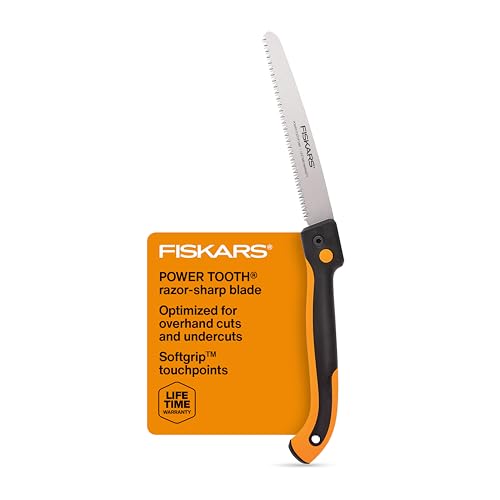
The Fiskars 10-Inch Folding Pruning Saw combines portability with cutting power, making it a solid choice for homeowners who want a versatile saw without the bulk of traditional models. The triple-ground power tooth blade is designed to cut aggressively and efficiently, tackling thicker branches and bushcraft work that would challenge standard pruning saws. The blade geometry allows you to make faster cuts with less effort, which matters when you're working on multiple trees or extended outdoor projects.
What sets this saw apart is the dual-position locking mechanism, which lets you switch between overhand and undercut positions without changing tools. This flexibility is particularly valuable for detailed trimming work where access and cutting angle vary from branch to branch. The folding design locks securely into place, providing the stability and control you'd expect from a fixed saw while maintaining the portability that makes it easy to carry on hikes, camping trips, or yard work sessions. The soft-grip handle further enhances control and reduces hand fatigue during extended use.
The steel blade holds its edge through heavy use, and Fiskars backs the tool with a lifetime warranty that reflects confidence in its durability. At just 0.66 pounds, this saw won't weigh you down, making it practical for anyone who values lightweight gear without compromising on cutting performance. It's a particularly strong option for DIYers and outdoor enthusiasts who want one reliable saw that handles multiple cutting scenarios.
| Specification | Details |
|---|---|
| Brand | Fiskars |
| Blade Length | 10 inches |
| Blade Type | Triple-Ground Power Tooth |
| Design | Folding with Dual-Position Locking |
| Handle Type | Soft-Grip (Non-Slip) |
| Weight | 0.66 pounds |
| Overall Dimensions | 4.88 x 1.25 x 14.75 inches |
| Blade Material | Steel |
| Warranty | Lifetime |
| Cutting Positions | Overhand and Undercut |
Before You Start: Inspect the blade for any damage and ensure the locking mechanism is tight. Wear work gloves and eye protection, as sawdust and small wood chips will fly during cutting.
For Overhand Cuts: Lock the blade in the overhand position (handle at a lower angle). This is ideal for cutting branches above your head or for general downward cutting strokes. Apply steady, even pressure without forcing the saw. Let the sharp blade do the work rather than pushing hard.
For Undercut Work: Flip the blade to the undercut position for cutting from below or for detailed work where you need a different angle. The dual-position design means you can adjust without changing tools, saving time and effort.
Maintenance: After use, wipe the blade clean of sap and debris. Store the saw in its folded position to protect the blade edge and keep it compact. The steel blade will maintain its sharpness through normal use, but avoid cutting into dirt or stone, which dulls the teeth.
Personal Protective Equipment: Always wear work gloves, safety glasses, and long sleeves when using this saw. Sawdust and small wood fragments can cause eye injury, and gloves protect your hands from splinters and blade contact.
Blade Handling: Keep your non-cutting hand clear of the blade path at all times. The sharp teeth can cause serious cuts if you lose control or slip during operation. Ensure the blade is fully locked in your chosen position before making any cuts.
Secure Your Workpiece: Never hold a branch or piece of wood with your hand while cutting. Secure it in a vise, clamp it to a stable surface, or have a second person hold it steady with proper hand placement away from the blade. This prevents the workpiece from moving unexpectedly.
Storage and Transport: Keep the saw folded and locked when not in use. Store it in a dry location away from children. The folding design makes it portable, but always secure it properly in a pack or toolbelt so it doesn't fall and injure someone below.
Choose the Right Stroke: Use smooth, steady strokes rather than rapid sawing motions. The triple-ground power teeth are designed to cut efficiently with moderate pressure. Forcing the saw or using jerky motions actually slows you down and tires your arm faster.
Angle Matters: The dual-position locking system is your advantage. For thick branches, start with the blade at a slight angle (around 45 degrees) to get the teeth engaged, then adjust your angle as the cut progresses. This technique minimizes binding and keeps the cut smooth.
Manage Sap and Resin: If you're cutting fresh wood with heavy sap, periodically wipe the blade with a dry cloth or tissue. Buildup slows the saw and makes cutting harder. For stubborn sap, a light application of mineral oil on the blade helps it slide through more easily.
Maintenance Extends Life: After each use, especially with sappy wood, clean the blade thoroughly. Store in a dry environment to prevent rust. The lifetime warranty covers defects, but proper care keeps your saw performing at peak efficiency for years.

Pros
- Induction-hardened teeth maintain sharpness through extended use
- Dual-angle handle design (45° and 90°) helps you find the right cutting position without guesswork
- Lightweight aluminum handle reduces hand and arm fatigue during longer projects
- Versatile enough for woodworking, gardening, drywall trimming, and general DIY tasks
- Includes protective storage sleeve, making it safe to keep in your toolbox
Cons
- No customer reviews available yet, so long-term durability feedback is limited
- May require initial practice to master the proper cutting technique for smoothest results
The Jorgensen 20-inch hand saw combines practical design with solid engineering for homeowners and DIYers tackling everything from light woodworking to drywall trimming. Its 11 TPI (teeth per inch) blade with triple-ground teeth is engineered to cut efficiently on both the push and pull strokes, which means faster progress with less physical effort compared to traditional handsaws. The 0.85mm high carbon steel construction, hardened through induction heating, resists dulling better than standard blades, so you'll maintain sharp, clean cuts throughout your project.
Comfort and control are central to this saw's design. The handle combines ABS plastic with TPE soft-grip material to reduce hand fatigue during extended cutting sessions, and the ergonomic shape fits naturally in your palm. The 45° and 90° angle guides molded into both sides of the handle serve as visual and tactile references, helping you maintain consistent cutting angles without constantly checking your work. This feature is especially valuable if you're new to hand sawing or working in tight spaces where a power saw won't fit.
Versatility makes this saw a smart addition to any toolbox. Beyond traditional woodworking, it handles plywood, drywall panels, PVC and plastic pipes, and other materials commonly encountered in home projects. The deep tooth grooves accelerate chip removal, keeping your cutting line visible and reducing binding. The saw arrives with a protective plastic sheath and cardboard sleeve, addressing both safety and storage concerns that matter when you're keeping tools organized at home.
| Specification | Details |
|---|---|
| Brand | Jorgensen |
| Blade Length | 20 inches |
| Blade Material | High carbon steel (0.85mm thick) |
| Teeth Per Inch (TPI) | 11 TPI |
| Tooth Design | Triple-ground, induction hardened |
| Handle Material | ABS + TPE soft grip |
| Handle Features | 45° and 90° angle guides |
| Color | Orange |
| Dimensions | 20 x 2.5 x 7 inches |
| Includes | Protective plastic sheath and cardboard sleeve |
| Suitable For | Woodworking, drywall, plastic pipes, plywood, gardening, trimming |
Getting Started: Mark your cut line clearly with a pencil and straightedge. Position the saw at your marked line and gently guide the blade into the material using light pressure. Let the sharp teeth do the work rather than forcing the saw through.
Cutting Technique: Use smooth, even strokes at a consistent angle. The 45° and 90° guides on the handle help you maintain the proper angle throughout the cut. On the initial strokes, use light pressure to establish a groove; once the groove is set, you can increase pressure gradually. The saw cuts on both the push and pull strokes, so don't lift it unnecessarily between strokes.
Material-Specific Tips: For wood and plywood, maintain steady pressure and let the teeth remove chips naturally. When cutting drywall or plastic pipes, reduce pressure slightly to avoid binding or cracking. Always support the material properly to prevent it from twisting or pinching the blade as you near the end of the cut.
Before You Start: Inspect the blade for damage and ensure the handle is secure. Wear safety glasses to protect your eyes from wood chips and dust. Secure your workpiece in a vise or clamp so both hands remain free to control the saw.
During Cutting: Keep your hand and fingers clear of the blade's path. Never reach across the blade or cut toward your body. Maintain firm footing and stable body position to prevent slips that could cause the blade to slip and cut your hand or arm. If the blade binds, stop immediately and gently work it free rather than forcing it.
Storage and Maintenance: Always store the saw in its protective sheath to prevent accidental cuts when reaching into your toolbox. Keep the blade dry to prevent rust. Never leave the saw unattended with the blade exposed, especially around children or pets.
Maximize Blade Sharpness: The induction-hardened teeth stay sharp longer, but you'll get the longest life by letting the saw's weight and sharp teeth do the cutting work rather than pressing hard. Excessive pressure accelerates wear and creates rough cuts. A light, steady hand produces cleaner results than aggressive sawing.
Use the Angle Guides Effectively: The 45° and 90° guides aren't just for beginners. Professional woodworkers use them as quick references to maintain consistent angles without constant visual checking. This is especially valuable when making multiple identical cuts or working in poor lighting conditions.
Choose Your Cutting Strokes Wisely: The 11 TPI blade is optimized for general-purpose cutting, making it ideal for mixed projects. For very fine detail work, slower, deliberate strokes produce better results. For faster cuts through thick material, use full-length strokes and let the blade's design work for you. Keep the blade moving smoothly; jerky motions create rough edges and tire your arm faster.
Buying Guide: How to Choose the Right Hand Saw
Picking the right hand saw comes down to matching blade geometry, length, and tooth count to the material and cut quality you need. The sections below break down every factor worth weighing before you buy.
Blade Length and Its Effect on Cutting Speed
Longer blades take more material with each stroke, which speeds up rough cuts on thick lumber. A 15-inch to 20-inch panel saw is ideal for framing, drywall, and general carpentry. Shorter blades in the 6-inch to 10-inch range offer more control in tight spots and are preferred for joinery, flush-cutting dowels, or pruning branches in dense shrubs. The JORGENSEN 20-inch models in this roundup sit at the longer end of the spectrum, giving you aggressive stroke length for dimensioned lumber and PVC pipe alike.
Teeth Per Inch: Coarse vs. Fine Cuts
TPI is the single most important spec for cut quality. Low TPI (6 to 8) removes material quickly but leaves a rough edge. High TPI (11 to 17) cuts slowly but produces a smooth, near-finished surface. The JORGENSEN 15-inch coarse saw runs at 8 TPI, making it the right tool for green lumber, rough framing, and outdoor jobs where speed matters more than surface finish. The JORGENSEN 20-inch Pro models and the IRWIN 15-inch run at 11 to 14 TPI, striking a balance between speed and a clean exit surface on softwood and hardwood alike. For the finest work, the RUITOOL Japanese pull saw offers a double-sided 14/17 TPI blade designed specifically for flush cuts and precision joinery.
Push Cut vs. Pull Cut: Western vs. Japanese Saws
Traditional Western-style panel saws cut on the push stroke. The blade is relatively stiff and thick, which lets you apply downward pressure without the blade flexing. Japanese-style saws cut on the pull stroke, which keeps the thin blade in tension and virtually eliminates deflection. The result is a narrower kerf (the slot the blade carves), less wasted material, and exceptionally clean cuts. The RUITOOL Ryoba pull saw in this lineup exemplifies that category: its SK5 flexible blade and dual-edge design let you switch between rip and crosscut teeth without flipping the workpiece. If you do a lot of fine woodworking or trim carpentry, a pull saw is worth adding alongside a standard panel saw.
Folding Saws for Portability and Outdoor Use
If you need a saw for camping, trail maintenance, or garden pruning, a folding blade is a game-changer. The blade locks open for cutting and folds safely into the handle for transport. The REXBETI 11-inch folding saw uses SK-5 high-carbon steel teeth hardened beyond standard blades, and the Fiskars 10-inch folding pruning saw features a dual-position locking mechanism so you can set the blade at two different angles for overhand or underhand cuts. Neither model is meant for dimensional lumber, but both handle green wood and dry branches with ease. For heavier outdoor cutting, the Seesii mini chainsaw in this roundup gives you cordless powered cutting for tree trimming when hand-sawing would take too long.
Handle Design and Ergonomics
An uncomfortable handle causes fatigue quickly, especially on longer cuts through hardwood. Look for a full-grip pistol handle with a textured or rubberized palm zone. The IRWIN ProTouch handle uses a contoured grip with a rubber over-mold that reduces slippage even with gloved hands. The JORGENSEN aluminum handles are assembled using ultrasonic welding, meaning there are no screws or pins that can loosen over time. For extended sessions, that kind of structural integrity matters. Whether you are cutting drywall for a remodel or sizing lumber for a deck, hand fatigue should not be the reason you stop mid-project.
Blade Material and Tooth Hardness
Most quality hand saw blades are made from high-carbon steel, commonly SK5 or M2-grade alloy. The teeth are then induction-hardened, a process that heats only the tooth tips to create a surface hardness far exceeding the rest of the blade. Induction-hardened teeth stay sharp two to three times longer than standard steel teeth and resist the abrasive grit found in treated lumber. The REXBETI and RUITOOL models both use SK-5 steel, while the IRWIN blade uses M2 advanced steel with the same hardening process. Avoid blades with no specified steel grade, as tooth quality directly determines how long a saw stays usable between sharpenings or replacements.
Best Hand Saws for Specific Materials
Not every hand saw works on every material. Panel saws with 8 TPI handle softwood, hardwood, PVC pipe, and drywall well. For metal, you need a hacksaw with 18 to 32 TPI, which falls outside this roundup. Pruning saws have widely spaced teeth designed for green, sappy wood that would clog a woodworking blade. If your project involves cutting both construction lumber and garden branches, consider keeping two saws on hand: a general-purpose panel saw and a folding pruning saw. Pairing hand saws with jigsaws gives you even more versatility for curved or irregular cuts.
Safety Considerations When Using a Hand Saw
Even a manual blade deserves respect. Always secure your workpiece in a vise or with clamps before cutting; a piece that shifts mid-stroke can cause the blade to jump and create a laceration. Start cuts with a few light backstroke pulls to score a guide groove before applying full stroke pressure. Keep your free hand well behind the cutting line at all times. For folding saws, confirm the lock mechanism is fully engaged before you begin. Store panel saws in a blade guard or hang them on a pegboard so the teeth do not contact other metal tools, which dulls them prematurely. Good workshop habits also mean pairing hand tools with safer power tools where appropriate; a well-set-up workspace that includes random orbital sanders for finishing reduces the total number of cuts needed at the bench.
Why Trust Us
HomeThru is an independent editorial platform. We do not sell hand saws, and we have no financial relationship with any of the brands featured here. Our recommendations are based on thorough research: we analyze product specifications, compare verified buyer experiences across thousands of reviews, consult manufacturer documentation, and cross-reference findings with professional trade standards. We apply the same editorial rigor to hand tools that we bring to impact drivers, cordless drills, and every other category we cover. If a product makes this list, it earned its place on merit, not marketing spend.
Final Thoughts
After thorough research and analysis, every saw on this list delivers real value in its intended use case. Here are our top picks by category to help you zero in on the right tool for your needs:
- Best Overall: JORGENSEN 20 Inch Pro Hand Saw delivers an exceptionally high star rating with its 11 TPI fine-cut blade, welded aluminum handle, and long stroke length that handles hardwood, drywall, and plastic pipes with equal ease.
- Best for Rough and Fast Cuts: JORGENSEN 15-Inch Coarse Handsaw offers aggressive 8 TPI tooth geometry and a non-slip aluminum handle, making it the go-to for framing, green lumber, and outdoor construction tasks.
- Best for Precision Woodworking: RUITOOL Japanese Ryoba Pull Saw features a double-sided SK5 blade with 14 and 17 TPI edges, ideal for flush cuts, dovetails, and joinery where a clean kerf is non-negotiable.
- Best Folding Saw for Outdoor Use: REXBETI 11-Inch Folding Pruning Saw pairs an extra-long SK-5 hardened blade with a compact folding design that slips into a pack or tool bag for camping and garden work.
- Best Budget-Friendly Pick: IRWIN 15-Inch ProTouch Hand Saw backs its reputation with M2 advanced steel and an ergonomic rubber-grip handle at one of the lowest price points in the lineup, making it a smart first hand saw for any DIYer.
Whichever model you choose, a quality hand saw complements your power tool lineup rather than competing with it. Keep one near your workbench alongside your circular saw and your jigsaw for the cuts that require finesse over speed. A good hand saw will still be sharp and useful long after the batteries on your power tools have been retired.
Frequently Asked Questions
What Is the Difference Between a Pull Saw and a Push Saw?
Western-style panel saws cut on the push stroke and use a rigid, thicker blade that handles heavy downward pressure well. Japanese-style pull saws cut on the pull stroke, which keeps a thin blade in tension and produces a narrower kerf with a cleaner surface. Pull saws excel at precision joinery and flush cuts. Push saws are faster through thick lumber. Many woodworkers keep one of each for different stages of a project.
How Many Teeth Per Inch Do I Need?
For rough framing and outdoor cuts, 6 to 8 TPI removes material quickly. For general carpentry on dimensional lumber, 10 to 11 TPI balances speed and surface quality. For fine woodworking, trim carpentry, or joinery, 14 TPI and above gives a smooth finish that needs minimal sanding. Match TPI to the finish quality required, not just the speed of the cut. Using a coarse saw on finish trim wastes time on cleanup work.
Can a Hand Saw Cut PVC Pipe and Drywall?
Yes. A standard panel saw with 8 to 11 TPI handles PVC pipe, drywall, and thin plastic sheeting without any special blade swap. The key is to use light, controlled strokes to prevent the material from cracking or chipping at the cut line. For drywall specifically, score the face paper first with a utility knife, then use the saw to cut the core cleanly. A folding pruning saw is not suitable for these materials because its tooth geometry is optimized for green wood fiber.
How Do I Keep a Hand Saw Blade Sharp Longer?
Induction-hardened teeth resist dulling far longer than standard steel, but blade life still depends on how you store and use the saw. Keep blades away from moisture to prevent rust pitting on the tooth edges. Store the saw in a blade guard or hang it vertically so the teeth do not knock against other metal tools. Avoid cutting through nails or embedded screws, which can chip or bend tooth tips instantly. Wiping the blade with a light machine oil after each use prevents surface corrosion between projects.
Is a Folding Pruning Saw Strong Enough for Home Carpentry?
Folding pruning saws are designed for green wood, branches, and brush. Their widely spaced, aggressive teeth cut fast through sappy, fibrous material but leave a rough surface on seasoned lumber. For finish carpentry or framing, a dedicated panel saw is the better choice. That said, a folding saw is a practical addition for anyone doing landscaping, garden maintenance, or backcountry camping where a full-size saw is impractical to carry. Think of it as a complement to your carpentry saws, not a replacement.




Write Your Review
No reviews yet. Be the first to share your experience!