

Fresh pasta is one of those kitchen projects that sounds intimidating but rewards you every single time. The texture is silkier, the flavor is richer, and the experience of rolling out sheets of dough at home is genuinely satisfying. The right pasta maker is what bridges the gap between a sticky pile of dough on your counter and restaurant-quality fettuccine on a Tuesday night. Whether you want a classic hand-cranked Italian machine or a fully automated electric extruder, there is a pasta maker on this list built for your kitchen and your skill level.
At HomeThru, our editorial team independently researched, analyzed, and compared dozens of pasta makers, drawing on verified buyer reviews, manufacturer specifications, and hands-on culinary expertise to narrow the field down to the seven strongest options available today. We looked at everything from dough-rolling consistency and cutter precision to build quality, ease of cleanup, and long-term durability. The result is a curated shortlist that covers every budget and use case, from occasional weekend cooking to serious Italian cooking enthusiasts. If you are also building out your kitchen with complementary tools, our stand mixers ranked for power and capacity pair beautifully with manual pasta machines to make the dough preparation even easier.
Top Pasta Makers We Recommend

Pros
- Durable Italian construction with nickel and chrome plating resists corrosion
- Produces three pasta varieties with quick roller and cutter changes
- Straightforward hand-crank mechanism needs no power source or batteries
- Affordable entry point for home pasta makers compared to electric models
- Lightweight and portable for easy storage or transport
Cons
- Hand-crank operation requires physical effort and takes longer than electric alternatives
- Limited to three pasta shapes, so specialty cuts like pappardelle or ravioli require separate equipment
The Marcato Atlas 150 is a time-tested manual pasta machine that brings authentic Italian pasta-making into your home kitchen. Its nickel and chrome-plated steel construction provides excellent durability and corrosion resistance, making it a worthwhile investment for anyone serious about fresh pasta. The machine handles the three most popular pasta shapes efficiently: fettuccine, tagliolini, and lasagna sheets, with simple roller and cutter adjustments between each style.
Operation is straightforward and requires no electricity, making it ideal for kitchens with limited counter space or power outlets. The hand-crank mechanism is smooth and well-engineered, though it does demand some physical effort, particularly when rolling thicker dough. First-time users typically achieve decent results within their first few sessions, and the included user manual provides clear guidance on setup, dough consistency, and roller adjustments.
This machine appeals most to home cooks who enjoy the hands-on process of making pasta and value simplicity and reliability over speed. It's compact enough to store easily and light enough to move around your kitchen. For those looking to expand beyond three pasta shapes, additional attachments are available separately, though they must be purchased individually.
| Specification | Details |
|---|---|
| Brand | Marcato |
| Model | Atlas 150 |
| Origin | Made in Italy |
| Primary Materials | Nickel-plated steel, chrome-plated steel, ABS plastic |
| Pasta Styles | Fettuccine, tagliolini, lasagna sheets |
| Operation | Manual hand crank (no electricity required) |
| Included Components | User manual |
| Mounting | Clamp-style table attachment |
Setup: Secure the machine to your work surface using the included clamp. Ensure the table edge is smooth and the machine is positioned at a comfortable height for hand-cranking.
Dough Preparation: Prepare fresh pasta dough using flour and eggs. The dough should be firm and slightly dry to prevent sticking. Knead it thoroughly by hand before feeding it into the machine.
Rolling: Set the roller to the widest setting (usually number 1). Feed small portions of dough through the roller, catching the flattened sheet on the opposite side. Fold the sheet in half and run it through again 2-3 times to develop gluten structure. Gradually decrease the roller width with each pass until you reach your desired thickness.
Cutting: Once rolled to the correct thickness, switch to your chosen cutter (fettuccine, tagliolini, or lasagna). Feed the dough sheet through the cutter attachment and catch the cut pasta as it exits. Arrange finished pasta on a drying rack or clean kitchen towel.
Drying: Let pasta air-dry for 30 minutes to 2 hours depending on humidity before cooking or storing in an airtight container.
Dough Consistency Matters: The key to smooth operation is proper dough hydration. If dough sticks to the rollers, it's too wet; if it tears or resists rolling, it's too dry. Adjust with small amounts of flour or water until the dough feels slightly tacky but not sticky.
Work in Small Batches: Don't try to feed the entire dough ball at once. Use pieces about the size of a golf ball, which gives you better control and more consistent results.
Keep Surfaces Clean: Dried dough bits can jam the rollers. Wipe down the machine between batches with a dry cloth. Never wash it with water, as this can cause rust despite the plating.
Develop a Rhythm: Hand-cranking becomes easier with practice. Develop a steady, moderate pace rather than forcing the crank quickly. Let the machine do the work.
Flatten Before Cutting: Always roll dough to your final thickness before switching to a cutter attachment. Cutting thick dough can strain the machine and produce uneven pasta widths.
Who Should Buy This? The Marcato Atlas 150 is ideal for home cooks who make fresh pasta regularly, value hands-on cooking, and prefer equipment that requires no electricity. It's also a great choice for those with limited kitchen space or budget constraints.
Who Might Want to Look Elsewhere? If you make pasta multiple times per week and want to minimize prep time, an electric pasta machine may be more practical. If you need specialty shapes beyond fettuccine, tagliolini, and lasagna, you'll need to purchase additional attachments separately.
Long-Term Value: This machine is built to last 20+ years with proper care. It's a one-time investment that pays off over time if you're committed to making fresh pasta regularly. The simple mechanics mean fewer parts to break and minimal maintenance beyond occasional cleaning and dry storage.
Storage and Space: The compact footprint (roughly 10 x 4 inches) makes it easy to store in a cabinet or drawer. The clamp-style mounting means it doesn't need permanent counter space and can be set up and removed quickly.

Pros
- Solid Italian engineering with a 90-year heritage from Imperia & Monferrina S.P.A.
- Highly versatile: handles pasta, lasagna sheets, and various bread doughs
- Adjustable roller system gives you complete control over pasta thickness
- Expandable design lets you upgrade with ravioli and other specialty attachments
- Easy to clean with the included brush and works well with just a damp cloth
Cons
- Manual operation requires consistent hand-cranking effort, which can be tiring for large batches
- No customer reviews available yet, so real-world durability and long-term performance remain unverified
The Imperia Classic Line represents authentic Italian pasta-making craftsmanship. Built entirely in Italy with premium chromed steel rollers and a solid steel frame, this machine delivers professional results for home cooks serious about fresh pasta. The adjustable roller system offers six thickness settings from 0.5mm to 5mm, giving you precise control whether you're making delicate tagliolini or hearty lasagna sheets.
Versatility is a major strength here. Beyond pasta, this machine handles bread doughs including piadina, Arabic bread, and other specialty preparations. The expandable design means you can add DUPLEX or SIMPLEX accessories later, or upgrade to ravioli-making capability with the RAVIOLAMP attachment. For those who prefer hands-free operation, a compatible electric motor (sold separately) can be attached via the side clamp slot.
The complete package includes a manual crank handle, natural cotton storage pouch, soft synthetic brush for roller cleaning, non-slip base, and table support clamp. Maintenance is straightforward: a damp cloth or the provided brush removes flour and dough residue effectively. This is a long-term investment in kitchen equipment backed by nearly a century of Italian manufacturing expertise.
| Feature | Details |
|---|---|
| Brand | Imperia |
| Model | Classic Line (IPASTA) |
| Country of Manufacture | Italy |
| Construction Material | Chromed steel (food-safe) |
| Pasta Shapes Produced | Fettuccine (6.5mm), Tagliolini (2mm), Flat sheets |
| Maximum Sheet Width | 150mm |
| Adjustable Thickness Settings | 6 levels (0.5mm to 5mm) |
| Operation Type | Manual crank (motorizable) |
| Motor Compatibility | Pasta Facile 4600 motor with universal guide bracket |
| Expandable Accessories | DUPLEX, SIMPLEX, RAVIOLAMP |
| Multi-Purpose Uses | Pasta, lasagna, bread doughs, piadina, Arabic bread |
| Included Accessories | Crank handle, cotton storage pouch, cleaning brush, non-slip base, table clamp |
| Cleaning | Damp cloth or soft brush |
| Manufacturer | Imperia & Monferrina S.P.A. (est. 1932) |
Basic Operation: Clamp the machine securely to your work surface using the provided table support. Prepare your pasta dough and feed it through the rollers. Start with the thickest setting (0.5mm) and gradually increase thickness by adjusting the dial. Use the crank handle with steady, even strokes.
Producing Pasta Sheets: For flat lasagna or pappardelle-style sheets, simply roll the dough through without using the cutting rollers. Adjust to your desired thickness and crank smoothly.
Cutting Fettuccine or Tagliolini: Once your dough reaches the desired thickness, align it with the appropriate cutting roller (6.5mm for fettuccine, 2mm for tagliolini) and feed through the machine. The cutting blades will portion your pasta into uniform strands.
Bread and Other Doughs: Use the same rolling process for piadina, Arabic bread, and other dough preparations. The machine works equally well for any dough that benefits from consistent flattening and thinning.
Dough Consistency: Your pasta dough should be slightly firm but pliable. If it's too wet, it will stick; if too dry, it will crack. Adjust flour and water ratios based on humidity in your kitchen.
Crank Technique: Use steady, even pressure when cranking. Rushing leads to uneven thickness and potential jamming. For large batches, take breaks to avoid hand fatigue.
Roller Care: Clean rollers immediately after use with the provided soft brush. Dried dough is harder to remove and can damage the precision of the cutting blades over time.
Motorization: If you plan to make pasta frequently, consider investing in the compatible Pasta Facile 4600 motor. It eliminates hand fatigue and produces more consistent results for high-volume pasta making.
Accessory Investment: Start with the base machine, then add DUPLEX or SIMPLEX accessories as your skills develop. The RAVIOLAMP accessory opens up ravioli and filled pasta possibilities.
Who Should Buy This: The Imperia Classic Line is designed for home cooks and DIY food enthusiasts who want authentic, restaurant-quality fresh pasta. If you make pasta regularly (at least weekly) and value Italian craftsmanship, this machine justifies the investment. It's also ideal if you want expandability for ravioli and specialty pasta shapes.
Who Might Want to Look Elsewhere: If you only make pasta occasionally or prefer minimal kitchen equipment, a smaller or more basic pasta maker may suffice. If hand-cranking is physically difficult, plan to purchase the optional electric motor from the start.
Long-Term Value: This machine is built to last decades. The Italian heritage and solid construction mean you're investing in a kitchen tool that will serve multiple generations. Maintenance is minimal, and parts are available from the manufacturer.
Space and Storage: The machine includes a natural cotton pouch for storage, but you'll need dedicated counter or cabinet space. The non-slip base and table clamp keep it stable during use, but it's not designed to be ultra-portable.
Warranty and Support: As an Imperia product, it's backed by a company with 90 years of pasta machine expertise. Verify current warranty terms with the retailer, as coverage may vary by region.

Pros
- Fast preparation time under 10 minutes reduces weeknight cooking stress
- Large 8-portion capacity perfect for families and dinner parties
- Versatile mixing function extends value beyond pasta to bread, cookies, and pizza dough
- App integration provides accessible recipes and removes guesswork from pasta making
- Dishwasher-safe components and non-stick design save cleanup time
Cons
- No reviews currently available to assess real-world performance and durability feedback
- Premium price point may be a consideration for casual pasta makers or budget-conscious buyers
The Philips 7000 Series Pasta Maker stands out for its speed and capacity, delivering homemade pasta in under 10 minutes while handling up to 8 portions in a single cycle. This makes it a practical choice for families who want fresh pasta without the time investment of traditional hand-rolling or smaller-capacity machines. The ProExtrude technology and Perfect Mixing Technology work together to create consistent dough texture and extrusion quality, removing much of the guesswork from pasta making.
Beyond pasta, the versatile mixing function adds genuine value to the appliance. You can use it to prepare pizza dough, bread starters, and cookie batters, making it more than a single-purpose kitchen gadget. The HomeID app integration is particularly useful for home cooks, offering step-by-step guidance and accommodating dietary preferences with vegan and gluten-free recipe options. This thoughtful feature set suggests Philips designed the machine with modern household needs in mind.
Practical design touches enhance the everyday experience. The non-stick interior and dishwasher-safe components mean cleanup is straightforward, and the white finish fits seamlessly into contemporary kitchens. The 150W motor appears adequate for the stated capacity, though long-term durability data from extended real-world use would provide additional confidence in the build quality. For households serious about homemade pasta and looking for speed and convenience, this machine offers a compelling combination of features and functionality.
| Specification | Details |
|---|---|
| Brand | Philips |
| Model | HR2660/03 |
| Series | 7000 Series |
| Power | 150W |
| Pasta Discs | 8 included |
| Capacity | Up to 8 portions per cycle |
| Preparation Time | Under 10 minutes |
| Key Technologies | ProExtrude Technology, Perfect Mixing Technology |
| Additional Functions | Mixing for cookies, pizza dough, bread |
| Dishwasher Safe Parts | Yes (non-stick components) |
| App Integration | HomeID App with recipes (vegan and gluten-free options) |
| Color | White |
Getting Started: Assemble the pasta maker according to the manual, ensuring all components are properly seated. Download the HomeID app to access recipes and step-by-step guidance before your first use.
Making Pasta: Add your measured ingredients (flour and water or eggs) to the hopper, select your desired pasta disc shape, and activate the machine. The ProExtrude technology handles the mixing and extrusion automatically. Fresh pasta will extrude in under 10 minutes. You can prepare up to 8 portions in a single batch without stopping.
Cleaning: Unplug the machine and allow it to cool. Remove the hopper and extrusion chamber, which are dishwasher safe. Wipe the main unit with a damp cloth. The non-stick coating makes residual dough easy to remove without soaking or scrubbing.
Dough Consistency: Use the app recipes as your starting point, but adjust flour and liquid slightly based on humidity in your kitchen. Dough should be slightly firm, not sticky, for best extrusion results.
Maximize the Mixing Function: Beyond pasta, experiment with the mixing function for pizza dough preparation, bread starters, and cookie batters. This versatility makes the machine a valuable addition to your kitchen workflow year-round.
Disc Selection: The 8 included discs offer variety in pasta shapes. Start with one or two favorites to master the machine, then explore other shapes as you gain confidence. Keep discs clean and dry between uses to maintain their non-stick properties.
Is This Machine Right for You? The Philips 7000 Series works best for households that regularly eat pasta or are interested in expanding their homemade cooking. If you cook for a family of 4 or more, the 8-portion capacity delivers real time savings. Casual pasta makers or those in small households might find a smaller, more affordable model sufficient.
Key Considerations: This is a premium appliance designed for convenience and speed rather than traditional hands-on pasta crafting. If you enjoy the meditative process of hand-rolling pasta, you may prefer a manual machine. However, if your goal is fresh, homemade pasta on weeknights without significant effort, the automation and app guidance justify the investment.
Before You Buy: Measure your counter or storage space, as this is a countertop appliance. Confirm that your household's pasta preferences align with the 8 included disc shapes. Review the HomeID app to ensure the recipe library matches your dietary needs and cooking style.

Pros
- Heavy-duty chrome-plated steel construction feels professional and durable
- Produces three distinct pasta shapes with interchangeable rollers and cutters
- Smooth anodized aluminum rollers prevent sticking and ensure even thickness
- Compact footprint and lightweight design make storage and portability easy
- Hand-wash maintenance keeps it simple and preserves material integrity
Cons
- Requires hand-crank operation, which demands physical effort and time for larger batches
- Manual design means a learning curve to achieve consistent thickness and sheet quality
The Marcato Atlas 180 represents the gold standard in manual pasta making for American home cooks. Built entirely in Italy with chrome-plated steel and anodized aluminum rollers, this machine combines durability with precision engineering. The construction quality is immediately evident when you hold it - the weight and solid feel signal a tool designed to deliver results for years.
From a practical standpoint, the Atlas 180 excels at producing three essential pasta shapes: thin lasagne sheets, delicate fettuccine, and fine tagliolini. The roller system is engineered to deliver consistent thickness and smooth surfaces without sticking or tearing. Whether you're preparing a weeknight dinner or hosting a dinner party, the hand-crank operation gives you complete control over dough thickness and pasta quality, something electric machines simply cannot match.
Maintenance is straightforward - hand washing preserves the machine's food-safe materials and keeps the precision rollers in optimal condition. For DIYers and home cooks seeking authentic pasta-making control without electricity or complicated settings, the Marcato Atlas 180 delivers restaurant-quality results at home.
| Specification | Details |
|---|---|
| Brand | Marcato |
| Model | Atlas 180 Classic |
| Construction Material | Chrome-plated steel (frame and body) |
| Roller Material | Anodized aluminum alloy |
| Pasta Shapes | Lasagne, Fettuccine, Tagliolini |
| Operation Type | Manual hand-crank |
| Power Required | None - hand-operated |
| Maintenance | Hand wash recommended |
| Food Safety | Materials safe for food processing |
| Origin | Made in Italy |
Preparation: Prepare your pasta dough according to your preferred recipe. Let it rest for 30 minutes before using the machine. Divide the dough into manageable portions about the size of a golf ball.
Rolling: Insert one dough portion between the rollers at the widest setting. Turn the hand crank smoothly and evenly, allowing the dough to pass through. Fold the flattened sheet in half and feed it through again at the same setting 2-3 times until smooth. This develops gluten and ensures even thickness.
Thinning: Gradually decrease the roller gap by one setting at a time, feeding the dough through once at each setting until you reach your desired thickness. For lasagne, stop at a thicker setting; for fettuccine and tagliolini, continue to thinner settings.
Cutting: Once your sheets are rolled to the correct thickness, feed them through the appropriate cutting attachment for your desired pasta shape. Lay finished pasta on a clean towel or drying rack before cooking.
Dough Consistency Matters: Your dough should be slightly firm and not sticky. If it sticks to the rollers, dust lightly with semolina flour or cornstarch between passes. Too much flour, however, can dry out your pasta.
Work in Batches: Don't try to process all your dough at once. Smaller portions are easier to control, produce more consistent results, and are less physically demanding on your hands and wrists.
Keep a Steady Rhythm: Turn the hand crank at a consistent, moderate speed. Rushing causes uneven rolling; going too slowly can dry out the dough. Find a comfortable pace and stick with it.
Dry Your Pasta Properly: Lay finished pasta on clean kitchen towels or a pasta drying rack for at least 30 minutes before cooking. This prevents sticking and helps achieve the ideal texture when cooked.
Clean Immediately: Wipe rollers and cutters with a dry cloth right after use, before dough dries on. Hand wash with warm water and mild soap if needed. Never soak or use a dishwasher.
Who Should Buy: The Marcato Atlas 180 is perfect for home cooks and DIYers who make pasta regularly and want authentic, hands-on control. It's ideal if you value Italian craftsmanship, don't mind hand-crank operation, and want a machine that will last for decades.
Who Might Look Elsewhere: If you need to produce large volumes quickly or prefer minimal physical effort, an electric pasta maker may be more practical. This machine rewards patience and technique over speed.
Space and Storage: The Atlas 180 has a compact footprint and weighs just a few pounds, making it suitable for most kitchens. It can be stored in a cabinet or drawer without taking up significant space.
Value Consideration: This is a premium manual pasta maker. The Italian manufacturing, durable materials, and precision engineering justify the investment for serious home pasta makers. It's a one-time purchase that will serve you for many years.
What to Expect: Expect a learning curve of 2-3 uses before you achieve consistently perfect sheets. The hand-crank operation requires some physical effort but gives you complete control over your final product. This machine rewards technique and attention to detail.

Pros
- Nine thickness settings give you complete control over pasta texture, from thick lasagna sheets to paper-thin dumpling wrappers
- Two interchangeable cutting attachments handle multiple pasta styles without buying separate machines
- Food-grade materials and simple manual design ensure hygienic, chemical-free pasta making
- Rust-resistant stainless steel construction provides long-term durability with proper care
- Lightweight aluminum rollers reduce fatigue during extended pasta-making sessions
Cons
- Blade attachments cannot be washed in a dishwasher and require hand-cleaning with a brush or wooden stick, which adds a maintenance step
- No clamp or suction feet mentioned, so the machine may slide around on smooth countertops during use without additional stabilization
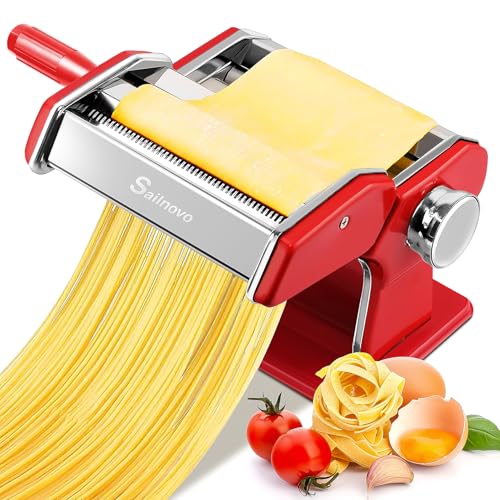
The Sailnovo 3-in-1 Pasta Maker is a versatile manual machine that brings authentic pasta-making into your home kitchen. Built from food-grade stainless steel and aluminum alloy, it combines durability with the simplicity of hand-crank operation. The nine adjustable thickness settings give you precise control over your dough, allowing you to create everything from thick lasagna sheets (up to 3mm) to delicate dumpling skins as thin as 0.5mm. This range makes it one of the most flexible manual pasta makers for home cooks who want variety without complexity.
The dual cutting attachments set this machine apart from single-function pasta makers. With 2.0mm and 4.5mm width options, you can produce spaghetti, fettuccini, and other noodle styles without purchasing additional equipment. The lightweight design and compact footprint make storage practical for most kitchens, and the purely manual operation means there's no learning curve, no electricity needed, and no complicated parts to maintain. Cleaning is straightforward: simply use a brush, wooden stick, or toothpick to remove residual dough from the blades.
This machine appeals to home cooks of all skill levels, from beginners exploring fresh pasta for the first time to experienced cooks seeking a reliable tool for regular use. The food-grade materials and manual design ensure you're making pasta in the cleanest, most hygienic way possible. Whether you're preparing a family meal or impressing guests with homemade pasta, the Sailnovo delivers consistent results with minimal effort.
| Specification | Details |
|---|---|
| Brand | Sailnovo |
| Material | Food-grade stainless steel and aluminum alloy |
| Thickness Settings | 9 adjustable levels (0.5mm to 3mm) |
| Cutting Widths | 2.0mm and 4.5mm |
| Operation Type | Manual hand-crank |
| Pasta Types | Spaghetti, fettuccini, lasagna, dumpling skins |
| Cleaning Method | Hand-clean with brush or wooden stick (not dishwasher safe) |
| Design | Lightweight, compact, space-saving |
| Durability | Rust-resistant construction |
| Included | English manual and customer support |
Getting Started: Before your first use, read the included English manual to familiarize yourself with the machine's parts and operation. Set up your pasta maker on a stable, level surface with adequate workspace on both sides.
Making Pasta: Prepare your dough according to your recipe and let it rest for 30 minutes. Set the thickness dial to your desired level (start with a thicker setting if you're new to pasta making). Feed a small portion of dough into the roller opening and turn the hand crank smoothly and evenly. The rollers will flatten the dough to your chosen thickness. Once your sheet reaches the desired size, select your cutting width attachment and feed the flattened dough through to create noodles of uniform width.
Cleaning and Storage: After each use, immediately remove any dough residue using a dry brush, wooden stick, or toothpick. Never use water or put blade attachments in the dishwasher, as moisture dulls the blades and shortens the machine's lifespan. Store in a dry location. Proper cleaning and storage ensure your pasta maker remains sharp and functional for years.
Dough Preparation: Use a well-hydrated dough that's not too sticky. If your dough tears or sticks, dust it lightly with semolina flour between passes. A properly rested dough (at least 30 minutes) rolls more smoothly and produces better results.
Thickness Technique: Start with thicker settings and gradually work down to your desired thickness. Passing dough through multiple times with slight thickness adjustments creates more uniform, professional-looking pasta than trying to reach final thickness in one pass.
Blade Maintenance: Keep blade attachments dry and sharp by storing them in a clean, dry place. If you notice reduced cutting performance, gently clean the blades with a soft brush and ensure no dough particles are lodged in the cutting edges. Sharp blades are essential for clean cuts.
Stability: If your machine shifts on smooth countertops during use, place a damp kitchen towel underneath to add grip. Stable operation makes hand-cranking easier and produces more consistent results.
Who Should Buy This? The Sailnovo is ideal for home cooks who want fresh, homemade pasta without the expense and complexity of electric machines. It's perfect for families who enjoy cooking projects together, food enthusiasts exploring Italian cuisine, and anyone seeking a durable, affordable pasta-making tool. The manual operation makes it accessible to users of all ages and skill levels.
What to Consider: This is a manual machine, so pasta making requires some physical effort and time. If you plan to make large quantities regularly, you may prefer an electric model. The blade attachments require hand-cleaning (no dishwasher), which is a minor but important maintenance detail. Ensure you have adequate counter space and that your surface is stable enough to accommodate the machine during use.
Value Assessment: At its price point, this machine offers excellent value compared to electric pasta makers and multi-function food processors. You get three functions (rolling, and two cutting widths) in one compact tool, plus the durability of stainless steel construction. The nine thickness settings provide versatility for various pasta styles and dumpling making, making it a worthwhile investment for regular home cooks.
Pros
- Precise thickness control lets you create restaurant-quality pasta shapes at home
- Food-grade construction ensures safe, taste-neutral results for the whole family
- Lightweight aluminum design is easy to handle and won't rust with regular use
- Quick assembly and disassembly make cleanup straightforward and hassle-free
- Affordable entry point for families wanting to start making fresh pasta together
Cons
- Zero customer reviews available yet, so real-world performance feedback is limited
- Hand-crank operation requires physical effort and takes longer than electric alternatives
The Sailnovo pasta maker brings authentic homemade pasta within reach for American home cooks. Built with food-grade materials throughout, this machine eliminates the metallic or plastic aftertaste that can plague cheaper models. The 180-degree roller design combined with nine adjustable thickness settings gives you precise control over your final product, whether you're aiming for paper-thin angel hair or thick, hearty fettuccine.
Practical design touches make this machine accessible for everyone from beginners to experienced pasta enthusiasts. The rust-resistant aluminum alloy construction handles regular use without degradation, while the secure clamp keeps everything stable during operation. The detachable roller and cutter system disassembles easily, and Sailnovo recommends simple dry-brush cleaning or using a toothpick for stubborn dough bits, keeping maintenance straightforward.
Family-friendly functionality stands out as a core strength. Kids can safely participate in pasta making thanks to the food-grade materials and hand-crank operation, creating opportunities to teach the art of authentic pasta preparation while building lasting kitchen memories. The responsive customer support team backs the machine with 24-hour response times, adding confidence to your purchase.
| Specification | Details |
|---|---|
| Brand | Sailnovo |
| Model | 180 Roller Pasta Maker |
| Material | Food-Grade Aluminum Alloy |
| Thickness Settings | 9 Adjustable (0.3-3mm or 0.01-0.1 inches) |
| Cutting Widths | 2 Settings (2mm and 6.25mm) |
| Roller Design | 180-Degree Roller |
| Cutter Types | Spaghetti, Fettuccine, Lasagna Compatible |
| Rust Resistance | Yes - Aluminum Alloy Construction |
| Weight | Lightweight Design |
| Clamp Type | Secure Clamp for Stability |
| Cleaning | Detachable, Dry Brush or Cloth Recommended |
| Operation Type | Hand-Crank Manual |
| Color | Red |
| Customer Support | 24-Hour Response Time |
Getting Started: Secure the Sailnovo pasta maker to your work surface using the clamp, ensuring it's stable before operation. Prepare your pasta dough according to your recipe, then divide it into manageable portions.
Rolling the Dough: Start with the thickest setting (9) and feed a small portion of dough into the roller while turning the hand crank. Run the flattened dough back through the same setting 2-3 times, folding it in half between passes. This develops gluten structure. Gradually decrease the thickness setting one notch at a time, running the dough through once per setting, until you reach your desired thickness.
Cutting Noodles: Once rolled to the correct thickness, switch to the appropriate cutter attachment. For spaghetti, use the 2mm width setting; for fettuccine or lasagna, use the 6.25mm setting. Feed the rolled dough through the cutter while turning the crank, catching the cut noodles on a lightly floured surface or drying rack.
Drying and Storage: Lay cut pasta on a clean cloth or drying rack for 30 minutes to 2 hours before cooking. Fresh pasta cooks much faster than dried varieties, typically in 2-4 minutes. Store leftover fresh pasta in the refrigerator for up to 3 days or freeze for longer storage.
Dough Consistency Matters: The ideal pasta dough should be firm and slightly dry to the touch, not sticky. If your dough sticks to the rollers, dust it lightly with all-purpose flour between passes. Too much flour, however, can affect the final texture.
Chill Your Dough: Refrigerate prepared dough for 30 minutes before rolling. Cold dough is easier to handle, produces smoother results, and reduces the likelihood of tearing during the rolling process.
Batch Processing: Work with small portions of dough at a time rather than trying to run the entire batch through at once. This gives you better control and more consistent thickness throughout.
Maintenance for Longevity: Always clean the machine immediately after use while any dough is still pliable. Use a dry brush or soft cloth to remove residue. Never wash the rollers or cutters with water, as moisture can promote rust despite the aluminum construction.
Experiment with Flour Types: While all-purpose flour works well, try durum flour for authentic Italian pasta or whole wheat flour for added nutrition. Different flours absorb water differently, so adjust your dough hydration accordingly.
Is This Right for You? The Sailnovo pasta maker suits home cooks who want to make fresh pasta regularly without the expense or counter space of an electric model. If you enjoy hands-on cooking and want to involve family members in the kitchen, the manual hand-crank operation is actually an advantage, not a drawback.
Comparing Manual vs. Electric: Manual pasta makers like this one require more physical effort but offer better dough control, cost significantly less, take up minimal storage space, and create a more interactive cooking experience. Electric models work faster but cost 3-5 times more and require dedicated counter or cabinet space.
What You'll Need Beyond the Machine: Invest in quality pasta flour (durum or all-purpose), a kitchen scale for consistent dough ratios, a drying rack or clean cloth for finished noodles, and a bench scraper for dough handling. Most home cooks already have these items.
Skill Level Expectations: Beginners can produce usable pasta on their first attempt, though the learning curve for perfect thickness and texture spans 3-5 batches. The nine thickness settings and dual cutting widths eliminate guesswork compared to older manual models with fewer options.
Long-Term Value: At this price point, the Sailnovo pasta maker pays for itself after making just 10-15 batches of fresh pasta compared to store-bought alternatives. The aluminum construction should last years with proper care and dry storage.

Pros
- Smooth, consistent rolling performance across all nine thickness settings
- Detachable components make it easy to switch between cutting styles
- Sturdy clamp design keeps the machine stable on countertops during use
- Stainless steel build quality suggests long-term durability
- Affordable entry point for fresh pasta making at home
Cons
- Hand-crank operation requires physical effort and takes longer than electric models
- Hand-wash only requirement means no dishwasher convenience
The Sur La Table Va Bene manual pasta maker brings straightforward, reliable pasta-making to home kitchens without unnecessary complexity. With nine adjustable settings ranging from 0 to 9, you can roll dough to your exact thickness preference, whether you're aiming for delicate lasagna sheets or standard noodle thickness. The stainless steel construction feels substantial and built to last, while the detachable pasta shaper and roller system give you flexibility to create spaghetti, fettuccine, or lasagna without swapping machines.
The clamp system is a practical feature that keeps the machine stable during operation, which is essential when hand-cranking dough through the rollers. The removable handle fits securely into both the sheet roller and pasta shaper, making transitions between cutting styles quick and intuitive. This design approach means you're not fumbling with complicated assembly between pasta shapes, keeping the focus on the actual pasta-making experience.
The main trade-off with this manual model is the physical effort required compared to electric alternatives. Hand-cranking takes time and arm strength, which is part of the appeal for some home cooks but a drawback for others. The hand-wash-only care requirement is also worth noting if you prefer dishwasher convenience. For budget-conscious DIYers and cooking enthusiasts who enjoy the tactile process of making pasta from scratch, this machine delivers solid performance and reliable results.
| Specification | Detail |
|---|---|
| Brand | Sur La Table |
| Model | Va Bene |
| Type | Manual Pasta Maker |
| Material | Stainless Steel |
| Color | Juniper Green |
| Thickness Settings | 9 Adjustable Settings (0-9) |
| Pasta Shapes | Spaghetti, Fettuccini, Lasagna, Dumpling Skins |
| Components Included | Manual Pasta Maker, Detachable Pasta Shaper, Removable Handle, Clamp |
| Clamp System | Countertop Stabilization |
| Care | Hand Wash Only |
| Operation | Hand Crank |
Preparation: Secure the pasta maker to your countertop using the clamp, ensuring it's tight and stable. Prepare your pasta dough according to your favorite recipe and let it rest for 30 minutes before use.
Rolling: Start with the thickness setting at 0 (thickest). Feed a small portion of dough through the roller while turning the handle steadily and evenly. Fold the dough in half and repeat 2-3 times at the same setting to knead and smooth it. Gradually increase the setting number by one and repeat until you reach your desired thickness.
Cutting: Once rolled to the correct thickness, switch to the detachable pasta shaper (spaghetti or fettuccine). Insert the shaped roller into the handle and feed the dough sheet through while turning the crank to cut consistent noodle strips. For lasagna, simply cut the rolled sheets by hand. Work in small batches and dust finished pasta lightly with flour to prevent sticking.
Dough Consistency: Your dough shouldn't be too wet or too dry. If it sticks during rolling, dust lightly with flour. If it tears, your dough may need more hydration or rest time.
Steady Crank Speed: Turn the handle at a consistent, moderate pace rather than fast and jerky. This produces more uniform thickness and prevents the dough from bunching or tearing.
Work in Portions: Don't try to process a huge ball of dough at once. Work with fist-sized portions, which are easier to control and produce better results. Keep unused dough covered to prevent drying.
Immediate Use: Fresh pasta cooks much faster than dried pasta (2-4 minutes typically). Use it within a few hours of making it, or dust generously with flour and let it dry for several hours before storage.
Is This Right for You? Choose the Va Bene if you enjoy hands-on cooking, want to make fresh pasta regularly, and don't mind the physical effort of hand-cranking. It's perfect for home cooks who value the tactile, meditative aspect of pasta-making and want a reliable, affordable machine that doesn't require electricity.
Manual vs. Electric: Manual pasta makers are quieter, more affordable, take up less space, and give you complete control over dough texture. They require more physical effort and time. Electric models are faster and less labor-intensive but cost significantly more and need counter or storage space.
Durability Expectations: Stainless steel construction suggests this machine will last many years with proper care. Hand-washing and drying immediately after use will prevent rust and extend its lifespan. Avoid storing it damp or in humid environments.
Pasta Shape Flexibility: This machine handles most common fresh pasta shapes. If you want ravioli or other specialty shapes, you'd need additional attachments or a different machine designed for those purposes.
Buying Guide: How to Choose the Right Pasta Maker
Choosing among the best pasta makers comes down to matching the machine to how you actually cook. A pasta maker that works beautifully for a home chef who makes pasta twice a week is very different from one that suits a beginner who wants to try fresh noodles once or twice a month. Below we break down the key factors to evaluate before you buy.
Manual Roller vs. Electric Extruder
The biggest fork in the road is between a manual roller machine and an electric extruder. Manual rollers, like the Marcato Atlas line and the Imperia machines in our list, use a hand crank to press dough through progressively thinner settings and then cut it into noodles. They produce flat sheet pasta such as lasagna, fettuccine, and tagliolini with exceptional texture because you control the process. They are also quieter, more compact, and generally more affordable in the entry-level range.
Electric extruders like the Philips 7000 Series work differently. You drop the ingredients into the hopper, select a disc, and the machine mixes and pushes dough through shaped dies to create tubular or specialty pasta shapes such as penne, rigatoni, or fusilli that a roller simply cannot produce. The trade-off is a higher price, more machine to clean, and slightly less control over dough hydration. If variety and convenience are your priorities, an extruder is worth the investment. If authentic sheet pasta and full control over the process are what you are after, a manual roller wins every time.
Thickness Settings and Roller Width
Most manual pasta machines offer between seven and nine thickness settings, which is more than enough for all practical purposes. Setting one on a Marcato or Imperia gives you a thick, rustic sheet suitable for filled pastas like ravioli, while the thinnest setting produces nearly translucent sheets for delicate angel hair or ultra-thin lasagna. The roller width matters too. The Atlas 150 rolls a 150mm (roughly six-inch) wide sheet, while the Atlas 180 handles a 180mm sheet, giving you more surface area per pass and speeding up larger batches. If you regularly cook for four or more people, the wider machine earns its keep quickly.
Build Quality and Materials
Pasta machines take mechanical stress every time you use them. The rollers need to maintain precise alignment across hundreds of uses, and the clamp or suction base needs to stay firmly anchored to your countertop while you crank. Chrome-plated steel construction, used on Marcato and Imperia machines, is the industry standard for good reason: it is durable, easy to wipe clean, and does not flex under the pressure of stiff dough. Budget-friendly options from Sailnovo and the Sur La Table Va Bene use aluminum alloy or stainless steel components, which keep costs reasonable while still providing adequate rigidity for home use. For comparison, the Philips 7000 Series uses a food-grade plastic housing with internal stainless components, which is appropriate for an electric appliance but means you should handle it with a bit more care during cleanup.
If you enjoy baking and want to round out your kitchen with similarly well-built appliances, top-rated bread makers for fresh homemade loaves are another worthwhile investment that pairs naturally with a pasta-making hobby.
Included Attachments and Pasta Shapes
Most manual pasta machines come standard with a flat roller and two cutters, typically producing a wider fettuccine and a narrower spaghetti or tagliolini. The Marcato Atlas 150, for example, cuts both fettuccine and tagliolini right out of the box. The Sailnovo 3-in-1 model adds a third cutting option, expanding your repertoire without requiring separate accessory purchases. If you want to go further into specialty shapes, check whether the brand offers additional attachment cutters for sale separately, as Marcato does with a wide range of optional cutters for everything from pappardelle to trenette.
Electric extruders like the Philips 7000 Series come loaded with multiple discs in the box, so you can make a wide variety of shapes from day one without buying anything extra. The machine even includes a HomeID app for guided recipes, which is a nice touch for beginners who want step-by-step support.
Ease of Use and Cleanup
Pasta machines should never be washed with water or submerged. Moisture causes internal metal components to rust, which ruins the machine and contaminates your food. Instead, you brush away dried dough with the included cleaning brush (Imperia includes one in the box) or a dry pastry brush, then wipe the exterior with a barely damp cloth. This is a non-negotiable maintenance step, so factor it into your buying decision if you prefer appliances you can toss in the dishwasher.
Electric extruders require more disassembly and more thorough cleaning since dough works its way into the extrusion chamber and die holes. Philips designs the 7000 Series with dishwasher-safe removable parts to address this, which is a meaningful quality-of-life improvement over older electric designs. The clamp mechanism on manual machines should also be checked periodically to make sure it is tight and not scratching your countertop finish. Pairing your pasta prep station with a good countertop food processor can also speed up the initial dough mixing step considerably.
Budget and Value
Pasta makers span a very wide price range. Entry-level manual machines from Sailnovo and Sur La Table sit at the affordable end and are excellent starting points for beginners who are not sure how often they will use one. Mid-range manual machines from Marcato and Imperia cost more but are made in Italy with tighter tolerances, heavier materials, and a track record of lasting decades. Premium electric extruders like the Philips 7000 Series represent a significant step up in price but eliminate much of the manual labor involved in the process.
As a rule, buy the most durable machine your budget allows if you plan to use it regularly. A well-built Italian-made manual roller will outlast several budget models and ultimately deliver better value over time. If you are shopping for other quality kitchen tools at the same time, browsing sharp, complete kitchen knife sets is a natural next step since good knives make shaping and cutting supplemental pasta much easier.
Storage and Footprint
Manual pasta machines are compact and easy to tuck into a cabinet between uses. The Marcato Atlas 150 and Imperia Classic are narrow enough to store upright in most pantry or cabinet shelves. The wider Atlas 180 takes slightly more shelf space but is still very manageable. Electric extruders are considerably bulkier and heavier, which is worth thinking about if your kitchen counter space is limited. Most users with smaller kitchens find that a manual roller lives happily on a shelf alongside other occasional-use tools like a waffle maker or specialty bakeware.
A Closer Look at Each Pasta Maker
Marcato Atlas 150: The Gold Standard for Home Pasta Making
The Marcato Atlas 150 is consistently the most recommended manual pasta machine across professional culinary circles, and for good reason. Made in Italy from chrome-plated steel, it offers nine thickness settings that give you precise control from thick lasagna sheets all the way down to paper-thin tagliolini. The crank handle locks securely in place, the table clamp is rock solid, and the rollers are precisely aligned so dough sheets come out even across the full width. With over 27,000 verified ratings averaging 4.6 stars, the Atlas 150 has earned its reputation through real-world, long-term use by home cooks around the world. It handles both soft egg doughs and firmer semolina doughs without complaint.
Imperia Pasta Maker Machine: A Worthy Italian Rival
The Imperia Classic is the other name that serious home pasta makers always bring up alongside Marcato. Also made in Italy from heavy-duty steel, it features an easy-lock dial for thickness adjustment, a wooden grip handle that feels comfortable over long cranking sessions, and a cleaning brush included in the box. It sits at a mid-range price point and carries nearly 7,000 reviews at 4.5 stars, reflecting extremely broad satisfaction. The wood handle is a small but meaningful ergonomic advantage over machines with plain metal or plastic handles, especially if you are rolling large batches. Both fettuccine and spaghetti cutters are included.
Marcato Atlas 180: Best for Larger Batches
The Atlas 180 is essentially the Atlas 150’s bigger sibling, featuring a 180mm roller width rather than 150mm. That extra 30mm per pass adds up quickly when you are making pasta for a dinner party or meal-prepping lasagna for the week. It carries the same chrome-plated Italian steel construction, the same precision thickness settings, and the same reputation for longevity. At 4.7 stars from nearly 2,000 reviews, it actually edges out its smaller counterpart in average rating, suggesting that buyers who specifically seek it out for batch cooking are highly satisfied with the result. It costs more than the Atlas 150, but for regular large-batch cooking, the wider roller is a genuine productivity upgrade.
Philips 7000 Series Pasta Maker: Best Electric Option for Variety
The Philips 7000 Series is the extruder on this list, and it represents a fundamentally different approach to homemade pasta. Rather than rolling flat sheets, it extrudes shaped pasta through one of eight included discs, so you can make penne, spaghetti, fettuccine, lasagna, and other shapes with minimal manual effort. The ProExtrude Technology and Perfect Mixing system handle dough development automatically, which means you simply add flour and liquid, select your disc, and let the machine do the work. It can prepare up to eight portions in a single batch, making it practical for families. The HomeID app connectivity is a bonus for beginners who want guided recipes. The trade-off is that it sits at the premium end of the price spectrum, it is larger than any manual machine, and the cleanup is more involved despite the dishwasher-safe components. At 4.3 stars from nearly 800 reviews, it performs well but has a slightly higher learning curve than a simple roller.
Sailnovo 3-in-1 Pasta Maker: Best Budget Manual Machine with Extra Cutters
The Sailnovo 3-in-1 is the most full-featured option at a budget price. It includes a roller plus two cutter attachments, handling spaghetti, fettuccini, and lasagna sheets right out of the box, and it offers nine adjustable thickness settings via an aluminum alloy and stainless steel construction. For cooks who are new to fresh pasta and want to explore multiple noodle widths without spending a lot upfront, this machine delivers genuine value. It holds 4.4 stars across over 3,000 reviews, which is impressive for a budget-tier product. It will not match the precision or longevity of a Marcato or Imperia, but it more than holds its own for occasional home use.
Sailnovo 180 Roller Pasta Maker: A Budget-Friendly Wide Roller
The Sailnovo 180 offers a wider 180mm roller at an entry-level price, making it one of the most accessible wide-format pasta machines available. It comes with both roller and cutter attachments, nine thickness settings, and a compact red design that stands out on the counter. With 4.5 stars from over 400 reviews, it shows strong early satisfaction among buyers who want wider sheets without the premium price of the Marcato Atlas 180. It is a solid choice for budget-conscious cooks who prioritize batch output over prestige.
Sur La Table Va Bene Manual Pasta Maker: A Stylish Entry-Level Option
The Sur La Table Kitchen Essential Va Bene stands out visually with its stainless steel and Juniper Green design, making it one of the more attractive pasta machines on the market. It handles spaghetti, fettuccini, lasagna, and dumpling skins, covers the most common use cases, and sits at a very approachable price point. At 4.3 stars from over 250 reviews, it is still building its track record but shows promising early satisfaction. It is a particularly appealing gift option for someone just getting into homemade pasta who wants a machine that looks as good on the counter as it performs in use.
Why Trust HomeThru
HomeThru is a fully independent editorial platform. We do not sell products, we do not fulfill orders, and we are not affiliated with any manufacturer or retailer. Our recommendations are built on structured independent research: we analyze verified buyer data across thousands of reviews, compare manufacturer specifications side by side, assess long-term ownership patterns, and draw on the expertise of our culinary and kitchen equipment editorial team.
For pasta makers specifically, we evaluated each machine against a consistent set of criteria including rolling consistency, cutter precision, build quality, ease of cleanup, available thickness range, and overall value relative to price. We looked at how each machine handles different dough types, from soft 00-flour egg dough to stiffer semolina blends, and weighed the real-world feedback of thousands of verified purchasers to validate our conclusions. Our goal is always to give you the information you need to make a confident buying decision, with no commercial strings attached. You can find the same independent approach applied to top-rated food processors, hand blenders worth owning for soups and more, and every other kitchen tool category we cover.
Final Thoughts
Making fresh pasta at home is one of the most rewarding cooking skills you can develop, and the machine you choose has a direct impact on how enjoyable and successful that experience will be. After thorough independent research across all seven pasta makers in this guide, here is how we would categorize the standout picks:
- Best Overall: Marcato Atlas 150 Classic Manual Pasta Maker, The most proven, most recommended manual pasta machine for home cooks of all skill levels, with precise Italian craftsmanship and broad dough compatibility.
- Best for Large Batches: Marcato Atlas 180 Classic Manual Pasta Machine, The wider 180mm roller makes batch cooking faster and more efficient, earning the highest average rating among all machines on this list.
- Best for Variety and Convenience: Philips 7000 Series Pasta Maker, Eight included discs and automated mixing make this the top pick for cooks who want maximum shape variety with minimal manual effort.
- Best Italian Runner-Up: Imperia Pasta Maker Machine, A close rival to the Atlas 150 with a comfortable wood grip handle, easy-lock dial, and nearly 7,000 satisfied owners backing its quality.
- Best Budget Pick: Sailnovo 3-in-1 Pasta Maker Machine, Three cutting options and nine thickness settings at an entry-level price make this the smartest way to start making fresh pasta without a large upfront commitment.
Whichever machine you choose, fresh pasta will change the way you think about weeknight cooking. Pair your new pasta maker with a quality cast iron Dutch oven for sauces that simmer low and slow, or a well-seasoned cast iron skillet for finishing pasta in the pan with butter and parmesan. If you want to preserve large batches of fresh pasta for later, a top-rated vacuum sealer keeps fresh noodles shelf-stable in the freezer for weeks. And if you enjoy hands-on kitchen projects in general, exploring precision sous vide cookers or slow cookers for every kitchen rounds out a seriously capable home cooking setup.
Frequently Asked Questions
Is a manual or electric pasta maker better for beginners?
Manual machines are generally the better starting point. They are more affordable, easier to understand, and give you hands-on feedback about the dough as you work. Machines like the Marcato Atlas 150 and Imperia Classic require no electricity and teach you the fundamentals of fresh pasta in a tactile, intuitive way. Electric extruders are better suited to cooks who already understand pasta dough and want to skip manual labor in favor of shape variety.
Can pasta machines handle whole wheat or gluten-free dough?
Yes, but with some adjustments. Whole wheat dough is stiffer and less elastic than standard 00-flour dough, so you may need to let it rest longer before rolling and work through the thickness settings more gradually. Gluten-free doughs vary widely depending on the flour blend and often require a binder like xanthan gum to hold together through the rollers. Both the Marcato Atlas and Imperia machines handle alternative doughs reasonably well, though you may find the dough tears more easily at the thinnest settings. An electric extruder like the Philips 7000 Series handles alternative doughs with less risk of tearing since extrusion applies different mechanical forces than rolling. For anyone building a full gluten-free kitchen, top-rated blenders and other tools that handle specialty ingredients are worth exploring alongside your pasta setup.
How do you properly clean and maintain a pasta machine?
Never submerge a pasta machine in water or put it in the dishwasher, as this causes internal metal components to rust. The correct method is to let any remaining dough dry completely on the rollers, then brush it away with a stiff cleaning brush or dry pastry brush. Wipe the exterior with a barely damp cloth and dry immediately. The Imperia machine comes with a dedicated cleaning brush for this purpose. Applying a light coating of food-safe mineral oil to the rollers a few times per year helps maintain smooth operation and prevents oxidation over time.
What pasta shapes can manual roller machines make versus electric extruders?
Manual rollers are ideal for flat sheet pastas and long cut noodles: lasagna, fettuccine, tagliolini, pappardelle, tagliatelle, and, with additional attachments, specialty widths. They can also produce filled shapes like ravioli and tortellini since you start with flat sheets. Electric extruders like the Philips 7000 Series produce tubular and shaped pastas such as penne, rigatoni, and fusilli that are impossible to make on a roller. If you want both capabilities, you would need both types of machines. Most home cooks find that a roller covers the majority of practical everyday use cases. To keep fresh pasta fresh longer, pairing your pasta maker with vacuum sealers for fresher food is a smart move.
How do you know when pasta dough is ready to run through the machine?
Properly prepared pasta dough should feel smooth, slightly tacky but not sticky, and spring back slowly when poked with a finger. If the dough tears during rolling, it likely needs more rest time, which allows the gluten to relax. If it sticks to the rollers, it may be too wet and needs a light dusting of flour on the sheet before each pass. Most recipes recommend resting wrapped dough at room temperature for at least 30 minutes before rolling. Starting on the widest thickness setting and working down gradually, folding and re-rolling a few times on the widest setting, also helps develop a smooth, even texture before thinning. For those who enjoy detailed culinary prep work, a food processor can help bring the dough together quickly before hand-kneading and resting.

Write Your Review
No reviews yet. Be the first to share your experience!