


A growing number of households are discovering that traditional freezers and refrigerators no longer meet their evolving needs. As families expand, move, or adjust their storage habits, the demand for flexible kitchen appliances has surged. One recent real-world example demonstrates how convertible refrigerator technology is reshaping the way consumers think about frozen and fresh food storage.
The Problem With Single-Purpose Appliances
For years, homeowners facing cramped refrigerator freezer sections turned to dedicated chest freezers as the obvious solution. These compact units promised extra capacity for bulk meat purchases, frozen vegetables, and meal prep items. However, chest freezers come with a major trade-off: they occupy floor space horizontally and make organization nearly impossible. Items stored at the bottom quickly become invisible, forgotten for months until freezer burn renders them unusable.
When household circumstances change, single-purpose appliances become problematic. A family that needed maximum freezing capacity two years ago might suddenly require more refrigerated space as children grow or elderly relatives move in. Switching appliances means another major purchase, another installation headache, and wasted money on equipment that no longer serves the household’s actual needs.
Enter the Convertible Refrigerator

The latest innovation addressing this challenge is the upright convertible refrigerator, which splits storage into two independent sections with separate doors. Each section can be set to operate as a full freezer, full refrigerator, or remain split with one side frozen and one side fresh. This flexibility means homeowners can reconfigure their appliance whenever their circumstances shift, without needing to buy replacement equipment.
A concrete example proves the value proposition. One household that had outgrown a 4.9 cubic foot chest freezer upgraded to a 20 cubic foot convertible unit. The capacity increase alone tripled available storage. More importantly, the upright design transformed organization from a frustrating guessing game into a streamlined system. Built-in bins and shelving allow users to see everything at eye level, making meal planning and grocery inventory management dramatically simpler.
Smart Features Matter for Modern Families
Today’s convertible refrigerators arrive with connectivity features that appeal to digitally savvy households. WiFi-enabled models let homeowners adjust settings, monitor temperature, and receive alerts directly from their smartphones. Some models include garage-ready certification, meaning they function properly in spaces without heating or cooling, expanding placement options beyond traditional kitchens. Additionally, fall appliance sales often cut refrigerator prices by up to 35 percent, making premium models more accessible to budget-conscious shoppers.
Energy Star certification ensures these units operate efficiently without excessive electricity consumption. Initial setup takes six to twelve hours to reach proper temperature, but app connectivity lets users monitor progress without opening doors repeatedly.
The Real-World Impact
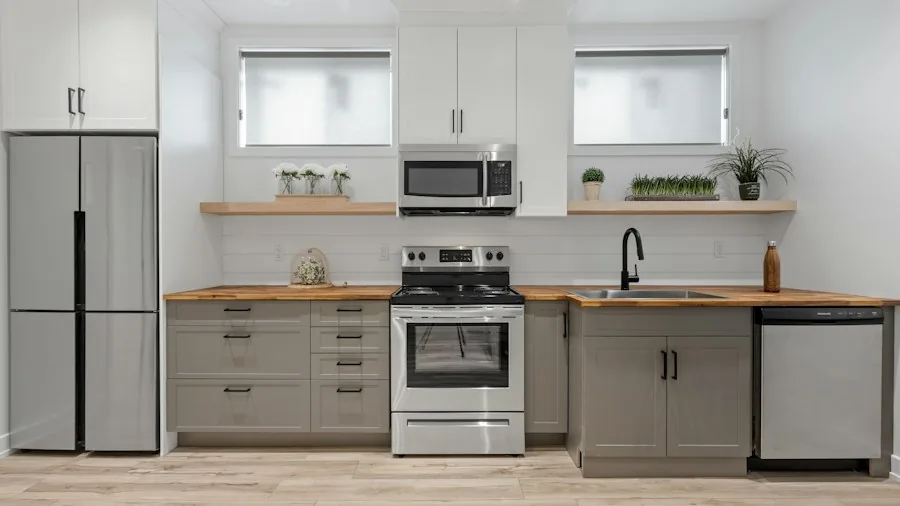
For families juggling complex storage needs, convertible refrigerators eliminate compromise. A household might currently operate as a full-freezer unit, supporting bulk purchases and meal prep. Five years later, when that same family needs two refrigerated sections instead, they simply switch the configuration through the app. No moving trucks, no installation crews, no second large appliance crowding the garage.
This flexibility particularly benefits growing families, multigenerational households, and anyone facing uncertain future needs. The upfront cost is higher than traditional freezers, but the longevity and adaptability offset the investment. When designers tackle kitchen layout challenges, they increasingly recommend convertible units because they handle multiple scenarios without redesign.
What Shoppers Should Know
Before purchasing a convertible refrigerator, measure your space carefully. These units typically measure around 30 inches wide and 67 inches tall, demanding dedicated floor space. Colors usually include white or stainless steel finishes. Capacity generally ranges from 15 to 22 cubic feet depending on the model.
Current promotions make these smart appliances more affordable than ever. Discounts of $300 to $400 are not uncommon, bringing premium models below the $1,000 threshold. For households struggling with the limitations of conventional freezers or those anticipating changing storage needs, convertible refrigerators represent a genuine innovation that reduces future purchasing headaches while maximizing immediate storage efficiency.





