A Major Shift in Kitchen Countertop Preferences Is Underway
If you’re planning a kitchen renovation or simply curious about current design trends, new data reveals a significant movement away from engineered quartz toward natural quartzite countertops. According to recent industry forecasts from the National Kitchen & Bath Association, approximately 78 percent of professional designers are now sourcing quartzite for renovations and new construction projects, marking a notable departure from the long-standing dominance of quartz in the market.
This shift is driven by both practical and regulatory concerns that are reshaping how homeowners and builders approach one of the most visible and durable elements of kitchen design. Understanding what’s happening in the countertop market can help you make a more informed decision if you’re considering an upgrade.
Understanding the Difference Between Quartzite and Quartz

Despite their similar names, quartzite and quartz are fundamentally different materials. Quartzite is a naturally occurring metamorphic rock formed deep within the earth. When used as a countertop material, quartzite slabs are sealed with protective coatings such as polyurethane, wax, or acrylic to guard against staining and etching. These sealants typically require reapplication every few years to maintain optimal protection.
Quartz, by contrast, is an engineered product manufactured by crushing natural quartz crystals and binding them together with polymer resins and pigments. This manufacturing process creates a non-porous, highly durable surface that resists stains and requires minimal maintenance compared to natural stone alternatives. While both materials can cost approximately the same per square foot, the composition of quartz presents an emerging problem that’s now affecting its market position.
Health and Environmental Concerns Driving the Market Change
California is preparing to become the first state in the nation to ban the production and installation of engineered quartz countertops. This regulatory action stems from serious occupational health concerns identified by California’s health and safety board. The issue centers on crystalline silica, a component found in man-made quartz products at concentrations exceeding 1 percent.
During manufacturing and installation, cutting engineered quartz releases fine dust particles that pose significant respiratory hazards to workers. Prolonged exposure to this dust can cause silicosis, a progressive lung condition that may eventually require lung transplantation for survival. The health implications extend beyond individual workers to broader public health considerations, which explains why designers and conscientious homeowners are reconsidering their material choices.
This regulatory shift is expected to influence purchasing decisions well beyond California’s borders, as health-conscious consumers nationwide become aware of these risks.
Why Quartzite Offers Superior Performance and Peace of Mind
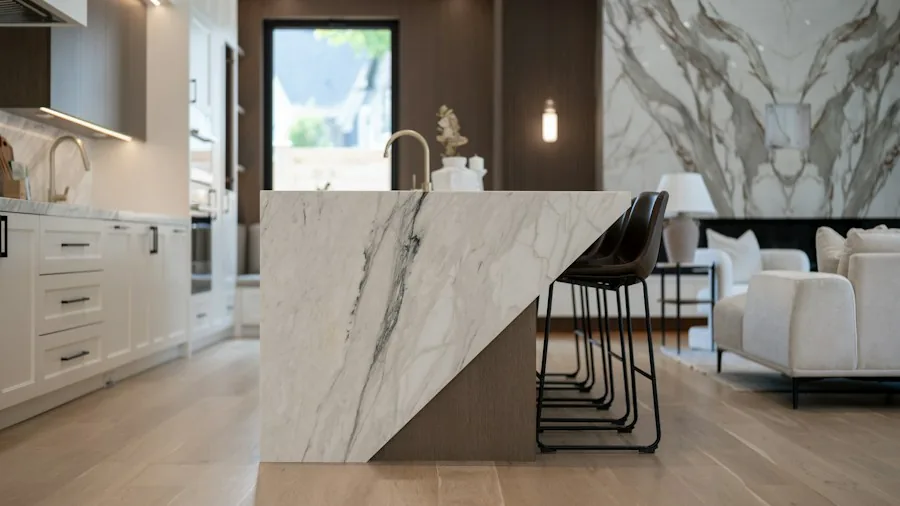
Quartzite delivers several compelling advantages that make it an attractive alternative to engineered quartz. The natural stone is significantly harder than many other countertop materials and demonstrates impressive resistance to etching and staining when properly sealed and maintained. Quartzite’s aesthetic appeal rivals that of marble, offering sophisticated veining patterns and color variations that create distinctive, personalized kitchen spaces.
When cared for appropriately through regular gentle cleaning and periodic resealing, quartzite countertops can perform flawlessly for decades, withstanding heavy daily use without compromising appearance or function. You can pair quartzite surfaces with functional additions like kitchen island dividers that hide clutter to create a comprehensive storage and design solution.
Beyond performance, choosing natural quartzite allows you to feel confident about your decision from an ethical standpoint. You’re selecting a material extracted from nature and finished rather than manufactured through a process that carries documented health risks.
Practical Considerations for Your Kitchen Decision
If you’re contemplating a kitchen remodel, the professional design community’s embrace of quartzite provides valuable guidance. The material’s growing popularity reflects not just a trend but a meaningful response to legitimate health and safety concerns.
When evaluating quartzite for your project, budget for regular maintenance including periodic resealing to preserve the protective barrier against stains. Understand that quartzite requires more care than engineered quartz, but many homeowners find the investment worthwhile for the natural beauty and ethical peace of mind the material provides.
Consider complementing your new countertop investment with supporting elements that enhance functionality. For instance, a stylish coffee maker can become a countertop focal point, while organizational solutions can maximize your counter space efficiency.
As the kitchen design industry continues evolving, quartzite stands out as the material choice that balances beauty, durability, and responsibility toward worker health and environmental considerations.