

A smoke detector is the one device in your home that should never fail you. Smart smoke detectors take that responsibility a step further by sending real-time alerts to your phone the moment an alarm triggers, warning you when a battery runs low before it starts chirping at 2 a.m., and in some cases even notifying emergency services automatically. Whether you live in a large multi-story house or a compact apartment, upgrading to a smart model is one of the simplest, highest-impact safety decisions a homeowner can make.
Our editorial team at HomeThru independently researched and analyzed the leading smart smoke detectors available right now, evaluating sensor technology, smart home compatibility, installation requirements, battery life, and real-world user feedback. The lineup below covers the top picks across every major use case, from hardwired whole-home systems to plug-in and battery-powered options, all from Kidde, one of the most trusted names in residential fire safety.
Top Smart Smoke Detectors

Pros
- No wiring required, making it perfect for renters and quick whole-home installation
- Real-time app notifications keep you informed whether you're home or away
- Wire-free interconnectivity ensures coordinated alerts across multiple detectors
- Faster smoke detection provides a safety advantage over standard models
- Low battery alerts prevent gaps in protection
Cons
- Requires compatible Ring app and internet connection; offline functionality is limited
- Battery replacement every 1-2 years adds ongoing maintenance costs compared to hardwired models
The Kidde Smart Smoke Detector bridges the gap between traditional fire safety and modern home automation. By connecting to your Ring app, this battery-powered detector sends instant notifications when smoke is detected, allowing you to respond quickly whether you're home, at work, or traveling. The wire-free design eliminates the need for professional installation, making it accessible for renters and homeowners alike.
A standout feature is the wire-free interconnectivity that synchronizes all Kidde alarms throughout your home. When one detector senses smoke, every alarm sounds simultaneously, ensuring no room goes unprotected and alerting everyone in the house. Additionally, Kidde's enhanced sensing technology reduces nuisance alarms from cooking, a common frustration with smoke detectors that can lead people to disable them entirely.
Performance-wise, this model detects smoke over 25% faster than competing models based on internal evaluation, giving your family critical extra seconds to evacuate safely. The two included AA batteries power the unit reliably, and low battery alerts notify you before power runs out. For those wanting professional monitoring, an optional Ring subscription adds 24/7 monitoring for $5 monthly, though it's not required for basic app notifications.
| Specification | Details |
|---|---|
| Brand | Kidde |
| Color | White |
| Dimensions | 2 x 5 x 5 inches |
| Size | 5 inches |
| Power Source | 2 AA alkaline batteries (included) |
| Connectivity | Ring App enabled, Alexa compatible, wire-free interconnectivity |
| Certifications | UL 217 and FCC standards |
| Category | Smoke Detectors & Fire Alarms |
Placement: Install detectors on every level of your home, inside bedrooms, and outside sleeping areas. Avoid placing them in kitchens where cooking steam triggers false alarms, though this model's enhanced sensing reduces that risk.
Maintenance: Test your detectors monthly by pressing the test button. Replace batteries annually or when the low battery alert sounds. Clean detectors quarterly with a vacuum to remove dust that can interfere with smoke detection.
Interconnectivity: Ensure all Kidde alarms are properly connected through the Ring app and within range of your home's Wi-Fi network. Check your user guide for setup instructions specific to your home layout.
Professional Monitoring: Consider the optional Ring subscription for 24/7 professional monitoring, especially if you travel frequently or want extra peace of mind beyond app notifications.
Is This Right for You? This detector works best for homeowners and renters who want smart fire protection without hardwired installation. If you rent, move frequently, or prefer app-based home automation, this battery-powered option eliminates installation barriers.
Home Size Considerations: Plan to purchase multiple units for whole-home coverage. The wire-free interconnectivity means you'll need at least one detector per level and outside sleeping areas. A typical three-bedroom home may need 4-6 units for comprehensive protection.
Internet Dependency: Real-time app notifications require an active internet connection and Ring account. The detectors will still function locally and sound alarms even if Wi-Fi drops, but you won't receive mobile alerts. Consider this if your internet is unreliable.
Cost Comparison: While the upfront cost per unit is reasonable, factor in battery replacement costs over time. Optional Ring monitoring adds $5 monthly if you choose professional 24/7 monitoring. Hardwired detectors may have lower lifetime costs but require professional installation.
Optimize App Notifications: Customize notification settings in your Ring app to ensure alerts reach your phone immediately. Test notifications monthly to confirm they're working, especially after app updates.
Battery Strategy: Replace all batteries at the same time each year (many homeowners choose Daylight Saving Time). Keep spare AA batteries on hand so a low battery alert doesn't leave you unprotected while waiting for replacements.
Maximize Interconnectivity: Place detectors within 30-40 feet of each other for reliable wireless communication. Avoid placing them in areas with heavy metal interference or far corners of the house where Wi-Fi signal is weak.
Reduce False Alarms: This model's enhanced sensing helps, but avoid placing detectors directly above stoves or in steamy bathrooms. If you still experience nuisance alarms, the 'hush' feature temporarily silences the alarm while you clear the air.

Pros
- Smart connectivity across your entire hardwired system with just one device
- Real-time mobile notifications for smoke and low battery warnings keep you informed away from home
- Enhanced sensing reduces nuisance alarms from cooking or steam
- Certified to UL 217 standards with comprehensive safety testing
- Everything needed for installation included in the box
Cons
- Requires 2.4 GHz Wi-Fi network; some homes with 5 GHz-only networks may need a router upgrade
- No reviews available yet, so real-world performance feedback from homeowners is limited
The Kidde Smart Hardwired Smoke Detector brings modern connectivity to a critical home safety device. This unit combines traditional hardwired reliability with app-based monitoring, allowing you to receive real-time alerts on your phone whether you're home or away. The hardwired design ensures constant power, while the AA battery backup provides protection during outages, making it a dependable choice for comprehensive fire safety coverage.
What sets this model apart is its advanced sensing technology, which delivers three times more precise smoke detection than conventional detectors. The enhanced algorithm significantly reduces false alarms triggered by cooking or bathroom steam, a common frustration for homeowners. The whole-home smart connectivity feature is particularly valuable: adding just one smart alarm to your existing hardwired system enables app control and notifications for every interconnected detector in your home, eliminating the need to replace your entire system.
Installation is straightforward with 2.4 GHz Wi-Fi connectivity, and the included hush button lets you silence false alarms remotely or manually. An automatic end-of-life alarm at 10 years removes the confusion about when to replace the detector. The device is certified to meet UL 217 standards, providing assurance that it meets rigorous fire safety requirements. For homeowners seeking reliable fire protection with smart home integration, this detector offers solid value and peace of mind.
| Specification | Details |
|---|---|
| Color | White |
| Dimensions | 2 x 5 x 5 inches |
| Weight | 1.21 pounds |
| Installation Type | Hardwired with AA Battery Backup |
| Wi-Fi Requirement | 2.4 GHz |
| Smoke Detection Precision | 3X more precise than standard models |
| End-of-Life Alert | 10 years from power-on |
| Safety Certification | UL 217 8th & 9th Edition, FCC Certified |
| Smart Features | Mobile alerts, remote hush, whole-home connectivity |
Installation: Turn off power at your breaker, disconnect the old detector, and wire the new unit according to the included diagram. Restore power and install the AA backup battery.
Wi-Fi Setup: Download the Kidde app, create an account, and follow the in-app prompts to connect your detector to your 2.4 GHz Wi-Fi network. Once connected, your hardwired alarms will be linked for whole-home monitoring.
Testing and Maintenance: Press the hush button monthly to verify the alarm sounds. You'll receive app notifications for low battery and end-of-life alerts. Replace the AA battery annually and the entire detector after 10 years.
Remote Control: From your phone, you can receive real-time smoke and battery alerts, silence false alarms, and monitor the status of all interconnected detectors in your home.
Placement Matters: Install detectors on every level of your home, inside bedrooms, and outside sleeping areas. Avoid placing them near kitchens or bathrooms where steam and cooking fumes trigger false alarms. This model's advanced sensing helps, but placement is still critical.
Battery and Power: Test your detector monthly using the hush button. Replace the AA backup battery annually, even if it hasn't been used. The hardwired connection ensures constant power, but the backup battery is your safety net during outages.
Interconnection Benefits: When hardwired detectors are interconnected and app-enabled, an alarm in one room triggers alerts throughout your home and on your phone. This gives you maximum warning time to evacuate safely, regardless of where the fire starts.
Replacement Schedule: The 10-year end-of-life alert is a safety feature, not a suggestion. Smoke detectors lose sensitivity over time, so replacing them on schedule is essential for reliable protection.
Is This Right for You? This detector is ideal if you have an existing hardwired smoke alarm system and want to add smart home monitoring without rewiring your entire home. It's perfect for homeowners who spend time away and want real-time alerts, or those frustrated by frequent false alarms from cooking.
Key Considerations: You'll need a 2.4 GHz Wi-Fi network for connectivity. If your home uses only 5 GHz Wi-Fi, you may need a dual-band router or Wi-Fi extender. Hardwired installation requires basic electrical work or a licensed electrician, depending on your comfort level.
Comparison Points: Unlike battery-only detectors, hardwired units ensure constant power and interconnection across your home. The smart features add convenience and peace of mind, but the core function remains fire detection and life safety. The advanced sensing technology specifically addresses cooking-related false alarms, a common complaint with standard detectors.
Long-Term Value: While the initial investment is higher than basic detectors, the reduced false alarms, app convenience, and 10-year lifespan make this a practical choice for homeowners serious about fire safety and smart home integration.

Pros
- 10-year battery design saves money and eliminates the need to remember annual battery replacements
- Voice alerts provide immediate, unmistakable notification compared to beeping-only detectors
- Combination unit reduces clutter by replacing two separate detectors with one compact device
- Enhanced sensing technology minimizes nuisance alarms from everyday cooking and bathroom steam
- Comprehensive UL certification ensures it meets the most current safety standards
Cons
- No user reviews currently available to confirm real-world performance and longevity claims
- When the 10-year battery expires, the entire unit must be replaced rather than just swapping batteries
The Kidde 10-Year Smoke and Carbon Monoxide Detector is a straightforward, practical choice for homeowners seeking reliable dual-threat protection without the maintenance burden. The standout feature is the sealed 10-year battery that eliminates the need for annual replacements and the dreaded low-battery chirps that interrupt sleep. Over the life of the detector, this design can save you money and spare you from the frustration of remembering when to swap batteries.
Voice alerts set this detector apart from basic beeping models. When smoke is detected, it announces 'Fire!' and for carbon monoxide threats, it clearly states 'Warning! Carbon Monoxide!' This audible clarity matters in emergencies when you need to understand the threat immediately. The enhanced sensing technology is designed to reduce false alarms caused by cooking or steam, a common complaint with older smoke detectors. The unit continuously self-tests its internal components, providing ongoing assurance that it will function when needed.
The 2-pack format makes it practical for covering multiple areas of your home, and the compact dimensions fit easily in bedrooms, hallways, and living spaces. The detector meets current UL standards including the 9th Edition of UL 217 for smoke detection and the 4th Edition of UL 2034 for carbon monoxide detection. This is a no-fuss option for homeowners who want protection to work quietly in the background for a decade.
| Specification | Details |
|---|---|
| Detection Type | Smoke and Carbon Monoxide (2-in-1) |
| Battery Type | 10-Year Sealed Battery (non-replaceable) |
| Alert Type | Voice Alerts and LED Warning Light |
| Color | White |
| Dimensions | 1.88 x 5 x 5 inches |
| Weight | 0.8 pounds |
| Package Contents | 2-Pack |
| UL Certifications | UL 217 9th Edition (Smoke), UL 2034 4th Edition (CO), FCC |
| Warranty | 10-Year Limited Warranty (alarm, not battery performance) |
| Self-Testing | Yes, continuous internal monitoring |
Placement Matters: Install one detector on each level of your home and in bedrooms. Smoke rises, so mount detectors on ceilings or high on walls. Carbon monoxide is odorless and colorless, so place detectors near sleeping areas and living spaces where you spend the most time.
Regular Testing: Although the detector includes self-testing technology, manually press the test button once per week to confirm it's working. This takes only seconds and gives you confidence in your protection.
Know the Difference: A voice alert saying 'Fire!' means smoke has been detected and you should evacuate immediately. A 'Warning! Carbon Monoxide!' alert means you should get outside to fresh air and call emergency services. Both threats require immediate action.
Battery Lifespan Planning: Mark your calendar for 10 years from installation so you remember to replace the entire unit when the sealed battery reaches the end of its life. Unlike traditional detectors, you cannot replace just the battery.
Who Should Buy This? Homeowners who want a low-maintenance solution and are tired of annual battery changes. It's especially valuable for people with multiple detectors or those who forget to replace batteries regularly.
Home Size Consideration: The 2-pack is ideal for small to medium-sized homes. Larger homes may need additional units for comprehensive coverage. A general rule is one detector per 600 square feet for smoke detection and detectors in bedrooms plus main living areas for carbon monoxide.
Comparing Combo vs. Separate Detectors: Combo detectors like this one save space and money compared to buying separate smoke and CO detectors. However, if one sensor fails, you replace the entire unit rather than just the faulty component. For most homeowners, the convenience and cost savings of a combo unit outweigh this consideration.
Budget Impact: The 10-year battery design means no ongoing battery expenses for a decade, making this a cost-effective long-term investment despite potentially higher upfront costs compared to basic detectors.
Installation Best Practices: Mount detectors on ceilings in the center of rooms when possible, as this provides optimal smoke detection. If ceiling mounting isn't feasible, place them high on walls within 12 inches of the ceiling. Avoid corners and areas near air vents where airflow can prevent smoke from reaching the sensors.
Maximize Voice Alert Effectiveness: Position at least one detector in your bedroom or sleeping area so you'll hear the voice alert during the night. Voice alerts are significantly more effective at waking people than traditional beeping, especially for heavier sleepers.
Maintenance and Longevity: Dust and debris can reduce detector sensitivity. Gently vacuum the exterior grilles every few months and avoid painting over the detector. Keep the area around detectors clear of obstructions like furniture or curtains that could block smoke from reaching the sensors.
Documentation: Write the installation date directly on the detector with a marker so you have a clear reference for when the 10-year battery will expire. This simple step prevents confusion years down the road about replacement timing.

Pros
- Early-warning CO detection at lower levels gives you a safety advantage for vulnerable household members
- App-based notifications mean you get alerts even when away from home, across multiple properties
- Battery backup with no low-battery chirps provides uninterrupted protection during power outages
- Air quality monitoring adds value beyond CO detection with mold risk and thermal comfort insights
- Compact oval design fits discretely on any outlet without aesthetic compromise
Cons
- Advanced Home Health subscription ($1.99/month) required for full air quality insights and trend analysis
- Requires 2.4 GHz Wi-Fi connection; may not function on 5 GHz-only networks or in areas with weak connectivity
The Kidde Smart Carbon Monoxide Detector represents a meaningful step forward in home safety technology for connected households. Unlike traditional CO detectors that only sound an alarm when dangerous levels are reached, this model uses advanced low-level CO technology to alert you at 30-70ppm through the Kidde App before concentrations become hazardous. This early-warning capability is particularly valuable if your household includes children, elderly family members, pregnant women, or pets who may be more vulnerable to CO exposure. The distinct light and sound patterns help you understand the severity of any situation at a glance.
Beyond CO monitoring, this detector measures indoor air quality, humidity, and volatile organic compound (TVOC) levels, providing weekly trend reports and personalized insights about mold risk and thermal comfort. The dual power system is thoughtfully designed: the plug-in connection offers seamless integration into your smart home ecosystem, while two included AA batteries provide backup during power outages without the annoying low-battery chirps that plague many detectors. The rotating plug accommodates both vertical and horizontal outlets, making installation flexible in any room.
The smart home integration works with Alexa and Google Home, allowing you to receive notifications across multiple devices and monitor several properties simultaneously if needed. The device meets UL 2034 5th Edition standards and carries a 10-year limited warranty, reflecting Kidde's confidence in its reliability. For homeowners prioritizing connected safety and air quality awareness, this detector delivers practical value and peace of mind.
| Specification | Details |
|---|---|
| Color | White |
| Shape | Oval |
| Dimensions | 1.52 x 2.9 x 5.47 inches |
| Weight | 0.43 pounds |
| Power | Plug-in (120V) with AA Battery Backup |
| Wi-Fi | 2.4 GHz enabled |
| Alarm Volume | 85 dB |
| CO Detection Range | Early alert at 30-70ppm; dangerous level alarm at 70ppm+ |
| Certifications | UL 2034 5th Edition, ETL Listed |
| Warranty | 10-year limited warranty |
| Smart Home Compatible | Alexa and Google Home |
| Additional Monitoring | Indoor air quality, humidity, TVOC levels |
Installation: Plug the detector into a standard 120V outlet in a central location, preferably near bedrooms. The rotating plug allows you to orient it vertically or horizontally without blocking adjacent outlets. Install the two included AA backup batteries in the designated compartment.
Initial Setup: Download the Kidde App and create an account. Follow the in-app prompts to connect the detector to your 2.4 GHz Wi-Fi network. Add the device to your Alexa or Google Home app for voice control and multi-device notifications.
Ongoing Monitoring: The detector continuously monitors CO levels and air quality. Check the app weekly to review air quality trends and humidity levels. If the optional Advanced Home Health subscription is active, review personalized mold risk and thermal comfort insights. Replace AA backup batteries annually or when prompted by the app.
Alarm Response: If the alarm sounds, evacuate immediately and call emergency services. Different light and sound patterns indicate early-warning versus dangerous CO levels. The app will send simultaneous notifications to all linked devices.
Placement Matters: Install this detector in central locations where you spend the most time, particularly near bedrooms. For multi-story homes, consider installing detectors on each level. Avoid placing it near windows, doors, or vents where drafts may affect readings. Keep at least 15 feet away from fuel-burning appliances when possible, but never skip protection near furnaces or water heaters.
Understand the Alerts: This detector uses distinct patterns for different CO levels. Early-warning alerts at 30-70ppm help vulnerable household members seek fresh air before dangerous exposure occurs. The different alarm pattern at 70ppm+ signals an immediate threat requiring emergency evacuation. Familiarize your household with these distinctions.
Maintenance and Reliability: Test the detector monthly using the test button. Replace backup batteries annually, even if the app hasn't prompted you. Ensure your Wi-Fi network remains stable; if connectivity drops, the detector still functions as a traditional CO alarm. Keep the device clean and dust-free for optimal sensor performance. If the alarm ever sounds, treat it seriously and evacuate immediately, even if you don't smell anything.
Know Your Risk: CO is produced by any fuel-burning appliance: furnaces, water heaters, stoves, fireplaces, and car exhaust in attached garages. The risk increases in winter when homes are sealed tight and heating systems run continuously. This detector's early-warning capability is especially valuable during cold months and in homes with multiple potential CO sources.
Who Should Buy This? This detector is ideal for homeowners who want connected safety technology and real-time alerts whether they're home or away. It's especially valuable if your household includes young children, elderly family members, pregnant women, or pets who may be more vulnerable to CO exposure. If you already use smart home devices like Alexa or Google Home, this integrates seamlessly into your ecosystem.
Key Considerations: You'll need a stable 2.4 GHz Wi-Fi network for full functionality. The optional Advanced Home Health subscription ($1.99/month) unlocks air quality insights; without it, you still get CO protection and basic air quality readings. Consider how many properties you manage: the app allows monitoring multiple detectors across different homes, making it useful for property managers or those with vacation homes.
Comparing Your Options: Traditional plug-in CO detectors are cheaper but offer no remote notifications or air quality monitoring. Battery-only detectors require frequent battery changes and produce low-battery chirps. This model balances convenience (plug-in power), reliability (battery backup), and intelligence (smartphone alerts and air quality data). The early-warning CO detection at 30-70ppm is a meaningful safety advantage over standard detectors that only alarm at higher levels.
Long-Term Value: The 10-year limited warranty and UL 2034 5th Edition certification reflect industry-standard reliability. The rotating plug design prevents outlet waste, and the lack of low-battery chirps improves household peace of mind. For families prioritizing connected home safety with air quality awareness, this detector delivers measurable value over its lifespan.
Pros
- Smart alerts via app and voice keep you informed even when away from home
- Hardwired design with battery backup provides dependable, always-on protection
- Alexa integration fits seamlessly into existing smart home ecosystems
- Combines traditional fire safety reliability with modern connectivity features
Cons
- Mixed user feedback on WiFi connectivity stability and occasional false alerts
- Requires professional or careful DIY hardwired installation, not suitable for renters or temporary setups
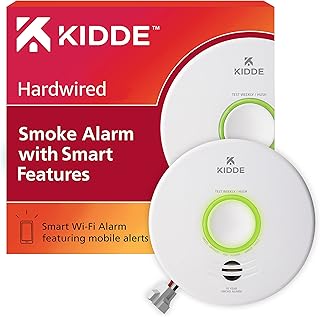
The Kidde Smart Smoke Detector bridges the gap between traditional fire safety and modern smart home technology. This hardwired unit maintains the reliability of conventional smoke detectors while adding WiFi connectivity and Alexa compatibility, allowing homeowners to receive instant notifications on their phones and smart speakers when smoke is detected.
Installation involves hardwiring the detector into your home's electrical system with battery backup for power outages, making it a permanent fire safety solution. The app provides real-time status checks and alerts, while voice notifications through Alexa ensure you're aware of dangers even when your phone isn't nearby. This dual-alert system offers flexibility for different household situations.
User feedback indicates strong appeal for tech-savvy homeowners seeking integrated smart home fire safety, though some report occasional WiFi connectivity issues and false alerts. For those prioritizing connected home monitoring and willing to manage occasional app notifications, this detector delivers both traditional protection and modern convenience in one device.
| Installation Type | Hardwired with Battery Backup |
| Connectivity | WiFi Enabled |
| Smart Home Compatibility | Amazon Alexa |
| Alert Methods | Voice Alerts, App Notifications, Audio Alarm |
| Detection Type | Smoke Detection |
| Power Source | Hardwired (120V) with Battery Backup |
| Standards Compliance | UL Listed |
| Mobile App | Yes, iOS and Android Compatible |
Before You Start: Turn off power at your breaker box. Locate existing hardwired smoke detector wiring or consult an electrician if installing new circuits. Ensure you have the correct voltage (120V) available.
Installation Steps: Turn off power to the circuit. Remove the old detector if replacing. Connect the new detector's wiring to the existing hardwired connection following the provided wiring diagram. Install the backup battery in the designated compartment. Restore power and follow the app setup instructions to connect to WiFi and link with your Alexa device.
Important: If you're uncomfortable with electrical work, hire a licensed electrician. Test the detector after installation using the test button. Check battery backup monthly and replace batteries as needed per manufacturer instructions.
Placement: Install detectors on every level of your home, inside bedrooms, and outside sleeping areas. Avoid kitchens and bathrooms where steam and cooking fumes can trigger false alarms. Keep detectors at least 10 feet from cooking appliances.
Maintenance: Test your detector monthly using the test button. Vacuum or dust the exterior quarterly to prevent debris buildup. Replace batteries promptly when the low-battery indicator sounds. Detectors should be replaced entirely every 10 years.
App Monitoring: Enable all notification settings in the app and verify alerts are reaching your phone and Alexa devices. During power outages, confirm the battery backup is functioning. Keep your WiFi network stable and your app updated for reliable connectivity and alerts.
Is This Right for You? Choose this detector if you want fire safety combined with smart home connectivity, have existing hardwired smoke detector infrastructure or are willing to install it, and use Amazon Alexa in your home. It's ideal for homeowners seeking remote monitoring and voice-based alerts.
Consider Alternatives If: You rent your home and need portable solutions, prefer battery-only detectors, don't use Alexa, or want the simplest traditional smoke detection without smart features. Some users prefer dedicated hardwired units without WiFi complexity.
Key Considerations: Verify your home has hardwired detector wiring or budget for professional installation. Confirm your WiFi network is reliable and covers your detector's location. Check that Alexa compatibility matches your existing smart home setup. Read user reviews about connectivity reliability in your area before purchasing.

Pros
- Long-lasting 10-year battery saves money and eliminates maintenance reminders
- Smart sensing technology reduces nuisance alarms from cooking or steam
- Faster smoke detection gives you critical extra seconds to respond
- Compact 5-inch design fits easily on walls or ceilings without clutter
- Three-pack provides whole-home coverage at good value
Cons
- No user reviews available yet, so real-world performance feedback is limited
- Non-replaceable battery means you must replace the entire unit after 10 years
The Kidde 30CUD10 combines smoke and carbon monoxide detection in a single, compact device designed for homeowners who want straightforward protection without complexity. The 10-year sealed battery is a major convenience factor, eliminating the annoying low-battery chirps that plague traditional detectors and saving roughly $40 in replacement batteries over the unit's lifespan. This approach appeals to busy homeowners who want set-it-and-forget-it reliability.
What sets this model apart is its advanced sensing technology, which delivers 25% faster smoke detection than standard models while simultaneously reducing false alarms triggered by cooking or steam. This balance matters in real kitchens, where false alarms lead many people to disable detectors entirely. The unit meets rigorous UL 217 and UL 2034 safety standards, ensuring it performs consistently when it matters most. The 85 dB alarm is loud enough to wake sleeping occupants, and the red LED provides visual confirmation that the detector is functioning.
The three-pack format makes it practical for whole-home coverage, placing detectors on each level and in bedrooms as recommended by fire safety experts. This is a solid choice for homeowners, rental property managers, and contractors who prioritize dependable, code-compliant detection without ongoing maintenance headaches. The 10-year limited warranty provides additional peace of mind for long-term protection.
| Specification | Details |
|---|---|
| Brand | Kidde |
| Model | 30CUD10 |
| Detection Type | Smoke and Carbon Monoxide (2-in-1) |
| Battery | 10-Year Built-in (Non-replaceable) |
| Alarm Volume | 85 dB |
| Dimensions | 1.88 x 5 x 5 inches |
| Weight | 0.48 pounds |
| Color | White |
| Package Contents | 3-Pack |
| Safety Standards | UL 217 (10th Edition), UL 2034 (5th Edition), FCC Compliant |
| Warranty | 10-Year Limited Warranty |
Placement Matters: Install one detector on each level of your home, including the basement. Place bedroom detectors inside sleeping areas or just outside them so alarms wake occupants. Avoid placing detectors in kitchens, bathrooms, or near cooking appliances where steam and cooking vapors trigger false alarms.
Regular Checks: Even with a 10-year battery, press the test button monthly to confirm the alarm sounds. If the detector doesn't alert, replace the unit immediately. Keep detectors clean by gently vacuuming or wiping them with a soft cloth to prevent dust buildup that can interfere with sensors.
Replacement Timeline: Mark your calendar for the 10-year replacement date. After 10 years, the battery and sensors degrade and the unit should be replaced entirely. Don't wait for a malfunction. For rental properties, maintain clear records of installation and replacement dates to ensure compliance with local fire codes.
How Many Do You Need? Fire safety experts recommend at least one detector per level plus one in each bedroom. The three-pack is perfect for a typical single-family home. Larger homes may need additional units.
Why Combination Detectors? Smoke and carbon monoxide are both silent killers. Combination units reduce the number of devices you need to maintain and ensure you're protected against both threats. This is especially valuable in homes with fuel-burning appliances like furnaces, water heaters, or fireplaces.
Battery vs. Hardwired: Battery-powered detectors offer flexibility in placement and don't require electrical work. The 10-year battery eliminates replacement hassles compared to traditional 9V battery models. If your home has hardwired detectors, battery units work well as supplements in bedrooms or remote areas.
Ideal For: Homeowners seeking low-maintenance protection, renters who can't hardwire detectors, rental property managers who want reliable code compliance, and anyone tired of replacing batteries or dealing with false alarms.

Pros
- Two-in-one functionality eliminates the need for separate air quality monitors
- Smart home compatibility offers convenient voice control and remote monitoring capabilities
- Hardwired design with battery backup provides reliable, continuous protection
- App-based alerts give you real-time awareness of both smoke and air quality issues
- Modern approach to home safety appeals to homeowners upgrading to connected devices
Cons
- WiFi connectivity issues reported by some users, requiring troubleshooting or manual reconnection
- Mixed user reviews suggest inconsistent performance and occasional false alerts
The Kidde Smart Smoke Detector and Indoor Air Quality Monitor represents a modern approach to home safety by combining two essential functions into a single connected device. Rather than installing separate smoke detectors and air quality sensors, homeowners can consolidate their safety infrastructure while gaining WiFi-enabled smart home integration. The hardwired installation with battery backup ensures the device continues operating during power outages, which is critical for fire safety.
From a practical standpoint, this device appeals to homeowners who've already invested in smart home ecosystems like Alexa and want unified control over their safety devices. The dual alert system through both voice notifications and mobile app notifications provides flexibility for different situations and household members. The air quality monitoring component adds value beyond traditional smoke detection, helping you track indoor environmental conditions that affect respiratory health and comfort.
However, user feedback reveals some important considerations before purchasing. WiFi connectivity has been problematic for certain users, and the device occasionally experiences false alerts. These issues suggest the technology may not be as refined as traditional hardwired detectors. Homeowners should carefully evaluate whether the smart features justify potential connectivity troubleshooting and whether a conventional detector might better suit their needs if reliability is the top priority.
| Specification | Details |
|---|---|
| Installation Type | Hardwired with Battery Backup |
| Primary Function | Smoke Detection |
| Secondary Function | Indoor Air Quality Monitoring |
| Connectivity | WiFi Enabled |
| Smart Home Compatible | Amazon Alexa Compatible |
| Alert Methods | Voice Alerts, Mobile App Notifications |
| Power Source | Hardwired (120V) with Battery Backup |
| Battery Type | Backup Battery (included) |
| ASIN | B0C44LLXQH |
Hardwired Installation: This detector requires hardwired installation into your home's electrical system, which typically means running wiring through your ceiling or walls. If you're not comfortable with electrical work, hire a licensed electrician to ensure proper installation and code compliance.
WiFi Configuration: After physical installation, you'll need to connect the device to your home WiFi network through the mobile app. Follow the manufacturer's setup instructions carefully, and ensure your WiFi signal is strong in the installation location to avoid connectivity issues.
Alexa Pairing: Once WiFi is established, enable the Kidde skill in your Alexa app and follow the pairing prompts. Test voice commands and notifications to confirm everything is working before relying on the device for daily protection.
Smoke Detection Priority: Remember that smoke detection is the primary safety function. Even if WiFi or app features fail, the device should still alert you to smoke through its built-in alarm. Verify the alarm sounds properly during setup.
Battery Backup Testing: Test the battery backup function periodically by turning off power to the circuit. The device should continue operating and alerting on battery power alone. Replace batteries according to manufacturer recommendations.
Placement Matters: Install detectors in bedrooms, hallways, and on every level of your home. Keep detectors away from kitchens, bathrooms, and areas prone to steam or cooking fumes to minimize false alarms. Ensure WiFi signal reaches your installation location for reliable smart features.
Who Should Buy This: Tech-savvy homeowners who want smart home integration and don't mind potential connectivity troubleshooting. Ideal if you're upgrading your entire home to connected devices and want centralized control through Alexa.
Who Might Want to Skip: Homeowners prioritizing absolute reliability over smart features, renters who can't install hardwired detectors, or those with weak WiFi coverage in their home. If connectivity issues frustrate you easily, a traditional hardwired detector may be more suitable.
Key Questions Before Buying: Do you have strong WiFi coverage where you'll install this? Are you comfortable with electrical installation or willing to hire an electrician? Is smart home integration important enough to justify potential connectivity issues? Would a simpler, non-connected detector better meet your safety needs?
Buying Guide: How to Choose the Right Smart Smoke Detector
Not every smart smoke detector suits every home. Before you add one to your cart, it is worth understanding the key factors that separate a reliable device from one that will frustrate you with false alarms or dead connectivity. The sections below break down the most important considerations our team identified during our research process.
Wired vs. Battery-Powered Installation
The single biggest fork in the road when shopping for smart smoke detectors is whether your home is already wired for hardwired alarms. Hardwired models, like the Kidde Smart Smoke Detector with WiFi and the Kidde App Enabled Smart Smoke Detector, connect directly to your home’s electrical system and use a battery only as a backup. This means they never fully die, and they can be interconnected so that when one alarm sounds, every alarm in the house sounds. That whole-home interconnectivity is a critical safety feature endorsed by fire safety guidelines.
If your home lacks the wiring infrastructure, battery-powered options are far more practical. The Kidde Smart Smoke Detector with Ring App runs entirely on AA batteries and uses wire-free interconnectivity through its app, so you still get whole-home coverage without touching a single wall. The Kidde Smoke and Carbon Monoxide Detector 2-Pack takes a similar approach with a sealed 10-year battery, meaning zero battery changes for a decade.
Sensor Type: Ionization vs. Photoelectric
Inside every smoke detector is a sensor that determines what kind of fire it catches earliest. Ionization sensors respond quickly to fast-flaming fires, the kind that can spread through a dry Christmas tree in under a minute. Photoelectric sensors are better at detecting slow-smoldering fires, such as those that start in upholstered furniture, which actually cause the majority of residential fire deaths because they produce thick smoke before any visible flame appears.
The safest choice is a detector that uses dual-sensor technology or pairs a smoke detector with a carbon monoxide detector. Models like the Kidde Smart Smoke Detector and Indoor Air Quality Monitor and the Kidde Smart Carbon Monoxide Detector and Air Quality Monitor go even further by monitoring air quality metrics beyond just smoke and CO, giving you a more complete picture of what is happening in your home’s air at any given moment.
Smart Home Ecosystem Compatibility
Smart smoke detectors earn their “smart” label through connectivity, and that connectivity is only as useful as the ecosystem you already use. If you have built out a Ring security system, the Kidde Ring App Enabled Smart Smoke Detector integrates directly, letting you manage smoke alerts from the same app as your doorbell camera and contact sensors. If you rely on Alexa for home automation, the WiFi-enabled Kidde hardwired models are certified Alexa compatible, so you can ask Alexa for a status update or have it announce alerts through your Echo devices.
Thinking about how your detector fits into a broader home setup is the same kind of forward-thinking approach you bring to any major home improvement purchase, whether that is choosing the right cordless drills for installation work or picking tools that grow with your projects.
Carbon Monoxide Detection: Why Combination Units Make Sense
Carbon monoxide is odorless and colorless, and it kills roughly 400 Americans every year in non-fire-related incidents. Many jurisdictions now legally require CO detectors in homes, particularly near sleeping areas. Combination smoke and CO detectors let you cover both threats with a single device, reducing the number of units you need to buy, install, and maintain.
The Kidde Smoke and Carbon Monoxide Detector 3-Pack is an excellent solution for homeowners who need to outfit multiple rooms efficiently. At a per-unit price well below buying individual detectors, this bundle makes compliance with local code requirements straightforward and affordable. The Kidde 10-Year Battery Smoke and CO Detector 2-Pack similarly offers long-term, maintenance-light coverage with voice alerts that tell you specifically whether the threat is smoke or carbon monoxide, removing any guesswork during an emergency.
Indoor Air Quality Monitoring
A growing category within smart smoke detectors is integrated air quality monitoring. Beyond smoke and CO, some devices now track humidity, temperature, and volatile organic compounds (VOCs) that can indicate mold growth, off-gassing from new materials, or other indoor air concerns. The Kidde Smart Smoke Detector and Indoor Air Quality Monitor and the Kidde Smart Carbon Monoxide Detector with Air Quality Monitor both offer this expanded visibility, making them especially valuable for households with young children, elderly family members, or anyone with respiratory sensitivities.
Think of air quality monitoring as the equivalent of using a precision level on a project when a rough eyeball check would have done the job before. It gives you more data and catches problems you might otherwise miss until they become serious.
Voice Alerts and App Notifications
One underrated feature of smart smoke detectors is clear, specific voice alerts. Rather than just sounding a generic alarm, voice-enabled detectors announce exactly what is happening and where. This is particularly valuable in multi-story homes where you may not immediately know whether an alarm originated upstairs or in the basement.
App notifications extend that clarity to wherever you happen to be. If you are at work and your detector senses smoke, you get a push notification immediately, giving you time to call a neighbor, check a camera, or contact emergency services before a small incident becomes a catastrophe. Every model in this roundup supports app-based alerts, though the specific apps vary by model.
Alarm Volume and Placement
The National Fire Protection Association (NFPA) recommends smoke detectors in every bedroom, outside every sleeping area, and on every level of the home including the basement. Most smart smoke detectors in this guide produce 85 dB alarms, which is loud enough to wake a sleeping adult even through a closed door. Proper placement matters as much as volume. Keep detectors away from cooking appliances to reduce false alarms, and do not place them near HVAC vents or drafts that could dilute smoke concentration and delay detection.
Planning the layout of your detector network is a practical project in itself, one that pairs well with having reliable tape measures and a solid set of utility knives on hand for any mounting and wire-management work during installation.
Battery Life and Maintenance
One of the most frustrating aspects of traditional smoke detectors is the low-battery chirp, often appearing at the least convenient times. Smart detectors solve this by sending app notifications well before the battery reaches a critical level, giving you days or even weeks to replace it at a convenient time. Sealed 10-year battery models, like those from the Kidde long-life lineup, eliminate battery changes entirely for a decade and are designed to be replaced as a complete unit at end of life rather than requiring annual maintenance.
Interconnectivity Across Your Home
Whether you go hardwired or wireless, interconnectivity is a feature worth prioritizing. When one detector senses smoke, every interconnected unit in the home should sound simultaneously. This is especially important for deeper parts of the house, like garages, basements, or rooms far from the primary alarm location. The Kidde Hardwired App Enabled Smart Smoke Detector supports traditional wired interconnect alongside smart app functionality, making it easy to integrate into an existing network of non-smart Kidde alarms without replacing your entire system at once.
Why Trust HomeThru
HomeThru is an independent editorial platform. We do not sell products, fulfill orders, or handle returns. Our team researches, evaluates, and compares home products based on publicly available specifications, verified user reviews, and input from home safety resources, without any manufacturer influence over our conclusions. We have no financial relationship with Kidde or any other brand featured in this guide. When we recommend a product, it is because the evidence supports that recommendation.
Our approach to evaluating home safety equipment draws on the same methodical framework we apply to any home product category, whether we are analyzing impact drivers for DIY projects or comparing random orbital sanders for finishing work. We look at real-world performance data, aggregate user feedback, and category-specific safety standards to give you a clear, honest picture of what each product actually delivers.
Final Thoughts
Every detector in this guide offers meaningful advantages over traditional smoke alarms. The right choice depends on your home’s wiring situation, your preferred smart home ecosystem, and whether you need single-threat or multi-threat coverage. Here is how we categorize the standout picks from this lineup:
- Best Overall: Kidde Smart Smoke Detector with Ring App offers wire-free interconnectivity and real-time Ring app notifications, making it the most versatile option for homes without hardwired infrastructure.
- Best for Hardwired Homes: Kidde App Enabled Smart Smoke Detector integrates cleanly into existing hardwired Kidde alarm networks while adding app-based monitoring through the Kidde platform.
- Best Combo Coverage: Kidde 10-Year Battery Smoke and CO Detector 2-Pack delivers smoke and carbon monoxide protection with zero battery maintenance for a decade, earning a strong four-star-plus rating from verified buyers.
- Best for Air Quality Monitoring: Kidde Smart Carbon Monoxide Detector and Air Quality Monitor goes beyond basic detection to track VOCs and environmental data, making it ideal for health-conscious households.
- Best Value Multi-Pack: Kidde Smoke and CO Detector 3-Pack provides whole-home coverage at a per-unit price that makes full compliance with NFPA placement guidelines genuinely affordable.
A smart smoke detector is not a luxury upgrade. It is the most consequential safety device in your home, and the smart features make it meaningfully more effective at the job it has always been designed to do. Pair your detection network with routine home maintenance habits, and you are giving your household the best possible foundation for long-term safety. For other home improvement projects around the same time, reliable claw hammers and a quality set of hand saws can handle a wide range of installation and finishing tasks with minimal fuss.
Frequently Asked Questions
How many smart smoke detectors do I need for my home?
The NFPA recommends at least one smoke detector on every level of your home, including the basement, inside every bedroom, and outside each sleeping area. For a two-story, three-bedroom home, that typically means a minimum of six to eight units. Smart detectors with interconnectivity let all of them alert simultaneously, so even a remote location like a finished basement is covered when an upstairs alarm triggers. Planning your layout carefully using accurate measuring tools helps you space units for maximum coverage.
Do smart smoke detectors work without Wi-Fi?
Yes. Every smart smoke detector in this guide will still sound its local audible alarm even if your Wi-Fi goes down or your router loses power. The smart features, such as push notifications and remote monitoring through the app, require an active internet connection. But the core life-safety function works independently of any network, making these devices reliable even during power outages when they have battery backup.
Can I mix smart and non-smart Kidde detectors in the same home?
In most cases, yes. Kidde designs many of its smart hardwired models to be backward compatible with traditional wired Kidde alarms. The Kidde App Enabled Smart Smoke Detector is a good example, supporting standard wired interconnect so existing non-smart alarms will sound alongside the smart unit when an alarm triggers. Always verify compatibility with Kidde’s documentation before purchasing, as specific model families may have restrictions.
Where should I not place a smart smoke detector?
Avoid placing smoke detectors directly near cooking appliances, since normal cooking vapors can trigger frequent false alarms. Bathrooms with steam, garages where exhaust fumes are present, and areas directly in front of HVAC supply vents are also poor locations. Drafts from vents can carry smoke away from the sensor before it reaches alarm threshold. Corners where two walls meet are similarly poor spots because air circulation is limited there.
When you are doing the physical installation work, a capable cordless drill and a good spirit level will make mounting quick and clean on any ceiling or wall surface.





Write Your Review
No reviews yet. Be the first to share your experience!