

Wire strippers are one of those hand tools that separate a clean, safe electrical job from a frustrating, potentially dangerous one. Whether you are roughing in a new outlet, chasing a short in your car, or tackling a home theater wiring project, the right wire stripper makes the work faster and the finished connections more reliable. A dull, cheap stripper nicks the conductor, weakens the wire, and invites heat buildup at the connection point. A well-designed tool sized to your wire gauge does the opposite: it removes insulation in a single smooth motion and leaves the copper or aluminum underneath completely undamaged.
Our editorial team at HomeThru independently researched and analyzed the wire strippers available today, comparing build quality, AWG range, grip ergonomics, cutting geometry, and long-term durability feedback from verified purchasers. We focused on options that cover the widest range of real-world applications, from fine automotive and electronics work all the way up to heavy Romex and NM cable used in residential rough-in. Below you will find the models that rose to the top, followed by a detailed buying guide to help you match the right tool to your specific wiring tasks. If you are building out a complete toolkit, pairing your wire stripper with quality utility knives and a reliable tape measure covers most of what you need for everyday electrical and general DIY work.
Top Wire Strippers of 2026

Pros
- Effortless single-action operation reduces hand fatigue during repetitive stripping tasks
- Precision engineering prevents wire damage, ensuring quality electrical connections
- Durable construction holds up to heavy daily use without degrading performance
- Versatile AWG range covers most residential and light commercial electrical work
- Generous 1-inch stripping length speeds up jobs requiring longer bare wire sections
Cons
- Limited to 8-22 AWG range, so heavier gauge cables require a different tool
- No reviews available yet, so long-term durability feedback from users is not yet documented
The Klein Tools 11063W wire stripper combines automatic stripping action with precision engineering, making it a standout choice for anyone who strips wire regularly. The compound-action mechanism requires just a single squeeze to cut and strip in one motion, dramatically reducing the repetitive hand movements that cause fatigue during extended work sessions. This efficiency translates directly to faster project completion and more comfortable tool handling.
What sets this stripper apart is its precision-machined holes and tension-loaded wire grip, which work together to remove insulation cleanly without nicking or damaging the underlying copper. This matters because damaged wire weakens electrical connections and can create safety hazards. The tool handles solid wire from 8-20 AWG and stranded wire from 10-22 AWG, covering the vast majority of residential and light commercial electrical applications. The ability to strip up to 1 inch of insulation in a single step is particularly valuable for jobs requiring longer bare wire sections.
Built with a cast alloy chassis and protective Ecoat finish, this stripper is engineered for durability in demanding environments. Whether you're running new circuits in a renovation, installing smart home devices, or tackling regular maintenance, the 11063W delivers the reliability and consistency that professionals expect. It's an investment in a tool that will serve you well across multiple projects and years of use.
| Specification | Details |
|---|---|
| Brand | Klein Tools |
| Model | 11063W |
| Tool Type | Wire Stripper and Cutter |
| Solid Wire Range | 8-20 AWG |
| Stranded Wire Range | 10-22 AWG |
| Max Insulation Strip Length | 1 inch (25 mm) |
| Stripping Method | Compound action, single-squeeze operation |
| Wire Grip Type | Tension-loaded grip |
| Chassis Material | Cast alloy with Ecoat finish |
| Finish | Heavy-duty corrosion-resistant Ecoat |
| Category | Electrical Hand Tools |
Basic Operation: Open the tool's jaws and insert the wire into the appropriate stripping hole for your wire gauge. Squeeze the handles together in a single smooth motion. The tool will cut the wire and strip the insulation simultaneously. Release the handles to open the jaws and remove the stripped wire.
Selecting the Right Hole: The 11063W has multiple precision-machined holes sized for different AWG ratings. Match your wire gauge to the correct hole to ensure clean, damage-free stripping. Using the wrong hole can result in nicked wire or incomplete insulation removal.
Wire Positioning: Hold the wire straight and centered in the selected hole. The tension-loaded grip will hold the cable in place. Maintain steady pressure as you squeeze for consistent results. For longer insulation strips (up to 1 inch), ensure the wire is fully inserted before squeezing.
Maintenance: Wipe the tool clean after use to remove insulation debris and copper particles. Keep the pivot point and jaws free of buildup. Store in a dry location to preserve the corrosion-resistant finish.
Electrical Safety: Always verify that circuits are de-energized before stripping wires. Use a voltage tester to confirm power is off. Never work on live circuits, as accidental contact can cause serious injury or electrocution.
Wire Handling: Inspect wire for damage before stripping. Avoid stripping wire that appears frayed, corroded, or compromised. Damaged wire should be cut away and replaced rather than used in connections.
Tool Safety: Keep fingers clear of the cutting edges when squeezing the handles. Do not force the tool on wire gauges outside its rated range, as this can damage the tool or cause slipping that results in hand injuries. Always squeeze smoothly and deliberately, never jerk the handles.
Work Environment: Use the tool in adequate lighting so you can see the wire gauge markings and ensure proper hole selection. Keep your work area organized and free of clutter to prevent accidents. Wear safety glasses when stripping wire to protect against flying insulation particles.
Gauge Verification: When in doubt about wire gauge, use a gauge reference chart or micrometer to verify before selecting a stripping hole. Taking an extra 10 seconds to confirm gauge prevents nicked wire that can compromise connection quality and longevity.
Consistent Stripping Length: Practice achieving consistent insulation strip lengths across multiple wires. This makes connections neater, reduces the risk of accidental shorts, and speeds up the overall installation process. Aim for 3/8 to 1/2 inch for most terminal connections unless specifications require otherwise.
Batch Processing: When stripping multiple wires of the same gauge, keep them organized by gauge and process them in batches. This workflow reduces the need to switch between holes and improves efficiency on larger projects.
Tool Care for Longevity: After each project, wipe down the tool and apply a light machine oil to the pivot point to prevent corrosion and keep the action smooth. The Ecoat finish is durable, but regular maintenance extends tool life significantly.
Pairing with Other Tools: Use the 11063W in combination with a quality voltage tester, wire crimper, and needle-nose pliers for a complete basic electrical toolkit. This combination covers 90 percent of residential wiring tasks.

Pros
- Automatic operation strips insulation cleanly without damaging copper wire underneath
- Trusted brand with decades of professional-grade tool manufacturing heritage
- Ergonomic grip reduces hand strain during high-volume wire stripping tasks
- Compact size makes it portable and easy to store in any toolkit
- Covers the most common residential wire gauges in a single tool
Cons
- Higher upfront cost compared to basic manual wire strippers limits appeal to occasional users
- Limited to 10-24 AWG range, so you'll need a separate tool for thicker or thinner specialty wire
The KNIPEX Automatic Wire Stripper is built for professionals and serious DIYers who strip wire frequently enough to justify a premium tool. Its automatic mechanism does the heavy lifting for you, which means less repetitive strain on your hands and wrists compared to manual strippers. The 10-24 AWG range covers the vast majority of residential electrical work, from standard Romex to individual THHN conductors.
What sets KNIPEX apart is the precision engineering behind the design. The tool consistently strips insulation cleanly without nicking or cutting the copper underneath, a critical feature that prevents connection problems and potential safety issues down the line. The 7.25-inch length strikes a good balance between leverage and maneuverability, fitting comfortably in tight junction boxes and behind appliances where space is limited.
This is a tool that rewards regular use. If you're wiring a new room, upgrading a panel, or running conduit regularly, the automatic action pays dividends in speed and comfort. Occasional users may find the investment steep, but for anyone who strips wire as part of their regular work, KNIPEX delivers the durability and performance that justifies the price.
| Specification | Detail |
|---|---|
| Brand | KNIPEX |
| Model | Automatic Wire Stripper |
| Wire Gauge Range | 10-24 AWG |
| Length | 7.25 inches |
| Type | Automatic (self-adjusting) |
| Tool Class | Precision Grade Performance |
| Primary Use | Residential and light commercial electrical work |
| Design Focus | Comfort and durability in professional and home shop environments |
Basic Operation: Insert the wire into the opening and squeeze the handles together. The automatic mechanism adjusts to the wire gauge and strips the insulation cleanly in one smooth motion. Release the handles to remove the stripped wire.
Optimal Results: Position the wire perpendicular to the stripper opening for best contact. For longer strips, you may need to reposition the tool along the wire and make multiple passes. The self-adjusting feature means you don't need to manually set the gauge each time.
Maintenance: Keep the cutting edges clean and dry. Occasionally wipe away wire insulation debris from the mechanism. Store in a dry location to prevent corrosion of the precision components.
Before Use: Always verify that power is turned off before stripping any live wires. Use a non-contact voltage tester to confirm circuits are de-energized. Work in a well-lit area where you can see clearly.
During Use: Keep your fingers clear of the cutting area and away from the hinge point where the handles meet. Never force the tool or use it on wire gauges outside the 10-24 AWG range, as this can damage the mechanism or create unsafe results.
After Use: Inspect stripped wire ends for nicks or damage before making connections. If the tool produces burrs or doesn't strip cleanly, clean the mechanism or have it serviced. Store safely away from children and in a location where it won't be damaged or cause injury.
Gauge Selection: The 10-24 AWG range covers most household circuits and device wiring. Verify your wire gauge before purchasing to ensure it matches your typical projects. If you regularly work with thicker (8-10 AWG) or thinner (26+ AWG) wire, consider having a second stripper for those gauges.
Efficiency Gains: The automatic mechanism shines when you're stripping multiple wires in succession. For panel upgrades, rewiring projects, or running new circuits, the time and fatigue savings add up quickly compared to manual tools.
Precision Work: The consistent stripping depth is invaluable when preparing wire for terminal blocks, breaker connections, and splice work. Clean strips mean better electrical contact and fewer connection failures over time.

Pros
- Adjustable design eliminates guesswork and works across a wide range of wire sizes
- Integrated cutter saves you from carrying multiple tools to the job
- Ergonomic grip design minimizes hand strain during repetitive stripping tasks
- Tensioning wheel provides fine control for delicate smaller gauge wires
- Excellent for both electrical and HVAC work, making it versatile for mixed projects
Cons
- Limited to nonmetallic sheathed cable and specific wire gauges, so it won't work for armored cable or very large gauge wires
- Requires practice to master the adjustment mechanism for consistent results across different wire types
The Klein Tools 11061 self-adjusting wire stripper is engineered for electricians and DIYers who need a tool that handles multiple wire types without constantly switching tools. The standout feature is its adjustable stopper mechanism, which lets you control exactly how much insulation gets stripped away. This is particularly valuable when working with different wire gauges on the same job, since you can dial in the right setting and move through your work faster.
The tensioning thumb wheel adds another layer of control, especially when working with smaller gauge wires that can be tricky to strip cleanly. Combined with the integrated wire cutter built into the handle, this tool consolidates multiple functions into one compact design. The grooved grip handles are thoughtfully designed to reduce hand fatigue, which matters when you're stripping dozens of wires. Whether you're running thermostat wires for HVAC systems or prepping Romex cable for electrical work, the tool's versatility across 10-20 AWG solid and 12-22 AWG stranded wires makes it a solid choice.
The heavy-duty construction suggests this tool will hold up to regular professional use, though like any adjustable tool, getting consistent results requires a bit of practice. Once you dial in your settings for a particular wire type, the repeatability is reliable. For homeowners tackling electrical projects or HVAC work, this stripper offers the precision and convenience that makes the job cleaner and faster.
| Specification | Details |
|---|---|
| Brand | Klein Tools |
| Model | 11061 |
| Solid Wire Capacity | 10-20 AWG |
| Stranded Wire Capacity | 12-22 AWG |
| Romex Cable | 12/2 and 14/3 (all sizes) |
| Cable Type | Nonmetallic (NM) sheathed |
| Adjustable Stopper | Yes - controls strip length |
| Tensioning Control | Thumb wheel for precision |
| Integrated Cutter | Yes |
| Handle Design | Grooved grips for ergonomics |
| Primary Use | Electrical and HVAC applications |
Basic Wire Stripping: Insert the wire into the appropriate gauge slot, adjust the stopper to your desired strip length, and squeeze the handles together. The tool will cut and strip simultaneously.
Adjusting for Different Gauges: Use the adjustable stopper to set how much insulation you want removed. Start with a conservative setting and increase as needed. The tensioning thumb wheel fine-tunes the grip pressure for delicate wires.
Romex Cable: Place the cable jacket between the stripping jaws, squeeze to score the outer jacket, then pull the cable through to remove the sheath. The integrated cutter makes quick work of the outer insulation without damaging the inner conductors.
HVAC Thermostat Wires: These small gauge wires benefit from the tensioning wheel adjustment. Set it lightly to avoid nicking the copper, then strip with a smooth, steady motion.
Before Each Use: Inspect the tool for damage or bent jaws. Clean any wire insulation debris from the cutting surfaces to maintain clean cuts and prevent slipping.
Proper Technique: Always keep your fingers clear of the cutting blades. Use smooth, controlled squeezing motions rather than jerky or excessive force. Let the tool do the work.
Power Safety: If working on live circuits, turn off power at the breaker before stripping wires. Never strip wire while it's energized, even if the circuit appears dead.
Wire Handling: After stripping, inspect the exposed conductor for nicks or damage that could create a fire hazard. Discard any wire with damaged insulation or exposed strands.
Tool Storage: Keep the tool in a dry location and store with the jaws slightly open to prevent spring tension fatigue over time.
Practice Your Settings: Before working on your actual project, practice on scrap wire to dial in the perfect stopper position and tensioning wheel setting for your specific wire gauge. This five-minute investment pays off in cleaner, faster work.
Romex Technique: Score the outer jacket lightly on the first squeeze, then pull the cable straight through. This prevents nicking the inner conductors and gives you cleaner results than trying to cut all the way through in one motion.
Maintain the Tool: Wipe down the jaws after each use to remove insulation debris. A small file can keep the cutting edges sharp if they become dulled from regular use.
Thermostat Wire Mastery: These delicate wires strip best with the tensioning wheel set to a lighter grip. Use a slow, controlled motion rather than aggressive squeezing.
Combo Workflow: Use this tool's integrated cutter to trim excess wire length right after stripping, reducing the number of tool switches and speeding up your workflow significantly.

Pros
- Self-adjusting mechanism takes the guesswork out of wire gauge selection
- Durable heat-treated steel construction withstands heavy-duty residential and light commercial work
- Ergonomic rubber grip makes repetitive stripping tasks less tiring
- Versatile across multiple wire types, from standard copper to coaxial cable
- Combines three essential functions, reducing clutter in your toolbox
Cons
- No user reviews available yet, so real-world durability feedback is limited
- May require practice to master crimping function for consistently professional results
The haisstronica Self-Adjusting Wire Stripper is designed to simplify electrical work around the house by combining three essential functions into one tool. The automatic wire gauge adjustment is the standout feature here, eliminating the need to manually select the correct setting before each strip. This saves time and reduces the risk of damaging wires due to incorrect gauge selection, which is a common frustration for DIYers new to electrical projects.
Build quality is solid across the board. The blades are constructed from heat-treated, polished, black-oxidized alloy steel, which means they're designed to stay sharp through extended use. The ergonomic rubber handle feels comfortable during repetitive work, and the compact size makes it easy to store or carry between rooms. The tool handles a wide range of wire types, including copper, coaxial, aluminum, and hot wires, making it genuinely versatile for most household electrical needs.
For homeowners and DIYers tackling basic wiring projects, this tool delivers practical value. The combination of stripping, cutting, and crimping capabilities means you won't need to juggle multiple tools on a job site. While the crimping function may require some practice to master, the overall design encourages confident, efficient work across common electrical tasks.
| Specification | Details |
|---|---|
| Brand | haisstronica |
| Type | 3-in-1 Wire Stripper/Cutter/Crimper |
| Wire Gauge Coverage | 10-24 AWG (0.5-6.0 mm²) |
| Blade Material | Heat-treated, polished, black-oxidized alloy steel |
| Handle Material | Rubber (ergonomic design) |
| Compatible Wire Types | Copper, cable, coaxial, hot wire, aluminum |
| Functions | Automatic wire stripping, cutting, crimping |
| Design | Self-adjusting automatic mechanism |
Wire Stripping: Insert the wire into the automatic adjustment slot. The tool will recognize the gauge and position the blades correctly. Squeeze the handle firmly until the insulation is removed. The self-adjusting feature means you don't need to manually dial in the wire size.
Wire Cutting: Place the wire in the cutting notch near the base of the tool. Squeeze the handle to cut cleanly through the wire. The cutting edges are designed to handle the same gauges as the stripping function.
Crimping: Insert the pre-stripped wire and terminal into the crimping slot. Squeeze the handle with steady, even pressure until the crimp is complete. Practice on scrap wire first to develop a feel for proper crimping pressure and positioning.
Maintenance: Wipe the blades clean after each use to prevent oxidation and buildup. Store in a dry location. Periodically check that the handle isn't cracked or loose, as this affects both safety and performance.
Always de-energize circuits before working: Never strip, cut, or crimp wires while electricity is flowing through them. Turn off power at the breaker and verify the circuit is dead using a voltage tester.
Wear appropriate protection: Use safety glasses to protect your eyes from wire fragments or insulation bits. Wear work gloves if handling rough or sharp wire edges.
Inspect wires before work: Check for damage, corrosion, or contamination on wires before stripping. Damaged wires should be replaced, not repaired.
Use correct crimping terminals: Match terminal size to your wire gauge. Incorrect terminals can cause poor connections, overheating, or electrical failures.
Keep hands clear of blades: Never place fingers near the blade area when squeezing the handle. The tool generates significant force and can pinch skin.
Inspect the tool regularly: Before each use, check for loose handles, cracked grips, or dull blades. A damaged tool is unsafe and produces poor results.
Practice on scrap wire first: Before working on actual projects, spend time stripping and crimping scrap wire to build muscle memory and understand how much pressure the tool needs. This is especially important for the crimping function.
Keep blades clean: After each use, wipe the blades with a dry cloth. Copper residue and insulation bits can dull the edges and affect stripping quality. A quick wipe takes 10 seconds and extends tool life significantly.
Use consistent pressure when crimping: Squeeze the handle smoothly and evenly rather than jerking or applying sudden force. Smooth pressure creates stronger, more reliable crimps that won't slip or fail.
Match wire length to task: For stripping, leave at least 1/4 inch of insulation on each side of the strip area. This gives you control and prevents over-stripping, which weakens the wire.
Store in a dry location: Keep the tool in a toolbox or drawer away from moisture. Humidity can cause rust on the steel blades, even with the black-oxide finish.
Test your work: After crimping a terminal, gently tug on it to ensure it's secure. A proper crimp should not slide or pull free from the wire.

Pros
- Combines three essential functions (stripping, cutting, crimping) into one compact tool
- High carbon alloy steel construction ensures accurate, clean strips and long-term durability
- Ergonomic design with non-slip rubber handle minimizes hand fatigue on larger jobs
- Covers the most common residential wire gauges (10-22 AWG) for typical home electrical work
- Extended 24-month warranty demonstrates manufacturer confidence in product quality
Cons
- Limited to 10-22 AWG range, so it won't handle heavier gauge industrial wiring or larger cables
- No reviews available yet, so real-world user feedback on long-term durability is not yet established
The WGGE WG-015 brings genuine versatility to residential electrical work by combining three essential functions into a single 8-inch tool. Its high carbon alloy steel construction delivers the precision needed for clean, accurate wire stripping across the 10-22 AWG range that covers most home wiring scenarios, whether you're working with solid copper or aluminum cables.
Comfort matters when you're working on multiple outlets or running new circuits, and this tool addresses that with a thoughtfully designed ergonomic handle featuring a non-slip rubber grip. The curved design fits naturally in your hand and reduces the strain that comes with repetitive squeezing, making it genuinely more pleasant to use over extended work sessions compared to budget alternatives.
The combination of reliable materials, practical design, and a 24-month warranty makes this a dependable choice for homeowners and DIYers who want a single tool they can trust. It handles the everyday electrical tasks most of us encounter without unnecessary complexity or bulk.
| Specification | Details |
|---|---|
| Brand | WGGE |
| Model | WG-015 |
| Tool Type | Wire Stripper, Cutter, Crimper (3-in-1) |
| Length | 8 inches |
| Wire Gauge Range | 10-22 AWG |
| Compatible Wire Types | Solid copper wire, aluminum cables |
| Material | High carbon alloy steel |
| Handle Type | Ergonomic curved design with non-slip rubber |
| Crimping Capability | Insulated and non-insulated terminals |
| Warranty | 24 months |
| Customer Support | 24/7 available |
Wire Stripping: Insert the wire into the appropriate gauge hole on the tool. Squeeze the handles firmly and pull the wire straight through. The tool will cut through the insulation without damaging the conductor inside.
Wire Cutting: Place the wire between the cutting blades near the hinge point (where the handles meet). Squeeze firmly for a clean cut. Cutting closer to the hinge provides more leverage for thicker wires.
Crimping Terminals: Slide the insulated or non-insulated terminal onto the stripped wire end. Insert the wire and terminal into the appropriate crimping slot. Squeeze the handles together with steady pressure until the crimp is complete. Release and remove the finished terminal.
Pro Tip: Always strip about 1/4 inch of insulation for best terminal contact. Test your crimps by gently tugging on the terminal to ensure a secure connection before installing in electrical boxes.
Before You Start: Always turn off power at the breaker before working on live circuits. Use a non-contact voltage tester to confirm power is off. Never work on energized wires.
Proper Technique: Keep fingers clear of the cutting and crimping blades when squeezing the handles. Work in good lighting so you can see wire gauges clearly and avoid mistakes. Wear safety glasses to protect against wire fragments.
Tool Maintenance: Keep the blades clean and dry. Wipe off any wire insulation debris after use. Store in a dry location to prevent rust. Check for loose handles or damaged blades before each use.
Wire Handling: Ensure all wires are properly insulated before crimping non-insulated terminals. Double-check that terminal sizes match your wire gauge. Never force wires through stripper holes that are too small, as this can damage the tool or cause slips.
Gauge Selection Matters: Always match the wire gauge hole to your actual wire size. Using the wrong gauge hole can result in incomplete insulation removal or damage to the wire conductor. When in doubt, measure with a caliper or refer to your wire packaging.
Crimping Success: A good crimp should be tight enough that you cannot pull the wire out by hand. If your first crimp feels loose, remove the terminal and try again with the wire seated deeper in the crimping slot. Practice on scrap wire before working on your actual installation.
Work Organization: Strip all your wires first, then crimp all your terminals in one session. This workflow reduces tool handling and helps you maintain consistent technique. Keep stripped wires organized by circuit to avoid confusion during installation.
Tool Longevity: The non-slip grip is durable, but avoid dropping this tool on hard surfaces. Store it in a tool bag or on a pegboard rather than loose in a toolbox where it may get damaged. Clean the blades occasionally with a dry cloth to maintain cutting performance.

Pros
- Multi-function design eliminates the need to carry multiple tools on the job
- Made in USA ensures quality materials and reliable American craftsmanship
- Ergonomic grips provide comfort and control during extended electrical work
- Handles both solid and stranded wire accurately without damage
- Includes screw shearing capability for complete electrical installation tasks
Cons
- Limited to specific AWG ranges, so you may need additional tools for heavier gauge wire
- No reviews available yet, so real-world user feedback on long-term durability is not established
The Klein Tools 1025 is a professional wire stripper engineered for electricians and DIYers who value efficiency and precision. This multi-function tool consolidates five essential tasks into one ergonomic design: stripping wire, crimping connectors, cutting wire and cable, shearing machine screws, and general cutting. The long nose profile is particularly useful for reaching into tight spaces and panel work where bulkier tools won't fit.
Performance on the core task of wire stripping is where this tool shines. It accurately handles 10-20 AWG solid wire and 12-22 AWG stranded wire, delivering clean cuts without nicking or damaging the conductor. The built-in crimping function works well for standard connectors, and the screw shearing capability covers six common machine screw sizes, making it genuinely versatile for electrical installations and repairs. The ergonomic grip design is thoughtfully executed to reduce hand fatigue during the repetitive squeezing motions that electricians and serious DIYers encounter daily.
Made in the USA, this tool reflects Klein Tools' commitment to quality materials and craftsmanship. The heavy-duty construction is built to withstand professional use, and the overall design balances functionality with durability. For anyone regularly working with electrical installations, panel upgrades, or equipment repairs, the 1025 represents a solid investment in a single, reliable tool that reduces the need to swap between multiple instruments on the job.
| Specification | Details |
|---|---|
| Model Number | 1025 |
| Brand | Klein Tools |
| Tool Type | Multi-Function Wire Stripper |
| Solid Wire Capacity | 10-20 AWG |
| Stranded Wire Capacity | 12-22 AWG |
| Primary Functions | Stripping, Crimping, Cutting, Shearing |
| Machine Screw Sizes | 4-40, 5-40, 6-32, 8-32, 10-32, 10-24 |
| Design Feature | Long Nose Profile |
| Grip Type | Ergonomic Enhanced Grip |
| Manufacturing | Made in USA |
| Construction | Heavy Duty Professional Grade |
Wire Stripping: Insert the wire into the appropriate sized hole based on your AWG measurement. Squeeze the handles firmly and rotate slightly, then pull the wire through to remove insulation cleanly. For stranded wire, use the 12-22 AWG slots; for solid wire, use 10-20 AWG slots.
Crimping: Place a crimp connector onto the stripped wire end, position it in the crimping section of the tool (typically near the pivot point), and squeeze firmly until the connector is securely attached to the wire.
Cutting Wire and Cable: Place the wire or cable in the cutting edge of the tool and squeeze the handles together. The long nose design allows you to cut in tight spaces where standard cutters won't fit.
Shearing Machine Screws: Identify your screw size (4-40 through 10-24), position the screw in the corresponding shearing slot, and squeeze to cut the screw cleanly. This is useful for shortening screws during electrical panel work.
General Cutting: Use the main cutting edge for general wire and cable trimming tasks during installation and repair work.
Before Use: Always verify the wire gauge using a gauge tool or measurement before selecting the appropriate stripping slot. Using the wrong slot can damage the wire or fail to strip it properly. Inspect the tool for any damage or dull edges before use.
During Use: Wear safety glasses to protect your eyes from wire clippings and debris. Keep your fingers clear of the cutting edge and shearing slots. Use firm, controlled pressure when squeezing the handles to avoid slipping or losing grip. Never force the tool beyond its rated capacity.
Electrical Safety: Always de-energize circuits before stripping or working with wires. Use a non-contact voltage tester to confirm power is off. When crimping connectors, ensure the connection is secure before applying power. Keep the tool dry and store it in a safe location away from moisture and extreme temperatures.
Maintenance: Periodically wipe the tool clean of wire debris and oxidation. Keep the cutting edges sharp by avoiding contact with hard materials like nails or screws when not in use. Store in a dry location to prevent rust.
Accurate Stripping: For the cleanest insulation removal, match the wire gauge precisely to the corresponding slot. Too large a slot may not grip the insulation; too small a slot can nick the conductor. Practice on scrap wire first to develop a feel for the right amount of pressure.
Crimping Best Practices: Always use the correct crimp connector for your wire gauge and application. Position the connector so the wire insulation sits just at the edge of the crimp barrel for proper strain relief. Squeeze with steady, firm pressure rather than jerking the handles.
Screw Shearing Efficiency: When shortening machine screws during panel work, mark the desired length with a marker first. This tool shears cleanly without the rough edges that a hacksaw or angle grinder might leave, reducing the need for deburring.
Workspace Organization: Keep the tool within arm's reach during electrical installations. The long nose design is excellent for working inside panels and junction boxes, so position yourself to have clear line-of-sight to your work area.
Tool Longevity: After working in dusty or humid environments, wipe down the tool and lightly oil the pivot point. This prevents corrosion and keeps the cutting edges in peak condition for years of use.

Pros
- Precision-ground stripping holes ensure accurate, clean wire stripping without nicking copper
- Shear-type cutting design produces smooth cuts that reduce wire fraying and damage
- Serrated nose provides excellent grip and control for bending and shaping tasks
- Made in USA with heavy-duty construction designed for professional and serious DIY use
- Multi-function tool eliminates the need to carry separate cutters and strippers
Cons
- Limited to specific AWG ranges (10-18 solid, 12-20 stranded), so heavier gauge wires require a different tool
- Curved handles may feel bulky for users with smaller hands or those preferring compact tool designs
The Klein Tools 11055EP stands out as a workhorse tool for anyone tackling electrical projects around the home or workshop. Its precision-ground stripping holes are engineered to grip wire securely without nicking the copper conductor, a critical feature that prevents shorts and ensures reliable connections. The shear-type cutting blades deliver consistently clean cuts across both solid and stranded copper wire, eliminating the jagged edges that can compromise electrical safety.
What makes this tool particularly valuable is its thoughtful design for real-world electrical work. The serrated nose grips wire firmly for bending, shaping, and pulling tasks without slipping, while the integrated looping and bending holes streamline common electrical procedures. The double-dipped comfort grips with curved handles are built to reduce hand fatigue during extended use, a consideration that matters when you're working on multiple circuits or larger projects.
Built in the USA and backed by Klein Tools' long-standing reputation, the 11055EP delivers professional-grade performance at a reasonable price point. Its ability to also cut small screws (6-32 and 8-32) adds practical versatility to your toolkit. For homeowners and DIYers who work with electrical systems regularly, this is a tool that earns its place in your collection through reliability and precision.
| Brand | Klein Tools |
| Model | 11055EP |
| Solid Wire Capacity | 10-18 AWG |
| Stranded Wire Capacity | 12-20 AWG |
| Screw Cutting | 6-32 and 8-32 |
| Cutting Type | Shear-type blades |
| Stripping | Precision-ground holes |
| Nose Design | Serrated for gripping |
| Handle | Double-dipped comfort grips, curved |
| Additional Features | Wire looping and bending holes |
| Country of Origin | Made in USA |
Stripping Wire: Insert the wire into the appropriate precision-ground hole that matches your wire gauge. Squeeze the handles firmly and rotate the tool slightly to score the insulation, then pull the wire through to remove the coating. The ground holes prevent nicking the copper conductor.
Cutting Wire: Place the wire between the shear-type cutting blades and squeeze smoothly for a clean cut. The design delivers burr-free results that are safe for connections.
Bending and Shaping: Use the strong serrated nose to grip wire firmly while bending or shaping. The integrated holes allow you to loop wire for terminal connections. For small screw cutting, position the screw between the blades and cut with steady pressure.
Electrical Safety: Always cut power and verify circuits are de-energized before stripping or cutting wires. Never use this tool on live electrical circuits.
Proper Technique: Keep fingers clear of the blade area when cutting. Use smooth, controlled squeezing motions rather than jerky movements. The serrated nose provides grip, but always maintain control of the wire being worked.
Tool Maintenance: Keep the blades clean and dry. Wipe away copper debris and insulation particles after use. Store in a dry location to prevent rust. Do not force the tool through oversized wire or materials beyond its rated capacity.
Gauge Selection: Match the stripping hole to your exact wire gauge for best results. Using the wrong hole can damage the insulation or copper. Keep a reference chart nearby when working with multiple gauges.
Clean Cuts Matter: The shear-type blades stay sharper longer when you cut cleanly in one smooth motion rather than multiple squeezes. This also reduces strain on your hand during extended work.
Wire Looping Efficiency: Use the integrated looping holes to form perfect terminal loops for screw connections. This ensures consistent, professional-looking connections that hold securely. Practice on scrap wire first to develop a feel for the right bend angle.

Pros
- Self-adjusting jaws save time and reduce wire damage from over-stripping
- Wide AWG range (7-32) covers speaker wires, automotive wiring, and electronics projects
- Dual functionality as both stripper and cutter reduces tool clutter in your toolbox
- Adjustable stripping length provides precision for different wire types and gauges
- Robust steel and nylon construction built to handle regular DIY and professional use
Cons
- Not designed for cutting steel materials, limiting its use for certain heavy-duty applications
- No reviews currently available to validate real-world performance and durability claims
The Knoweasy D3 wire stripper is engineered for homeowners and DIYers who work with a variety of wire gauges regularly. Its self-adjusting jaw mechanism is the standout feature, automatically conforming to wire diameter between 7-32 AWG without requiring manual adjustment. This design minimizes the risk of nicking or damaging insulation, which is especially important when working with delicate electronics or automotive wiring where clean connections matter.
The tool's dual functionality as both stripper and cutter adds practical value to any toolbox. The integrated cutter handles copper, aluminum, and cable cleanly, eliminating the need to switch between tools mid-project. The adjustable stripping length (5-20mm) gives you control over how much insulation to remove, accommodating both fine speaker wires and thicker multi-strand conductors. The robust steel and glass fiber nylon construction suggests good durability for regular use, though heavy-duty applications requiring steel cutting should be handled with dedicated tools.
This wire stripper is particularly well-suited for electronics projects, automotive wiring repairs, and general home improvement tasks. Whether you're installing speakers, replacing electrical connections, or working on automotive repairs, the Knoweasy D3 provides the precision and ease of use that makes repetitive stripping tasks less tedious. The 12-month warranty and responsive customer service offer reasonable peace of mind for your investment.
| Specification | Details |
|---|---|
| Wire Gauge Range | 7-32 AWG (0.03mm² to 10mm²) |
| Compatible Wire Types | Stranded and solid conductors, PVC insulation |
| Stripping Length Range | 5-20mm (0.25-0.75 inches) |
| Jaw Type | Self-adjusting |
| Cutting Capability | Copper, aluminum, and cable |
| Material | Steel strips and glass fiber nylon |
| Brand | Knoweasy |
| Model | D3 |
| Warranty | 12 months |
| Included Accessories | Welcome guide and customer support |
Getting Started: Identify your wire gauge using a gauge chart or the markings on the tool itself. The Knoweasy D3 covers 7-32 AWG, so verify your wire falls within this range before beginning.
Stripping Process: Insert the wire into the self-adjusting jaws until it reaches your desired stripping depth (5-20mm). The jaws will automatically conform to the wire diameter. Squeeze the handles firmly and pull the tool along the wire or rotate the wire through the jaws. The insulation will separate cleanly from the conductor.
Cutting Wires: Use the integrated cutter section for trimming copper, aluminum, or cable. Position the wire in the cutting notch and squeeze firmly. For best results, cut perpendicular to the wire rather than at an angle.
Pro Tips: Start with thicker gauge wires to get a feel for the tool's pressure requirements. For fine wires (higher gauge numbers), use lighter pressure to avoid nicking the conductor. Clean the tool occasionally to remove insulation debris that may accumulate in the jaws.
Electrical Safety: Always work with de-energized wires. Turn off power at the breaker and use a voltage tester to confirm circuits are dead before stripping wires in electrical applications.
Tool Safety: Keep your fingers clear of the cutting and stripping jaws while operating. Never force the tool through wire that doesn't fit your gauge range, as this can damage the jaws or cause the tool to slip.
Material Limitations: This tool is not designed for cutting steel materials. Using it on steel can dull the blades, damage the jaws, and create a safety hazard. Use dedicated steel-cutting tools for those applications.
Maintenance: Periodically inspect the jaws for damage or dull spots. Keep the tool clean and dry when stored. If the jaws become misaligned or damaged, discontinue use and contact customer support.
Who Should Buy This: The Knoweasy D3 is ideal for DIYers, electricians, automotive hobbyists, and homeowners who regularly work with wires. If you install speakers, repair automotive wiring, work on home electronics, or maintain electrical circuits, this tool will save you time and frustration.
What to Consider: Assess the wire gauges you work with most often. The 7-32 AWG range covers most common applications, but if you work exclusively with very heavy gauge industrial wiring or very fine gauge precision electronics, verify this range meets your needs. The self-adjusting jaw design is especially valuable if you work with mixed gauge wires in a single project, as it eliminates the need to adjust settings between different wire sizes.
Value Assessment: Compare this tool against manual wire strippers that require adjustment for each gauge, or single-gauge specialty strippers. The dual stripper-and-cutter function and self-adjusting mechanism justify the investment if you strip wires regularly. The 12-month warranty provides reasonable protection, and responsive customer service suggests the manufacturer stands behind the product.
Getting the Most from Your Tool: Invest in a few minutes learning the proper pressure and technique with scrap wire before starting critical projects. Keep the tool clean and stored in a dry location. With proper care, this stripper should provide years of reliable service for household and automotive projects.
Pros
- Precision ground stripping holes deliver clean, consistent results without nicking insulation
- Serrated nose provides excellent grip and control for bending and shaping delicate wire
- Self-opening coil spring speeds up workflow and reduces hand strain during extended use
- Dual wire-cutting and screw-shearing capability eliminates need for multiple tools
- Made in USA with proven durability and reliability for professional and home use
Cons
- Limited to small-gauge wire (20-32 AWG range), not suitable for heavy-duty electrical work with larger gauge wire
- No reviews currently available online to confirm real-world performance and longevity from actual users
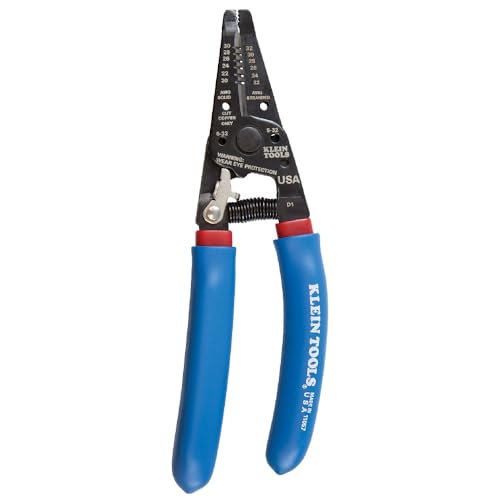
The Klein Tools 11057 is engineered for precision work with small-gauge electrical wire, making it ideal for electronics repair, low-voltage installations, and detailed wiring projects. The precision ground stripping holes are the standout feature here, allowing you to strip wire cleanly without damaging the conductor underneath. Combined with the easy-to-read gauge markings, you can work quickly and confidently without second-guessing your wire size.
The serrated nose and looping holes add genuine versatility to this tool. You get a reliable grip for bending and shaping wire, plus dedicated holes for forming clean loops and coils, which saves time compared to using separate tools or improvising. The coil spring self-opening action is a thoughtful design touch that reduces hand fatigue during repetitive stripping, especially valuable if you're working on multiple connections in one session.
As a USA-made tool from Klein Tools, a brand with deep roots in professional electrical work, this cutter reflects solid engineering and attention to detail. It's built for electricians and serious DIYers who value precision over speed and understand that the right tool for the job pays dividends in clean, professional results. This is not a heavy-duty cutter for large gauge wire, but within its intended range, it delivers dependable performance.
| Brand | Klein Tools |
| Model | 11057 |
| Wire Capacity (Solid) | 20-30 AWG |
| Wire Capacity (Stranded) | 22-32 AWG |
| Screw Shearing | 6-32 and 8-32 |
| Key Features | Precision ground stripping holes, serrated nose, looping holes, coil spring self-opening |
| Markings | Easy-to-read wire gauge labels |
| Country of Origin | Made in USA |
| Ideal For | Precision electrical work, electronics repair, low-voltage installations |
Stripping Wire: Select the appropriate hole for your wire gauge using the easy-to-read markings. Insert the insulated portion of the wire into the hole, squeeze the handles firmly, and pull the tool away from the wire. The precision ground hole will cleanly remove the insulation without nicking the conductor.
Cutting Wire: Place the wire between the cutting blades near the pivot point for maximum leverage. Squeeze the handles smoothly for a clean cut. For smaller gauge wire, you can cut closer to the tip of the tool for more control.
Shearing Screws: Use the dedicated screw holes to cleanly shear 6-32 and 8-32 screws. This is particularly useful when you need to trim fasteners flush or remove damaged screw heads without damaging surrounding components.
Looping and Bending: Use the built-in looping holes to form clean wire loops for terminal connections. The serrated nose provides excellent grip for bending and shaping wire without slipping, allowing you to create professional-looking connections.
Eye Protection: Always wear safety glasses when cutting or shearing wire and screws. Small pieces can fly unpredictably, especially when working with harder materials.
Secure Your Work: Hold the wire or screw firmly with your non-dominant hand, keeping fingers clear of the cutting area. Consider using a clamp or vise for small components to prevent slipping.
Inspect Before Use: Check the cutting blades and stripping holes for damage or debris before each use. Dull blades can slip and cause injury. Clean the tool after use, especially if working with insulation residue or corrosion.
Proper Grip: Use a firm, controlled grip on both handles. Never force the tool through material that seems too hard or thick for the specified gauge. Forcing can cause the tool to slip or the handles to snap shut unexpectedly.
Match the Hole to the Wire: The precision ground holes are sized for specific gauges. Using the correct hole ensures clean stripping without insulation damage or conductor nicking. Take a moment to verify the wire gauge before stripping, especially on mixed-gauge projects.
Angle Matters: When stripping, pull the tool straight back along the wire axis for the cleanest result. Angling or twisting can catch the conductor and damage it, compromising connection quality.
Keep Blades Sharp: Dull cutting blades require more force and are more likely to slip. If you notice rough cuts or increased resistance, it's time to sharpen or replace the tool. A sharp tool is safer and more efficient.
Use for Precision Work: This tool shines on detailed, small-gauge work where precision matters. For bulk stripping or heavy-duty cutting, a different tool may be more efficient. Know when to use the right tool for the job.
Wire Stripper Buying Guide
Choosing the right wire stripper comes down to understanding the type of wiring you do most often, the gauge range you need to cover, and how the tool fits in your hand over a long session. The sections below walk through every meaningful variable so you can make a confident, informed choice rather than buying by price alone.
Wire Gauge Range: Match the Tool to the Job
AWG (American Wire Gauge) is the single most important spec on the box. The number runs backward from what you might expect: a higher AWG number means a thinner wire. Fine electronics and low-voltage signal work typically uses 22 to 32 AWG wire, while residential electrical runs between 10 and 14 AWG for branch circuits and can go as heavy as 8 AWG for 240-volt appliance feeds. Automotive wiring usually falls in the 16 to 20 AWG range.
A tool like the Klein Tools 11057 covers 20 to 30 AWG solid and 22 to 32 AWG stranded, making it ideal for PCB repair, low-voltage controls, and automotive signal wires. At the other end of the spectrum, the Klein Tools 11063W handles 8 to 20 AWG solid and 10 to 22 AWG stranded, which covers everything from #12 branch circuit wire up through heavy feeder conductors. If you only want to own one stripper and your work spans both fine electronics and household wiring, look for a model like the KNIPEX Automatic Wire Stripper, which covers 10 to 24 AWG in a single self-adjusting jaw. Mismatched tools are the leading cause of nicked conductors, so never try to strip a 10 AWG wire in a notch sized for 18 AWG.
Manual vs. Self-Adjusting vs. Automatic Strippers
Manual strippers have a fixed set of notches corresponding to specific AWG sizes. They are the most affordable entry point and work well when you are stripping the same gauge repeatedly. The Klein Tools 11055EP is a classic example of this style: an inexpensive, Made in USA tool that handles both solid and stranded copper with a simple squeeze-and-pull motion. The trade-off is that you must select the correct notch each time, which slows you down when working with mixed gauges.
Self-adjusting strippers use a spring-loaded jaw that automatically closes around whatever diameter wire you insert, then strips without you needing to choose a notch. The Klein Tools 11061 is a well-regarded self-adjusting model that handles 10 to 20 AWG solid, 12 to 22 AWG stranded, and Romex NM cable in sizes 12/2 and 14/3. Self-adjusting tools save significant time on production work or any job where gauge varies frequently. The haisstronica Self-Adjusting Wire Stripper takes this further by adding crimping and cutting functions in one body, which makes it a strong value for budget-conscious buyers.
Fully automatic strippers, like the KNIPEX Automatic Wire Stripper, go one step further by gripping the insulation and pulling it clear in a single motion with minimal hand force. These tools are ideal for high-volume work such as panel wiring or production assembly. They cost more upfront but dramatically reduce hand fatigue over a full day. For anyone dealing with repetitive wiring jobs, the efficiency gain is real. Speaking of repetitive tasks, a well-organized tool chest keeps all your electrical hand tools within arm’s reach and prevents the inevitable hunt for the right stripper mid-job.
Blade and Cutting Geometry
The quality of the cutting edges determines how cleanly insulation separates from the conductor. Hardened steel blades stay sharp far longer than unhardened alternatives, and precision-ground notches reduce the chance of nicking the wire. Klein Tools manufactures its stripper blades in the USA and uses a spring-tempered steel that holds an edge through tens of thousands of stripping cycles. KNIPEX, made in Germany, applies a similar standard of tolerances to its automatic jaw mechanism.
Budget-oriented tools like the WGGE WG-015 use softer steel that may show wear sooner under heavy daily use, but for occasional home repair or automotive wiring, the edge life is more than adequate. The knoweasy Wire Stripper covers an exceptionally wide 7 to 32 AWG range, which is useful for electronics hobbyists who work across many wire sizes and do not want to swap tools constantly.
Multi-Function Tools vs. Dedicated Strippers
Many wire strippers also incorporate wire cutting, crimping, screw-shearing, or bolt-cutting features in the same body. The Klein Tools 1025 Long Nose Multi-Purpose Wire Stripper adds long-nose plier functionality, crimping jaws, and bolt-shearing holes to a standard stripper frame. This kind of tool earns its place in a compact pouch because it replaces three or four separate tools. The WGGE WG-015 similarly bundles crimping, cutting, and stripping into a budget-friendly package.
That said, dedicated strippers generally outperform multi-function tools at the actual stripping task, especially at the extremes of the AWG range. If you run long stretches of 10 AWG Romex in a wall, a dedicated heavy-duty stripper like the Klein Tools 11063W will feel noticeably more positive and precise than a multi-function tool trying to do everything. Think of it like choosing between a set of mechanic tool sets with every adapter imaginable versus a dedicated socket set optimized for a specific fastener range. Both have their place depending on how you work.
Ergonomics and Grip Design
Handle comfort matters more than most buyers realize until they spend a full day pulling wire. Look for overmolded rubber or thermoplastic elastomer (TPE) grips with distinct thumb rests and finger grooves. These features reduce grip force requirements and prevent the tool from rotating in a sweaty hand. Spring-loaded handles that return to the open position automatically further reduce fatigue on high-volume work.
The Klein Tools 11063W features Klein’s dual-material grip, a design refined over decades of field use by professional electricians. The KNIPEX stripper uses a single-lever squeeze design that keeps wrist movement minimal. For fine gauge work where precision matters more than grip force, the Klein Tools 11057 has a narrower handle profile that gives better tactile feedback on delicate conductors.
Build Quality, Country of Origin, and Warranty
Professional-grade wire strippers from Klein Tools are manufactured in the USA and carry a lifetime warranty against manufacturing defects. KNIPEX tools are made in Wuppertal, Germany and are similarly backed by a strong manufacturer guarantee. Both brands have earned their reputations over decades of professional use. For homeowners and occasional DIYers, mid-tier tools from haisstronica and knoweasy offer genuine value without the premium price of professional-grade options.
Budget models like the WGGE WG-015 are manufactured to a lower tolerance standard but remain serviceable for light use. The key decision point is frequency of use: if you wire one outlet per year, a budget tool is perfectly reasonable. If you are an electrician or a dedicated DIYer running new circuits regularly, invest in a professional-grade stripper. Your hands and your work quality will both benefit. A reliable electrical toolkit pairs well with a quality stud finder for locating the framing members you need to anchor boxes and panels securely.
Solid Wire vs. Stranded Wire Performance
Solid conductors are stiffer and hold their shape, while stranded wire is made up of many fine filaments twisted together. Stranded wire requires a slightly different cutting approach because even nicking one or two strands weakens the conductor measurably. Most residential branch circuit wiring (Romex) uses solid conductors, while flexible cords, automotive wiring, and most low-voltage signal wire uses stranded.
When a product listing specifies separate solid and stranded AWG ranges, take note: the two ranges are not interchangeable. A tool rated for 10 to 20 AWG solid may be rated for 12 to 22 AWG stranded because the stranded bundle has a larger overall diameter than an equivalent solid conductor at the same gauge. The Klein Tools product lineup is particularly transparent about this distinction, specifying both ranges clearly on every model.
Why Trust HomeThru
HomeThru is an independent editorial site with no affiliation to any manufacturer, retailer, or trade organization. We do not sell products, process orders, or handle warranty claims. Our wire stripper recommendations are the result of systematic independent research: we analyzed hundreds of verified purchaser reviews, cross-referenced long-term durability reports, compared manufacturer specifications, and assessed how each tool performs across the full range of real-world wiring scenarios described by professionals and homeowners alike.
We weight professional electrician feedback heavily because wire strippers are tools that reveal their weaknesses only after sustained use. A stripper that feels fine for ten pulls may develop blade slippage or handle fatigue issues that only show up after a few hundred. Our analysis specifically flags those patterns. We apply the same standard of independent evaluation to every category on the site, from reciprocating saws and hand saws to spirit levels and claw hammers. Our goal is always the same: give you the clearest possible picture of what a tool does well and where it falls short, so you spend money on something you will actually use for years.
Final Thoughts
Wire strippers from Klein Tools, KNIPEX, haisstronica, WGGE, and knoweasy cover every budget and application represented in this guide. After carefully analyzing all nine options, here are our standout picks by use case:
- Best Overall: Klein Tools 11063W Wire Cutter/Stripper delivers heavy-duty automatic stripping across a wide AWG range with Klein’s professional-grade build quality, making it the most versatile single tool in this lineup for residential electrical work.
- Best Premium Pick: KNIPEX Automatic Wire Stripper earns its higher price point through German-engineered precision, a self-adjusting jaw that handles 10 to 24 AWG without manual notch selection, and build quality that will outlast most other tools in your kit.
- Best Self-Adjusting Value: Klein Tools 11061 Self-Adjusting Stripper/Cutter handles solid, stranded, and Romex NM cable in a single tool at an accessible price point, making it an outstanding choice for homeowners who wire their own outlets and fixtures.
- Best Budget Pick: haisstronica Self-Adjusting Wire Stripper bundles stripping, cutting, and crimping into an affordable package that punches well above its price for anyone who needs a capable all-in-one electrical hand tool without a significant outlay.
- Best for Fine-Gauge Work: Klein Tools 11057 Wire Cutter/Stripper covers 20 to 30 AWG solid and 22 to 32 AWG stranded, making it the right tool for electronics repair, low-voltage controls, and automotive signal wiring where precision on delicate conductors is essential.
Whatever your wiring needs, the right wire stripper makes the work cleaner, faster, and safer. Pair your new stripper with a set of utility knives for insulation scoring and general jobsite cutting tasks, and consider adding an air compressor to your shop if you are doing broader renovation work that benefits from pneumatic tools. For long-term tool organization, a well-chosen rolling tool chest keeps every electrical and hand tool accessible without the clutter.
Frequently Asked Questions
What Is the Difference Between a Wire Stripper and a Wire Cutter?
A wire stripper is designed to cut through the insulation surrounding a conductor without severing the metal underneath. A wire cutter cuts through the entire wire, both insulation and conductor, cleanly. Many tools combine both functions: the stripping notches remove insulation, while a separate cutting blade at the tip or pivot cuts through wire completely. Understanding which function you need for a given task helps you use the right part of the tool and keeps both the blades and conductors in better shape over time.
Can I Use the Same Wire Stripper for Romex and Automotive Wiring?
Only if the tool covers the necessary AWG range for both applications. Residential Romex typically uses 10 to 14 AWG solid conductors, while most automotive wiring runs 16 to 20 AWG stranded. A tool like the Klein Tools 11063W covers both ranges and handles both solid and stranded wire, making it a reasonable choice for mixed use. Always confirm the AWG specifications on the packaging before buying a stripper you plan to use across multiple wiring contexts.
How Do I Know Which AWG Notch to Use on a Manual Wire Stripper?
Check the wire’s jacket or the labeling on the spool, which typically identifies gauge in AWG. Match that number to the corresponding notch on the stripper. If the wire is unlabeled, use a wire gauge tool or the gauge holes stamped into some stripper bodies to measure it. Starting one AWG size looser than you think you need is a safe strategy: if insulation does not come off cleanly, move to the snugger notch. This approach prevents nicking the conductor while you dial in the right size.
Are Self-Adjusting Wire Strippers Worth the Extra Cost?
For most homeowners and anyone working with mixed gauges, yes. Self-adjusting tools eliminate the need to select a notch manually, which saves time and reduces the risk of accidentally using the wrong size. The Klein Tools 11061 and haisstronica models both offer self-adjusting jaws at price points that are modest relative to the time they save. If you strip wire infrequently, a standard manual stripper is adequate. For regular use, the self-adjusting design pays for itself quickly in efficiency and fewer damaged conductors. Many buyers also find them far less frustrating to use in tight spaces where selecting the correct notch by feel is difficult.
How Do I Maintain My Wire Stripper to Keep It Sharp?
Keep the pivot joint lightly oiled with a drop of tool oil every few months to prevent stiffness and corrosion. Wipe the blades clean after use, especially after stripping wires that have greasy or contaminated jacketing. Avoid using the stripping notches to cut hard wire because doing so damages the precision-ground edges that make clean stripping possible. Store the tool in a tool chest or pouch rather than loose in a box where it can bang against harder tools. Professionally made strippers from Klein Tools and KNIPEX will maintain their edge for many years with basic care.



Write Your Review
No reviews yet. Be the first to share your experience!