

A reliable pipe wrench is one of those tools you don’t think about until you desperately need it. Whether you’re wrestling a corroded galvanized fitting under the kitchen sink, tightening a gas line connection in the utility room, or freeing a frozen outdoor hose bib that hasn’t moved in years, the right pipe wrench turns a frustrating job into a straightforward one. The wrong wrench, on the other hand, slips off fittings, mars pipe surfaces, strains your wrist, and can turn a quick repair into an expensive plumber’s call. If you’re building out your home toolkit, a solid pipe wrench belongs right alongside a quality wrenches set and a dependable pair of pliers for tackling plumbing and mechanical jobs with confidence.
Our editorial team at HomeThru independently researched and evaluated the top pipe wrenches available today, analyzing jaw design, handle material, weight, grip comfort, jaw capacity, and overall build quality across steel, aluminum, and cast iron options. We reviewed thousands of verified owner experiences and cross-referenced manufacturer specifications to give you an honest, independent picture of each tool’s real-world strengths and limitations. This guide covers 10 pipe wrenches at a range of sizes and price points, from a compact 6-inch model ideal for tight spaces to a heavy-duty 24-inch aluminum wrench built for maximum torque on large-diameter fittings.
Top Pipe Wrenches We Recommend
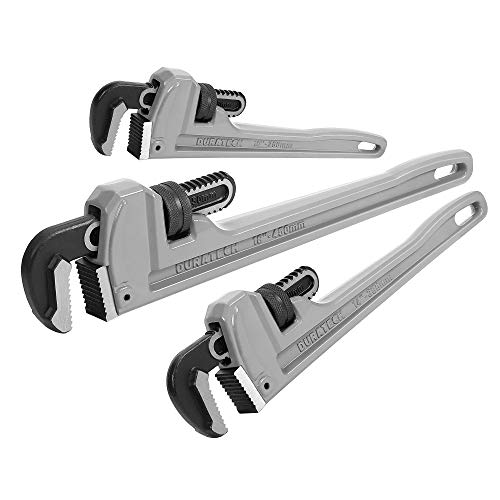
Pros
- Lightweight aluminum construction eliminates fatigue while maintaining professional strength and durability
- Drop-forged, heat-treated jaws provide superior grip on pipes without slipping or distorting
- Fully adjustable with self-cleaning threads and replaceable components extend tool lifespan
- Ergonomic design with comfortable grip reduces hand strain during plumbing and gas line repairs
- Three-piece set covers most residential and light commercial pipe work needs
Cons
- No reviews available yet, so long-term durability feedback from homeowners is limited
- Aluminum construction, while lighter, may not match the absolute maximum durability of premium steel pipe wrenches in extreme industrial settings
The DURATECH 3-piece aluminum pipe wrench set represents a smart choice for homeowners and DIYers who want professional-grade performance without the weight penalty of traditional steel tools. The aluminum construction delivers nearly 40% weight savings compared to steel equivalents, which translates directly to less hand and arm fatigue during extended plumbing repairs, gas line work, or fixture installation. Despite the lighter material, the drop-forged CR-MO steel floating jaws and heat-treated construction ensure these wrenches maintain the grip strength and durability needed for demanding pipe work.
What sets this set apart is the thoughtful engineering behind everyday usability. The self-cleaning threads prevent debris buildup, the easily replaceable jaw and spring assemblies extend the tool's working life, and the ergonomic handle design with its wide gripping surface was clearly developed with comfort in mind. The non-stick knurled adjustment nut won't bind, and the 18-inch model's overbite jaws maximize gripping surface for larger diameter pipes. For homeowners who value both precision and comfort, these features eliminate the frustration of slipping wrenches and hand cramps.
The three-size set (10", 14", and 18") covers the vast majority of residential plumbing and pipe repair scenarios. The included peg board hanging hole makes organization simple, and the professional-grade construction means these tools will remain reliable across countless projects. Whether you're repairing a leaky fitting, installing new plumbing, or working on gas lines, this set delivers the dependability and ease of use that serious DIYers expect.
| Specification | Details |
|---|---|
| Brand | DURATECH |
| Product Type | Pipe Wrench Set |
| Number of Pieces | 3 |
| Sizes Included | 10 inch, 14 inch, 18 inch |
| Material - Body | Aluminum (nearly 40% lighter than steel) |
| Material - Jaw | Drop-forged, heat-treated CR-MO steel |
| Jaw Type | Floating jaw with quick adjustment |
| Handle Design | Ergonomic with wide gripping surface |
| Adjustment Nut | Non-stick knurled |
| Special Features | Self-cleaning threads, replaceable components, overbite jaws (18"), peg board hanging hole |
| Standard Compliance | Exceeds GGG standard |
| Ideal For | Plumbing repairs, gas line work, household pipe fitting, professional and DIY use |
Basic Operation: Slide the wrench onto the pipe, positioning the fixed jaw against one side and the adjustable jaw against the other. Turn the adjustment nut clockwise to tighten the jaw grip. The wrench should bite into the pipe with firm, even pressure.
Proper Grip: Hold the wrench with your palm on the handle, using your fingers to guide rather than grip. The wide handle surface supports one-handed operation, but two hands provide better control and safety on stubborn fittings. Always pull the wrench toward you rather than pushing away.
Selecting the Right Size: Choose a wrench size that matches your pipe diameter for optimal grip. The 10-inch handles small pipes and tight spaces, the 14-inch covers standard household plumbing, and the 18-inch tackles larger diameter pipes and provides extra leverage. Never force a wrench that's too small onto a large pipe.
Maintenance: After each use, wipe the wrench clean and dry it thoroughly. The self-cleaning threads help prevent debris buildup, but occasionally work the adjustment nut back and forth to keep threads clear. If components become worn, the replaceable jaw and spring assembly can be swapped out to extend tool life.
Secure Your Work: Always secure the pipe or fitting in a vise or clamp before applying force with the wrench. Never hold the pipe with your free hand while turning the wrench, as sudden slipping can cause injury.
Proper Force Application: Apply steady, controlled pressure rather than sudden jerking motions. The heat-treated jaws are designed to grip firmly, but excessive force can damage fittings or cause the wrench to slip. If a connection won't budge, apply penetrating oil and wait several minutes before trying again.
Hand and Finger Safety: Keep your hands and fingers clear of the wrench jaws and the area where the adjustable jaw moves. When loosening or tightening the adjustment nut, position your hand so sudden slipping won't cause pinching or crushing injuries.
Appropriate Use: Use these wrenches only for pipe and fitting work. Do not use as a hammer, pry bar, or for applications outside their intended purpose. The aluminum handle, while durable, is not designed for impact force.
Work Environment: Ensure adequate lighting so you can see exactly where the wrench is gripping and where your hands are positioned. Wear work gloves for better grip and protection, especially when working with rough or rusty pipes.
Who Should Buy This Set: This wrench set is ideal for homeowners tackling plumbing repairs, gas line work, and fixture installation. DIYers who value comfort and reduced fatigue will appreciate the lightweight aluminum construction. Professionals who frequently move between job sites benefit from tools that are easier to transport and less tiring to use throughout the day. If you've experienced hand cramps or fatigue with heavier steel wrenches, this set offers a practical solution.
When You Need This Set: You'll reach for these wrenches when replacing faucets, repairing leaks, installing new fixtures, adjusting pipe fittings, or working on gas lines. The three-size range covers most residential plumbing scenarios, making this a versatile addition to any homeowner's toolbox.
What to Consider Before Buying: Evaluate your typical pipe diameters. The 10", 14", and 18" sizes cover most household needs, but if you regularly work with unusually large or small pipes, you might need additional sizes. Consider your storage space - the peg board hanging hole makes organization easy, but confirm you have wall space for mounting. If you work in extreme industrial settings or handle heavy-duty commercial plumbing regularly, research whether aluminum construction meets your durability requirements.
Value Assessment: Compare this set against individual steel wrenches of the same sizes. The weight savings alone justifies the investment for anyone who uses wrenches regularly. The replaceable components and durable construction mean these tools will serve you for years, making them a smart long-term investment.

Pros
- Rugged cast iron build withstands heavy-duty work and won't break under pressure
- Adjustable jaw eliminates clutter by replacing multiple fixed-size wrenches
- Ergonomic I-beam handle reduces hand strain during sustained gripping and turning
- Optimized jaw design grips pipes securely without slipping or rounding edges
- Simple twist-knob adjustment makes on-the-job sizing changes seamless
Cons
- Cast iron construction adds weight compared to modern aluminum alternatives, which can tire hands on overhead work
- No reviews currently available online, making it difficult for buyers to assess real-world durability and performance feedback
Klein Tools brings decades of professional tool expertise to this 14-inch cast iron pipe wrench, engineered for the heavy demands of plumbing and mechanical work. The cast iron construction provides substantial durability and a solid feel in hand, while the I-beam handle design balances strength with ergonomic comfort during extended use. The optimized jaw geometry delivers a no-slip grip that prevents frustrating slippage when working with pipes and fittings, a critical feature when applying high torque.
The adjustable jaw extending up to 2 inches is the real workhorse feature here, allowing you to handle multiple pipe sizes without cluttering your toolbox with several fixed-size wrenches. The twist-knob adjustment mechanism is straightforward and intuitive, letting you make quick size changes without fumbling or requiring additional tools. This versatility makes the wrench equally valuable for bathroom fixture repairs, basement plumbing projects, and mechanical work around the home.
For homeowners and DIYers who prioritize reliability and durability over weight considerations, this Klein Tools wrench delivers solid performance. The heavy-duty construction means this tool will remain in your toolkit for years, making it a sensible investment for anyone who tackles plumbing or mechanical projects regularly.
| Specification | Details |
|---|---|
| Length | 14 inches |
| Material | Cast Iron |
| Jaw Capacity | Up to 2 inches |
| Handle Design | I-Beam |
| Adjustment Type | Twist-Knob |
| Brand | Klein Tools |
| Model Number | 68227 |
| Application | Plumbing, Pipe Fitting, Heavy-Duty Work |
| Grip Type | Optimized Jaw Design for No-Slip Grip |
Adjusting the Jaw: Rotate the twist-knob counterclockwise to loosen and extend the movable jaw outward. Continue rotating until the jaw opening matches your pipe or fitting diameter. Rotate clockwise to tighten and lock the jaw in place before applying pressure.
Gripping Pipes: Position the pipe squarely in the jaw, ensuring both the fixed and movable jaws make full contact with the pipe surface. This maximizes grip strength and prevents slipping. The optimized jaw design is engineered to bite without damaging the pipe.
Applying Torque: For turning or tightening, pull the handle toward your body in a smooth, controlled motion rather than jerking. The I-beam handle provides leverage and control. Always maintain a firm, steady grip and keep your hand position stable throughout the turning motion.
Storage: After use, fully retract the movable jaw by rotating the twist-knob to minimize the tool's footprint in your toolbox. Store in a dry location to prevent rust on the cast iron surfaces.
Grip Security: Always ensure the pipe is fully seated in the jaw before applying force. A secure grip is essential to prevent the wrench from slipping and potentially causing injury or damage to the pipe fitting.
Hand Position: Keep your hand clear of the movable jaw during adjustment and operation. The cast iron jaw can pinch skin if fingers are in the path during tightening. Maintain a firm grip on the handle with your palm, not your fingers.
Appropriate Force: Use steady, controlled pressure rather than sudden jerking motions. Excessive force or twisting can strain your wrist and hand. If a connection is stuck, apply penetrating oil and allow time for it to work rather than forcing the wrench.
Pipe Condition: Inspect the pipe or fitting before gripping to ensure it's not already damaged or weakened. The wrench's powerful grip can further damage compromised pipes. Avoid using this wrench on chrome-plated or soft metal pipes where the jaw might leave marks.
Work Environment: Ensure adequate lighting and stable footing when working with pipe wrenches. Slips and falls are common hazards when applying high torque in awkward positions under sinks or in confined spaces.
Leverage Technique: For stubborn connections, position the wrench handle parallel to the pipe run whenever possible to maximize mechanical advantage. A longer lever arm (further from the pipe center) requires less hand force to achieve the same turning power.
Jaw Positioning: Always position the movable jaw on the side facing your direction of pull. This ensures the jaw tightens as you apply force, creating a more secure grip. The opposite positioning can cause the jaw to slip under load.
Prevent Pipe Damage: For polished or finished pipes where marks are a concern, wrap the jaw contact points with a thin cloth or rubber before gripping. This protects the pipe surface while maintaining adequate grip strength.
Maintenance: Periodically clean the jaw threads with a dry brush to remove debris and mineral buildup. A light coat of machine oil on the twist-knob mechanism keeps adjustment smooth and prevents corrosion on the cast iron body.
Complementary Tools: Pair this wrench with a second identical wrench for two-handed pipe work, where one wrench holds the fitting steady while the other turns the pipe. This technique prevents damage and provides better control on delicate or already-compromised fittings.

Pros
- Significantly lighter weight reduces fatigue and improves control on overhead or extended plumbing work
- Durable aluminum construction maintains strength while being easier to handle than heavy cast-iron alternatives
- Replaceable jaw components make repairs affordable and keep the wrench in service longer
- Non-stick adjustment nut and self-cleaning threads minimize maintenance and downtime
- Versatile capacity covers most standard residential pipe sizes in a single tool
Cons
- Aluminum construction may not withstand the same extreme abuse as heavier cast-iron models in industrial settings
- Limited online user feedback makes it harder for first-time buyers to assess real-world durability over extended periods
The RIDGID 818 represents a smart evolution in pipe wrench design, prioritizing user comfort without sacrificing the gripping power professionals need. By cutting weight by 40% compared to traditional cast-iron models, this aluminum wrench significantly reduces hand and wrist fatigue during long plumbing jobs. The full floating forged hook jaw and I-beam handle work together to provide stable, controlled gripping across the tool's 1- to 2.5-inch pipe capacity, making it equally suited for residential repairs and light commercial applications.
Practical durability features set this wrench apart from budget alternatives. The non-stick adjustment nut resists corrosion and keeps the mechanism smooth, while self-cleaning threads shed debris automatically, keeping the tool reliable on dusty job sites. The easily replaceable hook jaw, heel jaw, and spring assembly mean you can extend the wrench's life without buying a completely new tool when wear occurs. This modular approach saves money and keeps a trusted tool in your kit longer.
For homeowners and DIYers tackling plumbing maintenance or repairs, the RIDGID 818 strikes an excellent balance between weight and capability. It's light enough to use comfortably for hours without strain, yet engineered with the same professional-grade materials and forging techniques that make RIDGID a trusted name in plumbing tools. If you're upgrading from a smaller wrench or replacing a heavier model, this 18-inch aluminum option delivers noticeable improvements in control and comfort.
| Specification | Detail |
|---|---|
| Brand | RIDGID |
| Model | 818 |
| Type | Straight Pipe Wrench |
| Length | 18 inches (450 mm) |
| Material | Aluminum |
| Pipe Diameter Range | 1 to 2 inches (25 to 50 mm) |
| Maximum Pipe Capacity | 2.5 inches (65 mm) |
| Handle Design | I-beam with full floating forged hook jaw |
| Jaw Type | Hook and heel jaws (replaceable) |
| Special Features | Non-stick adjustment nut, self-cleaning threads |
| Weight Advantage | Approximately 40% lighter than cast-iron models |
| Pipe Coating Compatibility | Includes special jaws for plastic-coated pipe |
Basic Operation: Open the adjustable jaw by turning the adjustment nut counterclockwise until the jaw gap is slightly larger than your pipe diameter. Slide the wrench onto the pipe and tighten the adjustment nut clockwise until the jaw grips firmly. The hook jaw should contact the top of the pipe while the heel jaw contacts the bottom.
Gripping Technique: Always pull the wrench toward the hook jaw (the moving jaw) for maximum mechanical advantage. Push strokes are less effective and can damage the tool. Position your hand on the I-beam handle for balanced control, and avoid twisting or bending the handle sideways.
Pipe Size Adjustment: For different pipe diameters within the wrench's range, adjust the nut incrementally. Too loose a grip risks slipping; too tight can damage plastic-coated pipes. The non-stick adjustment nut glides smoothly, so you'll feel when you've reached the right tension.
Maintenance: After use, wipe the wrench dry to prevent corrosion. The self-cleaning threads naturally shed debris, but you can use a brush on stubborn buildup. Keep the adjustment nut lightly oiled for smooth operation. If jaws become worn, replacement kits are available to restore gripping power.
Proper Grip and Stance: Always pull the wrench toward the hook jaw, never push. Stand with a stable stance and brace yourself so you won't fall if the wrench slips. Keep your hands clear of pinch points between the jaw and pipe.
Pipe Preparation: Ensure pipes are secure and won't rotate or fall when you apply force. For plastic-coated pipes, use the special jaw assemblies included with this wrench to avoid cracking or damaging the coating. Check that the wrench is properly adjusted before applying full force.
Wear and Inspection: Regularly inspect the hook jaw, heel jaw, and spring assembly for cracks, bending, or excessive wear. Replace worn components immediately using RIDGID replacement parts. Never use a damaged wrench, as it may slip and cause injury.
Work Environment: Work in good lighting so you can see the wrench adjustment and pipe clearly. Keep bystanders away from your work area. If you're working overhead, secure the pipe and wrench carefully to prevent dropping either tool.
Jaw Adjustment Precision: For plastic-coated or delicate pipes, adjust the wrench slightly loose and apply gradual pressure. This distributes gripping force more evenly and reduces the risk of damage. For steel pipes in tight spaces, a slightly tighter grip improves control.
Leverage and Positioning: Use the full length of the 18-inch handle to your advantage. Gripping closer to the jaw end gives you more power for stubborn fittings; gripping near the end of the handle gives you better control for fine adjustments. Always position the wrench so the jaw opening faces your body.
Maintenance for Longevity: After working on corroded or dirty pipes, clean the wrench thoroughly and apply a light coat of machine oil to the adjustment mechanism. This prevents the non-stick nut from sticking and keeps the tool responsive. Store the wrench in a dry location to protect the aluminum from oxidation.
Replacement Strategy: Keep a spare set of jaw assemblies on hand if you use this wrench regularly. Replacing worn jaws is far cheaper than buying a new wrench, and having replacements ready means zero downtime on the job. RIDGID replacement kits are readily available and simple to install.

Pros
- Heavy-duty ductile-iron construction withstands years of demanding plumbing work
- Full floating jaw design grips pipes securely and adjusts quickly across multiple sizes
- Replaceable jaws reduce long-term ownership costs compared to buying new wrenches
- Self-cleaning threads minimize maintenance and keep the wrench performing smoothly
- Meets federal durability standards, ensuring professional-grade reliability
Cons
- No reviews available yet, so real-world user feedback on long-term durability is limited
- 18-inch length may feel large for users with smaller hands or those working in tight spaces
The RIDGID Model 18 represents a solid investment for homeowners and professional plumbers tackling serious pipe work. Built with ductile-iron construction and an I-beam handle, this wrench delivers the kind of durability you expect from RIDGID's reputation. The full floating forged hook jaw is the standout feature here, allowing quick adjustments across different pipe sizes while maintaining a secure grip that won't slip during heavy turning.
What sets this wrench apart is its practical engineering for real-world plumbing tasks. The self-cleaning threads prevent the frustrating buildup of debris that can slow down adjustments, and the replaceable hook and heel jaws mean you won't have to replace the entire tool when wear occurs. At 18 inches, it strikes a good balance between providing adequate leverage and remaining manageable in confined spaces like under sinks or behind fixtures.
The wrench is engineered to meet federal specifications GGG-W65IE, Type II, Class A, which translates to professional-grade performance standards. Whether you're installing new fixtures, maintaining existing plumbing, or tackling larger diameter pipes up to 2.5 inches, this tool is designed to handle the job reliably. For serious DIYers and professionals alike, it's a dependable choice that justifies its place in any plumbing toolkit.
| Brand | RIDGID |
| Model Number | 31025 |
| Length | 18 inches (450 mm) |
| Pipe Diameter Range | 1 to 2 inches (25 to 50 mm) |
| Maximum Pipe Capacity | 2.5 inches (65 mm) |
| Material | Ductile Iron with I-beam Handle |
| Jaw Type | Full Floating Forged Hook Jaw |
| Key Features | Self-cleaning threads, replaceable jaws |
| Federal Compliance | GGG-W65IE, Type II, Class A |
| Category | Pipe Wrench |
Selecting the Right Size: The RIDGID Model 18 works best on pipes from 1 to 2 inches in diameter, with capacity up to 2.5 inches. Always choose the wrench size that matches your pipe diameter for optimal grip and control.
Proper Grip and Positioning: Position the wrench so the hook jaw faces the direction you're turning. Grip the handle firmly near the end for maximum leverage. The floating jaw will automatically adjust to fit the pipe securely as you tighten your grip.
Turning Technique: Apply steady, controlled pressure rather than jerky movements. The wrench is designed to grip tighter as you turn, so let the tool do the work. For tight fittings, use smooth, continuous pressure rather than sudden force.
Maintenance: After use, wipe away any debris or moisture. The self-cleaning threads help prevent buildup, but occasionally running a cloth along the threads keeps the adjustment mechanism smooth and responsive.
Inspect Before Use: Check the wrench for cracks, bent jaws, or damaged threads before each use. A damaged tool can slip unexpectedly and cause injury or damage to pipes and fittings.
Secure Your Workpiece: Always ensure the pipe or fitting is secure and won't move when you apply force. Use a second wrench to hold the opposite side of a fitting if necessary, preventing rotation that could damage threads or cause the wrench to slip.
Use Proper Leverage: Never extend the wrench handle with a pipe or other tool for additional leverage. The wrench is designed with the right mechanical advantage for its size. Overextending can cause the tool to break or slip suddenly.
Hand and Body Position: Keep your hands clear of the moving wrench handle. Position your body so that if the wrench suddenly slips, your hand won't strike your body. Never place your hand in front of the wrench in the direction it will turn.
Appropriate for the Task: Use this wrench only on pipes and fittings. Do not use it as a hammer, pry bar, or for any purpose other than gripping and turning pipes. Using the tool incorrectly can damage it and create safety hazards.
Pair with a Second Wrench: For fittings with two connection points, use two pipe wrenches of the same size. Hold one wrench stationary on the lower fitting while turning with the other. This prevents damage to threads and gives you better control.
Know When to Upgrade Size: If you're regularly working with pipes larger than 2 inches, consider having a larger RIDGID wrench on hand. The Model 18 is ideal for standard residential plumbing, but larger pipes benefit from longer wrenches that provide better leverage.
Replace Jaws Before They're Worn Smooth: Don't wait until the jaws are completely worn to replace them. Slightly worn jaws still grip well, but severely worn jaws will slip. Keep replacement jaws in your toolkit so you can swap them out quickly when needed.
Clean Threads Regularly: Even though the wrench has self-cleaning threads, occasionally use a small brush to clear any stubborn debris from the thread grooves. A clean adjustment mechanism moves more smoothly and gives you better control.
Store Properly: Keep the wrench dry and store it in a tool bag or cabinet where it won't get knocked around. Protecting it from impacts and moisture extends its lifespan significantly.

Pros
- Serrated jaws deliver exceptional grip on corroded and difficult-to-turn fittings
- 40% lighter than traditional steel handles reduces hand and arm strain during extended use
- Precision-machined adjustment mechanism stays locked in place without slipping
- Wide jaw range handles both residential and commercial pipe sizes efficiently
- Built for professional use in demanding trades like plumbing, HVAC, and auto repair
Cons
- No customer reviews available yet, so long-term durability feedback is limited
- Aluminum handle may not appeal to users who prefer all-steel construction for maximum durability
The SK 18-Inch Professional Pipe Wrench is engineered for trades that demand reliability under pressure. The drop-forged Cr-V steel construction combined with serrated upper and lower jaws creates a powerful grip that bites into corroded and rusty pipes without slipping, making it ideal for stubborn fittings that resist standard wrenches. The precision-machined spin nut delivers smooth adjustment and locks securely in place, ensuring consistent performance across repeated use.
Weight matters when you're working overhead or in tight spaces for hours at a time. SK's aluminum I-beam handle reduces the overall weight by 40% compared to traditional all-steel designs, cutting fatigue without sacrificing structural integrity. The wrench covers pipe sizes from 1/2 to 2-1/2 inches with clearly marked increments, making quick size identification straightforward on the job. A convenient hanging hole rounds out the design, keeping your tool organized and accessible in the workshop or garage.
This wrench is purpose-built for professional mechanics, plumbers, HVAC technicians, and maintenance specialists who work on commercial mains, industrial lines, and heavy equipment where standard wrenches fall short. SK's century-long reputation for quality craftsmanship backs this tool, making it a solid choice for anyone who needs a wrench they can depend on in demanding conditions.
| Specification | Detail |
|---|---|
| Brand | SK |
| Length | 18 inches |
| Head Material | Drop-Forged Chrome Vanadium Steel |
| Handle Material | Lightweight Aluminum I-Beam |
| Jaw Capacity | 1/2 to 2-1/2 inches |
| Jaw Type | Serrated (Anti-Slip) |
| Adjustment Mechanism | Precision-Machined Spin Nut |
| Weight Reduction | 40% lighter than standard steel handles |
| Storage | Hanging hole for garage/workshop organization |
| Intended Users | Auto Mechanics, Plumbers, HVAC Technicians, Maintenance Professionals |
| Applications | Commercial mains, industrial lines, heavy HVAC, agricultural equipment |
Sizing and Positioning: Identify the pipe diameter you need to work with. Rotate the spin nut counterclockwise to open the jaw, then position the wrench around the pipe so the upper jaw contacts the top and the lower jaw contacts the bottom. Use the easy-to-read markings to confirm proper size alignment.
Securing and Tightening: Once positioned, rotate the spin nut clockwise to tighten the jaws around the pipe. The serrated jaws will bite into the pipe surface, creating a firm grip. Apply steady, controlled force to avoid over-tightening, which can damage the pipe or wrench.
Turning the Pipe: Grip the handle firmly and apply steady turning force. The wrench is designed to be pushed rather than pulled for maximum control and safety. For stubborn fittings, apply gradual pressure rather than sudden jerking motions to prevent slippage and potential hand injury.
Release and Storage: After completing your work, rotate the spin nut counterclockwise to release the jaws. Wipe away any debris or pipe material. Hang the wrench using the convenient hanging hole to keep it organized and protected in your workshop.
Proper Grip and Positioning: Always maintain a firm, controlled grip on the handle. Keep your hands clear of the jaw area when tightening or loosening. Position yourself with stable footing to maintain balance and control throughout the task. Never use your body weight to force movement; let the tool do the work with steady pressure.
Pipe Condition Assessment: Before using the wrench, inspect the pipe for structural damage or weak points. Corroded or compromised pipes may break unexpectedly under clamping force. If you suspect pipe damage, use lower pressure and monitor closely. Wear safety glasses to protect against any debris that may dislodge during work.
Avoid Overloading: Do not exceed the wrench's rated jaw capacity of 2-1/2 inches. Using the wrench on oversized pipes can damage the tool and create safety hazards. Keep the wrench in good condition by cleaning it regularly and inspecting for cracks or wear. Never modify the wrench or use it as a hammer or pry bar, as this can compromise its structural integrity and create dangerous failure points.
Serrated Jaw Advantage: The serrated jaws on this wrench excel at gripping corroded, oily, or slippery pipes where standard smooth-jaw wrenches fail. For maximum grip on difficult fittings, ensure the jaws are clean and dry before clamping. If you're working with a heavily corroded fitting, apply penetrating oil and allow it to soak for 15-30 minutes before attempting to turn the pipe. The serrated surface will bite through light rust and corrosion layers more effectively than smooth jaws.
Weight Advantage for Overhead Work: The 40% weight reduction compared to all-steel wrenches makes this tool exceptional for overhead work or extended use in confined spaces. If you frequently work on HVAC systems or under-sink plumbing, this lighter design will reduce fatigue and improve control. The aluminum handle conducts heat less than steel, making it more comfortable to use in hot environments like attics or mechanical rooms.
Size Identification Speed: The clearly marked size increments allow you to quickly identify the correct jaw position without trial and error. On busy job sites, this saves time and reduces the frustration of repeated adjustments. Keep the markings clean and visible by wiping the wrench after each use. This simple maintenance step ensures you can always read the size indicators at a glance.

Pros
- Significantly lighter than comparable heavy-duty wrenches, reducing user fatigue on long jobs
- Fast ratcheting action speeds up pipe adjustment and tightening tasks
- Replaceable components make repairs affordable and keep the tool working for years
- Forged alloy steel jaws provide reliable gripping power without slipping
- Made in the USA with proven RIDGID quality and durability standards
Cons
- Limited to 2-inch pipe capacity, so larger plumbing projects may require additional wrenches
- No reviews currently available online, making it harder to assess real-world user experiences
The RIDGID 814 straight pipe wrench combines lightweight engineering with industrial-grade durability, making it a smart choice for homeowners and professional plumbers alike. At just 2.5 pounds, it's approximately 40% lighter than traditional heavy-duty models, yet the full-floating forged alloy steel hook jaws deliver the gripping power needed for serious pipe work. This weight reduction is genuinely valuable during extended jobs where hand and arm fatigue can slow progress and compromise safety.
What sets this wrench apart is its thoughtful design for real-world use. The self-cleaning threads prevent the buildup of pipe debris and mineral deposits that can gum up other wrenches, while the easily replaceable hook jaws, heel jaws, and spring assemblies mean you're not replacing the entire tool when wear occurs. The I-beam handle provides a comfortable, secure grip that reduces slipping during high-torque applications, and the quick ratcheting action speeds up repetitive adjustments on multiple fittings.
Built to handle pipes up to 2 inches in diameter, the RIDGID 814 is well-suited for most residential plumbing tasks and many commercial applications. The aluminum body paired with forged steel jaws creates a balanced tool that won't corrode easily, and RIDGID's USA manufacturing heritage means this wrench is built to withstand years of heavy use. For DIYers tackling plumbing repairs or professionals who value efficiency and reliability, this is a dependable workhorse that delivers excellent value.
| Brand | RIDGID |
| Model Number | 31095 (Model 814) |
| Type | Straight Pipe Wrench |
| Length | 14 inches |
| Pipe Capacity | Up to 2 inches |
| Weight | 2.5 lbs |
| Handle Material | Aluminum I-beam |
| Jaw Material | Forged alloy steel |
| Key Features | Full-floating jaws, self-cleaning threads, replaceable components |
| Country of Origin | Made in the USA |
Basic Operation: Position the wrench around the pipe or fitting with the movable jaw facing the direction you'll turn. Tighten the handle to lock the jaws around the pipe, then apply steady, controlled pressure. For best results, keep the wrench aligned with the pipe to avoid slipping.
Quick Ratcheting: The floating jaw mechanism allows rapid adjustment without removing the wrench. After each turn, simply reposition and tighten for the next grip, speeding up jobs that require multiple adjustments.
Maintenance: After use, wipe away debris and any pipe compound residue. If threads become sticky, clean thoroughly to maintain smooth operation. Check jaw tightness periodically and replace worn components as needed using RIDGID replacement parts.
Proper Grip: Always grip the handle firmly with your full hand, not just your fingers. This gives you better control and reduces the risk of the wrench slipping and causing injury.
Body Position: Stand with feet shoulder-width apart and position yourself so you can apply force without losing balance. Never use excessive force that causes the wrench to slip suddenly.
Jaw Inspection: Before each use, visually inspect the jaws for cracks or excessive wear. Worn jaws are more likely to slip on the pipe and cause accidents. Replace damaged components immediately.
Pipe Security: Ensure the pipe or fitting is secure and won't spin unexpectedly. Use a second wrench to hold the opposite end if needed, especially when working on active plumbing systems.
Leverage and Angle: For stubborn fittings, position the wrench so the handle is aligned with the direction of force needed. This maximizes leverage and reduces the chance of the wrench slipping or the fitting rounding off.
Pipe Compound: Apply a thin layer of pipe thread sealant compound to the wrench jaws if you're working with old, corroded fittings. This improves grip and reduces slipping on difficult jobs.
Two-Wrench Technique: When disconnecting fittings, hold the fitting body with one wrench while turning the connector with another. This prevents stress on the pipe and reduces the risk of damaging the connection.
Regular Cleaning: Keep the self-cleaning threads clear by wiping the wrench after each job. Buildup of pipe dope or mineral deposits reduces efficiency and can cause the ratchet to stick.

Pros
- Lightweight design reduces hand and arm fatigue during overhead or extended work
- Full-floating jaws grip pipes securely while quick ratcheting speeds up job completion
- Replaceable components keep the wrench functional for years of heavy use
- Self-cleaning threads minimize maintenance and downtime between jobs
- Aluminum construction balances durability with portability for job site convenience
Cons
- Limited to 3-inch pipe capacity, so larger commercial plumbing work requires a different tool
- No customer reviews available yet, making it difficult to assess real-world performance and longevity
The RIDGID Model 824 represents a thoughtful balance between power and practicality for homeowners and professional plumbers tackling residential projects. The full-floating forged alloy steel hook jaws are engineered to deliver maximum gripping force, ensuring pipes stay secure during turning and adjustments. The quick ratcheting action lets you work faster, which matters when you're working overhead or in tight spaces where every second counts.
What sets this wrench apart is its lightweight aluminum construction without compromising strength. At just 6 pounds, it's roughly 40% lighter than traditional heavy-duty pipe wrenches, making it substantially easier to handle during extended jobs. The I-beam handle provides a comfortable, secure grip, and the self-cleaning threads mean you spend less time maintaining the tool and more time working. For anyone who's used an older, heavier wrench, this weight reduction translates directly to less fatigue and better control.
The replaceable jaw and spring assemblies are practical design features that extend the tool's working life. Instead of replacing the entire wrench when components wear, you can swap out just the worn parts, saving money and keeping your tool ready for the next job. The 24-inch length and 3-inch pipe capacity make this ideal for standard residential plumbing applications, though larger commercial work would require a bigger wrench.
| Specification | Details |
|---|---|
| Model Number | 824 |
| Brand | RIDGID |
| Length | 24 inches |
| Weight | 6 lbs |
| Pipe Capacity | Up to 3 inches |
| Handle Material | Aluminum I-beam |
| Jaw Material | Forged alloy steel (full-floating) |
| Key Features | Self-cleaning threads, replaceable jaws and springs, quick ratcheting action |
| Type | Straight pipe wrench |
Basic Operation: Grip the wrench firmly with one hand on the handle. Position the hook jaw around the pipe, then turn the adjusting nut with your other hand to tighten the grip. The jaw should bite into the pipe securely without slipping.
Proper Technique: Always pull the wrench toward you rather than pushing away. This gives you better control and reduces the chance of the wrench slipping off the pipe. For tight fittings, use steady, controlled force rather than sudden jerking motions.
Maintenance: After each use, wipe the wrench clean to prevent dirt and debris from accumulating in the threads. The self-cleaning design helps, but manual cleaning extends the tool's life. Store in a dry location to prevent corrosion.
Proper Grip: Always maintain a firm grip on the handle with your fingers away from the moving jaw. Never place your hand where it could be pinched if the jaw closes unexpectedly.
Pipe Security: Ensure the pipe is firmly secured in a vise or held steady before applying force with the wrench. A slipping pipe can cause the wrench to slip and lead to hand or finger injury.
Direction of Force: Pull the wrench toward your body rather than pushing away. This gives you better control and reduces the risk of losing your grip or the tool slipping off the pipe.
Appropriate Use: Use this wrench only on pipes and fittings it's designed for. Do not use it as a hammer or on fasteners like bolts and nuts, which can damage the jaw and create safety hazards.
Jaw Positioning: Position the jaw as close to the base of the fitting as possible. This gives you better leverage and reduces the chance of the wrench slipping off during turning.
Two-Wrench Technique: For stubborn fittings, use two wrenches: one to hold the fitting steady and one to turn the pipe. This prevents the fitting from rotating and damaging connections.
Regular Inspection: Check the jaw teeth and threads regularly for wear. Early replacement of worn components keeps the wrench working at peak efficiency and prevents slipping during critical jobs.
Weight Advantage: Take advantage of this wrench's lighter weight by keeping it in your toolbag for job-site work. You'll appreciate the reduced fatigue on longer projects compared to heavier alternatives.

Pros
- Aluminum construction keeps weight low while maintaining strength
- Adaptable jaw design handles various pipe diameters efficiently
- Professional-grade Milwaukee reliability and durability
- Straightforward setup with no complicated assembly required
Cons
- Limited availability of replacement parts compared to standard wrenches
- Aluminum may show wear marks over time with heavy-duty use on rough materials
The Milwaukee Cheater Aluminum Adaptable Pipe Wrench delivers a practical solution for homeowners and DIYers tackling plumbing projects. Its lightweight aluminum construction significantly reduces hand fatigue during longer work sessions, while the adaptable design eliminates the need to carry multiple wrenches for different pipe sizes. This single-tool approach streamlines your toolkit and makes storage easier in tight workshop spaces.
The cheater-style design provides superior leverage when working with stubborn or corroded pipe connections, giving you better control and reducing the physical strain required. Installation is straightforward and requires no special setup, allowing you to get to work immediately. The tool's compact form factor makes it invaluable when working in confined spaces like under sinks, in wall cavities, or behind appliances where standard wrenches won't fit.
Milwaukee's reputation for durability backs this wrench, and the aluminum-to-steel construction balance ensures longevity without unnecessary weight. Whether you're replacing fixtures, tightening connections, or performing routine maintenance, this adaptable wrench proves itself a dependable addition to any home improvement toolkit.
| Specification | Details |
|---|---|
| Brand | Milwaukee Electric |
| Product Type | Pipe Wrench |
| Material | Aluminum with Steel Components |
| Design Type | Cheater Adaptable |
| Key Feature | Easy Installation |
| Best For | Plumbing Repairs, Fixture Installation, Pipe Connections |
Getting Started: Before using your Milwaukee pipe wrench, inspect the jaws and threads for any debris. Ensure the adaptable mechanism is properly set for your pipe diameter. The wrench should slide smoothly with minimal resistance.
Proper Grip: Hold the wrench with a firm, comfortable grip on the handle. Position the jaws perpendicular to the pipe for maximum grip. Avoid twisting your wrist; instead, use your full arm for leverage. The cheater design allows you to apply pressure more efficiently than traditional wrenches.
Making the Connection: Slowly tighten or loosen connections by turning the handle steadily. Don't jerk or apply sudden force, as this can damage the wrench or the pipe. For stubborn connections, apply steady pressure and let the tool do the work. Always work with the wrench pulling toward your body when possible for better control.
Optimize Performance: Keep the wrench clean and dry between uses. Wipe away any mineral deposits or debris that could affect the adaptable mechanism's responsiveness. Store in a dry location to prevent corrosion on steel components.
Extend Tool Life: Apply a light machine oil to moving parts periodically to keep the adaptable jaw smooth and responsive. This simple maintenance step prevents sticking and ensures reliable operation on every project.
Work Smarter: The lightweight aluminum design makes this wrench perfect for overhead work or jobs requiring extended reach. Use it in combination with a basin wrench for complete fixture installation capability. Mark your wrench with a permanent marker to identify it in a shared toolbox.
Who Should Buy: This wrench is ideal for homeowners handling routine plumbing maintenance, DIYers installing new fixtures, and professionals who appreciate lightweight tools. If you frequently work in confined spaces or prefer minimal toolkit bulk, this adaptable design is a smart investment.
What to Consider: Evaluate your typical pipe sizes and connection types. The adaptable design handles most residential plumbing scenarios, but verify it accommodates your specific needs. Consider whether you need a single versatile tool or prefer specialized wrenches for different tasks.
Long-Term Value: While the initial investment is reasonable, factor in durability and ease of use. Milwaukee's reputation means you're buying reliability. The lightweight aluminum reduces fatigue, potentially saving your hands and wrists during extended projects. This tool typically outlasts several cheaper alternatives.

Pros
- American-made quality with proven durability and reliability
- Heavy-duty construction built to withstand professional-grade use
- Compact 6-inch size offers excellent control in tight spaces
- Distinctive red color prevents toolbox mix-ups
- Trusted RIDGID brand with strong reputation among plumbers and DIYers
Cons
- Smaller 6-inch size limits effectiveness on larger diameter pipes
- Requires proper technique and maintenance to prevent jaw wear over time
The RIDGID Model 6 pipe wrench represents a time-tested approach to plumbing work that prioritizes durability and dependable performance. Built in the USA, this wrench carries the reputation RIDGID has established among professional plumbers and serious DIYers who rely on tools that won't let them down mid-job. The 6-inch length strikes a practical balance, offering enough leverage for most residential plumbing tasks while remaining compact enough to maneuver in confined spaces under sinks and behind walls.
What sets this wrench apart is its heavy-duty construction and proven jaw mechanism designed to grip pipes firmly without slipping. The distinctive red finish isn't just aesthetic; it serves the practical purpose of making your tool instantly recognizable in a crowded toolbox. Whether you're replacing fixtures, tightening connections, or working on supply lines, this wrench delivers the gripping power and control that make plumbing work less frustrating and more efficient.
This is the kind of tool that rewards proper technique and regular maintenance. Keep the jaw clean and dry, apply light machine oil occasionally, and it will serve you reliably for years. It's an excellent choice for homeowners who want professional-quality performance without the premium price tag of specialty plumbing tools.
| Specification | Detail |
|---|---|
| Model | Model 6 |
| Length | 6 inches |
| Pipe Capacity | Up to 1 inch diameter |
| Manufacturer | RIDGID |
| Country of Origin | United States |
| Material | Heavy-duty steel |
| Color | Red |
| Type | Straight pipe wrench |
Proper Grip and Positioning: Hold the wrench with your dominant hand on the handle and use your other hand to stabilize the pipe or fitting. Position the wrench so the jaw is perpendicular to the pipe for maximum gripping power. Never try to force the wrench if it doesn't fit comfortably.
Tightening Connections: Slide the wrench onto the pipe, ensuring the lower jaw is firmly seated against the pipe. Turn the handle clockwise to tighten. The wrench should grip automatically as you apply pressure. For stubborn connections, apply steady pressure rather than jerking motions.
Loosening Tight Fittings: When loosening, turn counterclockwise with controlled, even pressure. If a fitting is extremely tight, try tapping the wrench handle gently with a rubber mallet to break the seal before applying full turning force. Never use a pipe wrench on chrome-plated or finished surfaces, as the teeth will leave marks.
Before You Start: Always turn off water supply before working on plumbing connections. Wear safety glasses to protect against water spray or debris. Ensure the work area is well-lit so you can see what you're doing clearly.
Proper Technique: Use steady, controlled pressure rather than sudden jerking motions that can slip and cause injury. Keep your hands clear of the wrench jaw and any moving parts. Never use excessive force or attempt to extend leverage with additional tools placed over the handle.
Maintenance and Storage: Inspect the wrench regularly for damage or wear. Keep the jaw clean and dry to prevent slipping. Store in a dry location away from moisture. After use near water, wipe dry immediately to prevent rust.
Jaw Maintenance: The teeth on the wrench jaw can become dull or worn with heavy use. Periodically clean out any debris trapped in the jaw using a wire brush. A light coating of machine oil on the jaw mechanism helps prevent rust and keeps the wrench moving smoothly.
Choosing the Right Size: The Model 6 works best for pipes up to 1 inch diameter. For larger pipes, consider a larger model. For very small supply lines, you might want a smaller wrench for better control and precision.
Dual-Wrench Technique: For stubborn fittings, use two wrenches: one to hold the fitting stationary and one to turn the connector. This prevents stress on the pipe and reduces the chance of damaging connections. This is especially useful in tight spaces where you can't get good leverage with a single wrench.

Pros
- Exceptional durability with ductile-iron construction that resists damage from hard use
- Quick-adjustment floating jaw saves time when working with multiple pipe sizes
- Replaceable components keep repair costs low compared to purchasing new tools
- Meets federal specifications, proving it's built to professional standards
- Comfortable I-beam handle reduces strain on hands and wrists during work
Cons
- No customer reviews available yet, so real-world durability feedback is limited
- Heavier weight compared to aluminum alternatives may tire users during overhead work
The RIDGID Model 10 represents the kind of straightforward, no-nonsense tool that has made RIDGID a trusted name in professional plumbing. The ductile-iron housing and I-beam handle combine to create a wrench that can handle the demands of regular use without compromising on strength or comfort. Whether you're tightening fittings in tight spaces or applying serious leverage to stubborn connections, this wrench delivers the kind of reliability that matters when you're in the middle of a job.
What sets this wrench apart is the engineering that goes into the details. The full floating forged hook jaw isn't just a marketing term, it's a functional advantage that lets you adjust quickly between different pipe sizes without fumbling or losing your grip. The self-cleaning threads mean you won't spend half your time scraping away debris, and the replaceable jaw, heel jaw, and spring assembly design keeps your initial investment protected long-term. You're not buying a disposable tool here, you're buying something you can maintain and repair.
The 10-inch size is the sweet spot for most residential and light commercial plumbing work, handling pipes from 1/4 inch all the way up to 1-1/2 inches. Federal specification compliance (GGG-W65IE) isn't just a number on the box, it's verification that this tool meets the standards professional plumbers depend on. For homeowners tackling serious plumbing projects or DIYers who want a wrench that won't let them down, the RIDGID Model 10 is a solid investment.
| Specification | Details |
|---|---|
| Brand | RIDGID |
| Model | 31010 (Model 10) |
| Size | 10 inches (250 mm) |
| Housing Material | Ductile Iron |
| Handle Design | I-Beam |
| Jaw Type | Full Floating Forged Hook Jaw |
| Pipe Diameter Range | 1/4 inch to 1 inch (6 mm to 25 mm) |
| Maximum Pipe Capacity | 1-1/2 inches (40 mm) |
| Federal Compliance | GGG-W65IE, Type All, Class A |
| Replaceable Parts | Hook Jaw, Heel Jaw, Spring Assembly |
| Thread Type | Self-Cleaning |
Selecting the Right Pipe Size: The RIDGID Model 10 handles pipes from 1/4 inch to 1-1/2 inches. Start by identifying your pipe diameter. The wrench's capacity range ensures you can work with most common residential plumbing without needing multiple tools.
Gripping and Adjusting: Place the hook jaw around the pipe and adjust the floating jaw by turning the handle. The jaw should grip the pipe firmly but not so tight that you strip the threads or damage the fitting. The floating design allows quick adjustments as you move between different pipe sizes.
Applying Force: Always pull the wrench toward the hook jaw, never push. This prevents the jaw from slipping off the pipe. Use steady, controlled pressure rather than sudden jerking motions, which can damage both the tool and the fitting.
Maintenance: After each use, wipe away any debris or water to prevent corrosion. The self-cleaning threads help, but regular cleaning extends the tool's life. Check the jaw and spring assembly periodically, and replace them if they show wear.
Proper Grip and Stance: Always maintain a firm, comfortable grip on the I-beam handle. Keep your hands clear of the jaw mechanism, especially when adjusting. Stand in a stable position with your body weight balanced, giving you leverage without overreaching.
Avoid Overextension: Don't use pipe wrenches on bolts, nuts, or fittings they're not designed for. This wrench is built for pipe work, and using it on the wrong fastener can damage the tool and cause slips that lead to injury.
Check Jaw Condition: Before each use, visually inspect the hook jaw and heel jaw for cracks, chips, or excessive wear. A damaged jaw won't grip properly and can slip, potentially causing injury or damage to the fitting.
Pipe Preparation: Make sure the pipe is secure and won't roll or shift when you apply pressure. Unstable pipes can slip out of the wrench mid-turn, causing loss of control and potential injury.
Hand and Foot Safety: Keep your hands away from pinch points between the jaw and the pipe. Wear work gloves to protect your hands, and keep feet clear of the wrench path in case it slips.
Work Smarter with Size Selection: The 10-inch size is ideal for most residential work, but knowing your pipe range helps you work faster. Keep a mental note of which pipes you work with most often, and you'll develop a feel for jaw adjustment without wasting time.
Leverage Matters: Don't just rely on hand strength. Use the full length of the handle for maximum leverage on stubborn fittings. Position your body so your arm is straight, not bent, when applying pressure. This gives you more control and reduces hand fatigue.
Thread Maintenance: Even with self-cleaning threads, occasionally run a rag along the threads to remove stubborn debris. Clean threads adjust more smoothly and give you better control over jaw pressure.
Jaw Replacement Strategy: Keep replacement jaw and spring assemblies on hand if you do regular plumbing work. Replacing worn parts quickly keeps you working instead of shopping, and it's far cheaper than buying a new wrench.
Storage and Protection: Store your wrench in a dry location to prevent rust and corrosion. A light coat of oil on the metal surfaces after extended use helps protect against moisture damage, especially in humid environments.
Pipe Wrench Buying Guide
Pipe wrenches look simple, but the differences between a great one and a mediocre one show up fast when you’re applying serious torque to a stubborn fitting. The sections below walk through every factor worth weighing before you buy, so you can match the right tool to your actual plumbing needs rather than just grabbing the first wrench you see on the shelf.
Size and Jaw Capacity
Pipe wrench size is listed by handle length, and it directly determines jaw capacity. A 6-inch wrench like the RIDGID Model 6 handles pipe up to about 3/4 inch in diameter, making it ideal for compact spaces and small fittings. A 10-inch model steps up to 1-inch pipe capacity and suits most residential plumbing repairs. An 18-inch wrench handles pipe up to 2 or 2.5 inches, which covers nearly every standard home application from sink drains to main shutoff valves. For commercial or industrial-scale work on large-diameter pipe, a 24-inch wrench delivers the jaw capacity and leverage that smaller models simply cannot provide. As a general rule, match the wrench size to the pipe diameter rather than defaulting to the biggest tool you own. Oversized wrenches on small pipe increase the risk of crushing fittings or slipping unpredictably under torque.
Steel vs. Aluminum Construction
Traditional pipe wrenches use drop-forged ductile iron or steel for the head and jaw components, which delivers exceptional durability and is forgiving under heavy abuse. The trade-off is weight. A steel or cast iron 18-inch wrench can fatigue your arm during extended overhead work or in cramped crawlspaces. Aluminum-body wrenches, like the RIDGID Model 818 and Model 824 series, use the same hardened steel for the jaw teeth and hook jaw while keeping the handle and body lightweight. This matters enormously when you’re lying on your back under a sink or working in a tight utility closet for an extended period. For homeowners doing occasional repairs, the weight savings of an aluminum wrench is a genuine quality-of-life upgrade. For contractors swinging a wrench dozens of times per shift, aluminum construction is essentially standard. Cast iron options like the Klein Tools 68227 represent a middle ground: more affordable and still durable enough for heavy residential and light commercial use, with more weight than aluminum but a lower price than premium forged aluminum tools.
Jaw Design and Tooth Geometry
The jaw is the working heart of a pipe wrench. The best designs use hardened steel teeth on both the hook jaw and the heel jaw, with an aggressive tooth geometry that bites into pipe under load and releases cleanly when pressure is relieved. Self-cleaning threads on the adjustment nut prevent grit and debris from jamming the mechanism during field use. Serrated jaw surfaces with a V-groove profile, like those on the SK 18-inch model, distribute clamping force evenly across the pipe circumference and reduce the chance of crushing thin-wall pipe. Overbite jaw geometry found on professional-grade tools like the Milwaukee Cheater allows the jaw to seat deeper on the fitting before applying torque, which significantly increases grip security on heavily corroded or paint-coated fittings. If you expect to work on smooth-surface materials like copper tubing, pair your pipe wrench with a rag or pipe wrench jaw protectors to avoid scoring the surface.
Handle Ergonomics and Grip
Long sessions with a poorly designed handle cause hand fatigue and reduce control at exactly the moment when precision matters most. Look for handles with a slight taper and enough diameter to fill the palm without strain. Some wrenches include a rubberized or contoured grip section; others rely on the inherent texture of an I-beam aluminum handle. The I-beam profile used across RIDGID’s aluminum lineup is a particularly practical design because it reduces weight without sacrificing rigidity, and the flat facets naturally resist rolling when the wrench is set down on a surface. For the most demanding jobs, the Milwaukee Electric Cheater’s adaptable multi-length design lets you start in a tight space with the base tool and then snap on an extension handle for maximum leverage once you have room to work. This versatility is genuinely useful in residential plumbing where you’re often transitioning between confined access and open runs of pipe within the same job. A capable pipe wrench pairs naturally with a complete screwdriver set and hex key sets when you’re assembling or disassembling plumbing fixtures.
Set vs. Individual Wrench
Buying a set often delivers strong value per tool. The DURATECH 3-piece aluminum set, for example, bundles 10-inch, 14-inch, and 18-inch wrenches at a price point significantly below purchasing each RIDGID aluminum wrench separately. For homeowners who want coverage across multiple pipe sizes without committing to a full professional lineup, a set is the practical choice. Experienced plumbers and contractors, however, often prefer assembling individual wrenches from a single trusted brand to guarantee consistent jaw quality and interchangeable replacement parts. If you already own one or two sizes and just need to fill a gap, buying individual wrenches makes more sense than purchasing a redundant set. Think of pipe wrenches the same way you’d approach chisels sets or combination squares: sets work well for broad coverage, while individuals suit targeted needs.
Straight vs. Offset (End Pipe Wrench) Design
All the wrenches in this roundup are straight pipe wrenches, which is the correct choice for the vast majority of residential plumbing applications. A straight wrench positions the handle in line with the pipe, giving you maximum leverage in open runs. Offset or end pipe wrenches angle the jaw at roughly 90 degrees to the handle, which is specifically useful for working close to walls or in spaces where a straight handle can’t swing an arc. Unless you’re doing a specific installation task where clearance is severely restricted at the pipe end, a straight wrench handles most home plumbing repairs efficiently and without complication.
Material Compatibility
Pipe wrenches are designed for threaded steel, iron, and brass fittings. Using a pipe wrench on PVC is possible in a pinch but risks cracking the fitting under torque, especially if the wrench slips. On copper tubing, the hardened teeth will gouge the soft metal surface immediately without protection. For galvanized steel, black iron, and threaded stainless fittings, a standard pipe wrench is the correct and effective tool. Always confirm pipe material before reaching for the wrench, and keep a pair of smooth-jaw locking pliers on hand for softer materials. Understanding material compatibility helps you decide which size and jaw type to reach for, and it prevents costly damage to fittings you’re trying to preserve.
Budget Considerations
Pipe wrenches span a wide range of price points in this roundup. Budget-friendly cast iron options like the Klein Tools 68227 deliver solid performance for occasional homeowner use without the premium cost of a professional aluminum tool. Mid-range picks like the DURATECH set offer excellent value by bundling multiple sizes. Premium options from RIDGID’s aluminum lineup and the Milwaukee Cheater reflect professional-grade construction, American manufacturing heritage in RIDGID’s case, and features like multi-length adaptability and self-cleaning adjustment mechanisms that justify their higher price over years of heavy use. For most homeowners, a mid-range aluminum wrench in the 10-inch to 14-inch range handles the majority of residential repairs without overspending. Professionals maintaining a full toolkit will appreciate investing in the heavier-duty models. Just as you’d think carefully about value when shopping for tape measures or spirit levels, the goal is matching tool quality to the frequency and intensity of your actual use.
Why Trust HomeThru
HomeThru is an independent editorial platform. We have no financial relationship with any manufacturer or retailer, and we don’t sell products, process orders, or handle warranty claims. Our pipe wrench recommendations are built on independent research: we analyze verified buyer feedback at scale, cross-reference manufacturer specifications against real-world use cases, and evaluate construction details like jaw hardness, alloy composition, handle geometry, and adjustment mechanism quality. We apply the same editorial standards to every category we cover, from wire strippers and hand saws to claw hammers and utility knives. Our goal is to give you the clearest possible picture of which tools genuinely earn their place in a home toolkit, so you spend money once on the right tool rather than twice on a replacement.
Final Thoughts
After thoroughly researching and comparing every pipe wrench in this roundup, a few standouts rise above the rest for specific use cases. Whether you’re a homeowner outfitting a toolkit for the first time or a professional plumber evaluating your next upgrade, the right choice depends on pipe size, job frequency, and how much you value weight savings versus cost. Here’s how we’d summarize the field:
- Best Overall: RIDGID 31100 Model 818 Aluminum Straight Pipe Wrench earns the top spot with its lightweight aluminum body, self-cleaning adjustment nut, floating I-beam handle, and exceptional jaw capacity that covers virtually every standard residential plumbing task. Rated 4.8 stars by nearly 1,500 verified buyers, it’s the benchmark other wrenches are measured against.
- Best Value Set: DURATECH 3-Piece Aluminum Pipe Wrench Set delivers three sizes at a budget-friendly price, making it the smartest buy for homeowners who want full coverage across 10-inch, 14-inch, and 18-inch capacities without purchasing individual premium wrenches.
- Best Compact Pick: RIDGID 31000 Model 6 Straight Pipe Wrench is purpose-built for tight spaces and small-diameter fittings, with American manufacturing quality at an accessible price point that makes it an easy addition to any home plumbing kit.
- Best for Maximum Torque: Milwaukee Electric Cheater Aluminum Adaptable Pipe Wrench stands out with its multi-length design that lets you dial in exactly the leverage you need, from confined access work to maximum torque on heavily corroded fittings.
- Best Lightweight Upgrade: RIDGID 31105 Model 824 Aluminum Straight Pipe Wrench brings professional 24-inch jaw capacity in an aluminum frame that reduces fatigue significantly compared to steel equivalents, earning a near-perfect 4.9-star rating from verified buyers.
Whatever size or style you choose, a quality pipe wrench is a long-term investment in your home’s maintenance capability. Pair it with a sturdy workbench for shop work, or keep it accessible alongside your bathroom repair tools when you’re upgrading bathroom faucets or installing handheld shower heads. The best pipe wrench is the one you reach for confidently because you know it will hold on the first bite.
Frequently Asked Questions
What size pipe wrench should a homeowner buy first?
A 10-inch or 14-inch pipe wrench covers the overwhelming majority of residential plumbing tasks, including sink drain assemblies, shutoff valves, and supply line fittings. If you can only buy one, a 14-inch aluminum model like the RIDGID Model 814 gives you enough jaw capacity for 1.5-inch pipe while remaining light enough to use comfortably overhead or in tight utility spaces. Add a 6-inch wrench later for small-diameter work in confined spots, and you’ll have a pair that handles nearly everything in a typical home. For guidance on rounding out your toolkit, a comprehensive pliers set is a natural companion purchase.
Is aluminum or steel better for a pipe wrench?
For most homeowners and professional plumbers doing repetitive work, aluminum is the preferred choice for handles and bodies because it cuts weight substantially without sacrificing jaw strength, since the jaw and teeth are still hardened steel. Steel and cast iron bodies are more affordable and extremely durable under abuse, which makes them a sensible choice for occasional home use or situations where budget is the primary concern. If you plan to use the wrench frequently or overhead, aluminum is worth the additional investment.
Can I use a pipe wrench on PVC pipe?
You can use a pipe wrench on PVC in an emergency, but it’s not recommended under normal circumstances. The hardened steel teeth are designed for metal pipe and will crush or crack thin-wall PVC fittings if you apply significant torque, especially on cold or brittle plastic. For PVC connections, a strap wrench or channel-lock pliers with smooth jaws is a safer choice. If you must use a pipe wrench on PVC, wrap the fitting thoroughly with a soft cloth and apply torque gradually rather than in one hard turn.
How do I maintain a pipe wrench so it lasts for years?
After each use, wipe the jaw teeth and adjustment nut threads clean of pipe dope, rust, and debris. A stiff wire brush removes buildup from the hook jaw teeth quickly. Lightly oil the adjustment nut threads with a few drops of machine oil to keep the mechanism moving smoothly. Store the wrench in a dry location to prevent rust on the steel jaw components. Periodically inspect the hook jaw spring for fatigue and the adjustment nut for cross-threading, and replace worn components promptly. Well-maintained pipe wrenches from quality brands can serve reliably for decades. Keeping a bench grinder in your shop also lets you restore blunted jaw teeth when needed.
Do I need two pipe wrenches for certain jobs?
Yes. Whenever you’re disconnecting threaded pipe or tightening fittings in a run that isn’t supported by a vise or fixed anchor, you need two wrenches working in opposition. One wrench holds the stationary pipe or fitting to prevent it from spinning and stressing upstream joints, while the second wrench turns the fitting you’re working on. Using a single wrench and relying on the wall or subfloor to hold the pipe steady is a common mistake that can torque and crack joints you weren’t intending to disturb.


Write Your Review
No reviews yet. Be the first to share your experience!