

Upgrading to smart light switches is one of the most practical improvements you can make to a home. Unlike smart bulbs, which need to be replaced every time a fixture changes, smart switches work with any existing bulb and give every person in the house a physical button to press. Whether you want to control your lights by voice, set schedules for energy savings, or build out a broader smart home system, the right switch makes all of it feel seamless. Our independent research team analyzed dozens of options across price points, wiring requirements, and ecosystem compatibility to bring you the most reliable picks available today. Pair any of these switches with LED strip lights or recessed lighting for a complete, layered lighting setup that is easy to control from anywhere.
Our Top Smart Light Switch Picks

Pros
- Works without a separate hub, reducing setup complexity and cost
- Seamless integration with major voice assistants for convenient hands-free control
- Away mode and scheduling features add security and energy management flexibility
- UL certified and backed by a large user base demonstrates reliability and safety
- Step-by-step app guidance makes installation accessible for most DIYers
Cons
- Requires neutral wiring, which older homes may lack, potentially necessitating an electrician
- Relies on 2.4GHz Wi-Fi only, which can be less stable than 5GHz in homes with dual-band routers
The Kasa HS200P3 smart light switch brings convenient remote control and voice automation to your home's basic lighting infrastructure. This three-pack offers good value for homeowners looking to upgrade multiple rooms, and the no-hub design keeps setup straightforward by connecting directly to your existing 2.4GHz Wi-Fi network. The app-guided installation is genuinely helpful, walking you through each step to ensure proper wiring and configuration.
Performance-wise, this switch excels at the fundamentals: remote on/off control via the Kasa app works reliably, voice commands through Alexa and Google Home respond quickly, and the scheduling features deliver real utility for automating routines or simulating occupancy when you're away. The away mode, which randomly switches lights on and off, is a practical security feature that doesn't require any additional hardware. With over 4 million users and UL certification, the Kasa brand has earned a solid reputation for dependable smart home products.
The main limitation is the neutral wire requirement, which eliminates this switch as an option for older homes without neutral wiring in their switch boxes. Additionally, the 2.4GHz-only connectivity can struggle in homes with congested Wi-Fi environments or when the router is far from switches. These constraints won't affect most modern homes, but they're worth verifying before purchase. For homeowners with compatible wiring and Wi-Fi setup, this switch delivers solid smart home functionality at a reasonable price point.
| Specification | Details |
|---|---|
| Brand | Kasa Smart |
| Model | HS200P3 |
| Color | White |
| Configuration | Single Pole, 3-Pack |
| Dimensions | 3.33 x 1.74 x 5.06 inches |
| Weight | 0.33 pounds per switch |
| Input Voltage | 100-120 VAC, 50/60 Hz |
| Amperage | 15 A |
| Wiring Requirement | Neutral wire required |
| Connectivity | 2.4GHz Wi-Fi |
| Hub Required | No |
| Voice Assistants | Amazon Alexa, Google Assistant |
| Certification | UL Certified |
| App Compatibility | Android 5.0+, iOS 10+ |
Installation
Turn off power at your circuit breaker before beginning. The Kasa app provides step-by-step guidance for connecting the neutral wire, line wire, and load wire to the correct terminals. If you're unfamiliar with electrical wiring, consulting a licensed electrician is recommended. Once wired and power is restored, the switch will begin searching for your Wi-Fi network.
App Setup
Download the Kasa app and create an account. Add the switch to your network by scanning the HomeKit code or entering the device ID. Once connected, you can immediately control the switch remotely, set schedules, and enable away mode from the app's intuitive dashboard.
Voice Control
Link your Alexa or Google Home account within the Kasa app. Once connected, simply say commands like 'Alexa, turn on the living room light' or 'Hey Google, turn off the bedroom switch.' Voice control works best when your Wi-Fi signal is strong near the switches.
Scheduling and Automation
Use the app's timer and countdown features to create schedules that automatically turn lights on or off at specific times. Enable away mode to randomly activate switches, which simulates occupancy and deters potential intruders while you're traveling.
Before Installation
Always turn off power at the circuit breaker before touching any wires. Use a voltage tester to confirm the power is off at the switch location. If you're unsure about your home's wiring or don't have a neutral wire available, consult a licensed electrician rather than attempting installation yourself.
Proper Wiring
This switch requires a neutral wire, which is essential for its operation. Attempting to use it in a location without neutral wiring can damage the device or create a fire hazard. Verify your switch box has a neutral wire before purchasing. The Kasa app guides you through correct wire placement, but following the instructions carefully is critical.
Wi-Fi and Electrical Safety
Ensure your 2.4GHz Wi-Fi network is secure with a strong password to prevent unauthorized access to your lights. The switch is UL certified for safe electrical use, but proper installation and avoiding overloading circuits (15 A maximum) are essential. Never attempt to disassemble or repair the switch yourself; contact Kasa support if problems arise.
Heat and Moisture
Install switches away from excessive heat sources or moisture-prone areas like bathrooms without proper ventilation. Ensure the switch box is properly sealed to prevent dust or debris from entering the electrical compartment.
Is This Switch Right for You?
The Kasa HS200P3 works best for homeowners with modern electrical systems that include neutral wiring in their switch boxes and a reliable 2.4GHz Wi-Fi network. If your home was built before the 1980s or your switch boxes lack neutral wires, this switch won't work without electrical upgrades. Similarly, if your Wi-Fi network is weak or you only have 5GHz bands available, connectivity may be unreliable.
What to Check Before Buying
Verify your switch boxes contain neutral wires by looking inside with a flashlight (with power off) or asking an electrician. Confirm your router broadcasts a 2.4GHz band and covers the areas where you plan to install switches. Consider how many rooms you want to automate; the three-pack is economical if you're upgrading multiple locations simultaneously.
Compatibility Considerations
This switch works with Alexa and Google Home but not Apple HomeKit, which may matter if your smart home ecosystem is heavily Apple-focused. The switch controls standard incandescent, LED, and CFL bulbs but isn't designed for ceiling fans or dimmer applications. If you need dimming capability, Kasa offers separate dimmer switch models.
Installation Difficulty
If you have basic electrical knowledge and your switch box is accessible, installation is manageable with the app's guidance. However, if you're uncomfortable working with electrical wiring or your switch box is cramped, hiring an electrician is a worthwhile investment for safety and peace of mind.

Pros
- Eliminates need for a hub, reducing setup complexity and cost
- Works with major voice assistants for hands-free lighting control
- Direct Wi-Fi connection ensures responsive performance
- UL certification confirms it meets rigorous safety standards
- Straightforward installation for homeowners with basic electrical knowledge
Cons
- Requires a neutral wire at the switch location, which older homes may lack
- Limited to 2.4GHz Wi-Fi networks, not compatible with 5GHz bands
The Kasa HS200 brings smart home convenience to your lighting without requiring a dedicated hub, making it an accessible choice for homeowners new to smart home technology. By connecting directly to your 2.4GHz Wi-Fi network, this single-pole switch lets you control lights remotely through the Kasa app or integrate with Google Home and Alexa for voice commands, whether you're in another room or away from home.
Installation is straightforward for those comfortable working with electrical switches, though it does require a neutral wire at the switch location - a consideration that's essential to verify before purchasing. The UL certification provides confidence in its electrical safety and build quality, and the switch's responsive performance reflects its direct Wi-Fi connection architecture without the latency issues sometimes found in hub-dependent systems.
This switch works best in homes with reliable 2.4GHz Wi-Fi coverage and represents a practical entry point into smart lighting automation. It's particularly valuable for renters and homeowners looking to upgrade individual rooms without committing to a whole-home system, though you'll want to ensure your wiring setup includes the neutral wire this model requires.
| Specification | Details |
|---|---|
| Model Number | HS200 |
| Switch Type | Single Pole |
| Connectivity | 2.4GHz Wi-Fi |
| Hub Required | No |
| Wiring Requirement | Neutral Wire Required |
| Voice Control | Google Home, Amazon Alexa |
| Certification | UL Certified |
| Color | White |
| Control Method | App, Voice, Manual Switch |
Before You Start: Turn off power at the breaker and verify the circuit is de-energized. Check that your switch location has a neutral wire (typically a white wire in the switch box). If unsure, consult an electrician.
Installation Steps: Remove the old switch and disconnect the wires. Connect the line (hot) wire to the brass terminal, the load wire to the other brass terminal, and the neutral wire to the silver terminal. Attach the ground wire to the green screw. Carefully push the switch into the box, secure the faceplate, and restore power at the breaker.
Setup: Download the Kasa app, create an account, and follow the in-app pairing instructions. Select your Wi-Fi network and complete the setup. Once connected, link the switch to Google Home or Alexa through their respective apps for voice control.
Electrical Safety: Always turn off power at the breaker before starting installation. Use a non-contact voltage tester to confirm the power is off. If you're uncomfortable working with electrical wiring, hire a licensed electrician to ensure proper installation and compliance with local electrical codes.
Neutral Wire Verification: This switch requires a neutral wire to operate safely. Attempting to install it without a neutral wire can damage the switch and create a fire hazard. If your switch location lacks a neutral wire, consult an electrician about running one or consider alternative smart switch models designed for your wiring configuration.
Wi-Fi Security: Use a strong, unique password for your Kasa account. Enable two-factor authentication if available. Keep the switch firmware updated through the app to receive security patches and performance improvements.
Is This Switch Right for You? The Kasa HS200 suits homeowners who want affordable smart lighting without a hub and whose switch locations have neutral wires. It's ideal for single-room upgrades, rental properties (where permitted), and homes with solid 2.4GHz Wi-Fi coverage.
Key Considerations: Verify your switch box contains a neutral wire before purchasing - this is the most common installation barrier. Ensure your Wi-Fi router is positioned to provide reliable 2.4GHz coverage throughout your home. Consider how many switches you plan to install, as each requires individual setup through the app.
Compatibility Check: This switch works with Google Home and Alexa but not with Apple HomeKit or other platforms. If you use HomeKit exclusively, explore alternative smart switch options. For multi-switch installations, plan your Wi-Fi network to handle multiple connected devices without performance degradation.

Pros
- Exceptional platform compatibility covers all major smart home ecosystems and voice assistants
- Matter-ready certification future-proofs your investment as the protocol becomes standard
- Remote access and scheduling features provide genuine convenience and home security benefits
- Works with existing 3-way switch setups, reducing the need for complete rewiring
- Clean, compact design fits standard wall boxes without bulky protrusions
Cons
- Requires a neutral wire at the switch location, which not all older homes have installed
- No dimming capability despite the Decora branding, limiting control to simple on/off switching
The Leviton Decora Smart Switch delivers genuine value for homeowners ready to upgrade their lighting control without overhauling their entire electrical system. Its standout strength lies in ecosystem flexibility—it works seamlessly across Alexa, Google Home, Apple Home, SmartThings, and Home Assistant, plus it arrives Matter-ready out of the box. This multi-platform approach means you're not locked into a single smart home standard and can expand your setup however you choose.
From a practical standpoint, the remote access and scheduling features solve real problems. You can turn lights on at sunset for security, check if you left lights on while at work, and create automated routines through the My Leviton app. Voice control works reliably across all three major assistants, and the switch handles both standard wired and wirefree 3-way configurations, making it adaptable to various home layouts without expensive rewiring.
The main limitation is straightforward: this switch requires a neutral wire at the installation point, which can be a dealbreaker in older homes with outdated electrical layouts. Additionally, despite its Decora name, it offers only on/off switching rather than dimming, so if you need brightness control, you'll need to look elsewhere. For homes with proper neutral wiring and straightforward switching needs, this is a solid, future-ready choice.
| Specification | Details |
|---|---|
| Brand | Leviton |
| Model | D315S-1RW |
| Color | White |
| Dimensions | 1.09 x 1.8 x 4.12 inches |
| Weight | 0.46 pounds |
| Switch Type | Wired or Wirefree 3-Way |
| Wiring Requirement | Neutral Wire Required |
| Connectivity | Wi-Fi |
| Smart Home Platforms | Matter, Alexa, Google Assistant, Apple Home/Siri, SmartThings, Home Assistant |
| Category | Smart Switch (On/Off Control) |
Basic Operation: After installation, download the My Leviton app and create an account. Connect the switch to your Wi-Fi network using the app's pairing process. Once connected, you can toggle the switch on and off through the app from any location.
Voice Control Setup: Link your Leviton account to your preferred voice assistant (Alexa, Google, or Siri) through their respective apps. Once paired, simply say commands like "Alexa, turn on the living room light" to control the switch hands-free.
Scheduling Lights: In the My Leviton app, navigate to the scheduling section and set custom on/off times. For example, schedule exterior lights to activate at sunset and deactivate at a specific time each evening. You can create multiple schedules for different days of the week.
3-Way Installation: For 3-way setups, follow the included wiring diagram carefully. The neutral wire connection is critical for proper operation. If you're unfamiliar with electrical work, consult a licensed electrician to ensure safe installation.
Maximize Security: Use sunset scheduling for front porch and entryway lights to deter intruders while you're away. Pair this with randomized on/off patterns for lights inside to simulate occupancy when traveling.
Save Energy: Create schedules that match your daily routine, turning lights off automatically during hours when rooms are typically unoccupied. This reduces energy waste compared to manually controlled switches.
Multi-Room Automation: If you install multiple Leviton switches, group them in your smart home app to control entire areas at once. For example, create a "Bedtime" scene that turns off all lights simultaneously.
Verify Neutral Wire: Before purchasing, confirm your switch location has a neutral wire. Test with a voltage detector or consult an electrician. Installing without a proper neutral wire will cause the switch to malfunction.
Platform Consistency: Choose one primary smart home platform (Alexa, Google, or Apple) for most automation, then use Matter as a backup. This simplifies troubleshooting and reduces compatibility conflicts.
Is This Switch Right for You? The Leviton Decora Smart Switch works best for homeowners who want reliable voice control and remote access without dimming capabilities. It's ideal if you're building a multi-platform smart home or want future Matter compatibility. It's not the best choice if you need dimming, brightness control, or live in an older home without neutral wires at switch locations.
Key Considerations Before Buying: Verify that your home's electrical wiring includes a neutral wire at each switch location you plan to upgrade. Check which smart home platforms you currently use or plan to adopt. Confirm your Wi-Fi network reaches the switch location reliably. Decide whether you need dimming functionality, as this model offers only on/off control.
Installation Requirements: You'll need a neutral wire, basic electrical knowledge or a licensed electrician, a smartphone for app setup, and Wi-Fi connectivity. Installation typically takes 15-30 minutes per switch for experienced DIYers.
Compatibility Checklist: Works with Alexa, Google Home, Apple Home, SmartThings, Home Assistant, and Matter. Verify your voice assistant is on this list before purchasing. The switch also requires the My Leviton app for full functionality and scheduling features.

Pros
- Hub-free setup saves money and reduces clutter compared to other smart home systems
- Intuitive app interface makes scheduling and automation accessible to non-technical users
- Away mode feature adds genuine security value by creating the appearance someone is home
- Voice control integration works seamlessly with both major smart home ecosystems
- Four-pack provides excellent value for outfitting multiple rooms
Cons
- Requires a neutral wire in your electrical box, which older homes may lack
- Depends on 2.4GHz Wi-Fi connectivity, which can be unreliable if your router is far away or congested
The TP-Link Tapo S500 delivers practical smart home automation without the complexity or cost of a hub-based system. Each switch connects directly to your 2.4GHz Wi-Fi network, making installation straightforward for homes with compatible wiring. The app-guided setup process reduces guesswork, though consulting an electrician is wise if you're unfamiliar with electrical work.
Where this switch shines is in everyday convenience and security. Voice commands through Alexa or Google Assistant let you control lights hands-free, while remote access via the Tapo app means you can manage your lighting from the office or while traveling. The scheduling and away mode features are genuinely useful for simulating occupancy when you're on vacation, adding a practical security layer without requiring additional hardware.
The four-pack format makes this an economical choice for outfitting multiple rooms, and the 2-year warranty provides solid peace of mind. The main limitation is that it requires a neutral wire in your electrical box and stable 2.4GHz Wi-Fi coverage, so compatibility varies by home. For homeowners with these requirements, the Tapo S500 offers reliable, no-frills smart lighting control at a reasonable price.
| Specification | Detail |
|---|---|
| Brand | TP-Link Tapo |
| Model | S500 |
| Color | White |
| Configuration | Single Pole |
| Package Quantity | 4 switches |
| Dimensions (per unit) | 5.04 x 3.33 x 1.4 inches |
| Connectivity | 2.4GHz Wi-Fi (no hub required) |
| Voice Control | Amazon Alexa, Google Assistant |
| Wiring Requirement | Neutral wire required |
| Safety Certification | UL Certified |
| Warranty | 2 years |
| Product Category | Home Improvement |
Installation: Turn off power at your breaker, remove your existing switch, and disconnect the wires. The Tapo S500 requires a neutral wire (typically white) in addition to the standard hot and load wires. Follow the included wiring diagram or consult an electrician if your home lacks a neutral wire at the switch location. Once wired, restore power and use the Tapo app to add the switch to your network.
App Setup: Download the Tapo app, create an account, and follow the step-by-step pairing process. The app will guide you through connecting to your 2.4GHz Wi-Fi network and naming each switch. Once added, you can control the switch immediately from the app.
Voice and Automation: Link your Tapo account to Alexa or Google Home in those apps to enable voice commands. Use the Tapo app's scheduling feature to set automatic on/off times, or enable away mode to randomly toggle lights and simulate occupancy while traveling.
Electrical Safety: Always turn off power at the breaker before beginning installation. If you're unsure about your home's wiring or lack a neutral wire at your switch location, hire a licensed electrician. Working with live electrical circuits is dangerous.
Wi-Fi Security: Use a strong, unique password for your Tapo account and your home Wi-Fi network. Keep the Tapo app and your router firmware updated to protect against security vulnerabilities. Avoid using public Wi-Fi to access your smart switches remotely.
Device Limits: Ensure your Wi-Fi network can handle the additional devices. If you experience connectivity issues, consider upgrading your router or moving it closer to the switches. A congested 2.4GHz band can cause switches to disconnect intermittently.
Is This Right for You? The Tapo S500 is ideal if you want affordable smart lighting without a hub, have a compatible electrical setup with a neutral wire, and have reliable 2.4GHz Wi-Fi coverage throughout your home. It's a good entry point for homeowners new to smart home automation.
What to Check Before Buying: Verify that your switch boxes have a neutral wire (ask an electrician if unsure). Confirm your router broadcasts a 2.4GHz network (many modern routers support both 2.4GHz and 5GHz). Consider how many switches you need and whether the four-pack covers your priority areas.
Installation Complexity: If you're comfortable with basic electrical work and have the required neutral wire, installation takes 15-20 minutes per switch. If not, budget for an electrician's visit, which will add to the overall cost. The app-guided setup is straightforward once wiring is complete.

Pros
- No hub needed - saves money and simplifies installation compared to systems requiring a separate bridge
- Works with standard fixtures - control any light without buying smart bulbs, making upgrades more affordable
- Flexible scheduling and automation - sunrise/sunset triggers and custom timers adapt to your daily routine
- Dual voice assistant support - compatible with both Alexa and Google Home ecosystems
- Compact design fits most standard electrical boxes without modification
Cons
- Requires neutral wire in your electrical box - older homes or certain room layouts may not have this, requiring an electrician
- 2.4GHz WiFi only - won't connect to modern 5GHz networks, which can be problematic if your router doesn't broadcast both bands simultaneously
The GHome Smart Light Switch offers a straightforward way to add voice and app control to any standard light fixture in your home. Unlike smart bulb solutions, this switch works with your existing fixtures and doesn't require replacing every bulb you want to control. The setup process is refreshingly simple - no hub to configure, just connect to your WiFi and download the GHome app to start controlling lights from anywhere.
Voice control through Alexa and Google Assistant works smoothly for basic commands, and the automation features are genuinely useful for busy homeowners. You can set lights to turn on at sunset, create morning routines, or schedule lights to simulate occupancy when you're away. The ability to group multiple switches means you can control an entire room or floor with a single command, which adds real convenience to daily living.
The main installation consideration is the neutral wire requirement - this is a standard safety feature but not all older homes have neutral wires run to every switch location. Before purchasing, verify that your electrical box has a neutral wire available. The 2.4GHz WiFi limitation is also worth noting if you've recently upgraded to a 5GHz-only network, though most modern routers broadcast both frequencies simultaneously.
| Specification | Details |
|---|---|
| Voltage/Frequency | 120V / 60Hz |
| Maximum Current | 15A |
| Maximum Load | 1800W |
| WiFi Standard | 2.4GHz Only (5GHz Not Supported) |
| Hub Required | No |
| Voice Assistants | Amazon Alexa, Google Assistant |
| Neutral Wire | Required |
| Switch Type | Single-Pole |
| Cover Dimensions | 4.72" x 2.76" x 0.34" |
| Internal Dimensions | 4.09"H x 1.77"W x 1.18"D |
| Certifications | UL, FCC |
| Current Firmware Version | V1.1.3 |
Installation Preparation: Turn off power at your breaker before beginning. Verify your electrical box has a neutral wire (typically white) available at the switch location. The switch requires this wire for operation - it cannot function without it.
Basic Setup: After installation, download the GHome app and search for the SW5 model. Connect to your 2.4GHz WiFi network (ensure your router broadcasts this frequency separately from 5GHz). The app will guide you through pairing each switch and assigning it to rooms.
Voice Control: Once paired with Alexa or Google Home, you can control lights by saying commands like 'Alexa, turn on the kitchen light' or 'Hey Google, dim the living room lights.' Create groups in the app to control multiple switches with a single voice command.
Automation: Use the scheduling feature to set lights on/off at specific times or tied to sunrise/sunset. This is especially useful for porch lights and security lighting. Check the app regularly for firmware updates - the manufacturer recommends upgrading to the latest version for improved stability.
Before Installation: Always turn off power at the circuit breaker before touching any wires. Use a non-contact voltage tester to confirm power is off at the switch location. If you're uncomfortable working with electrical wiring, hire a licensed electrician - improper installation can create fire hazards.
Wiring Safety: The switch includes 4x4 jumper wires for connections. Use only the provided wires or equivalent gauge copper wire. Ensure all connections are tight and secure - loose connections generate heat and can damage the switch. Never force wires into terminals.
Load Limits: Do not exceed the 15A maximum current or 1800W load rating. This switch is designed for standard household lighting circuits, not high-draw appliances. If you're unsure about your circuit's capacity, consult an electrician before installation.
Ongoing Maintenance: Keep the switch away from moisture and extreme temperatures. The UL and FCC certifications confirm this device meets safety standards, but only when installed and used correctly. If the switch becomes hot, malfunctions, or shows signs of damage, turn off power immediately and stop using it.
Is This Right for You? This smart switch is ideal if you want to add voice and app control to existing light fixtures without buying smart bulbs. It works well for renters (with landlord permission) and homeowners looking for an affordable smart home entry point. If you already have a smart home hub like an Echo Show or Google Home speaker, this switch integrates seamlessly.
Installation Requirements: Before buying, confirm that your light switch location has a neutral wire. If you're unsure, turn off the breaker and carefully remove your current switch plate to check. Most homes built after the 1980s have neutral wires, but older homes or certain circuits may not. An electrician can verify this for about $100-150 if needed.
WiFi Considerations: This switch requires a strong 2.4GHz WiFi signal at the switch location. If your router is far away or blocked by walls, consider a WiFi extender. Check that your router broadcasts 2.4GHz - many newer routers default to 5GHz only, which won't work with this switch. Most modern routers broadcast both, but it's worth confirming.
Quantity Planning: Many homeowners buy multiple switches to control different rooms. The app lets you group switches, so you can control multiple rooms with one voice command. Plan your installation to focus on high-traffic areas like hallways, bedrooms, and outdoor lighting first.

Pros
- Matter support future-proofs your smart home investment and prevents vendor lock-in
- LAN control ensures reliable operation without cloud dependency, critical during internet outages
- Multi-Admin capability allows different family members to control lights from their preferred platforms
- Guided app installation reduces setup complexity for most homeowners
- Works with all major voice assistants for maximum compatibility
Cons
- Requires neutral wire in switch box, which older homes may lack, necessitating an electrician consultation
- No reviews available yet, so real-world reliability and long-term performance data are limited
The TP-Link Tapo S505 Matter smart light switch represents a significant step forward in smart home flexibility. By supporting Matter protocol, this switch eliminates the traditional problem of being locked into a single ecosystem. Whether your household prefers Apple Home, Amazon Alexa, Google Home, or Samsung SmartThings, this switch works with all of them simultaneously through the Multi-Admin feature, allowing different family members to control the same lights from their preferred apps without conflict.
The standout feature for reliability-focused homeowners is the local area network control capability. Once configured, the switch communicates directly with other Matter devices on your LAN without requiring cloud connectivity. This means your smart lights continue to function even during internet outages, a practical advantage that many cloud-dependent smart home devices lack. The step-by-step app guidance makes installation accessible for most homeowners, though you'll need to confirm neutral wire availability before purchasing, as this is a non-negotiable requirement for proper operation.
Voice control integration with Alexa and Google Assistant adds genuine convenience for hands-free operation, particularly useful when entering dark rooms or when your hands are full. The 2-pack format provides good value for updating multiple rooms or zones in your home. For homeowners seeking a smart switch that prioritizes interoperability and offline reliability over proprietary features, this TP-Link option delivers on both fronts.
| Specification | Details |
|---|---|
| Brand | TP-Link Tapo |
| Model | S505 |
| Quantity | 2-Pack |
| Color | White |
| Dimensions | 5.04 x 3.33 x 1.41 inches |
| Switch Type | Single Pole |
| Protocol | Matter Certified |
| Voice Control | Amazon Alexa, Google Assistant |
| Smart Home Platforms | Apple Home, Amazon Alexa, Google Home, Samsung SmartThings |
| Network Requirement | 2.4 GHz Wi-Fi |
| Wiring Requirement | Neutral Wire Required |
| Installation Type | App-Guided Setup |
| Certification | UL Certified |
| Category | Home Improvement - Smart Lighting Control |
Before You Start: Turn off power at your circuit breaker. Verify your switch box contains a neutral wire (typically white or gray insulated conductor). If unsure, consult a licensed electrician before proceeding.
Installation Steps: The Tapo app provides guided, step-by-step instructions once you begin setup. Remove your old switch and note the wire connections (typically hot, neutral, and ground). Connect the Tapo switch following the app's visual prompts, ensuring the neutral wire is properly connected. Secure the switch in the box, attach the cover plate, and restore power. Complete the app setup by connecting to your 2.4 GHz Wi-Fi network and selecting your preferred smart home platform.
Important Reminder: If you're unfamiliar with electrical wiring, have any doubts about neutral wire availability, or live in an older home with non-standard wiring, hiring a licensed electrician is strongly recommended. Proper installation ensures both safety and optimal device performance.
Safety Certifications: This switch is UL certified, meeting rigorous American safety standards for electrical devices. The neutral wire requirement is a safety feature that prevents improper operation and potential damage to the switch or connected fixtures.
Platform Compatibility: The Matter protocol ensures this switch works with Apple Home, Amazon Alexa, Google Home, and Samsung SmartThings. You can add it to multiple platforms simultaneously, and changes made in one app reflect across all connected platforms in real-time.
Network Requirements: Requires 2.4 GHz Wi-Fi for initial setup and cloud features. Once configured, the switch maintains local network communication with other Matter devices even if internet connectivity is lost. Ensure your router broadcasts a 2.4 GHz band (many modern routers support both 2.4 GHz and 5 GHz simultaneously).
Wiring Compatibility: Single-pole configuration works with standard residential light switches. Verify neutral wire presence before purchasing. Not compatible with 3-way or 4-way switch configurations without additional accessories.
Is This Right for You? Choose the Tapo S505 if you want platform independence, already own devices from multiple ecosystems (Apple, Amazon, Google, Samsung), or prioritize offline reliability. This switch excels in multi-platform households where family members prefer different voice assistants.
Key Considerations: Confirm neutral wire availability in your switch boxes before purchasing. If your home was built before the 1980s or uses older wiring, have an electrician inspect your switches. Ensure your Wi-Fi network broadcasts 2.4 GHz (5 GHz alone won't work). Consider whether you need voice control or if simple app control meets your needs.
Installation Expertise: The app-guided setup is user-friendly for those comfortable with basic electrical work. If you've never replaced a light switch or are uncertain about electrical safety, budget for professional installation. A licensed electrician typically charges $75-150 per switch for labor.
Value Assessment: The 2-pack format makes this a practical choice for updating multiple rooms. The Matter certification adds future-proofing value since the protocol continues gaining adoption across smart home devices. Compare the total cost (including potential installation) against single-ecosystem alternatives to determine if multi-platform support justifies the investment for your household.

Pros
- Direct Wi-Fi connection eliminates the need for a separate hub or bridge device
- Intuitive app interface with scheduling and away-from-home control capabilities
- Voice control integration works seamlessly with both major smart home ecosystems
- Dimming range and fade-off feature provide flexibility for different lighting moods
- UL certified for safety and reliability
Cons
- Requires neutral wire in your switch box, which older homes may lack
- Only compatible with 2.4GHz Wi-Fi networks, not 5GHz, limiting placement options in some homes
The Kasa Smart Dimmer Switch HS220P3 delivers reliable smart lighting control for homeowners looking to upgrade their electrical switches without additional hardware. This three-pack offers a practical solution for dimming lights across multiple rooms, with smooth brightness adjustment from 0-100% through the Kasa app, voice commands, or the physical switch itself. The ability to fade lights on or off gradually makes it particularly useful for bedtime routines or morning wake-up scenes.
Setup is straightforward thanks to the app-guided installation process, though you'll need to confirm your home has neutral wiring in the switch boxes where you plan to install these dimmers. The direct Wi-Fi connection means no hub is required, simplifying your smart home setup. Integration with Alexa and Google Home works smoothly, giving you full voice control alongside app-based scheduling and remote access when you're away from home.
The main limitation to consider is the 2.4GHz Wi-Fi requirement, which may affect placement in homes with strong 5GHz-only networks or significant Wi-Fi dead zones. Additionally, if your electrical wiring doesn't include neutral wires at your switch locations, you'll need to consult an electrician before installation. For homes with compatible wiring and Wi-Fi coverage, these dimmers provide solid value and functionality at a reasonable price point.
| Specification | Details |
|---|---|
| Model | HS220P3 |
| Brand | Kasa Smart |
| Package Quantity | 3 Pack |
| Color | White |
| Dimming Range | 0-100% |
| Wi-Fi Standard | 2.4GHz |
| Switch Type | Single Pole |
| Wiring Required | Neutral Wire |
| Hub Required | No |
| Voice Control | Alexa, Google Home |
| Dimensions (with panel) | 5.06 x 3.33 x 1.74 inches |
| Dimensions (without panel) | 4.13 x 1.71 x 1.74 inches |
| Weight (per unit) | 0.33 pounds |
| Certification | UL Certified |
Installation: Turn off power at the breaker, then use the Kasa app to follow step-by-step installation guidance. Confirm your switch box has a neutral wire before beginning. If unsure about electrical work, consult a licensed electrician.
App Control: Download the Kasa app, connect to your 2.4GHz Wi-Fi network, and add each dimmer. You can then adjust brightness, set schedules, and create automations from your phone.
Physical Controls: Single-click the button to turn lights on or off instantly. Double-click to fade lights off gradually, perfect for bedtime. Hold the button to adjust brightness manually.
Voice Commands: After linking your Alexa or Google Home account in the Kasa app, you can say commands like 'Alexa, dim the living room to 50 percent' or 'Hey Google, turn off the bedroom lights.'
Scheduling: Use the app to set specific times for lights to turn on, off, or fade to a certain brightness level. This is useful for morning routines or simulating occupancy when away.
Before Installation: Always turn off power at the circuit breaker before working with electrical switches. Use a voltage tester to confirm power is off. Never work on live circuits.
Wiring Requirements: This dimmer requires a neutral wire. If your switch box lacks one, do not attempt installation. Contact a licensed electrician to assess your wiring and determine if neutral wires are available.
Compatibility Check: Verify your home has 2.4GHz Wi-Fi coverage where you plan to install dimmers. Weak signals can cause connectivity issues.
Load Limits: Do not exceed the dimmer's rated load capacity. Check the manual for maximum wattage specifications for your specific bulb types.
Professional Help: If you're unfamiliar with electrical work or your wiring setup is unclear, hire a licensed electrician. Improper installation can create fire hazards or damage equipment.
Is This Right for You? Choose the Kasa Smart Dimmer HS220P3 if you want affordable, hub-free smart dimming across multiple rooms with voice control and scheduling. It's ideal for tech-comfortable homeowners with compatible wiring and Wi-Fi.
Wiring Compatibility: Before purchasing, confirm your switch boxes have neutral wires. Older homes may not, requiring electrician assessment. This is non-negotiable for installation.
Wi-Fi Requirements: Ensure strong 2.4GHz Wi-Fi coverage throughout your home. If your network is 5GHz-only or has dead zones, these dimmers may not perform reliably.
Installation Skill Level: If you're comfortable with basic electrical work and have done switch replacements before, installation is manageable. Otherwise, hire a professional electrician.
Why the 3-Pack?: The three-pack is more economical than buying individual units and lets you upgrade multiple rooms at once, creating a cohesive smart lighting system.
Smart Home Ecosystem: These dimmers work with both Alexa and Google Home, so they're flexible regardless of which ecosystem you use. You can mix and match other Kasa products for expanded automation.

Pros
- Eliminates need for a separate smart home hub, reducing setup complexity and cost
- Voice control integration with major platforms makes hands-free operation seamless
- Timer and scheduling features provide energy savings and home security benefits
- App-guided installation significantly reduces confusion for DIY installers
- Dual-gang format saves space and simplifies wiring compared to two single switches
Cons
- Requires a neutral wire in your switch box, which older homes may lack
- Depends on 2.4GHz Wi-Fi connectivity, which may be unreliable in homes with weak signals or dual-band routers set to 5GHz
The Kasa Smart 2-Gang switch is a practical choice for homeowners looking to upgrade two separate light circuits without the expense and complexity of a dedicated smart home hub. The dual-gang design consolidates control into a single wall plate, delivering a cleaner aesthetic than installing two separate smart switches. The app-guided installation process removes much of the guesswork around wiring, though you'll still need to confirm that your switch box includes a neutral wire before purchasing.
Performance and voice control integration stand out as key strengths. The switch responds quickly to commands through the Kasa app and works reliably with Alexa, Google Assistant, and Samsung SmartThings. Advanced features like scheduling, countdown timers, and Away Mode give you flexibility to automate lighting based on your routine or create the appearance of occupancy when you're traveling. These capabilities add genuine value for security and energy management without requiring complex programming.
The main limitation is the dependence on 2.4GHz Wi-Fi connectivity. Homes with weak Wi-Fi coverage or routers configured primarily for 5GHz networks may experience inconsistent performance. Additionally, the neutral wire requirement eliminates this option for some older homes or specific switch locations. If your electrical setup accommodates these requirements and your Wi-Fi is solid, this switch delivers straightforward smart home control at a reasonable price point.
| Specification | Details |
|---|---|
| Model | HS200-2 |
| Design | 2-Gang, Single Pole |
| Color | White |
| Dimensions | 4.95 x 5.15 x 0.24 inches |
| Connectivity | 2.4GHz Wi-Fi |
| Hub Required | No |
| Wiring Requirement | Neutral wire required |
| Voice Assistants | Amazon Alexa, Google Assistant, Samsung SmartThings |
| Certification | UL Certified |
| Installation | App-guided setup |
Initial Setup: Before installation, verify your switch box contains a neutral wire (typically white or bare copper). Download the Kasa app and create an account. Power off the breaker controlling the switches you're replacing.
Installation: Follow the app's step-by-step wiring guide to connect the neutral wire, ground wire, and load wires to the appropriate terminals. The app eliminates confusion around master and auxiliary switch configurations. Once wired, turn the breaker back on and allow the switch to boot up.
App Control: Open the Kasa app to connect the switch to your 2.4GHz Wi-Fi network. Name each gang individually for clarity (e.g., 'Living Room Lamp' and 'Ceiling Light'). Set up schedules, timers, and Away Mode through the app, then invite household members to share control.
Voice Control: Link your Kasa account to Alexa, Google Home, or SmartThings. Use voice commands like 'Alexa, turn on the living room lamp' for hands-free operation. Test voice control after linking to ensure the connection is stable.
Electrical Safety: Always turn off power at the breaker before beginning installation. Use a non-contact voltage tester to confirm power is off before touching wires. If you're unsure about your home's electrical wiring, consult a licensed electrician before proceeding.
Wiring Verification: Confirm your switch box has a neutral wire before purchasing. Installing this switch without a neutral wire will damage the device and create a safety hazard. Neutral wires are typically white or bare copper and are distinct from ground wires.
Wi-Fi Security: Use a strong, unique password for your Kasa account. Enable two-factor authentication if available. Avoid connecting to unsecured public Wi-Fi when controlling your switches remotely, as this exposes your home automation to potential compromise.
Fire Safety: Do not force wires into terminal connections. Ensure all connections are secure and properly seated. If a switch becomes hot to the touch or emits a burning smell, turn off power immediately and contact an electrician.
Is This Right for You? The Kasa Smart 2-Gang switch works best for homeowners who want to automate two light circuits in the same location without installing a separate hub. It's ideal if you have reliable 2.4GHz Wi-Fi coverage and your switch box includes a neutral wire. If you're replacing single-pole switches in a modern home, this is a straightforward upgrade.
Before You Buy: Check your switch box to confirm the presence of a neutral wire. Test your Wi-Fi signal strength in the area where the switch will be installed. Determine whether you need single-pole or three-way switch functionality (this model is single-pole only). Verify that the existing switch location will accommodate the slightly thicker smart switch without interference from surrounding outlets or fixtures.
Installation Considerations: Budget 30-45 minutes for installation if you're comfortable with basic electrical work. The app-guided process is user-friendly, but if you're uncertain about any step, pause and consult a professional. Ensure your router is set to broadcast a 2.4GHz network, as some dual-band routers default to 5GHz-only mode.
Maximizing Value: Use scheduling to reduce energy consumption by automating lights on timers. Enable Away Mode when traveling to simulate occupancy and improve home security. Link multiple Kasa switches for synchronized control across rooms. Integrate with other smart home devices for more complex automation routines.
Pros
- No hub dependency means fewer devices to manage and lower overall smart home costs
- Guided installation with video support reduces frustration and installation time
- Works exclusively with Alexa, so setup is streamlined if you already use Amazon devices
- Scheduling and automation routines help reduce energy consumption and improve convenience
- Compact design fits standard electrical boxes without modification
Cons
- Limited to Alexa control only - won't work with Google Home, Apple HomeKit, or other platforms
- No local control or manual override if Wi-Fi connection drops, leaving you dependent on network stability
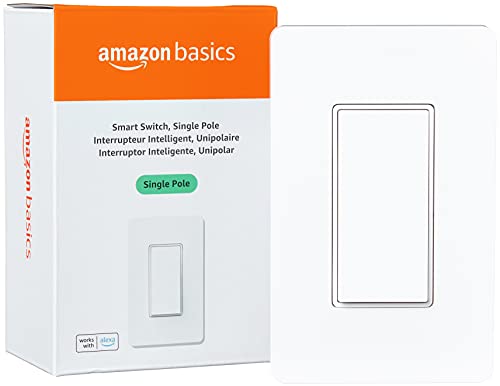
The Amazon Basics Smart Light Switch delivers straightforward smart home automation for homeowners looking to add voice control to their lighting without complexity or extra equipment. By connecting directly to your 2.4 GHz Wi-Fi network, this single-pole switch eliminates the need for a separate hub, reducing both cost and setup hassle. The guided installation process, supported by step-by-step video and documentation, makes it accessible even for those without electrical experience.
Functionality centers on Alexa integration, allowing you to control lights through voice commands and automated routines. You can schedule lights to turn on and off at specific times, adjust lighting based on your daily routine, and create custom scenes that fit your lifestyle. This automation capability adds genuine convenience and can help reduce energy consumption by ensuring lights aren't left on unnecessarily when you're away from home.
The switch's white finish and compact dimensions allow it to blend into standard wall installations. However, the exclusive Alexa compatibility means this option works best for households already invested in Amazon's ecosystem. If your home uses multiple voice assistants or smart home platforms, you'll want to evaluate alternatives that offer broader compatibility. The device's reliance on Wi-Fi connectivity also means lighting control depends on your network's stability and availability.
| Specification | Details |
|---|---|
| Brand | Amazon Basics |
| Color | White |
| Switch Type | Single Pole |
| Connectivity | 2.4 GHz Wi-Fi (No Hub Required) |
| Voice Control | Alexa Compatible |
| Dimensions | 2.91 x 4.64 x 1.62 inches |
| Weight | 0.24 pounds |
| Category | Home Improvement |
Installation: Turn off power at the circuit breaker before beginning. Remove your existing switch plate and disconnect the old switch. Connect the smart switch wires following the included diagram: typically line (hot), load, neutral, and ground. Secure the switch in the electrical box, attach the cover plate, and restore power.
Initial Setup: Download the Alexa app on your smartphone. Add a new device, select Light Switch, and follow the prompts to connect to your 2.4 GHz Wi-Fi network. The guided video tutorial walks through each step. Once connected, your switch will appear in the Alexa app as a controllable device.
Daily Use: Control lights by saying commands like 'Alexa, turn on the [room name] lights' or use the physical switch button manually. Create routines in the Alexa app to automate schedules, such as 'turn off all lights at 11 PM' or 'turn on bedroom light at 7 AM.' You can also control lights remotely through the Alexa app when away from home.
Optimize Your Wi-Fi: Position your router centrally in your home for strong 2.4 GHz signal coverage. Smart switches work best when they have reliable connectivity. If your switch frequently disconnects, move your router closer or consider a Wi-Fi extender.
Create Smart Routines: Build multi-step routines that trigger multiple lights at once. For example, create a 'Good Morning' routine that turns on bedroom, bathroom, and kitchen lights simultaneously. This saves time and creates consistent lighting patterns.
Use Scheduling for Energy Savings: Schedule outdoor or entryway lights to turn on at dusk and off at dawn using Alexa routines. This reduces wasted energy while maintaining security and convenience throughout the year.
Group Switches by Room: In the Alexa app, assign each switch to its corresponding room. This enables voice control by location ('Alexa, turn off the kitchen lights') and makes automation management cleaner and more intuitive.
Is This Right for You? Choose this smart switch if you already use Alexa, want affordable automation without a hub, and value simple installation. It's ideal for renters and homeowners avoiding complex smart home setups. Skip it if you use Google Home, Apple HomeKit, or prefer multi-platform compatibility.
Installation Considerations: This single-pole switch works in most homes but requires basic electrical knowledge or a willing DIYer. If you're uncomfortable working with electrical wiring, hire a licensed electrician. Ensure your electrical box has enough space for the switch and that your home's Wi-Fi reaches the switch location reliably.
Compatibility Check: Verify you have at least one Alexa device (Echo speaker, Echo Dot, or Alexa app on your phone) before purchasing. Your home Wi-Fi must support 2.4 GHz connections. Confirm the switch works with your specific Alexa device generation by reviewing current compatibility information.
Budget Planning: Factor in potential additional costs if you need Wi-Fi extenders for coverage or plan to hire an electrician for installation. Calculate the total investment and compare it with alternative smart switch brands that may offer broader platform compatibility at similar price points.

Pros
- Eliminates the need for a smart hub, saving money and simplifying setup
- Works as both 3-way and single-pole switch, offering flexibility for different room layouts
- Intuitive app and voice control make automation accessible to non-tech users
- Away mode adds a genuine security benefit for homes left vacant
- Scheduling and timer features help reduce energy consumption
Cons
- Requires a neutral wire in your switch box, which older homes may lack; consult an electrician if unsure
- Only connects to 2.4GHz Wi-Fi networks, not 5GHz, which may cause connectivity issues in homes with weak 2.4GHz coverage
The Kasa Smart 3-Way Switch HS210 is a practical choice for homeowners looking to add smart lighting control to multi-access rooms without investing in a separate hub. The kit includes two switches, making it ideal for staircases, front and back doors, or garage entries where you'd traditionally need a 3-way switch setup. Installation is straightforward for those comfortable with basic electrical work, thanks to the app-guided process that walks you through wiring and Wi-Fi connection step-by-step.
Performance and reliability are strong points. The switches connect directly to your home Wi-Fi without requiring a hub, which simplifies the ecosystem and reduces costs. Voice control works smoothly with both Alexa and Google Assistant, and the mobile app provides responsive control whether you're across the room or across the country. The away mode feature is genuinely useful for security, automatically turning lights on and off at random intervals to make your home appear occupied when you're traveling.
Before purchasing, verify that your switch boxes have neutral wires, as this is a mandatory requirement that can derail installation in older homes. Additionally, the 2.4GHz Wi-Fi limitation means you'll need reliable coverage on that band; if your home primarily uses 5GHz networks, connectivity may be inconsistent. Overall, for DIYers with compatible wiring and solid Wi-Fi coverage, this kit delivers excellent value and functionality.
| Specification | Details |
|---|---|
| Brand | Kasa Smart |
| Model | HS210 |
| Quantity | 2 switches per kit |
| Switch Type | 3-way or single-pole |
| Wiring Requirement | Neutral wire required |
| Connectivity | 2.4GHz Wi-Fi (no hub required) |
| Voice Control | Alexa and Google Assistant compatible |
| Control Method | Mobile app, voice commands, scheduling, timers |
| Features | Away mode, countdown timers, remote control, automation scheduling |
| Installation | App-guided setup |
| Safety Certification | UL certified |
| Color | White |
Installation: Turn off power at your breaker, then use the Kasa app to follow step-by-step wiring instructions. Connect the neutral wire, load wire, and travelers as shown in the app. Once wired, power on and use the app to connect the switch to your 2.4GHz Wi-Fi network.
Basic Operation: Either switch can turn the light on or off from its location. Use the Kasa app to control lights remotely from your phone, or say a voice command like 'Alexa, turn on the hallway light.'
Scheduling and Away Mode: In the app, set schedules to automatically turn lights on and off at specific times. Enable away mode to create random on/off patterns that simulate occupancy while you're traveling.
Before Installation: Turn off power at the circuit breaker and verify the power is off using a voltage tester. If you're unfamiliar with electrical wiring, hire a licensed electrician to ensure safe installation.
Wiring Requirements: This switch requires a neutral wire in your switch box. Do not attempt installation if a neutral wire is not present, as this can create fire hazards or equipment damage.
Wi-Fi Security: Use a strong, unique password for your Wi-Fi network. Keep your Kasa app and switch firmware updated to protect against security vulnerabilities.
Placement for Wi-Fi: Position your router within reasonable range of the switches. If you experience connectivity issues, move your router closer or consider a Wi-Fi extender on the 2.4GHz band.
Maximize Away Mode: Use away mode when traveling for extended periods. Vary the on/off times to look more realistic and deter potential intruders who might notice patterns.
Group Automation: In the Kasa app, create scenes to control multiple lights at once. For example, set an 'Goodnight' scene that turns off all lights in the house with a single voice command.

Pros
- No hub required; connects directly to 2.4 GHz Wi-Fi for straightforward setup
- Excellent platform compatibility covers all major voice assistants and ecosystems
- Slim design and wire leads make installation simple for DIYers
- Matter firmware update ensures long-term compatibility with emerging smart home standards
- Scheduling and auto-shutoff features help reduce energy waste and forgotten lights
Cons
- Neutral wire is required for installation, limiting compatibility with older homes or certain circuit configurations
- No built-in reviews available yet, so real-world performance feedback is limited
The Leviton Decora Smart Switch represents a solid entry point for homeowners looking to add Wi-Fi-controlled lighting without the complexity of a separate hub. It connects directly to your home network, supporting all three major voice ecosystems—Amazon Alexa, Google Assistant, and Apple Siri—plus SmartThings and other platforms. The addition of Matter support via firmware update is a thoughtful touch that future-proofs your investment as the smart home standard continues to mature.
From a practical standpoint, this switch shines in everyday convenience features. Schedule your exterior lights to illuminate at sunset, set auto-shutoff timers for frequently forgotten spaces like bathrooms and garages, or use randomized on-off patterns to simulate occupancy while you're traveling. The ability to control lights remotely from work or vacation gives you genuine peace of mind, and the 3-way configuration option means you can install companion switches at other wall locations without running new wires.
Installation is straightforward for most homeowners, with slim wire leads and a guided setup through the My Leviton app. The switch handles standard lighting loads as well as ceiling fans and exhaust fans up to 15A, making it versatile for various rooms. The main consideration is that it requires a neutral wire at the switch location, which may necessitate an electrician's help in older homes not originally wired with that configuration.
| Specification | Details |
|---|---|
| Model | D215S-1RW |
| Brand | Leviton |
| Color | White |
| Connectivity | Wi-Fi (2.4 GHz), Matter (firmware update) |
| Voice Control | Alexa, Google Assistant, Apple Siri |
| Platform Support | My Leviton app, SmartThings, Sonos, Resideo |
| Configuration | Single Pole or 3-Way |
| Companion Switches | DD0SR (Wired) or DAWSC (Wire-Free) |
| Rated Capacity | 15A, 3/4 HP |
| Load Types | Lights, ceiling fans, exhaust fans, motors, pumps |
| Installation Requirements | Neutral wire required |
| Hub Required | No |
| Setup | Guided setup via My Leviton app |
Initial Setup: Turn off power at your breaker, remove your existing switch, and connect the Leviton switch using the provided wire leads. Restore power, then download the My Leviton app and follow the guided setup to connect the switch to your 2.4 GHz Wi-Fi network. The app will walk you through adding it to your preferred voice assistant platform.
Remote Control: Once connected, open the My Leviton app to turn lights on or off from anywhere. Create schedules for specific times or set them to activate at sunset. For voice control, simply say commands like 'Alexa, turn on the living room lights' or 'Hey Google, dim the bedroom light to 50%.'
Automation Features: Use the auto-shutoff feature by setting a timer for specific rooms—helpful for bathrooms, closets, or garages where lights are frequently forgotten. Create randomized schedules while away to make your home appear occupied. For 3-way setups, pair this switch with a DD0SR wired companion or DAWSC wire-free companion switch at another wall location to control the same light from multiple points.
Maximize Convenience: Set sunset-triggered schedules for outdoor and entryway lights to eliminate the 'dark house' problem. Combine auto-shutoff with voice control in high-traffic areas to reduce energy waste without manual effort.
Vacation Mode: Use randomized lighting schedules that vary daily to create a genuinely lived-in appearance. Pair this with scheduled lock/unlock of smart doors for a comprehensive security presence.
Future-Proof Your Setup: Enable the Matter firmware update when available through the My Leviton app. This ensures compatibility with future smart home devices and platforms, protecting your investment as the ecosystem evolves.
Installation Planning: Before purchasing, verify that a neutral wire is present at your switch location. If unsure, consult an electrician—it's a quick inspection that prevents installation problems. When installing 3-way switches, the wire-free DAWSC companion option eliminates the need for new wiring between locations.
Is This Switch Right for You? Choose the Leviton Decora Smart Switch if you want Wi-Fi control without a hub, need voice assistant compatibility across multiple platforms, or plan to expand your smart home gradually. It's ideal for renters and homeowners who prefer flexibility and don't want to invest in a central hub system.
Key Considerations: Confirm your home has a neutral wire at the switch location before purchasing. If you have an older home or are unsure, contact an electrician for a quick assessment. This switch works best on 2.4 GHz Wi-Fi networks; if your router only broadcasts 5 GHz, you'll need to enable the 2.4 GHz band or use a dual-band setup.
Alternatives to Consider: If you prefer a hub-based system with more advanced automation, explore Lutron or SmartThings hub options. If you need a switch that works without a neutral wire, research alternative models specifically designed for that configuration. For budget-conscious buyers, basic smart switches without voice control are available at lower price points, though they offer fewer features.
Long-Term Value: The Matter support makes this a solid long-term investment, as it positions you for compatibility with future smart home products. The multi-platform support means you're not locked into one ecosystem, giving you flexibility to change voice assistants or add new devices without replacing the switch.

Pros
- No smart home hub needed - simplifies setup and reduces overall system costs
- Works seamlessly with three major voice assistant platforms
- Remote access and scheduling features provide genuine convenience and energy management
- Screwless installation design makes replacing existing switches straightforward
- Solid 4.1-star rating reflects reliable performance for basic on/off control
Cons
- Requires a neutral wire at the switch location, which older homes may lack
- Only compatible with 2.4GHz WiFi networks and cannot be used in 3-way or 4-way switch configurations
The TREATLIFE Smart Light Switch delivers straightforward smart home automation without unnecessary complexity. This 4-pack offers a practical entry point for homeowners and renters wanting to add voice control and remote access to their lighting. The switches integrate cleanly with major platforms including Alexa, Google Home, and SmartThings, and the absence of a required hub keeps setup simple and costs down compared to more elaborate systems.
From a practical standpoint, the scheduling and timer features address real household needs. You can set lights to turn on at sunset for security, create morning routines that gradually illuminate your space, or simulate occupancy while traveling. The 1250W capacity covers standard incandescent, LED, and CFL bulbs in most residential applications, and the screwless wall plate design makes installation faster than traditional switches.
Before purchasing, verify that your home has neutral wires at your switch locations - this is a hard requirement that disqualifies this switch for many older installations. Additionally, these switches are designed for single-pole setups only, so they won't work in 3-way or multi-switch configurations. If your home meets these requirements and you're looking for basic on/off automation at a reasonable price point, this 4-pack represents solid value.
| Specification | Details |
|---|---|
| Brand | TREATLIFE |
| Model | B07R4MFWCQ |
| Quantity | 4-Pack |
| Switch Type | Single-Pole On/Off (No Dimming) |
| Connectivity | 2.4GHz WiFi (No 5GHz Support) |
| Hub Required | No |
| Voice Assistants | Amazon Alexa, Google Assistant, SmartThings |
| Control Methods | Voice Commands, Smartphone App, Physical Button |
| Features | Scheduling, Timers, Automation, Remote Access, Device Grouping |
| Rated Capacity | 1250W / 10A |
| Wiring Requirement | Neutral Wire Required |
| Compatible Configurations | Single-Pole Only (Not 3-Way or 4-Way) |
| Wall Plate | Screwless Snap-On (Standard Size) |
| Certifications | FCC Listed |
Initial Setup: Download the Smart Life app and create an account. Add the switches to your WiFi network by selecting your 2.4GHz SSID and entering your password. The app will guide you through pairing each switch. Once connected, you can rename them (e.g., 'Kitchen Light', 'Bedroom Light') and organize them into groups.
Voice Control: Link your Alexa, Google Home, or SmartThings account to the Smart Life app. Your switches will appear as controllable devices in those ecosystems. You can then use voice commands like 'Alexa, turn off the kitchen light' or create routines that trigger multiple devices simultaneously.
Scheduling and Automation: In the Smart Life app, navigate to the specific switch and select 'Timer' or 'Schedule'. Set the days and times you want lights to turn on or off automatically. You can also create scenes - for example, an 'Away Mode' that turns on lights at sunset and off at midnight to simulate occupancy.
Optimize Your WiFi: These switches connect only to 2.4GHz networks. If your router broadcasts both 2.4GHz and 5GHz (dual-band), create a separate 2.4GHz network or ensure your 2.4GHz band is stable. Place switches within reasonable WiFi range to avoid connectivity drops.
Maximize Automation: Combine scheduling with voice commands for flexibility. Use timers for temporary on/off (like a 30-minute countdown before bed), and schedules for recurring daily patterns. Group related lights in the app so you can control entire rooms with one command.
Security and Energy Savings: When away, use the 'Away Mode' feature to turn lights on at dusk and off at night, deterring potential intruders. For occupied homes, automate hallway or bathroom lights to reduce energy waste from forgotten switches.
Is This Switch Right for You? These switches work best if you have single-pole lighting circuits (the most common residential setup), a neutral wire at your switch location, and a stable 2.4GHz WiFi network. They're ideal for renters and homeowners seeking affordable voice control without a hub, and for those building a multi-brand smart home ecosystem.
Pre-Purchase Checklist: Before buying, turn off power at your breaker and verify that a neutral wire (typically white) is present in your switch box. Confirm you have 2.4GHz WiFi available (most modern routers support this). Check that none of your lights are controlled by 3-way or 4-way switches - this product won't work in those configurations.
Installation Considerations: If you're not comfortable working with electrical wiring, hire a licensed electrician. The switches themselves are straightforward to install, but improper wiring can create safety hazards. Ensure your total lighting load on any single switch doesn't exceed 1250W, and avoid using these switches with dimmable circuits unless you're only using them in on/off mode.
Smart Light Switch Buying Guide
Smart light switches come in more varieties than most shoppers expect. Before choosing one, it helps to understand the key factors that separate a frustrating install from one that works flawlessly for years. Below, we walk through every consideration you should weigh, from wiring requirements to ecosystem fit.
Neutral Wire vs. No-Neutral Wiring
The single biggest installation hurdle for smart switches is the neutral wire. Most smart switches on the market today, including all of the Kasa, Tapo, Leviton, and TREATLIFE models in our list, require a neutral wire to complete the circuit and power the switch’s Wi-Fi radio even when the lights are off. Homes built after the mid-1980s typically have a neutral wire bundled in the electrical box. Older homes often do not. Before you purchase, turn off the breaker, remove your existing switch, and look for a white wire connected to the switch or capped off in the back of the box. If it is not there, narrow your search to the small number of no-neutral compatible models, or consider having an electrician run a neutral wire. Getting the wiring right upfront saves hours of troubleshooting later.
Single-Pole vs. 3-Way Configurations
A single-pole switch controls a light from one location only. A 3-way setup controls the same light from two different locations, such as the top and bottom of a staircase. Many people buy single-pole smart switches and only discover after installation that their wiring is actually a 3-way circuit. Check both switch boxes before ordering. For 3-way installs, you typically need a dedicated smart 3-way switch kit, like the Kasa HS210 KIT, which includes everything needed for both locations. Some brands let you pair one smart switch with a standard dumb traveler switch, which can reduce cost without sacrificing functionality.
Wi-Fi vs. Matter: Choosing Your Protocol
The majority of the best smart light switches connect directly over 2.4 GHz Wi-Fi without needing a separate hub. This makes initial setup fast and keeps costs low. The downside is that direct Wi-Fi switches rely entirely on your internet connection and the manufacturer’s cloud servers. If either goes down, remote control and voice commands may stop working until service is restored.
Matter is a newer open standard supported by Apple, Google, Amazon, and Samsung. Switches like the Leviton Decora D215S and the TP-Link Tapo S505 support Matter, meaning they work natively with Apple Home, Google Home, Amazon Alexa, and SmartThings without requiring separate integrations. Matter also allows local control, so your switches continue to respond even if your router loses its internet connection. If you are building a new smart home from scratch or own a mix of Apple and Google devices, prioritizing Matter-compatible switches is worth the modest premium. If you are simply adding a couple of switches to an Alexa-only or Google-only home, a straightforward Wi-Fi switch is perfectly capable and costs less.
Voice Assistant and App Ecosystem Compatibility
Nearly every smart switch in this roundup works with both Amazon Alexa and Google Assistant for hands-free voice control. If you already own a smart speaker from either ecosystem, linking your switches takes only a few minutes in each app. Apple Home users need to be more careful: only Matter-certified switches or HomeKit-specific models work natively with Siri and the Home app. The Leviton Decora D215S and TP-Link Tapo S505 cover all three ecosystems through Matter. If you are deep in the Amazon ecosystem and do not use Apple or Google, the Amazon Basics smart switch is an affordable entry point that integrates directly without any third-party app at all.
Dimmer Switches vs. On/Off Switches
On/off smart switches handle any bulb type, including LEDs, CFLs, and incandescents. Smart dimmer switches, like the Kasa HS220P3, require dimmable LED or incandescent bulbs to function correctly. Using a dimmer with non-dimmable LEDs can cause flickering, buzzing, or premature bulb failure. The benefit of a dimmer is obvious in living rooms, dining rooms, and bedrooms where mood lighting matters. For utility spaces like garages, laundry rooms, and pantries, a standard on/off switch is simpler and cheaper. Consider which rooms genuinely benefit from dimming before upgrading every switch in the house. Combining smart switches with pendant lights in dining rooms or chandeliers in entryways can dramatically improve ambiance when paired with a dimmer.
Scheduling, Automations, and Away Mode
One of the most underrated features of smart switches is scheduling. You can program lights to turn on at sunset, off at a set bedtime, or randomize on and off times to simulate occupancy while you are traveling. The Kasa app, TREATLIFE app, Leviton My Leviton app, and Tapo app all offer robust scheduling interfaces. Away mode, which randomly toggles lights to deter burglars, is available on most Kasa and TREATLIFE switches. If you use a platform like SmartThings or Amazon Routines, you can also trigger lights based on motion sensors, time of day, or other smart home events, creating automations that go well beyond what any single switch app offers on its own.
Multi-Pack Value vs. Single-Switch Purchases
Buying in multi-packs almost always brings the per-switch cost down significantly. The Kasa HS200P3 3-pack, the Kasa HS220P3 3-pack dimmer, the TREATLIFE 4-pack, and the Tapo S500 4-pack are all priced at a noticeable discount compared to buying the same switches individually. If you plan to outfit more than two or three locations in your home, start with a multi-pack from a single brand so all your switches share the same app and behave consistently. The Kasa 2-gang HS200-2 is another practical option if you have a dual-switch box and want to keep the footprint clean rather than installing two separate units side by side.
Safety Certifications and Build Quality
Any switch that connects to your home’s wiring should carry UL certification, which verifies that the device has been independently evaluated for electrical safety. Every switch in this roundup is UL listed, including models from Kasa, Tapo, TREATLIFE, and Leviton. FCC listing is equally important, confirming the device meets radio frequency emission standards. Avoid any switch that cannot provide both certifications. Leviton in particular has a long track record in residential electrical, and its Decora line carries the kind of build quality you would expect from a brand whose products appear in professionally installed homes and commercial spaces. For rooms that already have quality ceiling fans or outdoor ceiling fans with light kits, pairing them with a certified smart switch ensures safe and reliable operation over the long term.
Installation Difficulty and What to Expect
Most smart light switch installs take between 15 and 30 minutes per switch for someone comfortable with basic DIY electrical work. You need a Phillips screwdriver, a flathead, and optionally a voltage tester. The process involves turning off the breaker, removing the old switch, connecting the wires to labeled terminals on the new switch, tucking everything into the box, and attaching the faceplate. Kasa and Tapo both provide step-by-step app-guided installation that walks you through each wire connection with visuals, which is helpful for first-timers. If your electrical panel is already part of a larger renovation, coordinate switch installation alongside other recessed lighting or under-cabinet lighting work to minimize the number of times you are turning breakers on and off.
Why Trust HomeThru
HomeThru is an independent review publication with no affiliation to any manufacturer or retailer. We do not sell products, handle orders, or provide warranty support. Our editorial team researched, evaluated, and compared smart light switches by analyzing specifications, verified buyer reviews, ecosystem documentation, and installation requirements across real-world home configurations. We prioritize products that balance reliability, ease of use, and transparent safety certifications. Every recommendation in this guide reflects our honest assessment of what works best for homeowners at each budget and use case, not promotional agreements or sponsored placements. We apply the same methodology to every category we cover, from solar pathway lights to outdoor string lights.
Final Thoughts
Smart light switches are one of the most cost-effective ways to add genuine convenience and energy awareness to your home. Unlike smart bulbs, they work with any fixture and give every family member a physical control point. After a thorough review of every option in this guide, here are our standout picks by category:
- Best Overall: Kasa Smart Light Switch HS200P3 3-Pack, Reliable 2.4 GHz Wi-Fi performance, broad Alexa and Google Home compatibility, UL certification, and app-guided installation make this the most well-rounded value for anyone outfitting multiple rooms at once.
- Best for Matter and Multi-Ecosystem Homes: Leviton Decora Smart Switch D215S, Full Matter support means it works seamlessly with Apple Home, Alexa, Google Assistant, and SmartThings. The wired or wire-free 3-way capability adds flexibility that few competitors match.
- Best Budget Pick: Amazon Basics Smart Light Switch, The most affordable entry in the lineup, it offers solid Alexa integration and schedule functionality at a price point that makes whole-home upgrades genuinely accessible.
- Best Smart Dimmer: Kasa Smart Dimmer Switch HS220P3 3-Pack, Smooth dimming performance, multi-pack value, and full Alexa and Google Home support make this the top choice for living rooms, dining rooms, and any space where ambiance matters.
- Best for 3-Way Circuits: Kasa Smart 3-Way Switch HS210 KIT, A complete two-switch kit that handles staircase and multi-location lighting without requiring a second smart switch at the traveler location.
If you are planning a broader smart home upgrade, pairing smart switches with smart speakers, floor lamps, and table lamps creates a unified lighting experience you can control entirely by voice or schedule. For outdoor spaces, consider combining your new switches with outdoor string lights or solar path lights to extend smart control beyond your walls.
Frequently Asked Questions
Do Smart Light Switches Work Without Wi-Fi?
Most Wi-Fi smart switches lose remote access and voice control when your internet goes down, but the physical paddle or button on the switch still works for manual on/off control. Matter-certified switches like the Leviton Decora D215S support local control, meaning automations and app commands can continue to function even without an active internet connection, as long as your router is still running.
Can I Use a Smart Switch With LED Bulbs?
Yes, on/off smart switches work with any bulb type, including LEDs, CFLs, and incandescents. Smart dimmer switches require dimmable LED bulbs specifically. Using a dimmer with non-dimmable LEDs can cause flickering, buzzing, or early bulb failure. Always check the bulb packaging for a dimmable label before pairing it with a dimmer switch.
Is a Hub Required for Smart Light Switches?
None of the switches in this guide require a dedicated smart home hub. All connect directly to your home’s 2.4 GHz Wi-Fi network. That said, if you already use a hub platform like SmartThings, most of these switches are compatible and can participate in broader cross-device automations. Matter-enabled switches extend hub-free compatibility even further by supporting Apple Home, Google Home, and Alexa natively.






Write Your Review
No reviews yet. Be the first to share your experience!