

A drill press delivers something a handheld drill simply cannot: repeatable, perfectly perpendicular holes drilled at a consistent depth, every single time. Whether you are a weekend woodworker boring mortises, a hobbyist drilling circuit boards, or a serious DIYer building furniture, the best drill presses give you control, accuracy, and confidence that no freehand technique can match. We researched and analyzed dozens of benchtop and portable options from brands including WEN, SKIL, DeWalt, JET, Dremel, and Milescraft to bring you this carefully vetted list of top performers across every budget and use case.
Before diving into individual picks, it helps to understand what separates a capable machine from one that will frustrate you after a few uses. Speed range, spindle travel, table size, motor power, and build quality all play a role. We cover each factor in depth in the buying guide below, so you can match the right machine to your actual needs rather than just grabbing the best-known brand name. If you already own a solid set of cordless drills for jobsite work, a benchtop drill press rounds out your shop in ways a handheld tool never will.
Top Drill Presses We Recommend

Pros
- Laser alignment takes the guesswork out of positioning holes and saves setup time
- Variable speed control lets you dial in the perfect RPM for wood, metal, or plastic without stalling
- Tilting table handles angled drilling tasks that would be difficult or impossible on a fixed-table press
- Sturdy benchtop design occupies minimal shop space while delivering professional-grade stability
- LED work light and depth stop features show attention to user experience and practical drilling needs
Cons
- No user reviews available yet, so real-world durability and long-term reliability remain unproven
- Limited to benchtop use, which means smaller workpieces and less capacity than floor-standing models
The Skil DP9505-00 delivers solid performance for homeowners and DIYers who want precision drilling without the price tag of industrial equipment. The 6.2 amp induction motor provides reliable power across different materials, while the 5-speed system (610-2800 RPM) lets you optimize drilling speed for wood, metal, or composites. This flexibility matters because the right speed prevents bit wandering, reduces heat buildup, and produces cleaner holes.
What sets this drill press apart is the laser alignment system, which projects a precise crosshair onto your workpiece so you can position holes with confidence. Combined with the adjustable depth stop, you get repeatable accuracy for drilling multiple identical holes or production-style work. The tilting work surface (0-45 degrees left and right) is a practical feature that eliminates the need to clamp workpieces at odd angles, saving time and improving safety.
The LED work light and bump-off safety switch show that Skil prioritized usability and user safety in the design. For hobbyists building furniture, boxes, or tackling metalwork projects, this benchtop press offers the precision and features you need at an accessible price point. The compact footprint makes it ideal for home shops where space is at a premium.
| Specification | Detail |
|---|---|
| Motor | 6.2 Amp Induction Motor |
| Chuck Size | 10 Inch |
| Speed Range | 5 Speeds: 610 to 2800 RPM |
| Work Surface | Tilting Table (0-45 degrees left and right) |
| Depth Control | Adjustable Depth Stop |
| Table Height | Adjustable |
| Alignment | Laser Alignment System (Class II, 0.83mW) |
| Lighting | LED Work Light |
| Safety | Bump-Off Switch |
| Type | Benchtop Drill Press |
| Color | Multi |
Setup: Place the drill press on a sturdy, level workbench. Plug it in and familiarize yourself with the speed dial and depth stop adjustment. Always secure your workpiece with a vise or clamp before drilling.
Positioning: Use the laser alignment system to position your hole precisely. Activate the laser to see the crosshair on your workpiece, then adjust the table or workpiece position until the laser marks your desired drilling point.
Drilling: Select the appropriate speed for your material (lower speeds for metal, higher speeds for wood). Lower the chuck slowly and let the bit do the work without forcing it. The depth stop will halt the descent when you reach your target depth.
Angled Drilling: Loosen the table tilt mechanism and adjust the work surface to your desired angle (0-45 degrees). Re-secure it, then position and drill as normal. This feature is invaluable for furniture joinery and angled hole work.
Always Secure Your Workpiece: Use a vise, clamp, or the table's built-in hold-downs to prevent the workpiece from spinning if the bit catches. Spinning workpieces cause serious injuries.
Wear Proper Eye Protection: Metal shavings and wood chips can fly during drilling. Safety glasses are essential. Long hair should be tied back or covered.
Use the Bump-Off Switch: This feature prevents accidental startup. Always use it when you're not actively drilling, especially when changing bits or adjusting the workpiece.
Appropriate Speeds for Materials: Use lower speeds (610-1200 RPM) for metal and hard materials. Use higher speeds (1500-2800 RPM) for wood and softer materials. Forcing a bit at the wrong speed damages the bit and creates safety hazards.
Keep Hands Clear: Never place your hands near the chuck or bit during operation. Use the depth stop to control drilling depth rather than relying on hand pressure.
Use Backing Boards: Place a scrap piece of wood under your workpiece to prevent tear-out on the exit side of the hole, especially when drilling through wood.
Optimize Speed for Material: Start at a lower speed and increase gradually until you find the sweet spot where the bit cuts smoothly without chattering. Listen to the motor and feel for vibration.
Leverage the Laser for Layout: The laser alignment system is invaluable for drilling multiple holes in a pattern. Mark your first hole, verify the laser position, then use the laser as a reference for subsequent holes.
Maintain Your Bits: Keep bits sharp and clean. Dull bits require more pressure, generate heat, and produce poor-quality holes. A dedicated bit sharpening service or tool extends bit life significantly.
Use the Tilting Table for Complex Joinery: Angled holes for dowels, pocket holes, or decorative work are much easier and safer on a tilting table than trying to hold a workpiece at an angle by hand.
Pros
- Cast iron base and column minimize vibration for cleaner, more accurate holes
- Digital RPM display eliminates guesswork when switching between materials
- Laser and LED lighting combination makes hole alignment foolproof
- Variable speed motor handles everything from delicate wood inlays to steel fasteners
- Adjustable depth stop prevents costly drilling mistakes
Cons
- 85-88 pound weight requires a sturdy workbench and makes repositioning challenging
- No customer reviews available to assess real-world durability and long-term performance
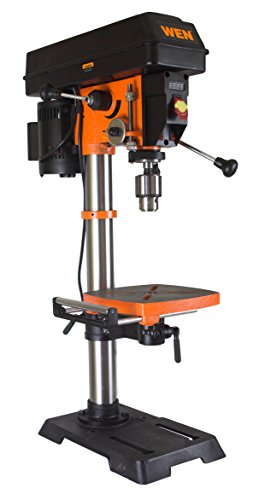
The WEN DP1263V benchtop drill press brings professional-grade precision to the home workshop. Its 6.2-amp induction motor delivers consistent power across a wide speed range from 580 to 3100 RPM, making it equally capable with hardwoods, softwoods, plastics, and light metals. The digital speed readout is a genuine convenience feature that takes the guesswork out of selecting the right RPM for each material, helping you achieve cleaner holes and longer tool life.
Build quality is a standout feature. The cast iron construction throughout the base and column minimizes vibration, which directly translates to more accurate holes and less chatter marks on your workpieces. At 88 pounds, this machine is heavy enough to stay put during operation but light enough to fit on a standard workbench. The combination of a class IIIA laser guide and overhead LED work light makes hole placement incredibly precise, and the adjustable depth stop prevents over-drilling and costly mistakes.
The beveling work table tilts up to 45 degrees, opening up angled drilling possibilities for joinery and decorative work. The 12-inch swing accommodates larger workpieces, and the 5/8-inch capacity chuck handles standard bits and accessories. The included two-year warranty provides peace of mind, though long-term durability feedback from extended field use would help establish this machine's reputation for lasting reliability.
| Specification | Detail |
|---|---|
| Motor | 6.2-Amp Induction Motor |
| Speed Range | 580 to 3100 RPM (Variable) |
| Speed Display | Digital RPM Readout |
| Swing | 12 Inches |
| Spindle Travel | 3 1/8 Inches |
| Chuck Capacity | 5/8 Inch Keyed |
| Work Table | 9 1/2 x 9 1/2 Inches (Beveling to 45 Degrees) |
| Dimensions | 22 x 14.5 x 37 Inches |
| Weight | 88 Pounds |
| Lighting | Class IIIA 2.5mW Laser + Overhead LED |
| Accessories Included | Chuck Key with Storage, Depth Stop, Table Roller Extension |
| Warranty | 2 Years |
| Color | Orange |
Getting Started: Secure the drill press to a sturdy workbench using the mounting holes on the base. Check that the chuck is tight and the spindle spins freely before plugging in. Always wear safety glasses and keep long hair and loose clothing away from the rotating spindle.
Setting Speed: Use the mechanical variable speed dial to select your RPM based on material type. Softer materials like wood can handle higher speeds (2000-3100 RPM), while harder materials like steel require slower speeds (500-1500 RPM). The digital readout confirms your current speed setting.
Positioning Your Work: Use the laser guide to align your hole location on the workpiece. Position the work on the table, then lower the spindle slowly using the feed handle until the bit just touches the surface. Use the depth stop to set how deep the hole will go, then engage the motor and feed steadily without forcing the bit.
Angled Drilling: For beveled holes, loosen the work table clamp and tilt to your desired angle (up to 45 degrees). Re-secure the clamp and proceed with your drilling operation. Always ensure your workpiece is stable and clamped if necessary.
Before Operation: Inspect the chuck for cracks and ensure the chuck key is removed before starting. Verify that the spindle rotates freely and all guards are in place. Keep the work area clean and well-lit.
During Operation: Always wear ANSI-approved safety glasses. Keep hands clear of the rotating spindle and use a clamp or vise to secure small workpieces. Never reach into the work area while the spindle is turning. Feed the bit slowly and steadily without forcing it through the material.
Material-Specific Precautions: Long-hair users should tie back hair and avoid loose clothing. When drilling metal, chips can become hot and sharp, so allow pieces to cool before handling. For wood, watch for grain tear-out by reducing speed on the exit side or backing the workpiece with scrap wood.
Maintenance: Unplug the machine before changing bits or performing maintenance. Keep the table and spindle clean of debris. Periodically check that all bolts and clamps remain tight, especially after heavy use.
Speed Selection Matters: The difference between a clean hole and a ragged one often comes down to RPM. Start at a conservative speed and increase gradually until you find the sweet spot where the bit cuts cleanly without binding. Keep notes on speeds that work best for your favorite materials.
Leverage the Laser: The laser guide is incredibly accurate, but remember it shows where the bit will enter. For through-holes, mark your exit point on the back of the workpiece as well to catch any drift. The laser is especially useful for drilling multiple holes in a pattern.
Depth Stop Technique: Use the depth stop not just to prevent over-drilling, but to ensure consistency when drilling multiple identical holes. Set it once, and every hole will be the same depth without thinking about it.
Feed Pressure Control: Let the bit do the work. Excessive downward pressure causes binding, dull bits, and broken drills. Light, steady pressure produces cleaner holes and longer bit life. This is especially important when working with delicate materials or small bits.
Table Extension Value: The included table roller extension is useful for supporting longer workpieces and preventing them from tipping or rotating during drilling. Use it whenever your workpiece extends beyond the main table.

Pros
- Laser guide system takes the guesswork out of hole placement and significantly improves drilling accuracy
- Compact footprint makes this press practical for home workshops and garages with limited bench space
- Wide RPM range accommodates different materials and bit sizes, from delicate finishing work to heavy-duty drilling
- Sturdy cast iron base and ergonomic controls deliver smooth operation and comfortable, controlled drilling
- LED lighting and depth stop features enhance visibility and repeatability for precision work
Cons
- Limited power compared to floor-standing industrial models means it's best suited for home and hobby use rather than production work
- No reviews currently available online, so long-term durability feedback from real users is not yet established
The JET JWDP-12 is engineered for homeowners and DIYers who need drilling precision without the bulk of a full-size industrial press. Its compact 10" x 16" cast iron base occupies minimal bench space while maintaining the rigidity necessary for accurate hole placement. The variable-speed motor ranging from 530 to 3,100 RPM adapts intelligently to different materials: slower speeds for delicate work in hardwoods or metals, faster speeds for softer woods and plastics. This flexibility makes it genuinely useful across a wide range of shop projects.
What sets this model apart is its XACTA Laser guide system, which projects an X-shaped pattern directly onto your workpiece to show exactly where the bit will enter. This eliminates the common frustration of misaligned holes and dramatically reduces the need for layout marking and rechecking. Combined with the clear linear depth scale and mechanical stop, you can drill consistently repeatable holes without overthinking the setup. The retractable roller extension is a practical addition that supports larger workpieces and speeds up adjustments between holes.
The 1/2 HP motor provides adequate power for typical home shop applications, though it's not designed for sustained production work or extremely heavy materials. The integrated LED work light is genuinely useful for visibility in dimly lit shops or on detailed applications. At 85 pounds, the press is portable enough to move between work areas but heavy enough to resist walking during operation. For serious hobbyists and homeowners tackling woodworking, metalworking, or DIY projects, this benchtop press delivers solid performance and reliability in a space-conscious package.
| Specification | Detail |
|---|---|
| Brand | JET |
| Model | JWDP-12 |
| Drill Press Size | 12-Inch |
| Motor Power | 1/2 HP |
| Voltage | 115V, Single Phase |
| Speed Range | 530 to 3,100 RPM (Variable) |
| Base Dimensions | 10" x 16.125" |
| Overall Dimensions | 16.125" x 10" x 37" |
| Weight | 85 lbs |
| Color | Black |
| Key Features | LED Work Light, XACTA Laser Guide, Retractable Roller Extension, Depth Stop, Ergonomic Controls |
Setup: Place the drill press on a sturdy, level workbench and ensure it's plugged into a properly grounded 115V outlet. Secure your workpiece firmly using the base clamp or a vise to prevent slipping during drilling.
Adjusting Speed: Consult the speed chart (typically affixed to the press) to select the appropriate RPM for your material. Loosen the motor belt tension knob, adjust the belt position on the pulley system, and retighten. Always make speed adjustments before powering on the motor.
Using the Laser Guide: Activate the LED laser to see the X-shaped drilling pattern on your workpiece. Align your hole location to the center of the X pattern. This visual guide eliminates the need for manual center-punching in many cases.
Setting Depth: Place a sample piece under the drill bit and lower the chuck until the bit just touches the surface. Set the mechanical depth stop at your desired drilling depth, then lock it in place. This prevents over-drilling and ensures consistent hole depths across multiple workpieces.
Drilling: Lower the chuck slowly and steadily using the ergonomic hand knob. Let the bit do the work; apply firm, even pressure without forcing. For larger bits or tougher materials, reduce speed and allow extra time for the bit to cut through.
Cleanup: Always power off and allow the chuck to stop completely before removing your workpiece or changing bits. Wipe away chips and dust regularly to maintain visibility and prevent debris from affecting accuracy.
Before You Start: Read the manufacturer's safety manual thoroughly. Inspect the drill press for loose components, cracks, or damage before each use. Ensure the power cord is in good condition and the outlet is properly grounded.
Personal Protection: Always wear safety glasses or a face shield to protect against flying chips and debris. Avoid loose clothing, dangling jewelry, and long hair that could catch in the rotating chuck. Consider wearing hearing protection if operating for extended periods, as the motor can produce significant noise.
Workpiece Security: Never attempt to drill a workpiece held only by hand. Always use the base clamp, a vise, or clamping blocks to secure your piece firmly. Unsecured workpieces can spin violently if the bit catches, causing serious hand and wrist injuries.
Chuck and Bit Safety: Always remove the chuck key immediately after tightening or loosening the chuck. A spinning chuck key can cause severe laceration or impact injuries. Inspect drill bits for damage or dullness before use; dull bits require excessive pressure and can slip unexpectedly.
Motor and Speed: Never reach toward the spinning chuck or bit. Allow the motor to come to a complete stop before removing your workpiece. Always adjust speed settings with the motor off and the chuck stopped.
Electrical Safety: Keep the work area dry and free from standing water. Do not operate the drill press with wet hands or while standing on wet flooring. Use a properly grounded outlet; never use an adapter that removes the ground pin.
Speed Selection Matters: The difference between success and failure often comes down to RPM. Slower speeds (under 1,000 RPM) work best for metals and hardwoods, where heat buildup can dull bits quickly. Medium speeds (1,200-2,000 RPM) suit most woodworking tasks. Higher speeds (2,500+ RPM) are ideal for soft woods, plastics, and small-diameter bits. When in doubt, start slower and increase speed only if the bit is cutting cleanly.
Master the Laser Guide: The XACTA Laser is most effective in moderate to bright lighting. If your shop is dim, position a work light nearby to make the laser pattern more visible. Use the laser to mark your exact drilling location before powering on; this gives you confidence that the hole will land exactly where you want it.
Prevent Bit Breakage: Small bits (under 1/8") are fragile and snap easily under excessive pressure. Use a light touch and let the bit cut at its own pace. For metals, apply a small amount of cutting fluid to reduce friction and heat, which extends bit life significantly.
Consistent Depth Stops Workflow: If drilling multiple holes to the same depth, set the depth stop once and lock it firmly. This eliminates the need to measure each hole individually and reduces the chance of drilling too deep. For production-style work, this simple step saves tremendous time.
Leverage the Roller Extension: The retractable roller extension isn't just for large workpieces. Use it to support the weight of heavy materials and reduce the physical strain on your arms during drilling. This also improves stability and drilling accuracy by keeping the workpiece level and secure.
Maintenance Extends Life: Wipe down the cast iron base after each session to prevent rust in humid climates. Keep the pulley system clean of dust and chips. Periodically check that all bolts and knobs are tight; vibration can loosen fasteners over time. A well-maintained press delivers consistent accuracy for years.
Pros
- Affordable entry point into benchtop drill press ownership for home workshops
- Versatile five-speed system adapts to wood, metal, and plastic materials
- Tilting worktable with 45-degree bevels opens up angled drilling possibilities
- Lightweight at 32 pounds makes it portable enough to relocate in your shop
- Compact footprint (7 by 11-inch base) fits tight workshop layouts
Cons
- No customer reviews available online, so real-world reliability feedback is limited
- 2.3-amp motor has modest power compared to larger benchtop models, limiting heavy-duty applications
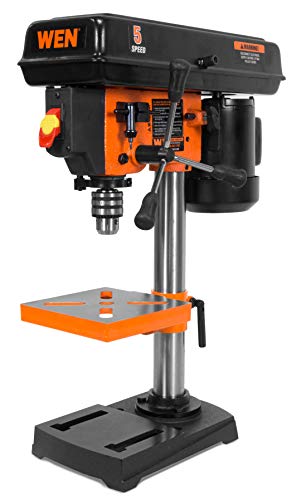
The WEN 4206T benchtop drill press is designed for homeowners and DIYers who need precision drilling without a large floor footprint. At just 23 inches tall with a compact base, it sits comfortably on any workbench while delivering practical functionality for drilling wood, plastic, and softer metals. The 2.3-amp induction motor runs smoothly across five selectable speeds, allowing you to dial in the right RPM for your material and bit size.
The standout feature is the adjustable worktable, which tilts 45 degrees in both directions and measures 6.5 by 6.5 inches. This flexibility lets you create angled holes and beveled edges without complex setups or jigs. The 8-inch swing and 2-inch spindle travel cover the majority of typical home projects, while the 1/2-inch keyed chuck provides secure bit holding. The onboard key storage is a practical touch that keeps your workspace tidy.
This drill press excels as a stepping stone into precision drilling, offering straightforward operation and reliable performance for hobbyists and weekend warriors. While the motor lacks the power of professional-grade models, it's perfectly suited for typical home workshop tasks. The reasonable price point makes it accessible for builders looking to upgrade from handheld drills without breaking their budget.
| Specification | Detail |
|---|---|
| Model | WEN 4206T |
| Motor | 2.3-Amp Induction |
| Spindle Speeds | 5 speeds: 750, 1100, 1500, 2100, 3200 RPM |
| Swing Capacity | 8 inches |
| Spindle Travel | 2 inches |
| Chuck | 1/2-inch Keyed |
| Worktable Size | 6.5 x 6.5 inches |
| Worktable Tilt | 45 degrees each direction |
| Overall Height | 23 inches |
| Base Dimensions | 7 x 11 inches |
| Overall Dimensions | 16.88 x 8.63 x 22.88 inches |
| Weight | 32 pounds |
| Color | Black and Orange |
Getting Started: Secure the drill press to a sturdy, level workbench using the base. Ensure adequate clearance around the machine for operation and material handling.
Setting Up Your Bit: Insert your drill bit into the 1/2-inch keyed chuck and tighten securely. Store the chuck key in the onboard holder when not in use to prevent dropping or losing it.
Selecting Speed: Consult a speed chart for your specific material. Start with lower RPMs (750-1100) for metal and larger bits, and higher speeds (2100-3200) for wood and small bits. Loosen the belt tension lever and adjust the belt position on the pulleys to change speeds.
Positioning Your Work: Place your workpiece on the adjustable worktable. Use the depth stop to set consistent drilling depth. For angled holes, loosen the table tilt mechanism and adjust to your desired angle up to 45 degrees.
Drilling: Pull the quill handle downward with steady, even pressure. Let the bit do the work without forcing. Release the handle to allow the spring to retract the spindle.
Before Operation: Always wear safety glasses to protect against flying debris. Tie back long hair and avoid loose clothing that could get caught. Remove the chuck key immediately after inserting your bit.
During Drilling: Keep your hands and fingers clear of the spinning chuck and bit. Never reach under the worktable while the spindle is rotating. Use a vise or clamp to secure small workpieces instead of holding them by hand.
Material Handling: Be aware that long workpieces can swing around as they spin. Secure larger materials firmly to prevent rotation. Start at low speeds and increase gradually to prevent sudden jerking.
Maintenance and Storage: Unplug the drill press before cleaning, adjusting, or servicing. Keep the area around the machine clear of clutter. Store the chuck key in its designated holder, never in the chuck itself. Allow the spindle to come to a complete stop before leaving the machine unattended.
Bit Selection Matters: Invest in quality twist bits, spade bits, and Forstner bits appropriate for your materials. A sharp bit reduces pressure needed and produces cleaner holes with less heat buildup.
Speed and Feed Balance: The five-speed system is your advantage. Use slower speeds for metal and larger diameters to prevent bit breakage and overheating. Faster speeds work better for wood and small bits but produce more heat.
Depth Stops Save Time: Set the depth stop for repetitive holes. This ensures consistency across multiple workpieces and prevents accidental over-drilling that damages your project.
Worktable Angles: The 45-degree tilt capability opens creative possibilities. Use it for creating angled holes in furniture, decorative bevels, or specialized joinery. Mark your tilt angle with a marker or tape for repeatability.
Vibration Control: Secure your workpiece firmly with clamps or a vise. This reduces vibration, improves accuracy, and keeps your hands safer by eliminating the need to hold the piece.
Pros
- Multiple speed settings let you match RPM to material type, improving accuracy and reducing bit breakage
- Tilting worktable enables beveled holes and specialized drilling angles that handheld drills cannot achieve
- Lightweight at 34 pounds and compact design make it ideal for small workshops and garage setups
- Cast iron base resists vibration, keeping your work steady and precise during operation
Cons
- 2.3-amp motor is less powerful than full-size industrial models, limiting it to lighter materials and smaller diameter bits
- Limited swing and spindle travel mean this press works best for small to medium projects rather than heavy production work
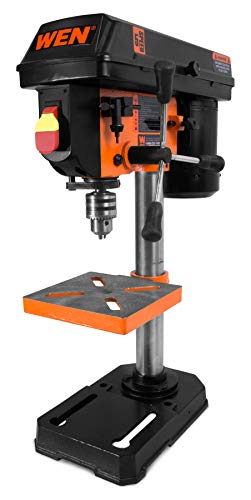
The WEN 4208T benchtop drill press brings reliable precision drilling to homeowners and DIYers who need more control than a handheld drill can offer. Its 2.3-amp induction motor powers through five selectable speeds, allowing you to dial in the perfect RPM for wood, plastic, soft metals, and other common workshop materials. The cast iron base keeps vibration minimal, which translates to cleaner holes and less strain on your bits.
The adjustable worktable is where this press truly shines for hobbyists. You can tilt it up to 45 degrees in either direction, opening up possibilities for angled holes, beveled edges, and specialized drilling applications that would be nearly impossible with a handheld tool. The 6.5-by-6.5-inch work surface is appropriately sized for the machine's overall footprint, and the 2-inch spindle travel handles most common drilling depths without fuss.
This is an honest benchtop tool designed for the DIY crowd, not professional shops running production jobs. The 2.3-amp motor and modest swing size mean you'll get the best results with smaller diameter bits and lighter materials. At 34 pounds with a 7-by-11-inch base, it fits comfortably on a workbench or shelf, making it a smart choice for anyone upgrading from handheld drills without needing industrial-grade power.
| Specification | Details |
|---|---|
| Motor | 2.3-Amp Induction Motor |
| Swing Capacity | 8 Inches |
| Spindle Travel | 2 Inches |
| Speed Settings | 5 Speeds: 740, 1100, 1530, 2100, 3140 RPM |
| Chuck Size | 1/2-Inch Keyed Chuck |
| Worktable Size | 6.5 x 6.5 Inches |
| Worktable Tilt Range | 45 Degrees Each Direction |
| Overall Height | 23 Inches |
| Base Dimensions | 7 x 11 Inches |
| Weight | 34.2 Pounds |
| Color | Black and Orange |
| Construction | Cast Iron |
Setup and Safety: Place the drill press on a sturdy, level workbench or stand. Ensure the power cord reaches a grounded outlet and the machine sits on a stable surface. Always wear safety glasses and keep loose clothing, hair, and jewelry away from the rotating chuck and bit.
Selecting Speed: Choose your RPM based on material and bit size. Use slower speeds (740-1100 RPM) for larger bits, harder metals, and delicate materials. Use faster speeds (2100-3140 RPM) for smaller bits and softer materials like wood and plastic. Start at a moderate speed if unsure, and adjust as needed.
Securing Your Workpiece: Place your material on the worktable and use clamps or a vise to hold it firmly in place. Never hold the workpiece by hand while drilling. Tighten the chuck securely around your bit using the keyed chuck (store the key in the onboard holder when not in use).
Drilling: Lower the spindle slowly and steadily using the feed lever. Let the bit do the work without forcing it. For through-holes, place a scrap piece underneath to prevent splintering on the exit side. Raise the spindle completely before removing your workpiece.
Essential Precautions: Always wear ANSI-approved safety glasses to protect against flying debris. Tie back long hair and remove loose jewelry, watches, and dangling sleeves before operating. Never reach near the rotating chuck or bit, even if the machine appears to be slowing down.
Workpiece Security: Always clamp or vise your workpiece to the table. Never hold it by hand. If the bit catches and spins the workpiece, it can cause serious hand and wrist injuries. Check that clamps are tight and the workpiece cannot shift during drilling.
Chuck Key Safety: Remove the keyed chuck immediately after tightening or loosening the bit. A forgotten key can become a dangerous projectile when the spindle rotates. The onboard key storage keeps it accessible and reminds you to secure it.
Power and Maintenance: Always unplug the machine before changing bits, adjusting the table, or performing maintenance. Keep the work area clear of clutter and ensure adequate lighting. Regularly check that all bolts and adjustments remain tight, and never operate a machine with visible damage.
Is This the Right Drill Press for You? The WEN 4208T works best for DIYers, hobbyists, and homeowners who need precision drilling beyond what a handheld drill can deliver. It excels at woodworking, light metalworking, and craft projects. If you primarily work with small to medium-sized pieces and don't need industrial production capacity, this is a solid fit.
Consider This If: You have a small workshop or garage with limited space. You want to upgrade from handheld drilling but don't need heavy-duty capability. You work with wood, plastic, and softer metals more than hardened steel. You value affordability and reliability over maximum power. You need the ability to drill angled or beveled holes regularly.
Look Elsewhere If: You run a professional shop or production operation requiring continuous duty. You frequently drill large-diameter holes or work exclusively with hardened steel and cast iron. You need a drill press with more than 2 inches of spindle travel for deep holes. Your workshop space is extremely limited (the 7x11-inch base is still substantial).
What to Know Before Buying: This machine requires assembly and a dedicated workspace. It's not portable, so plan a permanent home for it. The five speeds are fixed, so you choose the closest match for your task rather than dialing in a precise RPM. Bits and accessories are standard 1/2-inch chuck sizes, making them widely available and affordable.
Pros
- Adjustable five-speed transmission lets you match RPM to material type for cleaner, more precise holes
- Extended 3.5 inch spindle travel accommodates thicker stock and eliminates frequent repositioning
- Integrated LED worklight reduces eye strain and improves drilling accuracy in low-light conditions
- Cast iron base and table construction minimizes vibration and ensures stable, repeatable drilling
Cons
- No customer reviews available yet, so real-world durability and long-term reliability remain unverified
- 7.0 amp motor is adequate for general work but may feel underpowered for heavy industrial or continuous production use
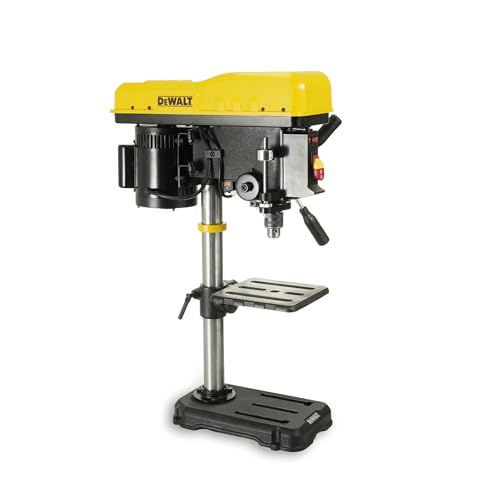
The DeWalt 10" benchtop drill press is engineered for homeowners and DIYers who need precision drilling without industrial-grade complexity. The 7.0 amp motor delivers consistent power across wood, metal, and plastic materials, while the five-speed transmission (610-2800 RPM) lets you match drilling speed to your workpiece. This flexibility is essential for achieving clean holes in different materials without burning, chipping, or wandering.
The 3.5 inch spindle travel is a practical advantage for projects requiring deeper penetration. Instead of repositioning your work multiple times or using a drill press vise, this spindle depth lets you handle thicker stock and larger assemblies in a single setup. The heavy-duty cast iron table and base absorb vibration effectively, which translates to smoother operation and more accurate hole placement, especially when drilling metal.
The integrated LED worklight is a welcome convenience feature that addresses a common workshop frustration: poor visibility over the drill table. By illuminating your work surface directly, the LED helps you see bit alignment and workpiece positioning clearly, reducing setup time and improving safety. At 39 pounds, this drill press is stable enough for demanding work yet manageable enough to reposition if your workshop layout changes.
| Specification | Details |
|---|---|
| Brand | DeWalt |
| Motor Power | 7.0 Amp |
| Chuck Size | 10 inch |
| Spindle Travel | 3.5 inches |
| Speed Range | 610-2800 RPM (5 speeds) |
| Table Material | Cast Iron |
| Base Material | Cast Iron |
| Work Light | Integrated LED |
| Dimensions | 11 x 7.98 x 22 inches |
| Weight | 39 pounds |
| Color | Yellow |
Setup and Installation: Place the drill press on a sturdy, level workbench. Ensure the table is perpendicular to the spindle using a square. Secure the unit if your benchtop allows bolting. Plug into a grounded outlet and verify the chuck rotates freely with no load.
Selecting Speed: Choose your RPM based on material and bit size. Start with lower speeds (610-1200 RPM) for metal and larger bits, medium speeds (1200-2000 RPM) for general wood drilling, and higher speeds (2000-2800 RPM) for small bits and fine detail work. Refer to your bit manufacturer's recommendations when unsure.
Drilling Technique: Secure your workpiece firmly to the table using a clamp or vise. Lower the spindle slowly using the feed handle, letting the bit do the work without forcing. For metal, use cutting fluid to extend bit life. Always remove the chuck key before operating and wear safety glasses.
Before Operation: Always remove the chuck key immediately after installing or removing a bit. Inspect the table for debris and ensure your workpiece is clamped securely. Check that the spindle rotates freely with no obstructions.
During Drilling: Wear ANSI-approved safety glasses to protect against flying debris and bit fragments. Keep your hands clear of the rotating spindle and never reach near the bit while it's spinning. Use a clamp or vise to hold your workpiece; never hold it by hand.
Material-Specific Precautions: When drilling metal, apply cutting fluid and be prepared for sudden bit grab as it breaks through. For wood, watch for splintering on the exit side and consider backing your workpiece with scrap wood. Keep long hair tied back and avoid loose clothing that could catch the spindle.
Is This Drill Press Right for You? This model suits homeowners, woodworkers, and hobbyist metalworkers who value precision and stability over maximum power. If you primarily drill wood or soft metals for furniture, cabinetry, or small metal projects, this press delivers reliable performance. It's also ideal if your workshop space is limited, as its compact footprint fits most benchtops without dominating your layout.
Consider Your Materials: The 7.0 amp motor handles wood, aluminum, brass, and mild steel effectively. If you plan heavy production work, drilling thick stainless steel regularly, or running the press continuously for extended periods, a higher-amperage industrial model may serve you better. The five-speed transmission is flexible enough for most hobby and light professional work.
Workspace and Setup: Measure your benchtop carefully. At 11 x 7.98 x 22 inches, this drill press requires adequate elbow room and clear sightlines. Ensure your bench can support 39 pounds securely and won't shift during drilling. Plan your workshop layout so you can clamp workpieces comfortably and access the feed handle without obstruction.

Pros
- Exceptional versatility with angle adjustment up to 90 degrees opens possibilities for complex drilling and grinding tasks
- Depth markings and stop feature eliminate guesswork and deliver consistent results across multiple workpieces
- Heavy-duty metal construction and multiple clamping points provide rock-solid stability during operation
- Works with most common Dremel models, making it a practical upgrade for existing tool owners
- Compact footprint and adjustable height make it suitable for various workshop setups and work surfaces
Cons
- Limited to 2-inch drilling depth, which restricts projects requiring deeper holes or thicker materials
- No customer reviews available to validate real-world durability and long-term performance expectations
The Dremel 220-01 drill press stand transforms a handheld rotary tool into a precision workstation, addressing a common challenge for DIYers who struggle with maintaining consistent angles and depths. The articulating design allows you to position your Dremel at any angle from perpendicular to 90 degrees horizontal in 15-degree increments, making it equally capable of drilling straight holes and grinding or polishing at awkward angles. The 2-inch depth capacity suits small to medium projects like jewelry work, model building, and detailed woodworking.
What sets this stand apart is its practical engineering for accuracy. The depth markings paired with a mechanical depth stop prevent the frustrating over-drilling that happens with freehand work, while the inch and metric scale on the base helps you position workpieces precisely. The telescopic shaft adjusts from 16 to 29 inches, accommodating different work heights and workshop setups without requiring a dedicated bench space. The sturdy metal base with four clamping points keeps everything locked in place, even when applying pressure during grinding or sanding tasks.
Compatibility spans eight Dremel rotary tool models, so if you own a 4300, 4000, 3000, or any of the 8000-series tools, this stand will work with your existing equipment. The included wrench and cord management clips show attention to usability details. While the 2-inch depth limit means it won't handle larger projects, for precision work on small components and intricate details, this stand delivers the control and repeatability that handheld work simply cannot match.
| Specification | Details |
|---|---|
| Brand | Dremel |
| Model | 220-01 |
| Color Options | Blue, Gray, Black |
| Dimensions | 5.98 x 5.98 x 11.81 inches |
| Weight | 4.85 pounds |
| Maximum Drill Depth | 2 inches |
| Height Adjustment Range | 16 to 29 inches (telescopic) |
| Angle Adjustment | 0 to 90 degrees (15-degree increments) |
| Compatible Dremel Models | 4300, 4000, 3000, 200, 100, 8250, 8240, 8220 |
| Base Features | Metal construction with 4 clamping points, inch/metric markings, depth stop |
| Included Accessories | Wrench, cord management clips |
| Product Category | Benchtop Drill Presses & Tool Stands |
Setup and Installation: Place the stand on a stable, level work surface. Clamp the base securely using all four clamping points to prevent movement during operation. Insert your compatible Dremel rotary tool into the holder and tighten the collet securely. Adjust the telescopic shaft to your preferred working height.
Drilling and Angled Work: Use the angle adjustment mechanism to set your desired angle in 15-degree increments, from perpendicular (0 degrees) up to 90 degrees horizontal. Align your workpiece using the inch and metric markings on the base for precise positioning. Set the depth stop to your target drilling depth by adjusting the mechanical stop and checking the depth markings. Turn on your Dremel and lower it gradually onto the workpiece, allowing the tool to do the work without forcing.
Horizontal Tool Operations: For polishing, sanding, or grinding tasks, position the stand at 90 degrees horizontal. Secure your workpiece firmly and present it to the rotating tool. Always wear safety glasses and secure long hair or loose clothing before operating. After each use, turn off the tool, wait for it to stop completely, and use the included wrench to change bits or accessories as needed.
Before Operation: Inspect the stand for any loose parts or damage before each use. Ensure all four clamping points are fully tightened and the workpiece is secured. Check that your Dremel bit or accessory is properly installed and tightened with the included wrench. Never operate with loose bits or accessories that could become projectiles.
During Operation: Always wear ANSI-rated safety glasses to protect against flying debris and dust. Keep hands and fingers clear of rotating bits and accessories. Never reach toward the spinning tool while it's running. Tie back long hair and remove loose jewelry or clothing that could catch on rotating parts. Use the depth stop feature to prevent unexpected deep penetration into your workpiece.
After Operation: Allow the Dremel to come to a complete stop before removing your workpiece or adjusting the stand. Use the cord management clips to store the power cord safely and prevent tripping hazards. Store the stand in a dry location away from moisture. Keep the included wrench in a designated spot for quick access during tool changes.
Is This Stand Right for You? The Dremel 220-01 is ideal if you own a compatible Dremel rotary tool and frequently need precise, repeatable drilling or grinding at specific angles. It's perfect for hobbyists working on small projects like jewelry, miniatures, model building, or detailed woodworking. If you're frustrated with hand-held drilling inconsistency or need to drill multiple identical holes, this stand eliminates those challenges.
What to Consider Before Buying: Verify that your Dremel model is among the eight compatible models listed (4300, 4000, 3000, 200, 100, 8250, 8240, 8220). Assess whether your typical projects fall within the 2-inch depth limitation. Measure your workspace to confirm you have room for a stand that adjusts from 16 to 29 inches tall. Consider whether you'll primarily use it for drilling, or if you need the horizontal positioning for polishing and grinding work.
Workspace Integration: This stand requires a stable work surface but doesn't demand a dedicated permanent setup. The compact 5.98-inch base footprint fits on most workbenches, craft tables, or even kitchen counters. The adjustable height means you can position it comfortably whether you're sitting or standing. If you work in a shared space or have limited room, you can clamp it down when needed and remove it when finished.

Pros
- Delivers accurate straight and angled holes without a full drill press setup
- Versatile angle settings and round-stock channels expand drilling capabilities significantly
- Works with standard cordless drills already in most home workshops
- Compact and portable, ideal for tight spaces and on-location projects
- Affordable alternative to stationary drill press equipment
Cons
- Limited to 3/8" and 1/2" drill chucks, excluding some newer or specialty drill models
- Requires manual angle adjustment and setup, adding a few extra steps compared to preset drill press stations
The Milescraft DrillMate is a smart accessory for homeowners and DIYers who want drill press accuracy without the workshop footprint or investment. This portable drilling guide attaches directly to cordless drills with 3/8" or 1/2" chucks, instantly converting them into precision drilling tools capable of handling straight holes, angled cuts, and round-stock work. The included 3/8" capacity chuck adds flexibility for different bit sizes and applications.
What sets the DrillMate apart is its thoughtful design for real-world drilling challenges. Multiple angle settings (45°, 60°, 75°, and 90°) with clear readouts make it easy to dial in exact angles without guesswork. The centering channels built into the base are particularly useful for drilling into round stock up to 3 inches in diameter, a task that normally requires careful hand positioning or specialized equipment. Whether you're working on edge drilling, dowel work, or angled joinery, this guide keeps your drill perpendicular and stable.
At just over 2 inches tall and weighing less than a pound, the DrillMate stores easily and travels well to job sites. The sturdy construction and secure attachment mechanism inspire confidence during use. For DIYers tackling woodworking projects, furniture assembly, or home repairs that demand precision without the expense of a stationary drill press, this is a practical and effective solution that delivers professional-quality results.
| Specification | Details |
|---|---|
| Brand | Milescraft |
| Model | 1318 |
| Product Type | Portable Drilling Guide |
| Compatible Drill Chucks | 3/8" and 1/2" |
| Included Chuck Capacity | 3/8" |
| Angle Settings | 45°, 60°, 75°, 90° |
| Maximum Round Stock Diameter | 3 inches |
| Dimensions | 16.63 x 7.13 x 2 inches |
| Weight | Approximately 0.4 pounds |
| Color Options | Black, Red, Grey |
| Product Category | Tools & Home Improvement |
Basic Setup
Attach the DrillMate to your cordless drill's chuck using the integrated mounting system. Ensure your drill chuck is compatible (3/8" or 1/2"). If using the included 3/8" chuck, install it securely with the provided key.
Straight Hole Drilling
Set the angle readout to 90° for perpendicular drilling. Place your workpiece on a flat surface, position the drill bit at your marked spot, and lower the guide smoothly to create a straight hole. The base keeps everything stable and aligned.
Angled Hole Drilling
Rotate the angle readout to your desired setting (45°, 60°, or 75°). Secure your workpiece firmly before drilling to prevent shifting. The guide will maintain your chosen angle throughout the drilling process.
Round Stock Drilling
Use the centering channels on the base to position round stock up to 3 inches in diameter. The channels help keep the workpiece centered and prevent rolling during drilling. This is especially useful for dowel work and cylindrical materials.
Before You Start
Always wear safety glasses when drilling. Secure your workpiece firmly using a clamp or vise to prevent it from spinning or shifting during operation. Never hold a workpiece by hand while drilling.
Drill Operation
Use appropriate drill speed for your material and bit size. Lower-speed settings provide better control and reduce the risk of bit binding. Keep your hands clear of the drill bit and rotating chuck at all times.
Maintenance and Care
Keep the guide clean and free of dust and debris. Check the chuck key is removed before operating your drill. Inspect the guide regularly for signs of wear or damage that could affect accuracy or safety.
Workpiece Security
Always clamp your workpiece to a stable work surface. For round stock, ensure it's properly seated in the centering channels before beginning. Never attempt to drill freehand without proper support and clamping.
Maximize Accuracy
Mark your drilling location clearly with a pencil or center punch before attaching the guide. This gives you a visual reference point and helps ensure your hole lands exactly where you want it. For repeated drilling tasks, create a simple jig to position multiple workpieces identically.
Material-Specific Techniques
For hardwoods, use a slower drill speed and a sharp bit to prevent tear-out. Softwoods can handle faster speeds. For metal work, use cutting fluid and reduce speed further. Back your workpiece with scrap wood to minimize splintering on the exit side of the hole.
Angled Hole Success
Double-check your angle setting before drilling, especially for critical joints like dowel connections. The clear angle readout makes this easy. For compound angles, consider making a custom base or using multiple guides in sequence.
Round Stock Handling
The centering channels are your friend for dowel and cylindrical work. Position the round stock carefully in the channel before lowering the drill. A light touch helps you feel when the bit makes contact, preventing sudden jumps or binding.
Pros
- Excellent power and speed range handles everything from delicate metalwork to tough hardwoods
- Digital readout and laser guide deliver professional-grade accuracy for woodworking and metalworking
- Heavy cast iron base minimizes vibration and chatter for cleaner holes
- Adjustable depth stop and beveling table expand your project capabilities significantly
- Two-year warranty provides solid peace of mind on a mid-range investment
Cons
- Small work table surface may feel cramped when handling larger stock or multiple pieces
- No reviews currently available online, so real-world user feedback is limited at launch
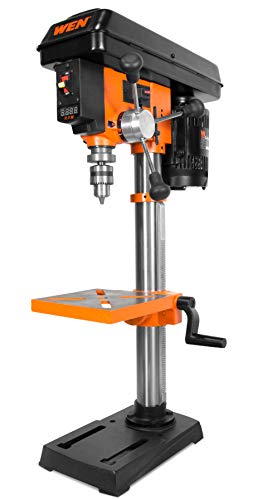
The WEN DP1062V benchtop drill press delivers impressive performance for a machine in this price category. The 6.2-amp induction motor provides plenty of power, while the variable-speed range from 530 to 3100 RPM makes it adaptable to different materials and bit sizes. Whether you're drilling through soft aluminum or hardwood, you can dial in the right speed for clean, precise results without burning or binding.
What sets this model apart is the thoughtful inclusion of a digital RPM readout and built-in laser guide. The digital display removes guesswork and ensures you're always operating at your intended speed, which matters when precision is critical. The laser alignment system is a genuine convenience feature that helps you position your workpiece accurately before the bit makes contact, saving time on layout work and reducing setup errors.
The cast iron construction and sturdy base keep vibration to a minimum, contributing to hole quality and operator comfort during extended use. The adjustable depth stop and beveling work table add versatility for specialized drilling tasks. At 57 pounds with compact dimensions, it fits on most workshop benches without dominating your space, making it an excellent choice for hobbyists, DIYers, and small shop owners who need reliable precision without a huge footprint.
| Specification | Detail |
|---|---|
| Motor | 6.2-Amp Induction Motor |
| Speed Range | 530 to 3100 RPM (Variable) |
| Swing | 10 Inches |
| Spindle Travel | 2 Inches |
| Work Table | 8 x 7.5 Inches (Beveling) |
| Chuck Capacity | 1/2 Inch Keyed |
| Laser | Class IIIA 2.5mW |
| Dimensions | 13.19 x 19.29 x 33.86 Inches |
| Weight | 57 Pounds |
| Warranty | 2 Years |
| Color | Orange |
Setup and Safety: Place the drill press on a stable, level workbench. Ensure the chuck is tight and the depth stop is properly set before powering on. Always wear eye protection and keep loose clothing, hair, and hands away from rotating parts.
Selecting Speed: Use the variable-speed adjustment to match your material and bit size. Start slower for harder materials and larger bits; increase speed for smaller bits and softer materials. Check the digital readout to confirm your selected RPM.
Using the Laser: Activate the laser guide to align your workpiece. Position the bit directly over your marked point using the laser as a reference. This eliminates layout pencil marks and ensures consistent hole placement across multiple pieces.
Drilling: Gently lower the feed handle with steady, even pressure. Let the bit do the work rather than forcing it. For through-holes, place scrap wood underneath to prevent tearout on the exit side. Use the depth stop to prevent drilling too deep or breaking through unexpectedly.
Before Operation: Inspect the chuck, bits, and work table for damage. Ensure all guards are in place and the machine is grounded. Remove the chuck key immediately after use and store it in the onboard holder to prevent accidental contact.
During Use: Never reach near the spinning chuck or bit. Secure your workpiece firmly using the work table or a clamp so it cannot rotate with the bit. Tie back long hair and remove jewelry, watches, and loose sleeves that could catch.
Speed and Material Handling: Start at lower speeds and increase gradually. Do not exceed the maximum RPM rating for your bit or material. For metal drilling, use cutting fluid to reduce heat and extend bit life. Stop the machine completely before removing your workpiece.
Maintenance: Keep the work table and base clean of debris and metal shavings. Periodically check that all bolts and fasteners remain tight. Lubricate moving parts as recommended in your owner's manual to maintain smooth operation and extend machine life.
Is This Right for You? The WEN DP1062V is ideal if you're a serious DIYer, woodworker, or small shop owner who values precision and reliability. It's powerful enough for metalworking, woodworking, and general drilling tasks, yet compact enough for home workshops. If you primarily drill holes in soft materials or only need occasional drilling, a handheld drill may be sufficient.
Key Considerations: The 8 x 7.5-inch work table is functional but modest in size. If you regularly drill large sheets or panels, you may want to invest in a larger aftermarket table or outfeed support. The laser is convenient but not essential for basic work. Consider whether you have adequate bench space and whether 57 pounds is manageable for your setup.
Comparison to Alternatives: Compared to budget benchtop models, this machine offers better power, digital precision, and laser guidance. Compared to industrial floor models, it sacrifices swing and table size but gains portability and affordability. Evaluate your project scope and available space to determine if the mid-range feature set meets your needs without overspending.
Buying Guide: How to Choose the Right Drill Press
Choosing among the best drill presses means weighing several overlapping factors. A machine that suits a metalworking hobbyist differs considerably from one ideal for a woodworker or a casual home user. Work through each consideration below before committing to a model.
Swing and Chuck Capacity
The swing of a drill press is the most commonly cited spec, and it refers to twice the distance from the column to the center of the spindle. An 8-inch drill press, for example, can drill to the center of a 8-inch-wide workpiece. Most homeowners and hobbyists find an 8-inch to 10-inch swing handles the overwhelming majority of projects comfortably. The chuck capacity tells you the largest drill bit shank the machine can grip. A half-inch chuck is standard on mid-range and higher machines and accepts a far wider range of bits than a three-eighths-inch chuck, making it the more versatile choice if you plan to work with Forstner bits, large spade bits, or hole saws. Pairing a capable drill press with impact drivers for driving fasteners gives you a well-rounded power tool setup for any serious workshop.
Motor Power and Speed Range
Motor amperage directly affects how confidently a drill press pushes through dense material. Budget 8-inch machines typically offer around 2.3 amps, which is adequate for softwoods and light metalwork but will bog down in thick hardwood or stainless steel. Mid-range and premium benchtop models step up to 6.2 amps or higher, which handles oak, maple, and even mild steel without hesitation. Speed is equally important. Fixed-speed machines lock you into one RPM, which means you cannot optimize drilling speed for different materials. Variable-speed motors, or belt-and-pulley systems with multiple settings, let you slow down for metal and speed up for wood, dramatically extending what a single machine can do. A five-speed or variable-speed model is almost always worth the modest price difference.
Spindle Travel and Depth Stop
Spindle travel is the maximum distance the chuck can move downward in a single plunge. Most benchtop drill presses offer between 2 inches and 3.5 inches of spindle travel. Deeper travel lets you drill longer holes without repositioning the workpiece, which matters for through-holes in thick lumber or for boring deep mortises. The depth stop is a lockable collar or rod that prevents the spindle from traveling beyond a set point. Precise depth stops are indispensable for drilling shelf-pin holes, hinge mortises, or any application where consistent depth is critical. Look for a depth stop that locks firmly and does not creep under repeated use. Good depth control also makes the drill press a reliable complement to precision layout tools like spirit levels when setting up flat reference surfaces on a project.
Table Size, Tilt, and Clamping Options
The worktable on a drill press needs to be large enough to support the material you are drilling, and it should lock solidly in the horizontal position under load. Many tables tilt left and right for angled holes, which is a genuinely useful feature if you make picture frames, chair legs, or any project requiring compound angles. Check that the tilt locks securely and that the table returns reliably to exactly 90 degrees when reset. Integrated slots or a fence system for clamping workpieces is a major safety and accuracy advantage. Unsecured workpieces can spin violently if a bit catches, so a proper clamping setup is not optional for anything thicker than very thin sheet material. A well-designed worktable on a drill press functions similarly to a reliable work surface in any shop: it is the foundation everything else depends on.
Cast Iron vs. Stamped Steel Construction
Cast iron tables and heads damp vibration better than stamped steel, which translates directly into cleaner holes and longer bit life. The WEN models in our lineup make a point of advertising their cast iron construction at accessible price points, and this matters. A machine that vibrates excessively during operation is both less accurate and more tiring to use over a long session. That said, stamped steel construction in a well-designed machine at the entry level is not automatically disqualifying. If you are drilling softwoods occasionally and portability matters, a lighter build may be perfectly acceptable. For anyone drilling hardwoods, metals, or doing precision joinery, cast iron is worth prioritizing.
Laser Guides and Work Lights
Laser alignment guides project a crosshair or two intersecting lines onto the workpiece, making it much easier to position your layout mark directly under the bit before you begin drilling. They are particularly helpful for one-off holes where setting up a fence would take longer than the job itself. LED work lights illuminate the drill point without adding heat, and they are a genuine quality-of-life improvement in any shop without ideal overhead lighting. Several models in our lineup include both features, including the SKIL DP9505-00, the WEN DP1062V, the WEN DP1263V, and the DeWalt 10-inch press. Neither feature replaces careful layout and a center punch, but they do reduce errors and speed up setup time. For comprehensive task lighting in your workspace, consider pairing your press with well-placed recessed lighting overhead to eliminate shadows across the work surface.
Portable Drill Guides vs. Full Benchtop Machines
Not every drilling task requires a full benchtop drill press. Portable drilling guides and drill press attachments bring a useful degree of perpendicularity to a standard handheld drill, and they are far more practical when you need to drill holes in a wall, a cabinet already installed in a kitchen, or any workpiece too large to bring to a fixed machine. The Dremel Drill Press Workstation and the Milescraft DrillMate occupy this category in our lineup. They sacrifice depth-of-cut capability and rigidity compared to a dedicated machine, but they offer portability and price advantages that make them the right tool for many homeowners. If you spend most of your time doing repairs and installations rather than shop woodworking, a portable drilling guide combined with a capable handheld drill covers the majority of scenarios you will encounter. You might also find that a sharp set of hand saws and a good portable drill guide handle most renovation tasks without a dedicated benchtop machine.
Accuracy and Runout
Runout refers to how much the drill bit wobbles off-center during rotation. Lower runout means more precise holes, longer bit life, and cleaner entry and exit surfaces. Premium drill presses from JET are specifically engineered to tight runout tolerances, which is why the JWDP-12 commands a considerably higher price than comparable swing-size machines from WEN or SKIL. If you are drilling critical joinery where a slightly off-center hole ruins an expensive piece of hardwood, minimizing runout is worth the investment. For general hobby use and home projects, the runout on well-reviewed mid-range machines is acceptable. Evaluating user reviews specifically mentioning hole accuracy and bit wobble is one of the most useful things you can do before purchasing. Precision also extends to your layout process: accurate tape measures and dependable marking tools are just as important as the machine itself when drilling to a specific location.
Why Trust Us
HomeThru is an independent review site with no affiliation to any manufacturer or retailer. We do not sell products, process orders, or handle warranty claims. Our editorial team researched and analyzed drill press options by examining technical specifications, verified buyer feedback patterns, brand engineering histories, and hands-on accounts from professional woodworkers and fabricators. We compared machine categories including benchtop benchtop drill presses, portable drilling guides, and variable-speed models to assemble a list that reflects genuine real-world value rather than sponsored rankings. Every product in this article was selected on merit. Our goal is to give you the clearest, most honest picture of what each machine does well and where it falls short, so you can make a confident decision regardless of your budget or experience level.
We apply the same independent research approach across all our power tool and hand tool coverage. If you are building out a complete home workshop, our coverage of circular saws, utility knives, and other essential tools follows the same standards you will find in this guide.
Final Thoughts
The best drill press for you depends on the type of work you do most often, the size of your workspace, and how much precision your projects demand. A compact, affordable benchtop machine handles the needs of most home woodworkers and DIYers without occupying a large footprint or straining a budget. Hobbyists who do fine detail work or metalworking will benefit from the rigidity and low runout of a premium machine. And for those who need drilling accuracy without a dedicated shop space, a well-designed portable drilling guide is a genuinely practical solution.
Here are our top picks by category to help you decide quickly:
- Best Overall: DeWalt 10-Inch Drill Press, A 7.0-amp motor, integrated LED worklight, and 3.5 inches of spindle travel make this a confident, capable machine for the serious home workshop at a mid-range price point.
- Best Budget Pick: WEN 4206T 8-Inch 5-Speed Benchtop Drill Press, Cast iron construction and five belt-driven speeds at an entry-level price make this the most accessible route into accurate benchtop drilling.
- Best Mid-Range Upgrade: SKIL 10-Inch 5-Speed Drill Press with Laser and Work Light, Laser alignment and an integrated work light add real convenience at a sensible step-up price for woodworkers ready to move beyond a basic machine.
- Best for Precision and Professionals: JET JWDP-12 12-Inch Variable Speed Benchtop Drill Press, Variable speed, half-inch chuck capacity, and JET’s engineering reputation for tight tolerances justify the premium price for anyone where accuracy is non-negotiable.
- Best Portable Option: Dremel 220-01 Drill Press Workstation, Compact, lightweight, and designed to work with rotary tools, this stand brings useful perpendicularity to small-scale drilling and craft work without occupying any permanent bench space.
Whatever your skill level, investing in a quality drill press pays dividends across hundreds of future projects. Accurate holes drilled at consistent depths are the foundation of strong joinery, clean woodworking, and professional-looking results. Take your time, match the machine to your actual workload, and you will wonder how you managed without one. For anyone building out a full workspace, do not overlook the rest of your shop setup: reliable cordless drill options for portable work and well-chosen hand saws complement a drill press to cover every cutting and boring task a home workshop demands.
Frequently Asked Questions
What Drill Press Size Is Right for Most Home Workshops?
For the majority of home woodworkers and DIYers, a 10-inch benchtop drill press hits the sweet spot between capacity and footprint. It handles boards up to 10 inches wide, accepts standard Forstner and spade bits, and fits on most workbenches without dominating the space. Those working primarily on small crafts or jewelry may find an 8-inch machine more than adequate, while anyone building furniture regularly may appreciate moving up to a 12-inch model. If you need inspiration for maximizing shop organization, our overview of impact driver options covers complementary power tools that belong in any well-organized home workshop.
Can a Drill Press Be Used for Metal as Well as Wood?
Yes, but with important caveats. Drilling metal requires slower speeds, cutting fluid or oil to prevent bit overheating, and a work-holding solution like a drill vise clamped to the table. Most benchtop drill presses with variable speed or multiple belt settings handle mild steel and aluminum without difficulty. Cast iron tables are better suited to the vibration generated by metalwork. Avoid drilling hardened steel on a light-duty machine, as the stress can damage both the chuck and the quill bearings over time. Always use high-speed steel or cobalt bits for metal, not standard wood spade bits.
Is a Variable Speed Motor Worth the Extra Cost?
For most users, yes. Variable speed lets you optimize RPM for the material being drilled, slow down for large-diameter bits that generate heat quickly, and fine-tune performance when switching between wood, plastic, and metal. Belt-and-pulley systems with five fixed speeds are a proven alternative and cost less to manufacture, but they require stopping the machine to change speed. Electronic variable speed is more convenient and delivers better low-speed torque for large Forstner bits. The WEN DP1062V and DP1263V both offer variable speed at competitive price points, making the feature accessible without a significant premium. Circular saws and other variable-speed tools follow a similar logic when it comes to material versatility.




Write Your Review
No reviews yet. Be the first to share your experience!