

When a standard power drill meets concrete, brick, or stone, it quickly reaches its limits. That is where hammer drills earn their place in any serious toolkit. Unlike a conventional drill, a hammer drill adds a rapid percussive action that drives the bit forward in short, powerful bursts as it spins, letting you punch through hard masonry materials far faster and with far less effort. Whether you are anchoring a ledger board to a concrete foundation, mounting shelves on a cinderblock wall, or installing expansion bolts in a poured slab, the right hammer drill turns a frustrating job into a manageable one. Most models also switch cleanly into standard drill mode, so you get a capable everyday driver paired with genuine masonry muscle in a single tool. Our independent editorial team researched and evaluated dozens of options across corded, cordless, and SDS-plus categories to bring you this ranked list of the best hammer drills available right now, covering everything from budget-friendly picks to professional-grade rotary hammers.
If you already own a capable drill and simply need a dedicated percussion tool, understanding the differences between hammer drills and rotary hammers will save you money and help you avoid buying more tool than you need. Likewise, if you are building out a complete power tool arsenal, pairing a hammer drill with reliable impact drivers and a solid cordless drill covers virtually every fastening and drilling task a homeowner or tradesperson encounters.
Top Hammer Drill Picks

Pros
- Exceptional power and speed make quick work of tough drilling tasks in concrete, stone, and hardwood
- Anti-rotation system is a genuine safety feature that reduces risk of wrist injury from sudden binding
- Dual-speed settings give you flexibility to match the tool to different materials and applications
- Long battery life between charges means fewer interruptions during extended projects
- Adjustable LED work light with multiple positions illuminates work areas effectively
Cons
- Tool-only model requires separate purchase of 20V MAX battery and charger, adding to initial cost
- No customer reviews available yet, so real-world durability and long-term reliability data is limited
The DEWALT DCD806B stands out as one of the most powerful 20V MAX hammer drills on the market. With 109% more power than standard models in its class, this brushless tool excels at demanding applications like drilling into concrete, masonry, and dense hardwoods. The dual-speed transmission (0-650 and 0-2,000 RPM) gives you precise control, allowing you to match the tool's performance to the material and task at hand.
Safety and user comfort are well-addressed through the anti-rotation system, which automatically detects excessive rotational motion and shuts the tool down before it can cause injury. This feature is particularly valuable when drilling into concrete where binding can happen suddenly. The bright 70-lumen LED work light with three adjustable positions ensures you can see what you're doing in dim or confined spaces, and the auto-shutoff function helps preserve battery life.
As a tool-only model, you'll need to pair this drill with a 20V MAX battery and charger from DEWALT's ecosystem. The 1/2-inch metal ratcheting chuck holds bits securely, and the tool's ability to make up to 175 holes per charge demonstrates respectable battery efficiency. For homeowners and DIYers tackling serious projects involving concrete or masonry work, this hammer drill delivers the performance and safety features you'd expect from DEWALT's professional-grade XR line.
| Specification | Details |
|---|---|
| Brand | DEWALT |
| Model | DCD806B |
| Tool Type | Brushless Cordless Hammer Drill |
| Voltage | 20V MAX |
| Chuck Size | 1/2 inch Metal Ratcheting |
| Speed Settings | 2-Speed (0-650 RPM / 0-2,000 RPM) |
| Power Advantage | 109% More Powerful Than Standard 20V MAX |
| Anti-Rotation System | Yes, with LED Indicator |
| Work Light | 70-Lumen LED, 3-Position Adjustable |
| Holes Per Charge | Up to 175 |
| TOOL CONNECT Ready | Yes (Chip Sold Separately) |
| What's Included | Tool Only (Battery and Charger Not Included) |
Getting Started: Insert a fully charged 20V MAX battery into the tool. Install your desired drill bit or hammer drill bit into the 1/2-inch chuck by aligning it with the chuck jaws and tightening firmly by hand or with the included chuck key. Always ensure the bit is centered and secure before operation.
Selecting the Right Mode: For general drilling in wood or metal, use standard drill mode. For concrete, masonry, or stone, engage hammer drill mode. Use the low-speed setting (0-650 RPM) for driving fasteners and high-speed setting (0-2,000 RPM) for drilling. Adjust the variable speed trigger gradually to find the right pace for your material.
Safe Operation: Maintain a firm, two-handed grip at all times. Position yourself so you're not directly in line with the tool's rotation axis. If the tool suddenly binds or the anti-rotation system engages (indicated by the red LED), release the trigger immediately and check your bit and material. Never force the tool; let the motor do the work. Use the LED work light to illuminate your work area, and take advantage of the 3-position adjustment to reduce shadows.
Anti-Rotation Protection: The anti-rotation system is your first line of defense against wrist injury. When it engages (you'll see the red LED light up), stop immediately and investigate why the tool bound. This could indicate a stuck bit, a change in material density, or improper technique. Never ignore this warning.
Grip and Stance: Always use both hands to operate this hammer drill, with one hand on the main handle and the other on the auxiliary side handle for stability. Position yourself with feet shoulder-width apart and brace your body so you can absorb any sudden movement. Avoid loose clothing or jewelry that could get caught.
Bit and Chuck Inspection: Before each use, inspect your drill bit for damage or wear. Ensure bits are fully seated in the 1/2-inch chuck and tightened securely. Worn or bent bits are more likely to bind. Allow the tool to come to a complete stop before removing bits or making adjustments. Always remove the battery if you'll be away from the tool for more than a few minutes.
Material Matching: The dual-speed transmission is your secret to efficient drilling. Use the low-speed setting when driving large fasteners or working with dense hardwoods to reduce strain on the motor and battery. Save the high-speed setting for drilling smaller holes in concrete or masonry where speed helps break through material faster. Switching speeds based on your task extends both tool and battery life.
Concrete and Masonry Work: When drilling into concrete, use a dedicated hammer drill bit designed for the job. Start at low speed to establish a pilot hole, then gradually increase speed as the bit penetrates. The anti-rotation system will protect you if the bit suddenly catches, but proper technique prevents binding in the first place. Mark your hole location with a center punch or marker before drilling to keep the bit from wandering.
Battery Management: The 175-hole capacity is based on typical conditions, but actual performance varies with material density and hole size. To maximize productivity, keep a second 20V MAX battery charging while you work with the first. This keeps your project moving without downtime. The LED work light consumes minimal battery power, so use it freely to improve visibility and accuracy in dim spaces.

Pros
- Powerful 8-amp motor with 2.0 feet-pounds of impact energy handles reinforced concrete and tough masonry efficiently
- Three-mode selector and variable speed trigger provide flexibility for drilling, chiseling, and fastener removal in one tool
- SDS-Plus system with 36-position Vario-Lock allows quick bit changes and precise angle control without tools
- Vibration control technology and D-handle design reduce user fatigue during overhead work and long sessions
- Includes complete accessories (auxiliary handle, depth gauge, carrying case) for immediate job-site readiness
Cons
- Corded design limits mobility and requires proximity to power outlets, making it less convenient for remote or outdoor work areas
- 8-amp motor and heavy-duty construction result in significant weight and vibration, requiring good upper body strength for extended use
The Bosch 11255VSR Bulldog Xtreme stands out as a serious workhorse for concrete and masonry professionals who demand consistent power and reliability. The 8-amp motor delivers 2.0 feet-pounds of impact energy with a variable speed range of 0-1,300 RPM and 0-5,800 BPM, giving users precise control over everything from delicate fastener work to aggressive concrete drilling. The three-mode selector (rotation-only, rotary hammer, and hammer-only) eliminates the need for multiple tools on the job site, while the variable speed trigger with reverse function adds versatility for both starting bits accurately and removing fasteners with ease.
Comfort and control are built into this hammer's DNA. The vibration control system significantly reduces fatigue during extended overhead drilling and chiseling, a critical feature for professionals spending hours on end with the tool above their heads. The ergonomic D-handle design, combined with the included auxiliary handle and depth gauge, provides excellent stability and precision. The SDS-Plus bit system with automatic locking and 36 Vario-Lock positioning angles allows tool-free bit changes and optimized chiseling angles, streamlining workflow and reducing downtime between tasks.
What makes this Bosch a practical investment is the complete package it delivers. The kit includes a carrying case, auxiliary handle, and depth gauge, so you're ready to work out of the box. The corded design means unlimited runtime and consistent power delivery without battery management concerns, though it does tie you to a power source. For homeowners and contractors serious about concrete work, this hammer drill represents excellent value and dependable performance on challenging projects.
| Brand | Bosch |
| Model | 11255VSR |
| Product Type | Corded Rotary Hammer Drill |
| Motor | 8 Amp Electric |
| Chuck Type | SDS-Plus |
| RPM Range | 0-1,300 RPM |
| BPM Range | 0-5,800 BPM |
| Impact Energy | 2.0 Feet-Pounds |
| Operating Modes | 3 (Rotation-Only, Rotary Hammer, Hammer-Only) |
| Bit Positioning | 36 Vario-Lock Positions |
| Handle Design | D-Handle with Auxiliary Handle |
| Speed Control | Variable Speed Trigger with Reverse |
| Vibration Control | Yes |
| Included Accessories | Auxiliary Handle, Depth Gauge, Carrying Case |
| Power Source | Corded (AC) |
Getting Started: Before plugging in, attach the auxiliary handle to the side of the drill for added stability and control. Insert the desired SDS-Plus bit into the chuck until you hear it click into place. The automatic locking system ensures secure bit retention without tools.
Setting Your Mode: Use the three-mode selector to choose your operation: rotation-only for regular drilling, rotary hammer for concrete and masonry, or hammer-only for chiseling and breaking. Select your desired RPM using the variable speed trigger, starting at lower speeds until you're comfortable with the tool's behavior.
Drilling Technique: For concrete work, use the rotary hammer mode with steady, even pressure. Let the tool do the work rather than forcing it. For overhead applications, use the auxiliary handle and depth gauge to maintain control and prevent fatigue. Always wear safety glasses and a dust mask, and use the reverse function carefully to avoid twisting injuries when removing stuck bits.
Personal Protective Equipment: Always wear safety glasses to protect against flying debris, a dust mask or respirator when drilling in concrete (which produces silica dust), and hearing protection due to the high noise level. Work gloves can help with grip, but avoid loose clothing that could catch on the rotating chuck.
Operational Safety: Secure your workpiece firmly before drilling to prevent it from rotating unexpectedly. Be aware that the reverse function can cause sudden twisting, so maintain a firm grip with both hands at all times. Never leave the tool running unattended, and always unplug it before changing bits or adjusting settings. Keep the power cord away from the drilling area and inspect it regularly for damage.
Fatigue and Positioning: Take regular breaks to avoid fatigue, which increases the risk of losing control. When drilling overhead, use the auxiliary handle and maintain a stable stance. The vibration control helps reduce fatigue, but extended use still requires proper body mechanics and positioning to prevent strain injuries to your wrists, shoulders, and back.
Bit Selection and Maintenance: Invest in quality SDS-Plus bits designed for your specific application (concrete, masonry, or mixed materials). Keep bits clean and sharp for best performance. The 36 Vario-Lock positions allow you to angle the bit for horizontal, vertical, or diagonal chiseling, so experiment to find the optimal angle for your specific task.
Speed and Pressure Strategy: Start at lower speeds to establish a solid grip and get a feel for how the tool responds. Once comfortable, increase speed gradually. Use steady, even pressure rather than forcing the tool through material. For very hard concrete, slightly reduce speed and let the impact energy do the work. For softer materials, increase speed for faster progress.
Reducing Dust and Vibration: While the vibration control is built in, using a dust shroud or vacuum attachment (if available) reduces airborne silica and improves visibility. For long sessions, take breaks to reset your grip and posture. The auxiliary handle is your friend for overhead work, so always use it to distribute effort across both arms and reduce single-arm fatigue.

Pros
- Exceptional torque and impact rate make quick work of masonry and metal drilling tasks
- Brushless motor technology reduces maintenance and extends tool lifespan compared to brushed alternatives
- Versatile three-in-one design eliminates need for separate tools for different applications
- Generous 4.0Ah battery capacity and included charger keep you working longer without downtime
- All-metal chuck and robust construction inspire confidence during demanding projects
Cons
- No customer reviews available yet, so real-world durability and long-term reliability remain unverified
- Brand recognition is limited compared to established tool manufacturers, which may affect resale value or warranty support
The DCK 20V brushless hammer drill stands out as a capable mid-range option for homeowners and DIYers tackling serious projects. Its brushless motor technology delivers consistent 600W power output while minimizing heat and wear, translating to lower maintenance demands and extended tool life. The impressive 531 in-lbs of torque paired with 36,000 BPM impact rate positions this drill as a genuine workhorse for masonry, metal, and wood applications.
What makes this drill particularly practical is its flexibility. The dual-speed transmission (0-550 and 0-2200 RPM) with 22+1+1 torque clutch allows you to match power and control to your specific task, whether you're precision-driving fasteners into delicate materials or powering through thick brick. The all-metal 1/2-inch keyless chuck maintains a firm grip even under intense hammer drilling stress, eliminating the slippage issues common with plastic alternatives. The integrated LED work light adds genuine utility for basement, attic, and interior wall work.
The 4.0Ah battery capacity proves substantial for extended sessions, rated to drive approximately 800 screws or drill 90 deep holes in wood per full charge. The complete kit includes 42 drill and driver bits, a charger, belt hook, and storage bag, giving you everything needed to start working immediately. For homeowners investing in a versatile, multi-function tool that doesn't compromise on power, this drill delivers solid engineering at a reasonable price point.
| Specification | Details |
|---|---|
| Brand | DCK |
| Voltage | 20V |
| Motor Type | Brushless |
| Power Output | 600W |
| Torque | 531 in-lbs (60 N-m) |
| Impact Rate | 36,000 BPM |
| Speed Settings | 2 speeds: 0-550 RPM and 0-2200 RPM |
| Torque Clutch | 22+1+1 settings |
| Chuck Type | 1/2-inch keyless all-metal |
| Drilling Capacity - Brick | 1/2-inch diameter |
| Drilling Capacity - Steel | 1/2-inch diameter |
| Drilling Capacity - Wood | 1-1/2-inch diameter |
| Battery | 4.0Ah lithium-ion |
| Battery Runtime | ~800 screws or ~90 deep wood holes per charge |
| Charger | 2A included |
| Modes | Standard drilling, hammer drilling, screw driving |
| Work Light | LED integrated |
| Included Accessories | 4.0Ah battery, 2A charger, 42 drill/driver bits, belt hook, 12-inch storage bag |
| Energy Efficiency | 70% |
Getting Started: Fully charge the 4.0Ah battery using the included 2A charger before first use. Insert the battery into the drill handle until it clicks securely into place. Attach your chosen drill bit or driver bit into the 1/2-inch keyless chuck by rotating the chuck collar clockwise until snug. Do not over-tighten.
Selecting the Right Mode: Slide the mode selector to choose between standard drilling, hammer drilling, or screw driving. Use hammer mode for masonry and concrete, standard drilling for wood and metal, and screw driving mode for fastening applications. Adjust the speed dial to 0-550 RPM for precision work or 0-2200 RPM for faster material removal.
Operating the Drill: Position your workpiece securely and mark your drilling point with a pencil or center punch. Grip the drill firmly with both hands for stability, especially when hammer drilling. Squeeze the trigger smoothly to start; the trigger responds proportionally to pressure, allowing variable speed control. Use the torque clutch settings (22+1+1) to prevent over-driving screws into soft materials. Start with lower settings and increase as needed. Always wear safety glasses and hearing protection during operation.
Before Each Use: Inspect the drill for cracks, damage, or loose components. Check that the chuck is tight and the bit is secure. Ensure the battery is fully charged and properly seated. Remove the chuck key if present. Verify that the work area is clear of obstacles and that your workpiece is properly clamped or secured.
During Operation: Always wear impact-rated safety glasses to protect against flying debris and bit breakage. Use hearing protection when hammer drilling, as impact rates exceed 100 decibels. Wear work gloves to improve grip and protect hands from sharp bit edges. Keep long hair and loose clothing away from the rotating chuck. Never reach into the chuck while the drill is powered on. Maintain firm, two-handed control at all times, especially during hammer drilling mode where kickback is possible.
Battery and Charger Safety: Do not expose the battery to extreme heat, cold, or moisture. Charge only with the included 2A charger in a dry location. Do not attempt to disassemble or modify the battery. Allow the drill to cool for 15 minutes before charging if it has been used continuously. Never leave a charging battery unattended. Store the battery in a cool, dry place away from children and pets.
Material-Specific Techniques: For brick and concrete, use hammer drilling mode with the lowest speed setting to allow the impact mechanism to do the work; forcing the drill through masonry actually reduces efficiency. For metal drilling, switch to standard mode and use a slow, steady speed with light pressure to prevent bit walking and overheating. For wood, use the higher speed setting to achieve clean holes; the lower torque clutch settings prevent splitting in delicate trim work.
Maximizing Battery Life: The 4.0Ah battery delivers longest runtime when you match the speed setting to your task. High-speed operation drains the battery faster than necessary for heavy drilling. Keep a second battery charged and ready to swap during extended projects. Store batteries in a cool environment; heat degrades lithium-ion performance. If your battery seems to lose charge quickly, allow it to fully cycle (completely discharge and recharge) once monthly to maintain optimal capacity.
Chuck and Bit Maintenance: Periodically clean the keyless chuck to prevent bit slippage. Use a dry cloth to wipe away dust and debris. If drilling produces excessive heat, slow down and allow the drill to cool. Overheating can damage the chuck and shorten tool life. Invest in quality drill bits; cheap bits dull quickly and require excessive pressure, draining your battery and reducing precision. Store bits in the included bag to prevent rust and damage.
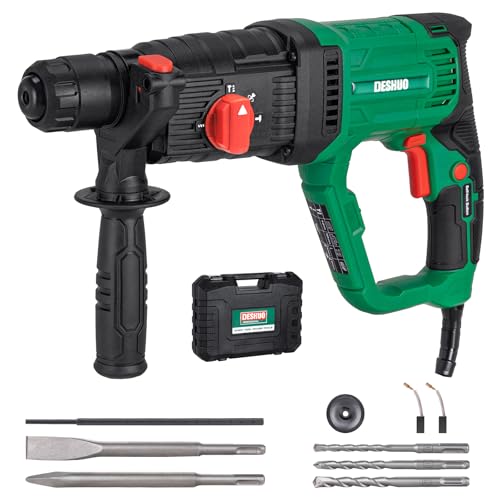
Deshuo 1" SDS-Plus Rotary Hammer Drill, 9 Amp
Pros
- Lightweight and well-balanced design reduces arm strain during extended overhead or downward drilling
- Multiple modes and vario-lock positioning make it versatile for both drilling and chiseling applications
- Safety clutch provides good protection against sudden torque reactions and wrist injuries
- Comes fully equipped with bits, chisels, and case, so you can start working immediately
- Corded power eliminates battery management and provides consistent, uninterrupted performance
Cons
- Limited to SDS-Plus bits only, which may require purchasing additional accessories if you already own SDS-Max or standard drill bits
- No user reviews available yet, so real-world durability and long-term reliability remain unverified by homeowners
The Deshuo 1" SDS-Plus rotary hammer is designed as a lightweight, accessible option for homeowners and DIYers who need reliable concrete drilling and chiseling capability without excessive weight. At just 7.19 pounds, it's notably lighter than many corded competitors, making it practical for overhead applications like drilling into ceiling joists or upper wall areas where fatigue becomes a real concern during extended use.
Performance-wise, the 9-amp motor delivers 5,300 beats per minute and 2.21 foot-pounds of impact energy, which is sufficient for drilling through concrete, brick, masonry, and cement. The four operational modes provide genuine versatility: rotation-only for standard drilling, rotary hammer for impact drilling, hammer-only for chiseling, and vario-lock for positioning the hammer head at your desired angle. The tool-less SDS-Plus bit system speeds up bit changes and ensures consistent power transfer, while the built-in safety clutch offers important protection if a bit suddenly catches or binds.
The variable speed trigger with locking button gives you control over drilling pace and allows smooth starting, which helps reduce startup shock and operator fatigue. The vibration control system further contributes to comfort during longer work sessions. The package includes three drill bits, two chisels, and a carrying case, so you have essential tools ready out of the box. Keep in mind that this drill is limited to SDS-Plus bits only, so verify compatibility before purchasing if you already own other bit types.
| Specification | Detail |
|---|---|
| Brand | Deshuo |
| Model Type | 1" SDS-Plus Rotary Hammer Drill |
| Motor | 9 Amp |
| RPM Range | 0-1,100 RPM |
| Blows Per Minute | 0-5,300 BPM |
| Impact Energy | 2.21 ft-lbs (3 Joules) |
| Weight | 7.19 lbs |
| Bit Type | SDS-Plus Only |
| Operating Modes | Rotation Only, Rotary Hammer, Hammer Only, Vario-lock |
| Speed Control | Variable Speed Trigger with Locking Button |
| Direction | Forward and Reverse |
| Safety Features | Safety Clutch, Vibration Control |
| Included Accessories | 3 Drill Bits, 2 Chisels, Carrying Case |
| Warranty | 24 Months |
| Power Type | Corded Electric |
Before You Start: Verify that you are using SDS-Plus bits only. Check that the bit is fully seated in the chuck. Ensure the work area is clear and stable, and wear safety glasses and hearing protection.
Selecting Your Mode: Use the multi-function selector to choose your operating mode. For standard drilling into concrete or masonry, select rotary hammer mode. For chiseling or removing material, select hammer-only mode. Use vario-lock to position the hammer head at your preferred angle for chiseling work.
Operating the Drill: Grip the drill firmly with both hands, positioning one hand on the auxiliary handle for stability. Squeeze the variable speed trigger gently to start at low speed, then increase pressure for higher speed as needed. Use the locking button to maintain continuous operation at your desired speed. For bit removal, press the forward or reverse button to help disengage tightened bits from the chuck.
Safety Reminders: The built-in safety clutch will automatically disengage if the bit binds, reducing sudden torque reactions. Do not force the drill or apply excessive pressure; let the impact energy do the work. Take breaks during extended use to manage fatigue and maintain control.
Personal Protective Equipment: Always wear ANSI-approved safety glasses to protect against flying debris and dust. Use hearing protection, as rotary hammers generate significant noise. Consider wearing a dust mask or using a dust collection system when drilling into concrete, as silica dust poses serious respiratory hazards.
Proper Grip and Stance: Use both hands to grip the drill firmly, with one hand on the main handle and one on the auxiliary handle. Maintain a stable stance with feet shoulder-width apart and knees slightly bent. This positioning helps you maintain control and absorb vibration safely.
Bit Binding Prevention: The built-in safety clutch protects against torque reactions if a bit suddenly catches. However, avoid forcing the drill or applying excessive downward pressure, which can increase binding risk. Let the motor and impact energy do the work. Always ensure the bit is fully seated and locked before operation.
Work Area and Maintenance: Clear your work area of obstacles and ensure the surface is stable before drilling. Inspect the drill, bits, and chuck for damage before each use. Keep the power cord clear of the drill path and away from sharp edges. Never leave the drill running unattended, and always unplug it before changing bits or performing maintenance.
Is This Drill Right for You? The Deshuo 1" SDS-Plus rotary hammer is ideal if you are a homeowner or DIYer who needs reliable concrete drilling and chiseling capability without the weight penalty of heavier professional-grade models. Its lightweight design makes it practical for overhead work, and the four operational modes provide versatility for both drilling and chiseling tasks. If you plan to drill frequently or tackle heavy-duty commercial projects, you may want to evaluate professional-grade models with higher impact energy.
Key Considerations Before Buying: Verify that you need SDS-Plus bits, not SDS-Max or standard drill bits. Confirm that a corded drill suits your workspace and that you have access to a nearby power outlet. The 9-amp motor and 5,300 BPM output are suitable for concrete, brick, and masonry drilling, but research whether this power level matches your specific project demands. Review the 24-month warranty terms and confirm that support is available in your region.
What You Get in the Box: This package includes the drill, three SDS-Plus drill bits, two chisels, and a carrying case. This is a complete starter set, so you can begin work immediately without purchasing additional accessories. The carrying case makes storage and transport convenient, which is valuable if you move between multiple job sites or store tools in a garage or shed.

Pros
- Impressive four-function capability eliminates the need for multiple tools on mixed-material job sites
- Comprehensive accessory bundle saves money and gets you working immediately without additional purchases
- Dual-switch design is more durable than single-switch alternatives, extending the tool's service life
- Strong 4200 bpm impact frequency and 820 rpm speed deliver fast, efficient results on concrete and masonry
- Thoughtful ergonomic features like the adjustable handle, anti-vibration system, and safety clutch make it comfortable for extended use
Cons
- No customer reviews available yet, so real-world durability and long-term reliability remain unverified by homeowners
- The 0.5-inch maximum drilling capacity in metal is quite limited, making it less suitable for steel-focused projects compared to specialized metal drills
The ENEACRO ENRH3201 rotary hammer stands out as a well-engineered tool designed for homeowners and professionals who need genuine versatility on the job site. Its 13-amp motor generates 5.5 ft-lbs of impact energy, which translates to efficient drilling and chiseling through concrete, brick, and masonry. The four operating modes (drill-only, hammer-only, hammer-drill, and chisel-position adjustment) mean you can handle everything from driving fasteners into wood to demolishing old tile and brickwork without swapping tools.
Comfort and safety are clearly priorities in this tool's design. The dual-layer anti-vibration system noticeably reduces hand fatigue during extended work sessions, while the safety clutch protection guards against sudden torque spikes that could injure your wrist. The 360-degree adjustable auxiliary handle is genuinely useful for working in tight corners or overhead, and the soft-grip design prevents slipping even when your hands are dusty. At 12.6 pounds, it's light enough for all-day use without excessive strain, yet substantial enough to deliver serious power.
What makes this package especially attractive is the completeness of what you receive. Three SDS-plus bits, two chisels, an auxiliary handle, a carrying case, maintenance grease, and spare carbon brushes arrive ready to work. The heat-resistant copper motor and anti-dust bottom structure suggest the manufacturer invested in longevity. For DIYers tackling renovation projects or professionals managing multiple job types, this rotary hammer delivers the flexibility and thoughtful design features that make work faster and less exhausting.
| Specification | Detail |
|---|---|
| Motor | 13 Amp industrial-grade electric motor |
| Impact Energy | 5.5 ft-lbs (7.4 joules) |
| No-Load Speed | 820 r/min |
| Max Impact Frequency | 4,200 bpm |
| Concrete Drilling Capacity | Up to 1.25 inches diameter |
| Metal Drilling Capacity | Up to 0.5 inches diameter |
| Chuck Type | SDS-Plus quick-change |
| Bare Machine Weight | 12.58 lbs |
| Total Weight (with accessories) | 18.1 lbs |
| Dimensions (L x W x H) | 15.36 x 10.24 x 4.53 inches |
| Shipping Dimensions (L x W x H) | 17.32 x 13.46 x 4.96 inches |
| Operating Modes | Drill only, Hammer only, Hammer-drill, Chisel positioning |
| Handle | 360-degree adjustable auxiliary handle |
| Motor Protection | Heat-resistant copper wire, anti-dust bottom structure |
| Safety Features | Safety clutch protection, dual-layer anti-vibration system |
Getting Started: Before plugging in, familiarize yourself with the two function switches. One switch controls the three primary modes (drill, hammer, hammer-drill), while the other adjusts chisel positioning. Always wear safety glasses and a dust mask when working with concrete or masonry, as these materials generate harmful silica dust.
Changing Bits and Chisels: The SDS-Plus chuck allows quick bit changes without tools. Simply pull the sleeve back, insert or remove the bit, and release. The included 8mm, 10mm, and 12mm bits cover most residential drilling tasks, while the two 10-inch chisels handle tile removal and light demolition work.
Operating Tips: Start with the tool unplugged when switching modes. For concrete drilling, use the hammer-drill mode and let the motor do the work, applying steady downward pressure without forcing. The 360-degree adjustable handle can be repositioned to suit your work angle, making overhead drilling and tight-space access much easier. Apply the included lubricant grease to the chuck periodically to maintain smooth operation.
Maintenance: After each use, wipe dust from the motor vents and check the carbon brushes (replacements are included). Store the tool in the provided carrying case to protect it from damage and keep accessories organized for your next project.
Personal Protective Equipment: Always wear ANSI-approved safety glasses to protect against flying debris. A dust mask or respirator is essential when drilling or chiseling concrete, as silica dust poses serious respiratory hazards. Work gloves improve grip and protect against sharp edges on bits and chisels. Hearing protection is recommended for extended use, as rotary hammers generate significant noise.
Preventing Injury: The safety clutch protection is your primary defense against sudden torque spikes. However, always maintain a firm grip with both hands, keep your wrists straight, and never force the tool. Let the motor do the work. The adjustable auxiliary handle is designed to help you maintain control, especially during hammer-only mode when resistance can be unpredictable. Never wear loose clothing or jewelry that could catch in the rotating chuck.
Work Environment: Ensure your work surface is stable and secure before starting. Use a sturdy ladder or scaffolding if working overhead, and never operate this tool while fatigued. Keep the power cord away from sharp objects and wet areas. Always unplug the tool before changing bits, adjusting handles, or performing maintenance. Store the tool safely away from children and untrained users.
Choosing the Right Mode: Drill-only mode works best for wood, drywall, and metal with minimal resistance. Use hammer-only mode for light demolition, tile removal, and breaking up concrete without drilling. Hammer-drill mode is your workhorse for serious concrete and masonry drilling. Chisel positioning lets you align flat chisels for controlled demolition work. Switching modes based on your material saves energy and extends tool life.
Maximizing Drilling Speed: For concrete drilling, start with a smaller bit to create a pilot hole, then step up to your target size. This reduces stress on the motor and prevents bit slipping. The 4,200 bpm impact frequency is most effective when you apply consistent, moderate pressure. Forcing the tool or tilting it off-angle reduces efficiency and can damage bits. Let the vibration do the work while you guide and apply downward pressure.
Extending Tool Life: The included lubricant grease should be applied to the chuck every 10-15 hours of use. Keep the motor vents clear of dust by wiping them down regularly. Check carbon brushes periodically and replace them when worn (spares are included). Store the tool in a dry location and use the carrying case to prevent damage. The heat-resistant copper motor is built for long work sessions, but allow brief cooling periods during marathon projects to maintain optimal performance.
Pros
- High torque motor delivers reliable performance on tough materials like concrete and hardwood
- Comprehensive 100-piece bit set covers most common drilling and fastening needs
- Variable speed trigger provides excellent control and prevents overdriving screws
- Lock-on feature reduces hand strain for longer work sessions
- Heavy-duty 1/2-inch chuck handles larger diameter bits that cheaper models can't accept
Cons
- Corded design limits mobility and requires proximity to a power outlet
- No reviews available yet, so real-world user feedback and long-term durability data are limited
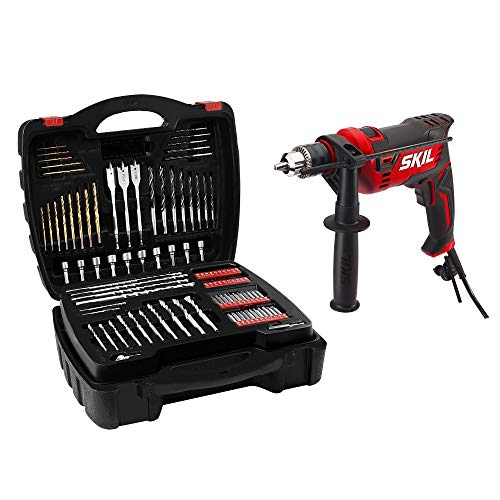
The Skil HD182002 is a solid mid-range hammer drill designed for homeowners and DIYers who need a dependable tool for mixed-material projects. The 7.5 Amp motor delivers strong torque, making it capable of drilling through concrete with a hammer function engaged, while still handling everyday fastening tasks in wood and metal. The variable speed trigger is a key feature that separates this from basic single-speed drills, allowing you to slow down when driving screws or working with delicate materials and ramp up power for aggressive concrete drilling.
What sets this model apart is the practical value proposition: you get a capable hammer drill plus a 100-piece bit set right out of the box. This means you won't need to buy bits separately for most common projects around the house. The 1/2-inch keyed chuck is robust enough to handle larger diameter bits, which matters when you're drilling deep into concrete or driving large fasteners. The lock-on button is a thoughtful design choice that reduces hand fatigue during extended drilling sessions, making this tool more comfortable for longer jobs.
The corded design is a trade-off worth considering. While it means you'll always have consistent, unlimited power without worrying about battery charge, you'll need to stay within cord length of an outlet. For homeowners with multiple projects in different areas of their property, a 25-50 foot extension cord is a practical investment. Overall, this hammer drill represents good value for the price point and delivers the performance needed for typical home improvement tasks.
| Specification | Details |
|---|---|
| Brand | Skil |
| Model | HD182002 |
| Motor | 7.5 Amp |
| Chuck Size | 1/2 inch keyed chuck |
| Function | Hammer drill (concrete, masonry, wood, metal) |
| Speed Control | Variable speed with 2-finger trigger |
| Convenience Features | Lock-on button for extended use |
| Included Accessories | 100-piece drill bit set |
| Power Type | Corded electric |
Getting Started: Plug the drill into a grounded outlet. Insert the appropriate bit into the 1/2-inch chuck, tightening the keyed chuck firmly by hand until the bit is secure. For hammer drilling in concrete or masonry, ensure the hammer function is engaged (check your manual for the engagement switch location).
Drilling Technique: Start with the variable speed trigger at a lower setting to establish control. Gradually increase speed as you begin drilling. Let the drill do the work rather than forcing it, especially when using the hammer function. For concrete, use short bursts rather than continuous pressure. For wood and metal, a steady, consistent speed works best.
Fastening Screws: Disable the hammer function for screw driving. Use lower variable speeds to avoid overdriving screws, particularly in softer woods. The lock-on button can be engaged once you've found the right speed, freeing your hand from continuous trigger pressure during extended fastening sessions.
Personal Protection: Always wear safety glasses to protect against flying debris and bit fragments. Consider wearing a dust mask when drilling into concrete or masonry, as silica dust poses respiratory risks. Wear work gloves to protect your hands and improve grip, especially during hammer drilling operations.
Proper Handling: Maintain a firm, stable stance and grip the drill with both hands, especially when using hammer mode. Sudden bit binding can cause the drill to twist unexpectedly. Keep long hair and loose clothing away from the rotating chuck. Never reach underneath the drill while it's running.
Electrical Safety: Use a properly grounded outlet or a grounded extension cord. Inspect the cord for damage before each use. Never operate this drill in wet conditions or with wet hands. Keep the drill away from water sources. Unplug the drill before changing bits or performing any maintenance.
Bit Selection and Organization: The included 100-piece set covers most needs, but organize bits by size and type for quick access. Use smaller bits for pilot holes before driving large fasteners. For concrete drilling, masonry bits with carbide tips last longer than standard bits. Keep bits clean and dry to prevent rust and extend their lifespan.
Optimizing Performance: Use the variable speed feature strategically: lower speeds provide better control and reduce the risk of overdriving screws, while higher speeds work best for drilling larger holes in wood. When hammer drilling in concrete, use short, deliberate bursts rather than continuous pressure. This reduces stress on the motor and improves drilling accuracy.
Comfort and Efficiency: The lock-on button is your friend during repetitive fastening tasks. Engage it once you've found your ideal speed, then use both hands to guide and stabilize the drill. This reduces fatigue and improves precision. For extended projects, take breaks to prevent hand and arm fatigue, even with the lock-on feature engaged.

Pros
- Vibration control technology significantly reduces hand fatigue on longer jobs
- Integral clutch safety feature prevents dangerous kickback when bits bind
- Powerful 8.5 amp motor handles tough masonry and concrete drilling consistently
- Rotating brush ring ensures equal performance whether drilling or chiseling
- Corded design eliminates battery concerns for extended work sessions
Cons
- Corded operation limits mobility and requires proximity to power outlets
- No reviews currently available to assess real-world user experiences and long-term durability
The DeWalt D25263K is a corded SDS rotary hammer designed for homeowners and professionals who need reliable performance in concrete, masonry, and stone. With 3.0 joules of impact energy and an 8.5 amp motor, this drill handles demanding applications without compromising power or consistency. The active vibration control system is a genuine comfort feature, noticeably reducing the strain on your hands and arms during extended use, which makes a real difference on full-day projects.
Safety and control are built into this tool's design. The integral clutch mechanism is particularly valuable, automatically reducing sudden torque spikes if your bit jams or binds. This prevents the dangerous wrist-twisting that can occur with other rotary hammers and gives you confidence working at height or in tight spaces. The rotating brush ring is another thoughtful engineering choice, delivering full power and torque whether you're drilling forward or chiseling in reverse.
Dust management and maintenance are simplified through compatibility with DeWalt's D25301D dust extraction system, keeping your work area cleaner and potentially extending tool life. The two-year free service warranty provides additional peace of mind. This is a straightforward, hardworking tool that prioritizes user comfort and safety without unnecessary complexity.
| Specification | Details |
|---|---|
| Brand | DeWalt |
| Model | D25263K |
| Type | SDS Rotary Hammer Drill |
| Power Source | Corded Electric |
| Voltage | 115 Volts |
| Motor Amperage | 8.5 Amps |
| Impact Energy | 3.0 Joules |
| Key Features | Active Vibration Control, Integral Clutch, Rotating Brush Ring |
| Dust Extraction | Compatible with D25301D System |
| Warranty | 2 Year Free Service |
Setup and Safety: Before operating, ensure the tool is unplugged. Insert the SDS bit firmly into the chuck until it locks in place with a distinct click. Always wear safety glasses, a dust mask or respirator, and hearing protection. For overhead work, secure yourself with a harness if working at height.
Drilling in Concrete: Mark your drilling location clearly. Plug in the tool and position it perpendicular to the surface. Start at low speed to establish the bit, then gradually increase pressure. Let the tool do the work; excessive force won't speed up drilling and increases fatigue. For deeper holes, withdraw the bit periodically to clear dust.
Chiseling Mode: Switch to chiseling by rotating the mode selector. The rotating brush ring ensures full power in reverse. Use controlled, steady pressure rather than forcing the tool. Take breaks to assess your progress and prevent overheating. Always keep both hands firmly on the handles for control.
Personal Protective Equipment: Safety glasses are non-negotiable to protect against concrete dust and flying debris. A properly fitted N95 or P100 respirator mask is essential for dust protection, especially in enclosed spaces. Hearing protection is important, as rotary hammers produce sustained noise above 85 decibels. Wear work gloves and steel-toed boots when operating.
Clutch and Kickback Prevention: The integral clutch reduces sudden torque reactions, but always maintain a firm grip with both hands positioned on the handles. Never wrap your thumb around the handle. If the bit binds, release the trigger immediately. The clutch will help, but your grip is your primary defense against wrist injury.
Electrical Safety: Use a properly grounded extension cord rated for outdoor use if needed. Keep the cord away from the work area and never operate in wet conditions. Check the cord for damage before each use. If you're working near moisture or outdoors, consider using a ground fault circuit interrupter (GFCI) outlet.
Bit Selection Matters: Using the correct SDS bit for your material makes a significant difference. Carbide-tipped bits last longer in abrasive concrete, while standard bits work fine for softer masonry. Keep several bits on hand so you can switch if one becomes dull. A sharp bit reduces strain on both you and the motor.
Dust Extraction Boosts Efficiency: Connecting the D25301D dust extraction system not only keeps your work area cleaner but also improves visibility of your drilling location. Less dust also means the motor runs cooler. If you're doing extensive drilling, dust extraction is worth the investment.
Rhythm and Pressure: Rotary hammers work best with steady, consistent pressure rather than aggressive force. Find a rhythm and let the impact mechanism do the work. Pushing too hard causes fatigue and doesn't accelerate drilling. Take short breaks every 15-20 minutes to prevent hand and arm strain, even with vibration control active.

Pros
- Lightweight and compact design ideal for overhead work like rod hanging and railing installation
- Brushless motor provides efficient performance with less downtime for maintenance
- Active vibration control reduces hand and arm fatigue on longer jobs
- Versatile mode selector allows quick switching between drilling and hammer drilling
- Solid impact energy for concrete fastening, drilling, and light chiseling tasks
Cons
- Tool-only model requires separate purchase of battery and charger, adding to initial cost
- No reviews available yet, so real-world user feedback and long-term reliability data are limited
The DEWALT DCH172B represents a solid choice for homeowners and DIYers who need a cordless concrete drill without the bulk of heavier models. Its 1.4 joules of impact energy is sufficient for fastening anchors, drilling holes, and light chiseling in concrete and masonry, while the compact, lightweight design makes it far more comfortable for overhead applications like mounting cable trays, strut systems, and railings compared to full-size rotary hammers.
Performance hinges on the brushless motor and German-engineered mechanism, which work together to deliver consistent power while minimizing maintenance demands. The SHOCKS active vibration control system is a meaningful feature that reduces vibration transmitted to your hands and arms, making extended work sessions more comfortable. The mode selector switch adds versatility, allowing you to transition quickly between standard drill and hammer drill applications depending on your task.
Dust control and safety are addressed through compatibility with DEWALT's DWH200D shroud and DWH161D1 dust extractor, making the tool OSHA Table 1 compliant when properly equipped. Keep in mind this is a tool-only purchase, so you'll need to invest in a compatible 20V battery and charger separately. For users already invested in the DEWALT 20V ecosystem, this drill represents strong value and capability.
| Specification | Details |
|---|---|
| Brand | DEWALT |
| Model | DCH172B |
| Type | Cordless SDS Plus Rotary Hammer Drill |
| Voltage | 20V MAX |
| Impact Energy | 1.4 Joules |
| Chuck Size | 5/8 inch SDS Plus |
| Motor Type | Brushless |
| Features | SHOCKS Vibration Control, Mode Selector, German-Engineered Mechanism |
| Applications | Drilling, Hammer Drilling, Fastening in Concrete and Masonry |
| Compliance | OSHA Table 1 (with DWH200D shroud and DWH161D1 dust extractor) |
| Included | Tool Only (battery and charger sold separately) |
Before You Start: Ensure your 20V battery is fully charged and inserted securely into the tool. Attach the appropriate SDS Plus bit or accessory for your application (drill bit, chisel, or fastening bit). Always wear safety glasses, a dust mask, and hearing protection when operating this rotary hammer.
Switching Modes: Use the mode selector switch to choose between standard drill mode and hammer drill mode. Hammer drill mode is necessary for concrete and masonry work. Standard drill mode is suitable for wood and metal applications.
Operating Tips: Allow the motor to reach full speed before applying pressure. Let the tool do the work, applying steady, controlled pressure rather than forcing it. For overhead work, ensure a firm grip with both hands and maintain good balance. When chiseling, use light to moderate pressure and allow the impact mechanism to drive the work. Always remove the bit or accessory before changing modes or batteries.
Personal Protective Equipment: Always wear ANSI-approved safety glasses to protect against flying debris. Use a dust mask or respirator when drilling or chiseling concrete, as concrete dust can contain harmful silica particles. Hearing protection is recommended, as rotary hammers generate significant noise.
Operational Safety: Maintain a firm, two-handed grip at all times, especially during startup when torque can be unpredictable. Never operate the tool with one hand. Keep your body positioned to the side to avoid injury if the bit binds. Check the battery and tool for damage before each use, and do not operate if either shows signs of wear or malfunction.
Dust Control and Compliance: When OSHA compliance is required, use the tool with the DWH200D shroud and DWH161D1 dust extractor as specified. This setup minimizes airborne concrete dust and helps protect your respiratory health. Always work in well-ventilated areas and consider using a shop vacuum with the dust extractor for heavy-duty concrete work.
Bit Selection and Maintenance: Use quality SDS Plus bits designed for the specific material you're working with. Concrete requires different bits than masonry or stone. Keep bits clean and inspect them regularly for wear or damage. A dull or damaged bit forces the tool to work harder, reducing efficiency and battery life. Always remove the bit after use to prevent corrosion and ensure the chuck remains clean.
Battery Management: The brushless motor is efficient, but battery performance depends on proper care. Charge batteries fully before extended work sessions, and avoid letting them fully deplete. In cold weather, battery performance may decrease, so store batteries indoors and allow them to warm to room temperature before use. Rotate between two batteries if you have them, allowing one to cool while using the other.
Technique for Best Results: For drilling, apply steady, even pressure and let the motor speed do the work. For fastening anchors, use short bursts of hammer action rather than continuous operation. When chiseling, angle the tool slightly and use controlled strokes. For overhead work like rod hanging or cable tray mounting, take frequent breaks to avoid fatigue and maintain control. The lightweight design is an advantage, but proper technique extends both tool life and your comfort.
Pros
- Powerful impact energy and brushless motor handle demanding concrete and masonry work efficiently
- Active vibration control noticeably reduces hand strain during overhead drilling and mounting tasks
- Compact, lightweight design excels for awkward angles, rod hanging, and confined spaces
- Versatile three-mode dial lets you switch between drilling, hammer drilling, and chipping without tool changes
- Bare tool format saves money if you already own DeWalt 20V MAX batteries
Cons
- No battery or charger included; requires separate purchase of 20V MAX batteries if you don't already own them
- Zero customer reviews available limits real-world feedback on long-term durability and performance consistency
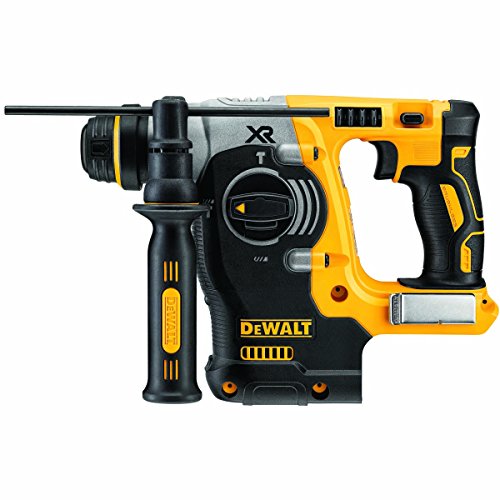
The DeWalt DCH273B stands out as a serious tool for professionals and experienced DIYers who tackle concrete and masonry work regularly. With 2.1 Joules of impact energy and a brushless motor, it delivers the power needed for fast drilling through concrete, anchor installation, and fastening applications. The cordless design eliminates the hassle of extension cords on jobsites and makes it genuinely portable for overhead work, cable tray mounting, and confined spaces where a corded hammer drill becomes impractical.
What sets this model apart is the SHOCKS Active Vibration Control system, which meaningfully reduces the vibration transmitted to your hands and arms during use. For anyone who spends hours drilling overhead or working on walls, this feature translates directly to less fatigue and better control. The three-mode rotating dial (Drill, Hammer Drill, Chip) gives you flexibility to handle different tasks without swapping tools, and the lightweight construction makes it genuinely comfortable for extended use compared to heavier rotary hammers.
The bare tool approach means you'll need to invest in 20V MAX batteries separately if you don't already own them, but this saves money if you're already part of the DeWalt ecosystem. The OSHA Table 1 compliance when paired with the optional DWH303DH dust extractor makes it suitable for regulated jobsites where dust control is mandatory. This is a well-engineered tool built for professional results, backed by DeWalt's reputation for durability and performance.
| Specification | Detail |
|---|---|
| Brand | DeWalt |
| Model | DCH273B |
| Power Source | Cordless (20V MAX) |
| Motor Type | Brushless |
| Impact Energy | 2.1 Joules |
| Chuck Type | SDS |
| Application Modes | 3 (Drill, Hammer Drill, Chip) |
| Vibration Control | SHOCKS Active Vibration Control |
| Weight | Lightweight design (specific weight not listed) |
| Configuration | Bare Tool Only (no battery/charger) |
| Compliance | OSHA Table 1 (with DWH303DH extractor) |
Before You Start: Ensure your 20V MAX battery is fully charged. Inspect the SDS chuck for debris and clean if necessary. Always wear safety glasses, work gloves, and a dust mask when drilling concrete or masonry.
Setting Your Mode: Use the rotating dial on the tool to select your application mode: Drill for fastening, Hammer Drill for drilling into concrete, or Chip for removing material. Start with Hammer Drill mode for most concrete work unless you're simply fastening into pre-drilled holes.
Drilling Technique: Insert your SDS bit fully into the chuck until it seats. Hold the tool firmly with both hands, maintaining steady pressure without forcing it. Let the hammer mechanism do the work; excessive force won't speed drilling and increases fatigue. For overhead work, position yourself for stability and control. Start at low speed and increase gradually as the bit engages the material.
Dust Control: For jobsite compliance and cleaner work, attach the optional DWH303DH dust extractor. This captures debris at the source and maintains visibility of your work area.
Personal Protective Equipment: Always wear ANSI-approved safety glasses to protect against flying debris. Use a dust mask or respirator when drilling concrete, as silica dust poses serious respiratory hazards. Work gloves improve grip and reduce vibration felt by your hands.
Secure Your Work: Clamp or secure your workpiece before drilling. Never hold it in your hand, as the rotary action and hammer mechanism can cause sudden twisting that results in wrist or hand injury. Use appropriate mounting hardware (clamps, vises, or strut mounting) to stabilize your material.
Inspect Before Use: Check the SDS chuck for proper bit seating before starting. A loose bit can eject suddenly. Inspect the battery for damage and ensure the tool is functioning normally. Never operate a damaged tool.
Control and Positioning: Maintain a firm, stable stance with feet shoulder-width apart. Keep both hands on the tool at all times. Be aware of the rotating chuck and never place your hands, hair, or clothing near it during operation. For overhead work, ensure you can maintain control and have clear access to the power button for emergency shutdown.
Battery Strategy: If you're doing extended concrete work, invest in two 20V MAX batteries so one charges while you work. Higher amp-hour ratings (5.0Ah or greater) provide longer runtime for demanding jobs. Keep batteries charged and stored in a cool, dry location to maximize lifespan.
Bit Selection Matters: Use quality SDS bits rated for your specific material (concrete, masonry, or stone). Dull or low-quality bits generate excessive heat and slow progress. Invest in premium bits for faster, cleaner drilling and longer tool life.
Optimize Your Technique: In Hammer Drill mode, use steady, moderate pressure rather than forcing the tool. The hammer mechanism does the heavy lifting; your job is to guide and control. In Chip mode, maintain consistent pressure for efficient material removal. Start with slower speeds in hard materials and increase as the bit engages.
Dust Management: Even without the optional extractor, minimize dust by drilling at a slight downward angle to help debris fall away from your face. Work outdoors or in well-ventilated spaces when possible. A shop vacuum connected to a dust extractor significantly improves visibility and reduces cleanup time.
Maintenance: After each use, remove any concrete dust from the chuck and exterior surfaces with a dry brush. Store the tool in a dry location. Periodically inspect the SDS chuck for wear and replace if bits no longer seat securely.
Hammer Drill Buying Guide
Choosing from the wide range of hammer drills on the market requires understanding a handful of core specifications and design decisions. Price alone is a poor guide because a mid-range corded SDS rotary hammer from Bosch or DEWALT will outperform many premium-priced standard hammer drills on tough concrete. Work through the factors below before committing to any model.
Hammer Drill vs. Rotary Hammer: Know the Difference
A standard hammer drill uses a clutch-driven ratcheting mechanism that produces a percussive action as the chuck spins. The hammering force is relatively modest, making these tools ideal for drilling holes up to about half an inch in diameter in concrete or brick. A rotary hammer, by contrast, uses an electro-pneumatic piston mechanism that delivers significantly more impact energy measured in foot-pounds. Rotary hammers accept SDS-plus or SDS-max bits that lock in without a chuck, resist slipping under load, and transfer energy more efficiently into the material. If you regularly drill holes larger than half an inch in dense concrete or need chisel or chipping mode for light demolition, a rotary hammer is the smarter investment. For occasional anchor holes or mounting work in average masonry, a compact hammer drill is lighter, less expensive, and easier to handle in tight spaces.
Corded vs. Cordless
Corded hammer drills deliver consistent power without any concern about battery life, which matters on long concrete-drilling sessions where a cordless tool might fade as the battery depletes. If you are working near an outlet on a jobsite or in a garage, a corded model from Bosch, DEWALT, Skil, ENEACRO, or Deshuo gives you sustained performance at a lower price point than an equivalent cordless tool. Cordless hammer drills, like the DEWALT 20V MAX XR and the DCH273B rotary hammer, offer genuine freedom of movement and fit naturally into a battery ecosystem you may already own. The tradeoff is weight from the battery pack and the need to manage charge cycles. For most homeowners who drill masonry a few times a year, a 20V cordless model is perfectly adequate. Tradespeople doing daily anchor installation often prefer a corded rotary hammer for sustained output.
Amperage and Voltage
On corded hammer drills, motor amperage is the clearest indicator of raw power. The Skil HD182002 runs on 7.5 amps, which is sufficient for lighter masonry work and occasional anchor holes. The ENEACRO SDS-plus rotary hammer steps up to 13 amps, which supports aggressive drilling in hard concrete with larger-diameter bits. The Bosch 11255VSR Bulldog Xtreme runs at 8 amps and pairs that with an efficient SDS-plus system, so it punches above its amperage rating in real-world use. On cordless models, voltage gives a rough sense of power class. A 20V MAX brushless tool like the DEWALT DCD806B or the DCH172B handles a broad range of masonry tasks and fits into the same battery platform as other DEWALT tools you may already own, from circular saws to reciprocating saws.
Blows Per Minute and RPM
Two speed ratings define how a hammer drill performs: rotations per minute (RPM) and blows per minute (BPM). RPM determines how fast the bit spins, while BPM measures how many percussive strikes the tool delivers each minute. Higher BPM values generally translate to faster material removal in concrete and masonry. Most quality hammer drills offer variable-speed triggers and a two-speed gearbox, giving you a lower gear for high-torque driving and a higher gear for faster drilling. Look for a tool that lets you dial in speed progressively rather than jumping between fixed settings, especially if you plan to use the drill for woodworking or metal in addition to masonry work.
Chuck Type and Bit Compatibility
Standard hammer drills use a keyed or keyless chuck, typically half an inch in diameter, that accepts conventional twist bits as well as masonry bits. This makes them versatile for mixed-material drilling. SDS-plus rotary hammers use a slotted drive system chuck that holds dedicated SDS bits. The bits slide in and lock with a simple push-and-twist motion, and the slot design allows the bit to move axially inside the chuck, transmitting the piston’s impact energy directly through the bit rather than through the chuck mechanism. This dramatically increases drilling efficiency in hard materials. If you invest in an SDS-plus model like the Bosch Bulldog Xtreme, the DEWALT D25263K, or the ENEACRO 13-amp drill, budget for a starter set of SDS-plus bits in the sizes you use most often.
Brushless vs. Brushed Motors
Brushless motors use electronic commutation rather than physical carbon brushes to transfer current to the motor windings. The practical result is less friction, less heat buildup, longer motor life, and better energy efficiency from the battery. On a cordless hammer drill, a brushless motor typically extends runtime by 25 to 50 percent compared to a brushed equivalent at the same voltage. Both the DEWALT DCD806B and the DCH172B feature brushless motors, which is a meaningful advantage for users who rely on a single battery charge for extended work sessions. The DCK brushless hammer drill kit is another budget-friendly brushless option worth considering for occasional home use. For corded models where runtime is not a concern, a quality brushed motor is still entirely capable and often more affordable.
Vibration Control and Safety Clutch
Extended use of a rotary hammer generates significant vibration that fatigues your hands and wrists. Professional-grade models like the DEWALT D25263K include active vibration control (AVC) systems that use a counterweight mechanism to absorb and dampen the return vibration from the piston. This is not a marketing feature. On a full day of anchor installation, the difference between a tool with and without vibration control is genuinely felt in your grip and forearm by mid-afternoon. A safety clutch, which disengages the drive train if the bit binds suddenly in the material, is equally important and present on most reputable models including the Deshuo SDS-plus rotary hammer. Without a clutch, a bit that snags in rebar or a void can wrench the tool violently, a significant injury risk. Always confirm both features are present before buying any rotary hammer you plan to use regularly.
Weight and Ergonomics
Hammer drills are denser and heavier than standard drills because of their added mechanical components. When drilling overhead into concrete or working in a confined space, tool weight becomes a real factor in user fatigue and accuracy. The Skil HD182002 is an accessible entry-level choice that keeps weight manageable for homeowners. The ENEACRO 13-amp rotary hammer adds more mass but justifies it with substantially greater drilling power. Cordless models add battery weight but often feature better-balanced housings because the battery sits at the rear. Look for a rubberized overmold grip, a comfortable D-handle or side handle, and a balanced weight distribution that lets you maintain steady pressure without fighting the tool.
Included Accessories and Value
Some hammer drills ship as bare tools, while others include bits, cases, or battery and charger kits. The Skil HD182002 bundles a 100-piece drill bit set, which provides immediate value for a homeowner building out a new toolkit. The Deshuo rotary hammer includes three SDS-plus drill bits, two chisels, and a carrying case, a strong accessory package at its price tier. Bare tool offerings from DEWALT, like the DCD806B and the DCH273B, make sense if you already own compatible 20V MAX batteries and a charger. Factor accessory value into your per-dollar comparison, especially if you are starting from scratch and need bits, cases, or extra batteries. A quality tool chest to store your growing collection keeps everything organized and protected between jobs.
Why Trust Us
HomeThru is an independent editorial publication with no financial relationship with any brand, retailer, or manufacturer. We do not sell products, process orders, or handle warranty claims. Our recommendations are built entirely on objective research: we analyze verified user feedback across thousands of real-world purchases, cross-reference manufacturer specifications, assess long-term reliability data, and compare competitor positioning to identify genuine strengths and weaknesses in each product category. For this hammer drill roundup, our team evaluated corded and cordless models from Bosch, DEWALT, Skil, ENEACRO, DCK, and Deshuo, weighing performance specifications, motor technology, safety features, ergonomic design, and overall value for both homeowners and trade users. Every product that appears in our lists is chosen on merit. We are not compensated for placements, and our editorial process is kept entirely separate from any commercial considerations. If a product underperforms relative to its price or its competition, it does not make the cut, regardless of brand recognition. You can also explore our research on drill presses, air compressors, and other workshop essentials using the same rigorous independent methodology.
Final Thoughts
After thorough research and comparison, these standout picks rise to the top across different use cases and budgets. Each award below is based solely on verified product specifications and the attributes described in this guide.
- Best Overall: Bosch 11255VSR Bulldog Xtreme Rotary Hammer delivers a proven SDS-plus system, efficient 8-amp motor, and a trusted brand reputation that makes it the most well-rounded choice for homeowners and tradespeople alike.
- Best Cordless for Serious Work: DEWALT 20V MAX SDS Rotary Hammer DCH273B combines three application modes with cordless flexibility, making it ideal for professionals who need rotary hammer capability without being tethered to a cord.
- Best Budget Rotary Hammer: Deshuo 1-Inch SDS-Plus Rotary Hammer Drill packs four functions, a safety clutch, and a useful accessory kit into an affordable package that punches well above its price tier for occasional masonry work.
- Best for Beginners: Skil 7.5 Amp Corded Hammer Drill HD182002 pairs a capable half-inch hammer drill with a generous 100-piece bit set, giving new tool owners everything needed to get started without a large upfront investment.
- Best Compact Cordless Upgrade: DEWALT 20V MAX XR Brushless Hammer Drill DCD806B offers a brushless motor and 20V MAX XR platform compatibility in a compact form factor that excels for overhead drilling and confined-space work.
Whichever model you choose, pairing it with quality masonry bits and keeping a sturdy workbench in your workspace makes every drilling project faster and safer. If your next project involves cutting rather than drilling, jigsaws and demolition-ready reciprocating saws round out a capable power tool lineup. For hanging hardware and driving fasteners alongside your hammer drill, a well-matched impact driver handles screws and bolts faster and with less wrist strain than a standard drill.
Frequently Asked Questions
Do I Need a Hammer Drill or a Rotary Hammer?
For most homeowners drilling occasional anchor holes or mounting fixtures into concrete or brick, a standard hammer drill is sufficient. If you regularly drill holes larger than half an inch in diameter, work with dense concrete block, or need a chiseling function for light demolition, a rotary hammer is the better tool. The SDS-plus models in this roundup from Bosch, DEWALT, ENEACRO, and Deshuo bridge both needs at approachable price points.
Can I Use Regular Drill Bits in a Hammer Drill?
Standard hammer drills with a keyless chuck accept conventional twist bits and masonry bits, so yes. However, SDS-plus rotary hammers require SDS-specific bits that lock into the slotted drive chuck. Using a regular bit in SDS mode is not recommended because the bit will not lock correctly and the percussive action can damage both the bit and the chuck. Always match your bits to the tool’s chuck system, and use carbide-tipped masonry bits specifically designed for percussion drilling in concrete.
Is a Cordless Hammer Drill Powerful Enough for Real Masonry Work?
Modern 20V brushless cordless hammer drills and rotary hammers are genuinely powerful enough for the majority of residential masonry tasks, including anchor installation, fixture mounting, and through-hole drilling in standard concrete block. The DEWALT DCH273B and DCH172B demonstrate that cordless rotary hammers can match corded performance for most applications. Where corded models still have an edge is on sustained heavy drilling sessions where battery management becomes a workflow concern. For occasional home use, a quality cordless model is an excellent choice.
What Safety Precautions Should I Follow When Using a Hammer Drill?
Always wear safety glasses and hearing protection, as hammer drills and rotary hammers generate both debris and significant noise. Use a dust mask when drilling concrete or masonry to avoid inhaling silica dust. Before drilling into any wall, use a reliable stud finder and a circuit-tracing tool to confirm no electrical wiring or plumbing runs through the drilling path. Secure workpieces firmly, engage the side handle for two-handed control on rotary hammers, and let the tool’s safety clutch do its job if the bit binds unexpectedly.
How Do I Maintain a Hammer Drill to Keep It Performing Well?
After each use, blow out dust from vents with compressed air to prevent buildup that restricts airflow and causes overheating. Apply a small amount of SDS-plus grease to the shank of SDS bits before each session to reduce wear on the chuck mechanism. Inspect the chuck jaws or SDS collar regularly for wear or cracking. For cordless models, store batteries at room temperature away from direct sunlight. On corded tools, inspect the power cord for fraying near the strain relief. Replacing worn carbon brushes on brushed-motor models before they fail prevents damage to the motor commutator and extends tool life significantly. Store your hammer drill in a case or on a dedicated shelf in your rolling tool cabinet to protect it between jobs.


Write Your Review
No reviews yet. Be the first to share your experience!