

A heat gun is one of those tools you reach for far more often than you expect. Whether you’re stripping decades of paint from a window frame, shrinking tubing around an electrical splice, softening adhesive on a stubborn floor tile, or bubble-busting freshly poured resin, a good heat gun handles it with precision that a hair dryer or open flame simply can’t match. The best heat guns deliver focused, controllable heat between 120°F and 1,200°F, making them as useful in a professional workshop as they are on a craft table. Our editorial team at HomeThru independently researched, analyzed, and compared the leading models across wattage, temperature range, build quality, ergonomics, and real-world versatility to bring you this definitive guide. From budget-friendly dual-setting corded models to professional-grade LCD-equipped units, you’ll find the right tool for your project and your budget below.
Top Heat Guns We Recommend

Pros
- Rapid heat-up time and dual-mode power system handle everything from delicate electronics repairs to heavy-duty paint stripping
- Variable temperature control with a smooth dial dial prevents the guesswork of fixed-setting heat guns
- Four interchangeable nozzles cover most common applications without purchasing additional attachments
- Thoughtful ergonomic design minimizes hand strain during longer projects
- Solid overheat protection extends tool lifespan and provides peace of mind during extended use
Cons
- No customer reviews available yet, so real-world durability and long-term reliability remain unverified
- The 5.2-foot cord may feel limiting for larger workshop spaces without an extension cord
The SEEKONE 1800W heat gun stands out for its combination of raw power and precise control. With dual heating modes that range from 50°C to 650°C and airflow settings between 190 and 500 L/min, this tool adapts to both delicate and demanding tasks. Whether you're smoothing 3D printed models or stripping paint from baseboards, the variable temperature dial lets you dial in exactly the heat you need without overshooting and damaging materials.
The four included nozzles represent thoughtful engineering for a mid-range heat gun. The deflector nozzle concentrates heat into a narrow pattern for precision work, the dual concentrator nozzles focus intense heat on specific spots, and the reflector nozzle disperses warmth evenly across larger surfaces. This versatility means you won't need to buy additional attachments for most common projects. The ergonomic handle design also matters more than it sounds; extended heat gun work can strain your hand and wrist, so the contoured grip helps prevent fatigue during longer sessions.
Safety features include built-in overheat protection that automatically prevents the tool from reaching dangerous temperatures or damaging your home's electrical circuit. The rapid 1.5-second heat-up time means less idle time waiting for the tool to reach working temperature, improving efficiency on multi-step projects. For hobbyists and homeowners tackling everything from craft work to home repairs, this heat gun delivers professional performance without the professional price tag.
| Specification | Detail |
|---|---|
| Power | 1800W |
| Temperature Range | 50°C to 650°F (122°F to 1202°F) |
| Heat-Up Time | 1.5 seconds |
| Mode I Airflow | 190-210 L/min (50-450°C) |
| Mode II Airflow | 250-500 L/min (50-650°C) |
| Heating Control | Variable temperature dial (rheostat-type) |
| Airflow Control | High/Low switch on handle |
| Cord Length | 5.2 feet |
| Safety Features | Overheat protection |
| Nozzle Attachments | 4 included (1 deflector, 2 concentrator, 1 reflector) |
| Handle Design | Ergonomic to reduce repetitive strain |
| Package Contents | Heat gun, 4 nozzles, user manual |
Getting Started: Plug the heat gun into a grounded outlet and allow 1-2 minutes for it to reach full operational readiness. Always start with the temperature dial set to the lowest setting and the airflow switch on low.
Temperature Control: Use the black dial on the handle to adjust temperature from 50°C to 650°C. For delicate materials (electronics, thin plastics, 3D printed parts), start at lower temperatures around 100-200°C. For heavy-duty work (paint removal, PVC heating), operate in the 400-650°C range. The dial provides smooth, gradual adjustment so you can dial in the exact temperature needed.
Airflow Management: The high/low switch on the handle controls air velocity independently of temperature. Use low airflow for precision work and sensitive applications; use high airflow for faster heating and paint removal. The four nozzles direct this airflow differently: use the deflector for narrow, focused heat; concentrators for intense, concentrated heat on small areas; and the reflector for broad, even heat distribution.
Safe Operation: Never leave the heat gun unattended while powered on. Allow the tool to cool completely before storing. The overheat protection will automatically shut down the heating element if internal temperature exceeds safe limits, but this is a safety feature, not a substitute for careful use. Always wear safety glasses when working with heat guns, and keep the nozzle at least 4-6 inches from your work surface unless you need closer contact for specific applications.
Personal Protection: Always wear safety glasses to protect your eyes from heat and debris. For extended use or work with toxic materials (like lead paint), wear a respirator mask approved for your specific hazard. Heat-resistant gloves are recommended when handling materials immediately after heating or when working near the nozzle.
Work Environment: Operate the heat gun in well-ventilated areas. Never use it in enclosed spaces without proper ventilation, especially when removing paint or working with materials that may release fumes when heated. Keep the heat gun away from flammable materials, solvents, and propane or other compressed gas containers. Maintain a clear workspace with no obstructions around the nozzle.
Electrical Safety: Use a properly grounded outlet (three-prong plug). The built-in overheat protection guards against electrical damage, but never operate the heat gun with wet hands or in damp conditions. Unplug the tool immediately after use and allow it to cool completely before storing. The overheat protection will automatically disable heating if the tool reaches dangerous internal temperatures, but this is a safety feature, not permission to ignore normal precautions.
Material Awareness: Different materials require different temperatures. PVC begins to degrade above 60°C, so use lower settings for PVC work. Plastics can melt or release harmful fumes at high temperatures. Always research the safe heating temperature for your specific material before beginning work. When removing paint, especially in older homes, assume it may contain lead and follow EPA guidelines for safe removal.
3D Printing Excellence: This heat gun excels at 3D printing post-processing. Set the temperature to 80-120°C and use the reflector nozzle to gently smooth layer lines on printed parts. For removing support material, use 150-200°C with a concentrator nozzle for precision. The variable temperature control prevents warping or melting the model, which fixed-temperature heat guns often cause. Work slowly and methodically, moving the nozzle constantly to avoid overheating any single area.
Paint Removal Technique: For stripping paint, use Mode II (high airflow) at 500-600°C, but keep the nozzle moving constantly. Holding the heat gun in one spot too long can scorch wood or damage underlying materials. Use the deflector nozzle to create a narrow heat pattern that you can control precisely. Work at a 45-degree angle and use a paint scraper to remove softened paint as you heat. Multiple light passes work better than one aggressive pass.
Shrink Wrapping and PVC Work: The dual airflow system is perfect for shrink wrap applications. Use low airflow at 300-350°C for gentle, even heating that shrinks material without creating hot spots or wrinkles. For PVC heating and bending, stay below 60°C to avoid degradation. The concentrator nozzles work best for directing heat to specific bend points while protecting surrounding material.
Maintenance and Storage: After each use, let the heat gun cool for at least 30 minutes before storing. Store nozzles separately in a protective bag to prevent damage. Periodically check the power cord for damage and ensure the handle remains clean and dry. The overheat protection will occasionally trigger during heavy use; if this happens, unplug the tool and allow it to cool completely before resuming work. This indicates you're pushing the tool hard, so consider taking breaks to extend its lifespan.
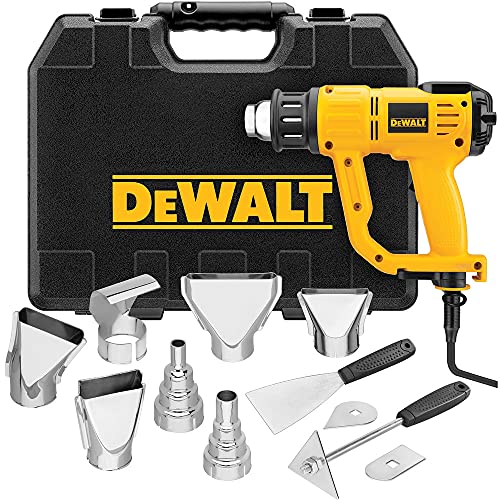
Pros
- LCD display allows precise temperature adjustment in 50-degree increments, eliminating guesswork
- Integrated kickstand provides hands-free stability, improving workflow and safety
- Lightweight and compact design reduces user fatigue during extended applications
- Built-in overload protection prevents heating element damage and extends tool life
- Comes with hard case and accessories, offering complete value out of the box
Cons
- No variable speed fan control, limiting flexibility for delicate applications that require lower airflow
- LCD display may be difficult to read in bright sunlight or from certain angles
The DEWALT D26960K delivers professional-grade performance in a compact, user-friendly package. The LCD display is a standout feature, allowing you to dial in precise temperatures in 50-degree increments rather than relying on vague dial settings. This precision matters when you're working with heat-sensitive materials like vinyl wrapping, shrink tubing, or delicate paint removal where a few degrees can mean the difference between perfect results and ruined work.
The kickstand is genuinely thoughtful engineering. Instead of setting the gun down and worrying about it rolling or tipping, you simply prop it up and keep both hands free for your project. Combined with the ergonomic grip and lightweight 2.3-pound design, this gun is comfortable to use for extended periods without hand cramping. The built-in overload protection is a practical safety feature that automatically shuts down the heating element if something goes wrong, protecting your investment and preventing potential hazards.
The included hard case and accessory kit add real value, eliminating the need to buy storage solutions separately. The cord protector is a small detail that pays dividends over time by preventing damage where the cord meets the housing, a common failure point on heat guns. Whether you're a homeowner tackling a one-time project or a contractor reaching for this tool regularly, the combination of precision controls, thoughtful design features, and included accessories makes this a solid choice.
| Specification | Details |
|---|---|
| Brand | DEWALT |
| Model | D26960K |
| Product Type | Heat Gun |
| Display Type | LCD Digital Display |
| Temperature Control | 50-degree increments |
| Weight | 2.3 lbs |
| Design Features | Kickstand, cord protector, hang ring, overload protection |
| Grip Type | Ergonomic comfort grip |
| Included Accessories | Hard case and accessory kit |
Before Starting: Inspect the cord and plug for damage. Ensure you're working in a well-ventilated area and wearing appropriate safety gear including heat-resistant gloves and eye protection.
Basic Operation: Plug in the heat gun and allow it to warm up for 30 seconds. Use the LCD display to set your desired temperature in 50-degree increments. Start at a lower temperature and increase as needed for your specific application. The kickstand allows you to set the gun down safely between tasks without worrying about it rolling away.
Common Applications: For paint removal, use medium to high temperatures and keep the gun moving to avoid scorching. For shrink-wrap or tubing, start at lower temperatures and increase gradually. For plastic bending, use medium heat and work slowly. Always test on a small, inconspicuous area first when working with unfamiliar materials.
Personal Protection: Always wear heat-resistant gloves and safety glasses when operating the heat gun. Keep long hair and loose clothing away from the nozzle. Never point the gun at yourself or others, even briefly.
Workspace Safety: Work in a well-ventilated area to avoid inhaling fumes, especially when removing paint or heating plastics. Keep flammable materials at least 12 inches away from the gun's nozzle. Never leave the gun unattended while plugged in or hot.
Equipment Care: Allow the gun to cool completely before storing it. The built-in overload protection will automatically shut down the heating element if it detects a problem, but never force the gun to continue operating if it shuts off unexpectedly. Check the cord protector regularly for signs of wear and replace if damaged.
Temperature Precision: The 50-degree increment adjustment is more precise than most heat guns. Write down the ideal temperature for your most common tasks so you can quickly return to proven settings without guessing.
Maximize the Kickstand: Use the integrated kickstand to keep the gun stable while you prep materials or wait for surfaces to cool. This hands-free setup reduces fatigue and improves accuracy on detail work.
Extend Tool Life: The cord protector is designed to prevent the most common failure point on heat guns. Avoid kinking the cord or running it over sharp edges, and always coil it loosely for storage. The hard case keeps everything organized and protected between uses.

Pros
- Versatile dual-heat design works for multiple DIY projects and craft applications
- Corded operation eliminates downtime and provides consistent power throughout use
- Ergonomic handle design with multiple grip positions reduces hand strain
- Built-in stand improves safety and convenience during heat-up and cooldown phases
Cons
- Corded design limits mobility and requires proximity to a power outlet during use
- No customer reviews available to verify real-world durability and long-term performance
The BLACK+DECKER HG1300 is a straightforward, no-frills heat gun built for homeowners and DIYers who need a reliable tool for occasional projects. With 1,350 watts of heating power and two temperature settings (750°F and 1,000°F), it covers the most common heat-gun applications: removing paint from wood and metal, loosening corroded fasteners, thawing frozen pipes, and heat-shrinking materials for crafts. The dual-setting approach is practical, allowing you to match heat intensity to the job without buying multiple tools.
Design and ergonomics are solid for the price point. The lightweight, compact body reduces fatigue when working overhead or on vertical surfaces, while the 3-position side handle gives you flexibility in how you grip and control the tool. The built-in stand is a smart addition that keeps the gun safely elevated during cooldown, protecting your work surface and your hands. The included glass protect nozzle is a thoughtful touch for users working near windows or delicate finishes.
The corded design is a trade-off worth understanding. You get unlimited runtime and consistent power delivery, but you'll need to stay within reach of an outlet. This is typical for entry-level heat guns and makes sense if you're working indoors or in your garage. Just be sure to read the user manual carefully before starting any project, as high-temperature tools demand respect and proper technique for safe operation.
| Specification | Details |
|---|---|
| Brand | BLACK+DECKER |
| Model | HG1300 |
| Power | 1,350 watts |
| Temperature Settings | 750°F and 1,000°F (dual) |
| Cord Type | Corded (electric) |
| Handle Design | 3-position side handle |
| Stand | Built-in stand included |
| Accessories | Glass protect nozzle |
| Weight | Lightweight and compact |
| Primary Use | Paint stripping, rust removal, pipe thawing, crafts |
Preparation: Plug the heat gun into a properly grounded outlet. Allow 30 seconds for the heating element to reach operating temperature. Set the temperature dial to your desired setting (750°F for delicate work, 1,000°F for heavy-duty tasks like paint stripping).
Operation: Hold the gun 3-6 inches from your work surface, depending on the task and material. Keep the nozzle moving to avoid concentrating heat in one spot, which can scorch wood or damage surfaces. Use the 3-position side handle to maintain a comfortable grip and steady control. For paint stripping, work at a slight angle to lift paint as it softens.
Cooldown: Turn off the heat gun and place it on the built-in stand to cool. Never touch the nozzle or barrel until it has cooled completely. Always consult the user manual for specific guidance on your particular project type and material.
Before You Start: Read the user manual thoroughly. Wear safety glasses to protect your eyes from debris and hot air. Use heat-resistant gloves when working with high temperatures. Ensure your work area is well-ventilated, especially when stripping paint or burning off old finishes.
During Use: Never point the heat gun at people, pets, or flammable materials. Keep the nozzle moving to prevent overheating any single spot. Be aware that surfaces can remain hot long after you stop heating them. Do not use the tool near water or in wet conditions unless you have proper electrical protection.
After Use: Place the heat gun on its built-in stand to cool naturally. Do not immerse the tool in water or expose it to moisture while hot. Allow adequate cooling time before storing. Keep the cord away from hot surfaces and check it regularly for damage before each use.
Is This the Right Heat Gun for You? The BLACK+DECKER HG1300 is ideal if you're a homeowner or casual DIYer who needs a heat gun for occasional projects. It's affordable, straightforward to use, and covers the most common applications. If you plan to use a heat gun frequently or professionally, you may want to consider higher-wattage models or cordless options for greater mobility.
Key Considerations: Think about your primary use case. For paint stripping and heavy-duty work, the 1,000°F setting is essential. For delicate crafts and heat-shrinking, 750°F usually suffices. The corded design is fine for garage and indoor work but limits outdoor mobility. If you need flexibility to move around a large space, a cordless model might be worth the extra investment.
Budget and Value: This tool delivers solid value for the price. You get dual temperatures, a built-in stand, and a glass protect nozzle without paying for premium features you may not need. Compare it against other entry-level heat guns to ensure it fits your budget and project requirements.

Pros
- Dual temperature settings give you precise control for delicate crafts and heavy-duty stripping tasks
- Fast heat-up time and strong airflow (up to 500L/min on high) mean jobs finish quickly
- Thoughtful ergonomic design with stand and hook reduces fatigue and improves workspace efficiency
- UL certification and overheat protection provide peace of mind during extended use
- Four nozzle attachments expand versatility across paint removal, shrinking, embossing, and detail work
Cons
- First-time use produces smoke and burning odor as the anti-rust coating on the heating core burns off, which can be alarming despite being normal
- No reviews currently available, so real-world user feedback on long-term durability and performance is limited
The SEEKONE 1800W heat gun stands out as a versatile tool for homeowners and DIYers tackling everything from paint stripping to 3D printing post-processing. With 1800W of power and dual temperature settings (752°F and 1112°F), this gun gives you precise control over heat output. The lower setting works well for delicate crafts and materials prone to damage, while the high setting delivers serious power for heavy-duty jobs like PVC shrinking and paint removal. The airflow scales with temperature too, reaching 500L/min on the high setting for faster work.
Design and safety are where this heat gun really shines. The TPE rubber handle feels comfortable during extended use and won't slip when your hands get warm. The vertical stand is a thoughtful addition that lets you set the gun down without hunting for a safe spot, and the hanging hook makes storage simple. More importantly, the built-in overheat protection automatically cuts power to the heating element if temperatures get too high, preventing damage to the tool and reducing fire risk. UL certification and flame-retardant nylon around the air outlet reinforce that safety was a priority in the design.
The kit includes four interchangeable nozzles, expanding the gun's range from craft embossing and detail work to larger surface coverage. This flexibility makes it a smart investment if you plan to tackle multiple project types. One heads-up: expect smoke and a burning smell the first time you use it as the anti-rust coating on the heating core burns away. This is normal and temporary, but worth knowing so you don't panic. Overall, this is a capable, well-thought-out heat gun that delivers professional results without the professional price tag.
| Specification | Details |
|---|---|
| Brand | SEEKONE |
| Power | 1800W |
| Temperature Settings | 2 modes: 752°F (400°C) and 1112°F (600°C) |
| Airflow (Low) | 250L/min |
| Airflow (High) | 500L/min |
| Included Nozzles | 4 interchangeable nozzles |
| Handle Material | TPE rubber (non-slip, ergonomic) |
| Housing Material | PA6 flame-retardant nylon composite |
| Safety Features | Overheat protection, UL certification |
| Storage Features | Hanging hook, vertical stand |
| Applications | Paint stripping, PVC shrinking, crafts, embossing, 3D printing post-processing, headlight restoration |
Getting Started
Before your first use, set the heat gun on a heat-safe surface and let it run for a few minutes. You'll notice smoke and a burning smell as the anti-rust coating on the heating core burns away. This is completely normal and will stop after the first use. Make sure you're working in a well-ventilated area.
Selecting Your Temperature
Mode I (752°F, 250L/min): Use this lower setting for delicate work like craft embossing, detail shrinking, and any project where you want controlled, gentle heat. This mode is also ideal for materials that can warp or discolor at high temperatures.
Mode II (1112°F, 500L/min): Switch to this high-power setting for heavy-duty tasks like paint stripping, PVC shrinking on larger areas, and 3D print smoothing. The increased airflow covers more ground faster.
Choosing the Right Nozzle
The four included nozzles let you focus or spread the heat as needed. Use a narrower nozzle for detail work and precision, and a wider nozzle for covering larger surfaces quickly. Nozzles are easy to swap, so experiment to find what works best for your specific task.
Safe Operation
Always hold the gun at a safe distance from your work surface to avoid burns or material damage. Keep the air outlet pointed away from your face and body. Use the vertical stand when you need both hands free, and take advantage of the hanging hook for convenient storage between tasks.
Before You Start
- Read all instructions before operating the heat gun.
- Ensure the work area is well-ventilated, especially during first use when smoke and odor are present.
- Keep the heat gun away from water and wet surfaces to avoid electrical hazards.
- Always unplug the gun before leaving it unattended or changing nozzles.
During Operation
- Never point the heat outlet at your face, hands, or body. The air can reach extreme temperatures and cause serious burns.
- Wear heat-resistant gloves and safety glasses when working, particularly on paint stripping or heavy-duty projects.
- Keep the gun at least 6 inches from your work surface unless your specific task requires closer contact.
- Do not use on flammable materials or near combustible substances like gasoline, paint thinner, or propane.
- The built-in overheat protection will automatically shut down the heating element if temperatures exceed safe limits, but do not rely on this as your only safety measure.
After Use
- Unplug the heat gun and allow it to cool completely before storing.
- Never store the gun while it is still hot or plugged in.
- Use the hanging hook or store in a dry location away from moisture and dust.
- Check the power cord regularly for damage before each use.
Special Considerations
- The TPE rubber handle and flame-retardant nylon housing are designed to stay cool, but the air outlet and nozzles will be extremely hot during operation. Do not touch these areas.
- When stripping paint, be aware that old paint may contain lead. Use appropriate respiratory protection and follow EPA guidelines for lead-safe practices.
- For 3D printing applications, ensure adequate ventilation as heated plastic can release fumes.
Paint Stripping
Start with Mode II for fast heating, then use a paint scraper to remove loosened paint. Keep the nozzle moving in steady strokes to avoid scorching the underlying surface. For delicate surfaces, drop to Mode I and work more slowly. Always wear a respirator when stripping old paint.
PVC and Plastic Shrinking
Mode II is your go-to for shrink wrap and PVC applications. Keep the nozzle about 8-12 inches away and move it slowly across the surface for even shrinking. Test on a scrap piece first to dial in the distance and speed for your specific material.
Craft and Detail Work
Mode I gives you the precision you need for embossing, leather stretching, and intricate crafts. The lower airflow means better control, and the four nozzles let you focus heat exactly where you need it. Work slowly and deliberately, checking your progress frequently.
3D Printing Post-Processing
Use Mode I or Mode II depending on your filament type and desired result. For smoothing layer lines, keep the nozzle moving and don't linger on one spot to avoid warping. For removing support material, Mode II works faster but requires a steadier hand. Always work in a well-ventilated space.
General Best Practices
- Keep a fire extinguisher nearby when doing heavy-duty work like paint stripping.
- Use the vertical stand when you need both hands free for scraping or holding material.
- Let the gun cool between projects to extend the lifespan of the heating element.
- Clean any debris from the air intake regularly to maintain airflow and prevent overheating.
- Start with the lower temperature mode and work up if needed. It's easier to add heat than remove it.

Pros
- Cordless design offers superior mobility and freedom compared to corded alternatives
- High maximum temperature handles demanding tasks like paint removal and plastic welding
- Built-in LED work light improves visibility in tight, dark work areas
- Dual nozzle attachments expand versatility without buying separate tools
- Lock-on trigger reduces hand fatigue during extended use
Cons
- 42-minute runtime per charge may require a second battery for longer projects or job sites
- No customer reviews available yet, limiting real-world feedback on durability and long-term performance
The DEWALT 20V MAX cordless heat gun delivers professional-grade performance in a compact, battery-powered package. With a maximum temperature of 990°F and 6.7 CFM airflow, this tool handles demanding applications from paint stripping to plastic welding. The cordless design eliminates the tether of extension cords, making it genuinely practical for work around the house, in garages, and on job sites where outlet access is limited or inconvenient.
Practical features enhance usability on real projects. The integrated LED light brightens work areas without requiring a separate work light or headlamp, which proves especially valuable when stripping paint from interior trim or working inside cabinets. The lock-on button enables hands-free operation for sustained heating tasks, reducing hand fatigue during repetitive work. Two nozzle attachments (flat and hook) provide application flexibility without purchasing additional accessories, allowing you to direct airflow precisely where needed.
Runtime and battery considerations matter for job planning. The 42-minute charge provides solid coverage for most home improvement tasks, though larger projects like stripping an entire room or extensive shrink-wrap work may benefit from a second battery. As a tool-only model, you'll need to supply your own 20V MAX battery and charger, though these integrate seamlessly with other DEWALT 20V tools if you already own them.
| Brand | DEWALT |
| Model | DCE530B |
| Battery Voltage | 20V MAX |
| Max Temperature | 990°F (532°C) |
| Airflow | 6.7 CFM |
| Runtime per Charge | Up to 42 minutes |
| Nozzle Attachments | Flat and Hook |
| Work Light | LED |
| Trigger Design | Lock-on button, Lock-off trigger |
| Configuration | Tool Only (battery and charger not included) |
Preparation: Charge your 20V MAX battery fully before use. Attach either the flat or hook nozzle depending on your application. Flat nozzles work best for broad surfaces like paint removal; hook nozzles direct heat into corners and tight spaces. Always wear heat-resistant gloves and eye protection.
Operation: Trigger the tool to begin heating. The LED light activates automatically. For sustained heating tasks, press the lock-on button to maintain continuous operation without holding the trigger. Release the lock-off trigger or press the lock button again to stop heating. Allow the tool to cool before storage.
Common Applications: Use for paint stripping (test a small area first), shrink-wrap application, adhesive removal, plastic welding, and detail work on trim or hardware. Always maintain safe distance from the work surface and keep the nozzle moving to avoid damage.
Heat Hazards: The nozzle and discharged air reach extreme temperatures. Never point the tool at people, pets, or flammable materials. Maintain clear distance from the work surface as specified in the manual. Allow the tool to cool completely before touching the nozzle or storing it.
Personal Protection: Always wear heat-resistant gloves rated for high temperatures and safety glasses to protect eyes from debris and radiant heat. Work in well-ventilated areas, especially when stripping paint, as fumes may be released. Keep long hair and loose clothing away from the intake and discharge areas.
Battery and Electrical Safety: Use only DEWALT 20V MAX batteries and chargers designed for this tool. Do not use damaged batteries or chargers. Keep the tool dry and never use near water or in wet conditions. Inspect the tool for damage before each use and discontinue use if cracks or defects appear.
Maximize Battery Life: Keep a second 20V MAX battery charged and ready to swap mid-project. This eliminates downtime waiting for a recharge. Invest in higher-capacity batteries (4.0Ah or larger) if you plan extended use sessions. Store batteries in cool conditions to preserve charge capacity.
Application Techniques: When stripping paint, work at a consistent distance and use smooth, overlapping passes rather than holding the nozzle in one spot, which can damage surfaces. For shrink-wrap, keep the tool moving to ensure even heating and prevent material scorching. Test on inconspicuous areas first, especially on delicate finishes or aged materials.
Maintenance and Storage: Allow the tool to cool for at least 10 minutes before storage. Store in a dry location away from moisture and extreme temperatures. Keep nozzles clean and free from debris. Periodically check the air intake vents for blockages and clean gently with a soft brush if needed.

Pros
- Dual safety fuse system provides exceptional protection against overheating and fire hazards
- Four interchangeable nozzles cover a wide range of applications without needing multiple tools
- Fast heat-up time and dual temperature modes deliver both precision and power for diverse projects
- Lightweight, ergonomic design with textured grip makes it comfortable for extended work sessions
- ETL certified and backed by lifetime technical support from Batavia's professional service center
Cons
- No user reviews currently available to assess real-world durability and long-term performance feedback
- Dual temperature settings may feel limited for users who need more granular heat control for specialized applications
The Batavia 1800W heat gun stands out for its thoughtful approach to safety without sacrificing power. The dual integrated fuse system is a genuine differentiator, automatically powering down and locking into cool-down mode if the tool overheats. This design protects both the user and the device itself, extending the tool's lifespan while reducing fire risk during demanding projects. For homeowners and DIYers concerned about tool safety, this feature alone justifies consideration.
Performance-wise, the gun delivers genuine versatility through its two temperature modes and 1800W motor. Mode I at 752°F with 250L/min airflow handles precision work like shrink tubing and delicate crafts, while Mode II at 1112°F with 500L/min tackles industrial applications such as vinyl wrapping and paint stripping. The tool reaches maximum temperature quickly, minimizing wait time and keeping workflow momentum going. The included four nozzles are purpose-built for specific tasks, eliminating the need to purchase additional attachments.
Design and usability round out the package. At 30% lighter than comparable models, the Batavia reduces hand fatigue during longer sessions, and the ergonomic grip with textured surface ensures secure control. The flame-retardant composite shielding around the nozzle eliminates burn hazards, a practical safety consideration for workshop environments. Backed by ETL certification, lifetime technical support, and a satisfaction guarantee, this heat gun offers solid peace of mind for both casual DIYers and regular tool users.
| Specification | Details |
|---|---|
| Brand | Batavia |
| Power | 1800W |
| Temperature Mode I | 752°F / 250L/min airflow |
| Temperature Mode II | 1112°F / 500L/min airflow |
| Included Nozzles | 4 precision nozzles |
| Material | Flame-retardant PA6 composite shielding |
| Weight | 30% lighter than competitor models |
| Safety Features | Dual integrated safety fuses with auto shut-off and mandatory cool-down mode |
| Certification | ETL certified |
| Storage | Integrated hanging hook |
| Warranty | Lifetime technical support and 100% satisfaction guarantee |
Getting Started: Before first use, inspect all four nozzles and select the one matching your project. Attach the nozzle securely to the gun's outlet. Plug in the tool and allow it to reach operating temperature (typically within seconds due to the 1800W motor). Always operate in a well-ventilated area away from flammable materials.
Temperature Selection: Mode I (752°F) is ideal for heat-sensitive materials like vinyl wraps, shrink tubing, and detailed craft work. Mode II (1112°F) delivers industrial-strength heat for paint stripping, epoxy application, and heavy-duty tasks. Start with the lower temperature and increase only if needed. Hold the gun 2-4 inches from your work surface and move steadily to distribute heat evenly.
Nozzle Applications: Use the shrink tubing nozzle for electronics and cable work, the flat nozzle for paint stripping and large surfaces, the cone nozzle for epoxy and concentrated heating, and the detail nozzle for precision craft applications. Always allow the gun to cool completely before storing, and use the integrated hanging hook for convenient, safe storage between uses.
Built-in Protection: The Batavia's dual safety fuse system automatically shuts down the tool if overheating is detected, triggering a mandatory cool-down period before restart is possible. This feature prevents dangerous situations and protects your device. Never attempt to override or disable this safety system, as it's designed to protect both you and your equipment.
Operational Safety: Always wear safety glasses and heat-resistant gloves when operating the heat gun. Keep the flame-retardant nozzle shield in place to prevent accidental burns. Never point the gun at people, animals, or yourself. Work in well-ventilated areas, especially when stripping paint or heating materials that may emit fumes. Keep the gun away from water and wet surfaces to avoid electrical hazards.
Storage and Maintenance: Allow the tool to cool completely before storing. Never cover the gun while hot, as trapped heat can damage internal components and pose a fire risk. Store in a dry location away from children and pets. Check the power cord regularly for damage before each use. If the tool enters cool-down mode, allow adequate time for the safety system to reset before attempting to restart.
Who Should Buy: This heat gun is ideal for DIYers tackling vinyl wrapping projects, crafters working with heat-sensitive materials, homeowners doing paint stripping, and professionals needing reliable industrial-grade equipment. The dual temperature modes and four nozzles make it versatile enough for occasional users and frequent professionals alike. If safety features are a priority, the dual fuse system makes this an excellent choice.
Key Considerations: Evaluate whether you need both temperature modes for your planned projects. The 752°F setting handles most craft and precision work, while the 1112°F mode is necessary for heavy-duty applications like paint stripping. Consider the types of nozzles included and whether they match your primary use cases. The lightweight design is a genuine advantage if you'll be working overhead or for extended periods.
Value Assessment: This tool combines industrial power with smart safety engineering, ETL certification, and lifetime technical support. The included four nozzles eliminate the need for separate purchases, and the lightweight design reduces fatigue-related costs (fewer breaks, faster completion). For homeowners investing in a heat gun they'll keep for years, the safety features and support backing provide long-term value and peace of mind.

Pros
- Variable temperature control prevents overheating sensitive materials like vinyl or thin plastics
- Integrated stand frees both hands for holding workpieces or using scraping tools simultaneously
- Dual fan speeds let you balance heat intensity with airflow control for different materials
- Reliable 1500-watt output delivers professional-grade heating for common DIY tasks
- Corded operation means no downtime waiting for battery recharges on bigger projects
Cons
- No digital temperature display, so heat adjustments rely on a manual dial without precise readouts
- Limited online feedback available, making it harder to assess real-world durability and long-term reliability
The PORTER-CABLE PC1500HG delivers straightforward heat gun functionality at a price point that won't break the bank for homeowners. With 1500 watts of output and a variable temperature dial, you get meaningful control over heat intensity without the complexity of digital controls. Whether you're stripping old paint, shrinking wrap around bundled materials, or bending PVC pipe, the adjustable heat dial lets you dial in the right temperature for the job at hand.
The dual fan speed selector is a practical feature that separates this model from bare-bones heat guns. Low speed gives you precision control for delicate work like removing vinyl decals or loosening adhesive on trim, while high speed accelerates material softening for heavier tasks. The integrated support stand is genuinely useful, allowing you to rest the gun upright on your workbench and keep both hands free for manipulating your project or using a scraper simultaneously.
As a corded tool, the PC1500HG eliminates battery management concerns and delivers consistent power throughout extended work sessions. The tradeoff is cord management on the job site, but for most homeowners tackling renovation projects around the house, this is a minor consideration compared to cordless convenience. This heat gun represents a solid choice for DIYers who want reliable performance and practical features without premium pricing.
| Specification | Detail |
|---|---|
| Power Output | 1500 Watts |
| Temperature Control | Variable Dial |
| Fan Speed Settings | 2 (High and Low) |
| Power Type | Corded Electric |
| Support Stand | Integrated, Hands-Free |
| Brand | PORTER-CABLE |
| Model Number | PC1500HG |
Getting Started: Plug the heat gun into a grounded outlet and allow 30 seconds for the heating element to warm up. Start with the temperature dial on a low setting and increase gradually as needed for your specific material.
Fan Speed Selection: Use the 2-speed selector to control airflow. Choose low speed for precision work like decal removal or delicate paint stripping, and high speed for faster material softening on larger surfaces or heavy-duty projects.
Hands-Free Operation: Place the gun on its integrated support stand when you need both hands free. This setup is especially useful for holding workpieces steady or using a scraper tool while heat is applied.
Temperature Adjustment: The variable dial allows real-time heat adjustments without stopping. Experiment on scrap material first to find the optimal temperature for your specific application before working on finished surfaces.
Heat and Burn Prevention: Heat gun nozzles reach extremely high temperatures. Always wear work gloves and eye protection. Never touch the nozzle or direct heat at your hands, face, or body. Allow the gun to cool completely before storing.
Fire Safety: Keep the heat gun away from flammable materials, curtains, insulation, and propane tanks. Maintain clear space around the work area. Never leave a running heat gun unattended, even on its stand. Always unplug before setting down for extended periods.
Ventilation and Fumes: When removing old paint or melting certain plastics, harmful fumes may be released. Work in well-ventilated areas or outdoors when possible. Wear a respirator mask if working indoors with potentially toxic materials like lead-based paint.
Electrical Safety: Inspect the cord for damage before each use. Use a grounded outlet and avoid wet conditions. Never use the heat gun near water sources or in damp environments. Keep the power cord away from the heat stream.
Material-Specific Temperatures: Paint removal typically requires higher temperatures (around 1000-1200 degrees), while shrink wrapping and vinyl decal removal work best at lower temperatures (600-800 degrees). Start low and increase gradually to avoid damaging underlying surfaces.
Maximize the Stand: The integrated stand is your friend for two-handed work. Position it so the nozzle points at your target area, then use both hands to hold your workpiece or operate scraping tools. This setup dramatically speeds up paint removal jobs.
Dual Fan Strategy: Use low fan speed for precision work and to reduce material scatter. Switch to high speed when you need faster results on larger surface areas or when working outdoors where some air movement is already present.
Scraper Technique: For paint removal, apply heat for 20-30 seconds, then immediately scrape while the paint is still soft. Alternate between heating and scraping rather than trying to remove all paint in one pass. This prevents damage to underlying wood or drywall.

Pros
- Two distinct heat settings eliminate guesswork when switching between delicate and demanding tasks
- Safety features including automatic overheat shutoff and nozzle shield provide peace of mind
- Lightweight and portable design makes it easy to maneuver in confined areas and overhead work
- Retractable stand enables hands-free operation for projects requiring both hands
- Excellent value for makers and hobbyists who need occasional heat application without professional-grade pricing
Cons
- 350W power output is modest compared to full-size heat guns, making it slower for large surface areas
- No digital temperature display or timer features, so you're relying on the two preset temperatures rather than custom settings
The SEEKONE HG350 mini heat gun delivers practical versatility in a surprisingly compact package. With dual temperature settings at 500°F and 842°F, it covers a wide range of applications from gentle vinyl work to more aggressive heat shrinking and 3D print finishing. The 350W motor is modest but sufficient for precision tasks where control matters more than raw power, and the included reflector nozzle concentrates heat output effectively even in confined spaces.
Safety and ergonomics are thoughtfully integrated throughout the design. Built-in overheat protection automatically cuts power if temperatures climb too high, while the nozzle safety shield and retractable stand add practical safety features that make extended use comfortable. The lightweight construction and ergonomic grip reduce hand fatigue, and the retractable stand enables hands-free operation when you need both hands for your project. The 4.9-foot cable provides reasonable reach for most home workshop setups.
This heat gun shines for makers, crafters, and DIYers who tackle projects intermittently rather than professionally. It's particularly well-suited for 3D printing post-processing, where its precision heating smooths layer lines and removes support material without damaging delicate models. While the 350W output won't match larger industrial heat guns for speed on big jobs, it excels at controlled, detailed work where accuracy and safety matter most. The dual temperature approach eliminates the need to hunt for a specific setting, though users should note there's no digital display or custom temperature control.
| Specification | Details |
|---|---|
| Brand | SEEKONE |
| Model | HG350 |
| Power | 350W |
| Temperature Settings | 500°F (260°C) and 842°F (450°C) |
| Cable Length | 4.9 feet |
| Design | Compact, lightweight with retractable stand |
| Safety Features | Automatic overheat protection, nozzle safety shield |
| Included Accessories | Reflector nozzle, user manual |
| Primary Applications | Crafting, vinyl wrapping, heat shrinking, 3D printing post-processing |
Getting Started: Plug the heat gun into a standard outlet and allow 30 seconds for the heating element to reach temperature. The two temperature buttons control your heat output - use the lower 500°F setting for delicate work like vinyl and heat-sensitive materials, and the higher 842°F setting for heat shrinking and heavy-duty applications.
Operation Tips: Hold the gun 2-4 inches from your work surface and move it steadily to avoid overheating one spot. The reflector nozzle focuses heat into a concentrated beam, perfect for precision work in tight spaces. Deploy the retractable stand when you need hands-free operation. Always keep the air outlet unobstructed during use.
Finishing Up: Allow the heat gun to cool for several minutes after use before storing. The automatic overheat protection will cut power if the unit gets too hot, so don't worry about accidental damage from extended use. Store in a dry location away from moisture.
Before You Start: Always inspect the power cord for damage before plugging in. Keep the air outlet clear and unobstructed at all times - never cover the back of the unit while it's running. Ensure adequate ventilation in your work area, especially when heating plastics or synthetic materials that may release fumes.
During Operation: Maintain proper distance from your work (2-4 inches minimum) to avoid scorching or melting materials. Keep the nozzle safety shield in place to prevent accidental contact with the hot tip. Never point the heat gun at people or animals. Use the retractable stand to stabilize the gun if you need both hands free, rather than setting it down unsupported.
After Use: Allow the unit to cool completely before touching the nozzle or storing it. The automatic overheat protection will shut down the unit if internal temperatures exceed safe limits, but don't rely on this as your only safety measure. Keep the heat gun away from flammable materials, and never use it in damp environments or near water sources.
Choosing Your Temperature: Start with the lower 500°F setting whenever possible - you can always increase heat if needed, but overheating can ruin your project. The lower setting works beautifully for vinyl wrapping, shrink tubing, and most craft applications. Reserve the 842°F setting for stubborn heat shrinking tasks or heavy-duty applications where lower temperatures won't work.
Technique Matters: Smooth, steady motion beats holding the gun in one spot. Move the nozzle continuously across your work surface to distribute heat evenly and prevent damage. For 3D printing post-processing, use short bursts of heat rather than prolonged exposure - this gives you better control and prevents warping. The reflector nozzle's focused beam is your friend in tight spaces; use it to your advantage rather than fighting it.
Workspace Setup: Work on a heat-resistant surface and keep flammable materials at least 12 inches away from your work area. Good lighting helps you see what you're doing and catch any overheating early. If you're doing repetitive work, the retractable stand frees up both hands - position it so the heat beam hits your target without the stand blocking your view or access.

Pros
- Two distinct temperature modes give you flexibility for delicate crafts and heavy-duty paint removal
- Comprehensive accessory bundle eliminates the need to buy nozzles and tools separately
- Quick heat-up time and stable power delivery save time on the job
- Safety features including overload protection and anti-scalding sheath provide peace of mind
- Included carrying case makes storage and transport convenient
Cons
- No user reviews currently available to assess real-world durability and long-term performance
- Higher wattage (1800W) means it draws significant electrical load, which may require dedicated circuits for extended use
The SEEKONE 1800W Heat Gun stands out as a capable workhorse for homeowners and DIYers who need serious heat-gun performance without breaking the bank. The dual-mode temperature system is genuinely useful: Mode I handles delicate applications like heat shrinking and epoxy resin work, while Mode II delivers maximum heat for stubborn paint removal and vinyl wrapping. The 1.5-second heat-up time is refreshingly quick, and the variable airflow system (up to 500L/min) ensures you can focus heat exactly where you need it.
The accessory package is genuinely comprehensive. Five different nozzles, a putty knife, and a handheld scraper cover most common heat-gun tasks right out of the box. The ergonomic handle design is thoughtfully engineered to reduce hand strain during longer sessions, which matters when you're stripping paint or working on detailed projects. The included carrying case keeps everything organized and makes this tool genuinely portable between projects.
Safety features are well-integrated: the temperature control switch prevents overheating, the UL-certified wiring meets electrical standards, and the anti-scalding sheath protects your hands from accidental contact. The overload protector safeguards both the tool and your home's electrical system. At 1800W, this gun demands respect for power consumption, but that capability is exactly what makes it effective on demanding jobs.
| Power Rating | 1800W |
| Temperature Range (Mode I) | 120-840°F (50-450°C) |
| Temperature Range (Mode II) | 120-1112°F (50-600°C) |
| Airflow (Mode I) | 190-210 L/min |
| Airflow (Mode II) | 250-500 L/min |
| Heat-Up Time | 1.5 seconds |
| Nozzle Attachments | 5 specialized nozzles |
| Additional Accessories | Putty knife, handheld scraper, user manual |
| Handle Design | Ergonomic with anti-scalding sheath |
| Safety Features | Overload protection, temperature control switch, UL-certified wiring |
| Storage | Durable compact carrying case included |
| Brand | SEEKONE |
Getting Started: Plug the heat gun into an appropriate outlet and allow 1.5 seconds for it to reach temperature. The two-mode system lets you select your operating range: Mode I (120-840°F) for delicate work, Mode II (120-1112°F) for heavy-duty applications.
Selecting the Right Nozzle: The five included nozzles serve different purposes. Use the concentrator nozzle for focused heat on small areas, the flat nozzle for broad coverage, and the reflector nozzle for applications requiring heat distribution. Start with lower temperatures and increase as needed for your specific project.
Safe Operation: Always wear safety glasses and heat-resistant gloves. Keep the gun moving to avoid concentrating heat in one spot too long. Allow the tool to cool completely before storing, and never leave it unattended while powered on. The carrying case provides safe storage once the unit has cooled.
Electrical Safety: This 1800W tool draws significant power. Plug it directly into a wall outlet rather than extension cords when possible, and ensure your home's electrical system can handle the load. Never use it in wet conditions or near water sources.
Personal Protection: Always wear safety glasses to protect your eyes from debris and heat. Heat-resistant gloves are essential, especially when working with materials that will be heated. Long sleeves and long pants provide additional protection from accidental contact with the hot air stream.
Material Safety: Be aware of what you're heating. Some materials release toxic fumes when heated (certain plastics, old paint containing lead). Ensure adequate ventilation and research your specific materials before beginning work. Never point the heat gun at people or animals, and keep it away from flammable materials.
Temperature Strategy: Start in Mode I for any new project to get a feel for how the material responds to heat. You can always increase to Mode II if needed, but overheating delicate items can cause permanent damage. The ability to adjust temperature precisely is your biggest advantage with this dual-mode system.
Nozzle Selection Matters: Different nozzles create different heat patterns and airflow concentrations. For paint removal, the flat nozzle spreads heat evenly. For shrink wrapping or detailed work, use the concentrator nozzle. Experimenting with different attachments on scrap material first saves time and frustration on your actual project.
Efficiency Techniques: The 1.5-second heat-up time is fast, but you can work even more efficiently by having all materials and tools staged before powering on. For paint removal, apply gentle pressure with your scraper rather than forcing it. Let the heat do the work. On shrink-wrap projects, keep the gun moving in smooth, even passes to avoid overheating any single area.
Pros
- Dual temperature flexibility handles paint softening, adhesive removal, shrink wrap, and bolt loosening in one tool
- Hands-free stand design prevents accidental nozzle contact with work surfaces and reduces fatigue
- Two-speed fan control gives you precision for delicate tasks and power for heavy applications
- Durable corrosion-resistant nozzle withstands repeated use and harsh conditions
- Compact, lightweight design with convenient wall storage makes it easy to keep organized
Cons
- No digital temperature display or precise temperature control between the two fixed settings, limiting fine-tuning for specific materials
- Limited information on cool-down time and heat retention may be important for users working in tight spaces or on heat-sensitive surfaces
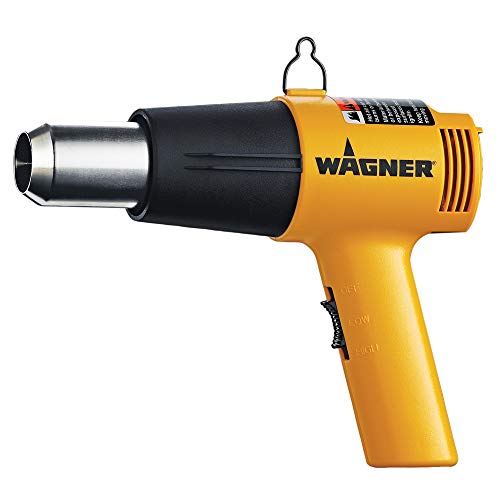
The Wagner HT1000 is a straightforward, no-frills heat gun designed to handle the most common household projects homeowners and DIYers encounter. With dual temperature settings at 750°F and 1000°F, it covers everything from softening paint and caulk to shrinking wrap and loosening rusted fasteners. The two fan speeds give you meaningful control over how much heat and airflow you're directing at your work, making it adaptable whether you're working on delicate trim or tackling stubborn adhesive.
What sets this tool apart is its practical design for real-world use. The integrated stand eliminates the need to hold the gun constantly, which matters when you're working with both hands on your project. The corrosion-resistant nozzle is engineered to withstand repeated heating cycles and exposure to moisture, so the tool holds up over time. The built-in hanging hook transforms storage from an afterthought into something genuinely convenient, and the compact profile means it won't dominate your toolbox.
Wagner's 50-plus years in the power tool industry shows in the attention to safety details. This model is ETL-listed and certified to UL and CSA standards, meaning it's been independently evaluated for electrical safety and performance reliability. Backed by U.S.-based customer support, you're not buying from a faceless manufacturer. For homeowners seeking a dependable, multi-purpose heat gun that handles standard renovation and repair tasks without unnecessary complexity, the HT1000 delivers solid value.
| Feature | Details |
|---|---|
| Brand | Wagner Spraytech |
| Model | HT1000 |
| Temperature Settings | 750°F and 1000°F |
| Fan Speeds | 2 adjustable speeds |
| Nozzle Material | Corrosion-resistant |
| Operation Mode | Hands-free with integrated stand |
| Storage | Integrated hanging hook |
| Safety Certification | ETL Listed (UL and CSA standards) |
| Primary Uses | Paint softening, caulking, adhesive removal, shrink wrap, plastic pipe bending, fastener loosening |
Getting Started: Plug the heat gun into a grounded outlet. Allow 30 seconds for the heating element to warm up before directing heat at your work surface. Always wear safety glasses and heat-resistant gloves.
Paint and Caulk Removal: Set the temperature to 750°F for gentle softening of paint and caulk. Hold the nozzle 6-8 inches from the surface and move it slowly back and forth. Use a scraper to remove softened material once it begins to bubble or peel.
Shrink Wrap and Plastic Bending: Use the 1000°F setting for shrink wrap applications. For bending plastic pipes, use the lower 750°F setting and keep the nozzle moving to avoid damage. Always test on scrap material first.
Loosening Fasteners: Apply heat from the 1000°F setting to rusted bolts and nuts for 30-60 seconds, then attempt removal with the appropriate wrench. The heat expands the metal and breaks corrosion bonds.
Hands-Free Operation: Place the heat gun on its integrated stand when you need both hands free. Ensure the nozzle points away from you and any flammable materials.
Personal Protection: Always wear safety glasses to protect against debris and heat. Use heat-resistant gloves rated for at least 300°F, and consider wearing long sleeves when working overhead or near your face.
Work Environment: Clear the work area of flammable materials, including paper, cardboard, gasoline, and propane. Ensure adequate ventilation when removing paint or other materials that may release fumes. Never point the heat gun at people, pets, or electrical components.
Electrical Safety: Use a grounded outlet and avoid wet conditions. Do not immerse the heat gun in water or use it in rain. Check the power cord for damage before each use.
Cooling and Storage: Allow the heat gun to cool for at least 30 minutes before storing. Never touch the nozzle immediately after use, as it remains extremely hot. Store in a dry location away from moisture and extreme temperatures.
Manufacturer Standards: This model is ETL-listed and certified to UL and CSA safety standards, meaning it meets rigorous independent safety evaluations. Always follow the manufacturer's instructions and keep the user manual accessible for reference.
Temperature Selection Strategy: Start with the 750°F setting for most paint and caulk removal tasks. Reserve the 1000°F setting for stubborn materials, shrink wrap, and heavy-duty applications. Switching between settings based on material response saves time and reduces risk of damage.
Fan Speed Control: Use the lower fan speed for delicate work where precision matters, such as removing paint from trim or working near glass. Use the higher fan speed when you need faster heat transfer, like loosening corroded fasteners or shrinking wrap quickly.
Nozzle Distance Matters: Hold the nozzle 6-8 inches from most surfaces. Closer proximity heats faster but risks scorching or damaging materials. Test on inconspicuous areas first, especially on wood or painted surfaces.
Scraper Technique: For paint removal, work in small sections. Heat until the paint begins to bubble or lift, then scrape immediately while the material is still pliable. Waiting too long allows the paint to reharden.
Leverage the Stand: The integrated stand is invaluable for tasks requiring both hands. Position it on a stable, non-flammable surface and angle the nozzle toward your work. This setup is especially useful for large-area paint removal or when you're working with a partner.

Pros
- Rapid heat-up time saves you time on every project without sacrificing control
- Dual-speed airflow lets you switch between precision work and heavy-duty applications instantly
- Four included nozzles cover most common tasks from SMD rework to vinyl wrapping
- Overheat protection and industrial-grade components mean years of reliable use
- Safety-focused design with retractable cover reduces burn risk in busy workshops
Cons
- No customer reviews available yet, so real-world durability feedback is limited
- The 1.5-second heat-up time is impressive but still requires brief warm-up before use begins
The COMTO SG-1004 heat gun delivers the power and precision that serious DIYers and professionals demand. With 1800W of heating power and a temperature range spanning 122°F to 1202°F, this tool handles everything from delicate shrink tubing on electronics to aggressive paint stripping and vinyl wrapping on vehicles. The rapid 1.5-second heat-up time means less waiting around and more time actually working on your projects.
What sets this heat gun apart is its thoughtful engineering for real workshop conditions. The dual-speed fan system gives you granular control, shifting from gentle 0-250 L/min airflow for precision work to a turbo 250-500 L/min setting for heavy-duty jobs. The four included nozzles cover most common applications, and the industrial-grade FR-4 fiberglass PCB is built to withstand extended use without degrading. The 5.9-foot cord is long enough for realistic workshop mobility without sacrificing durability.
Safety features show this wasn't designed by people who've never held a heat gun. The retractable heat-resistant cover prevents accidental burns, and the overheat protection system keeps the tool running safely even during extended sessions. Whether you're an engineer working on SMD components, an auto professional wrapping vehicles, or a DIYer tackling home improvement projects, this heat gun provides the reliability and versatility you need without unnecessary complexity.
| Specification | Details |
|---|---|
| Model | SG-1004 |
| Power | 1800W |
| Heat-Up Time | 1.5 seconds |
| Temperature Range | 122°F to 1202°F |
| Fan Speed I | 0-250 L/min |
| Fan Speed II | 250-500 L/min |
| PCB Material | FR-4 Fiberglass |
| Operating Life | 600+ hours stable use |
| Power Cord Length | 5.9 feet (1.8m) |
| Cord Type | Abrasion-resistant |
| Included Nozzles | 4 specialized attachments |
| Safety Features | Overheat protection, retractable heat-resistant cover |
Getting Started: Read the instruction manual before first use. Plug the heat gun into a grounded outlet and allow 1.5 seconds for it to reach operating temperature. Select your desired temperature using the adjustable control dial, ranging from 122°F for delicate work to 1202°F for heavy-duty applications.
Operating Tips: Use Fan Speed I (0-250 L/min) for precision work like SMD rework, resin curing, and detailed shrink tubing applications. Switch to Fan Speed II (250-500 L/min) for faster paint stripping, vinyl wrapping, and other heavy-duty tasks. Attach the appropriate nozzle for your specific application before heating begins.
Safe Operation: Keep the retractable heat-resistant cover in place during operation to prevent accidental burns. Never point the heat gun at people or animals. Maintain proper ventilation, especially when working with materials that may release fumes. Allow the tool to cool completely before storage, and always unplug when not in use.
Personal Protection: Wear heat-resistant gloves when working with materials being heated, and consider safety glasses to protect your eyes from airborne particles or debris. Long sleeves and closed-toe shoes provide additional protection in workshop environments.
Equipment Safety: The retractable heat-resistant cover is your first line of defense against accidental burns. Always engage it when the gun is in use. Never leave a powered heat gun unattended, and keep it away from flammable materials, solvents, and combustible surfaces. The overheat protection system activates automatically, but proper use prevents the need for it.
Workspace Precautions: Ensure adequate ventilation, especially when heating materials that may emit fumes or odors. Keep the 5.9-foot power cord clear of heat sources and sharp objects. Store the heat gun in a cool, dry location after it has completely cooled. Keep the tool away from water and moisture to maintain electrical safety.
Temperature Selection: Start at lower temperatures and gradually increase only if needed. This approach gives you better control and reduces the risk of damaging delicate materials. For shrink tubing and vinyl wrapping, the mid-range temperatures often deliver the best results without excessive heat exposure.
Nozzle Optimization: Match the nozzle to your task for maximum efficiency. Different nozzles concentrate or disperse heat differently, so experiment to find what works best for your specific application. Keep all four nozzles organized and accessible for quick changes between tasks.
Dual-Speed Fan Strategy: The lower fan speed gives you precision and control for intricate work, while the higher speed accelerates larger projects. Many professionals switch between speeds within a single project, using low speed for detailed areas and high speed for broader coverage, maximizing both quality and efficiency.

Pros
- Variable speed and temperature control eliminates need for multiple tools
- Lightweight and compact design makes it comfortable for detailed crafting work
- Quiet operation ideal for indoor hobby projects
- Includes useful accessories like shield and stand for added convenience
- UL certified construction provides reliable safety and durability
Cons
- No reviews available yet to assess real-world performance and durability across different applications
- May have limited heat output compared to full-size professional heat guns for heavy industrial tasks
The Chandler Tool mini heat gun addresses a common problem for crafters and DIYers: full-size heat guns are often too heavy and powerful for detailed work, while truly compact options lack versatility. This model splits the difference with dual temperature and speed settings that let you dial in exactly what you need, whether you're working with delicate epoxy resin details or tackling larger shrink-wrap projects. The lightweight, ergonomic design with insulated grip means you can work comfortably for extended periods without hand fatigue.
Beyond crafting, this heat gun proves surprisingly practical for home improvement and repair tasks. The variable settings work well for paint prep and scraping, vinyl wrap installation, electronics work, and soldering applications. The included shield and wire stand add safety and convenience, allowing hands-free operation when needed. The quiet operation is a genuine advantage if you're working in shared spaces or during evening hours.
As a UL certified tool from an established manufacturer, this heat gun prioritizes safety and reliability. The compact form factor makes it easy to store and transport, and the multi-purpose design means it won't sit unused in your toolbox. For hobbyists and DIYers who need a capable heat gun without the bulk and noise of professional-grade equipment, this Chandler Tool option delivers solid performance across a wide range of applications.
| Specification | Details |
|---|---|
| Brand | Chandler Tool |
| Model Type | Mini Dual Temperature Heat Gun |
| Temperature Settings | Dual temperature (low and high) |
| Speed Settings | Variable speed control |
| Weight | Lightweight and compact |
| Design Features | Ergonomic insulated grip, quiet operation |
| Included Accessories | Protective shield, wire stand |
| Certifications | UL certified |
| Primary Applications | Epoxy resin, embossing, shrink wrapping, vinyl wrap, candle making, sublimation, electronics, phone repair, paint prep |
| Color | Grey/Black |
Getting Started: Plug in your heat gun and allow it to warm up for 30 seconds. Start with the low temperature and low speed settings for delicate work like resin bubble removal or embossing powder application.
For Detailed Crafting: Keep the nozzle 2-3 inches from your work surface when using low settings. Use slow, steady movements to avoid overheating delicate materials. The low speed setting is ideal for epoxy resin work, jewelry making, and candle applications where precision matters.
For Heavy-Duty Tasks: Switch to high temperature and high speed for shrink wrapping, vinyl wrap application, or paint removal. Maintain consistent distance and motion to ensure even heat distribution. Use the included stand for hands-free operation when working on larger projects.
Safety Practice: Always point the nozzle away from yourself and others. Use the protective shield when working with materials that might splatter or pop. Allow the tool to cool for several minutes before storing, and never touch the nozzle immediately after use.
Before Use: Inspect the cord for damage and ensure the tool is UL certified. Keep the heat gun away from water, moisture, and flammable materials. Never use near gasoline, propane, or other volatile substances.
During Operation: Always point the nozzle away from your face, hands, and others. Wear safety glasses when working with materials that might splatter or pop. Use the included protective shield as a barrier between the heat source and your work area. Keep long hair and loose clothing away from the intake vents.
After Use: Unplug the tool and allow it to cool completely before storing. Never touch the nozzle or shield immediately after use, as they retain heat for several minutes. Store in a dry location away from children and pets. Do not submerge in water or use excessive moisture near the electrical components.
Application-Specific Safety: When working with epoxy or resin, ensure good ventilation. For electronics repair, use low temperature settings to avoid component damage. When shrink wrapping, maintain proper distance to prevent material ignition. Always read material-specific safety guidelines before heating any substance.
Resin and Epoxy Work: Use low temperature and low speed settings to gently remove bubbles from resin pours. Work in circular motions about 3 inches from the surface, moving quickly to avoid overheating the resin. For best results, apply heat immediately after pouring while the resin is still fluid.
Embossing and Powder Work: The low speed setting is perfect for embossing powder application. Hold the gun at a slight angle and use short bursts rather than continuous heat. This gives you better control and prevents powder from scattering. Keep the nozzle moving to distribute heat evenly.
Shrink Wrap and Vinyl: Switch to high settings for faster results with shrink wrap and vinyl applications. Work in sections, overlapping your heat passes slightly for even coverage. Test on scrap material first to understand how your specific vinyl or shrink wrap responds to heat.
Paint and Surface Work: For paint removal and prep, use high temperature settings with the shield in place to protect surrounding areas. Work at a slight angle to direct loosened paint away from you. The dual speed control lets you adjust intensity based on the paint type and surface.
Storage and Maintenance: Store the heat gun upright or horizontally in a cool, dry location. The included stand can double as storage. Keep the intake vents clear of dust and debris by gently wiping with a dry cloth periodically. Never use compressed air on the vents, as this can damage internal components.
Heat Gun Buying Guide
Choosing the right heat gun comes down to understanding a handful of core specifications and matching them to how you actually plan to use the tool. A crafter who embosses card stock twice a week has very different needs from a contractor stripping paint on Victorian-era trim. Use the sections below to narrow your options before you buy.
Wattage and Heating Power
Wattage is the single most telling number on a heat gun spec sheet. Most consumer-grade models fall between 1,000 and 1,800 watts. A higher wattage means the element reaches working temperature faster and recovers quickly between passes. For tasks like stripping paint, bending PVC pipes, or thawing frozen plumbing, you want at least 1,500 watts. For lighter crafting work such as embossing, resin de-bubbling, or heat-shrink tubing on electronics, a compact 350-watt mini gun is gentler and far more maneuverable. Mid-range 1,800-watt models like the SEEKONE 1800W variants strike a balance that covers both heavy and light tasks. Pairing a powerful heat gun with the right cordless drills and other power tools can make a full renovation project significantly smoother from start to finish.
Temperature Range and Control
Temperature range determines how versatile a heat gun really is. Entry-level models like the Wagner Spraytech HT1000 offer two fixed settings, typically around 750°F and 1,000°F, which covers most common household jobs reliably. Variable-temperature models, such as the SEEKONE 1800W with a 122°F to 1,202°F range or the DEWALT D26960K with its LCD display and 50°F increment adjustments, give you precise control for sensitive materials. If you frequently work with plastics, vinyl wrap, or delicate electronics, variable control is worth the investment. Fixed dual-setting guns are perfectly capable for paint stripping, caulk removal, and general home maintenance, and they tend to be simpler to operate.
Corded vs. Cordless
Corded heat guns deliver consistent power for as long as you need it, making them the go-to for extended paint-stripping sessions or workshop use. Cordless models like the DEWALT 20V MAX Heat Gun (DCE530B) trade unlimited runtime for the freedom to move around a jobsite, inside a vehicle, or in spaces where outlets aren’t nearby. The tradeoff is real: even the best cordless heat guns typically offer around 40 minutes of continuous run time per charge, which may require battery swaps on big projects. If you already own tools from a compatible battery platform, a cordless heat gun becomes a much more practical addition. For most homeowners and serious DIYers, a corded model covers 90 percent of situations. Cordless becomes essential for professionals who value mobility.
Nozzle Attachments
The nozzles bundled with a heat gun dramatically expand what it can do. Most kits include four types: a flat concentrator nozzle for directing heat along a surface without scorching surrounding material, a round concentrator for focused point work, a reflector nozzle that wraps heat around pipes for even shrinking, and a fish-tail nozzle for wide-area coverage. Premium kits like the SEEKONE 1800W with Carry Case include all four plus organized storage. If a heat gun ships with only a bare nozzle or none at all, factor in the cost of buying attachments separately. Nozzle compatibility varies by brand, so check before purchasing add-ons.
Safety Features
Overheat protection is a non-negotiable feature. It automatically cuts power to the heating element if internal temperatures climb too high, preventing damage to the tool and reducing fire risk. Look for models that clearly list overheat or overload protection in their specs. The SEEKONE Mini Heat Gun, SEEKONE 1800W models, and BATAVIA Heat Gun all include this feature. A built-in kickstand or stand-flat base is a smaller but genuinely useful safety addition: it lets you set the gun down safely while the barrel cools, rather than balancing it on its side. Cool-down fan modes, which continue airflow after you release the trigger, also extend element life significantly.
Ergonomics and Weight
Hand fatigue matters on longer jobs. Full-size 1,800-watt heat guns typically weigh between two and three pounds, which is comfortable for short tasks but tiring over an hour of continuous use. Mini models like the SEEKONE Mini Heat Gun at 350 watts weigh noticeably less and are far easier to maneuver in tight spots or for detailed craft work. Grip design, cord length, and whether the trigger lock allows hands-free operation all affect comfort. Look for a cord of at least five feet, since working near outlets while directing heat upward or at an odd angle is awkward with a short lead. The SEEKONE 1800W Hot Air Gun Kit ships with a 5.2-foot cord, and the SEEKONE Mini comes with a 4.9-foot cable, both of which offer practical reach for most workspaces. If you work in a dedicated shop space, a heavy-duty workbench with a power strip positioned at the back keeps cords managed and your workflow clean.
Best Uses by Task
Different tasks call for different tool profiles. Here is a quick breakdown to help you match the right heat gun to your most common jobs:
- Paint stripping and caulk removal: Choose a high-wattage corded model with at least 1,000°F maximum output and a flat concentrator nozzle. The PORTER-CABLE PC1500HG at 1,500 watts and the DEWALT D26960K are excellent here.
- Shrink wrapping and PVC pipe bending: Any 1,800-watt variable-temperature gun works well. The reflector nozzle is essential for even heat distribution around pipes or tubing.
- Crafts, embossing, and resin work: Opt for a mini or low-wattage model with a gentle airflow setting. The SEEKONE Mini Heat Gun and the mini dual-temp hot air gun (B0D6BHVRJC) are purpose-built for this use case.
- Vinyl wrap and automotive work: Variable temperature control and a fish-tail nozzle give you the wide, even heat needed for conforming vinyl to curved surfaces without burning it.
- Electrical and electronics repair: A mini heat gun with precise low-temperature control protects sensitive components while shrinking tubing cleanly.
- Loosening rusted bolts and frozen hardware: Concentrated high heat does the job quickly. The Wagner HT1000 at its top 1,000°F setting handles this well for occasional household use.
Heat Gun vs. Other Tools
It is worth clarifying where a heat gun fits in your toolkit relative to similar tools. A standard hair dryer tops out around 140°F, far too cool for softening paint or shrinking tubing. A propane torch delivers intense, open-flame heat ideal for soldering copper pipe, but it is impractical and risky for paint removal near wood or for crafting. A heat gun sits between those two tools, offering controlled, flameless heat in a range that handles the vast majority of home improvement and craft tasks safely. If you are building out a complete home workshop, a heat gun pairs naturally alongside angle grinders for metal prep work and reciprocating saws for demolition tasks where adhesives or paint-softened materials need to be cleared first.
Budget vs. Premium Models
The heat gun market spans a wide price range. Budget-friendly options like the SEEKONE Mini Heat Gun and the BATAVIA dual-protection model deliver genuine value for occasional craft use or light home projects without requiring a significant investment. Mid-range models from SEEKONE and PORTER-CABLE add variable temperature control, stronger build quality, and more complete accessory kits. At the premium end, the DEWALT D26960K brings an LCD display, extremely precise temperature adjustment, a protective hard case, and the build durability expected from a professional-grade tool. For most homeowners, a mid-range 1,800-watt variable-temperature model provides the best balance of capability and cost. If you use the tool professionally or need pinpoint accuracy for specialized tasks, the premium investment is justified. Similarly, if you’re investing in a full suite of impact drivers and other professional-grade power tools, spending more on a heat gun that matches that quality tier makes sense.
Why Trust HomeThru
HomeThru is an independent editorial platform. We do not accept products for free from manufacturers, and we have no financial relationship with the brands featured in this guide. Our recommendations are based on deep independent research: we analyze product specifications, study verified buyer feedback across thousands of reviews, cross-reference expert opinions, and evaluate how each product performs against the specific demands of the tasks it claims to handle. For this guide, we evaluated twelve heat guns across criteria including wattage, temperature range, control type, included accessories, safety features, ergonomics, cord length, and overall value for money. We updated our analysis to reflect current market availability and user feedback. Our team also covers a broad range of home tools and improvement categories, from random orbital sanders for surface prep to jigsaws for precision cuts, so we bring cross-category context to how these tools fit into real projects. We are not a retailer, do not process orders, and are not affiliated with any seller or warranty program.
Final Thoughts
After thoroughly evaluating each model in this roundup, a few clear winners emerge depending on your priorities. Here are our top picks by category:
- Best Overall: SEEKONE Heat Gun 1800W (Variable Temperature) delivers an industry-leading temperature range, four nozzle attachments, overheat protection, and an impressively long power cord, all at a price point that makes it accessible to most homeowners and serious DIYers.
- Best Professional-Grade Pick: DEWALT D26960K Heat Gun with LCD Display sets the standard for precision with its digital temperature readout, 50°F increment adjustments, and rugged construction that holds up to daily professional use.
- Best Budget Pick: SEEKONE Heat Gun 1800W Dual-Temperature offers a surprising amount of power and a full four-nozzle kit at a budget-friendly price, making it the smartest entry point for anyone new to heat guns.
- Best for Crafts and Detail Work: SEEKONE Mini Heat Gun 350W is lightweight, gentle enough for embossing and resin work, and small enough to use with one hand for extended crafting sessions without fatigue.
- Best Cordless Option: DEWALT 20V MAX Cordless Heat Gun (DCE530B) is the tool of choice for professionals and advanced DIYers who need full mobility on jobsites without sacrificing heat output.
Whichever model you choose, a heat gun is a genuinely versatile addition to any home workshop or craft setup. Pair it with proper safety habits, the right nozzle for your task, and a stable workspace such as a well-organized garage shelving system to keep your accessories and materials tidy, and you will get years of reliable performance. If you are building out your power tool collection further, our guides to cordless circular saws, hammer drills, and rotary hammers are solid next reads.
Frequently Asked Questions
Can I use a heat gun to remove vinyl flooring or wallpaper?
Yes, and it works very well for both tasks. For vinyl flooring, apply heat in small sections to soften the adhesive underneath, then use a floor scraper or pry bar to lift the material cleanly. For wallpaper, direct heat at a section for 10 to 15 seconds to loosen the paste, then peel while the material is still warm. Work in small areas so the adhesive does not re-harden before you remove it.
What safety precautions should I take when using a heat gun?
Keep the nozzle moving to avoid scorching a single spot, especially on wood or plastic. Never point a running heat gun at a person, pet, or flammable material. Allow the gun to cool completely before storing it, and use the cool-down mode if your model offers one. Always work in a ventilated area, particularly when stripping paint, since older paint may contain lead and should be handled with appropriate respiratory protection. Wear heat-resistant gloves when working near the nozzle. Keep a clear workspace free of sawdust or shavings, since a stray blast of hot air across debris is a fire risk.
Is a mini heat gun powerful enough for shrink tubing and vinyl wrap?
For standard electrical heat-shrink tubing and small-scale vinyl wrap work, a 350-watt mini heat gun is completely sufficient. Its lower maximum temperature actually makes it safer for these tasks, since overheating shrink tubing can split it and excess heat on vinyl wrap can cause bubbling or discoloration. For large automotive vinyl wraps or heavy-wall industrial tubing, step up to a full 1,800-watt variable-temperature model for faster coverage and better control over wide surfaces.
How do I choose between fixed dual settings and variable temperature control?
Fixed dual-setting heat guns like the Wagner HT1000 are simpler, more affordable, and perfectly adequate for most everyday tasks: stripping paint, thawing pipes, softening caulk, and loosening rusted fasteners. Variable temperature control becomes genuinely important when you work with heat-sensitive materials like specific plastics, delicate electronics, or stamping powders for crafts, where the difference of 50°F to 100°F can mean the difference between a clean result and a ruined workpiece. If your projects are diverse, variable control gives you flexibility that fixed settings cannot replicate.
Can a heat gun be used for soldering or working with metal?
A heat gun can handle light metal work such as loosening rusted bolts, bending thin aluminum flashing, or applying heat-activated epoxy to metal surfaces. However, it cannot replace a soldering iron for precision circuit board work, and it does not reach the temperatures needed for brazing or welding. For stripping paint off metal surfaces, a heat gun is excellent and far safer than open flame. If you need to combine heat gun work with grinding or surface preparation on metal, check out our coverage of angle grinders for complementary tool guidance.

Write Your Review
No reviews yet. Be the first to share your experience!