

A smart thermostat is one of the highest-return upgrades you can make to any home. By learning your schedule, responding to your voice, and automatically adjusting to save energy when you are away, the best smart thermostats pay for themselves faster than almost any other connected device. Whether you rent an apartment, own a sprawling two-story house, or manage a vacation property remotely, there is a Wi-Fi thermostat on this list that fits your setup and your budget. Our editorial team independently researched and evaluated models from ecobee, Google Nest, and Honeywell Home to bring you this curated shortlist.
The options below cover a wide price range, from budget-friendly entry-level picks to full-featured premium units with built-in air quality monitoring and voice assistants. Keep reading through our buying guide to understand which features actually matter for your home before you spend a dollar.
Top Smart Thermostats for 2026
Pros
- Exceptional compatibility covers nearly all residential HVAC systems with included installation hardware
- Radar occupancy detection and learning algorithms deliver genuine energy savings without sacrificing comfort
- Seamless integration with Siri, Alexa, and Google Assistant for voice control and automation
- Expandable design allows you to add SmartSensors for precise temperature control in specific rooms
- Energy Star certified and hardwired design ensures reliable, long-term operation
Cons
- Requires C-wire or Power Extender Kit installation, which may complicate setup for users unfamiliar with HVAC wiring
- No reviews currently available to validate real-world performance and long-term reliability claims
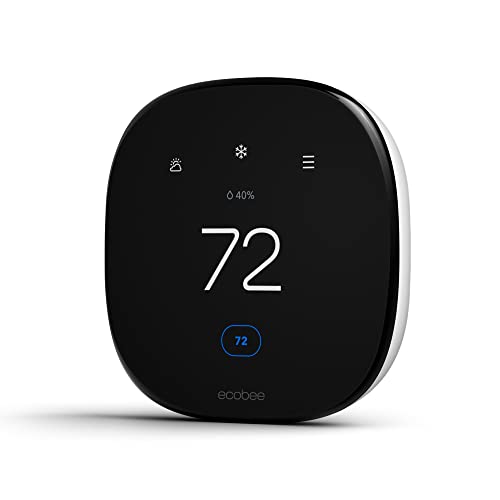
The ecobee Smart Thermostat Enhanced stands out as a comprehensive smart home climate solution designed for homeowners who want both comfort and cost savings. Its built-in radar occupancy sensor actively learns your daily patterns and automatically preheats or precools your home before you arrive, ensuring you walk into the perfect temperature every time. The thermostat's adaptive learning engine adjusts based on your temperature preferences, humidity levels, and schedule, working quietly in the background to optimize your HVAC system's efficiency without requiring constant manual adjustments.
What makes this thermostat particularly practical is its broad compatibility with 90% of residential HVAC systems, including gas furnaces, oil systems, electric heat, heat pumps, and boilers. The included Power Extender Kit removes a major installation barrier for homes without a C-wire, making DIY installation feasible for most homeowners. Once installed, you gain complete remote control through the ecobee app, Apple Watch, or your preferred voice assistant, allowing you to manage your home's climate from work, vacation, or anywhere with internet access.
The potential to expand your system with ecobee SmartSensors elevates this thermostat beyond basic programming. These sensors detect which rooms are occupied and adjust temperatures accordingly, addressing a common frustration with standard thermostats that treat your entire home as a single zone. Combined with the Energy Star certification and the promise of up to 26% annual savings on heating and cooling costs, the ecobee Smart Thermostat Enhanced delivers meaningful value for homeowners serious about energy efficiency and smart home integration.
| Specification | Details |
|---|---|
| Brand | ecobee |
| Model | Smart Thermostat Enhanced |
| Color | Black |
| Dimensions | 0.94 x 4.09 x 4.09 inches |
| Weight | 1.1 pounds |
| Installation Type | Hardwired (24 VAC) |
| Compatibility | 90% of HVAC systems (gas, oil, electric, heat pump, boiler) |
| Included Accessories | Power Extender Kit, Trim Kit |
| Smart Home Integration | Works with Siri, Alexa, Google Assistant |
| Control Methods | Smartphone app, tablet, Apple Watch, voice commands |
| Certification | Energy Star Certified |
| Expandable | Compatible with ecobee SmartSensors for multi-room control |
Before You Start: Turn off power to your HVAC system at the breaker. Check your current thermostat wiring and use ecobee's online Compatibility Checker to confirm your system works with this model. Take a photo of your existing thermostat's wiring before removal.
Installation Steps: Remove your old thermostat and label each wire according to its terminal (heat, cool, fan, power, common). If you don't have a C-wire, the included Power Extender Kit connects to your HVAC system to provide the necessary power. Mount the ecobee trim ring and faceplate using the provided hardware, then connect the wires to the corresponding terminals on the ecobee unit. Restore power and follow the in-app setup wizard to connect to your WiFi and configure your preferences.
When to Call a Professional: If your HVAC system uses unusual wiring configurations, if you're uncomfortable working with electrical connections, or if the Power Extender Kit installation seems unclear, hire a licensed HVAC technician. Professional installation ensures your system operates safely and your warranty remains valid.
Maximize Energy Savings: Enable the 'Away' mode when you leave for extended periods so the thermostat doesn't heat or cool an empty home. The radar occupancy sensor will automatically resume normal operation when you return, but manually setting away schedules for regular work hours amplifies savings.
Optimize Comfort with SmartSensors: If you have rooms you use more than others, add ecobee SmartSensors in those spaces. The thermostat will prioritize those rooms' temperatures, eliminating hot and cold spots throughout your home.
Fine-Tune Humidity Control: The ecobee learns to adjust temperature based on humidity levels. Let it run for at least two weeks before making manual adjustments so it can establish accurate baseline preferences for your home and climate.
Use Automation Rules: Create custom automation rules in the app to adjust temperatures based on time of day, outdoor weather, or occupancy patterns. This reduces the thermostat's learning curve and immediately captures energy savings aligned with your lifestyle.
Is This Thermostat Right for You? Choose the ecobee Smart Thermostat Enhanced if you want a programmable thermostat that learns your habits, integrates with your smart home ecosystem, and actively works to reduce your energy bills. It's ideal for homeowners with compatible HVAC systems who value remote control and multi-room temperature management.
Key Considerations: Verify compatibility using ecobee's Compatibility Checker before purchasing. Confirm your HVAC system has a C-wire or be prepared to use the included Power Extender Kit. If you're not comfortable with DIY thermostat installation, budget for professional installation. Consider whether you'll eventually add SmartSensors for zone control.
What You Get: The thermostat itself, Power Extender Kit, Trim Kit, and all necessary mounting hardware for installation. You'll also gain access to the ecobee mobile app, voice assistant integration, and the ability to expand your system later with optional SmartSensors.

Pros
- All-in-one solution combining thermostat, room sensor, and air quality monitor eliminates need for separate purchases
- Substantial energy savings potential backed by ENERGY STAR certification makes it a smart long-term investment
- Included smart sensor and Power Extender Kit reduce installation complexity and additional costs
- Built-in voice assistant and speaker add convenient smart home control without extra hardware
- Wide system compatibility (95%) means it works with most existing HVAC setups
Cons
- Premium price point is significantly higher than basic programmable thermostats, requiring budget consideration
- Requires compatible smart home ecosystem (Apple Home hub for Siri, or Alexa/Google device) to unlock full voice control features
The ecobee Smart Thermostat Premium stands out as a comprehensive climate control solution that goes beyond temperature management. With its included smart sensor, the system can monitor comfort levels in different rooms and automatically adjust your HVAC system accordingly, ensuring consistent temperatures throughout your home. The built-in air quality monitor adds genuine value by tracking indoor air conditions and providing actionable insights, plus helpful reminders when it's time to replace your furnace filter.
Installation is designed with DIYers in mind. The included Power Extender Kit eliminates a major barrier for homeowners without a C-wire, and the compatibility checker on ecobee's support page helps verify your system will work before you purchase. The large, vibrant touchscreen display with cinematic interface makes daily interaction intuitive, while the premium materials and metal siding give it a polished appearance that complements modern home decor.
Energy efficiency is a genuine benefit here, with the potential to save up to 26% annually on heating and cooling costs compared to a constant 72-degree hold. The built-in voice assistant and speaker (your choice of Siri or Alexa) provide convenient control options, and integration with ecobee's smart doorbell camera adds extra functionality. This thermostat appeals to homeowners who want advanced features, energy savings, and improved indoor air quality in a single device.
| Specification | Details |
|---|---|
| Brand | ecobee |
| Color | Black |
| Dimensions | 4.09 x 4.09 x 2.9 inches |
| Weight | 1.32 pounds |
| Compatible Systems | Furnaces, ACs (2H/2C), heat pumps (2H/2C + 2 stage AUX), boilers, PTACs, fan coil units |
| Voltage | 24VAC HVAC systems |
| System Compatibility | 95% of HVAC systems |
| Included Accessories | Smart Sensor, Power Extender Kit, Trim Kit |
| Smart Home Integration | Works with Siri, Alexa, Google Assistant |
| Special Features | Air quality monitor, occupancy-sensing radar, built-in speaker |
| Energy Rating | ENERGY STAR certified |
Before You Start: Use ecobee's compatibility checker at ecobee.com/compatibility/thermostat to verify your HVAC system works with this thermostat. Take a photo of your current thermostat's wiring before removal.
Key Installation Points: The Power Extender Kit included in the box is essential if your home doesn't have a C-wire, making installation possible in most homes. The Trim Kit helps achieve a clean, finished look around the wall opening. If you're not comfortable with electrical work, hiring a professional HVAC technician is recommended, though many homeowners successfully complete DIY installation.
After Installation: Download the ecobee app to complete setup, add your smart sensor to a room where you want temperature monitoring, and connect to your preferred voice assistant (Siri requires an Apple Home Hub). The thermostat will guide you through calibration and optimization steps.
Maximize Energy Savings: Use the smart sensor in your primary living space during the day and bedroom at night. This ensures your HVAC system prioritizes comfort where you actually are, reducing unnecessary heating and cooling of unused rooms.
Air Quality Optimization: Check the air quality monitor regularly and act on its filter-change reminders promptly. A clean filter improves both air quality and HVAC efficiency, directly impacting your energy savings.
Smart Home Integration: If you have multiple ecobee devices (like the smart doorbell camera), they work together seamlessly. The thermostat can trigger actions based on your doorbell activity, such as adjusting temperature when you arrive home.
Voice Control Setup: Choose your preferred voice assistant carefully. Alexa integration is typically the most straightforward, while Siri requires an Apple Home Hub. Google Assistant works well if you have Google Home devices throughout your home.
Is This Right for You? The ecobee Premium is ideal if you want a single device that handles temperature control, room-by-room comfort, and air quality monitoring. It's worth the premium price if you value energy efficiency, smart home integration, and indoor air quality insights.
Budget Considerations: This is a high-end thermostat. If you're looking for basic programmable functionality without smart features, a standard thermostat will cost significantly less. However, the energy savings and included smart sensor justify the investment for most homeowners over 3-5 years.
Technical Requirements: You'll need a compatible HVAC system (95% of homes qualify), a smartphone for app control, and ideally a smart home ecosystem (Alexa, Google Home, or Apple Home) to maximize voice control benefits. The Power Extender Kit solves the C-wire issue for most installations.
Installation Complexity: If your home has a C-wire, installation is straightforward for DIYers with basic electrical knowledge. Without a C-wire, the included Power Extender Kit makes it possible but slightly more complex. Professional installation is always an option if you prefer.

Pros
- Broad HVAC compatibility covers most residential heating and cooling systems
- Energy Star certified with documented savings potential and schedule automation
- Intuitive touchscreen interface combined with robust smartphone app control
- No C-Wire requirement makes DIY installation feasible for most homeowners
- Smart home ecosystem flexibility with support for all major voice assistants
Cons
- No built-in room sensors included; SmartSensor 2-pack requires additional purchase for multi-room monitoring
- Power Extender Kit needed for homes without C-Wire, adding to total installation cost
The ecobee Smart Thermostat Essential positions itself as an accessible entry point into smart home climate control, and our research confirms it delivers on core functionality. The device combines a responsive color touchscreen with reliable app-based control, allowing homeowners to adjust temperatures on-site or remotely. Energy savings claims of up to 23% annually are supported by the thermostat's intelligent scheduling, which adapts to your presence patterns and can optimize heating and cooling cycles during peak-rate hours using the built-in time-of-use feature.
Installation is genuinely DIY-friendly for most homeowners, with compatibility across 85% of residential HVAC systems including gas furnaces, heat pumps, boilers, and dual-fuel setups. The absence of a C-Wire requirement is a significant advantage, though homes without existing C-Wire infrastructure will need the Power Extender Kit (sold separately) to function properly. The thermostat integrates seamlessly with Apple HomeKit, Google Assistant, and Alexa, making it a practical choice if you're already invested in any of these ecosystems.
One notable limitation is that temperature sensing is limited to the thermostat's location; monitoring multiple rooms requires purchasing the SmartSensor 2-pack separately. The built-in eco+ features like humidity detection and schedule assistant provide value beyond basic temperature control, and free software updates ensure the device remains functional and secure over time. For homeowners prioritizing energy efficiency and multi-ecosystem compatibility without premium pricing, this thermostat represents solid value.
| Brand | ecobee |
| Model | Smart Thermostat Essential |
| Color | White |
| Dimensions | 3.62 x 3.62 x 0.91 inches |
| Weight | 0.2 pounds |
| Display | Color touchscreen |
| Compatibility | 85% of HVAC systems; 24 VAC equipment including gas, oil, electric, dual fuel, heat pumps, boilers |
| Smart Home Integration | Apple HomeKit, Google Assistant, Amazon Alexa |
| Control Methods | Touchscreen, mobile app, voice commands |
| Energy Certification | ENERGY STAR certified |
| Installation | DIY-friendly; no C-Wire required (Power Extender Kit available separately) |
| Expandability | Compatible with SmartSensor 2-pack (sold separately) |
Initial Setup: Turn off power to your existing thermostat at the breaker. Remove the old thermostat and note your wire connections. The ecobee app provides step-by-step installation guidance with wire identification tools. Connect wires to corresponding terminals on the ecobee unit, power it on, and follow the on-screen setup wizard to connect to your WiFi network and smart home ecosystem.
Temperature Control: Adjust temperatures directly using the color touchscreen or through the ecobee mobile app from anywhere. Create custom schedules that automatically adjust temperatures based on your daily routine, occupancy patterns, and time-of-use rates if your utility offers them.
Remote Monitoring: Use the app to track real-time energy consumption, receive notifications when your system runs, and view historical usage patterns. Enable geofencing to automatically adjust temperatures when you leave or return home, maximizing comfort and efficiency without manual adjustments.
Voice Control: Once connected to Alexa, Google Assistant, or Apple HomeKit, use voice commands to ask for current temperature, adjust setpoints, or activate specific schedules. Integration is automatic after initial pairing through your smart home app.
Is This Thermostat Right for You? The ecobee Smart Thermostat Essential is ideal if you want energy savings and smart home integration at a mid-range price point. It works best in homes with standard HVAC systems and existing WiFi coverage. If your home lacks a C-Wire, budget an additional cost for the Power Extender Kit.
Compatibility Check: Before purchasing, verify your HVAC system compatibility using ecobee's online compatibility checker on their support page. Check whether your system is gas, electric, heat pump, or dual-fuel, and confirm your thermostat's current voltage (should be 24 VAC). If you're uncertain about wiring, consider having a professional verify compatibility before installation.
Additional Considerations: If you need temperature monitoring in multiple rooms, plan to purchase the SmartSensor 2-pack separately. Confirm your home has adequate WiFi signal near the thermostat location for reliable app connectivity. If you're heavily invested in one smart home ecosystem (Apple, Google, or Amazon), verify the ecobee app integrates properly before buying.
Installation Options: Most homeowners can handle DIY installation following the app's guided process. However, if your home lacks a C-Wire or you're uncomfortable working with electrical connections, professional installation is recommended. Budget accordingly if hiring an HVAC technician.
Maximize Energy Savings: Use the time-of-use feature if your utility company offers variable rates. Set the thermostat to precool or preheat during off-peak hours when electricity is cheaper, reducing runtime during expensive peak hours. Enable geofencing so the thermostat automatically switches to away mode when all household members leave, preventing unnecessary conditioning of an empty home.
Optimize Scheduling: Create separate schedules for weekdays and weekends to match actual occupancy patterns. The schedule assistant learns your habits, but manual adjustments ensure the thermostat reflects your true comfort preferences. Avoid setting the same temperature for all hours; gradual adjustments consume less energy than large setpoint changes.
Monitor Humidity: Use the built-in humidity detection to maintain comfort year-round. During winter, maintain 30-50% humidity to prevent dry skin and static electricity. In summer, keep humidity below 60% to reduce cooling load and prevent mold growth. The thermostat displays current humidity on its touchscreen.
Smart Home Integration: Create automation routines that adjust temperature based on time of day or occupancy. For example, set Alexa or Google Home routines to lower temperature at night and raise it before you wake. This layered automation reduces manual adjustments and maximizes both comfort and efficiency.

Pros
- No C wire required for most home systems, simplifying installation
- Intelligent learning adjusts comfort settings based on your habits and preferences
- Proactive maintenance alerts help prevent costly HVAC repairs
- Seamless integration with Google Home ecosystem and compatible smart home platforms
- Sleek, compact design fits most wall spaces without looking bulky
Cons
- Heating-only, cooling-only, zone-controlled, and heat pump systems may require a C wire or compatible power accessory
- No built-in lock feature, so physical access to the thermostat cannot be restricted
The Google Nest Thermostat brings smart climate control to homes with an intuitive, energy-focused design. Its standout feature is the ability to automatically reduce heating or cooling when your home is empty, paired with a Savings Finder that continuously suggests schedule optimizations. For homeowners serious about reducing utility costs, this thermostat delivers real value by learning your patterns and adapting without constant manual adjustments.
Remote control is seamless through the Google Home app, allowing you to adjust temperature from anywhere on your phone, laptop, or tablet. The thermostat also integrates with Google Assistant, Alexa, and Matter-certified voice assistants, giving you flexibility in how you control your home. HVAC monitoring is a practical addition, sending alerts when something seems amiss with your heating or cooling system, which can help catch problems early before they become expensive repairs.
Installation is straightforward for most homes since the thermostat operates without a C wire in typical systems. However, certain configurations like heat pump or zone-controlled systems may require additional power accessories. The Snow color option offers a clean aesthetic that blends into most modern home interiors. Overall, this is a solid choice for homeowners wanting energy savings, remote access, and smart home ecosystem compatibility in one device.
| Specification | Details |
|---|---|
| Brand | |
| Model | Nest Thermostat |
| Color | Snow |
| Diameter | 3.31 inches |
| Dimensions | 3.31 x 3.31 x 1.07 inches |
| Weight | 0.2 pounds |
| Connectivity | Wi-Fi |
| Power Requirements | Works without C wire in most homes; C wire or compatible power accessory required for some systems |
| Certification | ENERGY STAR Certified |
| Voice Control Compatible | Google Assistant, Alexa, Matter-certified assistants |
| Lock Feature | No |
Initial Setup: Turn off power at your breaker, remove your old thermostat, and take a photo of the wiring for reference. Install the Nest Thermostat according to the included instructions, ensuring all wires are properly connected. Power the system back on and follow the in-app setup wizard to connect to Wi-Fi and configure your HVAC system type.
Daily Operation: Use the Google Home app on your smartphone to set schedules, adjust temperature remotely, and monitor energy usage. The thermostat learns your routine automatically, so it begins making adjustments based on when you typically leave and return home. Access Savings Finder recommendations in the app to identify additional ways to optimize your schedule.
Voice Control: Simply say 'Hey Google, set the temperature to [desired degree]' or use compatible Alexa devices with the same command. Check that your smart speaker is connected to the same Wi-Fi network as your thermostat for reliable voice commands. Review HVAC alerts and maintenance reminders regularly through the Google Home app to stay on top of system health.
Maximize Energy Savings: Enable Nest Renew if your energy provider supports it to automatically shift usage to cleaner or cheaper energy times. Review the Savings Finder suggestions weekly and adjust your schedule based on seasonal changes in daylight and outdoor temperature patterns. Combine the thermostat's learning feature with consistent daily routines for the best automatic adjustments.
Maintenance and Alerts: Pay attention to HVAC system alerts in the Google Home app, as early detection of issues can prevent costly repairs. Schedule annual HVAC maintenance before heating and cooling seasons begin. Keep the thermostat away from direct sunlight, heat sources, and drafty areas to ensure accurate temperature readings.
Smart Home Integration: Link your Nest Thermostat with other Google Home devices and routines to create automated comfort scenes (e.g., 'Good Night' lowers temperature automatically). If using multiple voice assistants, test voice commands on each platform to confirm compatibility. Use the app's remote access feature to adjust temperature before arriving home in extreme weather for added comfort.
Who Should Buy This: The Google Nest Thermostat is ideal for homeowners with standard heating and cooling systems who want energy savings without complexity. It's perfect if you already use Google Home or Alexa and want seamless smart home integration. Budget-conscious homeowners will appreciate the ENERGY STAR certification and Savings Finder feature that help reduce monthly utility bills.
Before You Buy: Use Google's online Nest Compatibility Checker on their support page to verify your HVAC system works with this thermostat. Take note of your current thermostat's wiring setup; if you have a heating-only, cooling-only, zone-controlled, or heat pump system, confirm whether you'll need a C wire or compatible power accessory. Ensure you have a stable Wi-Fi connection in your home, as the thermostat relies on it for remote access and voice control features.
Installation Considerations: Most homeowners with standard systems can install this thermostat themselves by following the included instructions. If your system requires a C wire and you don't have one, budget for a qualified HVAC technician to install a compatible power accessory. The compact Snow finish blends seamlessly into modern homes, but verify your wall space accommodates the 3.31-inch diameter before purchasing.
Pros
- Smart home integration works seamlessly with Alexa, Google Home, and Honeywell's mobile app for convenient remote access
- Energy Star certification and monthly energy tracking help identify savings opportunities and reduce heating and cooling costs
- Flexible 7-day programming accommodates shift work, variable schedules, and demand response programs
- Intuitive touchscreen interface makes programming and daily adjustments quick and straightforward
- Potential utility rebates and demand response rewards offset initial purchase cost
Cons
- Requires a C-wire connection, and homes without one need a separate power adapter, adding installation complexity and cost
- Not compatible with electric baseboard heating systems or heating-only oil furnaces without a C-wire, limiting use in some homes
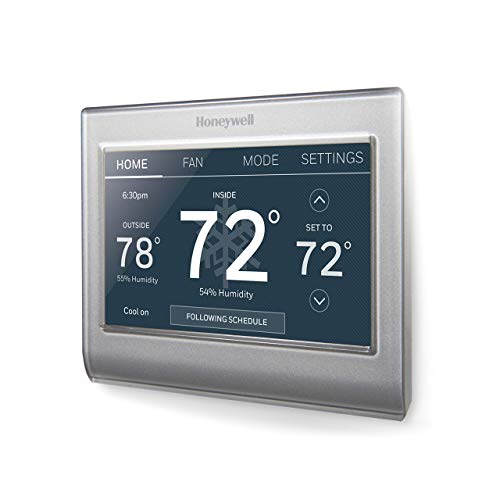
The Honeywell Home RTH9585WF1004 brings smart home convenience to temperature control with its Wi-Fi connectivity and intuitive touchscreen interface. The 7-day programmable feature gives you granular control over your heating and cooling schedule, whether you're managing a traditional 9-to-5 routine or shift work. The ability to create custom schedules for weekdays and weekends, combined with remote access through the mobile app and voice control compatibility with Alexa and Google Home, makes managing your home's climate effortless from anywhere.
Energy efficiency is a core strength of this thermostat. Its Energy Star certification means it meets strict efficiency standards, and the built-in energy tracking provides monthly reports that highlight your consumption patterns. Homeowners can identify opportunities to reduce energy use through personalized recommendations, and eligible customers may qualify for utility rebates or enrollment in demand response programs that reward energy conservation efforts. The fan control options (On, Automatic, and Circulate) let you optimize comfort while managing energy consumption.
Installation requires careful consideration: the thermostat needs a C-wire to function, and homes without one will need a separate power adapter, which adds to setup costs and complexity. Compatibility is broad for most forced air systems (gas, oil, and electric furnaces plus heat pumps), but it won't work with electric baseboard heating or heating-only oil furnaces unless a C-wire is already present. Before purchasing, verify that your HVAC system is compatible and assess your home's wiring to avoid unexpected installation challenges.
| Specification | Details |
|---|---|
| Brand | Honeywell Home |
| Model | RTH9585WF1004 |
| Color | Gray |
| Display | Bright touchscreen |
| Programming | 7-day programmable |
| Connectivity | Wi-Fi enabled, Alexa and Google Home compatible |
| Dimensions | 3.5 x 4.5 x 0.88 inches |
| Weight | 0.45 pounds |
| Certification | Energy Star certified |
| Compatible Systems | Forced air (gas, oil, electric), hot water, steam, heat pumps with electric backup |
| Not Compatible With | Electric baseboard heat (120-240V), heating-only oil furnaces without C-wire |
| Power Requirement | C-wire required (adapter available separately) |
| Fan Modes | On, Automatic, Circulate |
Is This Thermostat Right for You?
The Honeywell Home RTH9585WF1004 is best suited for homeowners who want smart temperature control without premium pricing. It's ideal if you have a compatible HVAC system (forced air furnace or heat pump), already have a C-wire in your home, and want to save energy through programmable scheduling and remote access. If you're interested in utility rebates or demand response programs, check with your local energy provider before purchasing to confirm eligibility.
Installation Considerations
Before buying, verify that your heating and cooling system is compatible. The thermostat works with most forced air systems but not with electric baseboard heat or heating-only oil furnaces unless you have a C-wire. If your home lacks a C-wire, you'll need to purchase a separate power adapter, which adds cost and may require professional installation. Consult your HVAC documentation or a technician if you're unsure about compatibility.
Smart Home Integration
This thermostat pairs well with existing Alexa or Google Home setups, allowing voice control and app-based adjustments from your smartphone. The mobile app provides remote access and energy tracking, making it easy to monitor and adjust your home's temperature when you're away. Set up is straightforward if you're comfortable with basic smart home device pairing.
Maximize Energy Savings
Use the 7-day programming feature to align your heating and cooling schedule with your daily routine. Adjust temperatures down by 7-10 degrees during winter nights and up during summer days when you're away to see meaningful reductions in energy consumption. Review your monthly energy reports to identify usage patterns and fine-tune your schedule accordingly.
Leverage Demand Response Programs
Contact your local utility company to learn about available demand response programs. These programs may allow the utility to make minor temperature adjustments during peak demand periods in exchange for bill credits or rebates. Enrolling can offset the thermostat's cost while helping the grid manage peak loads.
Optimize Fan Settings
Use the Automatic fan mode for most situations, which runs the fan only when heating or cooling is active. Switch to Circulate mode occasionally to improve air distribution throughout your home without continuous fan operation, balancing comfort and efficiency.
Check C-Wire Availability Early
Before purchasing, verify whether your HVAC system has a C-wire (common wire). If you're unsure, consult your thermostat's installation manual or contact a local HVAC technician. Knowing this upfront prevents installation delays and unexpected adapter costs.

Pros
- Impressive energy savings potential with machine learning that adapts to your home's unique heating and cooling patterns
- No C wire required in most homes, making installation simpler and more accessible for DIY setup
- Included temperature sensor provides room-level control, eliminating uncomfortable hot and cold spots
- Beautiful design with a large display and adjustable brightness that functions as a smart home hub
- Voice control through Google Assistant, Alexa, or Siri gives you multiple ways to adjust temperature on the go
Cons
- Premium price point may require significant upfront investment compared to basic programmable thermostats
- Requires a Google account and Google Home app for full functionality, which may not appeal to users preferring non-Google ecosystems
The Google Nest Learning Thermostat (4th gen) represents a significant step forward in smart climate control for the modern home. This thermostat combines elegant design with powerful automation, featuring a 60% larger display and Dynamic Farsight technology that keeps essential information visible from across the room. The included Nest Temperature Sensor (2nd gen) addresses one of the most common comfort complaints in homes: uneven temperature distribution, allowing you to set different temperatures for different rooms throughout the day.
What sets this thermostat apart is its adaptive learning capabilities. The system learns how external factors like sunlight and outdoor temperatures affect your home's interior climate, then intelligently pauses heating and cooling systems to prevent unnecessary energy waste. The new Adaptive Eco mode takes this further by automatically finding energy-efficient temperatures when you're away, then returning to your preferred comfort level within an hour of your return. Combined with the claimed potential for up to 31% savings on heating and cooling bills, these features make a compelling case for energy-conscious homeowners.
Installation and compatibility are generally straightforward. The thermostat works with most 24V systems including gas, electric, oil, forced air, heat pump, and radiant heating, and notably does not require a C wire in most homes. The system integrates seamlessly into the Google Home ecosystem and is Matter-compatible, giving you flexibility in how you control and automate your climate. Remote access through the Google Home app, combined with voice control options via Google Assistant, Alexa, or Siri, means you can adjust your home's temperature from anywhere, anytime.
| Specification | Details |
|---|---|
| Model | Google Nest Learning Thermostat (4th gen) |
| Color | Polished Obsidian |
| Included Components | Thermostat + Nest Temperature Sensor (2nd gen) |
| Compatible Systems | Gas, electric, oil, forced air, heat pump, radiant (most 24V systems) |
| Installation | No C wire required in most homes |
| Smart Home Integration | Matter-compatible; works with Google Home, Alexa, Siri |
| Display | 60% larger display with Dynamic Farsight and adjustable brightness |
| Key Features | Learning capability, Adaptive Eco mode, natural heating/cooling, room-level temperature control |
| Weight | 0.36 pounds |
| Product Category | Programmable Smart Thermostat |
Before You Start: Turn off power to your HVAC system at the breaker. Use the Google Nest Compatibility Checker online to verify your system is compatible and to understand your specific wiring configuration. Take a photo of your current thermostat's wiring before removal for reference.
Installation Steps: Remove your old thermostat and carefully label each wire according to its terminal (typically W, Y, G, R, C). The Nest thermostat comes with a wall plate and trim ring. Install the wall plate, then connect the wires to the corresponding terminals on the Nest unit. Most homes won't need a C wire, but if your system requires one and you don't have it, you may need professional assistance. Once wired, turn the breaker back on and follow the in-app setup process to connect to your Wi-Fi and Google Home account.
Sensor Placement: Install the included Nest Temperature Sensor in the room where you want the most accurate temperature control, typically a bedroom or main living area. The sensor communicates wirelessly with the thermostat, so ensure it has a clear path without major obstructions. Use the Google Home app to set schedules and temperature targets for each sensor location.
Is This Thermostat Right for You? The Google Nest Learning Thermostat (4th gen) is ideal if you want maximum energy savings, prefer remote smartphone control, and are already invested in the Google ecosystem or don't mind integrating with it. If you have multiple rooms with significant temperature variations, the included sensor is a major advantage. However, if you prefer minimal smart home connectivity or use a non-Google ecosystem exclusively, a simpler thermostat may better suit your needs.
Compatibility Check: Before purchasing, verify your system's compatibility using Google's online Compatibility Checker tool. You'll need to know your current thermostat's wiring configuration or have access to your HVAC system's specifications. Most modern heating and cooling systems are compatible, but older systems or those with unusual wiring may require professional installation.
Installation Considerations: While many homeowners can install this thermostat themselves, if you're uncomfortable working with electrical wiring or your system lacks a C wire and you need one installed, budget for professional installation. The learning and adaptive features take time to optimize, typically 1-2 weeks, so don't expect maximum savings immediately after installation.
Maximize Energy Savings: Set up separate temperature schedules for weekdays and weekends, and use the Adaptive Eco feature aggressively when you're away. The more consistent your usage patterns, the better the thermostat learns and optimizes. Pair the system with weatherstripping and insulation improvements to amplify energy savings.
Optimize Comfort with Multiple Sensors: The included sensor is powerful, but consider adding additional Nest Temperature Sensors to other rooms (bedrooms, home offices, etc.) for zone-based control. This prevents the thermostat from overheating or cooling the entire home to match a single room's preference.
Smart Home Integration: Create automation routines in Google Home that adjust temperature based on time of day, occupancy, or other triggers. For example, lower temperature automatically when you leave for work or raise it 30 minutes before you arrive home. Use voice commands for quick adjustments without opening the app.

Pros
- Learning thermostat adapts to your routine and preferences over time
- Easy mobile app control gives you flexibility when away from home
- Voice integration with major smart home ecosystems
- Energy reports help you track and reduce heating/cooling costs
- Intuitive interface makes programming straightforward for most users
Cons
- Requires a C-wire connection, which not all older homes have installed
- Initial setup and WiFi connectivity can be finicky in some households
The Nest Thermostat E brings smart climate control to homeowners seeking a balance between features and affordability. Its machine learning technology observes your heating and cooling patterns, then automatically adjusts temperatures when you're away or asleep, which can meaningfully reduce energy consumption throughout the year. The frosted white design is modern and unobtrusive, fitting seamlessly into most home interiors without drawing attention.
Remote access through the Google Home app means you can adjust your home's temperature from your phone, whether you're at work, traveling, or simply relaxing in another room. Integration with Alexa and Google Assistant enables voice control, so you can ask your smart speaker to raise or lower the heat without lifting a finger. The thermostat also displays helpful information like weather forecasts and weekly energy usage, giving you visibility into how your HVAC system performs and where savings opportunities exist.
Installation requires a C-wire to power the device, which is standard in most modern homes but may necessitate professional help in older houses. Once connected to your WiFi network, the setup process guides you through programming preferences. Users consistently report that the learning features kick in after a few weeks of operation, and the combination of automation and manual control makes this thermostat practical for households that want smart technology without overwhelming complexity.
| Specification | Detail |
|---|---|
| Model | Nest Thermostat E (T4002ES) |
| Color | Frosted White |
| Connectivity | WiFi (2.4 GHz and 5 GHz) |
| Power Requirements | C-wire (24V) |
| Compatible Systems | Heating, cooling, heat pump, auxiliary heat |
| Voice Control | Alexa and Google Assistant compatible |
| App Control | Google Home app for iOS and Android |
| Display | Color touchscreen with weather and energy info |
| Learning Feature | Automatic schedule learning |
| Warranty | Manufacturer warranty included |
Before You Begin: Turn off power to your current thermostat at the breaker. Take a photo of your existing thermostat's wiring for reference. Verify that you have a C-wire (common wire) available, as this model requires it for operation.
Installation Steps: Remove your old thermostat and carefully label each wire according to its terminal (heat, cool, fan, etc.). Turn off the breaker again for safety. Install the Nest Thermostat E mounting plate on the wall, ensuring it's level. Connect each wire to its corresponding terminal on the Nest unit, making sure the C-wire is connected. Restore power and follow the in-app setup prompts to connect to your WiFi network and configure your preferences.
If You Don't Have a C-Wire: Consider hiring a professional HVAC technician to run a C-wire from your furnace or air handler to your thermostat location. This typically costs between $200 and $500 but ensures proper operation. Some homes may have an unused wire in the wall that can be repurposed as a C-wire.
Maximize Energy Savings: Let the learning feature run for at least two weeks before manually adjusting schedules. The thermostat works best when it observes your natural patterns. Set your away temperature 5-8 degrees lower in winter and higher in summer to maximize savings when nobody's home.
Optimize WiFi Connection: Place your router within reasonable range of the thermostat for stable connectivity. If you experience dropouts, consider a WiFi extender near the device. Check that you're connecting to a 2.4 GHz band if your router broadcasts on both frequencies, as the Nest E works best on 2.4 GHz.
Use Seasonal Scheduling: Create different schedules for summer and winter months. This prevents the thermostat from learning conflicting patterns and helps it maintain efficiency year-round. Review your energy reports monthly to identify trends and adjust settings accordingly.
Is This Thermostat Right for You? The Nest Thermostat E suits homeowners with standard HVAC systems who want smart features at a mid-range price point. It works with most heating, cooling, and heat pump systems found in single-family homes. If you have a complex HVAC setup, radiant heating, or multiple zones, consult with an HVAC professional before purchasing.
Key Considerations: Confirm your home has a C-wire or budget for professional installation to add one. Ensure your WiFi network is reliable, as the thermostat depends on consistent connectivity for remote access and cloud features. If you live in an area with frequent power outages, the battery backup feature helps maintain basic operation during brief interruptions.
Budget and Value: This model offers excellent value for homeowners seeking learning capabilities and app control without premium pricing. The energy savings potential typically pays for the device within a few years. Compare it to basic programmable thermostats and higher-end Nest models to determine which fits your needs and budget best.

Pros
- Exceptional smart home compatibility across all major platforms and ecosystems
- Included smart sensor enables true room-by-room comfort without additional purchases
- Impressive energy efficiency potential with documented savings up to 23% annually
- Built-in Alexa eliminates need for separate smart speaker in your home
- DIY installation is straightforward with helpful app-based guidance
Cons
- No user reviews available yet, so real-world performance feedback is limited
- Requires compatible HVAC system and may need professional installation if wiring is complex
The ecobee SmartThermostat represents a significant upgrade for homeowners ready to modernize their climate control. The inclusion of Alexa built-in is a standout feature that eliminates the need for a separate smart speaker, while the quad-core processor and dual-band WiFi ensure responsive performance whether you're adjusting temperature from your couch or across the country via the mobile app.
What sets this thermostat apart is the included smart sensor, which monitors occupancy and temperature in important rooms and automatically adjusts your system to maintain comfort where it matters most. This room-by-room approach addresses a common frustration with traditional thermostats: uneven heating or cooling throughout your home. Combined with intelligent scheduling capabilities, this targeted approach helps explain the potential for up to 23% annual savings on energy costs.
The DIY installation process is genuinely user-friendly, with step-by-step guidance built directly into the ecobee app and video walkthroughs to guide you through each stage. The glass-finished touchscreen display looks premium on any wall, and compatibility with Siri, Google Assistant, Samsung SmartThings, and IFTTT means this thermostat integrates smoothly regardless of which smart home platform you've already invested in.
| Specification | Details |
|---|---|
| Brand | ecobee |
| Color | Black |
| Dimensions | 4.29 x 4.29 x 1 Inches |
| Weight | 0.625 pounds |
| Category | Programmable WiFi Thermostat |
| Voice Control | Alexa Built-in, Works with Siri and Google Assistant |
| Smart Home Integration | Apple HomeKit, Google Assistant, Samsung SmartThings, IFTTT |
| Processor | Quad-core |
| Connectivity | Dual-band WiFi, Bluetooth 5.0 |
| Included Accessory | Smart Sensor for room comfort monitoring |
| Installation Time | 45 minutes or less (DIY) |
Initial Setup: Download the ecobee app before installation. The app provides step-by-step video guidance and confirms your HVAC system compatibility. Turn off power at your breaker before beginning installation.
Basic Operation: Use the touchscreen display to adjust temperature manually, or let the thermostat learn your preferences automatically. Access the mobile app to create schedules, view energy reports, and control your thermostat remotely from anywhere.
Voice Commands: With Alexa built-in, simply say commands like 'Alexa, set the temperature to 72 degrees' or 'Alexa, what's the current temperature?' You can also use Google Assistant or Siri through compatible devices on your network.
Smart Sensor Placement: Position the included sensor in a bedroom or frequently occupied room where you want the thermostat to prioritize comfort. The sensor communicates wirelessly with the main unit to adjust temperature based on occupancy.
Maximize Energy Savings: Use the app's scheduling features to lower temperatures when you're away or sleeping. The thermostat learns your patterns over time, but manual schedules accelerate savings. Review your energy reports monthly to identify optimization opportunities.
Optimize Sensor Placement: Place the smart sensor in your master bedroom to ensure comfortable sleeping temperatures, or in a home office if you work from home. The thermostat prioritizes comfort in rooms where the sensor detects activity.
Leverage Multi-Platform Control: Set up voice commands across all your smart home devices. For example, create an 'I'm leaving' routine that adjusts your thermostat while also locking doors and turning off lights.
Monitor Seasonal Changes: Adjust your heating and cooling schedules as seasons change. The app makes it easy to modify settings without reprogramming, and the thermostat's learning capabilities improve accuracy over time.
Is This Right for You? This thermostat suits homeowners who want voice control, multi-room comfort, and significant energy savings. It's especially valuable if you already use Alexa, Apple HomeKit, or Google Home and want those systems to work together seamlessly.
Compatibility Check: Verify your HVAC system is compatible before purchasing. The ecobee app includes a compatibility checker. Most standard heating and cooling systems work, but some older or specialized systems may need professional assessment.
Installation Considerations: While DIY installation is possible in 45 minutes, your comfort level with electrical wiring matters. If your current thermostat has unusual wiring or you're uncomfortable working with electrical connections, professional installation is worth the investment.
Smart Home Ecosystem: This thermostat excels when integrated with other smart devices. If you're building a connected home, the ecobee's broad compatibility means you won't outgrow it as your setup expands.
Long-Term Value: The potential 23% annual energy savings can offset the initial investment over time. Combined with the included smart sensor and built-in Alexa, you're getting features that typically require separate purchases elsewhere.
Buying Guide: How to Choose the Right Smart Thermostat
Smart thermostats are not one-size-fits-all devices. The right pick depends on your HVAC system type, your preferred smart home ecosystem, and how much automation you actually want. Use the sections below to narrow down your options before committing to any model.
Compatibility with Your HVAC System
Before anything else, confirm that the thermostat you want is compatible with your existing heating and cooling equipment. Most modern smart thermostats support conventional single-stage systems with standard wiring, but some homes require multi-stage heat pumps, dual-fuel systems, or zone control. Check your current thermostat’s wiring terminals and match them against the compatibility list on the product page. The presence of a C-wire (common wire) is also important: many smart thermostats require one for consistent power, though some models ship with an adapter or power-stealing technology that eliminates the need for a C-wire entirely. If your home is older or has radiant heat, do extra homework before buying.
Smart Home Ecosystem and Voice Assistant Support
Ecosystem fit matters a great deal for daily convenience. If your home already runs on Amazon Alexa, look for a thermostat that integrates natively rather than relying on cloud-to-cloud workarounds. If you are invested in Apple HomeKit, ecobee models offer Siri compatibility that Google Nest does not. Every product on this list works with Alexa and Google Assistant, so those two ecosystems are the easiest to satisfy. Apple HomeKit users should stick with ecobee. If you use a whole-home automation platform like SmartThings, double-check official integration support before purchasing. The same thoughtful approach applies when you are selecting cordless drills for smart home installation projects, where compatibility with your workflow saves time and frustration.
Scheduling and Learning Capabilities
All smart thermostats support basic scheduling through an app, but learning thermostats go a step further by observing your routines and adjusting automatically. The Google Nest Learning Thermostat (4th gen) is the gold standard for self-programming: after about a week of manual adjustments, it builds a schedule without any input from you. If you prefer to stay in control, the ecobee lineup and the Honeywell Home RTH9585WF1004 offer seven-day programmable scheduling with granular time-of-day settings. Geofencing, which uses your phone’s location to trigger away mode automatically, is available on most Wi-Fi thermostats and is a genuinely useful feature for households that keep irregular hours.
Sensors and Air Quality Monitoring
One of the biggest limitations of any single thermostat is that it only reads temperature in one spot. If your bedroom runs hot while the living room is comfortable, a single sensor cannot fix that problem alone. ecobee addresses this with its SmartSensor ecosystem: remote sensors placed in any room feed temperature data back to the thermostat, which then averages or prioritizes readings based on occupancy. The ecobee Smart Thermostat Premium takes this further with a built-in air quality monitor that tracks VOCs and CO2 levels. The Google Nest Thermostat (4th gen) bundle includes a Nest Temperature Sensor for the same multi-room awareness. These features make a real difference in larger homes or multi-story layouts.
Energy Savings and Utility Rebates
Most smart thermostats carry an ENERGY STAR certification and come with energy reports that show exactly how much you are using and where you can cut back. Both ecobee and Nest provide monthly energy history in their apps. Beyond the device itself, check whether your local utility company offers a rebate for installing a qualifying smart thermostat. Many gas and electric utilities in the US rebate a significant portion of the purchase price, which can bring even a premium model into budget-friendly territory. Just as choosing impact drivers built for efficiency saves effort on the job, picking an ENERGY STAR-rated thermostat pays dividends over years of use.
Display, Design, and Ease of Use
Smart thermostats live on your wall for years, so aesthetics matter. The Honeywell Home RTH9585WF1004 offers a color touchscreen that lets you customize the display to match your decor. The ecobee line uses a clean, modern LCD with a large touch target that is easy to use without glasses. The Google Nest Learning Thermostat (4th gen) has a premium circular design with a Farsight feature that lights up and shows temperature or time when you walk near it. The Nest Thermostat E uses a frosted display for a softer, more understated look. If wall aesthetics matter to you as much as function, factor design into your shortlist early.
Installation: DIY vs. Professional
Most smart thermostats are designed for DIY installation and include step-by-step app-guided setup. ecobee’s app walks you through labeling wires and connecting them one at a time, making the process approachable even for first-timers. Google Nest’s app is similarly guided. If your wiring is unusual or you are not comfortable working near electrical panels, hiring an HVAC technician is always a reasonable option. Professional installation typically takes under an hour. Comfort with basic tool use, similar to what you might need for a tape measure and a level when mounting the baseplate, is all that most installs require. Speaking of mounting, a spirit level ensures your new thermostat sits perfectly straight on the wall.
Budget Tiers: What You Get at Each Price Point
Smart thermostats span a wide price range, and each tier delivers a meaningfully different experience. Entry-level picks like the ecobee Smart Thermostat Essential and the Nest Thermostat deliver solid scheduling and remote control without extras. Mid-range options like the Honeywell Home RTH9585WF1004 and the ecobee Smart Thermostat Enhanced add color displays, richer app features, and broader integrations. At the premium end, the ecobee Smart Thermostat Premium with SmartSensor and the Google Nest Learning Thermostat (4th gen) with a temperature sensor bundle deliver the most sophisticated automation, multi-room awareness, and in ecobee’s case, a built-in air quality monitor. Match your tier to your actual needs rather than always defaulting to the most expensive option.
Why Trust HomeThru
HomeThru is an independent editorial platform. We do not sell products, fulfill orders, or handle returns. Our recommendations are built through independent research, hands-on comparative analysis of specifications and real-world user feedback, and careful review of manufacturer documentation. We evaluate smart thermostats against criteria that actual homeowners care about: HVAC compatibility, ecosystem fit, energy savings potential, sensor capability, and long-term reliability. We update our picks regularly as new models are released and older ones are discontinued. No brand pays for placement here. Our only goal is to help you make a confident, well-informed purchase. The same editorial rigor we apply here goes into every category we cover, from reciprocating saws for home renovation to orbital sanders for finish work.
Final Thoughts
After researching and comparing all eight models on this list, a few clear winners emerge depending on your priorities. Here is how we would hand out the honors:
- Best Overall: ecobee Smart Thermostat Premium with Smart Sensor and Air Quality Monitor delivers the most complete feature set of any thermostat on this list, combining multi-room sensing, built-in air quality monitoring, voice assistant capability, and deep energy reporting in a single device.
- Best Self-Learning Thermostat: Google Nest Learning Thermostat (4th gen) with Nest Temperature Sensor earns this title for its ability to build a custom schedule on its own after just a few days of use, plus its bundled temperature sensor covers a second room out of the box.
- Best Budget Pick: ecobee Smart Thermostat Essential is the smartest entry-level option on the list, offering ENERGY STAR certification, Alexa and Google Assistant support, and reliable Wi-Fi control at the lowest price in the ecobee family.
- Best Mid-Range Value: ecobee Smart Thermostat Enhanced sits at the sweet spot between price and capability, adding SmartSensor compatibility and a more refined display over the Essential without reaching premium pricing.
- Best for Apple HomeKit Homes: ecobee SmartThermostat with Voice Control remains the strongest choice for households running Apple HomeKit, offering native Siri integration that Google Nest does not provide.
No matter which model you choose, upgrading from a basic programmable thermostat to any Wi-Fi smart thermostat is a meaningful improvement in both comfort and energy efficiency. If you are doing a broader home upgrade at the same time, pairing your new thermostat installation with quality utility knives for cutting wire insulation and a reliable claw hammer for any drywall patching makes the whole project go smoother. For more advanced HVAC wiring work, a sturdy jigsaw can help when you need to cut a clean opening in a wall panel. And if your installation calls for more serious structural work, circular saws and hand saws round out the toolkit nicely.
Frequently Asked Questions
Do Smart Thermostats Work Without a C-Wire?
Some smart thermostats use power-stealing technology to draw a small amount of electricity from existing wiring without a dedicated C-wire. ecobee ships every model with a Power Extender Kit as a backup solution. Google Nest’s latest thermostats also manage without a C-wire in many setups. That said, a C-wire provides more stable power and is always preferred. Check your current wiring before purchasing.
Will a Smart Thermostat Work with a Heat Pump?
Yes, but compatibility varies by model and system type. ecobee thermostats explicitly support heat pumps with auxiliary heat, which is important for homes in colder climates that rely on a backup heating element when outdoor temperatures drop. Google Nest also supports heat pump configurations. Always run the compatibility checker on the manufacturer’s website using your specific wiring before buying.
How Much Can I Actually Save on Energy Bills?
ecobee claims its thermostats save homeowners an average of 26 percent on heating and cooling costs annually compared to a hold-at-constant-temperature setup. Google Nest reports similar figures. Real-world savings depend heavily on your local climate, your utility rates, and how well you configure your schedule. Homes with occupants who keep irregular hours tend to see the largest gains from geofencing-based auto-away modes.
Is It Worth Paying More for a Learning Thermostat vs. a Programmable One?
If your household keeps a predictable routine, a well-configured seven-day programmable thermostat delivers most of the savings at a lower price. Learning thermostats earn their premium when schedules change frequently, when multiple people in the home have different routines, or when you simply want a hands-off experience. The Google Nest Learning Thermostat (4th gen) is the clearest example of learning technology done well, and its bundled temperature sensor adds practical value beyond the self-scheduling feature.
Can I Install a Smart Thermostat Myself?
Most homeowners can handle the installation without professional help. Both ecobee and Google Nest provide app-guided setup that walks you through identifying, labeling, and reconnecting your wires step by step. The job typically takes 30 minutes to an hour. Basic comfort with a screwdriver and the ability to follow instructions is all that is required. If your system is unusually complex or your wiring is non-standard, consulting an HVAC technician is a smart precaution.






Write Your Review
No reviews yet. Be the first to share your experience!