

A speed square might be the single most versatile layout tool you can keep on your belt. In one compact triangular package it functions as a try square, miter square, protractor, line scriber, and even a crosscut fence for a circular saw. Whether you’re framing walls, cutting rafters, marking stair stringers, or doing finish trim work, reaching for a reliable speed square is almost always the fastest path to an accurate line. Our editorial team researched and analyzed dozens of models across every price tier, studying build quality, graduation legibility, material durability, and real-world versatility to bring you a shortlist that covers every type of user. Pair your speed square with a quality tape measure and you’ll handle nearly every layout task a jobsite throws at you.
The eight speed squares below span a wide range of sizes, materials, and feature sets. There’s a budget-friendly plastic option for beginners, classic American-made aluminum squares for tradespeople, and multi-function carpenter squares for those who want maximum versatility in a single tool. Read on for the full breakdown, then scroll to our buying guide to learn exactly what separates a great speed square from a frustrating one.
Top Speed Squares

Pros
- Exceptional versatility: one tool replaces five, saving space and money in your toolkit
- Included Blue Book eliminates roof pitch calculations and reduces measurement errors
- Matte finish and high-contrast markings ensure readability in bright sun or dim conditions
- Built-in features like diamond cutout and scribing notches handle specialized carpentry tasks
- American-made quality with nearly a century of proven performance on job sites
Cons
- Limited to 7 inches, which may feel small for large framing projects or ripping long boards
- Steep learning curve for beginners unfamiliar with rafter angles and roof pitch terminology
The Swanson Speed Square has earned its place as an industry standard by delivering genuine versatility in a compact form. This 7-inch tool consolidates five separate functions—try square, miter square, saw guide, line scriber, and protractor—into a single instrument that handles everything from basic 90-degree cuts to complex rafter angles. The matte finish and high-contrast black gradations make readings clear whether you're working under bright sunlight or in shadowed areas, eliminating the frustration of squinting at your measurements.
What truly sets this tool apart is the included pocket-sized Blue Book, a comprehensive reference guide that contains pre-calculated roof pitch data. Rather than performing trigonometric calculations or consulting charts on your phone, you simply reference the guide to find the correct angle for any pitched roof scenario. This feature alone saves time on every roofing project and reduces the likelihood of costly measurement errors. The diamond cutout and 1/4-inch spaced scribing notches address real-world carpentry needs, making it easy to mark standard stud widths and rafter seat cuts with precision.
As a tool manufactured in the USA since 1925, the Speed Square represents dependable craftsmanship that has stood up to decades of professional use. Whether you're a seasoned carpenter tackling complex roof work or a homeowner building a deck or fence, this square delivers the accuracy and functionality needed for professional results. Its pocket-sized design means you'll actually carry it, making it far more practical than larger squares that stay in the truck.
| Specification | Details |
|---|---|
| Brand | Swanson Tool Co., Inc |
| Model | S0101 |
| Size | 7 inches |
| Color | Blue |
| Finish | Matte (non-glare) |
| Markings | Black gradations for common, hip, valley, and jack rafters |
| Features | 1/4-inch spaced scribing notches; diamond cutout for rafter seat cuts |
| Included Accessories | Pocket-sized Blue Book with roof pitch reference data |
| Functions | Try square, miter square, saw guide, line scriber, protractor |
| Origin | Made in USA |
| Category | Carpentry Squares |
For Square Cuts: Align the 90-degree edge against your board's edge and mark along the blade. The matte finish grips wood surfaces, preventing slipping during marking.
For Rafter Angles: Locate your roof pitch in the included Blue Book, then position the corresponding gradation line on your board. The Speed Square's design allows you to mark the angle without additional calculations.
As a Saw Guide: Clamp the square to your board with the blade edge aligned to your cut line. This keeps your circular saw or handsaw perfectly perpendicular, ensuring straight, true cuts.
For Scribing Notches: Use the 1/4-inch spaced notches to mark standard stud widths (typically 1.5 inches) or the diamond cutout for rafter seat cuts. These built-in features eliminate the need for separate measuring.
Keep the Blue Book Handy: Store the included reference guide in your tool apron or on your phone. Bookmark common roof pitches you work with frequently to speed up your workflow.
Use Both Edges: The Speed Square functions as both a try square and a miter square. Flip it to access different angles without reaching for another tool.
Pair with a Pencil: Keep a sharp pencil or marking knife nearby. The scribing notches are most accurate when used with fine-pointed marking tools rather than thick pencils.
Protect the Finish: The matte finish provides excellent grip but can wear with heavy use. Store it in a tool bag to minimize surface scratches that might affect readability over time.
Check for Square Regularly: Periodically verify the 90-degree angle against a known square surface. If your Speed Square gets dropped or bent, its accuracy may be compromised.
Who Should Buy This: The Swanson Speed Square is ideal for carpenters, roofers, framers, and serious DIYers who work with angles and need reliable, quick measurements. If you're building decks, framing walls, or doing any roofing work, this tool belongs in your collection.
When You Might Need Something Different: If you primarily work with large sheets of plywood or need to rip full-length boards, a larger framing square may be more practical. For purely decorative or simple square-cut projects, a basic combination square might suffice.
Size Considerations: The 7-inch size is perfect for portability and fits in any tool belt. However, it's smaller than traditional framing squares, which means you'll need to make multiple passes on very large pieces or use it as a reference guide rather than a full-length straightedge.
Value Assessment: At its price point, the Speed Square delivers exceptional value by combining five tools into one compact instrument. The included Blue Book alone justifies the investment if you work with roof pitches regularly. This is a lifetime tool that will outlast many other items in your toolkit.

Pros
- Heavy-gauge billet aluminum construction resists warping and maintains accuracy over time
- Two different sizes (7 and 12 inches) handle both detail work and larger projects
- Die-cast design provides superior precision compared to laser-etched alternatives
- Includes Blue Book reference guide, eliminating the need for separate purchases
- Made in the USA with over 95 years of manufacturing heritage
Cons
- No layout bar included on the 12-inch Big 12 model, which some users prefer for additional functionality
- Steep learning curve for beginners unfamiliar with rafter angle gradations and speed square techniques
The Swanson Speed Square Value Pack delivers two essential tools that belong in every homeowner's and DIYer's toolkit. The 7-inch Speed Square excels at detail work and marking precise angles on smaller materials, while the 12-inch Big 12 handles larger boards and structural framing tasks. Both squares feature heavy-gauge billet aluminum construction that resists dents and maintains accuracy through years of regular use, making them significantly more durable than lighter stamped alternatives.
What sets this value pack apart is the inclusion of the Blue Book reference guide, which provides quick-lookup tables for rafter angles, common cuts, and layout calculations. This eliminates guesswork on the job site and helps you mark common, hip, valley, and jack rafters with confidence. The multiple gradations etched into each square cover the most frequent angles you'll encounter, whether you're framing a roof, installing trim, or ensuring square cuts on boards.
For the price, this two-square combination offers exceptional versatility. The 7-inch square works perfectly as a saw guide for truing boards, while the larger 12-inch model handles full-size framing projects. Whether you're a weekend DIYer tackling a deck or a contractor managing multiple job sites, having both sizes on hand eliminates the need to switch tools or make multiple trips to your toolbox.
| Specification | Details |
|---|---|
| Brand | Swanson Tool Co., Inc |
| Product Type | Speed Square Value Pack |
| Included Items | 7-inch Speed Square, 12-inch Big 12 Speed Square, Blue Book Guide |
| Material | Heavy-Gauge Billet Aluminum Alloy |
| Construction Method | Die-Cast Design |
| Gradations | Common, Hip, Valley, and Jack Rafter Markings |
| Common Angles | 90 degrees and 45 degrees |
| Layout Bar | Not included on 12-inch model |
| Made In | USA |
| Best For | Carpenters, Roofers, Construction Professionals, DIYers |
As a Layout Tool: Place the speed square against the edge of your board with the pivot point at your marked line. Align the appropriate gradation (common, hip, or valley rafter) with the board edge, then mark along the hypotenuse for precise angle cuts.
As a Saw Guide: Position the square's body flat against your saw blade or circular saw base, then run the square along the board edge. This ensures perfectly square crosscuts every time.
For Angle Marking: The 45-degree and 90-degree marks are clearly indicated on both squares. Use these for quick reference when marking trim, framing, or any square-cut requirements.
Using the Blue Book: Reference the included guide whenever you need rafter angles, pitch calculations, or common cutting angles. Keep it nearby during layout work to eliminate on-site guesswork.
Keep Both Squares Accessible: Store the 7-inch square in your tool belt or apron for quick access during detail work, and keep the 12-inch Big 12 in your main toolbox for framing and larger projects. Having both nearby saves time and frustration.
Protect the Accuracy: Handle your speed squares carefully and avoid dropping them, as impacts can affect the precision of the die-cast aluminum. Store them flat or hang them on a pegboard to prevent warping.
Reference the Gradations Regularly: Familiarize yourself with the rafter gradations on each square. Mark your most-used angles with a permanent marker dot for even faster reference during repetitive tasks.
Use the Blue Book Before Every Roof Project: Even experienced framers benefit from double-checking rafter angles in the Blue Book. A few seconds of verification prevents costly mistakes on the roof.
Who Should Buy This Pack? This value pack is ideal for DIYers building a core tool collection, homeowners planning deck or framing projects, and professionals who need reliable backup squares on multiple job sites. If you only own one speed square, this pack gives you the versatility of two sizes at exceptional value.
What Makes Speed Squares Essential? Speed squares are one of the most versatile layout and cutting tools available. They handle angle marking, saw guidance, and rafter calculations in a single tool, making them indispensable for any serious DIY work or professional carpentry.
Why Choose Swanson? Swanson has manufactured speed squares in the USA since 1925, building a reputation for precision and durability. The heavy-gauge billet aluminum construction in this pack outlasts cheaper stamped alternatives and maintains accuracy through years of use.
Should You Buy the Blue Book Separately? No. This value pack includes the Blue Book, so you're getting a complete reference system. The guide eliminates the need to calculate rafter angles on the job site and provides instant access to common cuts and angles.

Pros
- Compact 2-in-1 design eliminates the need to carry two separate squares
- Thumb lock mechanism is intuitive and keeps the extension secure during use
- Aluminum construction is lightweight yet rugged enough for regular jobsite use
- Laser-etched markings resist fading and remain legible after extended use
- Ideal for carpenters, DIYers, and framers who value portability and efficiency
Cons
- No customer reviews available yet, so long-term durability feedback is limited
- The 6-inch base may feel small for some tasks that traditionally call for larger squares
The Crescent Lufkin EX6 addresses a common frustration among DIYers and carpenters: the need to carry multiple layout squares to handle different tasks. This 2-in-1 tool combines a 6-inch square with a fold-out extension arm that effectively transforms it into a 12-inch square. The thumb lock mechanism is straightforward and reliable, allowing you to deploy and secure the extension quickly without fumbling or worrying about accidental collapse during marking or cutting.
Build quality is solid throughout. The aluminum construction is lightweight enough to slip into a work pouch without adding bulk, yet sturdy enough to withstand regular jobsite conditions. The corrosion-resistant finish protects against rust and wear, and the laser-etched markings are sharp and durable. Unlike printed markings that fade with use, these etched lines remain visible even after months of regular work.
For homeowners tackling renovation projects, framers laying out wall studs, or carpenters making repetitive measurements, this tool delivers genuine value by reducing the number of items in your tool belt. The compact footprint means faster access and less time digging through your bag. It's an efficient choice if you work in tight spaces or prefer traveling light between job sites.
| Specification | Detail |
|---|---|
| Brand | Crescent |
| Model | LSSP6-07 |
| Type | 2-in-1 Extendable Layout Square |
| Base Size | 6 inches |
| Extended Size | 12 inches (with fold-out arm) |
| Material | Solid Aluminum |
| Finish | Corrosion-resistant coating |
| Markings | Laser-etched for durability |
| Locking Mechanism | Quick-access thumb lock |
| Weight | Lightweight (exact weight not specified) |
| Storage | Work pouch or pocket compatible |
Basic Setup: The EX6 comes ready to use as a standard 6-inch square right out of the box. The thumb lock is located near the fold-out extension arm and is clearly visible on the tool.
Extending the Arm: Press or slide the thumb lock to release the extension arm. Gently pull the arm outward until it locks into the extended position, creating a 12-inch square. You'll feel or hear a click when it's fully secured.
Measuring and Marking: Use the laser-etched markings to align with your workpiece. The extended arm provides additional reach for larger layouts, rafter cuts, or wide boards. Keep the tool flat against your surface for accurate measurements.
Retracting the Arm: Press the thumb lock again to release the extension, then carefully fold the arm back into the compact position. Store it in your work pouch or tool belt for easy transport between tasks.
Pair with a Pencil: Keep a sharp pencil or marking knife nearby. The laser-etched lines are guides; a fine-point marker creates crisp, accurate layout lines on wood.
Check the Lock Before Cutting: Always verify that the extension arm is fully locked before using the square as a guide for circular saws or table saws. A secure lock prevents movement during the cut.
Clean Regularly: Dust and sawdust can accumulate in the thumb lock mechanism. Wipe the tool clean after each job to keep the lock operating smoothly.
Use Both Sides: Like traditional squares, the EX6 has both inside and outside corners. Flip it over depending on whether you're marking an inside or outside angle.
Organize Your Tool Belt: The compact size makes this an ideal replacement for two separate squares. Use the space you save for other frequently needed tools.
Secure the Extension Before Use: Never use the square with the extension arm partially extended or unlocked. This can cause inaccurate measurements and unsafe cuts if the tool shifts during use.
Inspect Before Each Use: Check the aluminum for dents, cracks, or damage that could affect accuracy. A bent square produces unreliable measurements and can lead to poor cuts or misaligned framing.
Keep Hands Clear: When retracting the extension arm, keep your fingers away from the lock mechanism and the folding joint to avoid pinching.
Use as a Guide, Not a Clamp: This is a measuring and marking tool, not a clamp. Do not apply excessive pressure or use it to hold workpieces in place during cutting operations.
Store Safely: Keep the square in a tool pouch or on a workbench where it won't be stepped on or crushed under heavier tools, which could bend the aluminum and compromise accuracy.
Pros
- Lightweight and durable composite material won't rust or splinter like wood squares
- Center line guide and scribing notches save time on repetitive layout tasks
- Beveled edge design reduces reading errors and improves accuracy
- 8-inch size is versatile enough for siding, framing, and general carpentry
- Proven reliability with a long track record in professional and DIY shops
Cons
- Limited to 8 inches, so larger projects may require a bigger square for efficiency
- No reviews available to assess long-term durability or real-world performance feedback
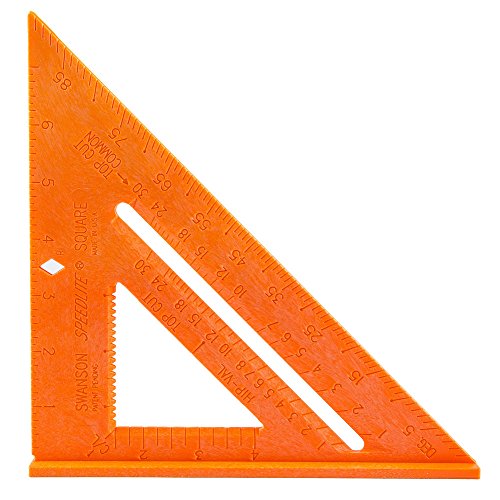
The Swanson Tool T0118 is a compact 8-inch speed square built for carpenters and DIYers who need a lightweight, durable layout tool. The high-impact polystyrene composite material keeps weight down without sacrificing strength, making it comfortable to use for extended periods on the job site. Its orange color provides good visibility in dim lighting conditions, and the overall design is straightforward and proven effective for decades of professional use.
What sets this square apart are its thoughtful design features. The center line guide is particularly useful for marking the center of round stock like pipes or posts, eliminating the need for mental math or separate marking tools. The 1/8-inch spaced notches along the edge allow you to quickly scribe parallel lines for siding layout, framing guides, or other repetitive marking tasks. The beveled edge reduces glare and makes it easier to read measurements accurately, especially in outdoor light.
At 8 inches, this square strikes a balance between portability and utility. It's ideal for siding installation, roof pitch layout, and general framing work where you need quick angles and straight edges. The composite construction resists rust and won't splinter like wooden squares, making it a low-maintenance tool that can handle jobsite abuse. This is a straightforward, reliable choice for homeowners and professionals who want proven performance without unnecessary complexity.
| Specification | Details |
|---|---|
| Brand | Swanson Tool Co., Inc |
| Model | T0118 |
| Size | 8 inches |
| Material | High-impact polystyrene composite |
| Color | Orange |
| Notch Spacing | 1/8 inch |
| Features | Center line guide, beveled edge, scribing notches |
| Category | Carpentry Squares |
For Angle Layout: Align the square's edge with your workpiece and use the pre-marked angle guides to quickly mark common roof pitches and bevels. The beveled edge helps you see your line clearly without lifting the tool.
For Center Marking: Place round stock (pipe, post, or dowel) in the center line guide notch. The guide automatically identifies the center point, saving time on layout work for round materials.
For Scribing Lines: Use the 1/8-inch spaced notches to mark parallel lines quickly. Slide the square along your workpiece and use each notch to create consistent, evenly-spaced guidelines for siding, sheathing, or other repetitive cuts.
General Tips: Keep the square clean and dry to maintain visibility. The lightweight composite design makes it comfortable to hold for extended periods, but always grip it firmly to prevent slipping during marking.
Secure Your Workpiece: Always clamp or secure your material before marking. Never hold the workpiece by hand while using the square, as the tool could slip and cause injury.
Proper Grip: Hold the square firmly against the workpiece with even pressure. A loose grip can result in inaccurate marks and potential slips.
Eye Protection: Wear safety glasses when marking, especially if using the square near power tools or in dusty environments. Composite material can splinter under extreme impact.
Tool Maintenance: Inspect the square regularly for cracks or damage. A damaged square can produce inaccurate measurements and should be replaced. Store in a dry location away from extreme heat or UV exposure, which can degrade composite materials over time.
Combine with Other Tools: Use the speed square alongside a pencil or marking knife for crisp, clean lines. A sharp pencil gives you better accuracy than a dull one, especially when using the notches for scribing.
Leverage the Beveled Edge: The beveled design reduces shadows and glare. Position yourself so light hits the square at a low angle to maximize visibility of your marked lines.
Mark Center Points Quickly: When marking multiple round posts or pipes, the center line guide saves significant time compared to measuring diameter and calculating the center manually.
Use for Roof Pitch Reference: The 8-inch size is compact enough to carry in your tool belt. Keep it accessible for quick pitch checks and angle verification throughout the day, reducing trips back to your main toolbox.

Pros
- Magnetic grip is strong enough to hold the square steady on metal without slipping or rotating
- Scribe notches save time by allowing quick, repeatable marks without measuring each time
- Precision machining delivers consistent, accurate angles for critical carpentry work
- Durable aluminum construction resists rust and corrosion on job sites
- Versatile design works for roofing layouts, stair stringers, and general framing tasks
Cons
- The magnetic feature only works on ferrous metal surfaces, limiting usefulness on wood-only job sites or when working with stainless steel
- At 7 inches, this square is smaller than full-size 12-inch squares, so it may require more careful positioning for larger layout work
The Milwaukee 7-inch magnetic rafter square is engineered for professionals and dedicated DIYers who value precision and efficiency on the job site. The rare earth magnets are notably strong, holding the square securely against steel beams, joists, and metal studs without requiring you to hold it in place. This magnetic feature is a genuine time-saver when you're working solo or need both hands free for marking and measuring.
The precision-machined aluminum body delivers the accuracy you need for critical carpentry applications like rafter layouts, stair stringers, and roof framing. The integrated scribe notches (marked 1 through 6 inches) are a thoughtful design element that eliminates fumbling with a tape measure for repetitive marks. The 1-inch pipe cutout and 1-1/8-inch heel add functional versatility without adding bulk or weight to the tool.
Overall, this rafter square represents solid value for framers and experienced DIYers. It's built to withstand years of jobsite use, and the magnetic design genuinely improves workflow. The main limitation is that the magnets only work on ferrous metals, so you'll need a traditional square for wood-only projects or when working with non-magnetic materials.
| Specification | Detail |
|---|---|
| Brand | Milwaukee Electric |
| Model | 7 Magnetic Rafter Square |
| Size | 7 inches |
| Material | Precision-machined extruded aluminum |
| Magnet Type | Rare earth magnets |
| Heel Size | 1-1/8 inch |
| Pipe Cutout | 1 inch |
| Scribe Notches | 6 notches (1 to 6 inches) |
| Primary Use | Rafter layout, stair stringers, framing |
Magnetic Attachment: Place the square flat against a steel beam, joist, or metal stud. The rare earth magnets will grip firmly, allowing you to position your pencil or marker without holding the square in place.
Scribe Notches: For repetitive marks (like rafter tails or stair treads), use the appropriate notch (1 to 6 inches) as a guide. This eliminates the need to measure each mark individually and ensures consistency across multiple pieces.
Pipe Cutout: The 1-inch cutout prop is designed to help you calculate rafter angles and position the square at the correct pitch. Align the cutout with the pipe or edge you're working with for accurate angle reference.
Heel Positioning: The 1-1/8-inch heel provides a stable reference point on uneven surfaces. Use it to anchor the square firmly before making your marks.
Keep Magnets Clean: Dust and metal shavings can reduce magnetic grip. Wipe the magnet surface regularly with a clean, dry cloth to maintain full holding power.
Combine with Other Tools: Use this square alongside a full-size 12-inch square for layout work that requires larger reference edges. The 7-inch size excels at detail work and tight spaces.
Check Accuracy: Before starting a major project, verify the square's 90-degree angle by checking it against a known accurate reference. Precision-machined squares maintain accuracy, but it's always good practice to confirm.
Jobsite Organization: The compact size makes this square easy to toss in a tool belt or apron. Keep it accessible for quick reference marks throughout the day.
Who Should Buy This? Professional framers, roofers, and serious DIYers who work regularly with metal framing or need a reliable, precision-marked square for layout work. If you're building decks, framing additions, or doing roof work, this square will pay for itself in time saved.
When to Choose a Different Square: If your projects are primarily wood-only construction (like furniture building or fine carpentry), a traditional non-magnetic square may be more practical. The magnetic feature is most valuable when you're working with steel studs, beams, or joists.
Quality Expectation: Milwaukee is known for durable, professional-grade tools. This square is built to last through years of jobsite use. The precision machining ensures consistent accuracy, and the aluminum construction resists corrosion and wear.
Value Consideration: This is a mid-range priced tool that delivers professional-grade performance. It's an investment in accuracy and efficiency that will serve you well across multiple projects.

Pros
- Smart Mark cutouts are genuinely useful for fast, repeatable layouts without mental math
- Integrated level vial with excellent visibility eliminates carrying a separate tool for simple plumb and level checks
- Angle slots cover the most common roof pitches, saving time on repetitive cuts
- Wide heel stays put on rough, uneven surfaces where standard squares slip
- High-quality construction feels substantial and built to last through years of jobsite use
Cons
- The cutouts and markings make the square busier to read at first glance, requiring a learning curve for new users
- At 7.25 inches, it's slightly smaller than some traditional framing squares, which may limit its use for larger layout work
The Johnson Level Johnny Square MACH-1 is a thoughtfully engineered rafter square that addresses real pain points in framing and layout work. The Smart Mark cutouts for standard dimensions like 1.5-inch, 3-inch, and 4.5-inch stud layouts, plus dedicated marks for LVL and flat studs, eliminate the need to calculate or hand-mark these repetitive measurements. This speeds up layout work significantly and reduces the human error that creeps in on longer framing jobs.
The integrated level vial is genuinely useful for quick plumb and level checks without reaching for a separate tool. With 320 degrees of visibility, you can assess level, plumb, and even existing roof pitch angles, effectively replacing a torpedo level for many common tasks. The 1-inch wide heel is a practical detail that keeps the square seated firmly on split lumber and irregular surfaces where thinner heels tend to rock or slip.
The pre-cut angle slots for 22.5°, 30°, 45°, and 60° cuts handle the vast majority of common roof pitches and angled cuts, making this square particularly valuable for roofing and structural work. Carpenters and experienced DIYers will appreciate how these features combine to reduce layout time and improve accuracy, though the square does require some familiarity with its marking system to use all features effectively.
| Specification | Detail |
|---|---|
| Brand | Johnson Level & Tool |
| Model | 1904-0700V |
| Product Name | Johnny Square MACH-1 Smart Mark Rafter Square |
| Size | 7-1/4 inches |
| Material | Black metal construction |
| Heel Width | 1 inch |
| Level Vial | Built-in with 320-degree visibility |
| Smart Mark Cutouts | 1-1/2", 3", 4-1/2" (studs/joists); 1-3/4", 3-1/2" (LVL); 3-1/2", 5-1/2" (2x4, 2x6, 4x4, 6x6); 1/2", 3/4", 1-1/2", 1-3/4" (rip cuts) |
| Angle Slots | 22.5°, 30°, 45°, 60° |
| Primary Use | Framing layout, rafter marking, angle cuts, plumb/level checks |
Layout Work: Align the appropriate Smart Mark cutout with your material edge. The cutouts correspond to standard stud spacing (16" on center, 24" on center) and common lumber dimensions, eliminating the need to hand-measure these repetitive marks. Simply use the notch as a guide for your pencil.
Angle Marking: For roof pitches or angled cuts, position the square so the desired angle slot aligns with your material edge. The 22.5°, 30°, 45°, and 60° slots cover nearly all common roof pitches and structural angles. Trace along the slot edge for precise angle marks.
Level and Plumb Checks: Place the square flat on your surface and check the built-in level vial. The 320-degree visibility allows you to assess level, plumb, and even measure existing roof pitch angles without needing a separate level tool.
Rip Cut Scribing: Use the smaller cutouts (1/2", 3/4", 1-1/2", 1-3/4") for marking rip cuts and scribing flat studs or blocking. These sized notches help you mark consistent widths quickly.
Master the Smart Marks First: Spend a few minutes familiarizing yourself with which cutout corresponds to which layout task. Once you know the system, your marking speed will increase dramatically compared to hand-measuring every mark.
Use the Wide Heel on Rough Materials: The 1-inch heel is wider than standard squares specifically for split and irregular lumber. Take advantage of this on weathered or wet framing where thinner squares tend to rock.
Combine with Your Speed Square: While this square excels at layout and common angles, keep a traditional speed square handy for custom angles outside the 22.5°-60° range.
Check the Vial Regularly: Like any level vial, verify it's accurate by flipping the tool 180 degrees. The bubble should move the same distance in both directions. This ensures your plumb and level checks remain reliable.
Keep it Clean: Wipe the cutouts and angle slots clean of sawdust regularly. Debris can make it harder to align the square precisely on your material.
Is This Right for You? The Johnny Square MACH-1 is ideal if you're framing walls, roofs, or decks and want to speed up layout work while reducing marking errors. It's particularly valuable for carpenters and experienced DIYers who perform the same layout tasks repeatedly. If you only occasionally frame or work with simple 90-degree cuts, a basic framing square may be sufficient.
Size Consideration: At 7.25 inches, this square is smaller than traditional full-size framing squares. It's perfect for most residential framing, but if you frequently work with large materials or need to mark across wide surfaces, you might want a larger square as a secondary tool.
Learning Curve: The Smart Mark system requires initial familiarity. Budget 15-20 minutes to understand which cutout corresponds to which layout task. Once learned, the system becomes intuitive and saves significant time.
Complementary Tools: Pair this square with a pencil holder or marking knife for the cleanest marks. A speed square remains useful for custom angles not covered by the pre-cut slots. A torpedo level is still helpful for checking longer runs, though this square handles quick plumb and level checks well.

Pros
- Exceptional accuracy with preset angle guide eliminates estimation errors on critical cuts
- Dual reference base saves time on repetitive layout tasks common in trim and cabinetry work
- Durable aluminum construction withstands daily job-site use without warping or degrading
- Orange anodized finish and laser-etched markings stay visible and legible long-term
- Compact size makes it easy to carry and use in confined spaces like under eaves or inside cabinets
Cons
- Limited to 4-1/2 inches, so it cannot handle larger layout tasks that require a full-size rafter square
- No reviews currently available to confirm real-world durability or long-term performance in the field
The Klein Tools 9354SSQ trim square is purpose-built for finish carpenters and woodworkers who need precision in tight spaces. Its most compelling feature is the dual reference base, which provides quick reference points at 1/4-inch and 3/8-inch dimensions. This design choice directly addresses the repetitive layout work that finish carpenters encounter daily, especially when installing trim, cabinetry, or running consistent spacing patterns.
The preset angle guide and scribe notches at 1/8-inch increments set this tool apart from basic trim squares. Rather than relying on your eye or trial-and-error, you can mark accurate 0-90 degree angles and consistent incremental lines every time. The high-visibility orange anodized aluminum finish and double laser-etched markings ensure your measurements remain legible even after months of job-site use, dust, and handling.
For finish carpenters, cabinetmakers, and DIYers tackling built-ins or detailed trim work, this square delivers the accuracy and durability needed for professional results. Its compact 4-1/2-inch size makes it ideal for overhead work and confined spaces where a full-size rafter square would be cumbersome. The lightweight aluminum construction means you can keep it in your pocket or tool belt without fatigue during long days on the job.
| Specification | Details |
|---|---|
| Brand | Klein Tools |
| Model | 9354SSQ |
| Type | Trim Square / Carpenter Square |
| Size | 4-1/2 Inches |
| Material | Aluminum |
| Finish | Orange Anodized |
| Markings | Double Laser-Etched |
| Angle Range | 0-90 Degrees (Preset Guide) |
| Reference Points | 1/4-Inch and 3/8-Inch Dual Base |
| Scribe Notches | 1/8-Inch Increments |
| Weight | Lightweight (Aluminum) |
| Ideal For | Finish Carpentry, Woodworking, Layout Work |
For Angle Marking: Use the preset angle guide to mark 0-90 degree angles accurately. Simply align the guide with your workpiece edge and mark along the guide notches. This eliminates guesswork and ensures consistent angles across multiple pieces.
For Reference Measurements: The dual reference base provides quick reference points at 1/4-inch and 3/8-inch. Use these points to align trim, cabinetry, or spacing marks without measuring each time. This is especially useful for repetitive layout tasks like marking stud spacing or trim setbacks.
For Scribe Notching: The 1/8-inch increment scribe notches allow you to mark consistent spacing lines for cutting, drilling, or aligning materials. Slide the square along your workpiece edge and use the notches as guides for repeatable marks.
Best Practices: Keep the square flat against your workpiece for accuracy. The compact size makes it ideal for overhead work and tight spaces where larger squares won't fit. Store in a dry location to preserve the anodized finish and laser-etched markings.
Maximize the Dual Reference Base: The 1/4-inch and 3/8-inch reference points align with standard drywall and framing dimensions. Use these to speed up layout work on trim, shelving, and cabinetry projects. This can cut your marking time in half on repetitive tasks.
Use the Scribe Notches for Spacing: Instead of measuring and marking each line individually, use the 1/8-inch increment notches to create consistent spacing patterns. This is invaluable for decorative trim spacing, shelf pin holes, or fence picket layouts.
Angle Guide for Beveled Cuts: The preset angle guide removes the need for a protractor or angle finder on simple 0-90 degree work. Mark your angle, then use a miter saw or hand saw to cut along the line for accurate beveled edges on trim and molding.
Keep It Accessible: The compact size makes this square perfect for a tool belt pocket or apron. Keep it handy for quick layout checks throughout the day rather than retrieving a larger square from your toolbox.
Who Should Buy This Square: Finish carpenters, cabinetmakers, trim installers, and serious DIYers will get the most value from this tool. If you work with molding, built-ins, or detailed woodworking that requires repeated accurate measurements, this square is worth the investment.
When to Use It: This trim square shines on repetitive layout tasks where you need the same measurements or angles multiple times. It's also ideal for overhead work, tight spaces, and situations where a full-size rafter square is too large or awkward.
Complementary Tools: Pair this square with a quality marking pencil or knife for crisp, accurate lines. A miter saw or hand saw will help you cut along the marked lines with precision. A speed square can handle larger layout tasks that exceed this trim square's 4-1/2-inch capacity.
What You're Paying For: You're investing in accuracy, durability, and time savings on repetitive work. The dual reference base, preset angle guide, and scribe notches are features you won't find on basic trim squares. Klein Tools' reputation for quality ensures this tool will perform reliably for years.

Pros
- Exceptional space-saver that replaces multiple tools, reducing clutter in your toolbox
- High-precision 1/16" graduations ensure accuracy on detailed carpentry and woodworking projects
- Durable aluminum construction with permanent laser-engraved scales resists wear and fading
- Included 2-in-1 carpenter pencil adds practical value without extra cost
- Lightweight design makes it comfortable to carry and use for extended periods
Cons
- Zero customer reviews available limits real-world feedback on long-term durability and performance
- Multi-function design may feel less intuitive than dedicated single-purpose tools for beginners
The THORVALD 6-in-1 carpenter square addresses a real frustration for DIYers: carrying multiple measuring tools to the job site. This compact 7-inch square consolidates a standard square, two protractors, three marking gauges, two rulers, a drill gauge, and a wrench into one aluminum instrument. The 1/16" precision graduations deliver the accuracy serious woodworkers and carpenters need, whether you're laying out rafter angles, marking cut lines, or checking drill bit sizes.
Build quality is a standout feature. The 4mm-thick aluminum construction strikes an excellent balance between durability and weight, and the laser-engraved markings are designed to resist fading even with regular site use. This is the kind of tool that should hold up through years of projects without losing readability. The included 2-in-1 carpenter pencil is a thoughtful addition, featuring a removable grip that lets you switch between standard marking and deep-hole access instantly.
The main consideration is that this multi-function approach works best for experienced DIYers and woodworkers who understand how to use each feature. Beginners might find a dedicated square more straightforward initially, but the learning curve is minimal. For anyone serious about reducing toolbox bulk while maintaining precision, this square represents genuine value and practical engineering.
| Specification | Detail |
|---|---|
| Brand | THORVALD |
| Model | 6-in-1 Carpenter Square |
| Length | 7 inches |
| Material | Aluminum (4mm thickness) |
| Precision | 1/16 inch graduations |
| Functions | Square, 2 protractors, 3 marking gauges, 2 rulers, drill gauge, wrench |
| Markings | Laser-engraved (fade-resistant) |
| Included Accessories | 2-in-1 carpenter pencil with removable grip |
| Weight | Lightweight (aluminum construction) |
| Category | Carpentry Squares / Multi-Purpose Tools |
As a Standard Square: Use the 90-degree edges to mark straight lines and verify square corners on lumber, drywall, or assembled pieces. The 7-inch length works well for layout on boards up to about 12 inches wide.
As a Protractor: The two integrated protractors let you measure and mark angles without a separate tool. Align the base edge with your reference line and use the rotating arm to set any angle from 0 to 180 degrees.
As a Marking Gauge: The three marking gauges help you scribe parallel lines at consistent distances from an edge, perfect for layout work before cutting or drilling.
As a Drill Gauge: Use the drill gauge feature to quickly verify bit sizes or check hole diameters without fumbling for a separate gauge.
With the Carpenter Pencil: The included 2-in-1 pencil features a removable grip. Keep the grip on for standard marking on flat surfaces, or remove it to access deep holes, tight corners, or recessed areas. The pencil is designed to write clearly on rough job site materials.
Keep it Clean: Wipe the laser-engraved markings regularly with a dry cloth to maintain visibility. Dust and debris can obscure graduations, reducing accuracy.
Store Safely: Keep the square in a tool roll or dedicated pouch to protect the laser engravings from scratches and ensure the markings stay crisp for years of use.
Double-Check Angles: When measuring angles, always verify your reading twice. The protractor feature is precise, but a second look catches mistakes before you cut.
Use the Wrench Function: The integrated wrench can tighten or loosen small fasteners on job sites, eliminating the need to dig through your toolbox for a dedicated wrench.
Mark Clearly: The 2-in-1 pencil works best on bare wood and rough materials. For metal or finished surfaces, consider using a mechanical pencil or marking pen for better contrast and accuracy.
Who Should Buy This? This square is ideal for homeowners tackling renovation projects, DIY woodworkers, carpenters, and anyone who values compact, multi-function tools. It's especially valuable if you work in tight spaces, travel between job sites, or simply prefer carrying fewer tools.
Who Might Want Something Else? Beginners just starting with hand tools might find a simple, single-purpose square easier to learn. Professional contractors who rely on specialized tools for each task may prefer dedicated instruments, though this square is rugged enough for professional use.
Key Considerations: Verify that the 7-inch length suits your typical projects. This size works well for general carpentry and woodworking but may feel small for large-scale framing work. The 1/16" precision is excellent for detailed work; if you only need rough measurements, a basic square may suffice. The aluminum construction is durable but not indestructible, so treat it as a precision tool rather than a pry bar or hammer.
Value Assessment: Compare the price to buying individual tools separately. Most users will find that consolidating six functions into one tool saves money and space while improving job site efficiency.
Buying Guide: How to Choose the Right Speed Square
Speed squares look simple, but there are meaningful differences between models that affect day-to-day usability. Understanding these factors before you buy prevents the frustration of discovering your new square is too small, too slippery, or too difficult to read mid-project. Below we walk through every specification that matters, from material and size to graduation style and special features.
Material: Aluminum vs. Plastic
The vast majority of professional-grade speed squares are machined from aluminum. Aluminum is light enough to wear on a belt all day, rigid enough to maintain its squareness under jobsite abuse, and durable enough to survive being dropped on concrete without bending out of true. Look for squares with etched or engraved graduations rather than painted ones, because paint wears away with heavy use while etched markings stay readable for the life of the tool.
Plastic speed squares, typically made from high-impact polystyrene, occupy a different niche. They weigh almost nothing, cost very little, and are genuinely accurate enough for most framing and rough carpentry tasks. The Swanson Speedlite in our lineup is a great example: it’s a legitimate layout tool, not a toy. If you’re a DIYer who occasionally needs to mark a quick cut line rather than a professional who lives on a roof all day, a quality plastic square does the job without weighing down your apron. That said, plastic squares are more prone to cracking over time and should be replaced if any corner chips.
Size: 7-Inch, 8-Inch, or Larger
The most common speed square size is 7 inches, and for good reason. It fits comfortably in most tool aprons, provides enough reach to span a standard 2×4 or 2×6, and is short enough to use as a saw guide without awkward positioning. Most rafter tables and angle scales on 7-inch squares are calibrated for the lumber dimensions most often encountered in residential framing.
Larger squares, including 8-inch and 12-inch models, shine when you’re working with wide stock, engineered lumber, or LVL beams. The Swanson SW1201K value pack in our lineup includes both a 7-inch and a 12-inch square, giving you a versatile set for nearly any situation. The trade-off is that a 12-inch square is less convenient to carry and takes up more room on a workbench. For most homeowners and finish carpenters, a 7-inch model is the right default; frame carpenters and roofers frequently reach for a larger square on bigger material. A good speed square complements other spirit levels nicely for layout work where plumb and square matter equally.
Graduation Legibility and Rafter Tables
A speed square is only as useful as its markings. Look for graduations in increments of one degree across the full 90-degree range, clearly labeled in large enough type to read at arm’s length. Some models offer half-degree graduations for precision angle work. The numbers should contrast sharply with the body of the square; yellow or white on black backgrounds tend to be easiest to read in low light or direct sun.
Most quality speed squares include rafter tables for cutting common, hip, and valley rafters. These tables tell you the exact angle to set when cutting framing members for a given roof pitch, which eliminates a great deal of mental math on the jobsite. The Swanson Blue Book, included with several Swanson models, expands on these tables with illustrated instructions for building stairs, dormers, and roofs. If you do any framing work at all, that kind of reference material is genuinely valuable. Combine your square with a sharp hand saw or a properly set-up miter saw and accurate rafter cuts become straightforward.
Scribing Notches and Pivot Points
Scribing notches are small cutouts along the body of the square that allow you to hold a pencil at a fixed distance from the edge of a board and drag the square along to mark a rip line. This is tremendously useful for scribing boards to walls, marking parallel lines, or quickly ripping a consistent width on dimensional lumber. Look for notches at 1/4-inch and 3/8-inch intervals at a minimum. Some squares add a locking pin slot that accepts a 1/4-inch adjustable pin to keep the square anchored while you pivot it for angle layout.
Multi-function squares like the THORVALD 6-in-1 go further, incorporating a built-in marking gauge, protractor, wrench, ruler, and drill gauge into a single tool. If bench space is tight or you’re working out of a small toolbox, that level of consolidation is appealing. Just be aware that multi-function designs sometimes compromise individual precision for overall convenience. For pure layout accuracy, a dedicated aluminum speed square from an established brand remains the gold standard.
Magnetic Base and Saw-Guide Functionality
One of the most practical uses for a speed square is guiding a circular saw for a quick crosscut. You hook the lip of the square over the edge of a board, hold the body of the square firmly against the saw’s base plate, and make a clean, square cut in seconds. For this to work well, the square needs a thick, rigid fence lip. Thin-lipped or flexible squares allow the saw to wander.
Milwaukee’s 7-inch Magnetic Rafter Square adds strong embedded magnets to the mix. The magnets attach to the blade of a circular saw, holding the square in position without a second hand. This is a genuine practical advantage when you’re working alone. The Johnson Level Johnny Square MACH-1 takes a different approach with a Smart Mark window that improves saw blade visibility during cuts. These premium features add to the price but can meaningfully speed up repetitive cutting tasks. Accuracy matters just as much with power tools, so consider reading about miter saws if you do significant volume cutting.
Specialty and Compact Squares
Trim carpenters and woodworkers sometimes reach for smaller squares that fit into tighter spaces. The Klein Tools 4-1/2-inch Trim Square in our lineup is designed exactly for that use case. Its dual reference base accommodates two common reference thicknesses, and the preset angle guide makes quick miter reference easy. For detailed woodworking and joinery, a compact trim square pairs naturally with combination squares, which offer adjustable blade lengths and built-in level vials.
The Crescent Lufkin EX6 takes a different tack entirely: it’s an extendable layout tool that unfolds to a longer measurement span while folding down for compact storage. This makes it especially handy for tile setting, flooring work, and cabinetry where longer reference lines matter. Understanding which specialty square fits your primary work type is just as important as picking the right material or size.
Brand Reputation and Country of Manufacture
Swanson Tool Co. has manufactured speed squares in the United States since 1925. That century of manufacturing history shows in the consistency of their aluminum construction and the accuracy of their markings. Swanson actually invented the speed square, and their 7-inch S0101 remains the benchmark against which most competitors are measured. Milwaukee, Johnson Level, Klein Tools, and Crescent Lufkin all bring strong brand reputations and professional-grade quality control to their respective offerings.
When evaluating any layout tool, check user reviews specifically for accuracy complaints. A square that is even slightly out of true will produce compounding errors across a project, especially in framing where angles repeat dozens of times. Etched aluminum squares from established brands rarely go out of square, but it’s always worth verifying your new square against a known-true reference before trusting it on critical work. The same principle applies to chisel sets and other precision hand tools: investing in a reputable brand upfront saves aggravation later.
Why Trust HomeThru
HomeThru is a fully independent editorial platform with no financial relationship to the manufacturers or retailers of any product we cover. We do not sell products, accept sponsored placements, or allow brand representatives to influence our rankings. Every recommendation in this guide is the result of independent research and analysis: we studied product specifications, reviewed manufacturing details, evaluated user feedback across thousands of verified purchases, and compared each model against alternatives at similar price points.
Our approach to hand tools draws on a consistent evaluation framework that covers build quality, graduation accuracy, usability for both tradespeople and DIYers, long-term durability, and overall value. We apply the same framework across our entire hand tools coverage, from screwdriver sets to pliers sets and beyond. When a product earns a spot on one of our lists, it’s because our research consistently supported that conclusion, not because of advertising relationships. We update our rankings as new products launch and as user feedback accumulates over time.
Final Thoughts
Every speed square on this list earns its place for a specific type of user or use case. Here’s how we’d summarize the field after our research:
- Best Overall: Swanson Tool Co S0101 7-Inch Speed Square. The original and still the standard. Made in the USA, accurate, durable, and backed by nearly a century of refinement. The included Blue Book alone makes it worth recommending to anyone who does any framing work.
- Best Value Set: Swanson Tool Co SW1201K Value Pack (7-Inch and 12-Inch). Two squares for a modest combined price, covering both everyday layout and wide-stock work. Ideal for carpenters who want a complete Swanson kit without overspending.
- Best for Precision Saw Guidance: Milwaukee 7-Inch Magnetic Rafter Square. The embedded magnets that lock onto a circular saw blade make solo cutting far safer and more repeatable. A standout feature for anyone doing high-volume crosscuts.
- Best Budget Option: Swanson Tool Co T0118 8-Inch Speedlite. An honest, accurate plastic square that costs very little and weighs next to nothing. A smart first speed square for a beginner or a solid backup to keep in a secondary toolbox.
- Best Multi-Function Pick: THORVALD 6-in-1 Carpenter Square. Wrench, square, protractor, ruler, marking gauge, and drill gauge in one compact tool. Practical for woodworkers who want to consolidate their bench layout toolkit.
No matter which square you choose, keep in mind that layout accuracy compounds across a project. A square that drifts even one degree produces increasingly visible errors as a build grows. Start with a reputable brand, verify it against a known reference before you rely on it, and replace it if it ever takes a hard impact that might compromise its geometry. Complement your speed square with quality utility knives for clean score lines, and consider a set of hex keys for any assembly work that follows your layout and cutting stages.
If you’re building out your hand tool kit more broadly, our coverage of claw hammers and wrench sets can help you fill in the remaining gaps. A well-chosen speed square is the kind of tool you reach for every single day once it’s in your kit, and any of the eight options above will serve you well for years to come.
Frequently Asked Questions
Can a speed square be used as a saw guide?
Yes, and it’s one of the most practical things a speed square does. Hook the lipped fence over the edge of a board, press the body firmly against the base plate of a circular saw, and the square guides the cut in a perfectly straight line. This works best with thicker-lipped aluminum squares. Magnetic models like the Milwaukee hold themselves in place without a second hand, which is especially useful when working solo.
What is the difference between a speed square and a combination square?
A speed square is a fixed triangular tool calibrated for 45-degree and 90-degree angles, with a protractor scale for any angle in between. It has no moving parts and is designed for quick, repeatable layout on a jobsite. A combination square has an adjustable sliding blade that can be set to any measurement, making it better suited for precise bench work and joinery where depth stops and parallel lines matter more than speed.
Are etched graduations worth paying more for?
Generally yes. Etched or engraved markings are cut into the metal body of the square and cannot wear away or flake off the way painted or printed graduations can. On a tool you’ll use daily for years, that durability matters. Painted squares are fine for occasional use, but professionals consistently prefer etched models because the markings remain legible even after years of heavy use and repeated contact with wood fibers and adhesives.
How do I verify that my speed square is actually square?
Draw a line along the 90-degree fence of the square, then flip the square over and align the fence with the same edge of the board. If the two lines are parallel, the square is true. Any gap or convergence indicates the square is out, and it should be replaced rather than relied upon for layout work. This simple check takes about thirty seconds and is worth doing with any new square before you trust it on a real project. You can apply the same logic when verifying spirit levels for plumb and level accuracy.
What size speed square should a beginner buy?
A 7-inch aluminum speed square is the right starting point for almost everyone. It fits in a standard tool apron, handles the full range of typical framing and trim work, and costs very little. Once you’ve established how often you use it and for what tasks, you’ll have a much clearer sense of whether a larger 12-inch square or a specialty trim square would add value to your kit. Most experienced carpenters own at least two sizes.




Write Your Review
No reviews yet. Be the first to share your experience!