Clean water at every tap is one of the most overlooked upgrades a homeowner can make. Instead of relying on pitcher filters or under-sink units for a single faucet, a whole house water filter treats every drop that enters your home, from the shower to the kitchen sink to the laundry room. You get consistent protection against sediment, chlorine, heavy metals, and other contaminants without thinking about it twice. We researched and analyzed dozens of options across multiple categories, from complete 3-stage filtration systems to individual replacement cartridges, to bring you this focused list of the best whole house water filters available right now. Whether you are dealing with city water loaded with chloramine or well water carrying iron and manganese, there is a system here that fits your situation.
Top Whole House Water Filters

Pros
- Comprehensive three-stage design addresses multiple contaminants in one system, reducing heavy metals, chlorine, and scale
- Durable stainless steel construction with individual pressure gauges and release buttons make filter changes straightforward
- Protects all water outlets simultaneously, improving water quality and extending appliance lifespan
- Reasonable filter replacement schedule (6-12 months) keeps maintenance manageable for most households
- Direct whole-house installation means no need for separate point-of-use filters at individual faucets
Cons
- Does not reduce TDS (total dissolved solids), so it won't soften water or address mineral content if that's your primary concern
- Requires dedicated cabinet or utility space due to its 29 x 8.5 x 30-inch footprint and 63-pound weight
The Express Water 3-Stage Whole House Filter System delivers comprehensive water treatment across your entire home's supply. Its three-stage approach targets the contaminants most homeowners worry about: heavy metals like lead and arsenic, chlorine and chloramine for taste and odor, and scale-forming minerals that damage pipes and appliances. The polyphosphate stage is particularly valuable for preventing costly buildup in water heaters and fixtures over time.
The system's build quality stands out with its stainless steel frame, individual pressure gauges for each stage, and pressure release buttons that make filter swaps straightforward without special tools. At 29 x 30 inches tall, it requires dedicated utility space, but the free-standing design means you can install it in a basement, garage, or utility closet without complex plumbing modifications. Flow rates of 0.25 gallons per second accommodate typical household demands at standard pressure ranges.
Realistic expectations matter here: this system excels at removing specific contaminants but does not reduce TDS or function as a water softener. Filter replacements every 6-12 months represent an ongoing cost, though the 100,000-gallon capacity between changes keeps maintenance intervals reasonable for most families. If your water quality concerns center on heavy metals, chlorine, or sediment rather than mineral hardness, this system provides solid protection at the point of entry.
| Specification | Detail |
|---|---|
| Brand | Express Water |
| Series | Deluxe Series |
| Filtration Stages | 3 |
| Dimensions | 29 x 8.5 x 30 inches |
| Weight | 63 pounds |
| Frame Material | Stainless Steel |
| Connection Size | 1 inch |
| Flow Rate | 0.25 gallons per second |
| Operating Pressure | 45-80 PSI |
| Filter Lifespan | 6-12 months or 100,000 gallons |
| Contaminants Reduced | Chlorine, Chloramine, Heavy Metals (Lead, Arsenic, Chromium, Mercury, Cadmium), Scale, Sediment |
| Contaminants NOT Reduced | TDS (Total Dissolved Solids) |
| Features | Pressure gauges per stage, pressure release buttons, laboratory-packed filters |
Installation: Locate your main water line before the first fixture or water heater. The 1-inch connection fits standard home supply lines. Install the system in a utility area with adequate drainage space for filter changes. Ensure water pressure stays between 45-80 PSI for optimal performance.
Initial Setup: After installation, run water through the system for several minutes to flush the new filter media. You may notice slight cloudiness initially, which clears quickly. Check all pressure gauges to confirm normal operation (typically 10-30 PSI across stages).
Ongoing Maintenance: Monitor the three pressure gauges monthly. When pressure rises noticeably on any stage, that filter needs replacement. Press the corresponding pressure release button to depressurize before unscrewing the filter cartridge. Most homeowners replace all three filters simultaneously every 6-12 months depending on water usage and quality. Keep replacement filters on hand to avoid water service interruptions.
Is This System Right for You? Choose this filter if your primary water concerns are heavy metals (especially lead or arsenic), chlorine taste and odor, or sediment buildup damaging appliances. It's ideal for homeowners with municipal water supplies or wells showing contamination in those categories.
When to Consider Alternatives: If your water is hard (high mineral content) or your main concern is reducing TDS, Express Water offers reverse osmosis systems that address those needs. If you only need point-of-use filtration at specific faucets, pitcher or faucet-mounted filters cost less upfront, though whole-house systems provide broader protection.
Installation Considerations: You'll need utility space for a 29 x 30-inch footprint and access to your main water line. Some homeowners hire a plumber for installation (typically 1-2 hours labor); DIYers with basic plumbing knowledge can often handle it. Budget for replacement filters every 6-12 months as an ongoing expense. Verify your water pressure is within the 45-80 PSI range before purchase, as lower pressure may reduce flow rates.
Maximize Filter Life: Sediment and chlorine are the primary drivers of filter clogging. If your water is visibly cloudy or has a strong chlorine smell, filters may need replacement sooner than 12 months. Keep replacement cartridges in stock so you're never without filtration while waiting for deliveries.
Monitor System Health: The three pressure gauges are your early warning system. Gradual pressure increases are normal, but a sudden spike suggests a clogged filter or potential issue. Check gauges monthly and note readings to spot trends. Pressure release buttons prevent hand strain during cartridge removal, especially important if you're changing filters alone.
Optimize Water Quality: This system works best when installed after the main shutoff valve but before any water heater or treatment appliances. If you have a well, consider a sediment pre-filter upstream to extend the life of these cartridges. Run water for 5-10 minutes after any filter change to purge air and ensure consistent flow to all fixtures.

Pros
- Comprehensive filtration targets multiple contaminants including heavy metals and emerging pollutants like PFAs
- Reusable pre-filter reduces ongoing cartridge costs and environmental waste
- High capacity (100K gallons) means fewer cartridge changes and lower annual maintenance
- No wastewater discharge makes it more efficient than reverse osmosis systems
- Standard 1-inch connections fit most homes without major plumbing modifications
Cons
- No customer reviews available yet, making it difficult to assess real-world performance and reliability
- Replacement cartridges are proprietary to Express Water, which may limit cost-saving alternatives
The Express Water Ultimate Protection Pro represents a solid mid-range option for homeowners concerned about water quality. The 3-stage filtration system addresses common contaminants found in municipal and well water, including chlorine, sediment, heavy metals, and scale-causing minerals. The inclusion of a reusable 50-micron spin-down pre-filter is a practical feature that extends the life of more expensive specialty cartridges while protecting the system from large particles that could reduce water flow.
Installation and maintenance are straightforward for a whole-house system. The quick-change cartridge design, transparent sediment housing, and built-in pressure gauges allow homeowners to monitor performance without professional help. The system maintains consistent water pressure and generates no wastewater, making it more efficient than reverse osmosis alternatives. With a capacity of up to 100,000 gallons per cartridge set, you'll spend less time managing replacements compared to point-of-use filters.
The system's durability features address real homeowner concerns: cleaner water means less scale buildup in pipes and appliances, potentially extending the life of water heaters, dishwashers, and washing machines. The 29 x 8.5 x 30-inch footprint is compact enough for most utility closets or basements. Standard 1-inch connections fit most homes, though professional installation is recommended if you're unfamiliar with plumbing work. This is a practical investment for families prioritizing water quality and long-term appliance protection.
| Specification | Details |
|---|---|
| Brand | Express Water |
| Model | Ultimate Protection Pro Series |
| Filtration Stages | 3-stage system |
| Pre-Filter Type | Reusable 50-micron spin-down sediment filter |
| Filter Capacity | Up to 100,000 gallons |
| Connections | 1 inch standard |
| Cartridge Type | Quick-change cartridges |
| Dimensions | 29 x 8.5 x 30 inches |
| Weight | 66 pounds |
| Features | Transparent sediment housing, pressure gauges, no wastewater |
| Contaminants Reduced | Chlorine, sediment, scale, lead, arsenic, PFAs, heavy metals |
Installation: The Express Water system requires connection to your main water line, typically at the point where water enters your home. Standard 1-inch connections fit most homes, but you may need a plumber if your incoming line uses different sizing. The system should be installed before the water heater to protect all hot water appliances.
Initial Setup: Before operation, flush the system for 5-15 minutes to remove any loose particles from new cartridges. Check that all connections are tight and monitor for leaks during the first 24 hours.
Routine Maintenance: Monitor the pressure gauges regularly. When inlet pressure drops significantly or water flow slows, it's time to replace cartridges. The reusable pre-filter can be rinsed clean and reused multiple times before needing replacement. Keep replacement cartridges on hand to minimize downtime.
Cartridge Replacement: The quick-change design allows most homeowners to swap cartridges without tools. Turn off the water supply, unscrew the old cartridge, and install the new one hand-tight. Flush the system again before resuming normal use.
Is This Right for You? Choose the Express Water Ultimate Protection Pro if you want comprehensive whole-house filtration without the wastewater and complexity of reverse osmosis. It's ideal for homes with municipal water concerns (chlorine, heavy metals, PFAs) or well water with sediment and scale issues.
Key Considerations: Verify your main water line connection size (usually 1 inch) before purchasing. Consider your household's daily water usage when planning cartridge replacement schedules. If you have extremely high sediment or iron content, you may need more frequent pre-filter cleaning. Budget for replacement cartridges, which are proprietary to Express Water.
Installation vs. DIY: Handy homeowners with basic plumbing knowledge can install this system, but professional installation ensures proper connections and warranty compliance. Factor installation costs into your total investment.
Maintenance Expectations: This system requires minimal ongoing attention compared to point-of-use filters. Plan for cartridge replacement every 12-24 months depending on water usage and quality. Keep the pressure gauges in view to monitor system health at a glance.
Maximize Filter Life: The reusable 50-micron pre-filter is your best defense against premature cartridge clogging. Rinse it monthly under running water if you have sediment-heavy water. This simple step can extend specialty cartridge life by 20-30 percent.
Monitor Pressure Gauges: Check inlet and outlet pressure gauges monthly. A significant drop signals cartridge saturation. Replacing cartridges before they're completely exhausted maintains better water flow and prevents pressure loss throughout your home.
Schedule Replacements Proactively: Don't wait for water quality to decline. Set a calendar reminder for cartridge replacement based on your usage and water quality. Keeping spare cartridges on hand prevents emergency shortages.
Protect Your Investment: Ensure all connections are tight during installation and after any maintenance. Loose fittings cause leaks that damage flooring and reduce system efficiency. Use plumber's tape on threaded connections for extra security.
Document Your System: Keep records of installation date, cartridge replacement dates, and any water quality changes you notice. This information helps you understand your water patterns and plan maintenance effectively.

Pros
- Effectively removes iron and manganese without consuming filter media, extending cartridge life significantly
- Easy DIY installation with straightforward maintenance and abundant YouTube support resources
- Excellent value with 100,000-gallon capacity per stage and certified filtration quality
- Preserves beneficial minerals while removing contaminants, ideal for well water treatment
- Responsive U.S.-based customer support with lifetime technical assistance
Cons
- Does not reduce Total Dissolved Solids (TDS), so it won't soften water or remove all dissolved minerals
- Requires space for a 28-inch tall system and periodic cartridge replacement every 12 months for typical household use
The iSpring WGB32BM addresses a common problem for homeowners with iron-rich water: rust staining, metallic taste, and appliance damage. This three-stage system tackles the issue head-on with a specialized iron and manganese removal stage that uses catalytic media, which outlasts traditional greensand filters by three times. The first two stages handle sediment down to 5 microns and chlorine removal using NSF/ANSI-certified coconut shell carbon, so you're getting comprehensive protection rather than a single-purpose filter.
Installation is straightforward for anyone comfortable with basic plumbing. The system connects to your main water line with standard 1-inch NPT fittings, maintains a respectable 15 GPM flow rate, and doesn't require special tools or professional help. The 20-inch by 4.5-inch cartridges are readily available, and iSpring's YouTube channel provides clear guidance for setup and maintenance. With each stage rated for 100,000 gallons, a family of four can expect roughly one year between cartridge replacements.
One important distinction: this system preserves healthy minerals in your water, making it fundamentally different from reverse osmosis systems that strip everything out. If your primary concern is iron and manganese removal rather than total dissolved solids reduction, this is a practical, durable choice. The lifetime free tech support from a U.S.-based team and one-year warranty add confidence to the investment, especially for homeowners new to whole-house filtration.
| Specification | Details |
|---|---|
| Model | WGB32BM |
| Brand | iSpring |
| Color | Blue |
| Dimensions | 24.25" W x 7.75" D x 27.75" H |
| Weight | 55 lbs |
| Flow Rate | Up to 15 GPM |
| Cartridge Size | 20" x 4.5" |
| Connection | 1" NPT inlet/outlet |
| Stage 1 | Polypropylene sediment filter (5 micron, 100,000 gal capacity) |
| Stage 2 | Coconut shell carbon block (100,000 gal capacity) |
| Stage 3 | Catalytic iron/manganese filter (FM25B) |
| Iron Reduction | Up to 3.0 ppm |
| Manganese Reduction | Up to 1.0 ppm |
| Warranty | 1 year manufacturer warranty |
| Support | Lifetime free U.S. technical support |
Installation: Shut off your main water supply and locate your incoming water line. The WGB32BM connects at the main shutoff valve using standard 1-inch NPT fittings. Follow the included manual or iSpring's YouTube videos for step-by-step guidance. Most homeowners complete installation in 30 to 60 minutes without special tools.
Initial Setup: Before first use, unwrap all three cartridges (they come individually wrapped to maintain freshness). Run water through the system for 5 to 10 minutes to flush out any carbon dust from the cartridges. You may notice the water appears slightly discolored initially, which is normal.
Maintenance: Monitor water pressure and flow rate monthly. When flow noticeably decreases or you reach the one-year mark, replace cartridges in this order: Stage 1 sediment, Stage 2 carbon, then Stage 3 iron filter. Replacement cartridges are widely available and affordable. Drain the housing before cartridge changes to minimize mess.
Ongoing Care: Keep the system in a cool, dry location away from direct sunlight. Check connections quarterly for leaks. If you notice rust staining returning or taste changes, it's time to replace cartridges. Register your product online to activate your warranty and gain access to priority tech support.
Is This System Right for You? The WGB32BM excels if you have well water with iron or manganese problems, or if your municipal water has high chlorine content and sediment. It's NOT designed to reduce total dissolved solids (TDS), soften water, or remove all dissolved minerals. If you need TDS reduction, consider iSpring's reverse osmosis systems instead.
Water Quality Assessment: Before purchasing, have your water analyzed by a local lab or your water utility. Identify iron, manganese, and sediment levels. If iron exceeds 3.0 ppm or manganese exceeds 1.0 ppm, this system may need supplemental treatment. For chlorine-heavy municipal water, this system alone is often sufficient.
Flow Rate Considerations: The 15 GPM capacity handles most household needs, but if you have multiple bathrooms and high simultaneous water use, flow may feel reduced during peak times. This is normal and reflects the filtration process. If flow becomes problematic, discuss options with iSpring's support team.
Budget and Maintenance: Factor in cartridge replacement costs annually. Stage 1 and 2 cartridges are inexpensive; Stage 3 iron filters cost more but last longer than greensand alternatives. Calculate total cost of ownership over three to five years before deciding. The system pays for itself through reduced appliance repairs and extended lifespan of water heaters and fixtures.
Maximize Filter Life: Install a sediment pre-filter before the WGB32BM if your water is extremely turbid or rusty. This protects Stage 1 and extends overall system life. Also, use a whole-house shutoff valve with a drain for easier cartridge changes.
Monitor Water Pressure: Check your incoming water pressure before installation. If it exceeds 80 PSI, install a pressure regulator upstream to protect the filter housing and extend component life.
Seasonal Adjustments: In winter, if your home is unheated or the system sits unused for weeks, drain the housing completely to prevent freeze damage. In summer, higher water usage may require more frequent cartridge changes.
Warranty Activation: Register your system online immediately after purchase to activate the one-year warranty. Keep your receipt and registration confirmation. This unlocks lifetime free tech support, which is invaluable if you encounter issues.
Water Testing After Installation: After replacing cartridges or completing installation, have your water analyzed again to confirm the system is performing as expected. This gives you baseline data and peace of mind that iron and manganese levels have dropped to acceptable ranges.

Pros
- Excellent compatibility with major brands and standard filter housings, making replacement straightforward
- Multi-layer design captures contaminants effectively and extends cartridge life compared to single-layer alternatives
- International certifications and food-grade materials provide confidence in water safety
- Two-pack format offers better value and reduces replacement frequency
- Preserves mineral content so you're not over-filtering your water
Cons
- Not recommended for well water sources; municipal tap water filtration only, limiting use for rural homeowners
- No customer reviews available to verify real-world performance claims, making independent assessment difficult
The PUREPLUS 5 Micron filter is engineered for homeowners with municipal water systems seeking an affordable replacement cartridge. The multi-layer density design combines three polypropylene layers with coconut shell activated carbon to target sediment, chlorine, rust, and discoloration. With a rated capacity of 30,000 gallons and a claimed 30% longer lifespan than standard filters, this cartridge should serve most households for 3-6 months depending on water quality and usage patterns.
Compatibility is a major strength here. The standard 10x4.5 inch dimensions fit GE, Culligan, Pentek, and numerous other whole-house systems, eliminating the guesswork of finding the right replacement. The manufacturer's rigorous quality control process, including 400 PSI pressure tests and 10,000 water hammer tests, suggests attention to durability and leak prevention. All materials meet European food-grade standards and carry BPA-free certification, which matters for anyone concerned about chemical leaching into their water supply.
One important limitation: this filter is specifically designed for municipal tap water and may underperform with well water, which typically contains different contaminant profiles. Additionally, the filter maintains mineral content rather than removing it, which some prefer but others seeking ultra-pure water might view differently. The absence of verified customer feedback makes it harder to assess real-world performance, though the manufacturer's 20-year industry history and high-volume distribution suggest established reliability.
| Specification | Details |
|---|---|
| Brand | PUREPLUS |
| Model Compatibility | GE FXHTC, GXWH40L, GXWH35F, GNWH38S, Culligan RFC-BBSA, WRC25HD, Pentek RFC-BB, and standard 10x4.5 housings |
| Filter Micron Rating | 5 Micron |
| Dimensions | 10 x 4.5 inches (9.8 x 4.5 x 4.5 inches packaged) |
| Capacity | Up to 30,000 gallons |
| Replacement Frequency | Every 3-6 months (average household) |
| Color | White |
| Weight | 3.5 pounds (pack) |
| Quantity | 2-Pack |
| Filter Media | 3-layer polypropylene plus coconut shell activated carbon |
| Certifications | European EC1935-2004, Australia Water Mark, REACH, BPA-Free |
| Quality Standards | ISO 9001, ISO 14000 |
Installation Steps:
- Turn off your water supply at the main valve or filter system shutoff
- Release pressure by opening a nearby faucet to depressurize the housing
- Using a filter wrench (usually included or sold separately), unscrew the old cartridge from the housing by turning counterclockwise
- Remove and discard the old filter; rinse the housing interior with clean water
- Insert the new PUREPLUS cartridge by hand, then tighten with the filter wrench until snug (do not over-tighten)
- Turn water supply back on slowly and check for leaks around the housing cap
- Run water for 2-3 minutes to flush the new filter before using
Maintenance: Monitor water pressure and flow rate. If pressure drops significantly or flow slows, it's time for replacement. Most households should change cartridges every 3-6 months; adjust based on your water quality and usage.
Is This Filter Right for You?
Choose the PUREPLUS 5 Micron filter if you: have a municipal water supply (not well water), use a standard whole-house filter housing with 10x4.5 dimensions, want an affordable alternative to OEM cartridges, and need protection against chlorine, sediment, rust, and discoloration.
Compatibility Check: Verify your current filter dimensions and housing model before ordering. This filter fits GE, Culligan, Pentek, and most generic 10x4.5 systems. If your housing accepts 9.75x4.5 filters, this product should still work but verify the fit first.
Water Quality Considerations: If you have well water, hard water, or high iron content, this filter may not meet your expectations. The manufacturer recommends their alternative product (B01N9024NF) for well water applications. For municipal water with typical chlorine and sediment issues, this cartridge should perform well.
Cost and Value: The two-pack format makes this an economical choice for regular replacements. At the suggested 3-6 month replacement interval, one pack covers 6-12 months of use for an average household.
- Extend Cartridge Life: If your water is particularly sediment-heavy, consider pre-filtering with a sediment trap before the main housing to reduce strain on the cartridge
- Pressure Monitoring: Install a pressure gauge on your filter housing (if not already present) to track when replacement is truly needed rather than guessing at the 3-6 month window
- Mineral Content: Since this filter preserves beneficial minerals, you'll maintain calcium and magnesium in your water, which some prefer for taste and appliance longevity
- Bulk Buying: Purchase multiple two-packs if you're committed to regular replacements; having spares on hand prevents water quality gaps
- Housing Maintenance: When changing cartridges, inspect the housing O-rings and seals for cracks or wear. Replace them if needed to prevent leaks
- Water Pressure Check: If you notice a sudden pressure drop after installation, ensure the cartridge is seated fully and the housing cap is tight but not over-tightened
Pros
- High dirt-loading capacity means fewer cartridge changes and lower long-term costs
- Works as an effective first-stage prefilter that protects expensive downstream filters and appliances
- Universal sizing fits most standard 10-inch filter housings without compatibility issues
- Food-grade materials ensure water safety with no leaching or secondary contamination
- Superior flow rate maintains water pressure while filtering effectively
Cons
- Requires replacement every six months for optimal performance, which can add up if water quality is very poor
- No user reviews available to verify real-world longevity claims under different water conditions
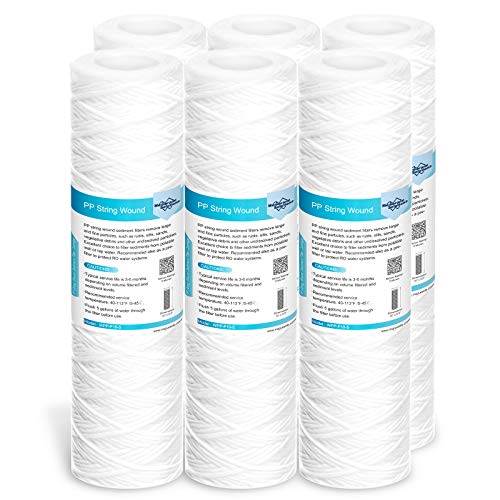
The Membrane Solutions 5 Micron String Wound filter is engineered specifically for homeowners dealing with sediment-heavy well water or municipal supplies prone to rust and particulates. Its deep graded honeycomb structure works by catching larger particles on the outer edges first, then progressively finer sediment toward the center core, which is a smart design that maximizes dirt-holding capacity without sacrificing water flow. This approach gives it roughly four times the sediment capacity and double the flow rate compared to standard polypropylene filters, making it a practical choice for whole-house systems that demand durability.
Protection is the real strength here. By removing up to 99% of sediment, rust, silt, sand, and other undissolved particulates, this prefilter shields your RO system, water softener, and downstream filters from premature clogging. It also protects your pipes, faucets, and shower heads from buildup that can reduce water pressure and damage fixtures over time. For homeowners with poor water quality, this first-stage defense is essential and often extends the life of your entire filtration investment.
The cartridge is made from food-grade, 100% polypropylene that is lead-free and BPA-free, meeting NSF/ANSI Standard 42 certification for material safety. With an expected lifespan of 15,000 to 20,000 gallons per cartridge, you should get six months or more between replacements depending on your inlet water quality. The universal 10x2.5 inch size fits most standard filter housings, making installation straightforward for DIYers upgrading or maintaining their water systems.
| Specification | Details |
|---|---|
| Micron Rating | 5 Micron |
| Dimensions | 10 x 2.5 x 2.5 inches |
| Pack Quantity | 6 Cartridges |
| Color | White |
| Weight | 0.36 pounds per unit |
| Material | Food-Grade Polypropylene (100%) |
| Filter Type | String Wound Sediment |
| Filtration Capacity | 15,000-20,000 gallons per cartridge |
| Sediment Removal | Up to 99% |
| Certifications | NSF/ANSI Standard 42 (Material Requirements) |
| Lead & BPA | Free |
| Compatibility | Universal 10-inch filter housings |
Installation: Turn off the water supply to your filtration system. Using a filter wrench, unscrew the old cartridge from the housing by turning counterclockwise. Remove and discard the spent filter. Rinse the filter housing interior with clean water to remove any sediment buildup. Screw the new Membrane Solutions cartridge into the housing by hand until snug, then use the filter wrench to tighten an additional one-quarter turn. Do not over-tighten.
Initial Operation: Turn the water supply back on slowly and check for leaks around the cartridge cap and housing. Run water for 2-3 minutes to flush air from the system and activate the new filter. You may notice slightly discolored water initially as the filter bed settles; this is normal and will clear within minutes.
Maintenance Schedule: Monitor water pressure and flow rate monthly. Replace the cartridge every six months or sooner if water pressure drops noticeably, indicating the filter is saturated. Keep spare cartridges on hand to avoid downtime. The replacement frequency depends on your inlet water quality; homes with very high sediment may need changes every 3-4 months.
Is This Filter Right for You? This cartridge is ideal if you have well water, live in an area with rusty or sediment-prone municipal water, or want to protect an expensive RO system or water softener. It works best as a first-stage prefilter in a multi-stage system rather than a standalone solution.
What to Consider: Verify your current filter housing uses the standard 10x2.5 inch cartridge size before ordering. Check your water pressure gauge before installation so you can monitor performance over time. If you have extremely high sediment loads, plan to replace cartridges more frequently and consider keeping multiple packs on hand. Budget for regular replacement costs since filters should be changed at least twice yearly in most situations.
System Compatibility: These cartridges work in whole-house systems, under-sink RO units, and commercial applications. They are compatible with most major housing brands that use the universal 10-inch cartridge format. If you are unsure about your system, measure your existing cartridge or check your system's manual before purchasing.
Maximize Filter Life: Install a sediment pre-screen or mesh strainer ahead of this filter if your water has very large particles or debris. This prevents premature clogging and extends cartridge life. Check your filter housing for sediment buildup during each change and rinse thoroughly.
Water Pressure Monitoring: A pressure drop of 15-20 PSI below your baseline indicates the filter is nearing saturation. Mark your starting pressure on the housing with tape so you can track performance easily. Don't wait for extremely low pressure; change early to maintain system efficiency.
Bulk Storage: Keep spare cartridges in a cool, dry place away from direct sunlight. The six-pack format is economical if you plan to use this filter long-term, but rotate stock so older cartridges are used first. Polypropylene can degrade if exposed to extreme heat or UV light for extended periods.

Pros
- WQA certified for durability and reliable performance over time
- Universal design fits most standard whole-home filters, giving you flexibility in replacements
- Stainless steel components resist corrosion and maintain a secure seal
- Protects all water-using appliances by filtering sediment and contaminants at the source
- Straightforward installation on 1-inch water mains with no special tools required
Cons
- Filter cartridges sold separately, adding to your initial setup cost and requiring research to find compatible options
- No reviews available yet, so real-world performance feedback from homeowners is limited
The Culligan WH-HD200-C is a whole-house water filter housing designed for homeowners looking to improve water quality at the point of entry. This system uses a universal design that accommodates most heavy-duty filter cartridges, making it a flexible choice if you want options when it comes time to replace filters. The stainless steel cap and engineered valve are built to withstand the demands of continuous filtration while maintaining a tight seal that prevents leaks.
In terms of what it removes, this filter housing reduces sediment, rust, scale, and coarse sand when paired with the right filter cartridge. These contaminants can damage appliances like water heaters and washing machines, so filtering them out at your home's main water line protects your investment in those systems. The WQA certification provides confidence that the housing itself meets industry standards for durability and performance, which matters when you're installing a system that will run continuously.
Keep in mind that the filter cartridges are sold separately, so you'll need to identify and purchase compatible replacements. This adds a step to your initial setup, but it also means you can choose filters based on your specific water quality needs. For homeowners with a 1-inch water main and concerns about sediment or appliance protection, this housing offers a straightforward, certified solution.
| Specification | Details |
|---|---|
| Brand | Culligan |
| Model | WH-HD200-C |
| Inlet/Outlet Size | 1 Inch |
| Colors Available | Copper, Transparent |
| Dimensions | 7.48 x 8.26 x 16.33 Inches |
| Weight | 9 Pounds |
| Key Materials | Stainless Steel Cap, Engineered Valve |
| Certification | WQA Certified |
| Filter Type | Universal Heavy-Duty (Sold Separately) |
Installation: Turn off your home's main water supply before beginning. Locate your 1-inch water main at the point of entry. Use a wrench to connect the inlet and outlet ports of the WH-HD200-C housing to your water line. Ensure all connections are hand-tight plus a quarter turn with a wrench to prevent leaks.
Filter Installation: Open the housing by turning the stainless steel cap counterclockwise. Insert your compatible filter cartridge into the housing, ensuring it seats properly. Close the cap by turning it clockwise until snug. Do not over-tighten.
Maintenance: Check your filter cartridge every 3 to 6 months, depending on your water quality. Replace the filter according to the cartridge manufacturer's recommended schedule, typically every 6 to 12 months. After replacing a cartridge, run water for a few minutes to purge air from the system.
Is This Right for You? The Culligan WH-HD200-C works best if you have a 1-inch water main and want to filter sediment, rust, and scale throughout your entire home. It's ideal for homeowners concerned about appliance protection or those with visible sediment or discoloration in tap water.
Before You Buy: Confirm your home's water main size is 1 inch. Identify compatible filter cartridges available in your area or online to avoid compatibility issues. Consider having a plumber install it if you're not comfortable working with water lines.
Compatibility Matters: This housing is universal, but not all filters fit all housings. Research compatible cartridges before purchasing to ensure you can find replacements when needed. Check product listings and manufacturer documentation to verify compatibility with your chosen filter brand.
Long-Term Value: Factor in the cost of replacement filters over time. While the housing is a one-time investment, filter cartridges are ongoing expenses. Compare costs across compatible filter options to understand your total cost of ownership.
Maximize Filter Life: Install a sediment pre-filter upstream if your water is very dirty or sandy. This protects your main filter and extends its usable life, saving you money on replacements.
Monitor Water Pressure: As your filter loads with sediment, water pressure may drop slightly. If pressure drops significantly, it's time to replace the cartridge. A pressure gauge on your system helps you track this.
Flush Regularly: After installing a new filter, run water through the system for several minutes to remove air and activate the filter media. This ensures optimal performance from day one.
Keep Records: Write the installation date on your filter cartridge with a marker. This helps you remember when to schedule your next replacement and prevents filters from staying in too long.
Check for Leaks: Inspect all connection points weekly during the first month after installation. A small drip early on is easier to fix than a major leak later. Hand-tighten connections if needed, but don't over-tighten the stainless steel cap.
Pros
- NSF-certified performance gives confidence in chlorine and sediment reduction
- Natural coconut shell carbon preserves healthy minerals while filtering contaminants
- Wide compatibility with major brands saves money by avoiding proprietary filters
- Rigorous quality control with 34 production processes and multiple pressure tests ensures reliability
- Four filters per pack provides 2 years of maintenance for typical households
Cons
- Not recommended for well water with high sediment content, which may clog filters prematurely
- No customer reviews available yet, so real-world performance data from end users is limited
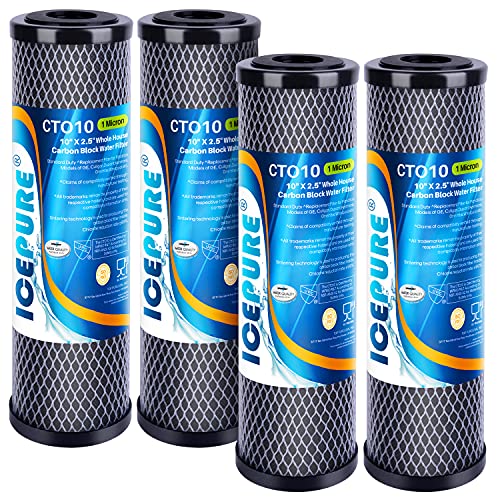
The ICEPURE 2.5" x 10" water filter cartridge is an NSF/ANSI 42 certified replacement designed for standard whole-house and RO filtration systems. It uses 100% natural coconut shell carbon combined with sintering technology to remove 99% of chlorine, taste, and odor while reducing heavy metals like mercury, copper, and cadmium. The filter preserves beneficial minerals such as potassium and calcium, maintaining naturally healthy water rather than stripping it completely.
Engineering and durability are core strengths here. Each filter undergoes 34 production processes, 400 PSI pressure testing, and 10,000 water hammer tests before shipping. The 3D multi-dimensional sealing technology creates a leak-proof fit that works across 50+ compatible models from DuPont, Whirlpool, GE, Culligan, and other major brands. This broad compatibility makes it an economical choice for homeowners looking to avoid expensive proprietary filters.
With a lifespan of up to 13,000 gallons per filter, the 4-pack provides roughly two years of filtration for an average household on a 6-month replacement schedule. The product is best suited for municipal tap water users; well water with high sediment content may reduce filter life significantly. ICEPURE's 26 years of industry experience and 200+ patents back this product, though it's worth noting this is an independent brand rather than an original equipment manufacturer.
| Specification | Details |
|---|---|
| Brand | ICEPURE |
| Filter Type | CTO Carbon Sediment (1 Micron) |
| Dimensions | 2.5" x 10" |
| Quantity | 4 Filters per Pack |
| Weight | 3.33 pounds |
| Color | Black |
| Material | Natural Coconut Shell Carbon, BPA-Free Housing |
| Filtration Capacity | Up to 13,000 gallons per filter |
| Recommended Replacement | Every 6 months |
| Certifications | NSF/ANSI 42, European EC1935-2004, Australian Water Mark |
| Pressure Rating | 400 PSI tested |
| Compatible Systems | Standard 10" x 2.5" RO units and whole-house systems |
Compatible Brands & Models: This filter works with any standard 10" x 2.5" whole-house or RO filtration system. Confirmed compatible models include DuPont WFPFC8002, WFPFC9001, SCWH-5, and DWC30001; Whirlpool WHCF-WHWC; GE FXWTC and FX12P; Culligan D-10A and D-10; Pentek CBC-10; and Aquaboon CTO systems.
Before You Buy: Verify your current filter housing dimensions match 2.5" x 10". Check your system's manual or look at your existing cartridge to confirm compatibility. If you're unsure, measure your filter housing or contact the original equipment manufacturer for clarification.
Water Source Matters: These filters are optimized for municipal tap water. If your home uses well water, especially water with visible sediment or high turbidity, ICEPURE recommends their specialized well-water filters (model B08H7Z5VZ2) for better performance and longer filter life.
Maximize Filter Life: Change your filter every 6 months regardless of usage, or sooner if water pressure drops noticeably. Sediment and chlorine accumulation reduces flow rate and filtration effectiveness over time. Setting a calendar reminder prevents you from overlooking replacements.
Installation Best Practices: Turn off water supply before removing the old cartridge. Flush the new filter by running water through it for 2-3 minutes before drinking to clear any carbon dust from manufacturing. Ensure the filter housing is clean and free of debris before inserting the new cartridge to prevent leaks.
Monitor Water Quality: If you notice chlorine taste returning before 6 months, your water may have higher contaminant levels than average, signaling a need for more frequent changes. Keep track of when you replace filters to establish your household's optimal replacement schedule based on actual usage and water quality.

Pros
- Comprehensive filtration addresses multiple water quality issues in one system
- Built-in pressure monitoring and timer reminders eliminate guesswork about filter replacement
- Pre-installed valves and included accessories reduce installation complexity and ongoing maintenance time
- Flexible plumbing adapters accommodate different home connection types
- Dual filter housings allow staggered replacement, minimizing water downtime
Cons
- No customer reviews available yet, so real-world performance data from homeowners is limited
- Replacement cartridges represent an ongoing cost, and filter life depends heavily on your local water quality
The HQUA WF3-01 is a whole-house water filtration system designed to address multiple water quality concerns simultaneously. It combines three filtration stages: a sediment filter to remove particles like rust and sand, a carbon block filter to eliminate chlorine and odors, and a compound GAC+KDF filter specifically engineered to reduce heavy metals including lead, mercury, arsenic, cadmium, and chromium. This multi-stage approach makes it suitable for homeowners dealing with discolored, cloudy, or foul-smelling water, as well as those concerned about chemical contamination.
Installation and maintenance are straightforward thanks to thoughtful design choices. The system ships with pressure relief and drain valves pre-installed, reducing the complexity of setup. Dual pressure gauges help you monitor when filters become clogged, while built-in 180-day countdown timers provide clear reminders about replacement schedules. The included cleaning brush and maintenance record card support ongoing upkeep, and flexible NPT adapters let you connect the system to 3/4-inch or 1-inch pipes depending on your home's plumbing configuration. The bracket-mounted or free-standing setup offers flexibility for different installation spaces.
The system uses Big Blue 20-inch by 5.5-inch filter cartridges, a standard in whole-house filtration that generally offers good availability and competitive pricing in the replacement market. However, actual filter life and effectiveness depend on your local water quality, mineral content, and household water usage. Homeowners should plan for regular cartridge replacement as part of their maintenance routine and budget accordingly for long-term operation.
| Specification | Details |
|---|---|
| Brand | HQUA |
| Model | WF3-01 |
| Filtration Stages | 3 (Sediment, Carbon Block, GAC+KDF) |
| Filter Type | Big Blue 20" x 5.5" Cartridges |
| Dimensions | 31" H x 23" W x 8" D |
| Weight | 44 lbs |
| Installation | Bracket-mounted or Free-standing |
| Pipe Connections | 3/4" NPT or 1" NPT (Adapters Included) |
| Pressure Monitoring | Multiple Pressure Gauges |
| Filter Life Timer | 180-day Countdown Timer |
| Included Accessories | Pressure Relief Valve, Drain Valve, Cleaning Brush, Maintenance Record Card, Flexible Adapters |
| Contaminants Reduced | Lead, Mercury, Arsenic, Cadmium, Chromium, Chlorine, Sediment, Odor, VOCs |
Installation: Shut off your main water supply before beginning. Decide whether to bracket-mount the system to a wall or place it free-standing near your water entry point. Use the included adapters to connect your home's main water line to the inlet port (typically 3/4-inch or 1-inch NPT). Connect the outlet port to your distribution line. Open the main water supply slowly and check all connections for leaks.
Operation: Once installed, water flows through all three stages automatically. No manual intervention is required during normal operation. The system has no flow direction requirement, so inlet and outlet can be reversed if needed for your plumbing layout.
Maintenance: Monitor the pressure gauges regularly. When pressure rises significantly above the starting pressure (recorded on your maintenance card), it signals filter clogging. Use the drain valve to depressurize the system, then unscrew the filter housing using the wrench. Replace the cartridge, use the included brush to clean the housing interior, reassemble, and record the new starting pressure on your maintenance card. Reset the 180-day timer when you replace a cartridge.
Stagger Replacements: The dual-filter design lets you replace cartridges at different times, minimizing water service interruption. Plan your replacement schedule so filters don't need changing simultaneously.
Track Your Pressure Baseline: Write down the starting pressure immediately after installing fresh cartridges. This baseline helps you recognize when filters are truly clogged versus normal fluctuations.
Water Quality Testing: Before and after installation, consider having your water tested by a local lab or through your municipal water department. This shows you what contaminants the system is actually removing and helps justify the investment.
Budget for Cartridges: Replacement filter cartridges are an ongoing expense. Research cartridge costs and typical replacement frequency for your area's water quality before purchasing, so you're prepared for lifetime operating costs.
Cold Water First: After cartridge replacement, run cold water through the system for 5 minutes before using it for drinking or cooking. This flushes any loose carbon dust from the new filters.
Is This System Right for You? The HQUA WF3-01 is best suited for homeowners who:
- Have concerns about heavy metal contamination (lead, mercury, arsenic) in their water supply
- Experience discolored, cloudy, or foul-smelling water from their taps
- Want a single system to address multiple water quality issues rather than point-of-use filters
- Are comfortable performing routine maintenance and replacing cartridges annually or as needed
- Have plumbing space and access for a 31-inch-tall, 23-inch-wide system
What This System Does NOT Do: This is a chemical and particulate filter, not a water softener. It does not remove dissolved minerals like calcium and magnesium that cause hard water. If you have hard water and want softening, you'll need an additional softening system or a combination unit.
Water Testing First: Before investing in any whole-house system, have your water tested. Your local health department or a certified lab can identify specific contaminants in your supply. This ensures you're buying a system that actually addresses your water's problems.
Cartridge Availability: Confirm that replacement Big Blue 20-inch cartridges are readily available and affordably priced in your area. Standard Big Blue cartridges are widely distributed, but prices vary by retailer and cartridge type.
Buying Guide: How to Choose the Right Whole House Water Filter
Picking the right whole house water filtration system comes down to knowing your water source, your household size, and which contaminants you actually need to remove. The market ranges from bare-bones sediment housings like the Culligan WH-HD200-C to fully loaded stainless-steel 3-stage systems from Express Water and iSpring. Use the sections below to match a system to your real-world needs before you buy.
Know Your Water Source First
City water and well water present different challenges. Municipal water is typically treated with chlorine or chloramine and may contain low levels of lead, VOCs, and PFAs from aging infrastructure. Well water often carries iron, manganese, sediment, and sometimes sulfur. Before you spend anything, request a water quality report from your utility or purchase an independent test kit. Your results will tell you exactly which filter media you need and prevent you from overpaying for capability you will never use.
Number of Filtration Stages
Single-stage housings like the Culligan WH-HD200-C accept one cartridge and are best used as a sediment pre-filter to protect downstream appliances. Three-stage systems such as the Express Water 3-Stage (B0BBZ8VZH1) and the HQUA WF3-01 layer sediment removal, carbon block filtration, and specialty media into a sequential process that handles a far broader range of contaminants. The iSpring WGB32BM adds a dedicated iron and manganese reduction stage, making it a practical solution for homes on well water. More stages generally mean better overall water quality, but they also raise upfront cost and installation complexity.
Flow Rate and Household Demand
Flow rate is measured in gallons per minute (GPM) and directly affects water pressure throughout your home. A household with two to three bathrooms typically needs at least 8 to 10 GPM to avoid noticeable pressure drops when multiple fixtures run simultaneously. Whole house systems that use dense carbon block media can restrict flow more than systems using granular or string-wound media. Check the manufacturer GPM rating and compare it to your household peak demand before purchasing. If your home already has borderline pressure, a high-flow design matters more than adding an extra filtration stage.
Filter Cartridge Life and Replacement Cost
The upfront price of a whole house filter is only part of the ownership equation. Replacement cartridges are an ongoing expense you will pay every three to twelve months depending on your water quality and household usage. Value packs like the PUREPLUS 5-micron cartridges (B01N2H2OO6) and Membrane Solutions string-wound filters (B082PXRJBZ) keep per-cartridge costs low on high-volume systems. The ICEPURE 1-micron carbon cartridges (B084DPJW37) offer finer filtration at a similarly accessible price point. Always factor annual cartridge costs into your total budget rather than comparing system prices alone.
Micron Rating and What It Means
The micron rating of a filter cartridge describes the size of particles it captures. A 5-micron cartridge removes sand, silt, rust, and larger sediment particles. A 1-micron cartridge captures finer particles including some cysts and very fine sediment. Lower micron ratings provide finer filtration but also restrict water flow faster and require more frequent cartridge changes in heavily sediment-loaded water. A common setup pairs a 5-micron sediment pre-filter with a 1-micron carbon block as a second stage, balancing protection with flow and cartridge longevity.
Inlet and Outlet Size
Whole house systems connect directly to your main water supply line. The most common residential pipe sizes are 3/4 inch and 1 inch. The Culligan WH-HD200-C uses a 1-inch inlet and outlet, which suits homes with larger supply lines and reduces pressure loss. Three-stage systems from Express Water and HQUA typically include adapters to fit standard residential plumbing. Confirm the connection size on your main line before ordering so you avoid unexpected fittings or adapter costs during installation.
Heavy Metal and Chemical Reduction
If your primary concern is heavy metals such as lead, arsenic, mercury, cadmium, or chromium, you need a system with purpose-built media beyond standard carbon. The HQUA WF3-01 specifically addresses this category with media designed to reduce those five heavy metals alongside chlorine and VOCs. The Express Water Ultimate Protection system (B0DFBJK5WG) pairs heavy metal reduction with anti-scale media, making it useful in areas with both hard water and metal contamination. Standard sediment and carbon-only systems will not meaningfully address dissolved heavy metals, so this distinction matters if you have confirmed contamination in your water report.
System Housing Material and Build Quality
Multi-stage systems come in plastic housing assemblies or stainless-steel frame configurations. The Express Water 3-stage model (B0BBZ8VZH1) uses a free-standing stainless-steel frame with three pressure gauges, which helps you monitor filter condition and identify when cartridges need replacement. Plastic housings are lighter and less expensive but can become brittle over years of temperature fluctuation in garages or utility closets. If your system will be installed in an unconditioned space, build quality and UV resistance of the housing deserves attention alongside the filtration specs.
Why Trust HomeThru
HomeThru is an independent review platform. We have no financial relationship with any of the brands featured in this article, and we do not sell, ship, or service any products. Our editorial team researched and analyzed hundreds of verified customer reviews, product specifications, manufacturer documentation, and publicly available water quality data to evaluate each system on its merits. We apply the same methodology across every category we cover, from air compressors to smart smoke detectors, to give you honest, independent guidance you can act on with confidence.
Our evaluation criteria for whole house water filters prioritized contaminant reduction capability, flow rate impact, long-term ownership cost, installation accessibility for the average homeowner, and verified customer satisfaction across a meaningful review sample. We weighted multi-stage complete systems and replacement cartridges separately because they serve different buyer needs. If you have questions about our methodology, our contact page is the right place to reach us. We do not handle product support, warranty claims, or returns for any manufacturer.
Final Thoughts
The best whole house water filter for your home depends on your water source, your household size, and the specific contaminants you need to address. The eight options in this guide cover the full spectrum from entry-level filter housings to premium 3-stage systems built for heavy metal and scale reduction. Here are our standout picks based on the research:
- Best Overall 3-Stage System: Express Water 3-Stage Whole House Water Filter System delivers broad-spectrum contaminant reduction including heavy metals, chloramine, chlorine, PFAs, lead, and arsenic in a durable stainless-steel frame with three pressure gauges for easy monitoring.
- Best for Well Water: iSpring WGB32BM 3-Stage Iron Filter Whole House stands out for its dedicated iron and manganese reduction alongside sediment and chlorine filtration, making it the most practical choice for households on private well water.
- Best for Heavy Metal and Scale Reduction: Express Water Whole House Water Filter System Ultimate Protection pairs heavy metal reduction with anti-scale media, covering the widest range of chemical and mineral threats for homes with complex water quality issues.
- Best Budget Entry Point: Culligan WH-HD200-C Whole House Water Filter System gives homeowners a reliable, professionally recognized housing for sediment protection and appliance longevity at an accessible price, with flexibility to choose your own cartridge.
- Best Value Replacement Cartridge: Membrane Solutions 5-Micron String Wound Whole House Water Filter offers a per-cartridge cost that makes high-frequency replacement practical for sediment-heavy water without straining your maintenance budget.
If you are also upgrading other areas of your home, it is worth looking at smart plugs for automating pump timers, outdoor security cameras for monitoring utility areas, and ladders suited for accessing overhead plumbing runs during installation. Reliable cordless drills and impact drivers make the mounting and plumbing work significantly easier if you are handling installation yourself.
Frequently Asked Questions
Do I Need a Whole House Filter If I Already Have a Refrigerator Filter?
A refrigerator filter only treats water going to the ice maker and dispenser. It does nothing for water used in the shower, dishwasher, laundry, or any other tap in your home. A whole house filter protects every outlet simultaneously, reduces scale buildup in appliances, and removes contaminants that affect your skin and hair in the shower, not just drinking water quality.
How Often Should I Replace Whole House Filter Cartridges?
Most sediment pre-filter cartridges in a whole house system should be replaced every three to six months depending on how much sediment your source water carries. Carbon block cartridges typically last six to twelve months. Systems with pressure gauges, such as the Express Water stainless-steel frame model, let you monitor pressure drop as a reliable indicator that a cartridge needs attention rather than relying solely on a calendar schedule.
Can I Install a Whole House Water Filter Myself?
Many homeowners with basic plumbing confidence install these systems successfully. The process involves cutting into your main supply line, installing shut-off valves, and connecting the filter housing with the correct fittings for your pipe size. A reliable reciprocating saw helps with cutting pipe cleanly, while caulk guns come in handy for sealing around utility room penetrations. If you are unsure about your supply line pressure or connection type, a licensed plumber can complete the job in under two hours.
Will a Whole House Filter Reduce My Water Pressure?
Any filter adds some resistance to water flow. How much depends on the cartridge micron rating, the filter housing design, and how loaded with sediment the cartridge is. Systems rated for 10 GPM or higher with clean cartridges installed typically cause no noticeable pressure drop in average households. Letting cartridges become clogged is the most common cause of pressure complaints. Monitoring your system with pressure gauges and replacing cartridges on schedule prevents this issue.
What Is the Difference Between a Whole House Filter and a Water Softener?
A whole house filter removes physical and chemical contaminants such as sediment, chlorine, heavy metals, and VOCs. A water softener addresses hardness minerals, specifically calcium and magnesium, through an ion exchange process that replaces them with sodium. The two systems serve different functions and are often installed together in series. Some premium whole house systems include anti-scale media that partially addresses hardness without a full softener, which suits mildly hard water situations without the salt maintenance a softener requires.