
If you’ve scrolled through kitchen and dining products lately, you’ve probably noticed splatterware appearing everywhere, from high-end boutiques to budget-friendly chains. This nostalgic pattern, characterized by scattered dots and a hand-finished appearance, is becoming one of the most talked-about trends in home decor right now. Understanding what’s driving this resurgence and how to style it properly can help you decide whether to bring this playful aesthetic into your own home.
What Exactly Is Splatterware and Why Is It So Popular Right Now
Splatterware gets its name from its signature look, which mimics paint or glaze deliberately splattered across a solid base. The pattern is intentionally random and imperfect, created to look as though color was flung directly at the piece with a brush. This unpredictability is central to its appeal, setting it apart from more precise, controlled patterns. Unlike manufactured designs, each splatterware piece feels genuinely handmade and unique.
The style experienced peak popularity in the 1990s, but it’s making a serious comeback today for good reason. Design professionals attribute this revival to nostalgia, but also to how well splatterware fits into modern decorating philosophies. Homeowners and designers are increasingly embracing what’s called slow decorating, which emphasizes spaces that feel collected, personal, and less polished over time. Splatterware embodies this aesthetic perfectly because it looks informal, casual, and genuinely lived-in rather than sterile or overly curated.
Traditional splatterware uses a metal base coated in enamel, which makes it exceptionally durable and long-lasting. This durability has deep roots, echoing utilitarian enamelware from wartime and camping equipment that was built to withstand heavy use. Modern splatterware pieces often capture that same sturdy quality while adding playful colors and patterns that feel decidedly contemporary.
Why Splatterware Works in Nearly Every Kitchen Style
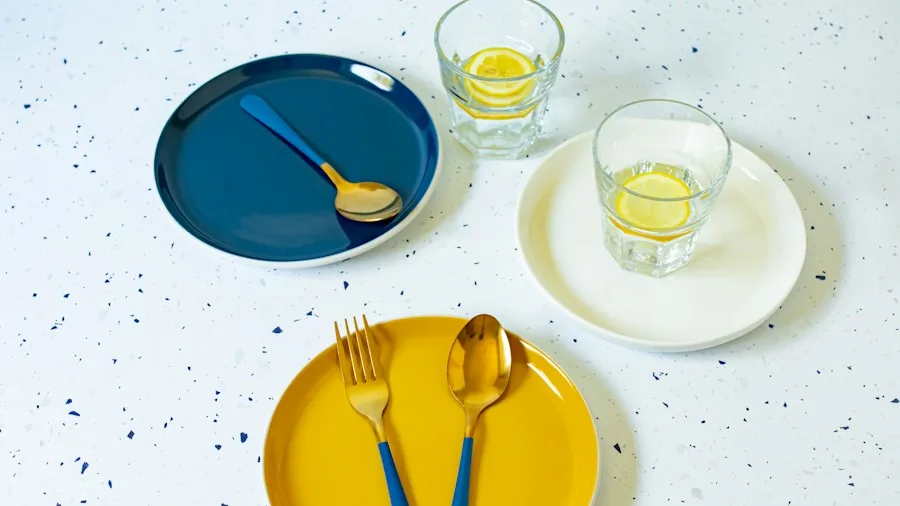
One of the biggest reasons splatterware is trending so widely is its versatility as a design element. Unlike trendy patterns that lock you into a specific aesthetic, splatterware adapts beautifully to nearly any decorating style. A cobalt or green speckled bowl, for example, can look equally at home in a farmhouse kitchen or a minimalist modern space. The key is understanding how color influences the overall feel.
Blue, green, brown, and terracotta splatterware pieces pair exceptionally well with rustic wood, natural stone, and vintage materials, making them ideal for cottagecore or country-inspired kitchens. These same pieces also work beautifully alongside honed marble or quartzite countertops, adding a collected, eclectic quality to contemporary spaces. Bright, multicolored splatterware leans playful and retro, while muted, earthy tones feel more old-world and grounded. Even when working with a challenging kitchen layout, splatterware can serve as a unifying design element that ties disparate elements together.
The color you select matters more than matching everything perfectly. Rather than trying to make splatterware coordinate with existing kitchen hues, design professionals recommend pulling one color from the splatterware piece and building around it. Cobalt pairs beautifully with warm ivory, deep brown, olive, and natural wood. Green splatterware works well with cream, burgundy, dusty blue, and terracotta accents.
How to Style Splatterware Like a Design Professional
If you’re considering adding splatterware to your kitchen, the golden rule among designers is: less is more. Rather than purchasing an entire coordinated set, start with just a few pieces you genuinely love and mix them gradually with items you already own. This approach creates that collected, intentional look that makes splatterware so appealing in the first place. A splattered serving bowl or pitcher mixed with simple white dishes, vintage glassware, and old silver serving pieces creates visual interest while maintaining an effortless quality.
Introducing multiple patterns and textures alongside your splatterware is actually encouraged, not avoided. Thoughtful styling choices, whether for tableware or kitchen storage solutions, demonstrate intentional design. Splatterware works particularly well when mixed with solid colors, linear patterns, geometric linens, and natural materials like rattan. Ribbed glassware can create visual structure against the randomness of the splatter pattern. However, avoid layering too many busy patterns of the same visual weight, as this can feel chaotic rather than collected.
The ultimate goal is creating a dining or kitchen experience that feels like a carefully curated collection you’ve built over time, not a museum display. This means choosing slightly imperfect, muted colors for a more authentic aesthetic, and allowing your splatterware to evolve naturally as you add pieces. Kitchen transformations succeed when they balance trendiness with personal style, and splatterware offers exactly that flexibility.