

A single router sitting in one corner of your home was never designed to push a strong, consistent signal through multiple floors, thick walls, and every room where your family streams, games, video calls, or controls smart displays and other connected devices. Mesh WiFi systems solve that problem by spreading several coordinated nodes throughout your home so every device connects to the nearest, strongest access point automatically. After independently researching and comparing dozens of options, we narrowed the list down to the 7 mesh WiFi systems that deliver the best combination of coverage, speed, reliability, and value for real homes. Whether you are upgrading a single-story apartment or blanketing a sprawling multi-floor house, there is a system on this list that fits your needs and budget.
The best mesh WiFi systems today range from budget-friendly tri-band AC kits to cutting-edge WiFi 7 platforms capable of handling multi-gigabit internet plans. Brands like TP-Link, Amazon eero, and NETGEAR have each brought something distinct to the table, and understanding what separates them saves you from overspending on features you will never use or underspending on hardware that cannot keep up. A solid mesh network also becomes the backbone for every smart home gadget you add later, from smart thermostats to outdoor security cameras, so getting the foundation right matters.
Top Mesh WiFi Systems We Recommend

Pros
- Exceptional coverage for large homes with intelligent mesh technology that learns and adapts to your environment
- Multiple Gigabit ports per unit provide flexibility for wired connections and stronger backhaul performance
- Comprehensive security features including HomeShield, parental controls, and QoS without subscription fees
- Supports 150+ devices, making it future-proof for growing smart home ecosystems
- Works with all major internet service providers and requires minimal setup time
Cons
- No user reviews available yet, so real-world performance feedback from homeowners is limited
- AX3000 speeds are moderate compared to higher-end Wi-Fi 6 models, which may not suit bandwidth-heavy households
The TP-Link Deco X55 delivers Wi-Fi 6 performance across large homes with a 3-pack that covers up to 6,500 square feet. This mesh system eliminates the need for separate routers and extenders, providing seamless connectivity throughout your space. Each unit features three Gigabit Ethernet ports, giving you nine total ports across the 3-pack for flexible wired connections and ethernet backhaul to boost speeds where it matters most.
What sets this system apart is its AI-driven mesh technology, which learns your home's layout and network patterns to optimize performance automatically. The system connects 150+ devices reliably, making it suitable for modern households with multiple smartphones, tablets, smart home devices, and streaming services. Setup is straightforward through the Deco app, and you can manage your network remotely, adjust parental controls, and monitor connected devices from anywhere.
Security is a core strength here. TP-Link's commitment to the CISA Secure-by-Design pledge means this router is built with advanced protection as a foundation. HomeShield provides basic network security, Quality of Service controls, and parental controls at no extra cost, protecting your family and devices without subscription fees. The system works with all major ISPs, though a modem is required for most connections.
| Specification | Details |
|---|---|
| Model | TP-Link Deco X55 (3-Pack) |
| Wi-Fi Standard | Wi-Fi 6 (802.11ax) |
| Speed Rating | AX3000 (2402 Mbps 5GHz + 574 Mbps 2.4GHz) |
| Coverage Area | Up to 6,500 square feet |
| Device Capacity | 150+ connected devices |
| Ethernet Ports | 3 Gigabit ports per unit (9 total in 3-pack) |
| Backhaul Support | Wired Ethernet Backhaul |
| Antenna Configuration | 2x2 HE160 (5GHz) + 2x2 (2.4GHz) |
| Security | CISA Secure-by-Design certified, TP-Link HomeShield |
| Security Features | Basic Network Security, QoS, Parental Controls |
| Management | Deco app with remote access |
| ISP Compatibility | All major ISPs (Comcast, Charter, AT&T, Verizon, Spectrum, Cox, etc.) |
Is This Right for You? The Deco X55 is ideal for homeowners with large homes (3,000-6,500 sq ft) who want reliable Wi-Fi 6 coverage without dead zones. It's perfect for families with multiple smart home devices, streaming services, and remote workers who need stable connectivity.
Coverage Considerations With three units in the pack, you can strategically place them to cover your entire home. Each unit can function as a router, so you have flexibility in placement. Wired ethernet backhaul between units will provide the fastest performance if your home has existing ethernet runs.
Device Capacity If your household has 50+ connected devices (including phones, tablets, smart lights, cameras, thermostats, etc.), this system is built to handle that load without performance degradation.
Security Priorities If network security and parental controls are important to you, the included HomeShield features provide solid protection without ongoing subscription costs. This is especially valuable for families with children or those concerned about IoT device security.
Setup Expectations The Deco app guides you through setup visually, so even non-technical users can get the system running in minutes. You'll need an existing modem connected to the internet before you begin.
Optimize Placement Position your first Deco unit (the router) near your modem and central to your home. Place the other two units in areas with weak signal or in high-traffic zones. Avoid corners, closets, and metal objects that interfere with radio signals.
Enable Wired Backhaul If you have ethernet runs between rooms, connect your Deco units with ethernet cables instead of relying on wireless backhaul. This significantly improves speed and reduces congestion on your Wi-Fi bands.
Use the App Features The Deco app lets you set up guest networks, schedule Wi-Fi on/off times, and monitor bandwidth usage by device. Explore the parental controls to manage which devices can access the network during certain hours.
Keep Firmware Updated Enable automatic firmware updates in the app to ensure your system always has the latest security patches and performance improvements.
Leverage QoS Settings Use Quality of Service controls to prioritize bandwidth for work-from-home devices or streaming services, ensuring critical activities get priority during peak usage times.

Pros
- Exceptional coverage area eliminates dead zones in large homes
- 6GHz band provides clean, interference-free connections for compatible devices
- Strong security features with CISA Secure-by-Design commitment
- Intelligent mesh automatically adapts to your usage patterns and environment
- Simple setup process and intuitive mobile app control
Cons
- WiFi 6E devices are still limited, so most users won't fully utilize the 6GHz band yet
- Premium pricing reflects advanced features that may exceed needs for smaller homes under 2,000 sq ft
The TP-Link Deco XE75 represents a significant leap forward in home WiFi technology, bringing WiFi 6E capabilities to homeowners seeking future-proof connectivity. The standout feature is the new 6GHz band, which operates independently from legacy WiFi devices and dramatically reduces interference. This is especially valuable in dense urban environments or homes with numerous smart devices competing for bandwidth. The tri-band architecture ensures that all three frequency bands work in concert, delivering the promised 5,400 Mbps total throughput while maintaining stable connections across 200 devices.
Coverage and performance are where this system truly excels. The three-unit pack covers up to 7,200 sq ft with seamless roaming, meaning you can move throughout your home without experiencing connection drops or buffering. The AI-driven mesh learns your network patterns and automatically optimizes performance, adjusting band steering and backhaul connections without manual intervention. Setup is refreshingly straightforward through the Deco app, which provides step-by-step visual guidance and lets you manage your network remotely, including guest WiFi control via Alexa voice commands.
Security is a core strength, with TP-Link's commitment to the CISA Secure-by-Design pledge and built-in HomeShield protection. The free tier includes network security scanning, IoT device identification, basic parental controls, and quality-of-service management. Compatibility is universal across major ISPs, making this a practical choice regardless of your internet provider. For large homes and users who demand high performance with minimal hassle, the Deco XE75 delivers solid value.
| Specification | Details |
|---|---|
| WiFi Standard | WiFi 6E (802.11ax) |
| Band Configuration | Tri-band (2.4GHz, 5GHz, 6GHz) |
| Total Speed | 5,400 Mbps |
| 2.4GHz Speed | 574 Mbps |
| 5GHz Speed | 2,402 Mbps (HE160) |
| 6GHz Speed | 2,402 Mbps (HE160) |
| Coverage Area | Up to 7,200 sq ft (3-pack) |
| Device Support | Up to 200 devices |
| Security | TP-Link HomeShield, CISA Secure-by-Design |
| Voice Control | Amazon Alexa compatible |
| ISP Compatibility | All major ISPs (Comcast, Charter, AT&T, Verizon, etc.) |
| Setup Method | Deco app with visual guidance |
| Backhaul Options | 6GHz band or WiFi |
Is This Right for You? The Deco XE75 is best suited for homeowners with large homes (over 3,000 sq ft), heavy WiFi usage, or numerous smart home devices. If you have a smaller home or minimal connectivity needs, a standard WiFi 6 mesh system may be more cost-effective.
Key Considerations: While the 6GHz band is a major advantage, WiFi 6E device adoption is still growing. Most of your current devices won't connect to 6GHz yet, but this system future-proofs your home. Ensure you have a compatible modem for your ISP before purchasing. The system works with all major providers but requires a separate modem in most cases.
Installation Tips: Position the main unit in a central location away from walls and metal objects for optimal coverage. The app-guided setup takes just minutes. Consider using the 6GHz band as a dedicated backhaul initially to maximize performance between units, then switch to WiFi Network mode once you acquire 6GHz-compatible devices.
Maximize Coverage: Place the main Deco unit in a central location on your home's main floor. Position satellite units where coverage is weakest, typically at opposite ends of your home or on different floors. Avoid closets, cabinets, and areas surrounded by metal or water pipes.
Optimize Performance: Use the 6GHz band as a dedicated backhaul between units for the fastest inter-node communication. Once you have 6GHz-capable devices, switch to WiFi Network mode in the app. Enable AI-driven optimization in settings to let the system automatically manage band steering and device placement.
Security and Management: Enable HomeShield's security features and set up parental controls through the app. Use guest WiFi for visitors to keep your main network isolated. Regularly check the weekly reports in HomeShield to monitor network health and identify unusual activity. Update firmware automatically through the app settings.

Pros
- WiFi 7 future-proofs your home network with significantly faster speeds than current WiFi 6 systems
- Three-piece system covers large homes efficiently without requiring additional satellites
- Tri-band technology maintains fast speeds even when multiple devices stream simultaneously
- Integrated security features with automatic updates provide ongoing protection without extra fees
- 2.5 Gig port accommodates fiber and high-speed broadband for maximum performance
Cons
- Premium pricing reflects cutting-edge WiFi 7 technology, making it a significant investment for budget-conscious buyers
- Requires U.S. operation only, limiting use for international travelers or those with properties outside the country
The NETGEAR Orbi 770 represents the latest generation of mesh networking, leveraging WiFi 7 technology to deliver speeds up to 11Gbps across your entire home. This tri-band system combines a central router with two satellite extenders to blanket up to 8,000 square feet, making it well-suited for larger homes, multi-story properties, or homes with challenging layouts. The enhanced backhaul technology ensures that your connection remains fast whether you're in the primary router's range or relying on a satellite extender.
Performance and device management stand out as key strengths. The system handles up to 100 connected devices simultaneously without noticeable slowdowns, and the 2.5 Gig Internet port ensures you're not bottlenecked if you have high-speed fiber or gigabit broadband. WiFi 7 delivers meaningful speed improvements over WiFi 6, and the system maintains full backward compatibility with older devices, so you won't face issues integrating older phones, tablets, or smart home accessories.
Security and ease of use round out the package. NETGEAR has built in Advanced Router Protection with automatic firmware updates, removing the burden of manual security maintenance from homeowners. The elegant new design with high-performance antennas blends into modern homes while delivering reliable 360-degree coverage. For those building a smart home or managing a household with numerous connected devices, this system provides the bandwidth and reliability needed for years to come.
| Specification | Details |
|---|---|
| Model | NETGEAR Orbi 770 Series (RBE773) |
| WiFi Standard | WiFi 7 |
| Maximum Speed | Up to 11Gbps |
| Coverage Area | Up to 8,000 sq ft |
| System Configuration | 1 Router + 2 Satellite Extenders |
| Bands | Tri-Band |
| Connected Devices | Up to 100 devices |
| Internet Port | 2.5 Gig Ethernet |
| Coverage Pattern | 360-Degree |
| Backhaul Technology | Enhanced Backhaul |
| Security | Advanced Router Protection with Automatic Firmware Updates |
| Device Compatibility | Backward compatible with older WiFi devices |
| Regional Availability | U.S. only |
Is This Right for You? The Orbi 770 is ideal if you have a large home (over 6,000 sq ft), live in a multi-story house, or deal with WiFi dead zones despite owning a good router. It's also perfect if you have numerous smart home devices, stream 4K video on multiple screens, or work from home and need reliable, fast connectivity.
When to Consider Alternatives: If your home is under 3,000 sq ft or you're budget-conscious, a single high-end router or a two-piece mesh system may suffice. If you don't plan to upgrade devices for several years, a WiFi 6 mesh system offers excellent value at a lower price point.
Setup and Integration: Mesh systems like the Orbi 770 are designed for straightforward setup. Expect to unbox the router and satellites, connect the router to your modem, power on all units, and use the NETGEAR app to configure your network. The system will handle most optimization automatically. Ensure your internet plan supports gigabit or higher speeds to fully benefit from WiFi 7 capabilities.
Optimal Router Placement: Position the main router in a central, elevated location away from walls and metal objects. This maximizes signal distribution to satellite extenders and throughout your home. Avoid placing it in closets, cabinets, or corners.
Satellite Positioning: Place satellites where they receive a strong signal from the router but also cover dead zones. Typically, one satellite per floor or one in the back of the house works well for most homes. Avoid placing satellites too close to the router, as this reduces coverage efficiency.
Network Optimization: Regularly check the NETGEAR app for firmware updates and enable automatic updates if available. Keep your WiFi password secure and consider creating a separate guest network for visitors. Monitor connected devices periodically and remove any unknown devices to maintain security and performance.

Pros
- True mesh system with one unified network name eliminates the frustration of switching between multiple WiFi networks
- Lifetime free HomeCare subscription provides continuous security updates and parental controls without recurring fees
- Simple app-based setup allows most users to install and configure the system in under 10 minutes
- Six total Gigabit Ethernet ports (two per unit) provide flexibility for wired connections and backhaul options
- Adaptive routing intelligently manages traffic, maintaining stable connections even with 100+ connected devices
Cons
- Performance may not match higher-end WiFi 6 mesh systems if you have extremely demanding bandwidth needs or large numbers of simultaneous 4K streams
- Coverage is limited to 5,500 sq. ft., so homeowners with significantly larger properties may need additional units beyond the 3-pack
The TP-Link Deco M5 addresses one of the most common frustrations homeowners face: unreliable WiFi coverage and dead zones in different parts of the house. This three-unit mesh system replaces the traditional router-plus-extender setup with a unified network that automatically routes your devices through the strongest connection point. Unlike older extender systems that force you to manually switch between network names, the Deco M5 keeps everything under one SSID, so your devices stay connected seamlessly as you move from room to room.
Performance is handled by TP-Link's Adaptive Routing technology, which continuously monitors network conditions and automatically selects the best path for each device. This means your smartphone, laptop, smart TV, and other connected devices get optimized performance without you having to manage anything manually. The system supports up to 100+ devices, making it practical for modern homes with multiple phones, tablets, smart home gadgets, and streaming devices all competing for bandwidth.
Security and ease of use round out the package. The included lifetime TP-Link HomeCare subscription delivers antivirus protection, parental controls, and Quality of Service tools to help you manage bandwidth and protect younger users. Setup takes just minutes through the Deco app, and the system works with Alexa for voice control. With six Gigabit Ethernet ports across the three units and support for wired backhaul, you have flexibility to hardwire devices or create a more robust backbone for your mesh network.
| Specification | Details |
|---|---|
| Model | TP-Link Deco M5 |
| Coverage Area | Up to 5,500 sq. ft. |
| Package Contents | 3-pack mesh units |
| Connected Devices | 100+ devices supported |
| Network Standard | WiFi 5 (802.11ac) |
| Ethernet Ports | 2 Gigabit ports per unit (6 total) |
| Backhaul Support | Wired Ethernet backhaul capable |
| Routing Technology | Adaptive Routing for optimized performance |
| Security | TP-Link HomeCare (lifetime free subscription) |
| Security Features | Antivirus protection, parental controls, QoS |
| Setup Method | TP-Link Deco app with guided instructions |
| Voice Assistant | Compatible with Alexa |
| ISP Compatibility | Works with most major internet service providers |
| Modem Required | Yes, for most ISP connections |
Initial Setup: Unbox all three Deco units and place one near your modem (this will be your main router). Download the TP-Link Deco app on your smartphone and follow the guided setup wizard. The app will walk you through connecting to your modem, naming your network, and creating a WiFi password. This typically takes 5-10 minutes.
Placement of Additional Units: Position the other two Deco units in areas with poor WiFi coverage, such as bedrooms, home offices, or entertainment rooms. For best results, place them roughly halfway between your main router and the areas you want to cover. Avoid placing units in closets, basements, or areas surrounded by metal objects, as these can interfere with signal strength.
Wired Backhaul (Optional): For improved performance, connect one or more Deco units to your main router using Ethernet cables. This creates a wired backbone for your mesh network and can significantly improve speeds in areas far from the main unit. Use any of the two Gigabit ports on each unit for this purpose.
Device Management: Use the Deco app to monitor connected devices, adjust parental controls, enable Quality of Service to prioritize certain devices or activities, and manage security settings. The app also provides real-time network health information and allows you to restart units or reboot your entire network remotely.
Is This System Right for You? The Deco M5 is ideal for homeowners with houses up to 5,500 sq. ft. who want to eliminate WiFi dead zones without dealing with multiple network names or complex setup. It's particularly well-suited for families with many connected devices (phones, tablets, smart home gadgets, streaming devices) and those who want built-in parental controls and security without paying monthly subscription fees.
When to Consider Alternatives: If your home exceeds 5,500 sq. ft., you may need to purchase additional units or consider a larger mesh system. If you have extremely demanding bandwidth requirements (multiple simultaneous 4K streams, online gaming tournaments, large file transfers), a WiFi 6 mesh system might offer better performance, though at a higher price point. If you prefer maximum flexibility and advanced customization options, you might want a more technical mesh system, though setup would be more complex.
What You'll Need: A modem connected to your internet service provider is required. You'll also need a smartphone or tablet to run the Deco app during setup, though the system can be managed from any device afterward. For optimal performance, consider having Ethernet cables available if you want to set up wired backhaul connections.
Key Questions to Ask Yourself: Does your home have WiFi dead zones? Do you have 100+ connected devices or plan to add smart home gadgets? Would you benefit from parental controls? Is your current setup using multiple network names? If you answered yes to these questions, the Deco M5 is likely a strong fit for your needs.
Optimize Unit Placement: Avoid placing Deco units directly on the floor or in enclosed spaces. Position them at least 3-5 feet off the ground on shelves, desks, or wall-mounted brackets for better signal distribution. Keep units away from microwaves, cordless phones, and other devices that operate on the 2.4 GHz frequency, as these can cause interference.
Use Wired Backhaul When Possible: If you have Ethernet cables running to different areas of your home, connect at least one additional Deco unit via Ethernet backhaul. This dramatically improves performance compared to wireless backhaul and reduces latency for devices connected to that unit.
Fine-Tune QoS Settings: Use the Deco app's Quality of Service feature to prioritize bandwidth for work-from-home devices, streaming services, or gaming systems. This ensures that critical activities maintain strong performance even when other household members are using the network heavily.
Enable Parental Controls Strategically: If you have children, set up parental controls through the HomeCare feature. You can schedule internet access times, block inappropriate content, and monitor browsing activity by device. These controls are particularly useful for managing screen time during school nights or homework hours.
Keep Firmware Updated: Check the Deco app periodically for firmware updates. These updates improve performance, add new features, and patch security vulnerabilities. Enable automatic updates if the app offers this option.
Monitor Network Health: Regularly review the network status in the Deco app to identify any connected devices that might be causing performance issues or security concerns. The app displays signal strength for each unit, helping you identify if repositioning might improve coverage.

Pros
- Exceptional coverage and device capacity make it future-proof for growing smart homes
- Wi-Fi 7 multi-link operation delivers noticeably faster speeds for streaming and gaming
- Intelligent TrueMesh software minimizes connection drops and optimizes network performance
- Dual 5 GbE ports support high-speed fiber internet without bottlenecking
- Industry-leading three-year warranty demonstrates manufacturer confidence
Cons
- Premium pricing places it above budget mesh systems, requiring significant upfront investment
- Optional eero Plus subscription adds recurring costs for full security and parental control features
The eero Pro 7 represents a significant leap in mesh Wi-Fi technology, bringing Wi-Fi 7 performance to homes that demand speed and reliability. With tri-band architecture and support for internet speeds up to 5 Gbps, this system handles fiber connections and bandwidth-intensive activities like 4K streaming, online gaming, and video conferencing without compromise. The dual 5 GbE ports eliminate potential bottlenecks, ensuring your network can match your internet service provider's speeds.
Coverage and device capacity set this system apart for larger homes and power users. Three units blanket 6,000 sq. ft. while maintaining stable connections for 600+ devices simultaneously, a crucial advantage for households with numerous smart home devices, security cameras, and connected appliances. The patented TrueMesh software continuously monitors your network and automatically routes devices to the optimal band and frequency, reducing the manual adjustments that plague traditional mesh systems.
Practical features round out the package: backward compatibility means you can integrate eero Pro 7 units with older eero hardware, and the optional eero Plus subscription provides advanced security layers including Malwarebytes protection, ad blocking, and parental controls. The three-year warranty and responsive support team add confidence to this investment, making it a solid choice for homeowners seeking a premium, long-term mesh Wi-Fi solution.
| Specification | Details |
|---|---|
| Model | eero Pro 7 |
| Wi-Fi Standard | Wi-Fi 7 (802.11be) |
| Configuration | Tri-band mesh system |
| Coverage Area | Up to 6,000 sq. ft. (3-pack) |
| Wireless Speeds | Up to 3.9 Gbps |
| Internet Support | Plans up to 5 Gbps |
| Ethernet Ports | Two 5 GbE auto-sensing ports per unit |
| Device Capacity | 600+ devices |
| Key Technology | TrueMesh, TrueRoam, TrueChannel, Multi-link Operation (MLO) |
| Backward Compatibility | Compatible with all previous eero generations |
| Security Features | Optional eero Plus: Advanced Security, Ad Blocking, Parental Controls, Malwarebytes, 1Password, VPN by Guardian |
| Warranty | Three years |
| Support | Email: [email protected] | Phone: +1-877-659-2347 |
Is This Right for You? The eero Pro 7 suits large homes (3,000+ sq. ft.), households with 100+ connected devices, and anyone with fiber internet or plans exceeding 1 Gbps. If you work from home, stream 4K content, or game competitively, the investment pays dividends through reliability and speed.
Setup and Installation: The eero system uses a mobile app for intuitive setup, typically completed in 10-15 minutes. Position the main unit centrally and place additional units on different floors or in distant rooms for optimal coverage. The system automatically configures itself and manages band steering without user intervention.
Network Management: The eero app provides real-time network insights, device management, and connection troubleshooting. For advanced users, the system supports guest networks, parental controls (with eero Plus), and detailed security monitoring. Firmware updates deploy automatically to maintain security and performance.
Long-Term Value: The three-year warranty and proven durability of eero systems mean this investment protects your network investment. Backward compatibility allows you to add older eero units if needed, and the system scales easily as your home expands or your device count grows.
Optimal Placement: Position the main eero Pro 7 in a central, elevated location away from walls, metal objects, and appliances. Secondary units perform best when placed on different floors or at the perimeter of coverage areas. Avoid closets, cabinets, and enclosed spaces that block Wi-Fi signals.
Maximize Wi-Fi 7 Performance: Ensure your devices support Wi-Fi 7 to take full advantage of the 3.9 Gbps speeds. Older devices will connect but at their native Wi-Fi standard. Position Wi-Fi 7 devices closer to router units for best performance on demanding tasks like 4K streaming or large file transfers.
Leverage TrueMesh Intelligence: The system's automatic band steering works best when you disable manual band selection on your devices. Let the TrueMesh algorithm route your devices to the strongest and fastest available connection. Check the eero app periodically to review which devices connect to which bands.
Security Best Practices: Consider subscribing to eero Plus for Malwarebytes protection, especially if your network includes smart home devices from multiple manufacturers. Enable parental controls if you have children, and use the guest network feature for visitors to isolate their traffic from your primary devices.

Pros
- WiFi 7 standard future-proofs your investment for upcoming device compatibility
- Expansive coverage area eliminates dead zones in larger homes without additional hardware
- High device capacity handles smart home ecosystems, streaming, gaming, and work-from-home needs
- 2.5GB port provides wired connectivity for servers, NAS, or gaming consoles
- Solid 4.2/5 rating reflects consistent user satisfaction across real-world conditions
Cons
- WiFi 7 devices remain limited, so you won't fully leverage the speed upgrade immediately
- Premium pricing reflects the newer technology, making it a larger upfront investment than WiFi 6 alternatives
The NETGEAR Orbi 370 represents a solid step forward for homeowners ready to adopt WiFi 7 technology. The system combines a primary router with two satellite extenders to blanket up to 6,000 square feet, making it well-suited for multi-story homes, large single-level spaces, and properties with challenging layouts. The BE5000 specification indicates robust throughput capacity, and the ability to handle 70+ simultaneous connections means your network won't struggle even as your smart home ecosystem grows.
What sets this system apart is the inclusion of a 2.5GB ethernet port on the main unit, which allows you to hardwire high-bandwidth devices like network-attached storage, gaming consoles, or desktop computers. This hybrid wired-wireless approach gives you flexibility in how you optimize your network. Built-in security features provide baseline protection without requiring a separate subscription, though advanced threat monitoring may require additional software. The mesh architecture ensures seamless handoff as you move between rooms, eliminating the frustration of manual network switching.
User feedback highlights the straightforward setup process and reliable performance in typical home environments. The mobile app provides convenient control over guest networks, device management, and basic troubleshooting. While WiFi 7 adoption is still in its early stages, this system positions you well for the next generation of wireless devices. The 4.2/5 rating suggests most users find the balance between performance, coverage, and ease of use worthwhile, though some note that full WiFi 7 benefits require compatible devices.
| Specification | Details |
|---|---|
| Model | RBE373 |
| WiFi Standard | WiFi 7 (802.11be) |
| Total Speed Rating | BE5000 (5 Gbps) |
| Coverage Area | Up to 6,000 sq ft |
| Connected Devices | 70+ |
| System Configuration | 1 Router + 2 Extenders |
| Ethernet Ports | 2.5GB port on main unit |
| Security Features | Built-in network security |
| Setup Method | Mobile app or web interface |
| Mesh Technology | Seamless roaming between nodes |
Is This Right for You? The Orbi 370 works best for homeowners with medium to large homes who want modern WiFi 7 technology without waiting years for devices to catch up. If your current network struggles with dead zones, drops connection during video calls, or can't handle multiple simultaneous streams, this system addresses those pain points effectively.
What to Consider Before Buying Evaluate your home's square footage and layout. While 6,000 sq ft is substantial, homes with many walls, multiple floors, or metal studs may need strategic placement of the extenders. If you have fewer than 20 connected devices and live in a smaller space, a single WiFi 7 router might suffice and save money. Conversely, if you're building a comprehensive smart home, this system's 70+ device capacity provides excellent headroom.
Maximizing Performance Position the main router centrally and elevated for best coverage distribution. Place extenders where they can still receive a strong signal from the router. The 2.5GB port is ideal for wiring your most bandwidth-hungry device directly to the main unit. Use the mobile app to monitor network health and adjust security settings as your needs evolve.
Optimal Placement Strategy Mount your router at eye level or higher in a central location away from walls and metal objects. Position extenders roughly one-third and two-thirds of the way through your coverage area rather than at the far edges, where signal quality may be too weak to extend effectively.
Network Performance Tuning Use the 2.5GB port for devices that stream 4K video, handle large file transfers, or run video conferencing. Keep WiFi connections for mobile devices, tablets, and smart home devices that don't require maximum bandwidth. This hybrid approach prevents congestion and maintains consistent speeds across your network.
Security and Maintenance Enable guest networks for visitors to keep your main network isolated. Regularly update the system firmware through the app to patch security vulnerabilities and improve performance. Monitor connected devices periodically to identify and remove any unauthorized access, especially if you share your WiFi password with multiple people.
Pros
- True mesh networking with seamless roaming eliminates the need for multiple network names and passwords
- Straightforward mobile app setup takes minutes, even for non-technical homeowners
- Parental controls offer granular per-child restrictions on screen time and website access
- Wired Ethernet backhaul option significantly boosts performance in larger homes
- Excellent device capacity at 100+ simultaneous connections handles modern smart home ecosystems
Cons
- AC1900 speeds are adequate but not cutting-edge for users with fiber internet or high-bandwidth needs
- No built-in modem means you'll need to purchase or rent a separate modem from your ISP
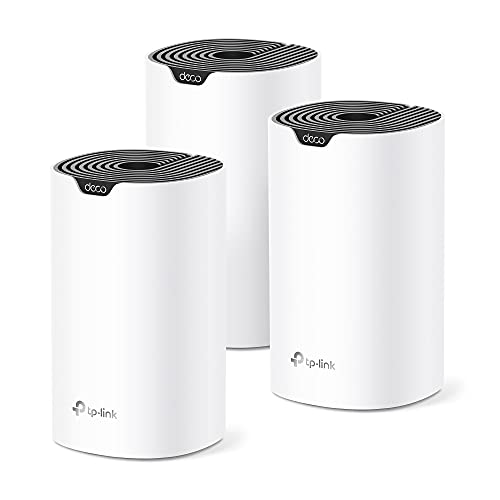
The TP-Link Deco S4 mesh system addresses one of the most common frustrations homeowners face: spotty WiFi coverage and dead zones. By deploying three units that work together as a unified network, you get consistent signal throughout homes up to 5,500 square feet. Unlike traditional WiFi extenders that require you to manually switch networks as you move around, the Deco S4 handles roaming automatically, keeping you connected to the strongest unit without interruption.
Setup is refreshingly simple. The Deco app walks you through installation on iOS or Android, and you can manage the network from your phone anytime. Features like robust parental controls let you create individual profiles for each family member, limiting screen time and blocking inappropriate content without complex router menus. The system also integrates with Alexa, so you can toggle guest WiFi using voice commands. With six Gigabit Ethernet ports across the three units and support for wired backhaul, you can hardwire devices or connect units via Ethernet for more stable, faster performance.
The AC1900 standard with 3x3 6-stream technology is solid for most households, supporting up to 100 connected devices. This makes it well-suited for homes with multiple smartphones, tablets, smart speakers, cameras, and IoT devices. The system works with any major ISP and doesn't lock you into proprietary modems, giving you flexibility and control over your network hardware.
| Specification | Details |
|---|---|
| Brand | TP-Link |
| Model | Deco S4 |
| WiFi Standard | AC1900 (802.11ac) |
| Speed | 3x3 6-stream AC1900 |
| Coverage Area | Up to 5,500 sq ft (3-pack) |
| Number of Units | 3 |
| Maximum Devices Supported | 100+ |
| Ethernet Ports | 2 Gigabit per unit (6 total) |
| Backhaul Support | Wired Ethernet backhaul |
| Mesh Technology | TP-Link Deco Mesh Technology |
| Setup Method | Mobile app (iOS/Android) |
| Parental Controls | Yes, per-profile customization |
| Voice Control | Works with Alexa |
| ISP Compatibility | All major ISPs (AT&T, Verizon, Xfinity, Spectrum, Cox, etc.) |
| Modem Required | Yes (not included) |
Is This Right for You? The Deco S4 is ideal if you're dealing with WiFi dead zones in a home up to 5,500 square feet and want a plug-and-play solution without technical complexity. It's perfect for families who value parental controls and anyone tired of managing multiple WiFi networks.
Who Should Skip It? If you have fiber internet with gigabit speeds or need the absolute fastest WiFi standard (WiFi 6), consider upgrading to a newer mesh system. Also, if your home is larger than 5,500 sq ft, you may need additional units beyond the 3-pack.
Setup Checklist Gather your internet modem, download the Deco app before unboxing, and plan unit placement: one near your modem, others in central locations away from walls and metal objects. Wired backhaul (connecting units via Ethernet) will give you the best performance if you have the infrastructure.
Maximize Coverage: Place the main Deco unit near your modem and internet entry point. Position the other two units in central locations on different floors or at opposite ends of your home, away from walls, metal objects, and appliances like microwaves.
Use Wired Backhaul: If you can run Ethernet cables between units, do it. Connecting Decos via Ethernet dramatically improves speeds and stability compared to wireless backhaul, especially in larger homes.
Leverage Parental Controls: Set up individual profiles for each child early. You can schedule online time windows, block specific websites, and monitor usage from the app without complex router settings.
Guest WiFi for Visitors: Enable guest WiFi through the app or via Alexa voice command. Guests get internet access without seeing your main network password.
Mesh WiFi Systems Buying Guide
Choosing among the best mesh WiFi systems is not simply a matter of picking the most expensive kit or the one with the most nodes. Your home size, wall construction, internet plan speed, number of connected devices, and budget all factor into which system actually performs well for you. The sections below walk through every key consideration so you can make a confident, informed decision.
Coverage Area and Number of Nodes
Coverage is the most fundamental spec to match to your home. Most three-pack mesh kits are marketed for homes in the range of five thousand to eight thousand square feet, but real-world performance depends heavily on floor plan layout, wall materials, and how many physical obstacles the signal must penetrate. Concrete, brick, and metal-framed walls cut range significantly compared to standard wood-frame construction. As a practical rule, start with a two-pack for apartments or smaller single-story homes, and move to a three-pack for multi-story or larger open-plan spaces. You can usually add satellite nodes later if gaps appear, which makes expandability another worthwhile feature to check before you buy.
WiFi Generation: WiFi 5, WiFi 6, WiFi 6E, and WiFi 7
The WiFi generation a system uses determines both its maximum theoretical throughput and how efficiently it handles many simultaneous connections. WiFi 5 (AC) systems like the TP-Link Deco M5 and Deco S4 remain capable and affordable options for households with moderate device counts and internet plans up to a few hundred megabits per second. WiFi 6 (AX) systems such as the TP-Link Deco X55 introduce OFDMA and MU-MIMO improvements that reduce congestion when dozens of devices are active at once. WiFi 6E kits like the TP-Link Deco XE75 add a third six-gigahertz band that is largely free of interference, making it an excellent choice for dense neighborhoods with crowded airwaves. WiFi 7 platforms, represented here by the Amazon eero Pro 7 and both NETGEAR Orbi 770 and 370 models, deliver the highest throughput and lowest latency available today, though their advantages are most apparent if your internet plan actually delivers multi-gigabit speeds. Pairing any modern mesh system with capable smart locks, smart doorbells, and other IoT devices becomes much smoother when your network can handle dense device traffic without slowing down.
Dual-Band vs. Tri-Band and Dedicated Backhaul
Dual-band mesh systems use two radio frequencies: the 2.4 GHz band and one 5 GHz band. Because those same bands carry both client traffic and the inter-node backhaul communication, performance can degrade as more devices connect or as you add nodes farther from the router. Tri-band systems reserve one radio (often an additional 5 GHz or 6 GHz channel) exclusively for node-to-node backhaul, keeping client traffic and backhaul from competing for bandwidth. For most households with more than fifteen or twenty connected devices, or for homes where nodes cannot be placed close together, a tri-band system is worth the additional cost. Ethernet backhaul, available on the TP-Link Deco X55 and other higher-end kits, is the gold standard if you can run a cable between nodes since it completely eliminates wireless backhaul latency.
Speed Ratings and Real-World Throughput
Advertised speed ratings like AC1900, AX3000, or AXE5400 are aggregate figures combining all bands under ideal lab conditions. Real-world speeds at typical distances with walls in between are always lower. A more useful benchmark is the rated speed on the primary 5 GHz band, since most client devices connect there for high-bandwidth activities like streaming or gaming. For households with gigabit internet and heavy use, look for systems rated at AX3000 or higher. For moderate plans and lighter use, AC1900 or AC1200 provides plenty of headroom without unnecessary expense. Your internet plan is often the actual bottleneck, so matching the system to your plan speed is more important than chasing the highest possible rating.
App Control and Smart Home Integration
Every modern mesh system ships with a companion smartphone app for setup and ongoing management. Quality varies considerably. The best apps provide device prioritization, parental controls, guest network management, real-time speed monitoring, and firmware update alerts without requiring a computer or technical knowledge. Amazon eero integrates natively with Alexa for voice controls and seamlessly connects with the broader Amazon smart home ecosystem. TP-Link Deco systems work with Alexa and include built-in antivirus and parental control features through their HomeShield service. NETGEAR Orbi bundles Armor security powered by Bitdefender for additional network-level threat protection. A reliable mesh network also makes managing other smart home additions far easier, whether that means monitoring video baby monitors, scheduling smart sprinkler controllers, or automating motorized blinds.
Security Features and Subscription Costs
Hardware cost is only part of the total ownership picture. Some mesh systems offer their full feature set for free after purchase, while others gate advanced features like intrusion detection, parental controls, or priority support behind recurring subscriptions. TP-Link HomeShield Pro, Amazon eero Plus, and NETGEAR Armor are all optional paid tiers worth evaluating. If network security is a priority, especially if you have a growing collection of smart devices including smart plugs and smart light bulbs that rarely receive firmware updates, a subscription-backed security layer adds meaningful protection without requiring a separate router-level firewall setup.
Port Configuration and WAN Compatibility
Most mid-range mesh systems include Gigabit Ethernet ports for wired device connections, which is sufficient for the majority of current internet plans. Higher-end systems like the NETGEAR Orbi 770 and 370 include 2.5 Gigabit WAN ports that support multi-gigabit fiber plans now rolling out in many cities. If you are on a standard gigabit or slower plan today but expect to upgrade within the next several years, a 2.5G port gives your hardware a longer useful lifespan. Checking port counts per node is also worthwhile if you plan to wire in smart TVs, gaming consoles, or network-attached storage drives without running additional switches.
Why Trust HomeThru
HomeThru is an independent review publication with no retail arm, no product sales, and no affiliation with any manufacturer. Our editorial team researches, analyzes, and evaluates products by studying verified owner feedback across thousands of real-world reviews, comparing manufacturer specifications in depth, monitoring long-term reliability reports, and cross-referencing findings from multiple independent sources. We receive no compensation from brands in exchange for favorable coverage. Every recommendation on this page reflects our honest assessment of which products deliver the best experience for homeowners. We cover a wide range of home categories, from wireless home security systems to top-rated robot vacuums and smart switches, always with the same independent standard applied.
Final Thoughts
The mesh WiFi systems on this list cover every major use case and price tier. Here is a quick summary of our top picks to help you land on the right choice for your home.
- Best Overall: Amazon eero Pro 7 delivers WiFi 7 performance, seamless Alexa integration, and a polished app experience that makes whole-home network management genuinely effortless, earning it the top spot for most households upgrading to a premium mesh system.
- Best for Large Homes: NETGEAR Orbi 770 Series covers up to eight thousand square feet with tri-band WiFi 7 speeds up to eleven gigabits and a dedicated 2.5 Gig internet port, making it the strongest choice for spacious homes on multi-gigabit fiber plans.
- Best Mid-Range Pick: TP-Link Deco XE75 brings the interference-free six-gigahertz band of WiFi 6E to a competitive price point, with AI-driven band management and independent reviewers recognition as the pick for most people.
- Best WiFi 6 Value: TP-Link Deco X55 offers AX3000 WiFi 6 speeds, three Gigabit ports per node, and Ethernet backhaul support at a mid-range price that still leaves room in the budget for other smart home upgrades.
- Best Budget Pick: TP-Link Deco S4 gives budget-conscious households reliable AC1900 whole-home coverage across five thousand five hundred square feet with Alexa support and Gigabit ports, backed by tens of thousands of positive owner reviews.
No single system is right for everyone. If you are managing a growing collection of smart devices, including smart smoke detectors, smart speakers, and smart ceiling fans, investing in a tri-band or WiFi 6E system now will serve you better as your device count grows. Start with your coverage needs and internet plan speed, then move up the list from there based on budget.
Frequently Asked Questions
How Many Nodes Do I Need for My Home?
For most homes under two thousand square feet on a single floor, a two-node kit provides solid coverage. Three-node kits are the right starting point for multi-story homes or floor plans between two thousand and five thousand square feet. Larger properties or homes with particularly thick walls may benefit from a four-node setup or a system that supports easy node expansion. Most manufacturers publish coverage estimates per node, so divide your total square footage by that figure as a rough planning guide, then round up one node if your walls are masonry or if you have a basement.
Is WiFi 7 Worth the Cost Right Now?
WiFi 7 hardware like the Amazon eero Pro 7 and NETGEAR Orbi 770 and 370 series represents a genuine generational improvement in throughput, latency, and multi-device efficiency. However, those gains are most noticeable if your internet plan delivers multi-gigabit speeds and if your client devices also support WiFi 7. For the majority of households on gigabit or slower plans with current laptops and phones, a WiFi 6E or WiFi 6 system delivers excellent day-to-day performance at a significantly lower price. WiFi 7 is a smart future-proofing investment if you plan to keep your mesh hardware for five or more years.
Can I Mix Nodes from Different Brands?
Generally, no. Mesh systems use proprietary protocols to coordinate seamless roaming and backhaul management between nodes, and those protocols are not interoperable across brands. TP-Link Deco nodes work together, eero nodes work together, and NETGEAR Orbi nodes work together, but you cannot mix a Deco satellite with an eero router. If you want to expand coverage later, you need to add a node from the same product family. This is an important reason to choose a platform from a brand that offers a clear upgrade and expansion path.




Write Your Review
No reviews yet. Be the first to share your experience!