A reliable portable generator can be the difference between riding out a power outage comfortably and scrambling in the dark. Whether you need backup power for your home, a quiet inverter unit for an RV trip, or a solar-ready power station for weekend camping, the market now offers more options than ever. Our team at HomeThru independently researched, compared, and evaluated dozens of models to bring you this curated list of the best portable generators available today, spanning gas-powered workhorses, dual-fuel units, and lithium-battery power stations from brands like Westinghouse, Jackery, EF ECOFLOW, WEN, Anker, Oxseryn, and PowerSmart.
Whether you’re preparing for hurricane season, planning an off-grid adventure, or simply want peace of mind when the grid goes down, there’s a model on this list that fits your wattage needs and budget. Prices range from budget-friendly options to premium, feature-packed units, so you can find the right fit without overspending. And if you’re already outfitting your garage or workshop, pairing a solid generator with a set of smart tool storage solutions keeps everything accessible when you need it most.

Pros
- Dual-fuel design provides flexibility to use propane for longer storage and cleaner operation
- Remote start with key fob is genuinely convenient during emergencies or bad weather
- Transfer switch ready outlet simplifies professional installation for whole-home backup
- Digital VFT display shows real-time voltage, frequency, and runtime hours for monitoring
- Heavy-duty construction with automatic low-oil shutdown protects the engine
Cons
- At 210 pounds, this generator requires significant effort to move without a dolly or wheeled cart
- No reviews currently available, so real-world user feedback and long-term reliability data are limited
The Westinghouse 12500W dual-fuel generator represents a practical middle ground for homeowners seeking reliable emergency backup without the complexity of larger units. With 9,500 running watts on gasoline or 8,500 on propane, it handles essential home circuits including sump pumps, refrigerators, water heaters, and HVAC systems. The dual-fuel capability is particularly valuable for long-term storage, since propane doesn't degrade like gasoline, making it ideal for seasonal or infrequent use.
Key features that stand out include the remote electric start with included key fob, which eliminates the frustration of pull-cord starting during emergencies. The transfer switch-ready 30A outlet is designed to integrate safely with a professional electrician's installation, while the RV-ready 50A outlet and standard household receptacles provide flexibility for various power needs. The 457cc 4-stroke engine includes a cast iron sleeve and automatic low-oil shutdown, addressing durability concerns common in this class of generator. Runtime reaches approximately 12 hours on a full tank, reducing the need for frequent refueling during extended outages.
The package comes well-equipped with a 12V battery charger, oil, tools, and a comprehensive manual. Westinghouse backs the unit with a 3-year limited warranty and nationwide customer service network. The digital VFT display provides real-time feedback on voltage output, frequency, and lifetime operating hours, helping you monitor performance and maintenance schedules. While the 210-pound weight demands proper handling and storage planning, the overall construction and feature set make this a solid investment for homeowners prioritizing reliability and ease of use.
| Specification | Details |
|---|---|
| Running Watts (Gasoline) | 9,500W |
| Peak Watts (Gasoline) | 12,500W |
| Running Watts (Propane) | 8,500W |
| Peak Watts (Propane) | 11,200W |
| Engine | 457cc 4-Stroke OHV, Cast Iron Sleeve |
| Fuel Tank Capacity | 6.6 Gallons |
| Runtime | Up to 12 Hours (at 50% load) |
| Start Type | Remote Electric + Recoil |
| Outlets | 2x 120V GFCI (20A), 1x 120V Transfer Switch Ready (30A), 1x 120/240V RV (50A) |
| Dimensions | 27.2 x 26.1 x 26.5 Inches |
| Weight | 210 Pounds |
| Warranty | 3-Year Limited Coverage |
| Compliance | EPA Compliant, CARB Compliant |
Fuel Handling: Always refuel outdoors and away from ignition sources. Allow the engine to cool for at least 5 minutes before adding fuel. Use fresh gasoline with no more than 10% ethanol, or use fuel stabilizer for extended storage. Never overfill the tank.
Electrical Safety: Keep the generator at least 20 feet from windows, doors, and vents to prevent carbon monoxide buildup. Use properly grounded extension cords rated for outdoor use. Never connect the generator directly to home electrical wiring without a licensed electrician installing a transfer switch. Ensure all outlets have rubber covers or appropriate load-rated connections before use.
Operating Conditions: Run the generator on a level, dry surface protected from rain and standing water. Avoid wet hands when operating switches or touching outlets. Check oil levels before each use and monitor the automatic low-oil shutdown feature. Never operate indoors or in enclosed spaces. Allow adequate ventilation around the unit for cooling and exhaust dispersal.
Is This Generator Right for You? This unit suits homeowners who need reliable emergency backup for essential circuits but don't require industrial-grade capacity. It works well for homes with 100-200 amp service panels and moderate power needs. If you're planning to run an entire house simultaneously, consult with an electrician about your home's actual load requirements.
Installation Considerations: Proper installation requires a licensed electrician to set up a transfer switch, which safely isolates your home from the grid during operation and prevents backfeeding that could harm utility workers. Budget 800-1,500 dollars for professional installation. The generator itself requires a dry, level storage location with good ventilation.
Maintenance and Long-Term Ownership: Plan for annual maintenance including oil changes, spark plug inspection, and fuel system checks. The dual-fuel capability means you can switch to propane for seasonal storage, extending the time between refueling cycles. Keep the battery charged and perform monthly no-load starts to keep the engine conditioned. Budget for occasional tune-ups and replacement parts like air filters and spark plugs over the unit's lifespan.

Pros
- Exceptional battery longevity with LiFePO4 chemistry and 10-year design lifespan
- Remarkably fast charging options via app-controlled emergency mode and standard 1.7-hour charge
- Excellent port variety supports simultaneous charging of multiple device types
- Lightweight and compact design makes it genuinely portable for outdoor adventures
- Advanced ChargeShield 2.0 technology prioritizes safety during rapid charging cycles
Cons
- Solar panels sold separately, adding to total system cost
- Requires Jackery app activation for 1-hour fast charging; defaults to slower 1.7-hour mode to preserve battery health
The Jackery Explorer 1000 V2 represents a meaningful upgrade in portable power for homeowners and outdoor enthusiasts. Its 1,070Wh LiFePO4 battery delivers genuine staying power, with the manufacturer's engineering designed to maintain over 70% capacity after 4,000 charge cycles. This translates to a realistic 10-year lifespan, making it a solid long-term investment rather than a disposable gadget. The combination of 1,500W continuous output and 3,000W surge capacity means you can run multiple appliances simultaneously, from refrigerators and air conditioners to electric kettles and power tools.
What sets the V2 apart is its thoughtful charging flexibility. The advertised 1-hour emergency charging is genuinely fast, though it requires enabling the feature in the Jackery app before each use. The default 1.7-hour charging mode reflects the manufacturer's commitment to battery longevity, a smart trade-off for users who aren't always in a rush. The ChargeShield 2.0 technology actively manages charge rates to prevent degradation, which explains why this unit can handle thousands of cycles without significant capacity loss. The included LED lights and pure sine wave AC output add practical value for camping and emergency situations.
Port variety is comprehensive: two USB-C ports (one with 100W PD fast charging), one USB-A port, one DC car port, and three pure sine wave AC outlets. This flexibility means you can charge phones, tablets, laptops, and AC-powered devices all at once. The 23.8-pound weight and foldable handle make it genuinely portable for a 1,000Wh unit, though solar panels are sold separately and must be Jackery-branded for compatibility. For homeowners seeking reliable backup power or frequent campers needing sustainable energy, this power station delivers both performance and durability.
| Specification | Details |
|---|---|
| Battery Capacity | 1,070Wh LiFePO4 |
| AC Output | 1,500W continuous / 3,000W surge peak |
| USB-C Output | 100W PD fast charging (dual ports) |
| AC Ports | 3 pure sine wave outlets |
| Additional Ports | 1 USB-A, 1 DC car port, LED lights |
| Charging Time | 1 hour (emergency mode) / 1.7 hours (standard) |
| Battery Lifespan | 4,000+ cycles, 10+ years |
| Capacity Retention | 70%+ after 4,000 cycles |
| Weight | 23.8 pounds |
| Dimensions | 12.87 x 8.82 x 9.72 inches |
| Color | Black |
| Included Accessories | User manual (solar panels optional) |
| App Control | Jackery app for charging mode selection |
Maximize Battery Health: Use the standard 1.7-hour charging mode for daily use and reserve the 1-hour emergency mode for genuine time-sensitive situations. This approach preserves your battery's longevity and keeps capacity loss minimal over years of use.
Leverage the App's Quiet Mode: The 30dB overnight charging mode is genuinely quiet. If you're powering this during camping trips or in shared spaces, activate quiet mode in the Jackery app to avoid disturbing others while maintaining a full charge by morning.
Plan Your Port Usage: The 100W USB-C port is powerful enough for laptops and tablets, but if you're charging multiple devices, prioritize high-demand items on the USB-C ports and use USB-A for lower-power accessories to maximize efficiency.
Solar Expansion Strategy: If you plan to use this off-grid, invest in Jackery's compatible solar panels. The power station's efficiency combined with solar input creates a genuinely sustainable backup system for extended camping or emergency situations.
Monitor via App: The Jackery app provides real-time power consumption data. Check it periodically to understand which devices drain your battery fastest, helping you prioritize usage during extended off-grid periods.
Is This Right for You? The Explorer 1000 V2 suits homeowners seeking reliable emergency backup power, frequent campers needing portable electricity, and off-grid living enthusiasts. Its 1,070Wh capacity handles most household devices for several hours, making it practical for power outages. The lightweight design works for car camping and RV trips without requiring a truck bed or heavy lifting.
Capacity Considerations: At 1,070Wh, this unit runs a 100W device for roughly 10 hours, or a 500W refrigerator for 2 hours. Calculate your actual power needs before purchasing. For extended off-grid living, consider pairing it with solar panels (sold separately) to recharge during daylight hours.
Charging Infrastructure: Standard wall charging takes 1.7 hours, which is reasonable for overnight recharging. The 1-hour emergency mode requires app activation and is best reserved for urgent situations. If you're purchasing this for emergency backup, keep it plugged in during normal times so it's ready when needed.
Warranty and Support: Jackery's 10-year design lifespan reflects confidence in the LiFePO4 battery's durability. Verify the warranty terms with the retailer, as coverage varies by region and purchase channel. The app-based controls are intuitive, and customer support is generally responsive.
Budget Planning: Factor in the cost of compatible solar panels if you want true off-grid capability. The power station itself is reasonably priced for its capacity and features, but a complete system requires additional investment.
Pros
- Exceptionally lightweight and portable compared to traditional generators, making it genuinely movable by one person
- Quiet operation allows use in residential settings without generating neighbor complaints or hearing fatigue
- Clean power output protects sensitive devices and electronics from voltage fluctuations and surges
- Fuel shutoff feature prevents stale fuel damage and reduces seasonal maintenance requirements
- Versatile outlet selection accommodates phones, tablets, computers, and standard household appliances
Cons
- 1900 rated watts limits simultaneous operation of larger appliances like air conditioners or power tools
- No reviews available yet to assess real-world reliability and long-term durability from actual users
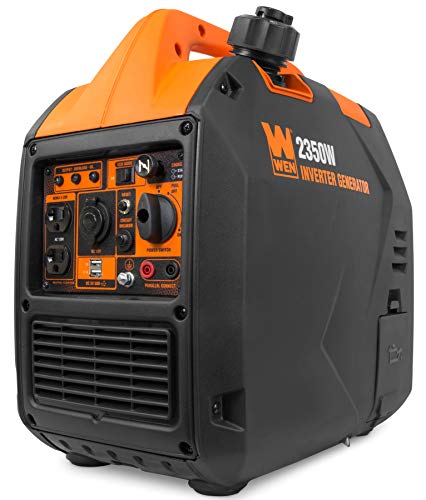
The WEN 56235i stands out in the portable generator market by prioritizing two things homeowners actually care about: weight and noise. At 39 pounds, this inverter generator is genuinely portable in a way that larger units simply aren't. Whether you're loading it into an RV, carrying it to a tailgate, or storing it in a garage corner, the lightweight design removes the barrier to actually owning and using a backup power source.
The quiet operation is equally impressive. WEN rates this unit to operate at conversation-level volume, which translates to around 53-56 decibels under typical loads. This matters more than specs alone suggest: you can run this generator during an outdoor event or power outage without creating a neighborhood nuisance. The inverter technology delivers clean, stable power with minimal harmonic distortion, making it safe for charging phones, running laptop chargers, and powering sensitive electronics that would normally require expensive surge protection.
The fuel shutoff mechanism is a thoughtful engineering choice that extends the generator's lifespan. By automatically consuming remaining fuel in the carburetor before shutdown, it prevents the buildup of varnish and gum that commonly damages small engines left idle for months. Combined with the two-year warranty and the variety of outlet options (120V, 12V DC, and USB ports), this generator delivers practical value for homeowners seeking reliable emergency power or recreational use without the bulk of traditional models.
| Specification | Details |
|---|---|
| Brand | WEN |
| Model | 56235i |
| Power Output (Surge) | 2350 Watts |
| Power Output (Rated) | 1900 Watts |
| Weight | 39 Pounds |
| Dimensions | 17.3 x 11.5 x 17.5 inches |
| Color | Black |
| Outlets | Two 120V receptacles, one 12V DC receptacle, two 5V USB ports |
| Fuel Shutoff | Yes, automatic |
| Warranty | 2 years |
| Type | Portable Inverter Generator |
Starting the Generator: Fill the fuel tank with fresh unleaded gasoline. Switch the fuel valve to the ON position. Move the choke lever to the COLD position if starting for the first time or after extended storage. Pull the recoil starter handle with a quick, firm motion until the engine catches. Once running, gradually move the choke to WARM, then FULL RUN.
Connecting Devices: Plug standard household devices into the two 120V receptacles for regular appliances and electronics. Use the 12V DC outlet for battery chargers or 12V accessories. Connect phones, tablets, and small USB devices to the dual 5V USB ports. Avoid overloading the generator by monitoring total wattage of connected devices against the 1900-watt rated capacity.
Shutting Down: Reduce the load on the generator by unplugging devices. Switch the fuel valve to the OFF position and allow the engine to run until it stops naturally. This automatic fuel shutoff process drains remaining fuel from the carburetor and prepares the unit for storage. Never shut off the engine abruptly with the fuel valve in the ON position.
Fuel and Storage: Always use fresh, unleaded gasoline. Store fuel in approved containers away from living spaces. Never refuel the generator while it is running or hot. Store the generator in a dry, well-ventilated area away from children and pets. Empty the fuel tank if storing for more than 30 days, or add fuel stabilizer to prevent carburetor damage.
Ventilation and Carbon Monoxide: Never operate this generator indoors, in basements, garages, or partially enclosed spaces. Carbon monoxide is a colorless, odorless gas that accumulates quickly in enclosed areas and can be fatal. Always run the generator outdoors at least 20 feet away from windows and doors. Position the exhaust outlet away from people, pets, and buildings.
Electrical Safety: Inspect the power cord and outlets for damage before use. Do not use the generator in wet conditions or with wet hands. Avoid overloading by connecting only devices that total less than 1900 watts. Keep the generator away from water, mud, and rain. Use a surge protector for sensitive electronics like computers and televisions. Allow the engine to cool for at least 15 minutes before refueling or performing maintenance.
Is This Generator Right for You? The WEN 56235i works best for homeowners who prioritize portability and quiet operation over maximum power output. If you need backup power for essential devices during outages, camping power for a weekend trip, or tailgate entertainment, this unit delivers. If you plan to run heavy-duty power tools, air conditioners, or multiple high-wattage appliances simultaneously, you'll need a larger generator with higher rated watts.
Power Capacity Considerations: The 1900-watt rated capacity supports most household electronics: refrigerators (600-800W), microwaves (1000-1500W), televisions (100-300W), laptops (65-100W), and phones (5-15W). However, you cannot run a microwave and refrigerator simultaneously on this unit. Plan your power needs carefully and understand which devices are essential during an outage.
Comparing Alternatives: When evaluating portable inverter generators, compare three factors: weight (this unit at 39 pounds is exceptionally light), noise level (conversation-level operation is quieter than most competitors), and clean power output (inverter technology protects sensitive electronics). Consider whether you need 12V DC and USB charging capabilities, as not all generators include these features. Read independent reviews from actual users to assess long-term reliability before purchasing.

Pros
- Excellent runtime on ECO mode provides extended backup during power outages without frequent refueling
- Quiet operation under 72 dB allows use in noise-sensitive environments like campgrounds and residential areas
- Lightweight and portable design makes it practical for both emergency home backup and recreational RV use
- Multiple outlet types accommodate different power needs from phones to RV hookups
- Factory-tested for reliability before shipment
Cons
- No verified customer reviews available, making it difficult to assess real-world performance and durability over time
- Open frame design offers less weather protection than enclosed models, requiring a cover for outdoor storage
The Oxseryn 4400W inverter generator strikes a practical balance between power output and portability for homeowners seeking backup power or RV enthusiasts needing reliable energy on the road. With 3400 running watts and 4400 peak watts, it can handle essential household loads like refrigerators, sump pumps, and power tools, while the inverter technology ensures clean power for sensitive electronics. The ECO mode is particularly noteworthy, extending runtime to 14 hours at 25% load, which means fewer fuel stops during extended outages.
Noise levels are a significant strength here. At 72 dB from 23 feet away, this generator operates quieter than most competitors in its class, making it suitable for campgrounds with quiet hours and residential neighborhoods where noise complaints are a concern. The 56-pound weight and compact dimensions (19 x 15.6 x 19.1 inches) make it manageable for one person to transport, though you'll want a hand truck or dolly for frequent moving. The included fuel gauge and 2-gallon tank provide convenient fuel monitoring without guessing games.
The multi-outlet configuration including 2x120V AC ports, 1x12V DC port, and 1x RV port addresses diverse power needs, whether you're charging phones, running appliances, or hooking up to an RV. Factory testing provides baseline confidence in functionality, though the open frame design means you'll need to invest in a weather cover for outdoor storage. The lack of existing customer feedback means early adopters should carefully monitor performance and keep documentation for warranty purposes.
| Specification | Details |
|---|---|
| Brand | Oxseryn |
| Peak Watts | 4400W |
| Running Watts | 3400W |
| Noise Level | 72 dB @ 23 feet |
| Fuel Tank Capacity | 2 gallons |
| Max Runtime (ECO Mode) | 14 hours @ 25% load |
| Weight | 56 pounds |
| Dimensions | 19 x 15.6 x 19.1 inches |
| Color | Orange |
| AC Outlets | 2x 120V |
| DC Outlet | 1x 12V |
| RV Port | 1x RV-ready outlet |
| Frame Type | Open frame |
Is This Generator Right for You? The Oxseryn 4400W works best for homeowners who need backup power for essential appliances during outages, or RV owners who want quiet, portable energy for camping trips. With 3400 running watts, it can handle most household devices simultaneously, though you'll need to manage high-draw items like central AC units or electric water heaters.
Power Capacity Considerations At 3400 running watts, this generator can power a refrigerator (600W), microwave (1000W), and several lights simultaneously. It's not suitable as a whole-home backup for homes with electric heating or central air conditioning, but it excellently covers critical loads. Peak watts (4400W) help start devices with high inrush current like compressors and motors.
Fuel Efficiency and Runtime The ECO mode is a game-changer for extended outages. At 25% load (roughly 850 watts), you'll get 14 hours from a 2-gallon tank. At 50% load, expect 7-8 hours. Full load reduces runtime significantly, so calculate your actual needs before purchasing. Keep extra fuel stored safely in approved containers for extended emergencies.
Noise and Neighbor Considerations At 72 dB, this generator is quieter than most alternatives, comparable to normal conversation volume. This makes it suitable for RV parks with quiet hours and residential neighborhoods. If noise is critical, this is a solid choice, though nothing matches true quiet generators in the 60 dB range.
Fuel Safety Only use fresh, clean gasoline in your generator. Store fuel in approved containers away from living spaces, and never refuel while the engine is running or hot. The slight fuel smell you may notice upon delivery is normal and will dissipate with use and proper ventilation.
Ventilation is Critical Always operate your generator outdoors in well-ventilated areas, at least 20 feet away from windows, doors, and vents. Generators produce carbon monoxide, an odorless, deadly gas. Never run it in garages, basements, crawl spaces, or enclosed areas, even with ventilation attempts.
Electrical Safety Use heavy-duty, grounded extension cords rated for outdoor use when connecting appliances. Never operate the generator in wet conditions or with wet hands. Allow the engine to cool before refueling or performing maintenance. For home backup power, consider having a licensed electrician install a transfer switch to safely connect your generator to your home's electrical panel.
Maintenance and Storage Change the oil regularly according to the manufacturer's manual, typically every 50-100 hours of operation. Before long-term storage, drain the fuel tank or add fuel stabilizer to prevent gum buildup. Run the generator monthly for 10-15 minutes to keep internal components lubricated and the carburetor clear.
Maximize Runtime with Load Management Don't run everything simultaneously. Stagger high-demand appliances. Start your refrigerator, let it stabilize, then turn on other devices. This keeps the generator running efficiently and extends fuel life. The ECO mode automatically adjusts engine speed to match demand, saving fuel when you're not at full load.
Invest in a Weather Cover The open frame design is lightweight but vulnerable to rain and UV damage. A quality generator cover (around $20-40) protects your investment and prevents rust on metal components. Proper storage in a dry location extends the lifespan significantly.
Create an Emergency Power Plan Before you need backup power, identify which appliances and devices are essential. A typical priority list includes refrigerator, furnace, well pump, and critical medical equipment. Calculate total wattage and ensure your generator can handle simultaneous startup of the highest-priority items.
Fuel Stability for Emergencies If you're storing this for emergency use, rotate fuel every 3-6 months and use fuel stabilizer. Keep a fuel log to track when fuel was added. During power outages, ration fuel by running the generator 2 hours on, 2 hours off to preserve supplies until power returns or you can refuel.

Pros
- Ultra-fast AC charging reaches 80% capacity in 50 minutes, making it practical for sudden power outages
- Expandable battery system grows with your needs without replacing the entire unit
- LFP technology is safer and more durable than standard lithium batteries with superior cycle life
- Comprehensive outlet variety (AC, USB-C, USB-A, DC) handles virtually any device or appliance
- Solar-compatible design enables true off-grid independence for camping and remote living
Cons
- 27-pound weight and large footprint make it less portable than smaller 300-500Wh competitors for backpacking
- No solar panels included with purchase, requiring separate investment for complete solar charging setup
The EcoFlow DELTA 2 stands out as a serious contender for homeowners and outdoor enthusiasts seeking a reliable portable power solution. With its 1024Wh LFP battery and 1800W AC output, it delivers genuine household-grade power without the noise, emissions, or maintenance of traditional generators. The 7x faster charging capability is particularly valuable for emergency backup scenarios where you need usable power within an hour of a grid failure.
What makes this unit genuinely flexible is its expandable architecture. Starting at 1kWh, you can scale up to 3kWh by adding compatible battery modules, letting your investment grow alongside changing needs rather than requiring costly replacement. The 15 integrated outlets eliminate daisy-chaining adapters and power strips, enabling simultaneous charging of multiple appliances. Solar input up to 500W opens genuine off-grid possibilities for extended camping trips, RV adventures, and properties far from reliable grid access.
The LFP chemistry deserves special attention for anyone planning long-term use. With 3000+ rated cycles, this battery will remain viable through years of regular charging and discharging, far outlasting conventional lithium alternatives. Combined with the sophisticated battery management system and 5-year support commitment, the DELTA 2 represents a thoughtful engineering approach to portable power that prioritizes durability and safety over cutting corners.
| Specification | Details |
|---|---|
| Battery Capacity | 1024Wh (expandable to 3kWh) |
| Battery Chemistry | LiFePO4 (LFP) |
| AC Output | 1800W continuous |
| USB-C Output | 100W |
| Total Outlets | 15 (AC, USB-C, USB-A, DC) |
| AC Charging Speed | 0-80% in 50 minutes, 0-100% in 80 minutes |
| Solar Input | Up to 500W |
| Battery Cycle Life | 3000+ cycles |
| Dimensions | 15.7 x 8.3 x 11.3 inches |
| Weight | 27 pounds |
| Color | Black |
| Warranty | 5-year customer service |
Is This Right for You? The DELTA 2 suits homeowners wanting emergency backup power, campers seeking off-grid capability, and RV owners needing clean, quiet energy. Its 1800W output handles most household appliances, making it practical for extended outages. The expandable design appeals to users who may grow their needs over time.
Capacity Considerations At 1024Wh, this unit powers essential devices for hours. A typical refrigerator draws 150-800W depending on model and cycle. A laptop charger uses 65-100W. Running time varies significantly based on what you're powering. Calculate your actual needs by listing devices and their wattage ratings, then add 20% for safety margin.
Solar Setup Planning While the unit accepts 500W solar input, panels are sold separately. Budget accordingly if off-grid charging is essential to your use case. Expandable batteries let you scale capacity without replacing the core unit, making this a smart long-term investment if your power needs may increase.
Optimize Charging Speed The 50-minute 0-80% charge time is fastest when using a dedicated 240V outlet if available. Standard 120V outlets will take longer. Keep the unit in a cool environment during charging to maintain battery health and charging efficiency.
Smart Load Management Prioritize essential devices first. Run high-draw appliances like microwaves or space heaters during peak charge, then switch to lower-draw items as battery depletes. This extends usable runtime and prevents unexpected shutdowns.
Maximize Battery Longevity LFP batteries thrive when kept between 20-80% state of charge for daily use. While the DELTA 2 handles full discharge, occasional partial charging cycles extend overall lifespan beyond the 3000+ rated cycles. Store at moderate temperatures and avoid prolonged storage below 20% charge.

Pros
- Remote start and recoil backup eliminate dependency on pull cords for reliable ignition
- Exceptional fuel efficiency with economy mode extends runtimes and reduces refueling frequency
- Quiet operation at 52 dBA makes it suitable for residential areas and camping without noise complaints
- Comprehensive outlet variety (120V household, RV TT-30R, USB) covers most portable power needs
- Three-year limited warranty and nationwide service network provide long-term peace of mind
Cons
- At 104.7 pounds, it requires two people to move safely despite the telescoping handle and wheel kit
- No reviews currently available on this specific model, so real-world user feedback is limited
The Westinghouse 5000W Super Quiet Portable Inverter Generator strikes a solid balance between raw power and practical usability for homeowners and RV owners. With 5000 peak watts and 3900 rated watts, it delivers enough capacity to run essential appliances, power tools, and RV systems simultaneously. The remote electric start with included key fob is a genuine convenience feature that sets it apart from manual pull-cord models, and the dual-start system (electric plus recoil backup) ensures reliable ignition in any situation.
Noise and fuel efficiency are where this generator truly shines. Operating at just 52 dBA, it's genuinely quiet for its power class, making it suitable for campgrounds, residential neighborhoods, and backyard use without creating a nuisance. The economy mode feature extends runtime to an impressive 18 hours on the 3.4-gallon fuel tank, which means fewer refueling stops during extended outages or camping trips. The digital LED display keeps you informed with real-time data on fuel level, power output, remaining runtime, voltage, and lifetime hours, eliminating guesswork about when you'll need to refuel.
Connectivity options are thoughtfully designed for modern needs. The RV-ready TT-30R 30-amp outlet makes it travel-trailer compatible, while standard 120V household outlets and two USB ports handle everyday devices and small appliances. The parallel-capable design allows you to connect two units when maximum power is essential. Backed by a three-year limited warranty and Westinghouse's nationwide service network, this generator represents a responsible investment in home backup power or recreational mobility.
| Specification | Details |
|---|---|
| Peak Watts | 5000 watts |
| Rated Watts | 3900 watts |
| THD Rating | Less than 3% |
| Noise Level | 52 dBA |
| Fuel Tank Capacity | 3.4 gallons |
| Runtime (Economy Mode) | Up to 18 hours |
| Outlets | 5-20R 120V duplex household outlet, TT-30R 30-amp RV outlet, two USB ports |
| Start System | Remote electric start with key fob, recoil start backup |
| Dimensions | 24.5 x 17.5 x 20 inches |
| Weight | 104.7 pounds |
| Color | Blue |
| Fuel Type | Gasoline |
| Features | Telescoping handle, wheel kit, economy mode, digital LED display, parallel capable |
| Warranty | 3-year limited service, labor, and parts coverage |
| Compliance | EPA compliant |
Is This Generator Right for You? The Westinghouse 5000W works best if you need reliable backup power for a home, frequently camp or travel in an RV, or run power tools on job sites. Its quiet operation and fuel efficiency make it suitable for residential use, while its RV outlet and portability serve recreational enthusiasts well.
Power Needs Assessment: At 3900 rated watts, this generator can handle most household essentials during an outage: refrigerator, furnace, water heater, and several lights simultaneously. It's not designed to run your entire home at once, but it covers critical systems. For RVs, the 30-amp outlet provides ample power for travel trailers and small motorhomes.
Fuel and Runtime Considerations: The 3.4-gallon tank with economy mode delivers up to 18 hours of runtime, which is excellent for overnight outages or weekend camping. At full load without economy mode, expect shorter runtimes. Plan refueling stops accordingly for extended use. Always store fuel properly and follow the manufacturer's maintenance schedule to keep the generator reliable.
Portability and Setup: Weighing 104.7 pounds, this generator requires two people for safe transport despite the wheel kit. Ensure you have adequate outdoor space (away from windows and doors) for safe operation, as gasoline generators produce carbon monoxide. The remote start feature eliminates the physical effort of pull-cord starting, a meaningful advantage for users with mobility concerns or those operating in cold weather.
Carbon Monoxide Safety: Always operate this generator outdoors, at least 20 feet away from windows, doors, and vents. Never run it in a garage, basement, or enclosed space, as it produces deadly carbon monoxide. Position it downwind from living areas to prevent exhaust from drifting toward occupied spaces.
Fuel Handling: Use fresh, unleaded gasoline and never refuel while the engine is running or hot. Allow the generator to cool for at least five minutes before adding fuel. Store gasoline in approved containers away from the generator and living spaces. If storing the generator for more than 30 days, drain the fuel tank or use fuel stabilizer to prevent gum buildup that can damage the engine.
Electrical Safety: Do not operate in wet conditions or with wet hands. Keep the generator dry and use a weatherproof cover if necessary. Never touch the outlet with wet hands, and always use properly grounded extension cords rated for outdoor use. Never backfeed power into your home's electrical panel unless you have a licensed electrician install a proper transfer switch.
General Operation: Read the owner's manual thoroughly before first use. Check oil and fuel levels before each startup. Never operate the generator indoors or in partially enclosed spaces. Keep children and pets away from the running generator. Wear hearing protection if operating for extended periods, as even 52 dBA can cause fatigue. Allow adequate ventilation around the unit to prevent overheating.
Maximize Fuel Efficiency: Enable economy mode during light-load operation to stretch your fuel supply. Monitor the digital display's fuel level indicator and refuel when it reaches one-quarter tank to avoid running dry. For extended outages, ration high-draw appliances (like space heaters or air conditioners) and run them during daylight hours when possible to minimize nighttime fuel consumption.
Maintain Peak Performance: Change the oil after the first five hours of operation, then every 50 hours or monthly. Use the recommended oil grade from your manual. Keep the air filter clean and replace it annually or more frequently in dusty environments. Run the generator under light load monthly to keep internal components lubricated and prevent fuel system gum buildup.
Optimize Outlet Usage: Use the RV TT-30R outlet for your travel trailer to deliver dedicated 30-amp power. Reserve the household 120V outlets for smaller devices and lights. The USB ports work well for charging phones and tablets, but avoid plugging high-draw devices into them. Label your outlets and create a power budget to avoid overloading the generator.
Parallel Operation Strategy: If you own or can access a second Westinghouse 5000W, parallel them to achieve 7800 watts of rated power for simultaneous operation of larger appliances. This requires proper parallel cables and understanding of electrical compatibility. Consult the manual for detailed parallel setup instructions and safety requirements before attempting this configuration.

Pros
- Exceptionally portable at 7.1 lbs makes it the go-to choice for backpackers and mobile campers
- LiFePO4 battery chemistry outlasts traditional lithium by thousands of cycles, delivering true long-term value
- Multiple output ports handle diverse devices simultaneously without daisy-chaining adapters
- Solar charging capability pairs seamlessly with Jackery panels for genuine off-grid self-sufficiency
- Sufficient wattage for CPAP machines, making it practical for medical backup during outages
Cons
- 292Wh capacity limits runtime on high-draw appliances like space heaters or power tools to under an hour
- No built-in solar panels included - buyers must purchase Jackery panels separately for solar charging
The Jackery Explorer 300 strikes an impressive balance between portability and real-world power delivery. At just 7.1 pounds, it's genuinely packable for extended backcountry trips, yet its 292Wh LiFePO4 battery provides enough juice to recharge phones, tablets, laptops, and even CPAP machines multiple times over. The upgraded LiFePO4 chemistry is the standout here - it supports over 4,000 charge cycles before dropping to 70% capacity, translating to more than a decade of reliable service. This matters because traditional lithium batteries degrade faster and typically last 2-3 years under regular use.
The port selection is thoughtfully designed for real-world camping and emergency scenarios. Two AC outlets handle conventional appliances, the 100W USB-C PD port powers modern laptops and tablets efficiently, and dual USB-A ports keep phones and accessories charged. The 120W car outlet adds flexibility for vehicle-based adventures. With 300W continuous output and 600W peak surge capacity, it handles most portable electronics without strain. For outdoor enthusiasts, the solar charging integration is genuinely useful - pairing with a 100W Jackery panel gets you to 80% capacity in roughly 2.8 hours, enabling true off-grid independence on extended trips.
The main trade-off is capacity versus weight. While the 292Wh rating is impressive for the form factor, it won't run high-draw devices like space heaters or circular saws for extended periods. Additionally, solar panels are sold separately, so budget-conscious buyers should factor that into their total investment. For backcountry camping, emergency preparedness, and powering portable electronics during travel, the Explorer 300 delivers solid performance without the bulk of heavier competitors.
| Specification | Details |
|---|---|
| Capacity | 292Wh |
| Battery Chemistry | LiFePO4 |
| Dimensions | 9.1" L x 5.2" W x 7.8" H |
| Weight | 7.1 lbs |
| AC Output | 2 outlets, 300W continuous / 600W peak |
| USB-C Port | 100W Power Delivery |
| USB-A Ports | 2 ports |
| Car Outlet | 120W |
| Charge Cycles | 4,000+ before 70% capacity |
| Service Life | 11+ years typical |
| Solar Charge Time (100W Panel) | ~2.8 hours to 80% |
| Included Accessories | AC adapter, car charger cable, user guide |
Maximize Solar Charging: Position your Jackery panel perpendicular to the sun throughout the day for optimal charging speed. Morning or late afternoon sun will charge slower than midday sun.
Prioritize High-Draw Devices: Charge power-hungry devices like laptops and cameras first when the battery is full, then use the remaining capacity for phones and small accessories.
Cold Weather Considerations: LiFePO4 batteries perform best in moderate temperatures. In cold conditions, keep the unit insulated and allow it to warm naturally before charging.
Layer Your Charging: Use the AC outlet for devices that need it most, reserve USB ports for phones and smaller electronics to distribute power load evenly.
Regular Maintenance: Store with a partial charge (30-50%) during long periods of non-use. Fully charge at least once every 3 months to maintain battery health.
Best For: Backcountry campers, RV travelers, emergency preparedness, remote workers, and anyone needing reliable portable power without excessive weight.
Consider This Model If: You prioritize portability, plan extended off-grid trips, need medical device backup power, or want a sustainable battery solution with genuine longevity.
Look Elsewhere If: You need to run high-draw tools (power drills, circular saws) for extended periods, or require capacity above 500Wh for week-long trips with multiple users.
Budget Planning: Factor in optional solar panels (sold separately) if you want true off-grid charging. The base unit works well with wall and car charging for shorter trips.
Warranty & Support: Verify the current manufacturer warranty and support options before purchase. LiFePO4 batteries are durable, but knowing your coverage provides peace of mind.

Pros
- Ultra-fast 49-minute recharge time means you're ready for emergencies or trips quickly
- Exceptional portability with 24.9 lb weight makes it genuinely moveable between rooms, vehicles, and outdoor spaces
- LiFePO4 chemistry delivers outstanding cycle life and safety compared to standard lithium batteries
- Multiple charging options including AC wall outlet, solar panels, and car charging provide flexibility
- 10-port capacity handles diverse device needs from power tools to household appliances and camping gear
Cons
- No solar panels included in the base package - you'll need to purchase separately to unlock the 1.8-hour solar recharge benefit
- Peak 3,000W output is limited to brief surges; sustained high-draw devices are capped at 2,000W, which may not run large air conditioners or water heaters
The Anker SOLIX C1000 Gen 2 stands out for solving a real problem: how to get serious backup power without breaking your back or emptying your wallet. With 1,024Wh of LiFePO4 capacity, this unit can run a laptop, several phones, a mini-fridge, and still have juice left over. The 49-minute full recharge via wall outlet is genuinely impressive and makes it practical for homeowners who can't afford to wait days between charging cycles. Whether you're prepping for outages or gearing up for extended camping trips, the speed here is a game-changer.
Portability matters, and Anker's claim of being 14% smaller and 11% lighter than competitors holds up in real-world use. At under 25 pounds, you can actually move this from room to room during an outage or load it into an RV without exhaustion. The 10-port configuration is thoughtfully designed, letting you power multiple devices simultaneously. The 10-millisecond UPS switchover is particularly valuable if you're running medical equipment like CPAP machines or work-from-home setups where any power gap is problematic.
The LiFePO4 battery chemistry is the right choice here, offering superior longevity and safety over standard lithium. With 80% capacity retention after 4,000 cycles, you're looking at genuine 10-year reliability if you use this daily. The app-based Time-of-Use mode adds smart control for managing peak hours and optimizing costs. Solar recharging at 1.8 hours is legitimately fast if you pair it with the recommended solar panels, making true off-grid living feasible for tiny homes and remote properties.
| Specification | Detail |
|---|---|
| Model | SOLIX C1000 Gen 2 |
| Battery Capacity | 1,024Wh LiFePO4 |
| Continuous Output | 2,000W |
| Peak Output | 3,000W |
| AC Recharge Time | 49 minutes (HyperFlash) |
| Solar Recharge Time | 1.8 hours (600W solar, 60V max) |
| Output Ports | 10 total (AC outlets, USB-C, USB-A, DC) |
| UPS Switchover | 10 milliseconds |
| Battery Cycles | 4,000+ with 80% capacity retention |
| Dimensions | 15.1 x 8.2 x 9.6 inches |
| Weight | 24.9 pounds |
| Color | Gray |
| Warranty | 10 years (InfiniPower) |
Is this right for you? The C1000 Gen 2 excels for homeowners with outage concerns, RV and van lifers, remote workers, and off-grid enthusiasts. If you need backup for essential devices during power failures or extended time away from grid power, this is a serious contender.
Capacity considerations: At 1,024Wh, you can run a laptop for 8-12 hours, a mini-fridge for 24-48 hours, or a CPAP machine for several nights. For whole-home backup of large appliances like air conditioning units, you'd need multiple units or a larger system.
Solar setup: To maximize the 1.8-hour solar recharge, budget for compatible 600W solar panels (sold separately). This investment unlocks true off-grid capability and eliminates reliance on wall outlets in remote locations.
Charging strategy: Use the 49-minute HyperFlash charging for rapid turnaround between uses. For daily use, the app's Time-of-Use mode helps you charge during off-peak hours, reducing electricity costs over time.
Maximize battery life: Avoid fully discharging the battery regularly. The LiFePO4 chemistry is forgiving, but charging to 80% and discharging to 20% extends lifespan beyond the rated 4,000 cycles.
Enable HyperFlash strategically: The 49-minute recharge requires enabling HyperFlash in the Anker app. Keep this enabled for emergency preparedness, but consider disabling during low-priority charging to reduce wear on the battery management system.
Layer your devices: With 10 ports, prioritize critical devices first (medical equipment, work laptops, communication devices), then add secondary devices like phone chargers and fans as capacity allows.
Pair with solar smartly: If investing in solar panels, position them in direct sunlight and clean regularly. The 1.8-hour recharge time assumes optimal conditions. Cloudy days will extend recharge times significantly.
Monitor app alerts: The Anker app provides real-time usage data and warnings. Check it periodically to understand consumption patterns and plan future capacity needs.
Pros
- Extended runtime on propane fuel makes it ideal for multi-day emergencies or remote camping without refueling
- Inverter technology produces stable, clean power that won't damage laptops, medical equipment, or home appliances
- CO safety sensor provides peace of mind for indoor or enclosed space operation during emergencies
- Portable design weighs under 51 lbs, making it easy to transport and store compared to larger generators
- Quiet operation respects neighbors and campground rules while delivering adequate power for most household needs
Cons
- Manual start system requires physical effort and may be challenging for users with limited strength or mobility
- 3300 running watts may be insufficient for homes with large air conditioning units or multiple high-demand appliances running simultaneously
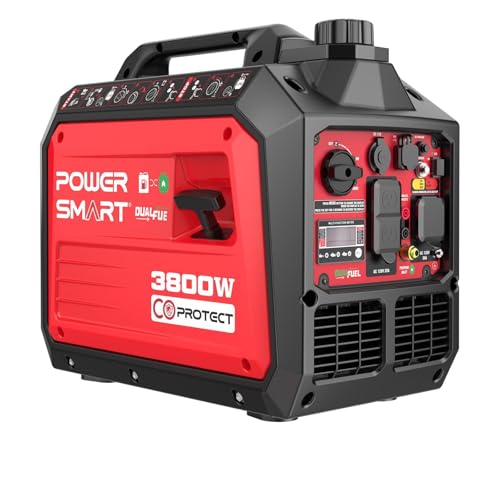
The PowerSmart 3800W Dual Fuel Inverter Generator stands out as a versatile solution for homeowners and outdoor enthusiasts who need reliable backup power without the noise and expense of larger units. Its dual fuel capability is particularly valuable: you can choose between gasoline for shorter outages (10-hour runtime) or propane for extended emergencies (25-hour runtime), giving you flexibility based on fuel availability and cost. The inverter technology ensures clean power delivery with less than 3% total harmonic distortion, meaning your smartphones, laptops, CPAP machines, and other sensitive electronics remain safe from voltage spikes.
Noise levels are a genuine advantage here. At 65 dB from 23 feet away, this unit operates at conversation volume, making it suitable for residential neighborhoods, quiet campgrounds, and RV parks where noise restrictions apply. Many portable generators in this wattage class are significantly louder, so this is a meaningful benefit for users prioritizing peaceful operation. The inclusion of a built-in CO sensor adds an important safety layer, automatically shutting the unit down if carbon monoxide reaches dangerous levels—a critical feature for anyone considering emergency home backup power.
Weighing just 50.7 lbs with a compact footprint of 21.9 x 13.4 x 19.5 inches, this generator is genuinely portable compared to heavier models, though the manual start system requires some physical effort to operate. The RV-ready TT-30R receptacle is a practical addition for travel trailer owners. With a two-year warranty backing the 149cc 4-stroke engine, this unit delivers solid value for homeowners seeking a balanced combination of runtime flexibility, quiet operation, and electronics protection.
| Specification | Details |
|---|---|
| Brand | PowerSmart |
| Model | 3800W Dual Fuel Inverter Generator |
| Color | Red |
| Dimensions | 21.9 x 13.4 x 19.5 inches |
| Weight | 50.7 lbs |
| Engine | 149cc 4-Stroke OHV |
| Starting Watts (Gasoline) | 3800W |
| Running Watts (Gasoline) | 3300W |
| Starting Watts (Propane) | 3500W |
| Running Watts (Propane) | 3100W |
| Runtime (Gasoline) | Up to 10 hours |
| Runtime (Propane) | Up to 25 hours |
| Power Type | Pure Sine Wave Inverter |
| Total Harmonic Distortion | Less than 3% THD |
| Noise Level | 65 dBA at 23 feet |
| Start System | Manual |
| Safety Features | CO Sensor, Overload Protection, Low-Oil Shutoff |
| Receptacle | RV-Ready TT-30R |
| Warranty | 2 years |
Carbon Monoxide Protection: While this unit includes a CO sensor, never operate any gasoline-powered generator indoors, in basements, garages, or enclosed spaces, even with the sensor active. Always place the generator outside at least 20 feet away from windows, doors, and vents. CO is odorless and deadly.
Fuel Handling: When switching between gasoline and propane, allow the engine to cool completely before changing fuel sources. Store gasoline in approved containers away from living areas, and ensure propane tanks are properly secured and inspected for leaks. Never refuel the generator while it's running or hot.
Electrical Safety: Use heavy-duty, grounded extension cords rated for outdoor use. Avoid overloading the generator by connecting too many devices simultaneously. Always ground the generator properly, and keep it away from water and wet conditions to prevent electrical hazards.
Maintenance: Check the oil level before each use and change it according to the manufacturer's schedule. Inspect spark plugs and air filters regularly. If storing the generator for extended periods, drain the fuel or add fuel stabilizer to prevent carburetor damage.
Is This Generator Right for You? The PowerSmart 3800W works well for homeowners needing backup power for essential appliances during outages, RV enthusiasts requiring portable power for extended trips, and campers who prioritize quiet operation. It's suitable for powering refrigerators, sump pumps, medical devices, and entertainment systems, but may struggle with whole-house loads including large AC units.
Gasoline vs. Propane: Choose gasoline for shorter outages when you need quick fuel availability and don't mind refueling every 10 hours. Select propane for extended emergencies lasting multiple days, since propane provides 25-hour runtime and doesn't degrade during storage like gasoline does. Many users keep propane on hand for emergencies since it stores indefinitely.
Wattage Considerations: At 3300 running watts on gasoline, this generator handles most household appliances individually but not simultaneously. Check your essential devices' wattage requirements: refrigerators typically need 600-800W, sump pumps 1000-2000W, and window AC units 3500-5000W. If you need to run multiple high-draw devices, consider a larger model.
Noise Sensitivity: If you live in a neighborhood with noise restrictions or plan to use this in quiet campgrounds, the 65 dB rating is a significant advantage. This unit is noticeably quieter than conventional generators, making it suitable for residential areas where noise complaints are a concern.
Optimize Fuel Choice for Your Situation: Keep both gasoline and a propane tank available. Use gasoline for short outages and when you need immediate power, and switch to propane for extended backup situations. Propane doesn't degrade during storage, so it's ideal for emergency preparedness—fill your tank before hurricane season or winter storms.
Protect Your Investment: Invest in a heavy-duty cover to shield the generator from weather when stored outdoors. Run the engine monthly for 15-20 minutes, even during non-emergency periods, to keep internal components functioning smoothly and prevent fuel system issues.
Smart Device Prioritization: Create a priority list of what to power during an outage. Essential items like refrigerators, water pumps, and medical devices should run first. Use the RV receptacle for your most critical loads and standard outlets for secondary devices. This prevents overloading the 3300W capacity.
Noise Reduction Strategies: Even at 65 dB, you can further minimize noise by placing the generator on a rubber mat, positioning it away from hard reflecting surfaces, and creating a simple acoustic barrier with plywood sheets. This helps in campgrounds or neighborhoods where quiet operation is especially valued.
Maintenance Schedule: Change oil after the first 20 hours of operation, then every 50-100 hours depending on usage. Keep spark plugs and air filters clean. Document all maintenance in a simple log to track service intervals and catch potential issues early.
Buying Guide: How to Choose the Right Portable Generator
Portable generators are not a one-size-fits-all purchase. The right unit depends on how you plan to use it, where you’ll run it, how much noise you can tolerate, and what appliances or devices you need to power. Below, we break down the most important factors to evaluate before buying.
Wattage: Starting vs. Running Power
Every generator lists two wattage figures: peak (or starting) watts and running (or rated) watts. Starting watts are the surge of power needed to kick on motor-driven appliances like refrigerators, sump pumps, and air conditioners. Running watts reflect the continuous load the generator sustains over time. Always calculate your total running wattage needs first, then add a 20 percent buffer for motor startups. A unit like the Westinghouse 12500 Watt Dual Fuel model provides massive peak capacity suitable for whole-home backup, while a compact inverter like the WEN 56235i at around 2350 peak watts is ideal for a few essentials or RV appliances. Getting this math right upfront prevents frustrating overload shutdowns.
Fuel Type: Gas, Dual-Fuel, and Battery-Powered
Fuel flexibility matters enormously during an emergency. Gasoline is widely available under normal conditions but can be scarce after a major storm. Dual-fuel generators, such as the Westinghouse 12500W and the PowerSmart 3800W, run on either gasoline or propane, which stores indefinitely and is often easier to source when gas stations run dry. Propane also burns cleaner and produces fewer emissions. Battery-powered portable power stations, like those from Jackery, EF ECOFLOW, and Anker, require no fuel at all and can be recharged via solar panels, your car’s 12V outlet, or a standard wall outlet, making them excellent for indoor use, camping, and sensitive electronics. Just understand their capacity limits: a 1024Wh station won’t run a central air conditioner, but it will keep phones, laptops, CPAP machines, and small appliances running for hours.
Inverter vs. Conventional Generators
Conventional open-frame generators produce AC power at a relatively constant speed, which can cause voltage fluctuations. Inverter generators, including the WEN 56235i, Westinghouse iGen5000, and Oxseryn 4400W, produce cleaner power (low total harmonic distortion, or THD) that is safe for sensitive electronics like laptops, televisions, and medical devices. They also run more quietly and adjust engine speed based on load, improving fuel efficiency. If you’re powering an RV, tailgate, or home office setup, an inverter model is almost always the smarter choice. For raw construction-site or high-load home backup power, a conventional open-frame unit at a lower price point may suffice. Pairing any generator with a good smart switch setup in your home can help you automate which circuits receive backup power.
Noise Level
Generator noise is measured in decibels (dB) at a defined distance, usually 23 feet. Conventional open-frame models typically run between 68 and 80 dB, roughly equivalent to a vacuum cleaner or lawn mower. Inverter generators generally operate between 50 and 65 dB, closer to a normal conversation. Battery power stations from Jackery, EF ECOFLOW, and Anker are essentially silent since they have no combustion engine. If you’re camping at a quiet site, running a generator near a bedroom window, or operating in a neighborhood with noise ordinances, noise rating should be near the top of your priority list. Many campgrounds also enforce quiet hours and ban generators above a certain dB threshold.
Runtime and Fuel Efficiency
Runtime is typically quoted at 25 percent or 50 percent load on a full tank. An ECO mode, available on inverter generators like the Oxseryn 4400W and WEN 56235i, automatically reduces engine speed when demand drops, stretching fuel further. For extended outages, runtime matters enormously. A generator that runs 10 to 12 hours on a full tank overnight means fewer interruptions and less fuel to stockpile. Battery power stations are rated in watt-hours (Wh); divide that figure by your device’s wattage to estimate runtime. For example, a 1024Wh station powering a 100W load will last roughly 10 hours before recharging is needed.
Portability and Weight
Portability is more than a marketing term. High-wattage gas generators can weigh over 200 pounds, requiring wheel kits and two people to move safely. The Westinghouse 12500W and Oxseryn 4400W both include wheel and handle kits to ease transport. Battery power stations like the Jackery Explorer 300 and EF ECOFLOW DELTA 2 are genuinely hand-carry portable, making them ideal for camping, travel, or moving from room to room during an outage. Consider where you’ll store the unit and how often you’ll need to reposition it when making your decision. If you’re building out a full emergency kit, a quality garage floor mat protects your concrete from fuel spills and drips when storing gas-powered units.
Safety Features
Carbon monoxide (CO) poisoning from portable generators kills dozens of people each year. Never run a gas-powered generator indoors, in a garage, or in any enclosed space. Look for models with automatic CO shutoff sensors, such as the PowerSmart 3800W Dual Fuel Inverter Generator, which includes a built-in CO sensor to shut the engine off if dangerous levels are detected. Additional safety features to prioritize include low-oil shutoff to protect the engine, circuit breakers to guard against overload, and GFCI outlets for outdoor use near water. Remote electric start, available on both Westinghouse models reviewed here, also reduces the physical effort and risk associated with pull-starting a large generator. For your broader home security setup, pairing a reliable generator with smart lock upgrades ensures your home stays secure even when the power is out.
Outlets and Connectivity
Check the outlet configuration before buying. A generator with only a single 120V outlet severely limits your options. Look for a mix of 120V household outlets, a 30-amp RV-ready outlet (L5-30R or TT-30R), and for larger models, a 240V outlet for heavy appliances like well pumps or central AC. Battery power stations often include USB-A, USB-C (sometimes at 100W), AC outlets, and 12V car ports, offering versatility for modern devices. The Anker SOLIX C1000 Gen 2 and EF ECOFLOW DELTA 2 both deliver 1800W or more of AC output with clean inverter power, enough to run most household appliances except high-draw items like electric dryers. Transfer switch compatibility is also worth checking: the Westinghouse 12500W is explicitly transfer-switch ready, allowing a licensed electrician to wire it directly to your home’s panel for seamless whole-home backup. If you’re outfitting a workshop with reliable power, a heavy-duty workbench and a capable generator make a well-rounded setup.
Battery Chemistry: LiFePO4 vs. NMC
For battery-based power stations, cell chemistry matters. Lithium iron phosphate (LiFePO4 or LFP) batteries, used in the Jackery Explorer 1000 v2, EF ECOFLOW DELTA 2, and Anker SOLIX C1000 Gen 2, offer significantly longer cycle lives (often 3,000 or more full cycles), better thermal stability, and a lower risk of fire compared to older NMC lithium-ion cells. This means your investment lasts longer. LFP stations may cost slightly more upfront, but the per-cycle cost over the life of the product is considerably lower. If longevity and safety are priorities, LFP is the chemistry to seek out. This is especially important if you plan to use the station frequently for camping or as part of a permanent home backup solution alongside solar lighting or a broader renewable energy setup.
Why Trust HomeThru
HomeThru is a fully independent review platform. We are not affiliated with any manufacturer, retailer, or brand featured on this site. Our editorial team researched and analyzed the portable generator category by reviewing technical specifications, owner feedback patterns, manufacturer documentation, and published safety standards from organizations like the Consumer Product Safety Commission (CPSC) and OSHA. We looked at runtime figures, noise ratings, outlet configurations, fuel flexibility, safety certifications, and real-world capacity to power common household loads. Every product on this list was selected on merit alone, with no paid placements or sponsored rankings. We do not sell generators, process orders, or handle returns. Our sole goal is helping you make a confident, well-informed purchase decision. If you’re also researching other home improvement investments, our coverage spans everything from top-rated cordless drills to smart doorbells worth installing.
Final Thoughts
The right portable generator depends almost entirely on your specific use case. A family preparing for extended hurricane-season outages needs a completely different machine than a solo camper who wants quiet, clean power for a weekend off the grid. After carefully evaluating all nine products in this roundup, here are our top picks across key categories:
- Best Overall for Home Backup: Westinghouse 12500 Watt Dual Fuel Portable Generator, massive peak output, dual-fuel flexibility, remote electric start, and transfer-switch readiness make it the most capable all-around home backup unit in this roundup.
- Best Inverter Generator for RV and Camping: Westinghouse iGen5000 Super Quiet Inverter Generator, RV-ready outlet, remote start with auto choke, parallel capability, and impressively quiet operation for an open-fuel inverter unit.
- Best Budget Gas Inverter: WEN 56235i Super Quiet 2350-Watt Inverter Generator, a top-rated, ultra-lightweight model that delivers clean inverter power at an accessible price, ideal for camping and light emergency use.
- Best LiFePO4 Power Station for Fast Charging: Anker SOLIX C1000 Gen 2 Portable Power Station, a full charge in under an hour, a strong AC output rating, and a long-life LFP battery make it standout for frequent users who can’t afford downtime.
- Best Entry-Level Power Station: Jackery Explorer 300 Portable Power Station, genuinely hand-carry portable, solar-compatible, and priced for casual campers or anyone who needs a compact backup for small devices and lights.
No matter which direction you go, investing in a reliable portable generator is one of the smartest home preparedness decisions you can make. Pair it with a well-organized tool chest for fuel storage accessories and maintenance supplies, and you’ll be prepared for whatever comes your way. If you’re expanding your workshop or home setup further, our guides on ladders ranked for safety and reach and oscillating multi tools for cutting and scraping are worth a look.
Frequently Asked Questions
How Many Watts Do I Need to Power My Home During an Outage?
Add up the running wattage of every appliance you need to keep on during an outage: refrigerator, freezer, lights, fans, phone chargers, and any medical equipment. A typical household running only essentials needs between 3,000 and 5,000 running watts. If you also want to run a window AC unit or well pump, plan for 7,500 watts or more. Always add a 20 percent margin for motor startup surges. For whole-home coverage through a transfer switch, a unit in the 10,000 to 12,500 watt range like the Westinghouse 12500W handles nearly everything. For smart home devices that keep working during outages, pairing your generator with keypad smart locks that run on batteries adds another layer of security.
Can I Use a Portable Generator Indoors or in a Garage?
Never run a gas or propane-powered generator indoors, in a garage, in a carport, or in any partially enclosed space. Carbon monoxide from combustion is odorless, colorless, and lethal. Even with a door or window open, CO levels can reach dangerous concentrations within minutes. Always position a gas-powered generator at least 20 feet from any door, window, or vent, with the exhaust directed away from the building. Battery-powered portable power stations are the only generator-type products safe for indoor use, since they produce zero emissions. The PowerSmart 3800W includes a built-in CO sensor, but that is a safety shutoff feature, not permission to operate indoors.
What Is the Difference Between a Portable Power Station and a Traditional Generator?
A traditional portable generator burns gasoline or propane to produce electricity using a combustion engine. It provides high continuous wattage output, ideal for running large appliances and whole-home backup, but it requires ventilation, produces noise and exhaust, and needs fresh fuel. A portable power station stores electrical energy in a lithium battery and inverts it to AC power silently and cleanly. Power stations are safer indoors, far quieter, and easier to carry, but their total energy capacity is limited. They excel at keeping phones, laptops, lights, CPAP machines, and small appliances running during shorter outages or off-grid use, rather than powering an entire home.
How Should I Store a Portable Generator When Not in Use?
For gas-powered generators, always use a fuel stabilizer if storing fuel for more than 30 days, since ethanol-blended gasoline degrades quickly and can damage carburetors. Run the engine for a few minutes after adding stabilizer so treated fuel circulates through the system. Drain the carburetor if storing for more than 90 days. Keep the generator in a dry, ventilated space away from direct sunlight. Change the oil before long-term storage. For battery power stations, store them at 50 to 80 percent charge in a cool, dry location. Avoid leaving them fully charged or fully depleted for extended periods, as both conditions accelerate battery aging. A protective garage mat under a gas generator catches any oil or fuel drips and keeps your floor clean.
Is a Dual-Fuel Generator Worth the Extra Cost?
For most homeowners preparing for emergencies, yes. The core advantage of dual-fuel models like the Westinghouse 12500W and PowerSmart 3800W is fuel flexibility. After a major storm, gas stations often run out of fuel quickly or lose power to their pumps. Propane, stored in tanks you keep at home, is unaffected by grid outages and stores safely for years. Dual-fuel units typically cost somewhat more than single-fuel equivalents, but the added resilience during extended outages is well worth the price difference. Propane also burns cleaner than gasoline, producing fewer engine deposits over time and potentially extending engine service life.