

Clean drinking water straight from the tap sounds simple, but what comes out of your faucet often carries more than just H2O. Chlorine, lead, PFAS compounds, sediment, and other contaminants can affect the taste, odor, and safety of your household water supply. Under sink water filters address all of that quietly and efficiently, sitting inside your cabinet and delivering filtered water on demand without taking up counter space or slowing your flow. Unlike a pitcher that needs constant refilling, a well-chosen under sink system keeps up with a busy household and requires only annual or biannual filter changes to stay effective. Whether you want a compact inline filter that connects directly to your existing faucet or a full reverse osmosis setup that removes nearly everything dissolved in your water, there is a system on this list that fits your needs. For homes dealing with broader water quality problems, pairing an under sink filter with a whole-house water filtration system gives you the most complete protection from the main line all the way to the glass.
Top Under Sink Water Filters We Recommend

Pros
- Extremely easy DIY installation without tools or plumbing experience required
- Retains essential minerals like calcium, potassium, and magnesium for healthier water
- Cost-effective long-term solution with low-cost replacement filters and 12-month service life
- Versatile compatibility with standard 3/8-inch and 1/2-inch cold water lines and fittings
- Renter-friendly option that doesn't require permanent modifications to your plumbing
Cons
- Only compatible with cold municipal water sources; unsuitable for well water or hot water applications
- Requires regular filter replacement every 12 months and proper storage during extended vacations to maintain performance
The Waterdrop 10UA delivers practical water filtration for homeowners prioritizing both safety and taste without unnecessary complexity. This under-sink system effectively reduces PFAS, PFOA/PFOS, lead, and chlorine while preserving essential minerals that contribute to water quality and health. The NSF/ANSI 42 certification confirms its performance meets established safety standards for municipal water supplies, giving you confidence in what comes from your tap.
Installation is genuinely straightforward, taking just three minutes with the included twist-and-lock construction and push-to-connect fittings. The system accommodates standard 3/8-inch and 1/2-inch cold water lines found in most American kitchens, and the compact design fits easily under most sinks without requiring professional plumbing help. The upgraded filtration area provides 20 times more dirt adhesion capacity than earlier models, which meaningfully reduces clogging and extends the system's usable life between replacements.
For budget-conscious homeowners and renters, the economics are compelling. Replacement filters cost under $26 and last a full year of household use, making this one of the more affordable filtration solutions available. The system works best with municipal tap water and cold water sources only, so well water users should explore alternative options. Regular maintenance is minimal, though filters require replacement annually and should be properly stored if you'll be away for extended periods.
| Specification | Details |
|---|---|
| Brand | Waterdrop |
| Model | 10UA |
| Installation Type | Under-sink, direct-to-faucet connection |
| Certifications | NSF/ANSI 42 Certified |
| Contaminants Reduced | PFAS, PFOA/PFOS, lead, chlorine, bad taste and odor |
| Filter Lifespan | 12 months (municipal water) |
| Replacement Filter Cost | Under $26 (Model WD-RF10) |
| Flow Rate | 1.33 GPM (3/8-inch outlet); 0.75 GPM at 60 psi |
| Water Line Compatibility | 3/8-inch and 1/2-inch cold water pipes with included convertor fitting |
| Faucet Compatibility | Female thread 1/2-inch or 3/8-inch connectors |
| Installation Time | Approximately 3 minutes |
| Filter Replacement Time | 3 seconds |
| Suitable For | Municipal water only; cold water sources only |
| Not Suitable For | Well water, hot water, or high-temperature applications |
| Applications | Kitchen, bathroom, RV, office, commercial spaces |
| Filter Material | Activated carbon from natural coconut shells |
| Mineral Retention | Preserves essential minerals (calcium, potassium, sodium, magnesium) |
Before You Start: Confirm your faucet has a female thread connector (1/2-inch or 3/8-inch). Locate your cold water supply line under the sink and ensure you have adequate space for the filter unit.
Installation Steps:
- Turn off the water supply valve under your sink.
- Locate and disconnect your existing faucet water line using the included wrench if needed.
- Attach the filter inlet to your cold water supply line using the push-to-connect fitting. If your line is 1/2-inch and the filter requires 3/8-inch, use the included convertor fitting.
- Connect the filter outlet line to your faucet using the twist-and-lock construction, ensuring a snug fit.
- Turn the water supply back on and allow water to run for 15-20 seconds to flush the system.
- Check all connection points for leaks.
Maintenance Tip: Mark your calendar for filter replacement after 12 months of use. When replacing, simply untwist the old filter cartridge and twist the new WD-RF10 filter into place. No tools required.
Maximize Filter Life: The 12-month lifespan assumes normal household use. Homes with heavily chlorinated or sediment-heavy water may need earlier replacement. Monitor water flow rate and taste as indicators of when replacement is needed.
Storage During Travel: If you'll be away for more than 30 days, remove the filter cartridge, seal it in a plastic bag, and store in your refrigerator (not freezer). This preserves the activated carbon and extends usability when you return.
Mineral Content Matters: This system intentionally preserves essential minerals rather than demineralizing your water. If you're concerned about mineral content, use a TDS meter as a general reference, but understand that beneficial minerals will register as dissolved solids. This is actually a positive feature for most homeowners.
Renter-Friendly Advantage: Because this system connects directly to your faucet line without permanent modifications, you can remove it when you move without leaving any trace. This makes it ideal for apartment dwellers or temporary housing situations.
Is This Filter Right for You? The Waterdrop 10UA works best if you have municipal water, want quick installation without professional help, and value both safety and affordability. It's not suitable for well water users or homes requiring hot water filtration.
Key Considerations:
- Water Source: Confirm you have municipal tap water. Well water requires different filtration technology.
- Installation Space: Measure the area under your sink to ensure adequate clearance for the compact filter unit.
- Faucet Type: Verify your faucet has a female thread connector (ask your plumber if unsure) before purchasing.
- Budget: Factor in annual filter replacement costs (under $26 per year) when evaluating total cost of ownership.
- Contaminant Priorities: This system excels at removing chlorine, taste/odor, lead, and PFAS. If you have specific contamination concerns, verify they're covered in the NSF certification.
Alternatives to Consider: If you need hot water filtration, have well water, or prefer whole-house filtration, explore alternative systems. For renters and apartment dwellers, this under-sink design is often superior to pitcher filters or faucet-mounted options due to better flow rate and longer filter life.

Pros
- Exceptional value with 5-year filter lifespan reduces long-term replacement costs significantly
- NSF/ANSI certified filtration effectively reduces PFAs, PFOS, lead, and chlorine contamination
- Simple DIY installation requires no drilling or special tools, with all parts included
- Preserves healthy minerals while filtering out harmful contaminants for better water taste
- Compact under-sink design works in tight spaces where other systems won't fit
Cons
- Does not reduce total dissolved solids (TDS), which requires reverse osmosis filtration for complete removal
- No customer reviews available to verify real-world performance and longevity claims
The CuZn UC-200 addresses a real pain point for homeowners: the cost of constantly replacing water filters. With a 5-year lifespan, this under-sink system dramatically reduces the expense and hassle compared to standard filters that need replacement every 6 months. The three-stage filtration approach combines micro sediment membranes, KDF-55 media, and coconut shell carbon to tackle multiple contaminants in a single cartridge, making it both efficient and practical for everyday use.
What sets this filter apart is its NSF/ANSI 42 and 372 certification, which means the filtration process has been independently evaluated to reduce harmful substances like PFAs, PFOS, lead, and chlorine. The system preserves beneficial minerals in your water, so you're not stripping out the good stuff while removing the bad. Installation is straightforward for DIYers: it connects inline to your faucet with no drilling required, and CuZn includes all necessary parts and video instructions to get you up and running quickly.
One important limitation to understand: this filter does not reduce total dissolved solids (TDS), which is only achievable through reverse osmosis systems. If you're dealing with hard water or high mineral content beyond what this system addresses, you may need additional treatment. For most homeowners focused on improving taste and reducing common contaminants like chlorine and lead, however, the UC-200 delivers solid performance at an excellent price point over its extended lifespan.
| Specification | Details |
|---|---|
| Brand | CuZn |
| Model | UC-200 |
| Filter Type | Under-Sink Inline |
| Filter Life | 5 years |
| Filtration Stages | 3-stage (micro sediment membranes, KDF-55, coconut shell carbon) |
| Certifications | NSF/ANSI 42 & 372 |
| Contaminants Reduced | PFAs, PFOA/PFOS, lead, chlorine |
| Installation | No-drill inline connection to faucet |
| Included Parts | All installation hardware included |
| Mineral Preservation | Yes, retains beneficial minerals |
| Limitations | Does not reduce TDS (requires reverse osmosis) |
Installation Overview: The UC-200 is designed for minimal complexity, making it accessible to homeowners with basic DIY skills. The system connects inline to your existing faucet with no modifications to your plumbing.
Key Installation Steps:
- Turn off water supply to the sink or faucet
- Disconnect the existing faucet aerator (the screen at the tip)
- Attach the filter housing using the included adapters and connectors
- Reconnect the faucet aerator to the filter outlet
- Turn water back on and check for leaks
- Run water for 5 minutes to flush the system before use
Space Requirements: The compact design fits under most standard kitchen and bathroom sinks. Ensure you have clearance beneath the sink for the filter cartridge housing. Video tutorial instructions are available from CuZn to walk you through each step.
Maximize Filter Life: The 5-year lifespan assumes typical household water usage. If your water is particularly sediment-heavy or you use high volumes, monitor water flow and pressure. Decreased flow may indicate the filter needs earlier replacement than the standard timeline.
Water Quality Improvement: You may notice taste and odor improvements within the first few days as chlorine is reduced. The system preserves minerals, so you'll still have naturally flavored water rather than the flat taste of some aggressive filtration methods.
Maintenance: Check connections periodically for leaks, especially during the first week after installation. Keep the area under your sink clear for easy access if you need to inspect or replace the cartridge. Mark your calendar for the 5-year replacement date to avoid missing your window.
Contaminant Focus: If lead is a primary concern in your area, this system is certified to reduce it. However, if you suspect severe contamination or have specific water quality concerns, consider having your water professionally evaluated first to ensure this system addresses your needs.
Who Should Buy This Filter: The CuZn UC-200 is ideal for homeowners seeking a cost-effective, long-term water filtration solution with minimal maintenance. It works well if you want to improve taste and reduce common contaminants like chlorine, lead, and PFAs without the expense of frequent filter changes.
Who Should Consider Alternatives: If you need to reduce total dissolved solids (hard water minerals) or have severe water quality issues, you may need a reverse osmosis system instead. If your water has extremely high sediment or contamination levels, a professional water assessment would help determine if this system is sufficient.
Budget Considerations: While the upfront cost is competitive, the true value emerges over time. With a 5-year lifespan versus 6-month replacements, you'll save significantly on cartridge costs over five years. Calculate your total cost of ownership by comparing the price of this system to the cumulative cost of replacing other filters every 6 months.
Installation Complexity: This is a DIY-friendly option. If you're uncomfortable working with plumbing connections, installation takes about 15-30 minutes and requires no special tools or plumbing knowledge. Video instructions from CuZn make the process straightforward.
Pros
- Exceptional value with 5-year filter lifespan reduces long-term replacement costs significantly
- NSF/ANSI certified filtration effectively reduces PFAs, PFOS, lead, and chlorine contamination
- Simple DIY installation requires no drilling or special tools, with all parts included
- Preserves healthy minerals while filtering out harmful contaminants for better water taste
- Compact under-sink design works in tight spaces where other systems won't fit
Cons
- Does not reduce total dissolved solids (TDS), which requires reverse osmosis filtration for complete removal
- No customer reviews available to verify real-world performance and longevity claims
The CuZn UC-200 addresses a real pain point for homeowners: the cost of constantly replacing water filters. With a 5-year lifespan, this under-sink system dramatically reduces the expense and hassle compared to standard filters that need replacement every 6 months. The three-stage filtration approach combines micro sediment membranes, KDF-55 media, and coconut shell carbon to tackle multiple contaminants in a single cartridge, making it both efficient and practical for everyday use.
What sets this filter apart is its NSF/ANSI 42 and 372 certification, which means the filtration process has been independently evaluated to reduce harmful substances like PFAs, PFOS, lead, and chlorine. The system preserves beneficial minerals in your water, so you're not stripping out the good stuff while removing the bad. Installation is straightforward for DIYers: it connects inline to your faucet with no drilling required, and CuZn includes all necessary parts and video instructions to get you up and running quickly.
One important limitation to understand: this filter does not reduce total dissolved solids (TDS), which is only achievable through reverse osmosis systems. If you're dealing with hard water or high mineral content beyond what this system addresses, you may need additional treatment. For most homeowners focused on improving taste and reducing common contaminants like chlorine and lead, however, the UC-200 delivers solid performance at an excellent price point over its extended lifespan.
| Specification | Details |
|---|---|
| Brand | CuZn |
| Model | UC-200 |
| Filter Type | Under-Sink Inline |
| Filter Life | 5 years |
| Filtration Stages | 3-stage (micro sediment membranes, KDF-55, coconut shell carbon) |
| Certifications | NSF/ANSI 42 & 372 |
| Contaminants Reduced | PFAs, PFOA/PFOS, lead, chlorine |
| Installation | No-drill inline connection to faucet |
| Included Parts | All installation hardware included |
| Mineral Preservation | Yes, retains beneficial minerals |
| Limitations | Does not reduce TDS (requires reverse osmosis) |
Installation Overview: The UC-200 is designed for minimal complexity, making it accessible to homeowners with basic DIY skills. The system connects inline to your existing faucet with no modifications to your plumbing.
Key Installation Steps:
- Turn off water supply to the sink or faucet
- Disconnect the existing faucet aerator (the screen at the tip)
- Attach the filter housing using the included adapters and connectors
- Reconnect the faucet aerator to the filter outlet
- Turn water back on and check for leaks
- Run water for 5 minutes to flush the system before use
Space Requirements: The compact design fits under most standard kitchen and bathroom sinks. Ensure you have clearance beneath the sink for the filter cartridge housing. Video tutorial instructions are available from CuZn to walk you through each step.
Maximize Filter Life: The 5-year lifespan assumes typical household water usage. If your water is particularly sediment-heavy or you use high volumes, monitor water flow and pressure. Decreased flow may indicate the filter needs earlier replacement than the standard timeline.
Water Quality Improvement: You may notice taste and odor improvements within the first few days as chlorine is reduced. The system preserves minerals, so you'll still have naturally flavored water rather than the flat taste of some aggressive filtration methods.
Maintenance: Check connections periodically for leaks, especially during the first week after installation. Keep the area under your sink clear for easy access if you need to inspect or replace the cartridge. Mark your calendar for the 5-year replacement date to avoid missing your window.
Contaminant Focus: If lead is a primary concern in your area, this system is certified to reduce it. However, if you suspect severe contamination or have specific water quality concerns, consider having your water professionally evaluated first to ensure this system addresses your needs.
Who Should Buy This Filter: The CuZn UC-200 is ideal for homeowners seeking a cost-effective, long-term water filtration solution with minimal maintenance. It works well if you want to improve taste and reduce common contaminants like chlorine, lead, and PFAs without the expense of frequent filter changes.
Who Should Consider Alternatives: If you need to reduce total dissolved solids (hard water minerals) or have severe water quality issues, you may need a reverse osmosis system instead. If your water has extremely high sediment or contamination levels, a professional water assessment would help determine if this system is sufficient.
Budget Considerations: While the upfront cost is competitive, the true value emerges over time. With a 5-year lifespan versus 6-month replacements, you'll save significantly on cartridge costs over five years. Calculate your total cost of ownership by comparing the price of this system to the cumulative cost of replacing other filters every 6 months.
Installation Complexity: This is a DIY-friendly option. If you're uncomfortable working with plumbing connections, installation takes about 15-30 minutes and requires no special tools or plumbing knowledge. Video instructions from CuZn make the process straightforward.
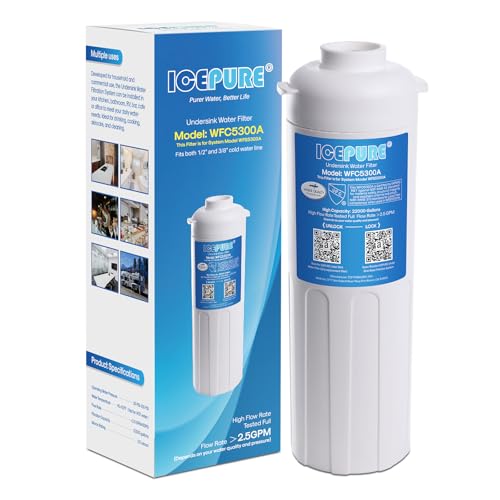
ICEPURE WFC5300A Under-Sink Water Filter System
Pros
- Comprehensive filtration removes major contaminants including heavy metals and chlorine in a single cartridge
- Long-lasting 22,000-gallon capacity means fewer replacements and lower long-term costs
- Multiple authoritative certifications (NSF/ANSI 42, European Food Grade, TUV, ROHS, REACH) provide confidence in safety and quality
- Simple installation without specialized tools or professional help required
- Works in diverse settings from home kitchens to RVs and commercial environments
Cons
- No customer reviews available on the listing, making it difficult to assess real-world performance and user experience
- Requires knowing your current ICEPURE model (WFS5300A) for compatibility, which may confuse first-time buyers unfamiliar with their system
The ICEPURE WFC5300A is a replacement under-sink water filter designed for homeowners who want reliable contaminant removal without the cost or complexity of whole-house systems. Its 0.5-micron filtration combined with activated carbon effectively targets heavy metals, chlorine, sediment, rust, and unpleasant odors, making it suitable for drinking, cooking, and general household use.
What sets this filter apart is its impressive 22,000-gallon capacity, which translates to approximately three years of use in homes with municipal water. This extended lifespan reduces the frequency of replacements and lowers your cost per gallon filtered compared to shorter-life alternatives. The filter's multiple certifications, including NSF/ANSI 42 and European Food Grade compliance, indicate it has been independently evaluated against rigorous safety and performance standards.
Installation is straightforward for DIY homeowners, with detailed video guides available to walk you through the process. The system fits under most kitchen sinks and adapts to various household and light commercial applications. However, this is a replacement cartridge, so you'll need an existing ICEPURE WFS5300A housing unit to use it. For homeowners with that system already in place, the WFC5300A offers a cost-effective way to maintain clean water without professional plumbing assistance.
| Specification | Details |
|---|---|
| Model | ICEPURE WFC5300A |
| Filtration Capacity | 22,000 gallons or 3 years |
| Micron Rating | 0.5 micron |
| Contaminants Removed | Heavy metals, chlorine, sediment, rust, bad taste, odor |
| Removal Rate | Over 99.99% |
| Compatible With | ICEPURE WFS5300A under-sink systems |
| Certifications | NSF/ANSI 42, European Food Grade (EC-1935/2016), TUV, ROHS, REACH, Australian Water Mark |
| Material | BPA-Free |
| Applications | Kitchen, bathroom, RV, office, commercial use |
| Installation | DIY-friendly, no professional tools required |
| Quality Control | 5-stage inspection and testing process |
Installation Steps:
- Turn off the water supply valve under your sink before beginning
- Locate your existing ICEPURE WFS5300A housing unit beneath the sink
- Unscrew the old filter cartridge by turning it counterclockwise
- Remove the old cartridge and discard it responsibly
- Flush the housing with water to remove any residual particles
- Insert the new WFC5300A cartridge and screw it clockwise until snug (do not over-tighten)
- Turn the water supply back on and run water for 2-3 minutes to flush the new filter
- Check all connections for leaks
Maintenance: Replace the filter every 3 years or after 22,000 gallons of use, whichever comes first. If water flow decreases noticeably before 3 years, the filter may need earlier replacement depending on your water quality. Keep detailed records of installation dates to track replacement schedules.
Maximize Filter Life: Pre-filter sediment with a simple mesh strainer if your tap water appears visibly cloudy or rusty. This reduces the workload on your under-sink filter and can extend its effective lifespan.
Installation Success: Have towels or a small bucket ready under the sink during installation to catch any residual water from the old cartridge. Keep the instruction manual and your filter's installation date visible (use a small label or marker on the housing) so you remember when to replace it.
Water Quality Monitoring: If you notice changes in water taste, odor, or flow rate before the 3-year mark, your filter may be saturated. This is especially common in areas with higher chlorine levels or mineral content. Don't wait until the full 3 years if performance noticeably declines.
Is This Filter Right for You? The ICEPURE WFC5300A is a replacement cartridge, so you must already own an ICEPURE WFS5300A under-sink system. If you have that housing unit, this cartridge is a straightforward, cost-effective way to maintain your filtration without purchasing a new system.
What to Consider: This filter excels at removing chlorine, heavy metals, and sediment from municipal water supplies. If your primary concern is bacteria or viruses, you may need a different filtration technology (such as UV or reverse osmosis). For well water with specific contaminants, evaluate your water quality report first to ensure this filter addresses your needs.
Budget Planning: Calculate your long-term costs by dividing the filter price by its 22,000-gallon capacity. Compare this per-gallon cost to pitcher filters or faucet-mounted options. For households using significant amounts of filtered water for drinking and cooking, under-sink systems typically offer better value over time.

Waterdrop G3P600 Tankless Reverse Osmosis System
Pros
- Exceptional space efficiency with tankless design that fits compact under-sink cabinets
- Low waste ratio means you're not wasting excessive water to produce filtered drinking water
- Smart faucet with TDS monitor and filter tracker eliminates guesswork about water quality and maintenance
- Quick and convenient filter changes without tools or system relocation
- Multiple NSF certifications and third-party laboratory evaluation provide confidence in contaminant reduction claims
Cons
- Requires dedicated under-sink electrical outlet, which may require professional installation if not already available
- No reviews currently available to verify real-world performance and long-term reliability from actual homeowners
The Waterdrop G3P600 stands out as a practical solution for homeowners who want quality filtered water without dedicating valuable under-sink cabinet space to a bulky storage tank. The 8-stage filtration system addresses a comprehensive range of contaminants including PFAS, chromium, arsenic, fluoride, and radioactive substances. With NSF/ANSI certification across multiple standards and third-party laboratory evaluation, this system demonstrates a commitment to meeting established safety and performance benchmarks.
The smart LED faucet is where this system truly differentiates itself. Rather than wondering about water quality or guessing when filters need replacement, the built-in TDS monitor displays real-time readings and the filter life tracker counts down remaining days until replacement is needed. This transparency helps you maintain optimal water quality and plan filter purchases in advance. The 600 gallons-per-day capacity with a 2:1 pure-to-drain ratio means the system produces filtered water efficiently without excessive waste, and the 8-second fill time for an 8 oz cup makes it practical for everyday use.
Installation requires an under-sink electrical outlet, which is a consideration for some households. The tankless design and tool-free filter replacement system make ongoing maintenance straightforward once the initial setup is complete. For homeowners prioritizing space efficiency and real-time water quality monitoring, this system offers a compelling alternative to traditional under-sink RO units.
| Specification | Detail |
|---|---|
| Model | G3P600 |
| Type | Tankless Reverse Osmosis System |
| Filtration Stages | 8 stages |
| Daily Capacity | 600 gallons per day |
| Pure to Drain Ratio | 2:1 |
| Water Flow Rate | 8 oz cup in 8 seconds |
| Faucet Type | Smart LED display faucet with TDS monitor and filter life tracker |
| Design | Tankless (saves 70% cabinet space) |
| Filter Replacement | Tool-free, 3-second replacement |
| Dimensions | 18.12" L x 5.67" W x 17.72" H |
| Power Requirement | Requires under-sink electrical outlet |
| Certifications | NSF/ANSI 42, 53, 58, 372; FCC; EU Standards; UKCA Standards |
| Contaminants Addressed | TDS, chromium, PFAS, radium, fluoride, arsenic, salt, iron, calcium, particles, chloride, chlorine, radioactive substances |
Before You Begin: Measure your under-sink cabinet to ensure it's at least 18.12" long, 5.67" wide, and 17.72" tall. Check that you have an available electrical outlet under the sink or plan for a licensed electrician to install one.
Key Installation Considerations: This system requires electricity to operate, unlike some gravity-fed filters. The tankless design means water is filtered on-demand, so there's no storage tank to position. Plan your plumbing connections to minimize bends and kinks in supply lines. The smart faucet connects to the system and displays real-time water quality data, so ensure it's positioned where you can easily read the display during use.
Filter Maintenance: The system tracks filter life automatically and displays remaining days on the LED faucet. When replacement is needed, the tool-free design allows you to swap filters in seconds without moving the system or using any tools. Keep replacement filters on hand so you're never without filtered water during the changeover.
Is This System Right for You? The Waterdrop G3P600 works best in homes where under-sink cabinet space is limited and you value real-time water quality information. It's ideal for households that use filtered water regularly for drinking, cooking, and food preparation.
Key Factors to Consider: You'll need an electrical outlet under your sink or be prepared to have one installed. The 600 gallons-per-day capacity suits most households; if you have very high water usage, you may want to verify this meets your needs. The smart faucet display is a significant advantage if you want to monitor water quality, but it also means you're dependent on electricity for operation.
Comparison Points: Unlike traditional RO systems with storage tanks, this tankless design eliminates the need for cabinet space and reduces water waste through its 2:1 pure-to-drain ratio. The smart LED faucet sets it apart from basic RO units that offer no feedback about water quality or filter condition. Consider your budget for replacement filters when making your decision, as this is an ongoing maintenance cost.
Maximize Water Quality: The TDS monitor on the faucet shows you the total dissolved solids in your filtered water. Lower readings indicate better filtration. Track these readings over time to understand your system's performance and plan filter replacements proactively before water quality drops.
Optimize Your Setup: Position the smart faucet where the LED display is easily visible at eye level. This makes it convenient to check water quality and filter life without bending or searching for information. Consider the placement of your cabinet electrical outlet during installation to avoid running cords across high-traffic areas.
Reduce Maintenance Surprises: The filter life tracker counts down days remaining, giving you advance notice before replacement is needed. Order filters a few days before the countdown reaches zero so you're never without filtered water. Keep the system's manual handy for reference on which filter stage addresses specific contaminants you're concerned about in your local water supply.
Pros
- Fast installation and filter replacement save time and eliminate plumber costs for most homes
- Mineral-retention design preserves water quality while filtering harmful substances effectively
- Long filter lifespan and staggered replacement schedule reduce maintenance frequency and costs
- Heavy-duty construction with proven durability under pressure and temperature extremes
- Works with standard 1/2-inch and 3/8-inch faucet connections on most municipal water systems
Cons
- Limited to cold water only and municipal tap water—well water requires a separate pre-filtration system first
- Does not reduce TDS (total dissolved solids), which some consumers mistakenly expect from water filters
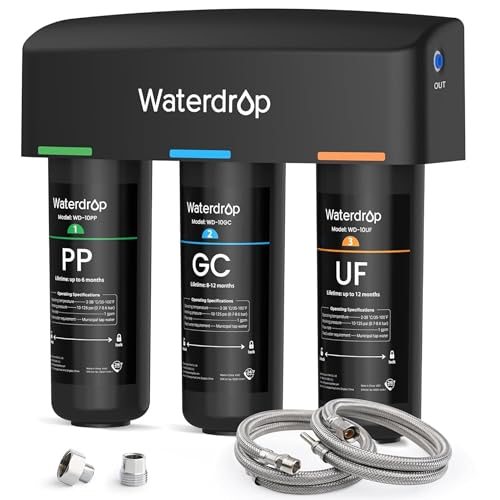
The Waterdrop WD-TSA-UF delivers solid performance for homeowners seeking a straightforward under-sink filtration upgrade. Its 9-stage system combines sediment, activated carbon, and ultrafiltration membranes to address common water quality issues like chlorine taste, odor, and heavy metals. The 0.01 micrometer filtration membrane is genuinely effective at capturing microscopic contaminants while the design smartly retains beneficial minerals your body needs, making this a balanced approach to water treatment rather than over-processing.
Installation and maintenance are where this system truly shines. The 3-minute setup with push-to-connect fittings means most homeowners can handle it solo without calling a plumber. The staggered replacement schedule—where different filters last 6, 8-12, and 12 months respectively—spreads out costs and keeps you from constantly swapping cartridges. Filter replacements themselves take about 3 seconds thanks to the twist-and-lock design, which is refreshingly practical for real-world use.
Build quality justifies the investment. The housing is twice as thick as typical filters and has been evaluated for durability under high pressure, temperature swings, and freezing conditions. The upgraded filtration area offers a 20X increase in dirt adhesion, which meaningfully reduces clogging and keeps water flow consistent. This system is designed for municipal cold water only, so well water users will need a pre-filtration stage first, but for standard tap water in most American homes, it's a reliable, low-hassle choice.
| Specification | Detail |
|---|---|
| Model | WD-TSA-UF |
| Filtration Stages | 9 stages across 3 compact filters |
| Membrane Type | 0.01 micrometer ultrafiltration |
| Filter 1 (WD-10PP) | Polypropylene sediment—6 months lifespan |
| Filter 2 (WD-10GC) | Activated coconut carbon—8 to 12 months lifespan |
| Filter 3 (WD-10UF) | Ultrafiltration membrane—up to 12 months lifespan |
| Contaminants Reduced | Chlorine, taste, odor, fluoride, heavy metals, rust, sediment, particles |
| Water Type | Municipal cold water only |
| Connection Size | 1/2 inch or 3/8 inch female NPT threads |
| Installation Time | Approximately 3 minutes |
| Filter Replacement Time | Approximately 3 seconds |
| Mineral Retention | Yes—preserves calcium, potassium, sodium, magnesium |
| TDS Reduction | No |
| Material Quality | Double-thickness housing, freeze and pressure resistant |
| Suitable For | Standard under-sink cold-water lines |
| Not Suitable For | Hot water, well water without pre-filtration |
Installation: Turn off the cold-water supply under your sink. Locate the cold-water line and faucet connections. Attach the filter system using the push-to-connect fittings—no tools required. Ensure the inlet connects to your main water line and the outlet to your faucet. Turn water back on and run water for 15 minutes to flush the system before drinking.
Filter Replacement: The WD-10PP sediment filter needs replacement every 6 months, the WD-10GC carbon filter every 8 to 12 months, and the WD-10UF ultrafiltration filter every 12 months. When it's time, simply twist the filter counterclockwise to remove it, then twist the new one clockwise until snug. No wrench needed. Replace filters on a staggered schedule so you're not changing all three at once.
Vacation Care: If you'll be away for more than 30 days, place each filter in a separate sealed plastic bag and store in your refrigerator (not the freezer) to keep them fresh and ready when you return.
Check Your Connection Type First: Before purchasing, confirm whether your faucet has 1/2-inch or 3/8-inch female NPT threads. If you have a quick-connect faucet, contact Waterdrop directly—they provide free adapter fittings to make it work.
Plan Your Replacement Schedule: Mark your calendar for the staggered filter changes. The WD-10PP goes first at 6 months, then the WD-10GC at 8-12 months, and finally the WD-10UF at 12 months. This spreads costs and keeps maintenance manageable year-round.
Pre-Filter Well Water: If your home uses well water, purchase the Waterdrop WD-PFK pre-filtration system first. This removes sediment and larger particles before they reach the main unit, protecting your filters and extending their lifespan significantly.
Verify Coconut Allergies: The activated carbon is made from natural coconut shells. If anyone in your household has a coconut allergy, confirm this is safe before installation.
Who Should Buy This: Homeowners on municipal water systems who want to reduce chlorine, taste, odor, and heavy metals without professional installation. It's ideal if you prefer a straightforward DIY setup, value long filter life, and don't need TDS reduction. This is not the right choice for well water without pre-filtration or if you need to filter hot water.
What to Know About Mineral Retention: This system intentionally keeps beneficial minerals like calcium, magnesium, potassium, and sodium in your water. If you use a TDS meter to measure water quality, understand that TDS measures all dissolved solids—including the good minerals. A lower TDS reading doesn't mean better water; this system removes harmful substances while preserving what your body needs.
Cost Considerations: Factor in filter replacement costs over time. The staggered schedule means you're replacing filters at different intervals, spreading expenses across the year. Compare the cost of replacement cartridges (WD-10PP, WD-10GC, WD-10UF) against your current water treatment method.
Installation Reality Check: While 3-minute installation is achievable for most homes with standard under-sink plumbing, tight spaces or unusual configurations may take longer. If your setup is non-standard, reach out to Waterdrop for adapter options before buying.

Pros
- Space-saving design fits under sinks with large food disposals and limited cabinet room
- Zero wastewater operation saves water and eliminates complicated drain line installation
- Extended filter life, especially the 24-month UF stage, keeps maintenance simple and affordable
- Smart panel with four indicator lights removes guesswork from filter replacement timing
- Preserves healthy minerals while filtering harmful contaminants, unlike RO systems
Cons
- Requires countertop drilling to install the dedicated faucet, which may deter renters or those avoiding permanent modifications
- Does not reduce TDS (total dissolved solids) or work with hot water and well water, limiting its application to municipal cold-water systems only
The Waterdrop TSU stands out as a practical choice for homeowners seeking cleaner drinking water without the environmental impact of bottled water or the complexity of reverse osmosis systems. Its 0.01 micron ultrafiltration membrane effectively removes chlorine, PFAS, taste and odor, and heavy metals while preserving minerals that contribute to water quality. The system delivers a steady 1.05 GPM flow rate, meaning you won't sacrifice water pressure for purification.
Installation is genuinely DIY-friendly. The system accommodates both 1/2" and 3/8" under-sink pipes, and all necessary hardware comes in the box. The main consideration is the countertop drilling required for the included brushed nickel faucet, which adds a finished look but represents a permanent modification. The compact footprint (under 15 inches in any dimension) makes it an ideal solution for tight cabinets, even those already housing large food disposals where space is at a premium.
Maintenance is simplified by the smart LED panel that indicates when each of the three filter stages needs replacement. With a 24-month lifespan for the main UF filter, a 12-month lifespan for the carbon stage, and a 6-month lifespan for the pre-filter, you're looking at manageable replacement schedules. Because the system produces zero wastewater, there's no drain line to route or maintain, making it both environmentally conscious and installation-simple.
| Specification | Details |
|---|---|
| Brand | Waterdrop |
| Model | TSU |
| Filtration Type | 3-Stage Ultrafiltration |
| Micron Rating | 0.01 micron |
| Max Flow Rate | 1.05 GPM |
| Dimensions | 4.68" W x 13.97" H x 14.81" L |
| Water Compatibility | Cold municipal water only |
| Pipe Sizes | 1/2" and 3/8" |
| Faucet Material | Brushed nickel |
| Installation | Countertop drilling required |
| Wastewater | None |
| Power Required | No |
| UF Filter Lifespan | 24 months |
| Carbon Filter Lifespan | 12 months |
| Pre-Filter Lifespan | 6 months |
| Certifications | IAPMO NSF/ANSI 372 (lead-free, BPA-free) |
| Contaminants Reduced | 30+ including chlorine, PFAS, heavy metals, taste, odor |
| Mineral Retention | Yes (unlike reverse osmosis) |
Before You Start: Locate your cold-water supply line under the sink and ensure you have access to the countertop above for faucet installation. Verify your under-sink pipes are either 1/2" or 3/8" diameter.
Installation Steps: (1) Turn off your main water supply. (2) Locate and shut off the cold-water valve under the sink. (3) Attach the system to your cold-water line using the included connectors (the system accommodates both 1/2" and 3/8" pipes). (4) Drill a hole in your countertop for the faucet (typically 1.25" diameter; a standard hole saw works well). (5) Insert the faucet through the countertop and secure it from underneath with the provided hardware. (6) Connect the faucet outlet line to the system. (7) Turn the water supply back on and check all connections for leaks. (8) Run water through the system for 5 minutes to flush the filters before drinking.
Key Tips: The system produces no wastewater, so you don't need to route a drain line to your sink drain like you would with reverse osmosis. All necessary fittings and adapters are included, so you shouldn't need to purchase additional hardware. If you're uncomfortable with countertop drilling, consider having a professional handle that step.
Understanding Your Smart Panel: The TSU features a black panel with four indicator lights that tell you the status of each filtration stage. When a light indicates it's time to replace a filter, order the appropriate replacement cartridge and follow the simple swap-out process. You'll need replacement filters: WD-TSPP (pre-filter), WD-TSUF (UF membrane), and WD-TSCT (carbon filter).
Filter Replacement Schedule: The pre-filter lasts 6 months, the carbon filter lasts 12 months, and the main UF membrane lasts 24 months. These timelines assume typical household use with municipal water. If your water is particularly sediment-heavy or has high chlorine levels, pre-filters may need more frequent replacement. Replacement is straightforward: turn off the water supply, unscrew the old cartridge, and screw in the new one. No special tools required.
Maintenance Checklist: Check connections monthly for any signs of leaks. Run water through the system for a few minutes if it hasn't been used for several days. Keep the smart panel visible and note when lights indicate replacement is needed. Because the system produces no wastewater, there are no drain lines to clean or maintain. The brushed nickel faucet can be cleaned with a soft cloth and mild soap to maintain its appearance.
Is This System Right for You? The Waterdrop TSU works best if you have a municipal water supply, want cleaner drinking water without the waste of bottled water, and have limited under-sink cabinet space. It's ideal for homeowners who prefer DIY installation and value the simplicity of no-wastewater operation. If your home has well water, uses hot water for drinking (unusual but relevant for some), or you need to reduce TDS levels, this system is not designed for those applications.
Key Considerations Before Buying: Installation requires drilling a hole in your countertop for the faucet. If you rent or prefer not to modify your kitchen, this may not be ideal. The system only filters cold water, so it won't work on hot water lines. Unlike reverse osmosis, it doesn't reduce TDS, though it does remove 30+ other contaminants. The 1.05 GPM flow rate is adequate for drinking and cooking but slower than some other systems. Plan for ongoing filter replacement costs: the pre-filter every 6 months, carbon filter every 12 months, and UF membrane every 24 months.
Comparing to Other Systems: Reverse osmosis systems remove more contaminants but waste water and require drain line installation. Pitcher filters are cheaper upfront but waste plastic and require frequent replacement. Countertop filters are easier to install but take up counter space. The Waterdrop TSU balances affordability, space efficiency, environmental impact, and ease of maintenance in a way that appeals to practical homeowners who want a permanent solution without excessive complexity.

Pros
- Complete NSF certification of the entire system offers genuine assurance that the RO unit meets rigorous drinking water standards
- Patented installation design saves hours of frustration by allowing all connections from above the sink, eliminating cramped under-cabinet work
- Comprehensive contaminant reduction addresses modern water concerns including PFAS and microplastics with documented removal rates exceeding 93%
- Remineralization stage restores beneficial minerals and pH balance, preventing the flat or acidic taste common with basic RO systems
- Transparent filter housing and modular replacement options empower homeowners to maintain the system confidently without guesswork
Cons
- Reverse osmosis systems inherently produce wastewater during filtration, typically at a 1:3 to 1:4 ratio of clean water to drain water, which may concern environmentally conscious households
- The 75 GPD production rate is moderate, meaning households with high daily water demand may experience slower fill times for large containers or multiple uses throughout the day
The iSpring RCC7AK represents a thoughtful approach to home water filtration, combining certified performance with practical design choices that matter to DIYers. The NSF 58 certification of the complete system distinguishes it from competitors offering only partial certifications. This six-stage system removes 93-98% of total dissolved solids, 96-99% of PFAS compounds, and over 1,000 other contaminants documented in municipal water supplies. The removal rates for specific concerns like lead (>98.9%), chromium (>99.2%), and asbestos (>99.7%) provide measurable confidence in water safety.
Installation stands out as genuinely different from conventional RO systems. The patented top-mounted faucet design eliminates the need to reach underneath your sink cabinet to tighten connection nuts, a feature that transforms the setup experience from frustrating to straightforward. Quick-fitting connectors and a clear manual support first-time installation, while the transparent first-stage filter housing gives you ongoing visibility into system performance. This transparency removes the guesswork from maintenance scheduling and helps you avoid the surprise of a saturated filter.
The mineral boost stage addresses a legitimate complaint about standard RO water: its flat taste and acidic pH. By remineralizing the water and balancing its pH naturally, the RCC7AK delivers drinking water that tastes more like spring water than processed water. Replacement filter options ranging from 6 months to 3 years provide flexibility for different household sizes and water quality conditions, while lifetime technical support from the company's Atlanta headquarters ensures expert help is available when you need it.
| Specification | Detail |
|---|---|
| Brand | iSpring |
| Model | RCC7AK |
| System Type | Under-Sink Reverse Osmosis with Remineralization |
| Filtration Stages | 6 stages |
| Production Rate | 75 gallons per day (GPD) |
| TDS Reduction | 93-98% |
| Certifications | NSF/ANSI 58 (complete system) |
| Faucet Design | Patented top-mounted for easy installation |
| Filter Housing | Transparent first stage for visual monitoring |
| Contaminant Reduction | PFAS (96-99%), Chlorine (95-99%), Lead (>98.9%), Chromium (>99.2%), Asbestos (>99.7%), Fluoride (>97.4%), and 1,000+ others |
| Special Feature | Patent-pending mineral boost (AK stage) for pH balance and mineral content |
| Installation | DIY-friendly with quick-fitting connections and step-by-step videos |
| Filter Replacement Options | F4AK (6-month), F9K (1-year), F19K75 (2-year), F28K75 (3-year) |
| Support | Lifetime technical support from Atlanta, GA headquarters |
Pre-Installation: Locate a convenient spot under your sink with access to cold water supply and drain. Ensure you have adequate space for the system and faucet above the counter. Turn off the main water supply and open a faucet to release pressure.
Step-by-Step Installation: The patented top-mounted design means all connections happen from above your sink cabinet. Attach the faucet to your countertop first, then connect the cold water supply line to the system's inlet using the quick-fitting connector. Attach the filtered water line to the faucet and the drain line to your sink drain or waste line. The quick-fitting connections require no special tools and create secure seals without the need to reach underneath and tighten nuts by hand.
After Installation: Turn the main water supply back on and flush the system for 5-10 minutes to clear carbon dust and air from the filters. The system is ready for use once the water runs clear. iSpring provides detailed video tutorials that walk through each step visually, and lifetime technical support is available if you encounter any questions during setup.
Filter Monitoring: The transparent first-stage filter housing allows you to monitor sediment buildup visually. Replace filters based on the schedule matching your household's water consumption: 6-month, 1-year, 2-year, or 3-year options. More frequent replacements ensure optimal performance and contaminant reduction rates.
Replacement Schedule: Most homeowners use the F19K75 (2-year) or F28K75 (3-year) filter sets for standard household use. Heavy-use households or those with poor incoming water quality may benefit from the F4AK (6-month) option. Replacement filters are designed for quick-change installation without tools.
System Care: Periodically check all connection points for leaks. The quick-fitting connectors are designed for durability, but inspect them annually. If water pressure drops significantly, it indicates filter saturation and replacement is needed. Keep the area around the system clean and dry to prevent moisture damage to cabinets or flooring.
Who Should Buy This System: The RCC7AK is ideal for homeowners concerned about drinking water quality, particularly those with municipal water containing chlorine, fluoride, lead, or PFAS compounds. It's perfect for DIYers who want a certified, reliable system without the complexity of commercial-grade equipment. The 75 GPD production rate works well for households of 2-4 people with moderate to average daily water consumption for drinking and cooking.
Who Might Consider Alternatives: If your household uses more than 100+ gallons of filtered water daily for drinking, cooking, and other purposes, a higher-capacity system may reduce wait times. If you have severe water quality issues or specific contaminants not listed, consult with a water quality professional before purchasing.
Key Decision Factors: Consider your household size, daily water consumption patterns, and primary water quality concerns. Evaluate the long-term cost of filter replacements based on your chosen replacement interval. Verify that your under-sink cabinet has adequate space for the system components. The NSF 58 certification and lifetime support make this a confidence-building choice for health-conscious homeowners investing in water quality for the long term.
Pros
- Space-saving design fits under sinks with large food disposals and limited cabinet room
- Zero wastewater operation saves water and eliminates complicated drain line installation
- Extended filter life, especially the 24-month UF stage, keeps maintenance simple and affordable
- Smart panel with four indicator lights removes guesswork from filter replacement timing
- Preserves healthy minerals while filtering harmful contaminants, unlike RO systems
Cons
- Requires countertop drilling to install the dedicated faucet, which may deter renters or those avoiding permanent modifications
- Does not reduce TDS (total dissolved solids) or work with hot water and well water, limiting its application to municipal cold-water systems only
The Waterdrop TSU stands out as a practical choice for homeowners seeking cleaner drinking water without the environmental impact of bottled water or the complexity of reverse osmosis systems. Its 0.01 micron ultrafiltration membrane effectively removes chlorine, PFAS, taste and odor, and heavy metals while preserving minerals that contribute to water quality. The system delivers a steady 1.05 GPM flow rate, meaning you won't sacrifice water pressure for purification.
Installation is genuinely DIY-friendly. The system accommodates both 1/2" and 3/8" under-sink pipes, and all necessary hardware comes in the box. The main consideration is the countertop drilling required for the included brushed nickel faucet, which adds a finished look but represents a permanent modification. The compact footprint (under 15 inches in any dimension) makes it an ideal solution for tight cabinets, even those already housing large food disposals where space is at a premium.
Maintenance is simplified by the smart LED panel that indicates when each of the three filter stages needs replacement. With a 24-month lifespan for the main UF filter, a 12-month lifespan for the carbon stage, and a 6-month lifespan for the pre-filter, you're looking at manageable replacement schedules. Because the system produces zero wastewater, there's no drain line to route or maintain, making it both environmentally conscious and installation-simple.
| Specification | Details |
|---|---|
| Brand | Waterdrop |
| Model | TSU |
| Filtration Type | 3-Stage Ultrafiltration |
| Micron Rating | 0.01 micron |
| Max Flow Rate | 1.05 GPM |
| Dimensions | 4.68" W x 13.97" H x 14.81" L |
| Water Compatibility | Cold municipal water only |
| Pipe Sizes | 1/2" and 3/8" |
| Faucet Material | Brushed nickel |
| Installation | Countertop drilling required |
| Wastewater | None |
| Power Required | No |
| UF Filter Lifespan | 24 months |
| Carbon Filter Lifespan | 12 months |
| Pre-Filter Lifespan | 6 months |
| Certifications | IAPMO NSF/ANSI 372 (lead-free, BPA-free) |
| Contaminants Reduced | 30+ including chlorine, PFAS, heavy metals, taste, odor |
| Mineral Retention | Yes (unlike reverse osmosis) |
Before You Start: Locate your cold-water supply line under the sink and ensure you have access to the countertop above for faucet installation. Verify your under-sink pipes are either 1/2" or 3/8" diameter.
Installation Steps: (1) Turn off your main water supply. (2) Locate and shut off the cold-water valve under the sink. (3) Attach the system to your cold-water line using the included connectors (the system accommodates both 1/2" and 3/8" pipes). (4) Drill a hole in your countertop for the faucet (typically 1.25" diameter; a standard hole saw works well). (5) Insert the faucet through the countertop and secure it from underneath with the provided hardware. (6) Connect the faucet outlet line to the system. (7) Turn the water supply back on and check all connections for leaks. (8) Run water through the system for 5 minutes to flush the filters before drinking.
Key Tips: The system produces no wastewater, so you don't need to route a drain line to your sink drain like you would with reverse osmosis. All necessary fittings and adapters are included, so you shouldn't need to purchase additional hardware. If you're uncomfortable with countertop drilling, consider having a professional handle that step.
Understanding Your Smart Panel: The TSU features a black panel with four indicator lights that tell you the status of each filtration stage. When a light indicates it's time to replace a filter, order the appropriate replacement cartridge and follow the simple swap-out process. You'll need replacement filters: WD-TSPP (pre-filter), WD-TSUF (UF membrane), and WD-TSCT (carbon filter).
Filter Replacement Schedule: The pre-filter lasts 6 months, the carbon filter lasts 12 months, and the main UF membrane lasts 24 months. These timelines assume typical household use with municipal water. If your water is particularly sediment-heavy or has high chlorine levels, pre-filters may need more frequent replacement. Replacement is straightforward: turn off the water supply, unscrew the old cartridge, and screw in the new one. No special tools required.
Maintenance Checklist: Check connections monthly for any signs of leaks. Run water through the system for a few minutes if it hasn't been used for several days. Keep the smart panel visible and note when lights indicate replacement is needed. Because the system produces no wastewater, there are no drain lines to clean or maintain. The brushed nickel faucet can be cleaned with a soft cloth and mild soap to maintain its appearance.
Is This System Right for You? The Waterdrop TSU works best if you have a municipal water supply, want cleaner drinking water without the waste of bottled water, and have limited under-sink cabinet space. It's ideal for homeowners who prefer DIY installation and value the simplicity of no-wastewater operation. If your home has well water, uses hot water for drinking (unusual but relevant for some), or you need to reduce TDS levels, this system is not designed for those applications.
Key Considerations Before Buying: Installation requires drilling a hole in your countertop for the faucet. If you rent or prefer not to modify your kitchen, this may not be ideal. The system only filters cold water, so it won't work on hot water lines. Unlike reverse osmosis, it doesn't reduce TDS, though it does remove 30+ other contaminants. The 1.05 GPM flow rate is adequate for drinking and cooking but slower than some other systems. Plan for ongoing filter replacement costs: the pre-filter every 6 months, carbon filter every 12 months, and UF membrane every 24 months.
Comparing to Other Systems: Reverse osmosis systems remove more contaminants but waste water and require drain line installation. Pitcher filters are cheaper upfront but waste plastic and require frequent replacement. Countertop filters are easier to install but take up counter space. The Waterdrop TSU balances affordability, space efficiency, environmental impact, and ease of maintenance in a way that appeals to practical homeowners who want a permanent solution without excessive complexity.
Buying Guide: How to Choose Under Sink Water Filters
Choosing among the many under sink water filters on the market comes down to understanding a handful of factors that directly affect day-to-day performance and long-term value. The sections below walk through each one in plain terms so you can match the right system to your home, your water quality, and your budget.
Filter Type: Inline, Ultrafiltration, or Reverse Osmosis
The most important decision you will make is which filtration technology suits your water source. Inline carbon block filters like the Waterdrop 10UA connect directly between your cold water supply line and your existing faucet. They excel at removing chlorine, chloramines, PFAS, and lead, and they require no separate dedicated faucet or drain line. Installation typically takes under fifteen minutes. These systems are ideal for municipal water that already meets regulatory standards but tastes or smells off.
Ultrafiltration systems such as the Waterdrop TSU and the Waterdrop WD-TSA-UF use hollow-fiber membranes with pores as small as 0.01 microns. That level of filtration physically blocks bacteria, cysts, and fine particulates while preserving beneficial minerals and keeping the TDS reading of your water unchanged. Because they do not require a storage tank, they take up very little cabinet space and deliver water at full line pressure. They do require drilling a hole for a dedicated faucet, which is worth factoring in if you rent or have a stone countertop.
Reverse osmosis systems, represented here by the Waterdrop G3P600 and the iSpring RCC7AK, push water through a semipermeable membrane that removes dissolved solids, heavy metals, nitrates, fluoride, and a wide spectrum of contaminants that carbon alone cannot catch. The tradeoff is some water waste during the filtration process, though modern tankless RO systems like the G3P600 have dramatically improved efficiency with a 2:1 pure-to-drain ratio. RO systems also produce the lowest TDS water, which some users prefer to remineralize using an alkaline stage, as the iSpring RCC7AK does with its seventh-stage calcite filter.
NSF/ANSI Certifications and What They Mean
Certifications from NSF International or WQA are the most reliable way to verify a filter’s performance claims before you buy. NSF/ANSI Standard 42 covers aesthetic contaminants like chlorine taste and odor. Standard 53 addresses health-related contaminants including lead, cysts, and VOCs. Standard 58 applies to reverse osmosis systems and confirms reduction of dissolved solids and specific heavy metals. Standard 372 certifies that the filter components themselves are lead-free. Every product on this list carries at least one of these certifications, and several carry multiple. When a brand publishes its own lab results without third-party verification, treat those numbers with more scrutiny. If water quality is a concern at the source level, a water softener can address hardness before water even reaches your under sink filter, reducing scale buildup on the membrane and extending filter life.
Flow Rate and Household Water Demand
Flow rate determines how quickly you can fill a glass, a pot for cooking, or a pitcher. Inline and ultrafiltration systems typically deliver water at or near full line pressure because they work in real time with no storage tank. Tankless RO systems generate filtered water continuously but at somewhat lower instantaneous flow than a straight carbon filter. Tanked RO systems store pre-filtered water under pressure and can dispense quickly on demand but require cabinet space for the pressure vessel. If your household goes through several gallons of drinking water per day, a tankless RO with a higher gallon-per-day rating like the G3P600 (rated at 600 gallons per day) will keep up far better than an older tank-based system rated at 50 to 75 GPD.
Filter Lifespan and Ongoing Costs
The purchase price of an under sink filter tells only part of the story. Annual filter replacement costs and the effort involved in changing them matter just as much over a three-to-five-year horizon. The Waterdrop 10UA, for example, is rated for one year or 1,000 gallons, making it one of the most affordable entry points on this list. The CuZn filter carries a five-year rated lifespan and uses a KDF-55 plus carbon media blend, which dramatically reduces the cost per gallon over time. The ICEPURE WFC5300A pushes the value envelope further with a rated lifespan of three years or 22,000 gallons, making it one of the longest-lasting inline options available. When evaluating cost, divide the replacement filter price by its gallon rating to get a true cost-per-gallon figure, then compare across systems.
Installation Requirements and Faucet Compatibility
Some systems connect directly between your supply line and your existing faucet using standard 3/8-inch or 1/2-inch compression fittings, requiring no drilling whatsoever. The Waterdrop 10UA and ICEPURE WFC5300A fall into this category. Others, including all three Waterdrop ultrafiltration models and any RO system, require a dedicated filtered-water faucet installed through a hole in the sink deck or countertop. Most sinks already have an unused soap dispenser hole or spray hose hole that works perfectly. If yours does not, you will need to drill through stainless steel or, more challenging, stone. Renters or anyone hesitant about modifications should stick with direct-connect inline systems. If you are upgrading the filtration across your whole home rather than just under one sink, whole-house water filters offer point-of-entry coverage at the main supply line.
Smart Features and Filter Life Monitoring
Several modern systems on this list include LED indicators or smart panels that track real-time filter status. The Waterdrop G3P600 features a smart LED faucet that displays filter life and system status at a glance, removing the guesswork from maintenance scheduling. The Waterdrop TSU includes a smart panel for the same purpose. These features are especially valuable in households where multiple people use the filtered water tap and no single person is keeping track of the last filter change. Simpler systems without electronics rely on a calendar reminder or a gallon counter based on average daily use. Both approaches work, but smart indicators reduce the chance of running a clogged or exhausted filter without realizing it. If you care about indoor air and water quality together, carbon monoxide detectors and air purifiers for large rooms complement a water filtration setup for a more complete home health strategy.
Remineralization and Water Taste Preferences
Reverse osmosis water has a very low mineral content, which some people enjoy for its clean, neutral flavor and others find flat or slightly acidic. If you prefer water with a natural mineral character, a remineralization stage restores calcium and magnesium to raise the pH and add back trace minerals. The iSpring RCC7AK includes this as its sixth stage, producing alkaline water with a slightly elevated pH. For households that want the contaminant removal of RO but the taste profile of spring water, remineralization is a meaningful differentiator. Standard carbon and ultrafiltration systems, by contrast, preserve the existing mineral content of your tap water while removing contaminants, so the taste is closer to what you already know, just cleaner and fresher.
Why Trust HomeThru
HomeThru is an independent editorial platform with no affiliation to any manufacturer, retailer, or brand. We do not sell products, process orders, or handle returns. Our evaluations are based on in-depth research, specification analysis, verified buyer feedback, and cross-referencing published certification data from NSF International and WQA. Every product on this list was selected because it holds meaningful third-party certifications, has a substantial and verifiable review base, and addresses a real range of household water quality scenarios. We apply the same analytical rigor we bring to categories like radon detectors and battery backup sump pumps for flood protection, where accuracy and reliability are not optional. We never accept payment for placement, and our recommendations do not change based on affiliate commission rates.
Final Thoughts
Under sink water filters represent one of the most cost-effective upgrades you can make to your home’s drinking water quality. The right system depends on what is in your water, how much you use, and how much cabinet space and installation flexibility you have. Here is a quick summary of our top picks by use case:
- Best Overall Value: Waterdrop 10UA Under Sink Water Filter System delivers NSF/ANSI 42-certified chlorine and PFAS reduction at a budget-friendly price point, with dead-simple direct-connect installation and no dedicated faucet required.
- Best Long-Term Budget Pick: ICEPURE WFC5300A Under Sink Water Filter earns this distinction with its exceptional rated lifespan and ultra-low cost per gallon, making it ideal for high-volume households watching ongoing maintenance expenses.
- Best Reverse Osmosis System: Waterdrop G3P600 Reverse Osmosis System combines tankless convenience, NSF/ANSI 42, 53, 58, and 372 certifications, and an efficient 2:1 pure-to-drain ratio in a compact under-counter footprint.
- Best for Alkaline Water Lovers: iSpring RCC7AK Alkaline 6-Stage Reverse Osmosis System adds a calcite remineralization stage that raises pH and restores minerals after the RO membrane does its work, satisfying users who want clean water with a naturally rounded taste.
- Best Ultrafiltration Option: Waterdrop TSU Ultra Filtration Under Sink Water Filter System uses a 0.01-micron hollow-fiber membrane and a smart panel to block bacteria and particulates while preserving beneficial minerals and maintaining healthy TDS levels.
Whichever system you choose, pairing it with periodic water quality checks and staying on top of filter replacement schedules will ensure you get the performance you paid for year after year. If your concern extends beyond the kitchen sink to the entire home, explore options in whole-house water filtration as well as water softeners ranked for hard water reduction to build a layered approach to water quality.
Frequently Asked Questions
Do Under Sink Water Filters Remove PFAS?
Several filters on this list, including the Waterdrop 10UA and the CuZn inline filter, are specifically certified or rated to reduce PFAS and PFOA/PFOS compounds. NSF/ANSI Standard 53 and Standard 58 cover many PFAS-related reduction claims. Always verify that a filter’s certification explicitly lists PFAS reduction rather than relying on general marketing language. Not every carbon filter removes PFAS at meaningful levels.
How Often Should I Replace My Under Sink Filter?
Replacement intervals vary widely by system and household usage. Most inline carbon filters are rated for six months to one year or a set number of gallons, whichever comes first. The ICEPURE WFC5300A is rated for up to three years. RO systems have multiple stages with different replacement schedules: sediment and carbon pre-filters typically need annual changes, while the RO membrane itself can last two to three years with proper pre-filtration. Always follow the manufacturer’s rated gallon limit rather than just a calendar date, especially if your household uses the tap heavily.
Will an Under Sink Filter Reduce My Water Pressure?
Direct-connect inline filters and ultrafiltration systems cause minimal pressure drop under normal conditions because they filter in real time at line pressure. A clogged or near-end-of-life filter, however, can noticeably reduce flow, which is a useful reminder to change it. RO systems produce filtered water at a slightly lower pressure but store it in a tank or generate it continuously, so the pressure at the dedicated faucet remains usable. Regularly replacing filters on schedule keeps pressure consistent.
Can I Install an Under Sink Water Filter Without a Plumber?
Most direct-connect inline filters are genuinely DIY-friendly and require only basic hand tools, fitting onto standard 3/8-inch or 1/2-inch compression supply lines. Systems requiring a dedicated faucet add one more step: drilling through the sink deck if no spare hole is available. That part may require a step bit and some patience, but it is within reach for anyone comfortable with basic home improvement tasks. Full RO systems with a drain line saddle valve add another connection but remain manageable without professional help for most installs.
Is an Under Sink Filter Better Than a Whole House Filter?
They serve different purposes and work best together. An under sink filter provides the highest level of contaminant reduction at the point of use, meaning the drinking water faucet gets the most thorough treatment. A whole-house water filtration system protects every faucet, shower, and appliance from sediment, chlorine, and scale but typically does not achieve the same contaminant-reduction depth as a dedicated under sink RO system. Homes with serious water quality concerns often benefit from both working in tandem.




Write Your Review
No reviews yet. Be the first to share your experience!