Every year, water damage costs American homeowners billions of dollars, and a significant share of those losses happen in basements during power outages. When a heavy storm knocks out your electricity, your primary sump pump goes silent at exactly the moment it should be working hardest. A battery backup sump pump system bridges that gap, keeping water moving out of your pit whether the grid is up or not. At HomeThru, our editorial team independently researched and evaluated dozens of options to bring you this guide to the best battery backup sump pumps available right now. We compared flow rates, battery chemistry, runtime capacity, smart features, installation complexity, and long-term reliability so you can make a confident, well-informed purchase.
Battery backup sump pumps fall into two broad categories. The first is a dedicated DC backup pump that runs directly off a 12-volt deep-cycle battery and activates automatically when your primary pump loses power or is overwhelmed by heavy inflow. The second is an inverter-based system that converts DC battery power into AC power, allowing your existing primary pump to keep running during an outage. Both approaches have merit depending on your pit size, typical storm duration, and budget. We cover both in this guide. Whether you have a finished basement you cannot afford to flood, a crawl space prone to groundwater intrusion, or simply want peace of mind during storm season, one of these systems belongs in your home.
Top Battery Backup Sump Pumps
Pros
- Ready-to-install design saves time and eliminates guesswork for homeowners
- Redundant pump system means protection continues even during primary pump failure
- WiFi monitoring capability (with add-on module) keeps you informed from anywhere
- Efficient PSC motor balances power and electricity consumption
- Compatible with standard AGM and wet-cell batteries for flexible power solutions
Cons
- WiFi connectivity requires separate CONNECT module purchase, adding to total cost
- No customer reviews available yet, so real-world reliability feedback is limited
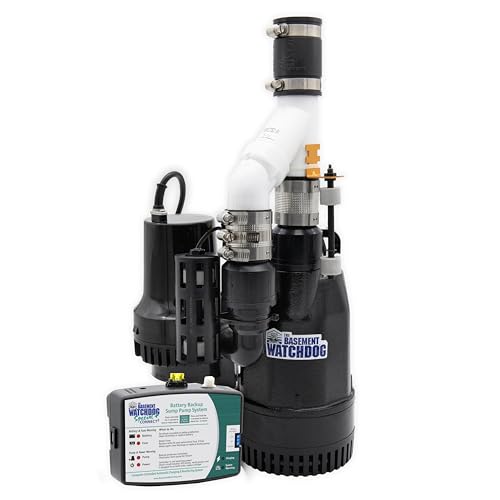
The Basement Watchdog Combo delivers comprehensive sump protection through a thoughtfully engineered dual-pump design. The preassembled configuration means you're not wrestling with complex plumbing or electrical setup - the system arrives ready to install, which is a significant advantage for homeowners tackling basement water management for the first time. The primary pump's 73 GPM capacity handles typical water intrusion quickly, while the battery-backed secondary pump ensures your basement stays protected even during power outages.
The monitoring controller is where this system truly shines for peace of mind. It continuously tracks pump operation, power status, and battery health, alerting you through visual and audible warnings when attention is needed. The optional WiFi module elevates this further by enabling remote notifications via text, email, and the Basement Watchdog app - valuable for homeowners who travel or want real-time awareness of basement conditions. The energy-efficient copper-wound motor balances performance with reasonable electricity consumption, and the flexible battery configuration lets you scale runtime based on your local flood risk and power outage patterns.
Installation assumes you have an existing sump pit or are prepared to create one, and the system requires either AGM or wet-cell batteries (sold separately). The 27-pound weight is manageable for most homeowners, though the dimensions mean careful planning for pit placement. For anyone serious about preventing basement flooding and willing to invest in monitored backup power, this preassembled combo system removes much of the complexity while delivering reliable, scalable protection.
| Specification | Details |
|---|---|
| Brand | Basement Watchdog |
| Model | CITS-50 |
| Motor Type | Copper-Wound PSC (Permanent Split Capacitor) |
| Horsepower | 0.5 HP |
| Primary Pump Capacity | 73 GPM at 0 ft lift; 59 GPM at 10 ft lift |
| Primary Pump Output | 4,400 GPH at 0 ft lift; 3,540 GPH at 10 ft lift |
| Backup Pump Capacity | 48 GPM at 0 ft lift; 35 GPM at 10 ft lift |
| Backup Pump Output | 2,890 GPH at 0 ft lift; 2,150 GPH at 10 ft lift |
| Battery Compatibility | AGM and wet-cell batteries (parallel connection supported) |
| Monitoring | 24/7 pump, power, and battery monitoring with alarm and warning light |
| WiFi Capability | Requires separate BW-WiFi2 CONNECT module |
| Alerts | Text, email, push notification, and mobile app (with WiFi module) |
| Color | Black |
| Dimensions | 21.7 x 17.2 x 10.9 inches |
| Weight | 27 pounds |
| Installation | Preassembled and preplumbed |
Installation: Position the preassembled system in your sump pit, ensuring the intake is submerged and the discharge line runs away from your foundation. Connect power to a dedicated outlet and battery terminals to your chosen battery (or batteries in parallel for extended runtime). No additional plumbing modifications are needed thanks to the preplumbed design.
Operation: The system automatically activates when water reaches the float switch, with the primary pump engaging first. If power fails, the battery backup controller seamlessly switches to the backup pump. Monitor the controller's indicator lights regularly and check battery charge status monthly. The alarm will sound and the warning light will illuminate if issues arise.
WiFi Monitoring (Optional): Purchase and install the BW-WiFi2 CONNECT module separately to enable remote notifications. Connect the module to your home WiFi network, download the Basement Watchdog app, and configure alert preferences. You'll then receive real-time notifications about pump activity, power status, and battery conditions from anywhere.
Maintenance: Check the sump pit monthly for debris, test the float switches quarterly, and inspect battery connections for corrosion. Replace batteries every 3-5 years depending on usage and climate. Clean the pump intake screen if water flow decreases.
Is This System Right for You? Choose the Basement Watchdog Combo if you live in a flood-prone area, experience occasional basement seepage, or want backup protection during power outages. It's especially valuable for homeowners with finished basements, valuable storage, or those who want peace of mind while away from home.
Key Considerations: You'll need an existing sump pit or the ability to install one (typically 18-24 inches deep). Budget for batteries separately - the system doesn't include them. If WiFi monitoring is important, factor in the cost of the CONNECT module. The backup pump's lower capacity (48 GPM vs. 73 GPM) means it's best suited for moderate water intrusion; severe flooding may overwhelm it.
Comparing Options: Single-pump systems are cheaper but offer no backup protection. Submersible-only pumps are simpler but harder to service. This combo's preassembled design saves installation headaches compared to building a system from individual components. The dual-pump redundancy provides confidence that your basement stays protected even during the worst-case scenario of primary pump failure.
Long-Term Value: The energy-efficient motor helps offset electricity costs over time. The ability to add a second battery extends runtime without buying an entirely new system. Quality construction and straightforward maintenance make this a solid long-term investment for serious basement water management.
Electrical Safety: Install the system on a dedicated outlet with a GFCI (Ground Fault Circuit Interrupter) breaker to prevent shock hazards. Never operate the pump in wet conditions without proper grounding. Keep the controller and electrical connections away from standing water.
Battery Safety: Handle batteries carefully - they're heavy and contain corrosive acid. Wear gloves and eye protection when connecting or replacing batteries. Ensure proper ventilation around batteries to prevent hydrogen gas accumulation. Store replacement batteries in a cool, dry location away from children and pets.
Sump Pit Safety: Never enter a sump pit without proper ventilation and safety equipment. Sump pits can accumulate dangerous gases. Always turn off power before servicing the pump or pit. Use a sturdy cover to prevent accidental falls and keep debris out of the pit.
Maintenance Safety: Turn off power at the breaker before performing any maintenance. Allow the pump to cool before handling. Check float switches regularly to ensure they move freely. Never attempt repairs beyond your skill level - contact a professional for complex electrical or mechanical issues.
Alarm Response: Take alarm sounds and warning lights seriously. They indicate a problem requiring immediate attention. Don't ignore repeated alarms as they signal potential system failure. Keep the alarm volume audible so you're alerted to issues, especially at night.

Pros
- Dependable backup power keeps basements protected 24/7 even when the grid goes down
- Dual float switches provide redundancy and prevent dry-running that damages pump motors
- Smart panel design with illuminated warnings eliminates guesswork during maintenance
- Compact footprint solves installation challenges in cramped basement spaces
- WiFi connectivity option lets you monitor system status remotely and receive alerts
Cons
- Battery sold separately, adding extra cost and requiring proper selection for your system's power needs
- No customer reviews available yet, so real-world durability and long-term reliability remain unproven
The Basement Watchdog Special CONNECT is engineered for homeowners who need reliable sump pump backup when storms knock out power. This system combines a primary pump with battery-powered redundancy, delivering 2,890 GPH at ground level and maintaining 1,730 GPH even at 10 feet of lift. The dual float switch design ensures the pump activates when water rises and shuts off at the proper level, preventing the motor damage that occurs with dry running.
What sets this unit apart is its user-centric design. The illuminated control panel displays warning messages that tell you exactly what needs attention, eliminating confusion during maintenance. The integrated battery fluid level sensor monitors your backup power supply continuously, alerting you before capacity drops to dangerous levels. For homeowners with tight or oddly-shaped sump pits, the compact 5 x 9 x 7.63 inch dimensions make installation feasible where larger units simply won't fit.
The WiFi-capable feature (with add-on module) transforms this from a set-it-and-forget-it device into a monitored system. You can check status remotely and receive alerts about water levels or maintenance needs without visiting your basement. Keep in mind that the battery comes separately, so you'll need to select the right capacity for your area's typical outage duration and your home's water intrusion patterns.
| Specification | Details |
|---|---|
| Pumping Capacity (0 ft. lift) | 2,890 GPH |
| Pumping Capacity (10 ft. lift) | 1,730 GPH |
| Motor Type | Copper-Wound |
| Float Switch Configuration | Dual Float Switch |
| Dimensions | 5 x 9 x 7.63 inches |
| Weight | 12 Pounds |
| Connectivity | WiFi-Capable with Add-on Module |
| Included Components | Controller, Charger, Dual Float Switch, Pump, Battery Box |
| Battery | Sold Separately |
| Category | Home Improvement |
When to Choose This System: Select the Basement Watchdog Special CONNECT if you live in an area prone to heavy rainfall, frequent power outages, or both. It's ideal for finished basements where flooding would cause significant damage, or for homes with valuable stored items below grade.
Key Considerations: Measure your sump pit carefully using the 5 x 9 x 7.63 inch dimensions provided. If your pit is smaller or has an irregular shape, this compact design may be your only viable option. Determine your area's typical outage duration to select the appropriate battery capacity. Research your home's water intrusion rate in heavy rain to ensure the 2,890 GPH capacity meets your needs.
Installation Planning: This system requires a dedicated 110V outlet near your sump pit for the charger. If you want WiFi monitoring, budget for the add-on module and ensure your basement has adequate WiFi signal. Consider hiring a licensed plumber if you're unfamiliar with sump pump installation, as improper setup reduces effectiveness.
Optimize Battery Life: Check battery fluid levels monthly using the integrated sensor monitoring system. Keep the battery fully charged during storm season, and replace it every 3-5 years depending on usage frequency and your area's climate.
Prevent False Alarms: Position both float switches at different heights so they trigger sequentially. The primary switch activates the main pump; the secondary switch engages the battery backup. This redundancy prevents the battery from draining unnecessarily during normal operation.
Maximize System Reliability: Install a check valve on the discharge line to prevent water from flowing backward into the sump pit when the pump stops. Test your entire system quarterly by pouring water into the pit to confirm both pumps activate in sequence. Keep the control panel accessible for quick maintenance checks.
Electrical Safety: Plug the charger into a GFCI-protected outlet to prevent electrical shock. Never operate the pump without proper grounding, and keep the control panel dry. If water splashes near electrical connections, shut off power immediately and allow components to dry completely before resuming operation.
Maintenance Safety: Always turn off power before servicing the pump or checking battery fluid levels. Never attempt repairs on electrical components yourself; contact a licensed electrician for wiring issues. Wear gloves when handling the battery, and dispose of old batteries according to your local hazardous waste guidelines.
Pit and Discharge Safety: Ensure your discharge line directs water away from your home's foundation, at least 4-6 feet from the sump pit. Cover the sump pit with a tight-fitting lid to prevent accidental falls and debris accumulation. Keep the area around your sump pump clear of storage items to maintain access for maintenance and emergency repairs.

Pros
- Automatic emergency activation provides peace of mind during storms and unexpected power outages
- Stainless steel housing resists rust and corrosion, ensuring long-term durability in wet conditions
- Top suction intake minimizes clogging and airlock issues that plague traditional sump pumps
- Compact design fits snugly in tight sump pits without requiring extensive pit modifications
- Sealed motor design with dielectric oil cooling improves efficiency and extends service life
Cons
- Battery not included, requiring a separate purchase and adding to total system cost
- No customer reviews available yet, making it difficult to assess real-world long-term reliability and user satisfaction
The Westinghouse Battery Backup Sump Pump System addresses a critical concern for homeowners in flood-prone areas: what happens to your basement when the power goes out during a storm? This dual-pump design pairs a capable 1/2 HP AC primary pump for everyday drainage with a high-flow DC battery backup that activates automatically when power fails. The result is continuous protection even when your home loses electricity, eliminating the anxiety many homeowners feel during severe weather events.
Build quality stands out as a major strength. Both pumps feature corrosion-resistant stainless steel housings that resist rust and degradation in the damp basement environment where they operate. The motor includes thoughtful engineering touches like a sealed shaft, lubricated ball bearings, and dielectric oil cooling to extend operational life. The top suction intake design is particularly smart, as it helps prevent the airlock and debris accumulation problems that commonly plague traditional sump pumps and reduce their effectiveness over time.
The compact footprint makes installation practical for most residential basements. At 14.4 x 9.3 x 15 inches and 50 pounds, this system fits into tight sump pits without requiring extensive modifications to your basement infrastructure. The energy-efficient motor design keeps power consumption reasonable while delivering dependable water removal when you need it most. Keep in mind that the battery is sold separately, so factor that cost into your budget when planning your purchase.
| Specification | Details |
|---|---|
| Brand | Westinghouse |
| Model | WH50BBU |
| Pump Type | Dual System (AC Primary + DC Battery Backup) |
| Horsepower | 1/2 HP |
| Primary Pump | AC-powered, high-capacity drainage |
| Backup Pump | DC-powered, automatic emergency activation |
| Material | Stainless Steel (corrosion-resistant) |
| Intake Design | Top Suction (prevents airlock and debris buildup) |
| Motor Features | PSC motor, sealed shaft, thermal overload protection, dielectric oil cooling |
| Dimensions | 14.4 x 9.3 x 15 inches |
| Weight | 50 pounds |
| Color | Blue/Black |
| Applications | Residential basements, light commercial use |
| Battery | Not included (sold separately) |
Installation: Position the pump system in your sump pit, ensuring the intake is submerged and the outlet line is properly routed to a drainage area away from your foundation. Connect the AC primary pump to a dedicated outlet with a GFCI breaker. Install the battery backup system according to the manufacturer's wiring diagram, connecting the DC pump to your battery (sold separately).
Normal Operation: The AC primary pump activates automatically when water levels rise in the pit, removing water continuously during normal conditions. Check the pit regularly for debris and clean the intake screen to maintain optimal performance. Most homeowners inspect their sump pump monthly and test it by pouring water into the pit to confirm activation.
Battery Backup Activation: During a power outage, the system automatically switches to the DC battery backup pump, which continues removing water without interruption. The battery backup ensures protection even if your primary power fails during a major storm. After power is restored, the system returns to normal AC operation. Periodically test your battery backup by simulating a power loss to ensure the switchover mechanism functions properly.
Electrical Safety: Always connect the primary AC pump to a dedicated outlet protected by a GFCI (Ground Fault Circuit Interrupter) breaker. This prevents electrical hazards in the damp basement environment. Never use extension cords; run a permanent circuit directly to the pump. Keep the battery backup system away from flammable materials and ensure proper ventilation around the battery installation area.
Maintenance: Regularly inspect the sump pit for debris, sediment, and objects that could clog the intake screen. Clean the top suction intake at least quarterly to prevent airlock and maintain consistent water flow. Check all electrical connections seasonally for corrosion or loose terminals, especially in high-humidity basements. Test the automatic switchover mechanism at least twice per year to confirm the battery backup activates properly during a power loss.
Installation Considerations: Ensure your sump pit is properly sized and sealed to prevent groundwater from entering around the pump. The outlet line should discharge at least 10 feet away from your home's foundation to prevent water from re-entering the basement. Install a check valve in the discharge line to prevent backflow. Keep the area around the pump accessible for maintenance and inspection. Never operate the pump dry, as this can damage the motor.
Maximize Battery Backup Performance: Invest in a high-quality deep-cycle battery with adequate amp-hour rating to ensure your backup pump runs long enough during extended outages. A larger battery provides extended protection during major storms. Consider installing a battery monitor so you can track charge levels and know when the backup system is ready. Test the battery monthly by disconnecting AC power briefly to confirm the DC pump activates smoothly and maintains proper flow.
Optimize System Reliability: Install your sump pit in the lowest point of your basement to maximize water collection efficiency. Use a rigid discharge pipe rather than flexible tubing, as it resists crushing and maintains consistent flow. Add a check valve with a ball bearing design, which prevents backflow better than traditional flapper-style valves. Consider a backup power source like a generator or battery backup system for your entire home if you live in an area with frequent extended outages.
Maintenance Best Practices: Keep a maintenance log documenting when you clean the intake screen, test the switchover mechanism, and inspect electrical connections. This helps you catch issues before they become problems. Store replacement parts like intake screens and check valves on hand so you can make repairs quickly if needed. In areas with very sediment-heavy groundwater, consider adding a sediment filter or pre-filter to extend the pump's service life and reduce clogging issues.

Pros
- High 2,700 GPH flow rate manages substantial water volumes during heavy flooding events
- Battery-powered operation eliminates dependency on grid electricity during outages
- Customizable battery selection lets homeowners tailor runtime to their specific needs
- Submersible design is compact and integrates seamlessly with existing sump pit setups
- Automatic activation removes guesswork and provides peace of mind during emergencies
Cons
- Battery is not included, requiring separate purchase and adding to total system cost
- Runtime depends entirely on battery capacity and pump runtime, which varies by weather severity and water volume
The Westinghouse 12V battery backup sump pump is engineered as a secondary defense system for homeowners facing basement flooding risks. With a 2,700 GPH capacity, this submersible pump delivers substantial pumping power during emergencies when your primary sump system is offline or compromised. The automatic activation feature means the pump engages without manual intervention, providing critical protection during power outages or primary pump failures when you may not be home or aware of the situation.
Installation and compatibility are strong points for this unit. The compact submersible design fits into standard residential sump pits, allowing homeowners to position it alongside an existing primary pump without extensive modifications or pit enlargement. The 12V DC motor system offers flexibility since you can select a battery that matches your specific needs, whether that means prioritizing extended runtime for storm-prone regions or choosing a more compact option for occasional backup protection.
One important consideration is that the battery is sold separately, so you'll need to budget for a compatible 12V battery and ensure you understand the runtime limitations of your chosen power source. For homeowners with finished basements, valuable stored items, or properties in flood-prone areas, this pump serves as practical insurance against water damage when grid power fails. It's best viewed as a complement to a primary sump system rather than a standalone solution.
| Specification | Details |
|---|---|
| Brand | Westinghouse |
| Model Type | Battery Backup Sump Pump |
| Power Source | 12V DC Battery (Not Included) |
| Maximum Flow Rate | 2,700 GPH |
| Pump Type | Submersible |
| Installation Type | Submersible in Standard Sump Pit |
| Color | Blue |
| Primary Use | Backup/Secondary Sump System |
| Activation | Automatic |
| Battery Compatibility | Standard 12V Batteries |
Installation: Position the pump in your existing sump pit alongside your primary pump. The compact submersible design requires minimal space, and most installations don't need pit modifications. Ensure the pump sits on a stable surface at the pit bottom.
Battery Connection: Connect a compatible 12V battery to the pump's terminals according to the included wiring diagram. Double-check polarity to prevent damage. Store the battery in an accessible, temperature-controlled location for optimal performance.
Automatic Operation: Once connected, the pump automatically activates when water levels rise or when primary power is unavailable. No manual switching is required. Test the system periodically by pouring water into the sump pit to confirm activation and proper discharge.
Maintenance: Check battery charge levels seasonally, especially before heavy rain seasons. Clean the intake screen regularly to prevent debris clogging. Inspect the discharge line to ensure water flows freely away from your foundation.
Battery Safety: Handle the 12V battery with care and follow the manufacturer's safety guidelines. Keep the battery away from children and pets. Ensure proper ventilation around the battery to prevent gas buildup. Store batteries in a cool, dry location away from flammable materials.
Electrical Precautions: Turn off power before connecting or disconnecting the pump. Inspect all wiring for damage before operation. Keep the battery and electrical connections dry and protected from water splash.
Pit Safety: Never enter a sump pit without proper safety equipment and training. Keep the pit cover secured to prevent accidental falls. Ensure proper ventilation if gases accumulate in the pit.
System Monitoring: Test your backup system monthly to ensure battery charge and pump functionality. Replace batteries as needed and don't wait until an emergency to discover equipment failure. Keep emergency contact information for a plumber readily available.
Is This Right for You? This pump is ideal if you have a primary sump system and want automatic backup protection during power outages. It's especially valuable for homeowners in flood-prone areas, those with finished basements, or anyone storing valuable items in their basement.
Battery Selection Matters: The battery you choose determines how long your pump can run. Calculate your needs based on local rainfall patterns and how long you typically experience power outages. A larger capacity battery costs more upfront but provides extended protection during extended outages.
Primary vs. Backup: This pump is designed as a secondary system, not a replacement for your primary sump pump. A properly functioning primary system should handle routine water removal. This backup activates when your main system fails or power is unavailable.
Installation Considerations: Most homeowners can install this pump themselves if they're comfortable with basic plumbing and electrical connections. However, if you're uncertain about battery wiring or sump pit modifications, hiring a professional plumber ensures proper setup and safety.
Long-Term Costs: Budget for battery replacement every 3-5 years depending on usage and battery quality. Factor this ongoing maintenance into your decision. Quality batteries may cost more initially but provide better reliability and longer service life.

Pros
- No maintenance required - sealed AGM design means no acid watering or terminal corrosion checks
- Safe for basements and indoor use - spill-proof construction prevents leaks and hazards
- Purpose-built for sump pump systems - optimized for the specific power demands of backup pumps
- Compact footprint - fits easily in tight basement corners without taking up significant space
- Dependable Westinghouse brand reputation - engineered to demanding performance standards
Cons
- Limited runtime - a 75Ah battery provides several hours of backup power depending on pump size and usage, not all-night protection for larger systems
- No reviews available yet - new product with no customer feedback to verify real-world performance and longevity claims
The Westinghouse 12V 75Ah AGM battery is purpose-built for homeowners who rely on sump pump backup systems to protect their basements from flooding. The sealed lead-acid design delivers consistent 12V power when your primary electrical system fails, ensuring your backup pump continues operating during storms and outages. This is especially valuable for anyone living in flood-prone areas or with a history of basement water intrusion.
What sets this battery apart is its maintenance-free AGM (Absorbent Glass Mat) technology. Unlike traditional lead-acid batteries, there's no need to check water levels, add distilled water, or worry about corrosion. The sealed construction also makes it safe for basement installation - no spills, no fumes, and no environmental hazards. At 11 x 7 x 10 inches, it's compact enough to fit in tight basement spaces without requiring a dedicated battery room or enclosure.
For homeowners evaluating sump pump backup options, this battery represents a straightforward, hassle-free solution. It's engineered to meet demanding performance standards and built specifically for the power demands of backup pump systems. The combination of sealed design, maintenance-free operation, and Westinghouse's trusted brand backing makes it a practical choice for anyone serious about basement flood protection.
| Specification | Details |
|---|---|
| Voltage | 12V |
| Capacity | 75 Amp Hours (Ah) |
| Battery Type | AGM Sealed Lead Acid |
| Dimensions | 11 x 7 x 10 inches |
| Maintenance | Maintenance-Free |
| Design | Spill-Proof Sealed Construction |
| Primary Use | Sump Pump Backup Systems |
| Installation | Indoor/Basement Safe |
Installation: Place the battery in a dry, level location near your sump pump backup system. Connect the positive (red) terminal to your backup system's charging controller first, then connect the negative (black) terminal to ground. Ensure all connections are tight and corrosion-free.
During Normal Operation: The battery remains charged by your backup system's charger. No maintenance is required - simply leave it connected and ready. The sealed design means no watering, no terminal cleaning, and no special upkeep.
During a Power Outage: When your primary power fails, the battery automatically supplies 12V power to your backup sump pump. The pump will continue operating as long as the battery has charge. Monitor the backup system's indicator lights to track battery status during extended outages.
After an Outage: Once power is restored, your backup system's charger will automatically recharge the battery. Allow several hours for a full recharge before relying on it again.
Know Your Runtime: A 75Ah battery provides several hours of backup power depending on your pump's amp draw. Smaller pumps (1-2 amps) may run 30+ hours; larger pumps (5+ amps) may run only 15 hours. Calculate your pump's amperage to understand how long you're protected.
Keep It Charged: Ensure your backup system's charger is functioning properly and keeping the battery topped off. A charger malfunction means your battery won't be ready when you need it most. Test your system monthly by checking the charger's indicator light.
Temperature Matters: AGM batteries perform best in moderate temperatures (50-80°F). Basements are ideal, but avoid placing the battery near furnaces, water heaters, or direct sunlight that could cause temperature swings.
Plan for Upgrades: If you live in a flood-prone area with frequent outages lasting more than a few hours, consider a larger capacity battery or dual-battery system for extended protection.
Is This Right for You? This battery is ideal if you have an existing sump pump backup system and need a reliable power source. It's not a standalone solution - you'll need a compatible backup pump system and charger controller to use it effectively.
What to Check Before Buying: Verify that your backup system uses a 12V power source. If your system requires 24V or higher voltage, this 12V battery won't work. Check your backup system's documentation or contact the manufacturer to confirm compatibility.
Capacity Considerations: The 75Ah capacity provides several hours of runtime depending on your pump size. Smaller pumps get longer protection; larger pumps drain the battery faster. If you need all-night protection during frequent outages, you may want to calculate your actual runtime needs or consider a larger capacity battery.
Installation Considerations: This battery is designed for basement installation and doesn't require special ventilation or acid-resistant enclosures. Its compact size (11 x 7 x 10 inches) fits in tight spaces, but ensure it's positioned on a level, dry surface away from standing water.

Pros
- No maintenance required - sealed AGM technology means no fluid refills or upkeep
- Extended runtime offers peace of mind with up to 80 hours of pump operation on some models
- Works with several Basement Watchdog sump pump systems, providing flexibility
- Durable construction designed for long-term standby use in basement environments
Cons
- Compatibility varies significantly by pump model, so you must verify your specific system before purchasing
- Older Basement Watchdog systems (pre-2014) without Remote Terminal may trigger false alarms
The Basement Watchdog BW-27AGM is a sealed AGM (Absorbent Glass Mat) standby battery engineered specifically for Basement Watchdog sump pump backup systems. Unlike traditional flooded batteries, this maintenance-free design eliminates the need to monitor water levels or add distilled water, making it a practical choice for homeowners who want reliable backup power without ongoing upkeep. The sealed construction also reduces corrosion risk and extends the battery's operational lifespan in damp basement environments.
Runtime performance depends on which Basement Watchdog pump system you own. The battery delivers up to 40 hours of protection on the Big Dog model, 48 hours on the Special Plus and Big Combination systems, and an impressive 80 hours on the Emergency and Combination models when operating on a 10% duty cycle. This extended runtime means your sump pump can continue protecting your basement for multiple days during power outages, significantly reducing flood risk during storms or grid failures.
Compatibility is the critical consideration before buying. This battery works with several Basement Watchdog models, but older systems purchased before 2014 that lack the Remote Terminal may experience false alarms when paired with this maintenance-free battery. Verify your pump's model number and purchase year to ensure compatibility, and contact Basement Watchdog customer support if you're uncertain about your system's compatibility.
| Specification | Details |
|---|---|
| Model | BW-27AGM |
| Brand | Basement Watchdog |
| Battery Type | Maintenance-Free AGM (Absorbent Glass Mat) |
| Dimensions | 8 x 12 x 12 inches |
| Weight | 49.8 pounds |
| Max Runtime (Big Dog) | 40 hours at 10% duty cycle |
| Max Runtime (Special+/Big Combo) | 48 hours at 10% duty cycle |
| Max Runtime (Emergency/Combo) | 80 hours at 10% duty cycle |
| Maintenance | None required |
| Category | Pump Accessories |
Verify Compatibility First
Before purchasing, confirm your Basement Watchdog pump model and the year it was installed. This battery works best with systems purchased after 2014 or those with a Remote Terminal. Check your pump's documentation or contact Basement Watchdog support to confirm compatibility and avoid false alarm issues.
Understand Runtime Expectations
Runtime varies significantly by pump model. A Big Dog system gets 40 hours, while an Emergency or Combination system can run for 80 hours. Calculate your expected duty cycle during a typical power outage to understand how many days of protection you'll have. Remember that actual runtime may be shorter if your pump operates at a higher duty cycle than 10%.
Installation and Placement
This battery is designed as a drop-in replacement for compatible Basement Watchdog backup systems. Ensure your pump's battery compartment has adequate ventilation and that the battery is securely mounted. The 50-pound weight requires careful handling during installation.
Maintenance and Care
While the AGM design is maintenance-free, store the battery in a cool, dry location when not in use. Check the battery's condition annually and replace it if you notice corrosion, swelling, or reduced runtime performance. Most AGM batteries last 3-5 years in standby applications.
Test Your System Regularly
Don't wait for a storm to discover your backup system doesn't work. Test your pump and battery at least twice yearly by unplugging the main power and confirming the backup system activates. This ensures the battery has adequate charge and the pump operates correctly.
Monitor Battery Age
Even maintenance-free AGM batteries degrade over time. If your battery is more than 5 years old, consider replacing it proactively before the next severe weather season. A failed battery during an actual emergency could be costly.
Keep a Spare Battery On Hand
If you have a critical sump pump system, keeping a second charged battery in storage provides insurance against failure. Batteries lose charge slowly even when not in use, so rotate your spare annually to keep it ready.
Pair with a Backup Generator
For maximum protection during extended outages, consider pairing this battery backup with a portable generator. The battery buys you time to set up a generator, extending your protection indefinitely.

Pros
- Pure sine wave technology protects sensitive pump electronics and extends equipment life
- Automatic switching eliminates the need to manually activate backup power during outages
- Comprehensive safety features and built-in cooling system prevent damage and overheating
- Works with multiple battery types, giving you flexibility in your backup power setup
- Simple installation and intuitive LCD remote make setup accessible for most homeowners
Cons
- No customer reviews available yet, so real-world performance data from actual users is limited
- Requires a separate deep-cycle battery purchase, adding to total system cost
The VIOPUMPO 2500W sump pump battery backup system addresses a critical vulnerability in most homes: what happens when the power goes out and your sump pump stops working. This unit bridges that gap by automatically switching to battery power, delivering 2500 watts of pure sine wave AC output that's safe for all pump types. The pure sine wave technology is important because it mimics standard grid power, avoiding the electrical interference and potential damage that cheaper modified sine wave systems can cause.
Installation is straightforward for most homeowners. The system requires no additional wiring beyond connecting AC and DC cables and plugging your sump pump into the unit's outlet. The built-in 25A charger supports fast and trickle charging modes for deep-cycle lithium and AGM batteries, with overcharge protection to extend battery life. An LCD remote controller gives you real-time visibility into voltage, power output, and battery charge status, so you always know your backup system's readiness.
Safety features are comprehensive, including overheat protection, short circuit protection, low voltage cutoff, and an integrated cooling system. The flexible mounting options allow you to position the unit flat or wall-mounted to suit your sump pump installation. While the system represents a solid investment in flood protection, remember that you'll need to purchase a compatible deep-cycle battery separately, and the lack of customer reviews means you're relying on the manufacturer's specifications rather than proven field performance.
| Specification | Details |
|---|---|
| Brand | VIOPUMPO |
| Model | UPS-2500 |
| Power Output | 2500W Pure Sine Wave |
| Battery Charger | Built-in 25A (Fast & Trickle Charging) |
| Compatible Battery Types | Deep-Cycle Lithium, AGM, Other Deep-Cycle |
| Control Interface | LCD Remote Controller |
| Color | Black |
| Mounting Options | Flat or Wall-Mounted |
| Protection Features | Overload, Overheat, Short Circuit, Low Voltage, Overcharge |
| Cooling System | Built-in |
| Warranty | 12 Months |
Initial Setup: Assemble the AC and DC cables as shown in your user manual. Position the unit near your sump pump basin, either laying it flat or mounting it to a wall using the side fixing holes. Ensure the unit is on a stable, dry surface away from moisture and flooding.
Battery Connection: Connect your deep-cycle battery (purchased separately) to the DC terminals following the polarity markings. The built-in 25A charger will begin conditioning the battery automatically. Use the LCD remote to monitor charging progress.
Sump Pump Connection: Plug your sump pump directly into the AC outlet on the unit. During normal operation, power flows from your home's electrical system. When the power fails, the system automatically switches to battery power within seconds, keeping your pump running without any action on your part.
Regular Maintenance: Check the LCD remote weekly to verify the system is charged and ready. Test the automatic switching quarterly by simulating a power loss (consult your manual for safe testing procedures). Keep the unit's ventilation clear so the cooling system operates effectively.
Installation Safety: Install the battery backup system in a location protected from standing water, though near your sump pump basin for short cable runs. Ensure the unit has adequate ventilation on all sides for the cooling system to function properly. Do not install in spaces where water could splash directly onto the unit.
Electrical Safety: Only connect deep-cycle batteries rated for the system. Do not attempt to use car batteries or non-deep-cycle batteries, as they will damage the charger and may pose fire or explosion risks. Always verify battery connections match the polarity markings before powering on.
Battery Handling: Deep-cycle batteries are heavy; use proper lifting techniques or get assistance when installing. Keep battery terminals clean and free of corrosion. The system includes multiple automatic protections, but never bypass or disable safety features. If you smell burning or see smoke, immediately disconnect power and contact customer support.
Testing and Maintenance: Before relying on the system during an actual outage, perform a test switch under controlled conditions. Check the LCD remote regularly to confirm the system is fully charged. Keep the user manual accessible for reference and follow all manufacturer guidelines for your specific battery type.
Is This Right for You? If you live in an area prone to flooding or power outages, or if your sump pump is critical to your home's structural integrity, this backup system is a worthwhile investment. It's designed for homeowners and serious DIYers who want automatic, hands-off protection without complicated wiring or installation.
What You Need to Know Before Buying: This is a backup power inverter system, not a complete UPS. You must purchase a compatible deep-cycle battery separately (lithium or AGM recommended). The 2500W capacity is suitable for most residential sump pumps, but verify your pump's wattage requirements match this system's output. The 12-month warranty covers manufacturing defects but not battery-related issues.
Budget Considerations: Factor in the cost of a quality deep-cycle battery in addition to this unit's price. Deep-cycle lithium batteries offer longer lifespan and faster charging but cost more than AGM options. Consider this a long-term investment in flood protection rather than a short-term expense.
Comparing Options: Look for systems that offer pure sine wave output (this one does), automatic switching capability, and comprehensive safety protections. Avoid modified sine wave systems that can damage sensitive electronics. Verify the charger amperage matches your battery type and compare warranty lengths. The VIOPUMPO's 25A charger and multiple safety layers are competitive features in this category.

Pros
- Automatic switchover means your basement stays protected even while you're away or asleep
- Pure sine wave output won't damage sensitive electronics or cause pump inefficiency
- LCD remote monitoring provides real-time visibility into system performance and battery health
- Flexible battery compatibility gives you options for cost and performance preferences
- Straightforward setup without requiring an electrician or major home modifications
Cons
- Battery is sold separately, adding to the total cost of a complete flood protection system
- No customer reviews available yet, so long-term durability feedback from real users is limited
The OLTEANP 2500W battery backup system addresses a genuine concern for homeowners in flood-prone areas: keeping your sump pump running when the power goes out. The core appeal lies in its automatic transfer switch, which seamlessly transitions your pump from grid power to battery power without manual intervention. This matters because a sump pump that stops working during a heavy rainstorm or hurricane is essentially useless, and water damage from a flooded basement can cost tens of thousands of dollars to repair.
From a technical standpoint, the 2500W pure sine wave output is the right choice for sump pumps and other sensitive equipment. Unlike cheaper modified sine wave inverters that can cause motors to run less efficiently or even fail prematurely, pure sine wave power delivers clean, stable electricity. The built-in 25A smart charger with multi-stage protection handles the charging cycle intelligently, which helps extend battery lifespan and ensures the system is always ready when needed. The LCD remote is a practical addition, letting you monitor battery voltage and load status without walking to the unit itself.
One important consideration: the battery is not included, so you'll need to purchase a compatible 12V deep-cycle battery separately. The system supports LiFePO4, AGM, GEL, and flooded batteries, giving you flexibility in choosing based on your budget and performance needs. Installation is straightforward with wall-mount or flat-placement options and simple AC/DC connections. The 12-month warranty and 24/7 customer support provide reasonable peace of mind, though the lack of user reviews means you're relying on the manufacturer's track record rather than extensive homeowner feedback.
| Specification | Details |
|---|---|
| Power Output | 2500W Pure Sine Wave |
| Charger Speed | 25A Fast Charging with Selectable Modes |
| Battery Type Compatible | 12V Deep Cycle (LiFePO4, AGM, GEL, Flooded) |
| AC Outlets | 3 Standard Outlets |
| USB Ports | 1 USB-A + 1 USB-C |
| Protection Features | Overcharge, Low Voltage, Overload, Short Circuit, Overheat |
| Monitoring | LCD Remote with Real-Time Display |
| Dimensions | 16.93 x 7.87 x 4.33 inches |
| Color | Black |
| Warranty | 12 Months |
| Included Accessories | Battery Cables, UPS Plug, User Manual |
| Installation | Wall Mount or Flat Placement |
Installation: Mount the unit on a wall near your sump pump or place it flat in a dry location. Connect the AC power cord to a standard outlet (this is your primary grid power source). Connect your 12V deep-cycle battery to the DC terminals using the included battery cables, observing correct polarity (red to positive, black to negative). The system is now ready to operate.
Normal Operation: The inverter automatically draws power from the grid when available, simultaneously charging your battery through the built-in 25A charger. The LCD remote displays battery voltage, load status, and operating mode. You can mount the remote on a wall or keep it nearby for easy monitoring.
During a Power Outage: The automatic transfer switch detects the loss of grid power and instantly switches to battery power, keeping your sump pump running without any action on your part. When utility power returns, the system automatically switches back to grid power and resumes charging the battery. No manual intervention is needed.
Maintenance: Check the LCD remote periodically to ensure the battery is maintaining a healthy charge level. Keep the unit in a dry location away from standing water. Follow the user manual for specific battery maintenance recommendations based on your battery type.
Electrical Safety: Always turn off power before connecting or disconnecting battery cables. Ensure all connections are tight and secure to prevent arcing or loose connections. Do not attempt to open the unit or modify its internal components. Keep the system away from moisture and standing water, even though it's designed for basement use.
Battery Safety: Verify your battery is compatible with this system (12V deep-cycle only). Use the correct battery type as specified in the manual - mixing battery types can reduce performance or cause damage. Ensure proper ventilation around the battery, especially if using flooded-type batteries that may emit hydrogen gas during charging.
Load Management: Do not exceed the 2500W maximum power output. While the system can run multiple devices, prioritize essential loads like your sump pump. Avoid running high-draw appliances simultaneously if your battery capacity is limited. The built-in overload protection will shut down the system if demand exceeds 2500W.
During Storms: Keep the LCD remote accessible so you can monitor the system during severe weather. Ensure the AC power cord is plugged into a properly grounded outlet. If you notice any burning smells, unusual sounds, or visible damage, disconnect the system immediately and contact customer support.
Is This Right for You? This system is ideal if you own a home with a basement sump pump in an area prone to flooding, frequent storms, or unreliable power. It's especially valuable if you have a finished basement you want to protect, or if you've experienced flooding during previous outages. If your sump pump is your only defense against water damage, this automatic backup is a smart investment.
Battery Selection Matters: The system works with 12V deep-cycle batteries, but your choice affects performance and cost. LiFePO4 batteries offer the longest lifespan and best performance but cost more upfront. AGM batteries provide a good balance of cost and reliability. GEL and flooded batteries are more budget-friendly but may require more maintenance. Consider how many hours of runtime you need - larger capacity batteries provide longer protection but take up more space and cost more.
Installation Considerations: You can install this yourself if you're comfortable with basic electrical connections, or hire an electrician for peace of mind. The system requires minimal rewiring since it connects to standard outlets. Plan the location carefully - it should be near your sump pump but in a dry area, and the remote should be placed where you can easily see it.
Budget Planning: Factor in the cost of the battery separately. A quality 12V deep-cycle battery can range from a few hundred to over a thousand dollars depending on capacity and type. The total system cost is the inverter plus the battery, plus installation if you hire help. Think of it as insurance against costly water damage - the investment typically pays for itself after preventing even one significant flood.

Pros
- Ready-to-install setup saves time and eliminates guesswork for homeowners
- Dual float switches on each pump provide four-layer protection against failure
- High flow rates at both 0 ft and 10 ft lift heights handle various basement configurations
- Battery backup ensures protection during power outages when you need it most
- Monitoring system gives peace of mind with real-time alerts and status indicators
Cons
- No user reviews available yet, so long-term durability and real-world performance remain unverified
- Backup pump flow rates drop significantly at 10 ft lift (1,500 GPH), limiting effectiveness in deeper installations
The Basement Watchdog Combo system addresses a critical homeowner concern: protecting your basement from water damage without requiring extensive installation expertise. This preassembled unit combines a primary pump capable of moving 3,720 gallons per hour with a battery-backed secondary pump, creating a two-layer defense against flooding. The copper-wound PSC motor is engineered for efficiency and longevity, helping keep operating costs reasonable over years of use.
What sets this system apart is its monitoring intelligence. The 24/7 controller tracks both pump operation and water levels, using visual lights and audible alarms to alert you immediately if problems develop. The dual float switches on each pump (four total activation points) provide redundancy that significantly reduces the risk of silent failures. For homeowners in areas prone to heavy rainfall or those with previous water damage, this multi-layered approach offers genuine peace of mind.
The compact design fitting 12-inch diameter pits makes it compatible with most existing basement installations, and the battery backup system provides intermittent pumping capability for days on a single charge. The preassembled construction means you're not wrestling with plumbing connections or complex setup procedures, though you'll want to ensure proper pit sizing and electrical installation by a qualified technician.
| Specification | Detail |
|---|---|
| Color | Black |
| Dimensions | 11.75 x 8.75 x 18 inches |
| Weight | 27 pounds |
| Motor Type | Copper-Wound PSC (1/3 HP) |
| Primary Pump Flow Rate | 62 GPM at 0 ft lift; 51 GPM at 10 ft lift |
| Primary Pump Volume | 3,720 GPH at 0 ft; 3,100 GPH at 10 ft |
| Backup Pump Flow Rate | 42 GPM at 0 ft lift; 25 GPM at 10 ft lift |
| Backup Pump Volume | 2,500 GPH at 0 ft; 1,500 GPH at 10 ft |
| Minimum Pit Diameter | 12 inches |
| Float Switches | Dual switches per pump (4 total) |
| Monitoring | 24/7 Controller with lights and alarms |
| Battery Charger | 0.4-Amp (compatible with BW-27AGM) |
| Battery Backup Runtime | Days of intermittent pumping per charge |
Is This System Right for You?
Choose this combo system if you experience basement water intrusion during heavy rains, live in a flood-prone area, or want protection during power outages. The dual-pump design is ideal for homeowners who can't afford downtime from pump failure.
Key Considerations Before Buying
Verify your sump pit diameter (minimum 12 inches required). Check the lift height from your pit floor to discharge point, as pump performance decreases at 10 ft and beyond. Confirm electrical outlet availability near the pit for the charger and monitoring controller. Consider whether you need a maintenance-free AGM battery (sold separately as BW-27AGM) for the backup system.
Installation Notes
While the system arrives preassembled, proper installation requires securing the unit in your pit, connecting discharge lines, and setting up electrical connections. Most homeowners should have a qualified plumber or electrician handle installation to ensure safety and warranty compliance. The compact footprint is advantageous, but ensure your pit opening allows equipment access.
Maintenance and Longevity
Regularly inspect the float switches for debris that could prevent activation. The monitoring system helps catch problems early. The battery backup requires periodic charging cycles to maintain effectiveness, and you may eventually need to replace the standby battery after several years of service.
Optimize Your System Setup
Position the sump pump intake to draw from the lowest point of your pit, and ensure the discharge line slopes away from your foundation. If possible, run the discharge line to daylight (outside ground level) rather than to a storm drain, which prevents water from re-entering your basement.
Maximize Battery Backup Performance
The battery backup works best for intermittent pumping during power outages, not continuous operation. Ensure your pit has adequate capacity to handle water accumulation between pump cycles. Test the backup system quarterly by disconnecting the primary pump to confirm the battery and backup pump activate properly.
Monitor and Maintain Proactively
Use the 24/7 monitoring controller's alerts as an early warning system. If you notice the alarm activating frequently, investigate the cause immediately rather than ignoring it. Keep the pit clean of debris that could jam the float switches or impellers. Document any unusual sounds or performance changes to catch problems before they become serious.
Plan for Long-Term Reliability
Mark your calendar to replace the standby battery every 3-5 years, even if it seems to work fine. Standby batteries lose capacity gradually and may fail when you need them most. Keep the charger plugged in during non-emergency periods to maintain the battery in ready condition.

Pros
- Simple plug-in setup reduces installation errors and electrical safety risks
- Supports multiple battery chemistries with intelligent 3-stage charging for longevity
- Clear LCD display lets you monitor system health and battery status at a glance
- Robust safety features protect against common electrical hazards
- Dual-pump capacity handles both primary and backup sump pump systems
Cons
- Battery not included, requiring separate purchase of compatible 12V battery (adds to total cost)
- No customer reviews available yet, limiting real-world user feedback on long-term reliability
The VEVOR 2500W sump pump battery backup system addresses a critical need for homeowners in flood-prone areas: keeping your sump pump running when the power goes out. This inverter delivers pure sine wave output at 2500W, which means it can support dual-pump operation simultaneously (a 1 HP main pump plus a 1/3 HP backup). The pure sine wave technology is important because it provides clean, stable power that won't damage sensitive electronics or pump motors, unlike cheaper modified sine wave alternatives.
Installation is refreshingly straightforward. Rather than requiring you to splice wires and navigate complex electrical connections, this system uses a standard 3-prong plug design. You simply plug it in, connect your battery, and it's ready to go. This approach significantly reduces the risk of wiring errors and electrical hazards that could compromise your basement protection. The system includes an LCD display that continuously shows voltage, battery level, and operational status, so you always know whether your backup power is ready to activate.
The charging system uses intelligent 3-stage technology (Bulk, Absorption, Float) that automatically optimizes battery performance and extends service life. It works with Lead-acid, AGM, Gel, and LiFePO4 batteries, giving you flexibility in your battery choice. The unit also includes multiple safety features like overcurrent protection, overvoltage protection, short circuit safeguards, reverse polarity detection, and high-temperature shutoff, plus a circuit breaker for additional security. Keep in mind that the battery is sold separately, so factor that into your budget when planning your backup system.
| Specification | Details |
|---|---|
| Power Output | 2500W Pure Sine Wave |
| Color | Black |
| Dimensions | 17.52 x 9.45 x 3.58 inches |
| Weight | 13.89 pounds |
| Pump Support | Dual-pump operation (1 HP main + 1/3 HP backup) |
| Battery Compatibility | 12V Lead-acid, AGM, Gel, LiFePO4 |
| Charging System | 3-stage (Bulk, Absorption, Float) |
| Display | LCD screen with LED indicators |
| Additional Outlets | USB port and AC outlet |
| Safety Features | Overcurrent, overvoltage, short circuit, reverse polarity, high temperature protection, circuit breaker |
| Installation | Standard 3-prong plug connection |
Setup: Position the inverter near your sump pump and battery location. Connect the 12V battery to the inverter using the battery terminals, ensuring proper polarity (red to positive, black to negative). Plug the unit into a standard wall outlet using the 3-prong connector.
Operation: The system automatically monitors your home's power status. When utility power is available, the inverter charges your battery using its intelligent 3-stage charging system. If power fails, the inverter automatically switches to battery power and delivers 2500W to keep your sump pump running. The LCD display shows real-time voltage and battery level so you can confirm the system is ready.
Daily Monitoring: Check the LCD display periodically to verify battery charge level and system status. The display will alert you to any issues. During power outages, the system automatically manages power delivery to your pump. The USB port and AC outlet provide additional emergency power for phones or small devices if needed.
Before Installation: Turn off power to your sump pump system before connecting the inverter. Ensure the 12V battery is compatible and fully charged before first use. Read all instructions carefully and follow proper electrical safety procedures.
During Operation: The system includes built-in protections against overcurrent, overvoltage, short circuits, and reverse polarity, but always verify correct battery polarity before connecting. Keep the inverter in a dry location away from water splash, as it will be near your sump pump. Ensure adequate ventilation around the unit to prevent overheating.
Maintenance: Periodically check battery terminals for corrosion and tighten connections if loose. Monitor the LCD display for any warning indicators. Keep the inverter clean and free of dust. If the system shows error codes or unusual behavior, disconnect the battery immediately and consult the manual or contact support before troubleshooting further.
Is This Right for You? This system is ideal if you live in an area prone to heavy rainfall, frequent power outages, or both. If your sump pump has ever failed during a storm because of a power outage, this backup system will give you peace of mind. It's also suitable if you have a dual-pump setup (primary plus backup) that needs simultaneous power.
Battery Selection: The inverter works with 12V Lead-acid, AGM, Gel, and LiFePO4 batteries. Lead-acid is budget-friendly but requires more maintenance. AGM and Gel are sealed and maintenance-free. LiFePO4 batteries are the most expensive but last longest and handle more charge cycles. Choose based on your budget and how long you need backup power to run.
Power Duration: How long the system runs depends entirely on your battery capacity (measured in amp-hours). A 100 Ah battery will run a typical 1 HP sump pump for several hours. Calculate your needs based on average power outage duration in your area and how many pumps you're running. The plug-and-play design means you can upgrade your battery later without reinstalling the inverter.

Pros
- Quick installation with no special tools or modifications required
- Integrated vertical float switch automatically activates when water levels rise
- High capacity handles both routine moisture and emergency flood situations
- USA manufacturing and 3-year warranty demonstrate quality commitment
- Battery backup option provides protection during storms and power outages
Cons
- Battery backup system requires separate purchase of the Wayne WSB1275 75 AH battery, adding to total cost
- No reviews available yet, so long-term user feedback and real-world performance data are limited
The Wayne WSS30VN sump pump is designed to handle the water management challenges that plague many American basements. With a 1/2 HP motor delivering up to 5,100 gallons per hour, this system can manage both routine seepage and serious water events. The pre-assembled, drop-in design means most homeowners can have it running in under 15 minutes without hiring a professional or making modifications to their existing sump basin.
What sets this model apart is its battery backup readiness. While the battery is sold separately, the system's capability to remove up to 10,000 gallons on a single charge provides genuine protection during power outages. The integrated vertical float switch handles activation automatically, so you don't need to monitor water levels manually. The pump has been evaluated for durability through 1 million cycle assessments, suggesting it should perform reliably over many years of use.
Built in the USA and backed by a 3-year warranty, the Wayne WSS30VN appeals to homeowners who prioritize dependable basement protection without complicated installation. The ultra-quiet operation is a practical bonus, especially if your sump basin is near living spaces. This is a straightforward, capable solution for anyone dealing with wet basement issues or seeking peace of mind during storm season.
| Specification | Details |
|---|---|
| Brand | Wayne |
| Model | WSS30VN |
| Motor Size | 1/2 HP |
| Maximum Flow Rate | 5,100 GPH |
| Battery Backup Capacity | Up to 10,000 gallons per charge |
| Float Switch | Integrated Vertical |
| Dimensions | 23.5 x 18.25 x 14 inches |
| Weight | 44 pounds |
| Minimum Basin Size | 16 inches diameter or larger |
| Power Cord Length | 8 feet SJTW |
| Durability Rating | 1 million cycle evaluation |
| Warranty | 3 years |
| Assembly Location | USA |
| Use Type | Indoor only |
Installation
Place the pre-assembled pump into your sump basin (16 inches diameter or larger). No drilling or modifications needed. Position the float switch so it moves freely up and down with water levels. Plug the 8-foot power cord into a GFCI-protected outlet.
Operation
The integrated vertical float switch automatically activates the pump when water rises to a set level. Water is expelled through the discharge pipe. When water drops, the pump shuts off automatically. The system runs quietly in the background.
Battery Backup Setup
To add battery protection, purchase the Wayne WSB1275 75 AH battery separately and connect it according to the manufacturer's instructions. This enables the pump to continue operating for up to 10,000 gallons if power is lost during a storm.
Maintenance
Periodically check that the float switch moves freely and the discharge pipe is clear. In areas with sediment-heavy water, inspect the pump intake annually. Keep the basin reasonably clean to prevent debris from affecting operation.
Electrical Safety
Always plug the pump into a GFCI (ground fault circuit interrupter) outlet to prevent electrical shock. Never operate the pump with wet hands or while standing in water. Ensure the power cord is in good condition and free from damage.
Installation Safety
Never attempt to install or service the pump while it's plugged in. Always disconnect power before performing any maintenance or adjustments. Make sure the sump basin is structurally sound before installation.
Operational Safety
Keep the pump intake clear of debris, rags, or objects that could clog it. Do not block the discharge pipe or allow water to back up into the basement. If the pump makes unusual noises or fails to activate, disconnect it and consult the manual or manufacturer support.
Battery Backup Safety
If using a battery backup system, follow all battery connection instructions carefully. Keep the battery in a well-ventilated area away from children and pets. Have the battery checked periodically to ensure it holds a charge.
Is This Pump Right for You?
The Wayne WSS30VN is ideal for homeowners with wet basements, high water tables, or homes in flood-prone areas. Its 5,100 GPH capacity handles both routine seepage and emergency situations. If you want quick installation without professional help, this pre-assembled system fits the bill.
Key Considerations
Sump Basin Size: Your existing basin must be at least 16 inches in diameter. Measure before purchasing.
Power Availability: Ensure a GFCI outlet is within reach of the 8-foot cord or plan to use a heavy-duty extension cord.
Battery Backup: If you want protection during outages, budget for the separate Wayne WSB1275 battery purchase.
Noise Level: This pump is ultra-quiet, making it suitable for basements near living spaces.
Warranty and Support
The 3-year warranty covers defects and provides peace of mind. USA manufacturing means parts and support are readily available. Keep your receipt and warranty documentation for any future claims.
Long-Term Value
With 1 million cycle durability and a reputation for reliability, the Wayne WSS30VN is a solid long-term investment. The ability to add battery backup later gives you flexibility to upgrade protection as your needs change.

Pros
- Dedicated sump pump backup system designed for basement flood prevention during storms and outages
- Pure sine wave technology ensures safe operation with modern pump motors and electronics
- Remote LCD controller provides convenient monitoring from anywhere in your home
- Adjustable voltage settings extend battery lifespan and improve overall system efficiency
- Multiple safety features and automatic switchover eliminate guesswork during emergencies
Cons
- Batteries must be purchased separately, adding significant additional cost to the total system investment
- No reviews available yet, so long-term reliability and real-world performance data are limited
The Viopumpo 2500W Sump Pump Battery Backup System addresses a critical concern for homeowners in flood-prone regions: keeping sump pumps operational when storms knock out power. This inverter-based system generates clean, pure sine wave power that protects pump motors and electronics from damage, unlike cheaper modified sine wave alternatives. With 2500 watts of capacity and three AC outlets, it can support multiple sump pumps running simultaneously, making it suitable for larger basements or homes with redundant pump systems.
The automatic switchover feature is a genuine convenience factor. When utility power fails, the system seamlessly transitions to battery power without requiring you to manually flip switches or restart equipment. The included LCD remote controller lets you monitor voltage, power draw, and battery charge status in real time, giving you confidence that your basement protection is active. The adjustable input voltage setting (9.5V-11V) is particularly useful for lithium battery compatibility, helping preserve battery health and extend its usable lifespan over time.
Installation is straightforward with simple cable assembly and flexible mounting options, though remember that batteries are sold separately and represent a significant portion of your total investment. The system includes comprehensive protection mechanisms including overload recovery, overheating protection, and low-voltage safeguards. With a 12-month warranty and responsive customer support, this is a purpose-built solution for homeowners serious about basement flood prevention.
| Specification | Details |
|---|---|
| Brand | Viopumpo |
| Model | UPS-2500 |
| Power Output | 2500 Watts |
| Output Type | Pure Sine Wave |
| Operating Current | 25A |
| AC Outlets | 3 Grounded Outlets |
| USB Ports | 5V/3.1A USB + 30W USB Type-C |
| Input Voltage Range | 9.5V - 11V (Adjustable) |
| Color | Black |
| Cooling System | Built-in Active Cooling |
| Protection Features | Overload, Overheating, Short-Circuit, Low-Voltage, Overcharge |
| Installation | Wall or Flat Mount (No Complex Wiring) |
| Remote Control | HD LCD Display with Real-Time Status |
| Warranty | 12 Months |
| Batteries | Sold Separately |
Setup and Installation
Begin by selecting your mounting location, either flat on a shelf or wall-mounted near your sump pump system. Assemble the AC and DC cables according to the included manual. No additional wiring is required beyond connecting the cables to the appropriate terminals. Once assembled, connect your sump pump to one of the three AC outlets.
Battery Connection and Configuration
Connect your external battery pack (purchased separately) to the DC input terminals. Before powering on, ensure the inverter is off and adjust the input voltage setting to match your battery type (9.5V-11V range). This step is critical for optimizing battery performance and lifespan, particularly with lithium batteries.
Monitoring and Testing
Power on the system and use the included remote control to verify that the LCD display shows proper voltage, power output, and battery charge levels. Test the automatic switchover by briefly interrupting AC power to confirm the system switches to battery backup smoothly. Keep the remote control in an accessible location so you can monitor system status during storms.
Routine Maintenance
Check battery charge levels monthly, especially during storm season. Ensure ventilation around the unit to support the active cooling system. Verify that all connections remain secure and free from corrosion. Consult the user manual for specific battery maintenance recommendations based on your battery type.
Installation Safety
Install the inverter in a location with adequate ventilation to prevent overheating. Avoid placing it in damp areas where moisture could damage electronics. Ensure all electrical connections are secure and properly grounded. Keep the unit away from children and pets, and never attempt to open or modify the internal components.
Battery Handling
Handle batteries according to the manufacturer's specifications for your specific battery type. Lithium batteries require different care than lead-acid batteries. Never mix battery types or attempt to use damaged batteries. Store backup batteries in a cool, dry location when not in use.
Power Management
Do not exceed the 2500-watt maximum output capacity. Calculate the wattage of all connected devices to ensure you stay within limits. Remember that sump pumps draw significant startup current, so avoid connecting other high-draw devices simultaneously. The built-in overload protector will automatically shut down the system if capacity is exceeded.
Weather and Outage Preparedness
Test your system quarterly to ensure automatic switchover functions properly. Monitor battery charge levels before and during storm seasons. Keep the remote control accessible and check battery status regularly during extended outages. If the system shuts down due to overload, allow it to cool for several minutes before restarting.
Is This Right for You?
This system is ideal if you own a home with a basement sump pump in an area prone to heavy rainfall, flooding, or frequent power outages. It's particularly valuable if you live in a region where summer thunderstorms or winter storms regularly cause grid failures. If your sump pump is your only defense against basement flooding, this backup system provides essential peace of mind.
Budget Considerations
The Viopumpo inverter itself is reasonably priced, but remember that batteries are sold separately. Quality lithium or lead-acid batteries can cost $500-$2000 or more depending on capacity. Calculate your total investment before purchasing. Consider how long you need the system to run during a typical outage in your area to determine the battery capacity you'll need.
Sizing Your System
The 2500-watt capacity is suitable for most residential sump pumps, which typically draw 800-1500 watts during operation. If you have multiple pumps or other basement equipment you want to backup simultaneously, verify that the combined wattage doesn't exceed 2500 watts. The three AC outlets give you flexibility to support multiple devices.
Battery Selection
Choose between lithium and lead-acid batteries based on your budget and space constraints. Lithium batteries are lighter, more efficient, and last longer, but cost significantly more. Lead-acid batteries are heavier and require more maintenance but offer lower upfront costs. The adjustable voltage input on this inverter makes it compatible with both types, so your choice depends on your priorities and budget.
Buying Guide: How to Choose the Right Battery Backup Sump Pump
Choosing among battery backup sump pumps is not as simple as picking the highest-rated model on a product page. The right system depends on your specific basement, the severity of your local weather, how long power outages typically last in your area, and what kind of primary pump you already have. Work through each factor below before committing to a purchase, and you will avoid the most common and costly mistakes homeowners make in this category.
DC Backup Pump vs. Inverter-Based Backup System
A traditional DC backup pump installs directly into your sump pit alongside your primary pump. It runs on 12-volt battery power and activates when its float switch detects rising water that the primary pump has not addressed. These systems are simple, self-contained, and relatively affordable. Their main limitation is flow rate: most DC pumps max out around 2,000 to 3,000 gallons per hour, which is sufficient for typical residential inflow but may fall short in high-volume situations.
Inverter-based systems like those from VIOPUMPO, OLTEANP, and VEVOR take a different approach. They convert stored DC battery energy into AC power, allowing your full-size primary pump to keep running during an outage. A 2,500-watt pure sine wave inverter can power most standard sump pumps without issue. This means you retain your primary pump’s full flow rate even when the grid is down. The trade-off is that inverter systems consume battery capacity faster because they are powering a larger motor. If outages in your area regularly stretch beyond twelve hours, plan to pair an inverter system with two or more deep-cycle batteries.
Flow Rate and Lift Height
Flow rate, measured in gallons per hour (GPH), tells you how much water a pump can move in ideal conditions. Real-world performance depends on lift height, which is the vertical distance water must travel from the pit to the discharge point. Manufacturers typically publish flow rates at zero feet of lift. At ten feet of lift, that number can drop by thirty to fifty percent. Before buying, measure your discharge pipe run and factor in vertical rise. A system rated at 2,900 GPH at zero feet may deliver closer to 1,500 GPH in your actual installation. Match the backup system’s real-world output to the average inflow rate your basement experiences during heavy rain.
Battery Type: AGM vs. Standard Wet-Cell
The battery powering your backup system matters as much as the pump itself. Standard wet-cell (flooded) lead-acid batteries are the least expensive option, but they require periodic maintenance: you must check and refill electrolyte levels every few months and ensure the area is ventilated because they off-gas hydrogen during charging. Absorbed glass mat (AGM) batteries are sealed, maintenance-free, and far safer to install in enclosed mechanical rooms. They also hold a charge longer during standby and tolerate deeper discharge cycles without losing capacity as quickly. Basement Watchdog’s BW-27AGM and the Westinghouse 12V 75Ah AGM battery are popular sealed choices that pair well with dedicated DC backup controllers. If you invest in a quality backup pump system, spending a little more on an AGM battery is almost always worth it.
Runtime Expectations
Runtime is the question every buyer asks first, and it is also the hardest to answer precisely because it depends on how often the pump cycles. A backup pump that runs continuously will drain a single 75 Ah battery in two to four hours. A pump that cycles on for thirty seconds every five minutes can run for eighteen to twenty-four hours on the same battery. The key variables are your inflow rate and how often the float switch triggers. For extended outages common in coastal or rural areas, consider a controller that supports dual-battery configuration or pair an inverter system with two batteries wired in parallel to double your reserve capacity.
Monitoring and Smart Features
Modern battery backup sump pump systems increasingly include monitoring controllers that alert you when something goes wrong. Basement Watchdog’s CONNECT series offers WiFi-capable monitoring with an optional add-on module. The controller tracks battery charge level, AC power status, pump activity, and fluid sensor readings, sending alerts to your phone so you know the system has activated even when you are not home. For a finished basement or a vacation property, this kind of remote visibility is genuinely valuable. If smart home integration matters to you, look for controllers that are compatible with common home automation platforms. Pairing a monitored sump pump system with reliable wireless home security creates a layered approach to property protection that can catch problems before they become disasters.
Combo Systems vs. Standalone Backup Pumps
If you do not already own a primary sump pump, or if your existing pump is aging and due for replacement, a combo system is often the most cost-effective path. Combo systems include both a primary AC pump and a DC battery backup pump pre-assembled on a single pedestal or bracket, with a shared controller. Basement Watchdog’s CITS-50 and CITE-33 are examples: the controller manages both pumps, monitors battery health, and can alert you to issues automatically. The Wayne 1/2 HP combo system takes a slightly different approach, integrating battery backup capability directly into a powerful primary pump platform capable of moving over 5,000 GPH. Combo systems simplify installation and reduce the number of separate components you need to maintain.
Installation Considerations
Most battery backup sump pump systems are designed for DIY installation, but the complexity varies. A standalone DC backup pump drops into your existing pit beside your primary pump and connects to the same discharge line via a check valve. Controller wiring typically involves connecting the battery, AC power for charging, and the pump leads, all of which are clearly labeled. Inverter-based systems add one more step: you need to route your primary pump’s power cord through the inverter rather than directly to the wall outlet. This is straightforward but requires basic comfort with electrical connections. If you plan a significant renovation around the project, good ladders for safe access and a reliable shop vac for cleanup will make the job cleaner and faster. Always consult a licensed plumber or electrician if you are uncomfortable with any part of the installation.
Pump Motor Quality and Warranty
Not all pump motors are created equal. Basement Watchdog specifies copper-wound PSC (permanent split capacitor) motors in their systems, which run cooler and last longer than aluminum-wound alternatives. Stainless steel construction, as seen in Westinghouse’s dual-pump system, resists corrosion in the damp, mineral-rich environment of a sump pit. Check the manufacturer’s warranty length and what it covers. A system backed by a two-year or longer warranty signals that the brand has confidence in its build quality. Replacement parts availability is also worth researching: a brand that has been in the market for decades is more likely to have repair parts available when you need them years down the road.
Why Trust HomeThru
HomeThru is an independent editorial platform. We have no financial relationship with any manufacturer, and we do not sell the products we cover. Our team of home improvement researchers and appliance analysts spent significant time analyzing manufacturer specifications, real-world user feedback, installation documentation, and category data to build this guide. We apply the same structured evaluation criteria to every product category we cover, from smart thermostats that manage home comfort to security cameras that keep an eye on your property. Our goal is straightforward: give you the clearest, most accurate picture of each product so you can buy with confidence and avoid expensive mistakes. We earn a small commission on qualifying Amazon purchases, which helps fund our research, but this never influences which products we recommend or how we rank them.
For this guide specifically, we cross-referenced flow rate and runtime claims against documented specifications from each brand, compared controller feature sets across the full product lineup, and evaluated battery compatibility requirements based on industry-standard deep-cycle battery performance data. We also weighed real-world installation feedback and assessed long-term ownership costs including battery replacement intervals. The products in this guide represent a curated cross-section of the category spanning dedicated DC backup pumps, combo primary-plus-backup systems, and inverter-based solutions from established brands including Basement Watchdog, Westinghouse, Wayne, VIOPUMPO, OLTEANP, and VEVOR.
Final Thoughts
A flooded basement is one of the most disruptive and expensive home emergencies you can face, and it almost always happens during a storm when your primary pump is already working at capacity or has lost power entirely. Investing in a quality battery backup sump pump system is one of the highest-return protective measures a homeowner can make. The right choice depends on your existing setup, how long outages typically run in your region, and how much water your basement sees during heavy rain. After thorough research and analysis, here are our standout picks from this guide:
- Best Overall Combo System: Basement Watchdog CITS-50 Preassembled Combo System delivers a complete primary-and-backup solution with a monitoring controller, copper-wound PSC motor, and WiFi capability via add-on module, making it the most well-rounded package for most homeowners.
- Best Dedicated DC Backup Pump: Basement Watchdog Special CONNECT is a focused, high-performing DC backup pump with solid flow capacity, a fluid sensor, and WiFi-ready monitoring that keeps you informed even when you are away from home.
- Best Inverter-Based Backup System: VEVOR 2500W Sump Pump Battery Backup offers a pure sine wave inverter with LCD display and auto-switching at a budget-friendly price point, making inverter-based protection accessible without sacrificing output quality.
- Best for Premium Dual-Pump Protection: Westinghouse Battery Backup Sump Pump System pairs two stainless steel pumps with automatic switchover and top-suction design, earning its place as the top pick for homeowners who want commercial-grade flood protection.
- Best Maintenance-Free Battery Upgrade: Westinghouse 12V 75Ah AGM Battery is the sealed, zero-maintenance power source that makes any DC backup system more reliable, safer to install indoors, and ready for years of standby service.
Whichever system fits your needs, pair it with a quality AGM battery, verify your discharge line can handle combined pump output, and test the float switch manually after installation to confirm the backup activates correctly. A little diligence up front means a dry basement when the next storm rolls through. For other home protection upgrades worth considering alongside your sump system, smart smoke detectors that connect to your phone and smart home displays that consolidate alerts in one place round out a solid home monitoring setup.
Frequently Asked Questions
Do I Need a Battery Backup Sump Pump if My Primary Pump Already Has a Backup Float?
A secondary float switch on your primary pump protects against float failure, but it does not help during a power outage. If your electricity goes out during a storm, your primary AC pump stops regardless of how many floats it has. A battery backup system is the only solution that keeps water moving when the grid fails, which is the scenario where basement flooding is most likely to occur.
How Often Should I Replace the Battery in My Backup Sump Pump System?
Most deep-cycle lead-acid batteries, including AGM types, deliver reliable standby performance for three to five years under normal conditions. Controllers with battery health monitoring will alert you when charge capacity degrades below a useful threshold. Even without alerts, plan to replace the battery proactively every three to four years rather than waiting for it to fail during an actual storm.
Can a Battery Backup Sump Pump Replace My Primary Pump Entirely?
In most cases, no. DC battery backup pumps are designed for temporary use and have lower flow rates than primary AC pumps. They are not intended to run continuously for days on end. Inverter-based systems come closer by powering your actual primary pump, but battery capacity is still finite. A dedicated primary pump connected to AC power remains the foundation of any reliable sump system, with the battery backup serving as the safety net.
What Size Battery Do I Need for My Backup Sump Pump?
Most residential battery backup sump pump systems are designed for a 12-volt, 75 to 100 Ah deep-cycle battery. Higher Ah ratings give you longer runtime between charges. Check your controller’s specification sheet for the compatible battery size range. Using a battery outside the rated range can reduce efficiency, shorten battery life, or void the warranty. AGM batteries at 75 Ah or above are the most practical choice for most homeowners.
Is It Worth Spending More on a System with WiFi Monitoring?
If you travel frequently, have a vacation property, or simply want real-time alerts when your basement needs attention, the added cost of WiFi monitoring pays for itself quickly. Knowing your backup system has activated while you are at work allows you to respond before water damage escalates. For homeowners who are always on-site during storms and check their pit regularly, basic monitoring without WiFi is perfectly adequate and saves meaningful money up front.
For broader home improvement projects happening around the same time, air compressors for pneumatic tools, paint sprayers for basement walls and utility spaces, and air compressors for finishing work are all worth evaluating as part of a comprehensive basement upgrade plan.