

A power planer is one of the most satisfying tools you can own for woodworking. Whether you need to flatten a cupped board, shave down a sticky door, or chamfer an edge before assembly, the right power planer turns a tedious multi-hour task into a matter of minutes. The market spans everything from budget-friendly corded models to professional-grade cordless units with brushless motors, and the differences between them matter more than most buyers realize. Our independent editorial team researched and analyzed dozens of options, comparing motor output, cutting width, depth adjustment precision, dust management, and long-term user feedback across thousands of verified reviews. The seven models you see here represent the strongest performers across every use case, from occasional DIY trim work to demanding jobsite applications.
If you are already comfortable with planers and just need to sharpen your door-fitting technique or plan a flooring installation, pairing this tool with quality pneumatic flooring nailers rounds out a capable finishing workflow. For those new to the category, keep reading through our buying guide before committing to any model.
Top Power Planers
Pros
- Exceptionally lightweight at 6 pounds, making it comfortable for hand planing without excessive arm strain
- 16 micro-adjustable depth stops allow precise control for consistent, repeatable cuts
- High cutting speed of 34,000 RPM produces smooth surfaces with minimal tearout
- Included rabbeting guide expands versatility for edge work and decorative cuts
- Complete accessory package with dust collection, fence, and stand eliminates need for additional purchases
Cons
- No user reviews available yet, making it difficult to assess long-term durability and real-world performance
- Limited to 1/8-inch maximum depth per pass, requiring multiple passes for thicker stock removal compared to heavier-duty models
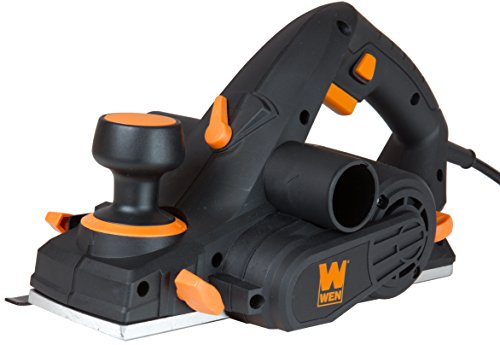
The WEN 6530 is a capable entry-level electric hand planer designed for homeowners and DIY woodworkers who need a lightweight, portable tool for smoothing boards and creating rabbets. With a 6-amp motor spinning at 34,000 cuts per minute, it delivers smooth finishes comparable to hand planing but with significantly less physical effort. The compact 3.25-inch width makes it maneuverable on smaller projects, while the 6-pound weight keeps fatigue at bay during longer work sessions.
Precision is where the WEN 6530 shines. The 16 positive depth stops let you dial in cuts from zero to 1/8 inch with confidence, ensuring consistent results across multiple passes. The included 5/16-inch rabbeting guide opens up design possibilities for edge work and decorative joinery, while the parallel fence bracket helps you maintain straight, true cuts. These features transform the planer from a basic smoothing tool into a versatile woodworking instrument suitable for box joints, edge treatments, and general stock preparation.
The complete package includes a dust bag for cleaner workshop conditions, a kickstand for convenient storage, and all necessary brackets and guides. The 2-year warranty reflects WEN's confidence in the product. For hobbyists and DIYers tackling general woodworking projects without industrial demands, this planer offers solid value and functionality at an accessible price point.
| Specification | Details |
|---|---|
| Brand | WEN |
| Model | 6530 |
| Motor Power | 6 Amps |
| Cutting Speed | 34,000 cuts per minute |
| Planing Width | 3.25 inches |
| Maximum Depth per Pass | 1/8 inch (0 to 1/8 inches adjustable) |
| Depth Adjustment | 16 positive stops |
| Rabbeting Capacity | Up to 1 inch with 5/16 inch guide |
| Weight | 6 pounds |
| Included Accessories | Dust bag, kickstand, parallel fence bracket |
| Warranty | 2 years |
Setup and Safety: Before operating, ensure the power cord is unplugged. Attach the dust bag to the collection port and secure the parallel fence bracket if you need straight-edge guidance. Install the rabbeting guide if making edge cuts. Set your work surface at a comfortable height, typically waist level, and clamp your workpiece securely.
Making Your First Cut: Plug in the planer and let the motor reach full speed before engaging the wood. Set the depth stop to a shallow cut (1/16 inch or less for your first pass) and feed the wood with steady, even pressure. Let the planer do the work without forcing it. Move the tool in the direction of the wood grain whenever possible to minimize tearout and achieve the smoothest finish.
Multiple Passes: Since the maximum depth is 1/8 inch per pass, thicker stock removal requires multiple passes. Make 2-3 shallow passes rather than one deep pass for better control and surface quality. After each pass, inspect your work and adjust the depth stop as needed. Use the kickstand to rest the planer between passes.
Grain Direction Matters: Always plane with the grain direction, not against it. If you're unsure, make a test cut on a scrap piece first. Planing against the grain can cause tearout and rough surfaces, even with a quality tool. Take time to examine your wood and identify the grain direction before starting.
Keep Blades Sharp: Dull blades produce rough surfaces and require more motor effort. Maintain your cutting blades regularly or replace them when they show signs of wear. Sharp blades make a noticeable difference in finish quality and make the tool easier to control.
Use the Fence for Consistency: The parallel fence bracket is your friend for repeat work. When creating multiple pieces or working on long boards, the fence keeps your cuts parallel and eliminates drift. Take time to set it up properly, and your results will be more professional and consistent.
Dust Collection: Always use the included dust bag. Planing creates fine wood dust that's unpleasant to inhale and can accumulate on your motor. A clean motor runs cooler and lasts longer. Empty the bag frequently to maintain proper airflow.
Who Should Buy This Planer: The WEN 6530 is ideal for homeowners and hobbyist woodworkers who tackle occasional projects like smoothing rough lumber, creating rabbets for boxes, or preparing stock for furniture. If you're upgrading from hand planing tools or need a portable, lightweight option, this planer fits the bill. It's also suitable for small workshop spaces where a full-size stationary planer isn't practical.
Who Should Look Elsewhere: If you're a professional woodworker running a production shop or regularly planing thick hardwoods, you'll want a more powerful planer with greater depth capacity. This tool is not designed for industrial use or continuous heavy-duty work. For large-scale projects requiring significant stock removal, a benchtop or stationary planer would be more efficient.
Budget Considerations: The WEN 6530 offers exceptional value for DIYers and hobbyists. It includes most accessories you'll need out of the box, reducing additional purchases. The 2-year warranty provides protection against defects. Consider this planer if you want to enter electric hand planing without a major investment, or as a supplementary tool alongside other workshop equipment.

Pros
- Cordless convenience eliminates extension cord management and power outlet dependency
- Precision-machined aluminum shoes ensure flat, parallel cuts every time
- Calibrated depth knob allows micro-adjustments down to 0.01 mm for fine woodworking
- Edge chamfering capability built into the front shoe saves time and tool changes
- Brushless motor technology provides reliability and reduced maintenance
Cons
- Bare tool only - requires separate purchase of 20V batteries and charger, adding to initial investment
- No customer reviews available to verify real-world performance and durability claims
The DEWALT DCP580B represents a solid choice for homeowners and DIYers seeking cordless planing capability. With its brushless motor spinning at 30,000 cuts per minute, this handheld planer handles edge trimming, material removal, and surface smoothing tasks with efficiency. The precision-machined aluminum shoes maintain consistent cut depth and parallelism, which is critical for professional-looking results on cabinet doors, trim work, and solid wood projects.
What sets this planer apart is its attention to detail in design. The calibrated depth adjustment knob allows micro-fine tuning to approximately 0.01 mm, making it suitable for both rough stock removal and delicate finishing work. The built-in edge chamfering groove in the front shoe eliminates the need for separate chamfering tools, and the kickstand prevents accidental gouging of your workpiece when you set the tool down between cuts. The ergonomic handle design reduces fatigue during longer planing sessions, which matters when you're working on multiple doors or lengthy trim runs.
The 20V MAX platform compatibility means you can integrate this planer into an existing DEWALT cordless system, though the bare tool purchase requires you to supply your own batteries and charger. The poly-V drive belt adds durability compared to standard belts, and replacement blades are readily available through the DW6654 part number. For serious DIYers and contractors who value cordless convenience and precision cutting, this planer delivers the performance and reliability expected from DEWALT's professional-grade lineup.
| Specification | Detail |
|---|---|
| Brand | DEWALT |
| Model | DCP580B |
| Power Type | Cordless (20V MAX) |
| Motor Type | Brushless |
| Cutting Speed | 30,000 cuts per minute |
| Maximum Depth of Cut | 5/64 inch (2 mm) |
| Depth Adjustment Precision | 1/256 inch (0.01 mm) |
| Shoe Material | Precision-machined aluminum |
| Drive Belt | Poly-V for increased durability |
| Special Features | Edge chamfering groove, kickstand, ergonomic handle |
| Replacement Blades | DW6654 (Part Number: N447366) |
| Configuration | Bare tool (batteries and charger sold separately) |
Setup and Safety: Before operating, ensure your 20V MAX battery is fully charged and properly installed. Inspect the blades for damage or dullness. Always wear safety glasses and hearing protection. Secure your workpiece firmly in a vise or clamp to prevent movement during planing.
Depth Adjustment: Use the calibrated depth adjustment knob to set your desired cut depth. Start shallow (around 1-2 mm) for initial passes, then gradually increase depth for subsequent passes. The precision knob allows 1/256 inch adjustments, so you can fine-tune for exact results. Always make test cuts on scrap wood first.
Planing Technique: Hold the planer with both hands using the ergonomic handle. Move the tool smoothly along the grain direction for the best finish and to prevent tearout. Keep even pressure on both the front and back handles. For edge work, use the built-in chamfering groove by angling the planer slightly. Let the tool do the work - don't force it through the material.
Kickstand Use: When pausing between cuts, use the integrated kickstand to rest the planer on your workpiece without creating gouges. This protects your material and keeps the tool safely positioned. Always turn off the planer before setting it down.
Blade Maintenance: Keep your blades sharp for clean cuts and consistent performance. Dull blades require more power and produce tear-out. Replace blades regularly using the DW6654 replacement set. Sharp blades also extend battery life by reducing motor strain.
Material Preparation: Before planing, inspect your wood for nails, screws, or foreign objects that could damage the blades. Sand rough surfaces lightly first if needed. Always plane with the grain direction - look at the edge grain and move the tool so the grain rises toward the direction of travel.
Depth Strategy: Make multiple shallow passes rather than one deep cut. This produces superior surface finish, reduces tearout, and extends blade life. Start at 1 mm depth and increase gradually as needed. For hardwoods, keep passes to 1-2 mm maximum.
Battery Management: Invest in multiple 20V MAX batteries to keep working while one charges. The brushless motor is efficient, but having backup power ensures you won't interrupt your workflow. Store batteries in a cool, dry location away from extreme temperatures.
Is This the Right Planer for You? The DEWALT DCP580B is ideal if you need a cordless handheld planer for trim work, edge chamfering, door fitting, or surface smoothing. It's not designed for heavy-duty industrial stock removal - that's a job for larger benchtop or thickness planers. This tool excels at precision edge work and detail finishing tasks.
Cordless vs. Corded: Choosing cordless means freedom from extension cords and power outlet limitations, but it requires battery investment. If you already own 20V MAX tools, this planer integrates seamlessly into your ecosystem. The brushless motor is efficient enough that a single battery handles most DIY projects, though having two batteries is practical for continuous work.
Bare Tool Consideration: This listing is for the bare tool only. You'll need to purchase 20V MAX batteries and a charger separately. Factor this into your budget if you don't already own DEWALT cordless equipment. The investment makes sense if you plan to use multiple 20V MAX tools.
Skill Level: Handheld planers require practice to master, but they're accessible to intermediate DIYers. If you're new to planing, start with scrap wood to develop technique. The precision depth adjustment makes it forgiving for learning. Professional contractors and experienced woodworkers will appreciate the build quality and accuracy.

Pros
- Lightweight and well-balanced design reduces user fatigue on overhead or extended work
- Fast 14,000 RPM motor handles dense hardwoods without bogging down
- Dual carbide blades stay sharp longer and produce consistently smooth finishes
- Click-stop depth adjustment is intuitive and holds settings reliably
- Cordless freedom eliminates extension cords and gives you mobility around the workshop
Cons
- Requires separate purchase of 18V LXT batteries and charger, adding to initial cost
- Limited to 3-1/4 inch planing width, making it unsuitable for wider boards or tabletops
The Makita XPK01Z brings cordless convenience to woodworking without sacrificing cutting power. At just 7.4 pounds, this planer is genuinely portable, making it ideal for job sites, small workshops, or overhead work where a corded tool would be cumbersome. The 14,000 RPM motor delivers impressive stock removal rates, and users appreciate how smoothly it handles both hardwoods and softwoods without stalling or bogging down.
The dual-edge carbide blades are the standout feature here. Unlike single-blade designs, these reversible blades mean you get twice the cutting life before replacement, and they consistently produce smooth finishes with minimal tearout. The click-stop depth adjustment knob is intuitive to use and holds your settings reliably, so you can dial in precise depths from zero to 5/64 inch and trust they'll stay put during operation.
The main consideration is that this is a tool-only purchase, so you'll need to invest in 18V LXT batteries and a charger if you don't already own them. However, if you're building a Makita cordless collection, this planer integrates seamlessly with your existing battery ecosystem. For woodworkers who prioritize portability and smooth finishes on boards up to 3-1/4 inches wide, the XPK01Z delivers professional results at a reasonable price point.
| Brand | Makita |
| Model | XPK01Z |
| Power Source | 18V LXT Lithium-Ion Cordless |
| Motor Speed | 14,000 RPM |
| Planing Width | 3-1/4 inches |
| Max Depth of Cut | 5/64 inch per pass |
| Cutter Head | 2-blade with double-edge carbide blades |
| Depth Adjustment | Click-stop with easy-to-read scale (0 to 5/64 inch) |
| Weight | 7.4 lbs (tool only) |
| Included | Tool only; batteries and charger sold separately |
Setup and Safety: Ensure your 18V LXT battery is fully charged before starting. Always wear safety glasses and hearing protection. Keep your hands clear of the cutter head and never reach under the planer while it's running.
Preparing Your Workpiece: Secure your board firmly in a vise or clamp. The planer works best on boards up to 3-1/4 inches wide. Inspect the wood for nails, staples, or debris that could damage the blades.
Setting Depth: Loosen the depth adjustment knob slightly, then rotate it to your desired cutting depth using the scale (typically 1/32 to 3/64 inch for smooth results). Tighten the knob once your setting is confirmed. Start with shallow passes on unfamiliar wood to assess grain direction and avoid tearout.
Planing: Hold the planer firmly with both hands and move it smoothly along the length of the board, following the grain direction when possible. Let the motor do the work; don't force the tool. Multiple shallow passes produce better finishes than one deep pass.
Maintenance: After use, allow the motor to stop completely before setting the planer down. Keep the dust chute clear and periodically inspect the carbide blades for damage or dullness. Store in a dry location with the battery removed.
Grain Direction Matters: Always plane in the direction of the grain whenever possible. If you're unsure, make a test pass on a scrap piece first. Planing against the grain often causes tearout, even with sharp carbide blades.
Shallow Passes Win: Multiple passes at 1/32 to 1/64 inch depth produce smoother finishes and put less strain on the battery than one aggressive 5/64 inch pass. This approach also reduces the risk of tearout on figured or reversing grain.
Battery Strategy: Keep a second 18V LXT battery charged and ready. The XPK01Z draws significant current, and having a backup ensures you can keep working while one battery charges. This is especially useful on larger projects.
Blade Maintenance: Carbide blades stay sharp much longer than steel, but when they eventually dull, flip them to the fresh edge rather than replacing them immediately. When both edges are spent, replacement blade sets are affordable and easy to install.
Dust Management: Attach a shop vacuum to the dust chute to keep your workspace clean and improve visibility of your work. Planer dust accumulates quickly and can clog the motor if left unchecked.
Personal Protective Equipment: Always wear ANSI-rated safety glasses and hearing protection. Consider a dust mask or respirator, especially when planing for extended periods. Long hair should be tied back or covered.
Before You Start: Inspect the board for nails, staples, screws, or other foreign objects that could damage the blades or cause kickback. Check that the depth adjustment knob is fully tightened before operating. Never operate with the battery partially inserted.
Proper Grip and Stance: Maintain a firm, two-handed grip at all times. Stand to the side of the planer, not directly behind it. Keep your hands well away from the cutter head opening and never reach underneath the tool while it's running or spinning down.
Workpiece Security: Always clamp or vise your board securely before planing. A slipping workpiece can cause loss of control or contact with the blades. Never hold the board by hand alone.
After Operation: Allow the motor to come to a complete stop before setting the planer down or touching the cutter head. Keep the tool away from children and store it in a secure location. Never leave a charged battery unattended or exposed to extreme temperatures.
Pros
- Powerful 6.5-amp motor handles demanding planing tasks with minimal effort and vibration
- Reversible blade design extends tool life and reduces downtime for blade changes
- Flexible dual-mount fence accommodates left and right-handed users and various edge configurations
- Intuitive ratcheting depth knob eliminates guesswork and speeds up setup between cuts
- Ball-joint cord swivel and spring-loaded stand improve handling and protect the blade
Cons
- No reviews currently available, making it difficult for potential buyers to assess real-world performance and durability
- 3-1/4 inch width limits it to smaller stock and edge work; larger boards require multiple passes or a wider planer
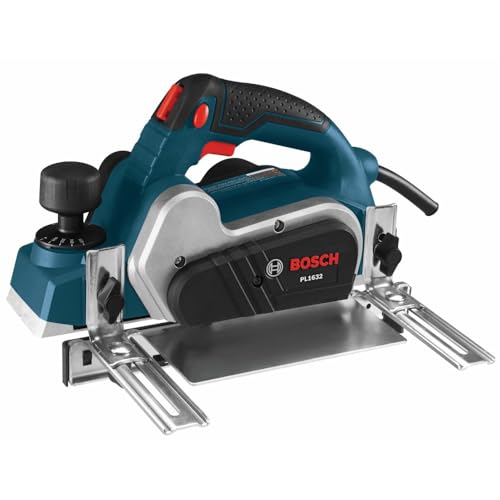
The Bosch PL1632 is engineered for woodworkers and serious DIYers who need reliable edge planing and stock smoothing without the bulk of a stationary machine. Its 6.5-amp motor spinning at 16,500 RPM generates enough power to handle hardwoods and reclaimed lumber, while the electronically counterbalanced blade system automatically optimizes the cutting angle, reducing drag and enabling faster, smoother operation than traditional fixed-blade designs.
What sets this planer apart is its reversible Bosch Woodrazor micrograin carbide blade, which lasts up to 30% longer than standard carbide alternatives. Combined with the ratcheting depth knob that allows precise 0 to 1/16 inch increments in one full rotation, you get both durability and accuracy in a handheld format. The dual-mount guide fence is equally impressive, mounting to either side of the tool to ensure consistent planing whether you're working left-handed or right-handed, and the precision-machined aluminum shoes maintain flatness and accuracy over time.
Practical touches like the ambidextrous lock-off release button, lock-on button for extended operation, ball-joint cord swivel, and spring-loaded protective stand demonstrate Bosch's attention to user safety and comfort. The separate inch and metric depth scales add convenience for detailed work. This is a tool built for serious craftsmanship, though its 3-1/4 inch width means it's best suited for edge work, trim, and smaller boards rather than wide stock preparation.
| Specification | Detail |
|---|---|
| Brand | Bosch |
| Model | PL1632 |
| Planing Width | 3-1/4 inches |
| Motor | 6.5 amps |
| Speed | 16,500 RPM |
| Depth Range | 0 to 1/16 inch |
| Depth Adjustment | Ratcheting knob, one revolution |
| Blade Type | Reversible Bosch Woodrazor micrograin carbide |
| Blade Life | Up to 30% longer than standard carbide |
| Guide Fence | Dual-mount (left or right side) |
| Shoe Material | Precision-machined aluminum (front and rear) |
| Safety Features | Ambidextrous lock-off release, lock-on button |
| Cord Feature | Ball-joint swivel |
| Stand | Spring-loaded, protective |
| Depth Scales | Inch and metric |
Setup and Safety
Before operating, ensure the tool is unplugged. Mount the dual-mount guide fence to the side that matches your work orientation and grip preference. Adjust the ratcheting depth knob to your desired planing depth, referencing either the inch or metric scale. Always wear safety glasses and hearing protection when operating this tool.
Basic Operation
Clamp or secure your workpiece firmly to a stable surface. Position the planer's front shoe flat against the wood edge or surface. Grip the tool with both hands, keeping fingers away from the blade area. Plug in the tool and press the power button. For continuous operation, engage the lock-on button. Move the planer smoothly along the grain direction at a steady pace, allowing the motor to do the work without forcing the tool. Make multiple light passes rather than one deep pass for better control and finish quality.
Maintenance and Blade Care
After each use, unplug the tool and allow the blade to stop completely. Check the reversible blade for dullness or damage; flip it over to use the opposite side, or replace it when both sides are worn. Clean dust and debris from the shoe area and depth adjustment mechanism regularly. Store the tool in a dry location with the protective stand deployed to protect the blade and work surface.
Before You Start
Always read the full instruction manual before operating this tool. Inspect the blade for cracks or damage before each use. Ensure your workpiece is securely clamped or held in a vise, never held by hand. Wear approved safety glasses to protect against wood chips and dust. Use a dust mask or connect the tool to a dust collection system to minimize inhalation of fine particles. Wear hearing protection, as the motor generates significant noise.
During Operation
Keep both hands on the tool at all times. Never reach under or near the blade while the motor is running. Always plane with the grain direction when possible to reduce tear-out and maintain control. Use the ambidextrous lock-off release button to prevent accidental starts; never bypass this safety feature. Allow the blade to reach full speed before making contact with the workpiece. Do not force the tool; let the motor do the work at its natural pace.
After Use and Storage
Always unplug the tool immediately after use and allow the blade to come to a complete stop before touching it. Never leave the tool running unattended. Store the tool out of reach of children and in a dry environment. Keep the blade protected using the spring-loaded stand when not in use. Check the cord for damage regularly and do not use if damaged. Have the tool serviced by an authorized Bosch dealer if you notice unusual vibration, noise, or performance changes.
Achieving the Best Finish
Make multiple light passes with shallow depth settings rather than one aggressive deep cut. This technique reduces tear-out, minimizes vibration, and produces a smoother surface that requires less sanding afterward. Always plane in the direction of the wood grain; if you're unsure of grain direction, test a small area first or look at the wood's edge to identify the grain pattern. For figured or highly figured wood, reduce your depth setting and slow your feed rate to prevent splintering.
Maximizing Blade Life
The reversible carbide blade gives you two cutting edges before replacement. Keep track of which side you're using and flip the blade when the first side dulls. A sharp blade produces cleaner cuts with less motor strain and heat buildup. Clean the blade regularly to remove pitch and resin buildup, which can dull it prematurely. Store the tool with the spring-loaded stand engaged to protect the blade from accidental contact.
Fence and Accuracy Techniques
Use the dual-mount guide fence for consistent edge work; it ensures parallel planing on both sides of a board. For chamfering or angled cuts, you can angle the fence slightly, though this requires careful technique. Always verify fence alignment before starting a planing session. For production runs or multiple identical pieces, take your time setting up the fence and depth once, then repeat the same settings for consistency. The ratcheting depth knob's one-revolution design makes it easy to return to the same depth if you need to plane multiple pieces.
Pros
- Dust management system keeps work area visible and reduces cleanup time
- Safety features like lock-off switch and protective kickstand build user confidence
- Integrated tool storage means you won't lose the wrench mid-project
- Affordable entry point for homeowners exploring woodworking and DIY finishing work
- Reliable corded power eliminates battery charging delays
Cons
- Limited online reviews available, so real-world user feedback is sparse at launch
- Corded design requires proximity to power outlet and adds cable management to your workspace
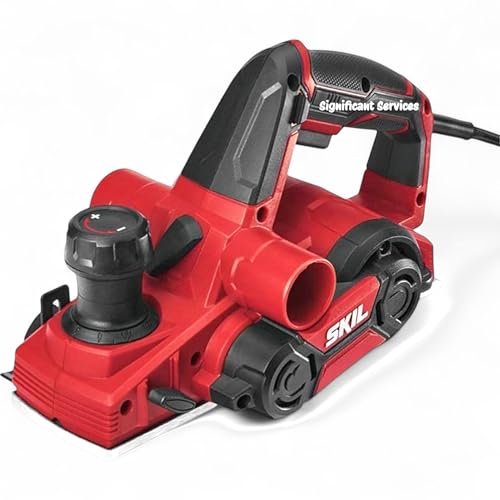
The SKIL 6.5 Amp Electric Planer is built with the DIYer and homeowner in mind. Its dual chip exhaust system stands out as a practical feature that keeps sawdust away from your cutting line, which means you can see exactly what you're planing and achieve cleaner, more precise results. This attention to visibility translates directly to better surface finishes on your stock, whether you're prepping boards for furniture, doors, or trim work.
Safety and usability are woven throughout the design. The smooth kickstand prevents blade contact with finished surfaces during setup, the lock-off switch stops unintended startups, and the integrated wrench storage keeps your adjustment tool within arm's reach. These thoughtful touches reduce frustration and help you work more confidently, especially if you're new to power planers.
At 6.5 amps with a 3-1/4 inch cutting width, this planer strikes a balance between power and portability. The corded design means unlimited runtime and no battery management, making it ideal for longer projects or workshop use. If you're building a DIY tool collection or need a reliable planer for occasional to moderate use, this model delivers solid value and straightforward operation.
| Specification | Detail |
|---|---|
| Brand | SKIL |
| Model | PL201201 |
| Motor | 6.5 Amp Electric |
| Cutting Width | 3-1/4 Inches |
| Power Type | Corded |
| Key Features | Dual Chip Exhaust, Smooth Kickstand, Lock-Off Switch, Wrench Storage |
| Category | Handheld Planers |
Setup and Safety: Before plugging in, ensure the lock-off switch is engaged. Adjust the cutting depth using the wrench stored on the planer itself, starting with a shallow cut (1/32 inch or less) for your first pass. Always wear safety glasses and a dust mask, as sawdust will be ejected from the exhaust ports.
Planing Stock: Place your workpiece on a flat, stable surface. Position the planer's smooth kickstand firmly against the wood to prevent blade contact. Feed the material in the direction of the grain for the smoothest finish. Let the planer do the work; don't force it through the cut. Make multiple shallow passes rather than one deep cut for better control and surface quality.
Dust Management: The dual chip exhaust system directs sawdust away from your sightline. Use a shop vacuum or dust collection system connected to the exhaust port to minimize cleanup and improve visibility. After each session, allow the motor to cool before storage, and keep the wrench in its designated holder.
Before You Start: Always verify the lock-off switch is engaged before handling or storing the planer. Inspect the blade for damage or dullness; a dull blade requires more force and increases kickback risk. Never operate the planer with wet hands or in damp conditions, and keep the power cord away from the cutting area.
During Operation: Wear approved safety glasses and a dust mask to protect against flying debris and sawdust inhalation. Keep hands and loose clothing away from the blade and exhaust ports. Never reach under or behind the planer while it's running. Use the smooth kickstand to maintain proper blade clearance from finished surfaces, and always feed material against the grain direction to reduce kickback.
After Use: Unplug the planer before making any adjustments or cleaning. Allow the blade to come to a complete stop before touching any part of the tool. Store the wrench in its built-in holder to prevent loss and keep the workspace organized. Keep the planer in a dry location and inspect the power cord regularly for damage before each use.
Is This Planer Right for You? The SKIL 6.5 Amp model is ideal for homeowners and DIYers who plane stock occasionally to moderately. If you're building kitchen cabinets, refinishing doors, prepping lumber for furniture, or smoothing rough-cut boards, this planer delivers the power and precision you need without the cost of professional-grade equipment. It's also a great starter tool if you're new to woodworking and want to learn planing fundamentals.
Consider Your Workspace: The corded design requires a nearby power outlet or an extension cord rated for power tools. The 3-1/4 inch width fits most workbenches and is easy to store. If you work in a large shop or outdoors frequently, a corded planer may feel limiting compared to a cordless option, but you'll never worry about battery charge or runtime. The dual exhaust system means you'll want adequate dust collection to keep your workspace clean.
Maintenance and Longevity: Keep the blade sharp for best results and safer operation. The integrated wrench storage and straightforward design make adjustments simple. Service the motor by keeping dust and debris out of ventilation ports. With basic care, this planer will provide years of reliable use for typical DIY and home improvement projects. If you anticipate heavy professional use, consider stepping up to a higher-amperage model designed for daily shop work.

Pros
- Powerful 6.5-amp motor handles demanding planing tasks without bogging down
- Two-blade cutter head at 17,000 RPM delivers smooth finishes and fast material removal
- Spring-loaded stand protects both blades and workpiece, extending tool life
- Easy blade installation system saves time and frustration during setup
- Included carrying case keeps the tool organized and protected during transport
Cons
- Limited to 3-1/4" width, which may not suit larger panel or board work
- No reviews available yet, so long-term durability and real-world performance data are limited
The Makita KP0800K is a well-engineered handheld planer designed for homeowners and DIYers who need to smooth edges, plane doors, trim wood, and prepare surfaces for finishing. Its 6.5-amp motor provides the power necessary to handle both softwoods and hardwoods without stalling, while the two-blade cutter head operating at 17,000 RPM ensures fast material removal paired with a smooth, professional finish. The ability to plane up to 3-1/4" wide and 3/32" deep in a single pass makes it practical for most common planing tasks around the home workshop.
The spring-loaded stand is a thoughtful design feature that automatically elevates the base when the planer is set down, protecting both the sharp blades from damage and your workpiece from accidental marks. This reduces wear on the tool and prevents costly blade replacements. The fast blade-setting system streamlines the installation process, allowing you to swap or adjust blades quickly without special tools or lengthy adjustments, which is especially valuable when switching between different thicknesses or working on multiple pieces.
Makita includes a protective tool case with this model, which is a significant advantage for storage and portability. The case keeps the planer secure during transport to job sites or storage in your workshop, protecting the investment and keeping the tool organized. This planer is best suited for trim work, edge planing, door fitting, and general woodworking tasks where its 3-1/4" width is sufficient. It is not designed for wide panel planing, but for its intended purpose as a handheld edge and detail tool, it delivers solid performance and reliability.
| Motor | 6.5 Amp |
| Planing Width | 3-1/4 inches |
| Planing Depth (Single Pass) | 3/32 inch |
| Cutter Head | Two-blade design |
| RPM | 17,000 |
| Stand Type | Spring-loaded base elevation |
| Blade Installation | Fast blade-setting system |
| Included Accessories | Tool case |
| Brand | Makita |
| Model | KP0800K |
Setup and Blade Installation: Before your first use, install the blades using Makita's fast blade-setting system. Consult the manual for proper blade orientation and tightening sequence. Always ensure blades are sharp and properly secured before operation.
Preparing Your Workpiece: Secure your workpiece firmly in a vise or clamp to prevent movement during planing. Mark the area to be planed lightly with pencil to track your progress. Start with light passes to assess how the wood responds, especially with hardwoods or figured grain.
Operating the Planer: Switch on the motor and allow it to reach full speed before contacting the workpiece. Move the planer smoothly and steadily along the grain direction whenever possible to minimize tearout. Make overlapping passes for even results. The spring-loaded stand will protect the blades when you set the tool down between passes.
Depth Control: Adjust depth incrementally for each pass rather than attempting maximum depth (3/32") on difficult wood. Lighter passes produce smoother finishes and reduce strain on the motor. Always work with sharp blades for best results and easiest operation.
Before Operation: Inspect blades for damage or dullness before each use. Ensure all guards and safety features are in place and functioning. Read the complete instruction manual provided by Makita. Always wear safety glasses and hearing protection during operation.
During Use: Keep hands and fingers clear of the cutter head at all times. Never reach under or over the planer while it is running. Maintain firm control and a stable stance. Do not force the tool through the wood; let the motor do the work. Keep the power cord clear of the work area and blade.
After Operation: Allow the cutter head to come to a complete stop before setting the tool down or making any adjustments. Never leave the planer running unattended. Unplug the tool before changing blades or performing maintenance. Store the planer in its protective case in a dry location away from children.
Grain Direction Matters: Always plane with the grain, not against it, to minimize tearout and achieve the smoothest finish. If you cannot determine grain direction, make test passes on a scrap piece first. Planing against the grain will produce rough, splintered surfaces even with sharp blades.
Keep Blades Sharp: Dull blades force the motor to work harder, produce poor finishes, and increase the risk of kickback or binding. Replace or sharpen blades regularly. Sharp blades also reduce noise and vibration, making the tool more pleasant to use.
Make Light Passes: Multiple light passes produce better results than one heavy pass. This approach reduces strain on the motor, minimizes tearout, and gives you better control. On figured or difficult wood, reduce depth to 1/64" or less per pass for the smoothest finish.
Protect Your Blades: Use the spring-loaded stand feature every time you set the planer down. This simple habit prevents blade damage, extends tool life, and protects your workpiece. Never lay the planer on its side with blades exposed.

Pros
- Cordless design eliminates extension cords and provides freedom to work anywhere on your project
- Fast blade changes without alignment tools reduce downtime between cuts
- Efficient brushless motor runs cooler and lasts longer than brushed alternatives
- Dual exhaust ports and dust management system keep shavings contained and visibility clear
- AMPSHARE system compatibility means one battery ecosystem across your tool collection
Cons
- No customer reviews currently available, so real-world durability and long-term performance data is limited
- Cordless operation means battery runtime and charge time are factors to consider for extended planing projects
The Bosch GHO18V-26N brings cordless convenience to serious planing work. Its brushless motor spins at 13,600 rpm, delivering the power needed to handle both softwoods and hardwoods with smooth, consistent results. The 3.25-inch planing width and 3/32-inch depth per pass mean you can cover large surface areas efficiently, whether you're fitting doors, smoothing edges, or chamfering corners on a deck project.
What sets this planer apart is its thoughtful design for real-world use. The tool-free blade change system with automatic alignment eliminates the frustration of manual adjustments, while the dual shaving exhaust ports keep your workspace cleaner and your sight lines clear. The uniform aluminum base plate ensures that cuts remain accurate pass after pass, which matters when you're working with expensive hardwoods or trying to achieve seamless transitions between boards.
The AMPSHARE battery ecosystem is a genuine advantage if you're building a cordless tool collection. One 18V battery can power this planer, drills, saws, and other compatible tools, reducing the number of chargers and battery packs cluttering your workshop. On-tool blade storage keeps two spares within arm's reach, so you're never caught mid-project without a sharp blade.
| Specification | Detail |
|---|---|
| Motor Type | Brushless |
| Motor Speed | 13,600 rpm |
| Planing Width | 3.25 inches |
| Planing Depth | 3/32 inch (2.6 mm) per pass |
| Battery Voltage | 18V |
| Base Plate | Uniform Aluminum |
| Blade Storage | On-tool storage for 2 blades |
| Dust Management | Dual shaving exhaust ports |
| Blade Change | Tool-free with automatic alignment |
| Battery System | AMPSHARE compatible |
Setup and Safety: Charge your 18V AMPSHARE battery fully before starting. Always wear safety glasses and a dust mask, as planing produces fine shavings. Secure your workpiece firmly in a vise or clamp before beginning.
Basic Planing Technique: Position the planer at the start of your workpiece with the base plate flat on the surface. Turn on the tool and let it reach full speed before making contact. Push the planer smoothly along the wood grain, maintaining even pressure on both the front and rear knobs. Make multiple passes if removing more than 3/32 inch of material. Allow the motor to stop completely before setting the tool down.
Blade Maintenance: Check blade sharpness regularly, as dull blades tear grain and reduce cut quality. Use the tool-free blade change system to swap in a fresh blade from on-tool storage when needed. Always ensure the motor has stopped and the battery is removed before changing blades.
Personal Protective Equipment: Always wear safety glasses to protect against flying shavings. A dust mask or respirator is essential, especially when planing for extended periods. Hearing protection is recommended due to motor noise.
Operational Safety: Keep hands and fingers clear of the planing path and rotating blades. Never reach under the base plate while the motor is running. Secure your workpiece to prevent movement during planing. Do not force the tool through knots or extremely hard grain; let the motor do the work.
Battery and Tool Care: Remove the battery before changing blades or performing maintenance. Store the tool in a dry location away from moisture. Inspect the base plate and blades for damage before each use. Never operate the planer with wet hands or in damp conditions.
Who Should Buy: This planer is ideal for homeowners and DIYers who tackle regular woodworking projects, door fitting, and edge work. It's also suited for contractors who value cordless convenience and already use AMPSHARE batteries. If you primarily work with hand tools or need a benchtop planer for heavy material removal, this handheld model may not be your best fit.
Key Considerations: Battery runtime depends on your AMPSHARE battery capacity and the density of wood you're planing. Softwoods plane faster than hardwoods, so factor in your typical project types. The 3.25-inch width is ideal for doors and boards but won't plane very wide surfaces in a single pass. Ensure you have at least one charged battery on hand, as planing can drain a battery faster than lighter duty work.
Value Assessment: The brushless motor, tool-free blade changes, and AMPSHARE compatibility justify the investment if you're building a cordless workshop. The dual exhaust ports and aluminum base plate demonstrate quality construction. If you only plane occasionally, renting may be more economical; for regular use, this planer offers reliability and convenience that pay for themselves over time.
Buying Guide: What to Look for in a Power Planer
Choosing between power planers is not simply a matter of price. A model that excels in a professional framing context may be frustrating to use for fine furniture work, and vice versa. The sections below break down every major specification so you can match a planer to your actual projects.
Corded vs. Cordless
Corded models like the WEN 6530 and Bosch PL1632 deliver consistent, uninterrupted power as long as you have an outlet nearby. This makes them ideal for extended shop sessions where you are surfacing multiple boards in sequence. Cordless models like the DEWALT DCP580B, Makita XPK01Z, and Bosch GHO18V-26N run on 18V or 20V MAX lithium-ion batteries, giving you true jobsite freedom. You can carry them up a ladder to plane a door jamb or take them to a remote renovation without hunting for extension cords. The trade-off is runtime and the additional cost of batteries if you are not already invested in a particular brand ecosystem. If you already own cordless tool combo kits from DeWalt or Makita, adding a same-brand planer means sharing batteries you already own, which dramatically reduces the effective purchase price.
Motor Power and Cutting Speed
For corded planers, amperage is the primary measure of cutting power. A 6-amp motor like the one in the WEN 6530 or the SKIL PL201201 handles softwoods and moderate hardwoods without bogging down. The Makita KP0800K steps up to a more powerful motor and reaches blade speeds that allow cleaner passes on dense species like oak or maple. For cordless models, brushless motor technology is a major differentiator. The DEWALT DCP580B delivers 30,000 cuts per minute via its brushless motor, which means greater efficiency, less heat buildup, and longer tool life compared to older brushed designs. Brushless motors also recover RPM faster when the blade contacts a hard grain, reducing the risk of tearout on figured wood.
Cutting Width and Depth of Cut
Nearly every hand planer in this roundup offers a 3-1/4-inch cutting width, which aligns with standard dimensional lumber dimensions and is the industry norm for portable models. Depth of cut is where you want to pay close attention. Most models offer a maximum single-pass depth around 1/16 to 3/32 inch for finishing passes, with some capable of up to 1/8 inch for aggressive stock removal. The DEWALT DCP580B is rated to a 2 mm cut depth per pass, translating to roughly 5/64 inch, which sits in a practical middle range for controlled material removal. For fine finish work, always start shallow and take multiple light passes rather than a single aggressive cut.
Depth Adjustment Mechanism
The quality of a planer’s front-shoe adjustment knob or dial determines how repeatable your cuts are. Look for clear, tactile detents or marked increments so you can return to a specific depth setting without guessing. The Makita KP0800K and the Bosch PL1632 both feature well-regarded adjustment systems that hold their set position under vibration. Budget models sometimes have looser adjustment mechanisms that creep during a long planing session, leading to inconsistent results. If you are working on a project where consistent thickness matters, such as fitting drawer fronts or matching panel reveals, this spec deserves extra attention. Woodworking precision also benefits from having accurate tape measures and reliable layout tools on the bench alongside your planer.
Blade System and Sharpening
Most portable power planers use double-sided reversible carbide blades. When one edge dulls, you flip the blade to expose a fresh cutting edge, effectively doubling blade life before a replacement is needed. The Bosch PL1632 and SKIL PL201201 both use standard reversible blade designs that are widely available and inexpensive to replace. The Makita KP0800K comes with high-speed steel blades and ships in a carrying case with extras, adding immediate value. Brushless cordless models like the Bosch GHO18V-26N and DEWALT DCP580B also use reversible carbide inserts. Always check blade availability for your model before purchasing, since some proprietary blade dimensions can be difficult to source locally and may require ordering online.
Dust and Chip Management
Power planers generate a substantial volume of wood shavings in a very short time. Most models include a chip ejection port on either the left or right side, and many can be connected to a vacuum hose for dust collection. The WEN 6530 includes a chip collection bag that works adequately for small jobs but fills quickly on larger stock. If you are planing inside a finished space, connecting the planer to a shop vacuum via the dust port is strongly recommended. The Makita KP0800K ships with a dedicated carrying case and has a well-designed chip ejector that ejects reliably to the right side. For jobsite use where dust control matters for safety and cleanup, investing in a model with a secure vacuum port connection is worth the extra cost. Pair this with an oscillating multi tool for detail work around corners where the planer cannot reach.
Ergonomics, Weight, and Balance
Hand planers require sustained two-handed control, so weight distribution and grip comfort directly affect the quality of your results. A planer that is too heavy will fatigue your arms on long passes, causing you to drag or tip the tool at the end of a board. Corded models in the 3-1/4-inch class generally weigh between six and eight pounds, while cordless models with a battery installed can reach nine pounds or more. The SKIL PL201201 and WEN 6530 are on the lighter end of the corded spectrum, making them easier to manage for extended door-fitting sessions. Front and rear handles should feel comfortable in a firm grip, and the front knob used to adjust depth should be reachable without shifting your grip. If you are working at elevation, stability on scaffolding or a ladder matters, so also consider having reliable ladders rated for the loads you are carrying.
V-Groove and Chamfer Guide
Many power planers include a V-groove machined into the front shoe, which lets you ride the planer along a board edge to create a consistent 45-degree chamfer. This feature is more useful than it sounds. Easing board edges before painting or finishing improves coating adhesion and gives furniture a more refined appearance. The Bosch PL1632 is particularly well regarded for its chamfer capability, producing clean, repeatable angled edges in a single pass. If chamfering is a regular part of your workflow, confirm the V-groove depth and placement on any model you are considering, as some shallower grooves make it difficult to maintain a consistent angle on narrow stock.
Price Range and Value Considerations
The power planers in this guide span from budget-friendly entry-level corded options to mid-range and premium cordless models. At the affordable end, the WEN 6530 and SKIL PL201201 deliver solid fundamental performance for homeowners who plane a few times a year. The Bosch PL1632 sits in the mid-range and adds build quality and brand reliability that many experienced woodworkers value. The cordless trio from DEWALT, Makita, and Bosch represent premium investments, justified if you depend on a planer regularly or if battery compatibility with your existing tool kit makes the math work. Before finalizing your budget, it is worth noting that a capable power planer pairs naturally with other renovation tools. For example, if you are refinishing trim after planing, having quality finish nailers for trim and molding on hand completes the job cleanly. Similarly, miter saws handle the crosscuts that set up your planed boards for final assembly.
Why Trust HomeThru
HomeThru is an independent editorial platform with no affiliation to any retailer, manufacturer, or brand. We do not sell products, handle orders, or provide warranty support. Our recommendations are built entirely on independent research: we analyze product specifications, evaluate verified user feedback from thousands of reviews, compare competing models side by side, and consult manufacturer documentation to verify claimed performance figures. For this guide on power planers, we reviewed all seven products featured here against a structured set of criteria covering motor performance, cutting precision, dust management, ergonomics, and overall build quality. The same methodology applies across every category on HomeThru, from top-rated cordless drills to drill presses for the shop. We update our guides regularly to reflect changes in availability, pricing, and competing products, so the information you read here reflects the current market.
Final Thoughts
After a thorough review of all seven models, here is how we would categorize the standout performers based on specific needs and use cases.
- Best Overall: DEWALT 20V MAX Brushless Planer (DCP580B) earns the top spot for its brushless motor delivering 30,000 cuts per minute, 2 mm cut depth control, and cordless freedom that works across jobsite and shop settings. It holds over 4,700 verified ratings at 4.7 stars, a level of real-world endorsement that is hard to argue against.
- Best Budget Pick: WEN 6530 6-Amp Electric Hand Planer is the clear value leader, drawing nearly 8,000 ratings at 4.6 stars from a wide range of users. Its lightweight build and 6-amp motor handle the vast majority of home planing tasks at an entry-level price.
- Best Cordless for Existing Makita Users: Makita XPK01Z 18V LXT Cordless Planer earns the highest average rating in this group at 4.8 stars across over 1,300 reviews. If you already own Makita 18V LXT batteries, this tool delivers professional-grade results without the overhead of a new battery platform.
- Best for Precision Workshop Use: Makita KP0800K 3-1/4-Inch Planer with Case ships with a tool case and extra blades, making it a complete package for woodworkers who want a reliable corded performer with a strong support ecosystem and a well-earned 4.7-star average.
- Best Mid-Range Corded Option: Bosch PL1632 3-1/4-Inch Planer stands out for its chamfering capability and robust build quality, appealing to serious DIYers who want Bosch durability at a mid-range price point.
Whichever model fits your workflow, pairing a power planer with complementary tools elevates the entire project. Brad nailers for finish carpentry handle the final fastening after planed surfaces are fitted, while a reliable paint sprayer delivers a uniform finish coat on the smooth surfaces your planer produces. If your renovation scope is broader, framing nailers and caulk guns round out a complete building and finishing toolkit.
Frequently Asked Questions
What is the difference between a power planer and a thickness planer?
A power planer, also called a hand planer, is a handheld tool you guide manually across a board surface. A thickness planer is a stationary benchtop or floor-standing machine that feeds lumber through automatically at a set height. Hand planers offer portability and are ideal for site work like fitting doors and trimming frames. Thickness planers process full boards to a uniform dimension and are better suited to shop-based lumber preparation.
Can a power planer replace a hand plane for furniture making?
Power planers remove stock quickly and level broad surfaces efficiently, but they require a practiced technique to avoid snipe at board ends and tracking marks along the face. For final surface preparation on fine furniture, many woodworkers follow a power planer pass with a hand plane or cabinet scraper to achieve a glass-smooth finish. Think of the power planer as a rapid stock removal tool and the hand plane as a precision finishing tool. They complement rather than replace each other. A set of oscillating multi tools can also handle edge details the planer cannot reach.
How do I prevent snipe when using a power planer?
Snipe refers to a slightly deeper cut at the very beginning or end of a pass, caused by the planer tipping as the front or rear shoe loses contact with the board. To minimize it, maintain firm downward pressure on the front shoe at the start of the pass and shift pressure to the rear shoe as you exit the board. Some woodworkers sacrifice a few inches of waste stock at each end of critical boards, planing through the snipe zone and then trimming it away. Consistent two-handed control is the most reliable prevention. For accurate cutoffs after planing, a well-calibrated miter saw makes clean crosscuts.
How often do power planer blades need to be replaced?
Blade life depends heavily on the wood species you are planing and whether the stock contains embedded grit or old fasteners. On clean softwood lumber, a set of reversible carbide blades can last through many projects before showing dullness. Planing reclaimed or construction lumber dulls blades far faster due to sand, dried adhesive, and the occasional hidden nail or screw. Check blades regularly for nicks and dullness. A dull blade produces a fuzzy surface finish and increases vibration noticeably. Most planers in this roundup use widely available blades that are straightforward to source and replace.





Write Your Review
No reviews yet. Be the first to share your experience!