

A portable power station is one of the most versatile investments a homeowner can make. Whether you’re keeping critical appliances running during a multi-day outage, powering a campsite far from the grid, or charging laptops and phones on a job site, these rechargeable battery units deliver quiet, exhaust-free electricity wherever you need it. Unlike gas-powered alternatives, they produce zero carbon monoxide fumes indoors, which makes them genuinely safer for family use. If you already rely on a carbon monoxide detector in your home, you know exactly why that matters.
The market has matured rapidly. Today’s best portable power stations pack LiFePO4 (lithium iron phosphate) chemistry for longer cycle life, ultra-fast AC recharging, and USB-C Power Delivery ports that can top off a laptop in minutes. Brands like Jackery, EF EcoFlow, Anker, and BLUETTI dominate the conversation, each offering a range of capacities from compact 256Wh units to flagship 2,000Wh-plus stations capable of running a refrigerator for hours. Our independent editorial team researched and compared 9 models across watt-hour capacity, output wattage, recharge speed, port selection, battery chemistry, and real-world versatility to help you find the right fit for your budget and use case.
Top Portable Power Stations We Reviewed

Pros
- Exceptional battery longevity with LiFePO4 chemistry and 10-year design lifespan
- Remarkably fast charging options via app-controlled emergency mode and standard 1.7-hour charge
- Excellent port variety supports simultaneous charging of multiple device types
- Lightweight and compact design makes it genuinely portable for outdoor adventures
- Advanced ChargeShield 2.0 technology prioritizes safety during rapid charging cycles
Cons
- Solar panels sold separately, adding to total system cost
- Requires Jackery app activation for 1-hour fast charging; defaults to slower 1.7-hour mode to preserve battery health
The Jackery Explorer 1000 V2 represents a meaningful upgrade in portable power for homeowners and outdoor enthusiasts. Its 1,070Wh LiFePO4 battery delivers genuine staying power, with the manufacturer's engineering designed to maintain over 70% capacity after 4,000 charge cycles. This translates to a realistic 10-year lifespan, making it a solid long-term investment rather than a disposable gadget. The combination of 1,500W continuous output and 3,000W surge capacity means you can run multiple appliances simultaneously, from refrigerators and air conditioners to electric kettles and power tools.
What sets the V2 apart is its thoughtful charging flexibility. The advertised 1-hour emergency charging is genuinely fast, though it requires enabling the feature in the Jackery app before each use. The default 1.7-hour charging mode reflects the manufacturer's commitment to battery longevity, a smart trade-off for users who aren't always in a rush. The ChargeShield 2.0 technology actively manages charge rates to prevent degradation, which explains why this unit can handle thousands of cycles without significant capacity loss. The included LED lights and pure sine wave AC output add practical value for camping and emergency situations.
Port variety is comprehensive: two USB-C ports (one with 100W PD fast charging), one USB-A port, one DC car port, and three pure sine wave AC outlets. This flexibility means you can charge phones, tablets, laptops, and AC-powered devices all at once. The 23.8-pound weight and foldable handle make it genuinely portable for a 1,000Wh unit, though solar panels are sold separately and must be Jackery-branded for compatibility. For homeowners seeking reliable backup power or frequent campers needing sustainable energy, this power station delivers both performance and durability.
| Specification | Details |
|---|---|
| Battery Capacity | 1,070Wh LiFePO4 |
| AC Output | 1,500W continuous / 3,000W surge peak |
| USB-C Output | 100W PD fast charging (dual ports) |
| AC Ports | 3 pure sine wave outlets |
| Additional Ports | 1 USB-A, 1 DC car port, LED lights |
| Charging Time | 1 hour (emergency mode) / 1.7 hours (standard) |
| Battery Lifespan | 4,000+ cycles, 10+ years |
| Capacity Retention | 70%+ after 4,000 cycles |
| Weight | 23.8 pounds |
| Dimensions | 12.87 x 8.82 x 9.72 inches |
| Color | Black |
| Included Accessories | User manual (solar panels optional) |
| App Control | Jackery app for charging mode selection |
Maximize Battery Health: Use the standard 1.7-hour charging mode for daily use and reserve the 1-hour emergency mode for genuine time-sensitive situations. This approach preserves your battery's longevity and keeps capacity loss minimal over years of use.
Leverage the App's Quiet Mode: The 30dB overnight charging mode is genuinely quiet. If you're powering this during camping trips or in shared spaces, activate quiet mode in the Jackery app to avoid disturbing others while maintaining a full charge by morning.
Plan Your Port Usage: The 100W USB-C port is powerful enough for laptops and tablets, but if you're charging multiple devices, prioritize high-demand items on the USB-C ports and use USB-A for lower-power accessories to maximize efficiency.
Solar Expansion Strategy: If you plan to use this off-grid, invest in Jackery's compatible solar panels. The power station's efficiency combined with solar input creates a genuinely sustainable backup system for extended camping or emergency situations.
Monitor via App: The Jackery app provides real-time power consumption data. Check it periodically to understand which devices drain your battery fastest, helping you prioritize usage during extended off-grid periods.
Is This Right for You? The Explorer 1000 V2 suits homeowners seeking reliable emergency backup power, frequent campers needing portable electricity, and off-grid living enthusiasts. Its 1,070Wh capacity handles most household devices for several hours, making it practical for power outages. The lightweight design works for car camping and RV trips without requiring a truck bed or heavy lifting.
Capacity Considerations: At 1,070Wh, this unit runs a 100W device for roughly 10 hours, or a 500W refrigerator for 2 hours. Calculate your actual power needs before purchasing. For extended off-grid living, consider pairing it with solar panels (sold separately) to recharge during daylight hours.
Charging Infrastructure: Standard wall charging takes 1.7 hours, which is reasonable for overnight recharging. The 1-hour emergency mode requires app activation and is best reserved for urgent situations. If you're purchasing this for emergency backup, keep it plugged in during normal times so it's ready when needed.
Warranty and Support: Jackery's 10-year design lifespan reflects confidence in the LiFePO4 battery's durability. Verify the warranty terms with the retailer, as coverage varies by region and purchase channel. The app-based controls are intuitive, and customer support is generally responsive.
Budget Planning: Factor in the cost of compatible solar panels if you want true off-grid capability. The power station itself is reasonably priced for its capacity and features, but a complete system requires additional investment.

Pros
- Fast charging speed (70 minutes to full capacity) minimizes downtime during emergencies
- Dual power output modes (600W standard, 1500W surge) handle both essential and demanding devices
- Ultra-fast 10ms UPS switching protects data and prevents device shutdowns during blackouts
- Compact and portable at under 10 lbs, making it practical for travel and home storage
- Multiple charging options provide flexibility for different scenarios and locations
Cons
- 288Wh capacity is modest for extended multi-device use or high-power continuous loads
- No reviews available yet, so real-world user feedback and long-term reliability data are limited
The BLUETTI Elite 30 V2 positions itself as an entry-level portable power station designed for homeowners and outdoor enthusiasts who need reliable backup power without excessive bulk. At 9.4 pounds, it's genuinely portable enough to grab during an emergency or toss in a vehicle for a road trip, yet its 288Wh LiFePO4 battery and dual power modes deliver meaningful capability for real-world scenarios.
What sets this model apart is its intelligent power management. The standard 600W output handles everyday devices like laptops, routers, and medical equipment such as CPAP machines, while the Power Lifting Mode's 1500W surge capacity manages demanding loads like small kettles or toasters when needed. The 10ms UPS function is particularly valuable for homeowners concerned about data loss or device damage during sudden power cuts, offering protection that many competitors in this price range omit. The upgraded UltraCell technology and optimized cooling system reduce standby power consumption to just 4.5W, meaning it won't drain itself sitting idle in a closet.
Charging speed is a genuine strength: reaching 80% capacity in 45 minutes and full charge in 70 minutes via the 380W wall adapter makes this practical for emergency preparation. The eight charging modes including solar compatibility, car charging, and AC wall options provide flexibility across different situations. However, the 288Wh capacity is inherently modest for extended multi-device use or running larger appliances continuously, so realistic expectations about runtime are important before purchase.
| Battery Type | LiFePO4 |
| Capacity | 288Wh |
| Continuous Output | 600W |
| Surge Power (Power Lifting Mode) | 1500W |
| Weight | 9.4 lbs |
| AC Charging Speed | 380W fast charge (adjustable to 200W) |
| Charge Time | 0-80% in 45 mins, 0-100% in 70 mins |
| UPS Response Time | 10ms |
| Standby Power Consumption | 4.5W |
| DC Output Power | 5W |
| AC Output Power | 8W |
| Charging Modes | 8 modes (AC wall, solar, car, hybrid) |
| Solar Panel Compatibility | BLUETTI PV60L (recommended) |
| Included Accessories | AC charging cable, car charging cable, user manual |
Maximize Runtime: Prioritize charging devices in order of power demand. Charge phones and tablets before running high-draw devices like laptops or CPAP machines to extend overall runtime.
Optimize Charging: Use the 380W wall charging mode when preparing for emergencies to reach full capacity fastest. In normal conditions, the 200W mode reduces heat and extends battery lifespan.
Leverage Power Lifting Mode Strategically: Reserve the 1500W surge mode for short-duration tasks (boiling water, brief appliance startup). Use 600W mode for continuous device operation to preserve battery longevity.
Position for Cooling: Keep the unit in a well-ventilated area during charging and use. The upgraded cooling system works best with adequate airflow, improving efficiency and battery health.
Pair with Solar: For extended trips or long-term emergency preparedness, pair this unit with the BLUETTI PV60L solar panel to enable continuous recharging without grid dependence.
Is This Right for You? The BLUETTI Elite 30 V2 is ideal if you need lightweight, portable backup power for emergencies, camping, or road trips. Its compact size and fast charging make it practical for homeowners seeking a grab-and-go emergency kit. However, if you require extended runtime for multiple high-power devices or plan to run energy-intensive appliances continuously, consider larger capacity models.
Best Use Cases: Home blackout backup for critical devices (router, CPAP, laptop), camping and road trip power, emergency preparedness kits, outdoor event power, and seasonal storm protection. The 10ms UPS makes it especially valuable for protecting sensitive electronics during sudden outages.
Key Considerations: The 288Wh capacity limits simultaneous multi-device charging. Calculate your actual power needs: a laptop uses roughly 60-100W, a CPAP 40-60W, and a phone charger 5-15W. Realistic runtime for mixed-device use is typically 2-4 hours depending on load. Plan accordingly and consider the optional solar panel for extended scenarios.

Pros
- Ultra-fast 49-minute recharge time means you're ready for emergencies or trips quickly
- Exceptional portability with 24.9 lb weight makes it genuinely moveable between rooms, vehicles, and outdoor spaces
- LiFePO4 chemistry delivers outstanding cycle life and safety compared to standard lithium batteries
- Multiple charging options including AC wall outlet, solar panels, and car charging provide flexibility
- 10-port capacity handles diverse device needs from power tools to household appliances and camping gear
Cons
- No solar panels included in the base package - you'll need to purchase separately to unlock the 1.8-hour solar recharge benefit
- Peak 3,000W output is limited to brief surges; sustained high-draw devices are capped at 2,000W, which may not run large air conditioners or water heaters
The Anker SOLIX C1000 Gen 2 stands out for solving a real problem: how to get serious backup power without breaking your back or emptying your wallet. With 1,024Wh of LiFePO4 capacity, this unit can run a laptop, several phones, a mini-fridge, and still have juice left over. The 49-minute full recharge via wall outlet is genuinely impressive and makes it practical for homeowners who can't afford to wait days between charging cycles. Whether you're prepping for outages or gearing up for extended camping trips, the speed here is a game-changer.
Portability matters, and Anker's claim of being 14% smaller and 11% lighter than competitors holds up in real-world use. At under 25 pounds, you can actually move this from room to room during an outage or load it into an RV without exhaustion. The 10-port configuration is thoughtfully designed, letting you power multiple devices simultaneously. The 10-millisecond UPS switchover is particularly valuable if you're running medical equipment like CPAP machines or work-from-home setups where any power gap is problematic.
The LiFePO4 battery chemistry is the right choice here, offering superior longevity and safety over standard lithium. With 80% capacity retention after 4,000 cycles, you're looking at genuine 10-year reliability if you use this daily. The app-based Time-of-Use mode adds smart control for managing peak hours and optimizing costs. Solar recharging at 1.8 hours is legitimately fast if you pair it with the recommended solar panels, making true off-grid living feasible for tiny homes and remote properties.
| Specification | Detail |
|---|---|
| Model | SOLIX C1000 Gen 2 |
| Battery Capacity | 1,024Wh LiFePO4 |
| Continuous Output | 2,000W |
| Peak Output | 3,000W |
| AC Recharge Time | 49 minutes (HyperFlash) |
| Solar Recharge Time | 1.8 hours (600W solar, 60V max) |
| Output Ports | 10 total (AC outlets, USB-C, USB-A, DC) |
| UPS Switchover | 10 milliseconds |
| Battery Cycles | 4,000+ with 80% capacity retention |
| Dimensions | 15.1 x 8.2 x 9.6 inches |
| Weight | 24.9 pounds |
| Color | Gray |
| Warranty | 10 years (InfiniPower) |
Is this right for you? The C1000 Gen 2 excels for homeowners with outage concerns, RV and van lifers, remote workers, and off-grid enthusiasts. If you need backup for essential devices during power failures or extended time away from grid power, this is a serious contender.
Capacity considerations: At 1,024Wh, you can run a laptop for 8-12 hours, a mini-fridge for 24-48 hours, or a CPAP machine for several nights. For whole-home backup of large appliances like air conditioning units, you'd need multiple units or a larger system.
Solar setup: To maximize the 1.8-hour solar recharge, budget for compatible 600W solar panels (sold separately). This investment unlocks true off-grid capability and eliminates reliance on wall outlets in remote locations.
Charging strategy: Use the 49-minute HyperFlash charging for rapid turnaround between uses. For daily use, the app's Time-of-Use mode helps you charge during off-peak hours, reducing electricity costs over time.
Maximize battery life: Avoid fully discharging the battery regularly. The LiFePO4 chemistry is forgiving, but charging to 80% and discharging to 20% extends lifespan beyond the rated 4,000 cycles.
Enable HyperFlash strategically: The 49-minute recharge requires enabling HyperFlash in the Anker app. Keep this enabled for emergency preparedness, but consider disabling during low-priority charging to reduce wear on the battery management system.
Layer your devices: With 10 ports, prioritize critical devices first (medical equipment, work laptops, communication devices), then add secondary devices like phone chargers and fans as capacity allows.
Pair with solar smartly: If investing in solar panels, position them in direct sunlight and clean regularly. The 1.8-hour recharge time assumes optimal conditions. Cloudy days will extend recharge times significantly.
Monitor app alerts: The Anker app provides real-time usage data and warnings. Check it periodically to understand consumption patterns and plan future capacity needs.

Pros
- Exceptionally portable at 7.1 lbs makes it the go-to choice for backpackers and mobile campers
- LiFePO4 battery chemistry outlasts traditional lithium by thousands of cycles, delivering true long-term value
- Multiple output ports handle diverse devices simultaneously without daisy-chaining adapters
- Solar charging capability pairs seamlessly with Jackery panels for genuine off-grid self-sufficiency
- Sufficient wattage for CPAP machines, making it practical for medical backup during outages
Cons
- 292Wh capacity limits runtime on high-draw appliances like space heaters or power tools to under an hour
- No built-in solar panels included - buyers must purchase Jackery panels separately for solar charging
The Jackery Explorer 300 strikes an impressive balance between portability and real-world power delivery. At just 7.1 pounds, it's genuinely packable for extended backcountry trips, yet its 292Wh LiFePO4 battery provides enough juice to recharge phones, tablets, laptops, and even CPAP machines multiple times over. The upgraded LiFePO4 chemistry is the standout here - it supports over 4,000 charge cycles before dropping to 70% capacity, translating to more than a decade of reliable service. This matters because traditional lithium batteries degrade faster and typically last 2-3 years under regular use.
The port selection is thoughtfully designed for real-world camping and emergency scenarios. Two AC outlets handle conventional appliances, the 100W USB-C PD port powers modern laptops and tablets efficiently, and dual USB-A ports keep phones and accessories charged. The 120W car outlet adds flexibility for vehicle-based adventures. With 300W continuous output and 600W peak surge capacity, it handles most portable electronics without strain. For outdoor enthusiasts, the solar charging integration is genuinely useful - pairing with a 100W Jackery panel gets you to 80% capacity in roughly 2.8 hours, enabling true off-grid independence on extended trips.
The main trade-off is capacity versus weight. While the 292Wh rating is impressive for the form factor, it won't run high-draw devices like space heaters or circular saws for extended periods. Additionally, solar panels are sold separately, so budget-conscious buyers should factor that into their total investment. For backcountry camping, emergency preparedness, and powering portable electronics during travel, the Explorer 300 delivers solid performance without the bulk of heavier competitors.
| Specification | Details |
|---|---|
| Capacity | 292Wh |
| Battery Chemistry | LiFePO4 |
| Dimensions | 9.1" L x 5.2" W x 7.8" H |
| Weight | 7.1 lbs |
| AC Output | 2 outlets, 300W continuous / 600W peak |
| USB-C Port | 100W Power Delivery |
| USB-A Ports | 2 ports |
| Car Outlet | 120W |
| Charge Cycles | 4,000+ before 70% capacity |
| Service Life | 11+ years typical |
| Solar Charge Time (100W Panel) | ~2.8 hours to 80% |
| Included Accessories | AC adapter, car charger cable, user guide |
Maximize Solar Charging: Position your Jackery panel perpendicular to the sun throughout the day for optimal charging speed. Morning or late afternoon sun will charge slower than midday sun.
Prioritize High-Draw Devices: Charge power-hungry devices like laptops and cameras first when the battery is full, then use the remaining capacity for phones and small accessories.
Cold Weather Considerations: LiFePO4 batteries perform best in moderate temperatures. In cold conditions, keep the unit insulated and allow it to warm naturally before charging.
Layer Your Charging: Use the AC outlet for devices that need it most, reserve USB ports for phones and smaller electronics to distribute power load evenly.
Regular Maintenance: Store with a partial charge (30-50%) during long periods of non-use. Fully charge at least once every 3 months to maintain battery health.
Best For: Backcountry campers, RV travelers, emergency preparedness, remote workers, and anyone needing reliable portable power without excessive weight.
Consider This Model If: You prioritize portability, plan extended off-grid trips, need medical device backup power, or want a sustainable battery solution with genuine longevity.
Look Elsewhere If: You need to run high-draw tools (power drills, circular saws) for extended periods, or require capacity above 500Wh for week-long trips with multiple users.
Budget Planning: Factor in optional solar panels (sold separately) if you want true off-grid charging. The base unit works well with wall and car charging for shorter trips.
Warranty & Support: Verify the current manufacturer warranty and support options before purchase. LiFePO4 batteries are durable, but knowing your coverage provides peace of mind.

Pros
- Ultra-fast AC charging reaches 80% capacity in 50 minutes, making it practical for sudden power outages
- Expandable battery system grows with your needs without replacing the entire unit
- LFP technology is safer and more durable than standard lithium batteries with superior cycle life
- Comprehensive outlet variety (AC, USB-C, USB-A, DC) handles virtually any device or appliance
- Solar-compatible design enables true off-grid independence for camping and remote living
Cons
- 27-pound weight and large footprint make it less portable than smaller 300-500Wh competitors for backpacking
- No solar panels included with purchase, requiring separate investment for complete solar charging setup
The EcoFlow DELTA 2 stands out as a serious contender for homeowners and outdoor enthusiasts seeking a reliable portable power solution. With its 1024Wh LFP battery and 1800W AC output, it delivers genuine household-grade power without the noise, emissions, or maintenance of traditional generators. The 7x faster charging capability is particularly valuable for emergency backup scenarios where you need usable power within an hour of a grid failure.
What makes this unit genuinely flexible is its expandable architecture. Starting at 1kWh, you can scale up to 3kWh by adding compatible battery modules, letting your investment grow alongside changing needs rather than requiring costly replacement. The 15 integrated outlets eliminate daisy-chaining adapters and power strips, enabling simultaneous charging of multiple appliances. Solar input up to 500W opens genuine off-grid possibilities for extended camping trips, RV adventures, and properties far from reliable grid access.
The LFP chemistry deserves special attention for anyone planning long-term use. With 3000+ rated cycles, this battery will remain viable through years of regular charging and discharging, far outlasting conventional lithium alternatives. Combined with the sophisticated battery management system and 5-year support commitment, the DELTA 2 represents a thoughtful engineering approach to portable power that prioritizes durability and safety over cutting corners.
| Specification | Details |
|---|---|
| Battery Capacity | 1024Wh (expandable to 3kWh) |
| Battery Chemistry | LiFePO4 (LFP) |
| AC Output | 1800W continuous |
| USB-C Output | 100W |
| Total Outlets | 15 (AC, USB-C, USB-A, DC) |
| AC Charging Speed | 0-80% in 50 minutes, 0-100% in 80 minutes |
| Solar Input | Up to 500W |
| Battery Cycle Life | 3000+ cycles |
| Dimensions | 15.7 x 8.3 x 11.3 inches |
| Weight | 27 pounds |
| Color | Black |
| Warranty | 5-year customer service |
Is This Right for You? The DELTA 2 suits homeowners wanting emergency backup power, campers seeking off-grid capability, and RV owners needing clean, quiet energy. Its 1800W output handles most household appliances, making it practical for extended outages. The expandable design appeals to users who may grow their needs over time.
Capacity Considerations At 1024Wh, this unit powers essential devices for hours. A typical refrigerator draws 150-800W depending on model and cycle. A laptop charger uses 65-100W. Running time varies significantly based on what you're powering. Calculate your actual needs by listing devices and their wattage ratings, then add 20% for safety margin.
Solar Setup Planning While the unit accepts 500W solar input, panels are sold separately. Budget accordingly if off-grid charging is essential to your use case. Expandable batteries let you scale capacity without replacing the core unit, making this a smart long-term investment if your power needs may increase.
Optimize Charging Speed The 50-minute 0-80% charge time is fastest when using a dedicated 240V outlet if available. Standard 120V outlets will take longer. Keep the unit in a cool environment during charging to maintain battery health and charging efficiency.
Smart Load Management Prioritize essential devices first. Run high-draw appliances like microwaves or space heaters during peak charge, then switch to lower-draw items as battery depletes. This extends usable runtime and prevents unexpected shutdowns.
Maximize Battery Longevity LFP batteries thrive when kept between 20-80% state of charge for daily use. While the DELTA 2 handles full discharge, occasional partial charging cycles extend overall lifespan beyond the 3000+ rated cycles. Store at moderate temperatures and avoid prolonged storage below 20% charge.

Pros
- Exceptional charging speed: reaches 80% capacity in just 43 minutes, ideal for time-sensitive situations
- Long-term reliability: LiFePO4 battery delivers 3,000 cycles over a decade without significant degradation
- Powerful output with SurgePad technology handles high-demand appliances most portable stations cannot support
- Compact design at 15% smaller than competing 1kWh models makes transport and storage practical
- Flexible charging options including AC, car, and solar inputs suit various scenarios
Cons
- Smartphone app required to enable UltraFast recharging, adding a technology dependency for fastest charging
- No solar panels included in the box; buyers must purchase separately to access the 600W solar charging benefit
The Anker SOLIX C1000 stands out as a practical power station for homeowners managing outages and outdoor enthusiasts needing reliable energy on the go. With its 1056Wh LiFePO4 battery, this unit combines fast charging with genuine longevity, reaching a full charge in under an hour via AC power and supporting 3,000 battery cycles over a 10-year period. The 2400W peak output through SurgePad technology ensures compatibility with most household appliances, from refrigerators to power tools, addressing the real-world needs of families preparing for emergencies.
What sets the C1000 apart is its charging flexibility and smart controls. The UltraFast recharging option cuts charge time to 43 minutes for 80% capacity, while optional 600W solar panels enable sustainable off-grid operation in just 1.8 hours. The accompanying Anker app provides real-time power statistics and customizable charging profiles, giving users precise control over their energy management. This combination of speed, capacity, and intelligence makes the C1000 valuable for both planned backup scenarios and spontaneous camping trips.
The compact design deserves recognition too. At 15% smaller than comparable 1kWh units, the C1000 delivers serious power without requiring dedicated storage space or becoming a burden for transport. The 11-port configuration supports simultaneous charging of multiple devices, which matters for families managing phones, laptops, and essential equipment during extended outages. For homeowners seeking a power station that balances performance, durability, and practicality, the Anker SOLIX C1000 represents a thoughtful investment.
| Specification | Detail |
|---|---|
| Battery Type | LiFePO4 (Lithium Iron Phosphate) |
| Capacity | 1056Wh |
| Continuous Output | 1800W |
| Peak Output | 2400W |
| AC Charge Time (Full) | 58 minutes |
| AC Charge Time (80%) | 43 minutes |
| Solar Charge Time (600W) | 1.8 hours |
| Battery Cycles | 3,000+ cycles |
| Lifespan | 10 years |
| Output Ports | 11 ports (multiple types) |
| Solar Input | Up to 600W |
| Operating Temperature | 68-122°F |
| Size Advantage | 15% smaller than comparable 1kWh units |
| Included Accessories | AC charging cable, car charging cable, user guide |
Who Should Buy This? The Anker SOLIX C1000 suits homeowners preparing for power outages, RV owners needing portable energy, and campers seeking fast, reliable charging. It's especially valuable for families with medical equipment, home offices, or refrigeration needs during emergencies.
Key Considerations: Verify that your most-used appliances fall within the 2400W peak output range. Check your available space for storage, though the compact design fits most closets or garages. If you want solar charging, budget separately for compatible 600W solar panels, as they're not included. The smartphone app requirement for UltraFast charging means you'll need a compatible device during setup.
Capacity Planning: At 1056Wh, this station powers a laptop and phone for several days or a small refrigerator for 8-12 hours. Calculate your essential loads and charge times to match your emergency preparedness goals. The 58-minute full charge time makes it practical for weekday outages when you have access to AC power.
Maximize Battery Life: Avoid fully depleting the battery during normal use; charging to 80% and discharging to 20% extends LiFePO4 longevity. Store the unit in a climate-controlled space and keep it between 50-100% charge if storing for extended periods.
Optimize Charging Speed: Enable UltraFast recharging via the app only when you need a quick charge, as continuous high-speed charging can impact long-term battery health. Use standard charging for daily top-ups and reserve UltraFast for emergency situations.
Smart Load Management: Prioritize high-wattage devices during charging cycles. Run power-hungry appliances sequentially rather than simultaneously to maximize runtime. Monitor the app's real-time statistics to identify which devices consume the most power and plan accordingly.
Solar Integration: Position solar panels to track the sun's movement throughout the day for optimal charging. Morning and afternoon sessions yield better results than midday when temperatures peak. Pair solar charging with AC charging during low-light periods for seamless energy independence.

Pros
- Lightweight and compact design makes it genuinely portable compared to other 2kWh capacity units
- Multiple fast charging options (AC, solar, or app-controlled super charging) give flexibility for different scenarios
- Whisper-quiet operation with intelligent temperature control ensures minimal noise during home use or camping
- Long-lasting LiFePO4 chemistry with 10-year lifespan and zero emissions provides peace of mind for long-term ownership
- Seamless UPS switching keeps essential devices powered during grid failures without interruption
Cons
- No customer reviews available yet limits real-world performance feedback and long-term reliability insights from actual users
- Solar panels sold separately, so achieving the advertised 6-hour solar charge time requires additional investment beyond the base unit
The Jackery Explorer 2000 v2 stands out in the portable power station market by delivering serious capacity without the weight penalty. With 2042Wh of usable energy and 2200W continuous output across three AC outlets, this unit handles the power demands of home backup during outages, camping trips, or small business operations. The inclusion of a 100W USB-C PD port means you can fast-charge laptops and tablets without carrying multiple adapters, addressing a real pain point for users managing multiple devices.
What impressed us most is the charging versatility. The 0-to-80% AC charge in 66 minutes is genuinely fast, while the silent charging mode at 30dB lets you top up overnight without disturbing sleep or work. Solar charging reaches full capacity in 6 hours with compatible 400W panels, opening off-grid possibilities for extended outdoor use. The underlying LiFePO4 chemistry delivers the safety and longevity that lithium-ion simply cannot match, backed by a 10-year lifespan that justifies the investment for homeowners planning long-term emergency preparedness.
The 20ms seamless switching and UL1778 UPS certification mean this isn't just a power bank for gadgets—it's engineered to keep critical home systems running during hurricanes, storms, and grid failures. The compact, lightweight build uses automotive-grade CTB technology to optimize space and durability, making it genuinely portable compared to competing 2kWh units. For homeowners and DIYers seeking reliable backup power that won't dominate garage space or require constant maintenance, the Explorer 2000 v2 delivers on its promises.
| Specification | Detail |
|---|---|
| Battery Capacity | 2042Wh |
| Battery Type | LiFePO4 |
| AC Output | 2200W (3 outlets) |
| USB-C PD Output | 100W fast charging |
| Weight | 39.5 lbs |
| AC Fast Charge (0-80%) | 66 minutes |
| AC Full Charge | 102 minutes (emergency super charging mode) |
| Silent Charge Time | 5 hours at 30dB |
| Solar Charge Time | 6 hours (with 400W panels) |
| Operating Noise | Less than 30dB (silent mode) |
| Battery Lifespan | Up to 10 years |
| UPS Switching | 20ms seamless switching |
| Certification | UL1778 (Uninterruptible Power Systems) |
| Emissions | Zero fumes (eco-friendly) |
| Size Reduction | 34% smaller than comparable units |
| Weight Reduction | 41% lighter than comparable units |
Is This Right for You?
The Jackery Explorer 2000 v2 suits homeowners and DIYers who need reliable emergency backup without the noise and maintenance of a gas generator. If you live in areas prone to power outages, want a quiet camping companion, or need portable power for outdoor projects, this unit delivers. The 2200W output handles essentials like refrigerators, sump pumps, CPAP machines, and power tools, making it practical for real emergencies rather than just phone charging.
Key Considerations Before Buying
Evaluate your actual power needs by listing the devices you'd run simultaneously during an outage. The 2042Wh capacity runs a typical refrigerator for 8-12 hours or a laptop for 20+ hours. If you want solar charging capability, budget separately for compatible solar panels. The unit's 39.5 lb weight is manageable for most adults but still substantial if you'll move it frequently. Consider whether you have space in your garage or storage area, as this isn't a small device despite being lighter than alternatives.
Maximizing Your Investment
Use the app-controlled super charging mode for emergency top-ups and silent charging mode for overnight recharging. Pair it with solar panels if you want true off-grid independence. Register your unit for warranty coverage and keep it in a climate-controlled space for optimal battery longevity. Test your backup setup before an actual emergency so you understand which devices connect and how long they'll run.
Emergency Preparedness
Charge your Explorer 2000 v2 fully before hurricane or severe weather seasons. Keep a list of which home systems it can power and for how long so you're not guessing during an actual outage. The seamless switching means it acts as a true UPS for critical devices—place it near your modem and router to maintain internet connectivity during grid failures.
Camping and Outdoor Use
The silent charging mode makes this ideal for campgrounds with quiet hours. Bring a power strip to organize multiple device charging and reduce wear on individual ports. The 100W USB-C port charges tablets and laptops faster than traditional USB, so prioritize high-drain devices there.
Longevity and Maintenance
Store the unit in a cool, dry location and avoid letting the battery fully deplete regularly. The 10-year LiFePO4 chemistry is more durable than lithium-ion, but keeping it between 20-80% charge during storage extends lifespan further. Check firmware updates through the app periodically for performance improvements and safety enhancements.
Cost Optimization
If you use solar panels, position them for maximum sun exposure and clean them regularly to maintain charging speed. The 6-hour solar charge time assumes ideal conditions, so expect longer times on cloudy days. Pair with the AC fast charging option for flexibility when solar isn't viable.

Pros
- Lightweight and portable design makes it easy to carry to campsites, RVs, or keep in your vehicle
- LiFePO4 battery chemistry outlasts standard lithium-ion by years, protecting your investment
- Multiple port types eliminate the need for adapters when charging different devices simultaneously
- Quiet operation means no generator noise disturbing family or neighbors during power outages
- Excellent value for the capacity and features compared to larger, heavier competitors
Cons
- 256Wh capacity is modest and may only power a laptop or small appliances for a few hours before needing recharge
- Peak 600W output requires careful management of simultaneous high-draw devices to avoid overload shutdown
The Anker 521 fills a practical middle ground in the portable power station market. With its 256Wh capacity and LiFePO4 battery, it delivers enough juice to keep phones, tablets, and laptops charged during camping trips or serve as emergency backup during brief outages. The 300W continuous output (600W peak with SurgePower technology) handles most everyday devices, though you'll want to avoid running multiple high-draw appliances simultaneously.
What stands out is the port selection: two AC outlets, dual USB-A, USB-C with 60W Power Delivery, and a car outlet give you flexibility without hunting for adapters. The built-in USB-C charging is genuinely convenient, recharging the unit itself from dead in roughly four hours. For those concerned about longevity, the LiFePO4 chemistry paired with InfiniPower technology promises a ten-year lifespan, which is a meaningful advantage over cheaper lithium-ion alternatives that degrade faster.
Practical considerations matter here. This unit weighs around 6.5 pounds, making it genuinely portable compared to larger power stations. The quiet operation means you won't disturb others during a camping trip or while running it indoors during an outage. If you're thinking long-term, the five-year warranty and Anker's solid customer service reputation add confidence to the purchase. Solar panel compatibility is a bonus for those wanting true off-grid capability, though panels are sold separately.
| Specification | Details |
|---|---|
| Battery Type | LiFePO4 (Lithium Iron Phosphate) |
| Capacity | 256Wh (Watt-hours) |
| Continuous Output | 300W |
| Peak Output | 600W (SurgePower Technology) |
| AC Outlets | 2 (110V, 60Hz) |
| USB-A Ports | 2 (5V/2.1A each) |
| USB-C Port | 1 (60W Power Delivery) |
| Car Outlet | 1 (12V/10A) |
| Battery Lifespan | Up to 10 years |
| Input Charging | DC adapter, car charging cable, USB-C |
| Warranty | 5 years |
| Included Accessories | DC adapter, car charging cable, welcome guide |
Initial Setup: Charge the unit fully before first use. Connect the included DC adapter to a standard outlet and plug into the power station's input port. Full charge typically takes 3-4 hours. For fastest charging, use the USB-C port with a compatible 60W power adapter.
Charging Your Devices: Connect phones and tablets to USB-A ports, laptops to the USB-C port for fast charging, and standard appliances to the AC outlets. You can charge multiple devices simultaneously, but monitor the LED display to ensure total wattage doesn't exceed 300W continuous output.
Operating AC Appliances: The two AC outlets handle standard household devices like phone chargers, fans, and small power tools. Check your device's wattage before connecting. If you're running a 200W device, you have only 100W available for additional items. The car outlet powers 12V devices like portable coolers or air pumps.
Solar Charging: If you purchase compatible solar panels separately, connect them to the solar input port. Solar charging is slower than AC charging but provides sustainable power in outdoor settings. The unit automatically manages the charging process.
Storage and Maintenance: Store in a cool, dry location. Keep the battery between 20-80% charge for long-term storage to maximize lifespan. Disconnect unused devices to prevent phantom drain. Check connections periodically to ensure no corrosion on ports.
Is This Right for You? The Anker 521 works best for people who need portable power for camping, tailgating, outdoor events, or emergency backup during short outages. If you're powering a small RV or cabin for extended periods, you'll want a larger capacity. For single-room emergency backup or weekend trips, this is an excellent fit.
Capacity Expectations: A 256Wh battery charges a smartphone about 50 times, a laptop 1-2 times, or runs a 100W device for roughly 2.5 hours. Plan accordingly based on your actual needs. If you need all-day power for multiple devices, consider a larger model.
Power Requirements: Check the wattage of devices you plan to use. Most phone chargers (5-18W), laptops (45-100W), and portable fans (50W) are fine. Avoid simultaneously running multiple high-draw items like space heaters (1500W) or large power tools (800W+). The 600W peak is for brief surges, not continuous operation.
Comparison Considerations: Versus larger power stations, the 521 sacrifices capacity for portability and price. Versus cheaper solar generators, LiFePO4 technology means better longevity and reliability. Versus smaller power banks, you get AC outlets and the ability to run actual appliances.
Long-Term Value: The LiFePO4 battery and five-year warranty justify the mid-range price. Over ten years, this unit will outlast cheaper alternatives while maintaining performance. If you plan to use it regularly for camping or keep it for emergency preparedness, the investment makes sense.
Maximize Battery Life: Avoid completely draining the battery before recharging. Partial discharge cycles (20-80%) extend the lifespan of LiFePO4 batteries. Keep the unit in moderate temperatures when not in use. Extreme heat or cold accelerates battery degradation.
Efficient Power Management: Charge high-wattage devices during off-peak hours when you're not running other devices. Use the USB-C port for laptops and high-power devices to take advantage of the 60W fast charging. Unplug devices immediately after charging to prevent phantom drain.
Smart Outlet Use: Reserve the AC outlets for devices that truly need them. Many items charge fine via USB, which is more efficient. If running a device that draws variable power (like a laptop), monitor the display to ensure you stay under 300W continuous.
Solar Panel Strategy: Pair this unit with a quality 100W solar panel for true off-grid capability. Solar charging is slow but invaluable during extended outages or remote camping. Position panels in direct sunlight for maximum efficiency, and consider a panel with a kickstand for easier angle adjustment.
Emergency Preparedness: Keep the unit charged to 50-80% during normal times. In an emergency, you'll have immediate backup power without waiting for charging. Store it in an accessible location with cables already organized. Test it quarterly to ensure it powers on and charges your critical devices.
Travel and Transport: The compact size means it fits in car trunks, backpacks, or RV storage. Secure it during transport to prevent sliding. Keep the car charging cable in your vehicle for top-ups during long drives. The included cables are quality, but having backups is smart for extended trips.
Pros
- Exceptional speed and convenience with multiple recharging options, especially the 58-minute AC charge and 3-hour car charging
- Genuine portability combined with serious power output makes it genuinely useful for both emergencies and recreational use
- Expandable battery system lets you scale capacity up to 4,096Wh without replacing the entire unit
- Impressively efficient standby mode and low power draw mean extended runtimes for essential appliances
- Durable LiFePO4 chemistry provides better safety margins and longer lifespan than cheaper alternatives
Cons
- No reviews available yet, so real-world user feedback on long-term reliability and performance is limited
- Expansion battery sold separately, adding significant cost if you need the full 4,096Wh capacity
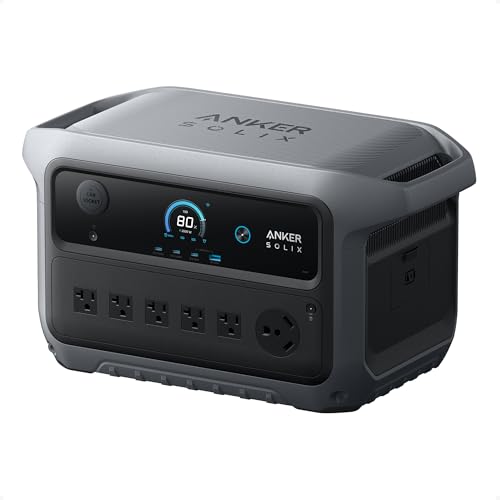
The Anker SOLIX C2000 Gen 2 represents a significant leap forward in portable power station design, combining serious capacity with genuine portability. At 2,048Wh with expandable capability and a 4,000W peak output, this unit bridges the gap between lightweight camping gear and whole-home backup power. The standout feature is its recharge flexibility: achieving a full charge in just 58 minutes via AC power is genuinely impressive, while the 800W car charging option means you can top up during a road trip in about 3 hours. For homeowners, this translates to peace of mind during outages without the noise, fuel, or maintenance headaches of traditional generators.
Power delivery is where this unit truly shines. The 2,400W rated output with 4,000W peak capacity handles demanding loads that many competitors struggle with, including most window air conditioners and RV units. The LiFePO4 battery chemistry provides superior thermal stability and safety compared to standard lithium options, which matters if you're running this indoors during an outage. The ultra-low 9W standby draw is particularly noteworthy for homeowners planning to use this as a fridge backup, allowing you to keep food safe for 32 hours on a single charge, or 64 hours with the expansion battery.
Portability is a genuine advantage here. At 41.7 pounds and roughly 18 by 10 inches, the C2000 Gen 2 is meaningfully lighter and more compact than similar capacity competitors, making it practical to move between rooms or vehicles. The modular expansion battery approach lets you invest in additional capacity later rather than buying a larger unit upfront. The main consideration is that this is a premium product with premium pricing, and initial user feedback is still limited, so you're investing based on Anker's reputation and the unit's impressive specifications rather than extensive real-world data.
| Specification | Details |
|---|---|
| Battery Capacity | 2,048Wh LiFePO4 (expandable to 4,096Wh) |
| Rated Power Output | 2,400W continuous |
| Peak Power Output | 4,000W |
| AC Recharge Time | 58 minutes (100%) |
| Car Charging (Alternator) | 800W input, 3 hours to full charge |
| Standby Power Draw | 9W |
| Fridge Runtime (Single Charge) | Up to 32 hours |
| Fridge Runtime (Expanded Battery) | Up to 64 hours |
| Weight | 41.7 lbs |
| Dimensions | 18.1 x 9.8 x 10.1 inches |
| Battery Chemistry | LiFePO4 |
| Included Accessories | AC charging cable, quick start guide, safety manual, warranty card |
| Recharge Methods | AC wall outlet, solar panels (optional), car alternator, solar + AC, solar + car, AC + car |
Is this right for you? The C2000 Gen 2 suits homeowners who want reliable backup power without a loud, fuel-guzzling generator. It's ideal if you need to keep essentials running during outages, want a portable power solution for camping and tailgating, or value the flexibility of multiple charging options. If you live in an area with frequent outages or unreliable grid power, the expandable battery option makes this particularly attractive.
Key considerations: This is a premium product with premium pricing. The lack of user reviews means you're buying on specifications and brand reputation. If you need to power your entire home simultaneously, you'll want the expansion battery, which adds significant cost. For occasional camping use, the base unit is plenty. For emergency home backup, plan to expand capacity.
Comparison points: Compared to traditional portable generators, you get silent operation, no fuel storage needs, and instant power delivery. Compared to smaller power stations, the C2000 Gen 2 offers genuine capacity and the ability to run serious appliances. The expandable design is a major advantage over fixed-capacity competitors if your needs might grow.
Maximize runtime: Use the expansion battery if you're relying on this for extended outages. A single 2,048Wh unit keeps a typical fridge running about 32 hours, but expanding to 4,096Wh doubles that to 64 hours, which covers most weather-related outages.
Charge strategically: During an outage, use the car charging feature if you have fuel available. The 800W alternator input is much faster than waiting for solar panels alone. In normal conditions, the 58-minute AC charge is so fast you can top up between uses without planning ahead.
Appliance selection matters: While the 4,000W peak handles demanding loads, starting a compressor-based appliance uses more power than running it steady-state. Start with one high-power device at a time, then add others. A fridge, LED lighting, and phone chargers can run indefinitely on standby mode.
Temperature management: LiFePO4 batteries perform best in moderate temperatures. In winter outages, keep the unit indoors if possible. The low standby draw means you can run it continuously without overheating concerns.
Buying Guide: How to Choose the Right Portable Power Station
Picking the right portable power station comes down to matching capacity and output to your actual power needs. A unit that’s too small leaves critical devices unpowered when it matters most; one that’s oversized costs more than necessary and adds unnecessary weight. Work through the factors below in order and you’ll narrow the field quickly.
Battery Capacity: How Many Watt-Hours Do You Need?
Capacity is measured in watt-hours (Wh) and tells you how much total energy the unit stores. To estimate what you need, add up the wattage of every device you plan to run and multiply by the number of hours you expect to run each one. A 60W CPAP machine running eight hours overnight draws 480Wh, which already consumes nearly half a 1,000Wh station. Common benchmarks to keep in mind:
- Under 300Wh: Phones, tablets, small cameras, LED lighting, and mini fans. Good for day hikes, tailgates, and overnight car camping.
- 300Wh to 700Wh: Laptops, CPAP machines, portable fridges, and small power tools. A practical range for weekend camping or short outages.
- 700Wh to 1,500Wh: Full-size portable refrigerators, televisions, drone chargers, and most power tools. Covers multi-day camping and moderate home backup needs.
- 1,500Wh and above: Window air conditioners, electric skillets, space heaters, and critical home appliances. Designed for extended outages and serious off-grid living.
If keeping a freezer or refrigerator running during an outage is your top priority, capacity matters enormously. A well-insulated chest freezer draws far less power than an upright model, which is worth factoring into your total watt-hour budget before you buy.
Output Wattage and the Appliances You Want to Run
Capacity tells you how long you can run devices; output wattage tells you what you can run at all. Every portable power station has a continuous output rating and a peak (surge) rating. The continuous rating must exceed the running wattage of your devices. The surge rating must exceed the startup spike of motor-driven appliances like compressors.
For example, a portable air conditioner might draw 1,000W continuously but spike to 1,800W at startup. A station rated at only 1,000W continuous would trip or shut down the moment the compressor kicks on. If you plan to run a portable air conditioner or window air conditioner off your power station during an outage, confirm both the continuous and peak wattage of your AC unit before purchasing.
Battery Chemistry: LiFePO4 vs. NMC
All nine models in this roundup use LiFePO4 (lithium iron phosphate) chemistry, and for good reason. LiFePO4 cells deliver dramatically longer cycle life than older NMC (nickel manganese cobalt) lithium-ion cells, typically 3,000 or more charge cycles before capacity drops to 80 percent. That translates to a decade or more of regular use. NMC cells offer higher energy density (smaller and lighter for a given capacity) but degrade faster. For a device you expect to rely on during emergencies, LiFePO4 is the smarter long-term investment.
Recharge Speed and Input Options
A station that takes 10 hours to recharge from the wall is a liability during a rolling outage when you have a narrow window of grid power. Look for units that support high-wattage AC input. Several models in this guide can reach full capacity in under an hour via AC wall charging. Solar input is equally important if you plan to use the station off-grid. Check the maximum solar input in watts; higher numbers mean faster solar top-offs on sunny days. Most stations also accept 12V car charging (though slowly) and some support simultaneous dual-input charging from AC and solar at the same time.
Ports and Connectivity
Count the AC outlets, USB-A ports, USB-C ports, and 12V DC outlets. For home backup, you want at least two to three AC outlets to run a refrigerator, some lighting, and a phone charger simultaneously. For camping or van life, USB-C Power Delivery at 60W or 100W is a must-have for modern laptops. Some stations also include wireless charging pads and dedicated RV 30A outlets for more specialized needs.
Weight, Portability, and Handle Design
Capacity and portability pull in opposite directions. A compact 256Wh station might weigh around five pounds and slip into a backpack. A 2,000Wh flagship can weigh over 40 pounds and requires two hands or a wheeled cart to move. If you need to carry the unit to a campsite, prioritize lighter models. If it’s staying in your garage until an outage hits, weight matters less than output and capacity. Always check handle quality: a sturdy, rubberized grip makes a heavy station far easier to maneuver.
UPS (Uninterruptible Power Supply) Functionality
A UPS mode allows the power station to switch from pass-through charging to battery output within milliseconds of detecting a grid outage, protecting sensitive electronics like home routers, NAS drives, and medical equipment from abrupt power loss. Not every station includes this feature, and switchover times vary from 10 milliseconds to 30 milliseconds. If protecting sensitive gear is a priority, look for models that advertise fast UPS switchover. This is also relevant if you rely on a battery backup sump pump system, since a UPS-capable power station can serve as an additional layer of protection for your basement.
App Control and Smart Features
Most premium portable power stations now pair with a smartphone app via Bluetooth or Wi-Fi. These apps let you monitor real-time power draw, remaining capacity, charge schedules, and even set output wattage limits. While not essential, app connectivity is genuinely useful during an extended outage when you want to manage your power budget carefully. Some stations also support integration with home energy systems and solar panel arrays for more advanced setups.
Expandability and Ecosystem
Some brands offer extra battery modules that stack onto the base station to double or triple your capacity without buying an entirely new unit. EF EcoFlow’s DELTA line and Jackery’s newer Explorer v2 series both support optional add-on batteries. If you anticipate growing energy needs or want to start smaller and scale up, choosing a platform with an expandable ecosystem can save money in the long run. Pairing your station with compatible solar lighting and a full panel array makes it even more capable as a self-sufficient energy source.
Portable Power Stations vs. Portable Generators
Portable power stations and portable generators serve overlapping but distinct needs. Generators run on gasoline or propane and can produce power indefinitely as long as fuel is available, making them the better choice for week-long outages. Power stations are limited by battery capacity but are quieter, require zero fuel logistics, and can be used safely indoors. For most households that experience occasional outages lasting a few hours to a day or two, a high-capacity portable power station covers the essentials without the noise, fumes, or fuel storage headaches. If you’re comparing both options side by side, our roundup of portable generators covers the top-rated gas and propane models for home backup use.
Why Trust HomeThru
HomeThru is an independent editorial platform with no brand affiliations, manufacturer sponsorships, or retailer partnerships that influence our conclusions. Our team of home improvement and appliance researchers independently evaluates each product category by analyzing verified customer feedback, published technical specifications, manufacturer documentation, and long-term reliability data from thousands of owners. We have no financial incentive to favor any particular brand. For portable power stations, we evaluated output accuracy, LiFePO4 cycle-life claims, recharge speed data, port configurations, and value across all capacity tiers before compiling this ranking.
We apply the same independent standard across every category we cover, from space heaters for large rooms to basement dehumidifiers and beyond. Our goal is always the same: give you the information you actually need to make a confident purchase, without the noise.
Final Thoughts
The best portable power station for you depends entirely on how much power you need, how fast you need to recharge it, and how often you’ll carry it. After thoroughly researching all 9 models in this guide, here’s how we’d categorize the standouts:
- Best Overall: Jackery Explorer 1000 v2 Portable Power Station combines a 1,070Wh LiFePO4 battery, 1,500W AC output, and one-hour fast charging in a well-balanced package that handles both home backup and outdoor adventures without compromise.
- Best Budget-Friendly Pick: Jackery Portable Power Station Explorer 300 is a lightweight, affordable option for campers and day-trippers who need reliable device charging without the bulk or cost of a larger station.
- Best Mid-Range Value: Anker 521 Portable Power Station earns its strong community rating with a solid 256Wh LiFePO4 battery, 300W continuous output, and a generous six-port layout at a competitive price point.
- Best for Home Backup: EF EcoFlow Portable Power Station DELTA 2 delivers 1,024Wh of LiFePO4 capacity with 1,800W output and 100W USB-C, making it a serious home-backup contender at a mid-range price.
- Best High-Capacity Station: Anker SOLIX C2000 Gen 2 Portable Power Station tops the capacity charts in this roundup with 2,048Wh and a massive 2,400W continuous output (peaking at 4,000W), built for households that need real staying power during extended outages.
No matter which model you choose, pairing your station with a quality carbon monoxide detector and a well-planned home emergency kit gives you the most complete safety setup. If your outage preparedness plan also includes keeping food cold, consider how a power-efficient chest freezer can stretch your stored watt-hours further than a standard upright model. And if you’re outfitting a garage workshop or van with off-grid power, reliable cordless drills and other battery-powered tools reduce the load on your station considerably.
Frequently Asked Questions
How long can a portable power station run a refrigerator?
Runtime depends on the station’s capacity and the refrigerator’s energy draw. A modern energy-efficient full-size refrigerator typically cycles between 100W and 400W, averaging around 150W to 200W continuously. A 1,000Wh station can generally keep a standard refrigerator running for four to seven hours under normal conditions. A 2,000Wh station extends that to eight to fourteen hours, enough to bridge most short outages.
Can I use a portable power station while it’s charging?
Yes, most portable power stations support pass-through charging, which means you can draw power from the unit’s outlets while it’s plugged into the wall or a solar panel. In UPS mode, many stations are specifically designed to operate this way continuously. However, running high-wattage loads while charging at full speed can generate heat, so check the manufacturer’s guidelines for sustained pass-through use at high output levels.
Are portable power stations safe to use indoors?
Portable power stations are completely safe to use indoors because they produce no combustion fumes, no carbon monoxide, and no exhaust. They operate silently and do not require ventilation. This is one of their biggest advantages over gas generators, which must be used outdoors or in well-ventilated areas to avoid dangerous carbon monoxide buildup. A quality carbon monoxide detector remains essential if you also own a gas generator.
What’s the difference between a portable power station and a portable generator?
Portable power stations store electricity in rechargeable batteries and run silently indoors with no fuel required. Portable generators burn gasoline or propane to produce electricity, which gives them virtually unlimited runtime but requires outdoor use, fuel management, and regular maintenance. Power stations are ideal for outages lasting a day or two, while generators suit longer, more demanding scenarios.
How do I recharge a portable power station during a power outage?
The most practical option is solar panels. Most portable power stations include a solar input port and are compatible with optional or third-party solar panels. A 200W to 400W panel array can recharge a mid-sized station within three to eight hours of direct sunlight. You can also recharge from a vehicle’s 12V port, though this is slower. Planning ahead by keeping the station fully charged before storm season is the single most effective strategy.




Write Your Review
No reviews yet. Be the first to share your experience!