

If you are still driving drywall screws with a standard drill, you are making the job harder than it needs to be. A dedicated drywall screw gun controls screw depth automatically, protecting the paper face of your panels from tears and preventing the dreaded overdriven fastener that weakens the board. Whether you are hanging a single sheet in a spare bedroom or framing out an entire basement, the right tool makes every run of screws faster, more consistent, and far less frustrating. Our editorial team independently researched and analyzed the top models available, drawing on verified buyer reviews, spec comparisons, and hands-on accounts from contractors and serious DIYers. Below you will find the most useful drywall screw guns on the market today, from budget-friendly cordless options to professional combo kits, with a detailed buying guide to help you choose the right one for your specific project.
Top Drywall Screw Guns

Pros
- Brushless motor runs cooler and lasts longer than brushed alternatives, maximizing tool lifespan
- Four operating modes eliminate the need for multiple tools, saving money and reducing jobsite clutter
- Adjustable depth control produces professional-quality results with consistent screw seating
- Lightweight and ergonomic design reduces user fatigue on extended drywall projects
- LED work light illuminates fastening points in dim or overhead work areas
Cons
- No battery or charger included with tool-only model, requiring separate purchase of 20V DeWalt battery system
- Learning curve required to master all four operating modes; users may need time to optimize mode selection for different tasks
The DeWalt DCF630B drywall screwgun addresses one of the biggest pain points in drywall installation: getting consistent, professional fastening across varying substrate types. The brushless motor operates with impressive efficiency, delivering steady torque whether you're sinking screws into light-gauge metal studs or dense drywall compound. The variable speed range and dedicated High/Low settings give you granular control without fumbling through complicated adjustments.
What truly sets this tool apart is its four operating modes. The Trigger Mode options let you control speed with your finger, PushStart Mode activates the motor automatically when you apply pressure, and Lock-On Mode maintains continuous operation for repetitive work. This flexibility means you're not fighting the tool's design on different tasks; instead, you can match the tool's behavior to your working style. The top-mounted mode selector makes switching seamless, even when you're working overhead or in awkward positions.
The adjustable nosecone is a game-changer for quality control. Proper screw depth is critical in drywall work, and this feature ensures every fastener seats consistently without breaking the paper face or leaving proud heads. Combined with the compact, lightweight design and integrated LED light, the DCF630B creates a tool that feels purpose-built for the job rather than adapted from a general-purpose platform.
| Specification | Detail |
|---|---|
| Motor Type | Brushless |
| Voltage | 20V Max |
| Operating Modes | 4 (Trigger High, Trigger Low, PushStart, Lock-On) |
| Speed Range | Variable, High and Low settings |
| Nosecone | Adjustable depth control |
| Work Light | LED integrated |
| Compatibility | TOOL CONNECT chip ready (DCE042 sold separately) |
| Design Features | Compact, lightweight, lanyard-ready |
| Battery System | DeWalt 20V Max (not included) |
Mode Selection: Use the top-mounted mode selector to choose your operating mode before starting. Trigger Mode (High Speed) is ideal for light-gauge substrates where speed matters. Trigger Mode (Low Speed) provides better control on heavier materials. PushStart Mode automatically engages the motor when you apply downward pressure, perfect for high-volume repetitive fastening. Lock-On Mode keeps the motor running continuously, freeing your trigger finger for faster work.
Depth Adjustment: Set the adjustable nosecone to match your substrate thickness. This ensures screws seat at the proper depth without over-driving or under-driving. Test on scrap material first to dial in the exact setting for your project.
Positioning and Technique: Hold the tool perpendicular to the surface for straight fastening. Let the tool do the work; excessive downward pressure can strip fasteners or damage the substrate. Work methodically across the drywall sheet, maintaining consistent spacing per your framing pattern.
Pre-Operation: Always inspect the tool for damage before use. Ensure the battery is fully charged and properly seated. Verify the nosecone is secure and the screw bit is properly installed and free of damage.
During Operation: Wear safety glasses to protect your eyes from flying debris or ejected fasteners. Keep your hands clear of the bit and nosecone area. Never operate the tool with your fingers near the bit opening. Use both hands when possible to maintain control, especially on overhead work. Be aware of the tool's torque reaction if a bit binds.
Electrical Safety: Keep the tool and battery away from water and moisture. Store batteries in a cool, dry location. Never leave a running tool unattended. Disconnect the battery before changing bits or performing maintenance. Follow all DeWalt battery safety guidelines, including proper charging and storage procedures.
Mode Mastery: Spend time experimenting with each operating mode on scrap drywall before your main project. Different crew members may prefer different modes, so there's no one-size-fits-all approach. Some professionals prefer Trigger Mode for control, while others swear by Lock-On Mode for speed on straightforward installations.
Bit Selection: Use the correct Phillips or square-drive bit for your fasteners. A worn or mismatched bit can slip and strip screw heads. Keep spare bits on hand; they wear faster than you'd expect on high-volume jobs.
Workflow Optimization: Pre-stage your screws in a pouch or apron pocket for quick access. Position yourself to minimize tool repositioning between fasteners. On large sheets, work in a systematic pattern to avoid missed spots and maintain even fastener spacing.
Battery Management: Keep a second battery charging while you work with the first. Brushless motors are efficient, but high-volume drywall work can still drain batteries faster than you'd expect. Having a backup ensures uninterrupted workflow.
Is This Tool Right for You? The DCF630B is purpose-built for drywall installation and finishing work. If you're hanging drywall sheets, taping, or doing any high-volume fastening in drywall or light-gauge metal framing, this tool will pay for itself in time savings and consistency. It's equally at home in the hands of a professional contractor or a dedicated DIYer tackling a whole-house drywall project.
Battery Ecosystem: This is a tool-only purchase, so you'll need to invest in DeWalt's 20V Max battery system if you don't already own one. The good news: that ecosystem is extensive, with dozens of tools available, making it a smart long-term investment for any homeowner or contractor doing regular projects.
Alternatives to Consider: If you only need occasional drywall fastening, a basic corded screwgun or even a cordless drill with a drywall bit attachment might suffice. However, if you value speed, consistency, and the ergonomic benefits of a purpose-designed tool, the specialized design and four-mode flexibility of the DCF630B justify the investment.
Pros
- Slim nose and removable shoe excel at accessing confined spaces where standard attachments fail
- Full 360-degree rotation gives you freedom to find the most comfortable working angle
- Tool-free adjustments and quick-release design save time between fastener changes
- Collated strip guide prevents tangled fasteners and keeps your workflow smooth
- Durable DEWALT construction built for consistent performance on job sites and home projects
Cons
- No reviews available yet, so real-world user feedback on long-term durability is limited
- Requires a compatible DEWALT screw gun, so it's not a standalone tool for new users
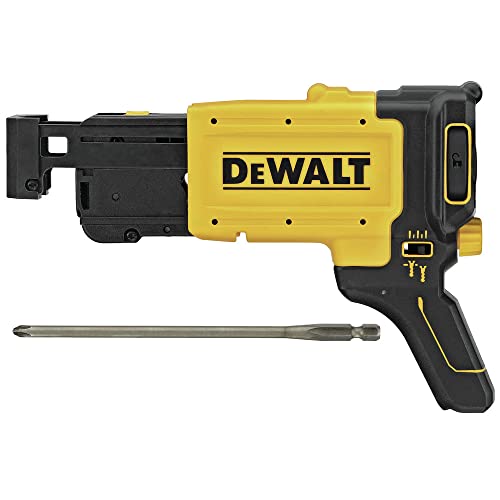
The DEWALT DCF6202 drywall screw gun attachment is engineered to solve a common frustration: reaching fasteners into corners and tight spaces. Its slim nose design paired with a removable shoe makes this attachment invaluable when working in confined areas where standard attachments simply won't fit. This matters because drywall installation often requires precision in corners, ceiling edges, and around door frames where space is limited.
What sets this attachment apart is its thoughtful design for user control and efficiency. The full 360-degree rotation capability lets you orient the tool at any angle that feels natural for your grip and the application, reducing fatigue during longer jobs. The tool-free screw length adjustment with clearly marked detent positions eliminates the need to grab a wrench every time you switch fastener sizes, and the quick-release button makes swapping attachments a one-handed operation. These features combine to keep your workflow moving without unnecessary interruptions.
The collated strip guide is a practical detail that prevents fastener strips from interfering with your hand during operation, while the tool-free spring removal design makes cleaning straightforward. If you already own a compatible DEWALT screw gun, this attachment integrates seamlessly into your existing tool ecosystem and delivers the specialized capability needed for professional-quality drywall work on residential projects.
| Specification | Details |
|---|---|
| Brand | DEWALT |
| Model | DCF6202 |
| Product Type | Drywall Screw Gun Collated Attachment |
| Nose Design | Slim nose with removable shoe |
| Rotation | Full 360-degree |
| Screw Length Adjustment | Tool-free with detent marks |
| Spring Removal | Tool-free design |
| Attachment/Removal | Release button, tool-free |
| Collation Guide | Prevents collation interference |
Setup: Attach the DCF6202 to your compatible DEWALT screw gun using the quick-release button. Adjust the screw length using the tool-free adjustment mechanism, aligning it with the detent mark that matches your fastener size.
Operation: Load your collated screw strip into the guide, ensuring the strip sits properly to prevent tangling. Position the attachment at your desired angle using the 360-degree rotation feature. Apply consistent pressure as you drive fasteners, letting the gun do the work.
Tight Spaces: Use the slim nose design to access corners and edges. The removable shoe allows you to get even closer to obstructions when needed. Rotate the attachment as needed to maintain comfort and control in confined areas.
Maintenance: After use, remove the spring using the tool-free spring removal feature and clear any debris. This simple step keeps the attachment functioning smoothly and extends its lifespan.
Before You Start: Always ensure your DEWALT screw gun is fully charged and functioning properly. Wear safety glasses to protect your eyes from flying debris and fastener fragments. Check that the attachment is securely seated on your screw gun before beginning work.
During Operation: Keep your hands clear of the fastening path and never point the gun toward yourself or others. Maintain a firm grip on the screw gun and brace yourself against the work surface to prevent sudden movements. Be aware of your surroundings when working in corners and tight spaces where visibility may be limited.
Fastener Handling: Inspect collated strips for damage before loading. Never force strips into the guide if they don't fit smoothly. Keep the collation guide clear of obstruction to prevent jams that could cause tool kickback or fastener ejection.
After Use: Allow the attachment to cool if you've been working continuously. Store the tool in a dry location and perform regular maintenance as outlined in your screw gun's manual. Check the quick-release button and attachment points regularly to ensure they remain secure.
Is This Right for You? The DEWALT DCF6202 is ideal if you own a compatible DEWALT screw gun and frequently work on drywall projects where tight corners and confined spaces are common. It's particularly valuable for interior finishing work, renovation projects, and any application requiring precision fastening in hard-to-reach areas.
Compatibility Matters: This is an attachment, not a standalone tool. You'll need a compatible DEWALT screw gun to use it. Check your current tool collection before purchasing to ensure compatibility. If you don't yet own a DEWALT screw gun, consider purchasing a compatible model as a complete system.
Key Features to Value: Prioritize the slim nose design if tight spaces are common in your work. The 360-degree rotation is valuable if you want maximum comfort and control. Tool-free adjustments matter if you frequently switch between different screw lengths. The quick-release mechanism saves time if you work with multiple attachments.
Budget Considerations: This attachment is a mid-range investment that pays dividends through improved efficiency and access to tight spaces. It's less expensive than purchasing a second screw gun but delivers specialized capability for specific applications. Consider it an essential addition if drywall work is a regular part of your projects.

Pros
- Depth-sensitive nosepiece removes the learning curve and ensures uniform fastener seating every time
- High-speed motor significantly reduces project time compared to manual or slower screw driving methods
- Ergonomic two-finger trigger and lightweight design minimize hand and wrist strain during extended use
- Heavy-duty internal components promise years of reliable performance on demanding drywall projects
- Professional-grade tool that delivers consistent results whether you are a contractor or experienced DIYer
Cons
- Corded design limits mobility and requires access to electrical outlets, which can be inconvenient on large job sites
- No user reviews available at this time, so real-world durability and long-term reliability feedback is limited
The DEWALT DW255 is engineered specifically for drywall hanging professionals and serious DIYers who need speed without sacrificing consistency. The standout feature is its depth-sensitive, set-and-forget nosepiece, which automatically adjusts fastener depth based on material resistance. This innovation eliminates the most common drywall installation mistakes: over-driving screws that puncture paper and create weak spots, or under-driving screws that leave raised heads. Once you set the depth once, you can hang an entire room with uniform fastener placement.
Performance-wise, the 6.0-amp motor spins at 5,300 RPM, delivering the production speed needed for large drywall projects. The two-finger trigger is a thoughtful ergonomic detail that matters when you are driving hundreds of fasteners overhead or at awkward angles. The lightweight design keeps fatigue manageable, and the helical-cut, heat-treated gears are built to handle years of heavy use without losing power or developing slop.
This tool is best suited for contractors, remodelers, and DIYers tackling significant drywall jobs where consistency and efficiency directly impact project quality and timeline. If you are hanging drywall occasionally or working on small patches, a basic drill might suffice. But for production-level work, the DW255 is a legitimate time-saver that pays for itself quickly through reduced rework and faster project completion.
| Brand | DEWALT |
| Model | DW255 |
| Type | Drywall Screw Gun |
| Motor | 6.0-Amp Electric |
| Speed | 5,300 RPM |
| Nosepiece | Depth-Sensitive, Set and Forget |
| Trigger | Two-Finger Design |
| Gears | Helical-Cut Steel, Heat-Treated |
| Power Type | Corded Electric |
| Primary Use | Drywall Installation and Hanging |
Setup and Depth Adjustment: Before starting, adjust the depth-sensitive nosepiece to match your drywall thickness and desired fastener seating. This is typically a one-time setup per project. Insert the appropriate drywall screw into the bit holder and ensure it is secure.
Operating the Screw Gun: Position the nosepiece against the drywall at a slight angle, keeping the tool perpendicular to the surface for best results. Gently squeeze the two-finger trigger to engage the motor. The nosepiece will automatically stop the screw at the correct depth once it makes full contact with the drywall. Release the trigger and move to the next fastening location. Maintain a steady, controlled pace for consistent results.
Best Practices: For overhead work, position yourself to minimize arm strain and use smooth, deliberate motions rather than rushing. Check your first few fasteners to confirm the depth is correct before proceeding with the full installation. Keep the tool clean and free of drywall dust, and ensure the screw bit is properly seated to avoid stripping or slipping.
Electrical Safety: Always inspect the power cord for damage before use. Use a properly grounded outlet or GFCI-protected circuit, especially in damp environments. Keep the cord away from sharp objects and high-traffic areas to prevent tripping or damage.
Personal Protection: Wear safety glasses to protect your eyes from flying drywall dust and debris. Consider a dust mask if working in a poorly ventilated area, as drywall dust can irritate respiratory passages during extended use. Avoid loose clothing or jewelry that could catch in the rotating bit.
Tool Operation: Never force the screw gun or apply excessive pressure. Let the depth-sensitive nosepiece do the work. Keep your hands clear of the bit and nosepiece at all times. Unplug the tool before changing bits or performing any maintenance. Do not operate the tool while fatigued, as reduced focus increases accident risk during extended projects.
Maximize Efficiency: Pre-mark your fastener locations with a chalk line or pencil before starting. This reduces hesitation and keeps spacing consistent. Load several screws into a screw magazine or apron pocket so you are not constantly reaching for individual fasteners. The rhythm of consistent, quick placement is what separates amateurs from professionals.
Extend Tool Life: Clean drywall dust from the motor vents regularly to prevent overheating. Occasionally inspect the helical gears for wear, and replace the bit holder if it becomes worn or damaged. Store the tool in a dry location away from extreme temperatures, and keep the power cord neatly coiled to prevent kinks.
Achieve Better Results: Start with a slower trigger squeeze to ensure the screw engages properly before full speed. On tapered drywall edges, the nosepiece may need slight adjustment to account for the slope. If you notice inconsistent depth across a section, stop and re-check your nosepiece setting rather than continuing with poor results. Quality control during setup saves rework time later.

Pros
- Brushless motor runs cooler and longer than brushed alternatives, maximizing battery life per charge
- Four distinct operating modes give you precise control for different fastening scenarios and user comfort
- Two-battery system with charger means one battery charges while you work with the other
- High RPM capability speeds up drywall installation and reduces fatigue on longer jobs
- Compact design and top-mounted controls allow one-handed operation and mode switching
Cons
- No user reviews available yet, so real-world performance feedback from homeowners is limited
- Brushless technology and dual-tool capability come at a premium price point compared to single-tool alternatives
The DEWALT 20V MAX XR Brushless Drywall Screw Gun and Cut-Out Tool Combo represents a solid investment for anyone regularly handling drywall projects. The brushless motor technology delivers consistent 26,000 RPM performance while generating less heat and requiring no brush maintenance, which translates to longer runtime on each battery charge and lower long-term ownership costs.
What sets this kit apart is the four dedicated operating modes. Trigger Mode High Speed handles standard fastening quickly, Trigger Mode Low Speed provides control on delicate or heavy-gauge materials, PushStart Mode engages without squeezing the trigger for repetitive work, and Lock-On Mode maintains continuous operation for extended tasks. The top-mounted electronic selector lets you switch modes with one hand, keeping your other hand free to position material or guide the tool.
The included two-battery system with charger removes a common friction point for combo kit buyers. You can keep one battery charging while working with the other, ensuring minimal downtime on job sites. The dual-tool design handles both drywall screw installation and precision cut-outs, reducing the need to swap between separate tools and streamlining your workflow on renovation and construction projects.
| Specification | Detail |
|---|---|
| Brand | DEWALT |
| Model | DCK265D2 |
| Voltage | 20V MAX XR |
| Motor Type | Brushless |
| Max RPM | 26,000 |
| Speed Range | Variable (High and Low settings) |
| Operating Modes | 4 modes: Trigger High, Trigger Low, PushStart, Lock-On |
| Mode Selection | Top-mounted electronic selector |
| Included Items | Drywall screw gun, cut-out tool, 2 batteries, charger |
| Application | Light-gauge and heavy-gauge substrates |
| Category | Combo Kit |
Mode Selection: Use the top-mounted electronic selector to choose your operating mode before starting. Trigger High Speed works best for standard drywall fastening, while Trigger Low Speed provides better control on dense materials or when precision is needed.
For Drywall Fastening: Position your screw and material, select Trigger or PushStart mode depending on your preference, and apply steady pressure. Trigger Mode gives you control over speed, while PushStart Mode engages automatically when you push the tool forward, ideal for repetitive fastening along studs.
For Cut-Outs: Switch to the cut-out tool attachment and select an appropriate speed mode. The variable speed range lets you slow down for detailed work or speed up for faster material removal. Lock-On Mode is useful when making longer cuts, as it maintains continuous operation without holding the trigger.
Battery Management: Keep one battery charging while using the other to maintain continuous workflow. Check battery charge indicators before starting large projects to avoid interruptions.
Before Operation: Inspect the tool and work area for damage or hazards. Wear safety glasses to protect against dust and debris, especially when making cut-outs. Use a dust mask or respirator when working with drywall, as inhalation of drywall dust can be harmful.
During Use: Maintain firm control of the tool with both hands when possible, even though one-handed mode selection is available. Never force the tool through material or apply excessive pressure. Be aware of the high RPM motor and keep loose clothing, hair, and jewelry away from rotating parts. Ensure your work piece is secure and won't shift unexpectedly.
Electrical Safety: Keep the charger and batteries away from water and wet conditions. Store batteries in a cool, dry location and never attempt to disassemble or modify them. Follow the manufacturer's charging instructions to prevent overcharging and battery damage.
Maximize Efficiency: Use PushStart Mode for repetitive fastening tasks like securing drywall sheets to studs. This reduces trigger finger fatigue on longer jobs and maintains consistent driving speed without manual speed adjustments. Pre-mark screw locations lightly with a pencil to keep your pattern straight and professional-looking.
Material-Specific Settings: Light-gauge substrates and pre-drilled holes benefit from Trigger High Speed mode for faster work, while heavy-gauge materials or dense substrates perform better at lower speeds where the motor has more torque. Experiment with speed settings on scrap material first to dial in the right balance for your specific project.
Tool Maintenance: The brushless motor requires no brush maintenance, but keep the air vents clear of drywall dust by wiping the tool down regularly. Store the tool in a dry location and keep battery contacts clean for reliable performance. Rotate between your two batteries to distribute wear evenly and extend overall kit lifespan.
Pros
- Brushless motor runs smoothly with minimal vibration, reducing user fatigue during extended use
- Tool-free depth adjustment eliminates the need for wrenches or setup tools on the jobsite
- 360-degree rotating head provides exceptional flexibility for angled and corner installations
- Makita battery compatibility allows you to share power across multiple tools if you own other Makita devices
- Compact 2-in-1 design replaces two separate tools, saving space and weight in your toolkit
Cons
- No customer reviews available yet, so real-world durability and long-term reliability remain unproven
- Funnywhale is a lesser-known brand compared to established tool manufacturers, which may affect warranty support and parts availability
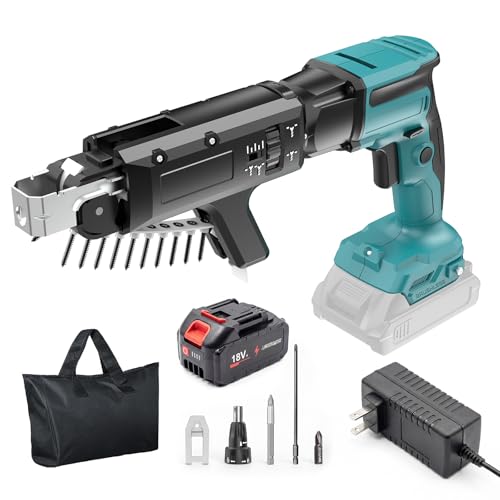
The Funnywhale 18V Cordless Drywall Screw Gun stands out as a practical 2-in-1 solution that combines auto-feed capability with manual control in a single compact unit. The brushless motor operates at 5,000 RPM with noticeably reduced vibration and noise compared to traditional corded models, making it more comfortable during extended drywall installation sessions. The tool-free depth adjustment with clearly marked stop positions delivers consistent screw seating without requiring additional setup time or equipment on the jobsite.
The 360-degree rotating head is a genuine advantage for accessing difficult areas like corners, edges, and confined spaces where standard screw guns struggle. This design flexibility allows you to work horizontally, vertically, or at angles without repositioning your body or the tool repeatedly. Battery compatibility with Makita's 18V lineup (BL1820 through BL1860 series) means you can leverage existing batteries if you already own Makita power tools, reducing the overall cost of ownership.
The included 4.0Ah battery, charger, and tool bag provide everything needed to start working immediately. However, potential buyers should note that this is a newer brand without established customer feedback, so durability claims and long-term reliability remain unproven through user experience. The 2-in-1 design is convenient, but it may not match the specialized performance of dedicated single-purpose tools from established manufacturers.
| Specification | Detail |
|---|---|
| Motor Type | Brushless |
| Motor Speed | 5,000 RPM |
| Voltage | 18V |
| Battery Capacity | 4.0Ah |
| Battery Compatibility | Makita 18V (BL1820, BL1830, BL1840, BL1850, BL1860 series) |
| Depth Control | Tool-free adjustment with stop marks |
| Rotating Head | 360-degree |
| Screw Gun Type | 2-in-1 (auto-feed and manual) |
| Applications | Drywall, boarding, decking, metal cladding |
| Included Accessories | 18V 4.0Ah battery, charger, tool bag |
| Brand | Funnywhale |
Setup: Charge the 18V battery fully before first use. Insert the battery into the handle until it clicks securely. Familiarize yourself with the depth adjustment marks on the tool body.
Adjusting Depth: Locate the tool-free depth control on the screw gun. Rotate or slide the adjustment to match your desired screw length (clearly marked on the body). No wrenches or additional tools are needed.
Loading Screws: For auto-feed mode, load screws into the magazine following the manufacturer's instructions. For manual mode, insert screws individually into the chuck.
Operating the Tool: Position the screw gun against your work surface at your desired angle (horizontal, vertical, or angled). Press the trigger to drive screws. The 360-degree rotating head allows you to adjust the tool orientation without changing your hand position.
Battery Management: Monitor battery charge during extended use. Swap in the second battery (if available) while the first charges to minimize downtime on larger projects.
Before Operating: Always inspect the tool for damage before use. Ensure the battery is fully charged and properly inserted. Wear safety glasses to protect against flying debris and screw fragments.
During Operation: Keep your hands clear of the rotating chuck and screw path. Maintain a firm grip on the tool with both hands when possible. Never reach into tight spaces while the tool is running. Avoid wearing loose clothing or jewelry that could catch on moving parts.
Workspace Safety: Work in well-lit areas to see your screw placement clearly. Keep bystanders at least 10 feet away from your work area. Use a stable work surface or scaffolding to prevent falls when working at height.
Battery and Charging: Never leave the battery charging unattended. Use only the provided charger. Store batteries in a cool, dry place away from moisture and extreme temperatures. Do not attempt to repair or modify the battery.
After Use: Allow the motor to stop completely before setting the tool down. Remove the battery after each use session. Clean the tool of debris and store it in the included tool bag away from moisture.
Maximize Efficiency: Use the auto-feed mode for large drywall installation projects to speed up repetitive screw driving. Switch to manual mode for precision work, repairs, or when working with delicate materials where over-driving is a concern.
Depth Control Mastery: Before starting a major project, drive a few test screws on scrap material to confirm your depth setting produces the exact seating you want. Mark your preferred depth setting with tape or a marker so you can quickly return to it if you adjust during the day.
Battery Strategy: On full-day projects, invest in an additional 18V Makita battery so you always have a charged unit ready while one is charging. This eliminates downtime waiting for recharges.
Rotating Head Advantage: Take full advantage of the 360-degree head for corner work and tight spaces. This feature reduces the need to reposition your entire body, decreasing fatigue and improving accuracy in awkward locations.
Motor Care: The brushless motor requires minimal maintenance, but keep the air vents clear of dust and debris. After dusty projects, use compressed air to clean the motor housing to ensure optimal cooling and longevity.

Pros
- High 6000 RPM motor speed powers through drywall, wood studs, and light-gauge metal efficiently
- Battery compatibility with DeWalt 20V ecosystem makes this a practical addition for existing tool owners
- Compact, lightweight design reduces user fatigue and improves maneuverability in tight spaces
- Tool-free depth adjustment saves time and delivers consistent results across varying material thicknesses
- Integrated LED light is genuinely helpful for visibility in poorly lit job sites and interior walls
Cons
- Tool-only configuration means you must already own a DeWalt 20V battery and charger, limiting appeal to new buyers
- No customer reviews available yet, so real-world durability and long-term performance remain unproven
The Ecarke cordless drywall screw gun brings cordless convenience to a task traditionally dominated by corded tools and pneumatic guns. Its brushless motor is the standout feature here, delivering 6000 RPM while running quieter and cooler than brushed alternatives. For homeowners and contractors already invested in the DeWalt 20V ecosystem, this tool eliminates the frustration of managing multiple battery systems and chargers on the job site.
Practicality shines through in the design details. The tool-free depth adjustment with clear length markings takes the guesswork out of consistent screw seating, whether you're fastening drywall to studs or working with different material thicknesses. At just 2.8 pounds, the ergonomic grip and included belt clip make this gun comfortable to use during long framing or drywall sessions, and the integrated LED light genuinely improves visibility in dim interior spaces where you need precision placement.
The forward and reverse function handles both driving and removal tasks, eliminating the need for a separate tool when you need to back out a misplaced fastener. This is a straightforward, no-nonsense tool designed for the specific demands of drywall installation and general fastening work. The main consideration is that this is a tool-only purchase, so you'll need existing DeWalt 20V batteries to get started.
| Specification | Detail |
|---|---|
| Brand | Ecarke |
| Motor Type | Brushless |
| Speed | 6000 RPM |
| Battery Compatibility | DeWalt 20V (not included) |
| Weight | 2.8 pounds |
| Depth Adjustment | Tool-free with length markings |
| Lighting | Built-in LED |
| Direction | Forward and reverse |
| Accessories Included | Belt clip |
| Ideal Applications | Drywall, fiberboard, light-gauge metal, wood studs |
Getting Started
Install a fully charged DeWalt 20V battery into the tool. Familiarize yourself with the forward and reverse toggle switch located on the handle. Adjust the depth collar to match your material thickness using the clear length markings, and no tools are required for this adjustment.
Operating the Tool
Position the screw into the chuck and press the trigger to drive. The brushless motor delivers consistent power throughout the battery charge cycle. Use the LED light to guide screw placement in dim areas. For removal, flip the direction switch to reverse and apply steady pressure to back out fasteners without stripping heads.
Maintenance Tips
Keep the chuck clean and free of dust. After each use, store the tool in a dry location. The brushless motor requires no brush replacement, which reduces long-term maintenance compared to traditional corded drills. Periodically check the depth collar for debris and clean as needed.
Material-Specific Techniques
For drywall, set the depth collar so the screw head sits just below the surface without breaking through the paper. On wood studs, adjust slightly deeper to ensure the head pulls the material tight. For light-gauge metal, use a steady trigger pressure and let the motor do the work rather than forcing it.
Efficiency on the Job
Use the belt clip to keep the gun accessible between fastening tasks, reducing time spent hunting for the tool. Pre-mark screw locations with a pencil to speed up placement, especially in low-light areas. The LED light is most effective when you position the tool so light falls directly on the fastening point.
Battery Management
Keep a second charged DeWalt 20V battery on hand so you can swap seamlessly without downtime. The brushless motor draws consistent power, so you'll get reliable performance even as the battery charge decreases. Avoid leaving the tool with a drained battery for extended periods, as this can affect battery longevity.
Who Should Buy This Tool
This screw gun is ideal for homeowners and contractors who already own DeWalt 20V batteries and chargers. If you're planning a drywall installation, interior framing project, or need a reliable fastening tool for multiple applications, this tool makes sense as a battery-compatible addition to your collection. It's especially valuable if you want to eliminate corded tools and the hassle of managing separate charging systems.
What You Need Before Purchasing
You must have at least one DeWalt 20V battery and a compatible charger. This is a tool-only purchase, so plan accordingly. Having a second battery on hand is recommended for uninterrupted workflow during larger projects.
Project Suitability
This tool excels at drywall installation, framing with wood studs, fastening fiberboard, and light-gauge metal work. It's versatile enough for general carpentry tasks requiring precise fastening. If your primary need is heavy-duty concrete fastening or masonry work, you'll want a specialized tool instead.

Pros
- Versa-Clutch technology minimizes risk of over-tightening and fastener damage on delicate materials
- Brushless motor runs cooler and quieter while extending battery runtime compared to brushed alternatives
- LED work light is genuinely useful for working in shadowed or indoor spaces
- Lightweight and ergonomic design reduces hand fatigue during repetitive fastening
- Consistent 2,000 RPM speed provides reliable, repeatable results across projects
Cons
- No battery or charger included, requiring separate purchase if you don't already own DeWalt 20V MAX equipment
- Limited online reviews available, making it harder to assess long-term durability and real-world performance from other users
The DeWalt DCF622B screw gun stands out as a specialized fastening tool built for precision work where over-driving can cause real damage. The Versa-Clutch system is the star here, giving you adjustable torque control that prevents stripping fasteners and crushing delicate materials like composites, plastics, and thin metals. This matters most when you're assembling cabinetry, attaching hardware, or working with materials that don't tolerate aggressive driving.
The brushless motor is a meaningful upgrade that delivers consistent 2,000 RPM speed while running cooler and quieter than older brushed designs. This efficiency translates to longer runtime per charge and less heat buildup during extended use. The built-in LED work light is a practical addition that actually improves visibility in shadowed corners and indoor spaces where you're often working. At its core, this is a tool designed for controlled, repeatable fastening rather than raw power.
As a tool-only purchase, the DCF622B makes sense if you already own DeWalt 20V MAX batteries and a charger. If you're starting fresh with DeWalt's ecosystem, factor in the cost of compatible batteries and a charger. The compact, lightweight design reduces hand fatigue during repetitive work, making it comfortable for both quick repairs and longer assembly projects. This is a solid choice for homeowners and DIYers who value precision and material protection over brute force.
| Brand | DeWalt |
| Model | DCF622B |
| Voltage | 20V MAX XR |
| Motor Type | Brushless |
| Speed | 2,000 RPM (consistent) |
| Torque Control | Versa-Clutch adjustable system |
| Work Light | Built-in LED |
| Applications | Metal fastening, composite assembly, precision screw driving |
| What's Included | Tool only (battery and charger sold separately) |
| Battery Compatibility | DeWalt 20V MAX platform |
Getting Started: Insert a compatible DeWalt 20V MAX battery into the handle until you hear it click. Ensure the battery is fully charged before beginning work. Attach the appropriate fastener bit to the chuck and tighten it securely by hand.
Adjusting Torque: The Versa-Clutch system features a numbered ring around the chuck. Start at the lowest setting and test on scrap material. Gradually increase the torque setting until the clutch disengages at the desired tightness. This prevents over-driving and protects your material and fasteners.
Fastening Technique: Position the bit squarely against the fastener head. Squeeze the trigger smoothly and let the tool do the work. The consistent 2,000 RPM speed means you don't need to apply excessive pressure. Use the LED work light to guide your aim in dim areas. For repetitive tasks, maintain a comfortable grip to minimize hand fatigue.
Maintenance: After use, remove the battery and store it in a cool, dry place. Periodically inspect the chuck and bit for debris or damage. Keep the LED lens clean for optimal visibility during future projects.
Before Operating: Read the full instruction manual provided by DeWalt. Inspect the tool for any visible damage or loose parts. Ensure the battery is properly seated and fully charged. Wear safety glasses to protect against flying debris or fastener fragments.
During Use: Maintain a firm, comfortable grip with both hands when possible. Keep your fingers clear of the chuck and rotating bit. Never force the tool or apply excessive side pressure, as this can damage the motor or cause the tool to slip. Be aware of the power cord (if using corded equipment) and keep it away from the work area.
Fastener Handling: Use the correct bit size for your fasteners to prevent slipping or stripping. Always ensure fasteners are aligned properly before driving. The Versa-Clutch will disengage when torque is reached, so respect this feedback and don't override it by continuing to squeeze the trigger.
Storage and Battery Safety: Store the tool in a dry location away from moisture and extreme temperatures. Keep batteries away from children and pets. Never leave a charged battery unattended for extended periods. If the tool begins to overheat or the battery becomes unusually warm, stop immediately and allow both to cool before resuming work.
Torque Setting Strategy: The Versa-Clutch is your best friend for consistent results. For delicate materials like composite trim or thin sheet metal, start at setting 3 or 4 and test on scrap. For standard wood fastening, settings 6-8 typically work well. For harder materials, you may need settings 8 and above. Always test your setting on a hidden area first to dial in the perfect torque before committing to visible work.
Bit Selection Matters: Invest in quality bits that match your fastener type precisely. A slightly worn or mismatched bit will slip and damage fastener heads. Keep a variety of bits on hand and replace them when they show wear. The right bit makes the Versa-Clutch system work more effectively.
Battery Management: Keep two batteries in rotation if possible, so one charges while you work with the other. This maximizes uptime on larger projects. Avoid draining batteries completely before recharging, as this extends their overall lifespan. The brushless motor's efficiency means you'll get more fasteners per charge than older models.
Lighting Advantage: Use the built-in LED strategically by positioning your body to avoid casting shadows on the fastener. The light is most effective in indoor spaces and shadowed areas. For outdoor work in bright sunlight, the LED may be less noticeable but still useful for inspecting fastener seating.
Buying Guide: How to Choose the Right Drywall Screw Gun
Drywall screw guns share a core concept with regular drills but differ in one critical way: they have a depth-sensitive nose cone that disengages the drive mechanism the instant the screw reaches the correct depth. That single feature is what separates a clean, professional finish from a wall full of torn paper and popped fasteners. Before you buy, there are several factors worth understanding so you can match the tool to your workload, your battery platform, and your budget.
Corded vs. Cordless
Corded drywall screw guns deliver consistent power without any concern about battery life, which is why professional drywall contractors who hang hundreds of sheets a week often prefer them. The DEWALT DW255 is a strong example of this category, running at a fixed amperage that never fades. The trade-off is the cord itself, which can snag, limit your range, and require an extension cord on larger jobs. Cordless tools powered by 18-volt or 20-volt MAX lithium-ion batteries have largely closed the performance gap. If you already own tools in a battery ecosystem, a cordless screw gun that shares that platform saves you money on batteries and chargers. For occasional use and smaller projects, cordless is almost always the smarter choice. For all-day professional use on large commercial jobs, a corded model still holds an edge in raw endurance. Pair your screw gun with reliable ladders and you will move through a ceiling job much more efficiently.
RPM and Motor Type
Speed matters in drywall work because you are often driving dozens or even hundreds of screws in a session. Most quality screw guns operate between 4,000 and 6,000 RPM. Higher RPM generally means faster driving, but only if the motor can sustain that speed under load. Brushless motors are a meaningful upgrade over brushed designs. They run cooler, last longer, and maintain more consistent torque throughout the battery charge cycle. If you are comparing two cordless models at similar price points, always favor the brushless option. The DEWALT DCF622B and the DCF630B both use brushless motors and illustrate why professionals gravitate toward that technology for high-volume work. While you are upgrading your power tools, it is also worth reviewing your framing nailers and finish nailers to complete your renovation toolkit.
Depth Adjustment and Nose Cone Design
The depth-setting nose cone is the defining feature of any drywall screw gun. It should lock securely in your chosen position, be easy to adjust without tools, and hold that setting consistently for hundreds of drives in a row. Look for a cone-lock mechanism that does not drift during use. Some models, like the DEWALT DCF622B with its Versa-Clutch system, allow you to dial in torque settings beyond just depth, giving you more control when working with different drywall thicknesses or when driving into steel stud framing versus wood. If the nose cone wobbles or changes depth mid-job, you will end up with inconsistent screw seating and additional finishing work before you can paint or skim coat.
Collated Attachments
A collated attachment feeds screws automatically from a strip magazine, eliminating the need to load individual fasteners by hand. This feature can roughly double your output on large jobs. The DEWALT DCF6202 is a dedicated collated attachment that mounts onto compatible DEWALT screw guns and handles the entire feeding process. If you are hanging more than a handful of sheets or working professionally, a collated setup pays for itself quickly in time saved. Some combo kits bundle a screw gun with a collated attachment, which is worth the higher upfront investment if volume is your priority. Keep in mind that collated attachments require compatible strip screws, which are sold separately from standard drywall fasteners.
Weight and Ergonomics
Drywall work is repetitive. You are extending your arm and driving screws hundreds of times in a session, often overhead for ceilings. A heavy tool accelerates fatigue and increases the risk of inconsistent depth on later drives when your arm is tired. Most cordless screw guns fall between two and four pounds without a battery, but the battery itself adds significant weight. Brushless motors tend to enable more compact, lighter designs than brushed equivalents. Check the total weight with battery before you commit. A comfortable grip, good balance, and a belt clip for resting the tool between runs all contribute to a more productive day. For ceiling work in particular, having a stable platform like quality step ladders under your feet makes a real difference in control.
Single-Speed vs. Variable-Speed Control
Some drywall screw guns run at a fixed speed optimized for standard drywall screws into wood or steel studs. Others offer variable speed via a trigger or a dial. Variable speed is useful when you need to start a screw slowly before it catches, or when working around delicate areas. For straightforward panel hanging, a single-speed gun tuned to the right RPM is often more efficient because you never have to think about settings. If you plan to use the tool for a wider variety of tasks beyond pure drywall hanging, variable speed or adjustable torque gives you more versatility. The DEWALT DCF622B Versa-Clutch stands out here with its multiple torque modes, making it adaptable across different fastener types and substrate combinations.
Battery Platform Compatibility
If you already own cordless tools from a specific brand, buying a screw gun that shares that battery platform is a straightforward way to save money and reduce the number of chargers you need to manage. DEWALT’s 20V MAX battery system is one of the most widely compatible platforms available, used across the DCF630B, DCF622B, and the DCK265D2 combo kit reviewed here. The Ecarke screw gun is also designed to accept DEWALT 20V batteries, which is a notable advantage for those already invested in that ecosystem. If you are building out a full renovation toolkit, check out our coverage of oscillating multi tools and miter saws, many of which share the same battery platforms.
LED Work Lights
Most modern cordless screw guns include an LED work light positioned near the nose cone to illuminate the fastener zone. This is more useful than it sounds. Basements, interior partition walls, and ceiling corners are often poorly lit, and a built-in light keeps your eyes on the screw without needing a separate lamp. If you are evaluating budget models, check whether the LED is present and whether it activates automatically or only with the trigger. For larger job sites where you need broader area lighting, a dedicated workshop setup with adequate task lighting is worth considering alongside your tool purchases.
Why Trust Us
HomeThru is an independent editorial site. We do not sell tools, process orders, or handle returns or warranties. Our team researched and evaluated each drywall screw gun in this guide by analyzing verified purchase reviews, manufacturer specifications, and real-world performance reports from contractors and DIY homeowners. We compared RPM ratings, motor type, depth adjustment mechanisms, battery compatibility, and ergonomic design across every model before making our recommendations. We looked at both professional-grade picks and budget-accessible options to ensure this guide is useful regardless of your experience level or project scope. For other renovation and building tasks, we have also researched and compared stud finders that will help you locate framing before you hang any drywall, and caulk guns for finishing seams and transitions after the boards are up. Our goal is simply to give you the clearest, most useful information so you can make a confident purchase decision without wading through marketing copy.
Final Thoughts
After carefully evaluating every model in this lineup, a few clear winners emerge depending on your priorities. Whether you need a workhorse corded gun, a versatile cordless professional tool, or a budget-friendly entry point, this list covers the full range. Here are our top picks by category:
- Best Overall: DEWALT 20V MAX XR Brushless Drywall Screw Gun and Cut-Out Tool Combo Kit (DCK265D2) delivers a complete professional solution with brushless technology, two batteries, a charger, and a cut-out tool in one kit. It is the most versatile package in this roundup and worth every dollar for serious work.
- Best Cordless Screw Gun: DEWALT 20V MAX XR Screw Gun with Versa-Clutch (DCF622B) stands out for its adjustable torque system, brushless motor, and compatibility with the entire DEWALT 20V MAX platform. It handles everything from standard half-inch drywall to thicker fire-rated panels with ease.
- Best Corded Pick: DEWALT Drywall Screw Gun 6.0-Amp (DW255) is the go-to for contractors who hang drywall all day and cannot afford battery interruptions. Consistent power and proven durability make it a reliable workhorse on large commercial jobs.
- Best Value Cordless: DEWALT 20V Max Drywall Screwgun (DCF630B) offers brushless performance at a mid-range price point, making it the smartest buy for homeowners and light-duty professionals who want quality without the premium kit cost.
- Best Collated Upgrade: DEWALT Drywall Screw Gun Collated Attachment (DCF6202) is the accessory that transforms a standard screw gun into a high-volume professional tool. If you are hanging more than a few sheets, this attachment saves more time than almost any other upgrade you can make.
Once your drywall is up and fastened, the finishing work begins. A quality wallpaper steamer can help you prep old surfaces before new panels go on, and paint sprayers will make the finishing coat go on faster and more evenly than a roller alone. If you are tackling a full renovation, also consider epoxy floor coatings for garage or basement floors and concrete grinders for surface prep before any coating goes down. Good tools compound: the right screw gun is just the beginning of a well-equipped renovation setup.
Frequently Asked Questions
Can I Use a Regular Drill Instead of a Drywall Screw Gun?
You can drive drywall screws with a regular drill, but you will likely overdrive some fasteners, tearing the paper face of the drywall and creating a weak hold. A dedicated screw gun has a depth-sensitive clutch that stops driving the instant the screw reaches the right depth. For a small patch or a few sheets, a drill works in a pinch. For a full room or more, a screw gun is a worthwhile investment that pays off in both speed and finish quality. Consider pairing it with quality tool belts to keep your fasteners and accessories within reach at all times.
What RPM Do I Need for Hanging Drywall?
Most professional drywall screw guns run between 4,000 and 6,000 RPM. For standard residential drywall into wood studs, a speed in the 4,400 to 4,850 RPM range is ideal. Higher speeds work well for experienced users who can maintain consistent tool angle and pressure. Beginners may find that a slightly lower speed gives them more control and fewer stripped screw heads while they develop their technique.
Is a Brushless Motor Worth the Extra Cost?
For anyone planning to use a drywall screw gun regularly, yes. Brushless motors generate less heat, last significantly longer than brushed alternatives, and maintain more consistent torque as the battery depletes. Over the lifespan of the tool, the durability advantage more than offsets the higher purchase price. Occasional DIYers on a tight budget may find that a brushed model still meets their needs, but professionals and serious homeowners should always choose brushless. For other tools where brushless technology makes a similarly large difference, see our guide to wood routers.
Do I Need a Collated Attachment?
A collated attachment feeds screws automatically from a strip, eliminating the need to load individual fasteners between drives. For large jobs involving many sheets of drywall, a collated system can dramatically increase your output per hour. For small repairs or occasional use, loading screws one at a time is perfectly manageable. The DEWALT DCF6202 collated attachment is designed for compatibility with several DEWALT screw gun models and is one of the most practical accessories available for volume drywall work. Pair it with a reliable laser distance measurer to accurately cut and plan your panel layout before you start driving.
Can a Drywall Screw Gun Drive Screws into Steel Studs?
Yes. Most quality drywall screw guns are designed to drive self-tapping drywall screws into both wood and light-gauge steel studs. The key is using the correct screw type: fine-thread screws for steel framing and coarse-thread screws for wood. Tools with adjustable torque, like the DEWALT DCF622B with Versa-Clutch, handle the transition between substrate types more gracefully. Always check the manufacturer’s specifications to confirm steel-stud compatibility before buying, especially for tools at the budget end of the market.





Write Your Review
No reviews yet. Be the first to share your experience!