

A flooded basement can cause thousands of dollars in damage within hours, yet a reliable sump pump is one of the most affordable layers of protection a homeowner can add. Whether you live in a flood-prone region or simply deal with seasonal groundwater intrusion, the right sump pump keeps your basement dry, your foundation intact, and your peace of mind intact. Our independent editorial team spent weeks researching, comparing, and evaluating the top-rated options across horsepower ratings, build materials, float switch designs, and real-world pumping capacity so you can make a confident, informed decision. From heavy-duty cast iron workhorses by WAYNE and Zoeller to budget-friendly thermoplastic utility pumps, there is a model on this list for every basement and every budget. If you already have a primary pump and want a safety net for power outages, pairing it with one of the battery backup sump pump systems we reviewed is a smart next step.
Top Sump Pumps We Recommend

Pros
- High flow rate at 4500 GPH makes it effective for major water removal emergencies
- Solid construction with reinforced thermoplastic casing resists corrosion and wear
- Built-in safety features including thermal overload protection and quality mechanical seal
- Versatile discharge adapters reduce need for additional fittings and modifications
- 10-foot UL-certified power cord provides safe, convenient operation
Cons
- No customer reviews available yet, so real-world reliability data is limited
- 1 HP motor requires standard 120V outlet, which may need dedicated circuit for continuous use
The Aquastrong 1 HP submersible sump pump is engineered for homeowners and DIYers who need serious water removal capability. With a 4500 GPH flow rate at 5 feet of lift and the ability to push water up to 30 feet vertically, this pump handles everything from basement flooding and window well drainage to pool maintenance and pond cleanup. The bottom suction design is particularly useful because it drains water down to just 1/5 inch from the surface, maximizing extraction without leaving standing water behind.
Durability and safety are built into this pump's design. The reinforced engineering thermoplastic casing resists corrosion and abrasion, making it suitable for prolonged water exposure. A quality mechanical seal prevents leakage, while the built-in thermal overload protector automatically shuts down the motor if it runs dry, preventing costly burnout. The 10-foot UL-certified power cord meets safety standards and provides convenient reach for most installation scenarios.
Installation is straightforward thanks to the 1-1/4 inch NPT discharge outlet paired with multiple snap coupling adapters (3/4, 1, and 1-1/4 inch). This flexibility means you can connect to existing plumbing or drainage systems without extensive modifications. For homeowners facing water emergencies or regular drainage needs, this pump offers reliable performance at a practical price point, backed by Aquastrong's customer service support.
| Specification | Detail |
|---|---|
| Motor Power | 1 HP |
| Flow Rate | 4500 GPH at 5 ft lift (75 GPM) |
| Maximum Lift Height | 30 feet vertical |
| Discharge Outlet | 1-1/4 inch NPT |
| Discharge Adapters Included | 1-1/2 inch elbow, 3/4 inch, 1 inch, 1-1/4 inch snap couplings |
| Solids Handling | Up to 1/5 inch particles |
| Minimum Water Level | Drains to 1/5 inch from surface |
| Casing Material | Reinforced engineering thermoplastic |
| Seal Type | Quality mechanical seal |
| Safety Features | Thermal overload protector |
| Power Cord | 10 feet, UL-certified |
| Design Type | Submersible, portable |
Installation Steps
1. Prepare the Discharge Location: Determine where water will exit. Connect the appropriate discharge adapter (3/4, 1, or 1-1/4 inch) to the pump's 1-1/4 inch NPT outlet using the snap couplings provided.
2. Position the Pump: Place the pump in the lowest point of the area being drained (basement sump pit, pool, pond, or window well). The bottom suction design will pull water efficiently from this position.
3. Connect Discharge Hose: Attach your drainage hose to the discharge outlet. For basement installations, route the hose away from your foundation to proper drainage areas.
4. Plug In and Operate: Connect the 10-foot power cord to a standard 120V outlet. The pump is ready to run immediately. Unplug to stop operation.
Operating Tips
Monitor Water Levels: The pump drains down to 1/5 inch from the surface, so it won't remove every last drop. Plan drainage accordingly.
Handle Debris: While this pump handles solids up to 1/5 inch, filter larger debris before water reaches the pump to extend its lifespan.
Prevent Dry Running: Don't let the pump run dry for extended periods. The thermal overload protector will shut it down, but it's best to ensure adequate water supply.
Electrical Safety
Use a Dedicated Circuit: If running continuously or for extended periods, use a dedicated 120V circuit to avoid overloading household circuits.
Inspect the Power Cord: Before each use, examine the 10-foot UL-certified cord for cuts, damage, or exposed wiring. Do not use if damaged.
Keep Cord Dry: While the pump is submersible, keep the power cord and plug away from standing water when possible. Never submerge the plug or cord.
Operational Safety
Avoid Dry Running: The built-in thermal overload protector prevents motor burnout, but extended dry running stresses the motor. Always ensure adequate water supply.
Secure Discharge Hose: Properly secure the discharge hose to prevent it from moving or creating a tripping hazard, especially in emergency drainage situations.
Ground Fault Protection: Consider using a GFCI outlet for added electrical safety, particularly in damp basement or outdoor environments.
Maintenance Safety
Unplug Before Service: Always disconnect the power cord before inspecting, cleaning, or servicing the pump.
Check Mechanical Seal: The quality mechanical seal prevents leakage, but periodically inspect for any visible water seepage around the motor housing.
Is This Pump Right for You?
The Aquastrong 1 HP submersible pump is ideal if you need to:
- Quickly remove water from flooded basements or crawl spaces
- Drain window wells after heavy rain
- Maintain pool water levels or perform seasonal draining
- Remove water from ponds, fountains, or water features
- Handle emergency water removal with a portable, plug-and-play solution
Key Considerations
Flow Rate Needs: At 4500 GPH, this pump handles serious water volume. If you need slower, continuous drainage, a smaller pump may be more appropriate.
Lift Height: The 30-foot maximum lift is excellent for basements and elevated drainage points. Measure your vertical distance to ensure this pump meets your needs.
Power Supply: Requires a standard 120V outlet. Ensure your location has accessible power within the 10-foot cord length.
Water Quality: This pump handles solids up to 1/5 inch. If dealing with heavily debris-laden water, pre-filter to protect the pump.
What Makes This a Smart Choice
The combination of high flow rate, corrosion-resistant construction, thermal overload protection, and multiple discharge adapters makes this a practical investment for homeowners facing water removal challenges. The reinforced thermoplastic casing and quality mechanical seal suggest durability, while the straightforward plug-and-play design means you don't need professional installation.

Pros
- High flow rate of 4,600 GPH handles heavy water removal quickly and efficiently
- Top suction design minimizes clogging and air lock issues common in sump applications
- Durable cast-iron and stainless steel construction withstands corrosive pit environments
- Quick 15-minute installation with no weep hole drilling required
- USA-made with solid 3-year warranty backing
Cons
- 1/3 HP motor may struggle with extremely high water volumes or prolonged heavy flooding in larger basements
- No reviews available yet, so real-world performance feedback from homeowners is limited
The Wayne CDU790 is a practical choice for homeowners looking to prevent basement water damage during heavy rain or snowmelt. With a 1/3 HP motor capable of moving 4,600 gallons per hour, this submersible pump delivers solid performance for most residential sump pit applications. The cast-iron volute paired with an epoxy-coated steel motor housing and stainless steel fasteners creates a durable package that can handle the corrosive environment of a sump pit over many years.
Installation is refreshingly straightforward, taking about 15 minutes without the need to drill a weep hole. The top suction design is a smart engineering choice that prevents air lock buildup and reduces clogging from debris settling at the bottom of your sump pit, two common frustrations with older pump designs. The integrated vertical float switch means you're not dealing with separate components or complex wiring, which simplifies both setup and future maintenance.
As a USA-assembled product backed by a 3-year warranty, the Wayne CDU790 reflects a commitment to quality and dependability. The pump operates quietly during extended cycles, so you won't be disturbed by constant noise in your basement. For homeowners in flood-prone areas or those dealing with chronic moisture issues, this pump offers reliable protection at a reasonable investment level.
| Specification | Details |
|---|---|
| Motor Power | 1/3 HP |
| Maximum Flow Rate | 4,600 GPH |
| Pump Type | Submersible Cast Iron and Stainless Steel |
| Suction Design | Top Suction |
| Float Switch | Integrated Vertical Float Switch |
| Motor Housing | Epoxy Coated Steel with Stainless Steel Fasteners |
| Volute Material | Cast Iron |
| Installation Time | Approximately 15 Minutes |
| Weep Hole Required | No |
| Warranty | 3 Years |
| Assembly Location | USA |
| Intended Use | Indoor Basement Sump Pit Applications |
Installation: Place the pump in your sump pit and connect the discharge hose to direct water away from your home's foundation. The integrated float switch automatically activates the pump when water rises to a preset level. No weep hole drilling is necessary. Installation typically takes about 15 minutes.
Operation: The pump operates automatically as water enters the sump pit. The float switch triggers the motor to turn on when water reaches the activation point and shuts it off when the pit drains. No manual intervention is needed for normal operation.
Maintenance: Periodically inspect the pump intake for debris and ensure the discharge line remains clear. Check that the float switch moves freely without obstruction. Keep the area around the sump pit accessible for future service needs.
Electrical Safety: Always plug the pump into a GFCI-protected outlet to prevent electrical shock. Never operate the pump without proper grounding. Keep the power cord away from water sources when not in use.
Installation Safety: Ensure the sump pit is properly sized for the pump and that the discharge hose directs water at least 4 to 6 feet away from your home's foundation. A backup pump or battery backup system is recommended for critical applications in flood-prone areas.
General Safety: This pump is for indoor basement use only. Do not submerge the motor housing deeper than recommended. Never attempt repairs while the pump is plugged in. Ensure adequate ventilation around the sump pit area to prevent humidity buildup.
Is This Pump Right for You? The Wayne CDU790 works best for homeowners with moderate to heavy water intrusion issues in finished or unfinished basements. If you experience occasional flooding during heavy rains or seasonal snowmelt, this 4,600 GPH pump provides reliable protection.
Sizing Considerations: A 1/3 HP pump is suitable for most residential sump pits. However, if you have an unusually large basement, extremely poor drainage around your foundation, or live in a very high-rainfall area, you may want to evaluate whether a larger pump would better serve your needs.
Long-Term Value: The USA assembly, 3-year warranty, and durable cast-iron construction suggest this pump is built to last. Factor in the quick installation time and minimal maintenance requirements when comparing value. Consider pairing it with a battery backup system for added peace of mind during extended power outages.

Pros
- High 5,100 GPH pumping capacity handles serious water volume during heavy rainfall and spring thaw
- Durable cast iron and corrosion-resistant steel withstand harsh, wet sump pit conditions year-round
- Float switch mechanism is built to cycle reliably over extended periods with minimal maintenance
- Top suction design reduces clogs and eliminates common air lock problems that plague cheaper models
- Code-compliant discharge fitting simplifies installation and passes building inspections
Cons
- No backup power option means the pump stops working during electrical outages when flooding risk is highest
- Float switch design may occasionally stick in older installations with heavy sediment buildup, requiring manual cleaning
The WAYNE CDU800 is engineered for homeowners who face serious basement water intrusion. With a 5,100 GPH capacity and robust 1/2 HP motor, this pump handles the kind of volume you need during heavy downpours and snowmelt season. The cast iron and stainless steel construction is built to last in the corrosive sump pit environment where cheaper plastic alternatives fail within a few years.
The float switch mechanism is the heart of any sump pump, and WAYNE designed theirs to handle 1 million cycles without hesitation. This means you get reliable, automatic water removal day and night without babysitting the system. The top suction design is a smart engineering choice that minimizes clogging issues and air locks, keeping the pump running smoothly without requiring a weep hole that many competing models demand.
Installation is straightforward thanks to the standard 1-1/2" NPT discharge fitting that meets building codes in most jurisdictions. The 3-year warranty reflects WAYNE's confidence in durability, and USA assembly adds peace of mind. This is a serious pump for serious water problems, best suited for basements in wet climates or properties with chronic drainage issues.
| Motor Power | 1/2 HP |
| Pumping Capacity | 5,100 GPH (gallons per hour) |
| Construction Materials | Cast iron and stainless steel |
| Float Switch Type | Vertical float switch |
| Float Switch Cycles | Rated for 1 million cycles |
| Suction Design | Top suction (minimizes clogging) |
| Discharge Fitting | 1-1/2" NPT |
| Code Compliance | Meets standard building codes |
| Assembly | USA assembled |
| Warranty | 3 years |
Installation: Place the pump in your sump pit on a level surface. Connect the discharge hose to the 1-1/2" NPT fitting and route it away from your foundation to daylight or a storm drain. Plug in the pump and verify the float switch moves freely without obstruction.
Operation: The vertical float switch automatically activates the pump when water rises to the set level. As water is expelled, the float drops and shuts the pump off. No manual intervention is needed during normal operation. The pump cycles on and off as needed to maintain the sump pit water level.
Maintenance: Check the sump pit quarterly for debris and sediment that could clog the intake. Clean the float switch mechanism annually to ensure smooth operation. Verify the discharge line is clear and draining properly away from your home's foundation.
Electrical Safety: Install the pump on a dedicated circuit with a GFCI outlet to prevent electrical shock. Keep the cord away from water when possible, and never operate the pump with wet hands. Have a licensed electrician handle any wiring beyond standard outlet connection.
Discharge Management: Always route the discharge hose away from your foundation, basement windows, and neighboring properties. Improper discharge can cause flooding elsewhere or damage to adjacent structures. Use check valves to prevent backflow during power outages.
Pit Safety: Never enter a sump pit without proper ventilation and safety equipment. Sump pits can contain hazardous gases. Keep children and pets away from the pit. Ensure the pit has a secure, locking cover to prevent accidental falls.
Is This Pump Right for You? The WAYNE CDU800 is ideal if you have a basement with chronic moisture problems, live in a flood-prone area, or experience heavy seasonal rainfall and snowmelt. The 5,100 GPH capacity handles serious water volume, making it suitable for larger basements and properties with significant drainage challenges.
Pit and Installation Requirements: You'll need an existing sump pit with adequate depth and diameter to accommodate the pump. The standard 1-1/2" NPT discharge fitting works with most existing drain systems. Check your local building codes before installation; some jurisdictions require permits and inspections for sump pump installations.
Backup Power Consideration: This pump requires electricity to operate. Consider adding a battery backup pump or generator if power outages coincide with heavy rain in your area. Many homeowners in flood-prone regions invest in backup systems for peace of mind during storms when the grid may fail.

Pros
- High 5,490 GPH capacity handles major water events efficiently
- Durable cast iron and stainless steel construction withstands harsh sump conditions
- Integrated float switch provides dependable automatic activation
- Anti-airlock design simplifies installation and reduces troubleshooting
- USA assembly and 5-year warranty demonstrate manufacturer confidence
Cons
- No backup power feature means it stops working during electrical outages when you need it most
- Vertical float switch design may require careful sump pit configuration to operate reliably
The Wayne CDU980E addresses a critical homeowner concern: reliable basement water removal during storms. With a 3/4 HP motor pushing 5,490 gallons per hour, this pump handles heavy water accumulation without hesitation. The combination of cast iron and stainless steel construction means it resists corrosion from constant exposure to water and minerals, a key factor in sump pump longevity that directly impacts your investment.
Installation and operation stand out as practical strengths. The integrated vertical float switch activates automatically when water levels rise, eliminating the need for manual monitoring or electrical timers. The top suction anti-airlock design is particularly valuable for DIY installers, as it removes a common source of frustration and performance issues that plague cheaper models. You can set it up without requiring a weep hole, which simplifies the initial installation process.
Built and assembled in the USA with a 5-year warranty, this pump reflects manufacturer confidence in its durability. The ultra-quiet operation means you won't hear constant noise from your basement, a quality-of-life benefit many homeowners overlook. For basements prone to water intrusion, this pump provides the capacity and reliability needed to protect your foundation and stored belongings.
| Specification | Detail |
|---|---|
| Motor Size | 3/4 HP |
| Maximum Flow Rate | 5,490 GPH |
| Construction Material | Cast Iron & Stainless Steel |
| Float Switch Type | Vertical Integrated |
| Discharge Port | Top Suction |
| Anti-Airlock Design | Yes |
| Assembly Location | USA |
| Warranty | 5 Years |
| Operation Type | Automatic (Float-Activated) |
Installation: Place the pump in your sump pit with the discharge hose connected to the outlet. The anti-airlock top suction design means you don't need to install a weep hole. Plug into a GFCI-protected outlet and allow the float switch to move freely without obstruction.
Operation: The vertical float switch activates automatically as water levels rise. The pump will run until water drops below the switch threshold, then shut off. No manual intervention is needed under normal conditions.
Maintenance: Periodically check that the float switch moves freely and isn't stuck against the pump body or pit walls. Clear any debris from the intake screen to maintain optimal flow. Test the pump monthly by pouring water into the sump pit to confirm it activates and removes water properly.
Electrical Safety: Always plug this pump into a GFCI-protected outlet to prevent electrical shock. Never use a standard outlet or extension cord without ground fault protection. If your basement outlet isn't GFCI-protected, have an electrician install one before operating the pump.
Sump Pit Setup: Ensure your sump pit is properly sized and the pump sits on a stable base. The float switch must have clearance to move up and down without hitting the pit walls or pump body, which could prevent automatic activation during an emergency.
Discharge Line: Direct the discharge hose away from your foundation and basement walls. Never allow pumped water to pool near your home, as it can cause additional water intrusion or foundation damage. Use a check valve in the discharge line to prevent backflow.
Power Outage Preparedness: This pump requires electricity to operate. During extended power outages, it will not function. Consider a battery backup sump pump system for critical protection during storms when the grid may fail.
Who Should Buy This Pump: Homeowners with basements prone to water intrusion during heavy rain or seasonal flooding benefit most from this model. If your basement has experienced water damage or you live in an area with high water tables, the 5,490 GPH capacity provides the power to handle serious water events.
Key Considerations: Before purchasing, measure your sump pit to confirm the pump's footprint fits comfortably. Verify that your basement has a GFCI outlet within reach of the power cord, or plan for an electrician to install one. Check that your discharge line can extend at least 10 feet away from your foundation.
Capacity Planning: The 5,490 GPH rating assumes optimal conditions. If your basement floods frequently or rapidly, this capacity handles most residential situations. However, if you experience water intrusion faster than this rate, you may need multiple pumps or a larger system.
Long-Term Value: The USA assembly and 5-year warranty suggest this pump is built for durability rather than being a disposable item. For homeowners planning to stay in their home long-term, investing in a quality pump with proven longevity makes financial sense compared to replacing cheaper models every few years.

Pros
- Strong flow rate of 1,800 GPH handles significant water volume quickly and efficiently
- Thermoplastic housing resists rust and corrosion better than metal alternatives in wet conditions
- Removable suction screen and 1/8-inch solids handling reduce clogging and maintenance hassles
- Includes both NPT and garden hose adapters for flexible discharge setup options
- Factory-tested quality assurance provides confidence in reliable startup and performance
Cons
- 10-foot cord length may require extension cords for applications farther from electrical outlets
- 1/4 HP motor is better suited for occasional use rather than continuous heavy-duty pumping
The Superior Pump 91250 delivers solid performance for homeowners and DIYers dealing with water removal tasks like basement flooding, pool drainage, or general utility pumping. With a 1,800 GPH flow rate and 25-foot vertical lift capacity, this 1/4 HP submersible pump handles moderate to significant water volumes efficiently. The thermoplastic construction is a smart choice for wet environments, offering genuine corrosion resistance that extends the pump's working life compared to traditional metal housings.
Practical design features make this pump accessible for various applications. The removable suction screen and ability to handle solids up to 1/8 inch reduce clogging and maintenance downtime. The dual discharge system - with both a 1-1/4 inch NPT connection and a 3/4 inch garden hose adapter included - gives you flexibility in how you set up and route water away from your work area. The 10-foot cord is adequate for most residential scenarios, though you may need an extension cord for some outdoor or remote applications.
This pump represents a practical value choice for occasional to moderate water removal needs. Superior Pump's 100% factory testing provides confidence that the unit will start reliably when you need it. It's not designed for continuous industrial use, but for a homeowner or DIYer tackling seasonal basement moisture, emergency water removal, or routine drainage projects, the 91250 offers dependable performance at an accessible price point.
| Specification | Details |
|---|---|
| Brand | Superior Pump |
| Model | 91250 |
| Motor | 1/4 HP |
| Flow Rate | 1,800 GPH (gallons per hour) |
| Maximum Lift Height | 25 feet vertical |
| Construction | Thermoplastic |
| Primary Discharge | 1-1/4 inch NPT |
| Secondary Discharge | 3/4 inch garden hose adapter (included) |
| Solids Handling | Up to 1/8 inch |
| Power Cord Length | 10 feet |
| Pump Type | Submersible utility pump |
| Quality Assurance | 100% factory tested |
Setup and Installation: Place the pump in the water source, ensuring it's fully submerged. Connect your discharge hose to either the 1-1/4 inch NPT outlet or the 3/4 inch garden hose adapter, depending on your setup. Route the discharge hose away from the pump location to a suitable drainage area. Ensure the 10-foot power cord reaches a grounded electrical outlet safely.
Operation: Plug the pump into a standard household outlet. The pump will automatically begin moving water once powered on. Monitor the water level in your work area to ensure the pump stays submerged. If water level drops below the pump intake, turn off the unit to prevent dry running.
Maintenance: Before each use, check and clean the removable suction screen to prevent clogging from debris and sediment. After use, allow the pump to drain completely and store in a dry location. Do not run the pump dry for extended periods, as this can damage the motor.
Electrical Safety: Always use a grounded, properly functioning outlet. Do not use this pump with damaged cords or in wet electrical conditions without proper protection. Keep the power cord away from sharp objects and high-traffic areas where it could be damaged. Consider using a ground fault circuit interrupter (GFCI) outlet for added protection.
Operational Safety: Never leave a running pump unattended. Always ensure the pump remains fully submerged during operation to prevent motor damage. Turn off and unplug the pump immediately if you notice unusual noises, vibrations, or performance changes. Do not attempt to repair internal components yourself.
Handling Solids: While this pump handles solids up to 1/8 inch, avoid pumping water containing larger debris, mud, or thick sediment, which can clog the intake screen and reduce performance. Regularly inspect and clean the removable suction screen before and after use to maintain optimal flow and prevent damage.
Is This Pump Right for You? The Superior Pump 91250 is ideal if you need occasional to moderate water removal for residential applications. It works well for basement flooding emergencies, pool or pond drainage, or general utility pumping tasks. If you anticipate heavy, continuous use or need to pump water from depths greater than 25 feet, you may want to consider a larger capacity model.
Key Considerations: Assess your typical water volume and required lift height. This pump's 1,800 GPH capacity handles most household scenarios efficiently. Check your electrical setup - the 10-foot cord may require an extension for remote locations. Consider the types of water sources you'll pump from; if you frequently deal with heavy sediment or large debris, a pump with larger solids handling capacity might be more suitable.
Comparing Options: When evaluating utility pumps, compare flow rate (GPH), lift capacity (feet), solids handling size, and construction material. The 91250's thermoplastic build offers corrosion resistance that extends durability. Its dual discharge adapters provide flexibility that some competing models lack. For most DIYers and homeowners, this combination of performance, durability, and accessible pricing makes it a practical choice for occasional water removal needs.
Pros
- Durable cast iron housing and motor withstand years of continuous operation
- Float switch automatically activates when water rises, providing hands-free protection
- Vortex impeller design effectively handles sediment and debris without clogging
- Compact footprint fits easily into standard sump pits
- Zoeller's established track record in residential sump pump reliability
Cons
- Limited online user reviews available, making it harder to assess real-world long-term performance
- 1/3 HP capacity may be insufficient for homes in high-water-table areas or during extreme rainfall events
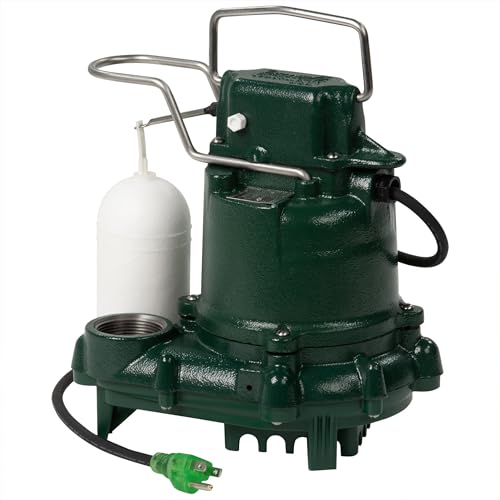
The Zoeller M53 Mighty-Mate represents a straightforward approach to basement water management. This submersible pump combines proven engineering with practical features that address the core needs of homeowners facing water intrusion. The automatic float switch means you don't have to monitor water levels manually, and the non-clogging vortex impeller is designed to handle the sediment and debris that often accompanies groundwater and rainwater.
Build quality is a standout here. The cast iron construction throughout the motor, pump housing, and switch case provides the durability homeowners expect from a sump pump that may run for years in challenging basement conditions. This robust design helps justify the investment in a pump that will reliably protect your foundation and basement spaces from water damage.
For typical residential applications with moderate to average water volume, the 1/3 HP motor delivers solid performance. The M53 works best in homes where water intrusion is seasonal or manageable rather than extreme. If your property sits in a high-water-table zone or experiences heavy runoff, you may want to evaluate whether a higher-capacity model would provide better protection for your specific situation.
| Specification | Details |
|---|---|
| Brand | Zoeller |
| Model | M53 Mighty-Mate |
| Motor Power | 1/3 Horsepower |
| Type | Submersible Sump Pump |
| Activation | Automatic Float Switch |
| Impeller Design | Non-Clogging Vortex |
| Motor Housing | Cast Iron |
| Pump Housing | Cast Iron |
| Switch Case | Cast Iron |
| Base | Plastic |
Installation: Place the M53 in your sump pit so the float switch hangs freely and can move up and down without obstruction. Ensure the discharge line is properly connected and directed away from your foundation. The pump should sit on a level surface or the plastic base provided.
Operation: Once installed and powered on, the pump operates automatically. As water accumulates in the pit and rises, the float switch activates the motor. The vortex impeller draws water in and pushes it up through the discharge line to the exterior or storm drain. When water level drops, the float descends and the pump shuts off automatically.
Maintenance: Periodically check that the float switch moves freely and isn't stuck on debris. Inspect the discharge line for blockages. Most homeowners should examine their sump pump setup at least twice yearly, especially before heavy rain seasons. Keep the pit clean and free of excess sediment to maximize pump efficiency.
Electrical Safety: Always plug the pump into a GFCI-protected outlet to prevent electrical shock in a wet basement environment. Never operate the pump with wet hands, and ensure the cord is in good condition with no cuts or fraying.
Water Discharge: Direct the discharge line away from your foundation and neighboring properties. Improper discharge can cause water to pool near your home's base, defeating the pump's purpose and potentially causing structural issues.
Pit Maintenance: Never reach into an operating sump pit. Turn off and unplug the pump before cleaning or inspecting the pit. Keep the pit covered when not actively monitoring it to prevent accidental falls and to reduce odors and debris entry.
Backup Power: Consider a battery backup system for extended power outages. Standard sump pumps stop working during blackouts, leaving your basement vulnerable during heavy storms when power failures are most likely.
Assess Your Water Volume: Consider how much water typically accumulates in your sump pit. The M53's 1/3 HP capacity works well for homes with moderate water intrusion. If your pit fills rapidly or you're in a high-water-table area, a larger pump may be necessary.
Check Pit Compatibility: Verify that your existing sump pit can accommodate this submersible pump's dimensions. The pump must sit level and the float switch needs room to move freely without hitting pit walls.
Discharge Line Planning: Plan where water will discharge before purchasing. Ensure you have adequate drainage away from your foundation, and that the discharge line can be properly installed and maintained.
Backup Considerations: Think about what happens during power outages. While the M53 itself doesn't include battery backup, many homeowners add a separate battery-powered backup pump as insurance against flooding during storms and blackouts.
Brand Reputation: Zoeller has a long history in the sump pump industry. Their focus on durable, reliable residential pumps makes them a trusted choice for homeowners seeking dependable basement protection.

Pros
- High pumping capacity handles heavy water flow without strain during severe weather
- Durable construction with stainless steel and cast iron resists corrosion in wet environments
- Top suction design minimizes maintenance by reducing clogging issues
- Quick installation makes it accessible for homeowners without extensive plumbing experience
- Long-term reliability backed by extensive cycle evaluation and American assembly
Cons
- Requires a sump basin at least 11 inches in diameter, limiting installation in smaller pits
- No reviews available yet, so real-world user feedback on long-term performance is limited
The Wayne CDU1000ET represents a solid choice for homeowners dealing with basement water intrusion. With a 1 HP motor capable of moving 6,100 gallons per hour, it handles the demands of heavy rainfall, snowmelt, and seasonal groundwater seepage without struggling. The combination of stainless steel motor housing and cast-iron volute provides the corrosion resistance necessary for long-term operation in the wet, acidic environment of a sump pit.
What sets this pump apart is its practical engineering. The top suction design eliminates air lock problems that plague some competing models and significantly reduces the risk of clogging from sediment and debris accumulating at the bottom of the pit. Installation takes roughly 15 minutes, and the pump doesn't require drilling a weep hole, making it accessible to DIYers who want to avoid additional plumbing complexity. The 1-1/2 inch NPT discharge outlet complies with most building codes, though you'll want to verify local requirements before purchase.
Durability is a key strength here. Wayne's evaluation of over 1 million cycles translates to genuine confidence in the pump's longevity, and the 5-year warranty reflects that commitment. For homeowners seeking a dependable, no-frills sump pump that handles serious water volume without demanding constant maintenance, this model delivers practical value. Just ensure your sump basin meets the 11-inch minimum diameter requirement before ordering.
| Specification | Details |
|---|---|
| Brand | Wayne |
| Model | CDU1000ET |
| Motor Type | 1 HP Submersible |
| Maximum Flow Rate | 6,100 GPH |
| Motor Housing | Stainless Steel |
| Volute Material | Cast Iron |
| Suction Design | Top Suction (Air Lock Prevention) |
| Discharge Outlet | 1-1/2 inch NPT |
| Minimum Sump Basin Size | 11 inches diameter |
| Operating Levels | 9 inch ON level, 4 inch OFF level |
| Installation Time | Approximately 15 minutes |
| Cycle Durability | Over 1 million cycles |
| Warranty | 5 years |
| Assembly Location | USA |
| Intended Use | Indoor basement use only |
Installation Basics: Place the pump in your sump basin (minimum 11 inches diameter) and connect the discharge line to your drainage system. The pump activates automatically when water reaches the 9-inch ON level and shuts off at the 4-inch OFF level. Installation typically takes 15 minutes without requiring a weep hole.
Operation: The pump operates automatically based on water level. During heavy rain or snowmelt, it continuously cycles to remove water and keep your basement dry. The top suction design means debris stays at the bottom of the pit rather than clogging the intake.
Maintenance: Periodically inspect the discharge line for blockages and ensure the float switch moves freely. Check that water drains properly from your sump basin. Most homeowners find minimal maintenance necessary with this model's design.
Electrical Safety: Install the pump on a dedicated outlet with a GFCI (Ground Fault Circuit Interrupter) breaker to protect against electrical hazards in wet basement environments. Never operate the pump without proper grounding.
Installation Safety: Turn off power before servicing. Ensure the sump basin cover is secure to prevent accidental falls and to contain odors. Keep the discharge line properly sloped to prevent backflow into your basement.
Operational Safety: Do not attempt to service the pump while it's running or powered on. Regularly check that the automatic float switch operates freely and isn't stuck in either position. Ensure adequate ventilation around the sump pit area.
Who Should Buy: This pump is ideal for homeowners with basements prone to water intrusion from heavy rain, snowmelt, or high groundwater. It suits properties with sump basins 11 inches or larger in diameter and those who want a straightforward, durable pump without complex features.
Key Considerations: Verify your sump basin meets the 11-inch diameter minimum before purchasing. Check local building codes to ensure the 1-1/2 inch NPT discharge outlet complies with your area's requirements. Consider your typical water volume during heavy rain to confirm the 6,100 GPH capacity meets your needs.
Installation Readiness: This pump is accessible to DIYers with basic plumbing knowledge. You'll need a discharge line, appropriate fittings, and a dedicated GFCI outlet. The 15-minute installation time assumes you have these materials ready and a suitable sump basin already in place.

Pros
- Smart sensor automation eliminates need for manual pump activation during water events
- Robust 2160 GPH flow rate rapidly removes standing water from large basement areas
- Thermal protection system safeguards motor from overheating and damage during low-water operation
- Easy-to-clean strainer base keeps intake clear without tools or disassembly
- Includes check valve adapter to prevent water backflow into discharge lines
Cons
- No reviews available yet, so real-world reliability data from homeowners is limited
- 1/3 HP motor may struggle with extremely thick sludge or heavily debris-laden water compared to larger horsepower models
The Acquaer 1/3 HP automatic submersible pump is engineered for homeowners who need reliable, hands-off water removal without constant oversight. Its built-in smart sensor detects water accumulation at 1.5 inches and automatically engages, then shuts down once levels drop below 0.25 inches. This automation is particularly valuable during unexpected basement flooding or heavy rain events when manual intervention isn't practical. The 2160 GPH flow rate positions this pump in the mid-range for residential applications, capable of handling moderate to significant water volumes without overwhelming most household drainage systems.
Durability is a key design priority here. The integrated thermal protection core prevents the motor from dry-running if water levels drop too quickly, a common failure point in budget sump pumps. The bottom suction intake with tool-free strainer base is thoughtfully designed to filter sediment and debris while maintaining stable operation on wet basement floors. The 10-foot power cord reaches standard wall outlets, and the included 3/4-inch garden hose adapter with check valve eliminates the need for additional adapters and prevents backflow issues that can compromise pump performance.
This pump excels for pool cover drainage, hot tub maintenance, and basement water removal in moderate-climate regions. The universal 115V requirement means no special electrical work is needed, making installation straightforward for most homeowners. The 3-year warranty provides reasonable coverage, and the manufacturer's commitment to 24-hour customer support suggests confidence in the product's reliability. For DIYers seeking an affordable, automatic sump solution without premium-tier pricing, this Acquaer model delivers practical features that address common residential water management challenges.
| Specification | Details |
|---|---|
| Brand | Acquaer |
| Motor Power | 1/3 HP |
| Voltage | 115V AC |
| Flow Rate | 2160 GPH (gallons per hour) |
| Discharge Port | 1 inch NPT |
| Hose Adapter | 3/4 inch with check valve |
| Power Cord Length | 10 feet, 3-prong plug |
| Activation Depth | 1.5 inches water level |
| Deactivation Depth | Below 0.25 inches |
| Suction Capability | Down to 0.25 inch depth |
| Strainer Base | Tool-free cleaning, debris filtration |
| Thermal Protection | Built-in dry-run protection |
| Warranty | 3 years |
| Included Accessories | 3/4 inch check valve adapter, manual |
Installation: Place the pump on the lowest point of your basement floor, pool cover, or flooded area. Ensure the strainer base sits flat and stable on the surface. Attach the 3/4-inch hose adapter to the 1-inch NPT discharge port using the included check valve. Connect your garden hose or discharge line to the adapter, routing water away from your foundation or to a desired drainage location. Plug the 10-foot power cord into a standard 115V household outlet.
Operation: Once powered, the automatic sensor continuously monitors water levels. When water reaches 1.5 inches, the pump activates automatically and begins removing water at 2160 GPH. As water drains and levels fall below 0.25 inches, the pump shuts off automatically. No manual switching is required. The pump will cycle on and off as needed during rain events or continuous water ingress.
Maintenance: Check the strainer base regularly, especially in debris-heavy environments. To clean, simply lift the pump and rinse the intake area with fresh water. No tools or disassembly needed. Ensure the power cord remains dry and away from sharp edges. During off-season storage, drain any residual water and store the pump in a dry location.
Electrical Safety: Always plug the pump into a GFCI-protected outlet to prevent electrical shock in wet environments. Never operate the pump with a damaged power cord. Keep the cord away from sharp objects, hot surfaces, and standing water when not in use. Ensure the outlet is rated for the pump's 115V requirement and can handle the motor's startup current draw.
Operational Safety: Do not attempt to operate the pump without water present for extended periods, though the thermal protection core provides safeguards. Never submerge the motor housing or power cord connector. Keep hands and objects away from the intake during operation. Discharge water away from electrical panels, gas meters, and areas where it could create safety hazards or structural damage.
Environmental Considerations: Verify that discharged water is routed appropriately and complies with local drainage regulations. Do not pump contaminated water (fuel, chemicals, sewage) through this pump unless specifically rated for such use. Allow the pump to cool before handling after extended operation. Store the pump indoors during freezing weather to prevent ice damage to internal components.
Who Should Buy This Pump: Homeowners in moderate-climate regions dealing with occasional to moderate basement flooding, pool cover drainage, or hot tub maintenance will find strong value here. The automatic sensor is ideal if you want hands-off operation during unexpected water events. The 2160 GPH flow rate suits residential applications where water removal needs to happen quickly but not at industrial scale. If you lack special electrical skills or want to avoid hiring an electrician, the standard 115V outlet compatibility is a major advantage.
When to Consider Alternatives: In areas with severe, chronic basement water intrusion, a larger horsepower pump (0.5 HP or higher) may be more appropriate for continuous duty cycles. If you're dealing with extremely sludgy or debris-laden water, a pump specifically rated for heavy solids handling might perform better. Homes with limited outlet access near the water source may need a longer power cord or professional installation to reach suitable electrical connections.
Key Decision Factors: Evaluate your typical water volume and frequency. Measure the distance from your flooded area to your discharge location to ensure the 10-foot cord reaches a safe outlet. Check local building codes for sump pump requirements in your area. Consider whether you prefer automatic operation or manual control. Verify that your home's electrical panel can support the pump's startup load without tripping breakers. Review the 3-year warranty terms and the manufacturer's customer support availability to ensure you have recourse if issues arise.
Buying Guide: How to Choose the Right Sump Pump
Choosing among the best sump pumps is not as simple as picking the most powerful model on the shelf. The right pump depends on your basement’s water volume, pit dimensions, discharge height, and how often flooding is a real threat. Use the factors below to match a pump to your specific situation before you buy.
Submersible vs. Pedestal Pumps
Submersible sump pumps sit directly inside the sump pit and are designed to operate while submerged. They are quieter, more powerful, and better suited for pits with heavy water flow. Every pump on our list is submersible, which reflects the market reality: submersible models now dominate because they handle higher gallons-per-hour (GPH) rates and last longer in most residential applications. Pedestal pumps, by contrast, mount the motor above the pit on a long shaft. They are easier to service and cheaper upfront, but louder and less capable under heavy loads. For most homeowners dealing with serious water intrusion, a submersible model is the right call.
Horsepower and Pumping Capacity
Horsepower (HP) directly determines how much water your pump can move per hour. Here is a quick reference for matching HP to your situation:
- 1/4 HP: Light-duty utility use. Good for clearing shallow standing water in a crawl space or low-risk basement. The Superior Pump 91250 falls in this range and works well as a secondary or backup option.
- 1/3 HP: The sweet spot for most residential basements with moderate water intrusion. The WAYNE CDU790 and Zoeller M53 are both strong 1/3 HP performers with excellent track records.
- 1/2 HP: Steps up capacity significantly. The WAYNE CDU800 delivers up to 5,100 GPH, making it appropriate for basements that see heavy seasonal flooding.
- 3/4 HP: Designed for basements with very high water volume or deep pits. The WAYNE CDU980E handles up to 5,490 GPH and includes a five-year warranty.
- 1 HP: Maximum residential capacity. The Wayne 1 HP cast iron pump and the Aquastrong 1 HP thermoplastic model both push into this range, ideal for worst-case flooding scenarios.
Keep in mind that rated GPH figures are measured at zero head (no vertical lift). Real-world output drops as discharge height increases, so always factor in how far water must travel vertically from the pit to your discharge line.
Cast Iron vs. Thermoplastic Construction
Build material is one of the clearest differentiators between budget and long-term value in sump pumps. Cast iron housings dissipate heat far more efficiently than plastic, which means the motor runs cooler during extended pumping cycles. WAYNE’s CDU series and the Zoeller M53 all use cast iron combined with stainless steel hardware for corrosion resistance. Thermoplastic models like the Aquastrong and the Acquaer are lighter, more portable, and cost less upfront. They are perfectly capable for occasional use or as utility pumps, but they may not hold up as well over years of continuous cycling in a wet pit. If your basement floods regularly, cast iron is worth the investment.
Float Switch Types
The float switch is the mechanism that tells your pump when to turn on and off. Getting this wrong leads to either a pump that runs constantly (burning out the motor) or one that activates too late (allowing water to rise too high). The main types are:
- Vertical float switch: Rides up and down along a vertical rod. Reliable in narrow pits and less likely to get stuck against the pit wall. All the WAYNE CDU models in this review use integrated vertical float switches.
- Tethered float switch: Swings freely on a cord. Works well in wide pits but can snag in tight spaces. More common on older or budget models.
- Electronic/pressure switch: Uses water pressure or electronic sensors rather than a mechanical float. Extremely reliable but adds cost. Found on premium models and combination systems.
For most standard sump pits, a vertical float switch offers the best balance of reliability and simplicity. If your pit is unusually narrow or has obstacles, double-check the switch type before purchasing.
Discharge Size and Plumbing Compatibility
Most residential sump pumps discharge through a 1.5-inch outlet, which connects to standard PVC drain pipe. Some budget and utility models, including the Acquaer, include a 3/4-inch garden hose adapter for flexible routing. Before purchasing, confirm that the pump’s discharge size matches your existing plumbing or that you have the adapters needed. A pump that moves 5,000 GPH through a 1-inch line will create back-pressure that reduces effective output and stresses fittings.
Warranty and Long-Term Reliability
A sump pump is a safety-critical appliance. You want a manufacturer that stands behind its product when it fails at 2 a.m. during a thunderstorm. WAYNE offers a three-year warranty on the CDU800 and an industry-leading five-year warranty on the CDU980E. Zoeller’s M53 has earned a reputation for outlasting its warranty by years in real-world use, which is reflected in its consistently strong user ratings. Budget thermoplastic options typically come with shorter warranty periods, so factor that into your total cost of ownership. Since your sump pump is your basement’s primary flood defense, it is worth pairing it with a quality basement dehumidifier to manage residual moisture after pumping cycles.
Power Backup Considerations
Here is the cruel irony of sump pumps: the worst flooding almost always comes with power outages. A primary AC-powered pump is useless the moment the grid goes down. We strongly recommend pairing any primary sump pump with a battery backup unit or a water-powered backup if your home has municipal water pressure. For homes in areas with frequent outages, a portable generator provides whole-home coverage that keeps your pump running alongside other critical appliances. A portable power station is a quieter, indoor-safe alternative for shorter outages. And if you want to protect sensitive electronics connected to the same circuit as your pump controller, a quality uninterruptible power supply can bridge the gap during brief interruptions.
Installation and Maintenance
Most submersible sump pumps are designed for DIY installation. You lower the unit into the pit, connect the discharge pipe, plug it into a dedicated GFCI-protected outlet, and test activation by pouring water into the pit. Annual maintenance should include cleaning the inlet screen, checking that the float moves freely, verifying the discharge line is clear, and running a bucket of water through to confirm the pump cycles correctly. Keeping the pit free of gravel and debris extends motor life significantly. For homes in regions with heavy clay soil or high sediment load in groundwater, inspect the inlet screen every six months.
Protecting Your Home Beyond the Pit
A sump pump addresses water at the lowest point of your home, but a complete moisture management strategy goes further. Whole house water filtration systems protect your supply lines, while radon detectors catch the invisible hazard that often accompanies basement moisture issues. Monitoring indoor air quality after flooding events is also advisable, since damp environments accelerate mold growth that affects the air throughout your home. If you have whole house fans or attic fans, running them after a pumping event helps clear residual humidity from the structure.
Why Trust HomeThru
HomeThru is an independent editorial site. We do not sell products, process orders, or handle warranties. Our team researched and evaluated the sump pumps on this list by analyzing hundreds of verified owner reviews, cross-referencing manufacturer specifications, reviewing pump performance data, and assessing long-term reliability reports from plumbing professionals. We applied consistent evaluation criteria across every model, including build material, motor rating, GPH capacity, float switch design, warranty terms, and value relative to price. No brand paid for placement. Our goal is straightforward: give you the clearest, most honest picture of what is available so you can protect your home without overspending.
We apply the same independent research methodology across every category we cover, from carbon monoxide detectors to water softeners to surge protectors. If a product earns a spot on one of our lists, it is because it cleared a high bar on objective criteria, not because of advertising relationships.
Final Thoughts
After a thorough evaluation of every pump on this list, here are our top picks by category to help you zero in on the right model for your situation:
- Best Overall: Zoeller M53 Mighty-Mate Submersible Sump Pump. Decades of proven reliability, cast iron construction, and a track record that consistently outperforms its price point make this the most dependable choice for the majority of homeowners.
- Best Heavy-Duty Upgrade: WAYNE CDU980E 3/4 HP Submersible Sump Pump. With up to 5,490 GPH capacity and a five-year warranty backed by cast iron and stainless steel construction, this is the pump to reach for when flooding is a recurring and serious threat.
- Best for Moderate Basements: WAYNE CDU790 1/3 HP Submersible Sump Pump. A proven 1/3 HP performer with an integrated vertical float switch, strong user satisfaction, and dependable output for typical residential conditions.
- Best Budget Utility Pick: Superior Pump 91250 1/4 HP Submersible Utility Pump. Compact, affordable, and versatile enough for crawl spaces, window wells, and low-volume water removal tasks where a full-size sump pump is overkill.
- Best High-Capacity Option: Wayne 1 HP Heavy Duty Submersible Cast Iron Sump Pump. Removing up to 6,100 gallons per hour with a newly redesigned switch, this is the most powerful pump on our list for basements that see extreme water volume.
No matter which model you choose, the most important thing is that you have a pump in place before you need it. Water damage is always more expensive than prevention. Keep up with annual maintenance, consider a battery backup unit for outage protection, and pair your pump with a quality basement dehumidifier to manage moisture long after the water level drops. If security and home safety are on your mind more broadly, our reviews of gun safes and biometric home safes cover other critical layers of household protection worth considering.
Frequently Asked Questions
How do I know what size sump pump I need?
Start by estimating how much water enters your pit during a heavy rain event. If your pit fills faster than a 1/3 HP pump can clear it, step up to 1/2 HP or higher. Homes with deep pits or long horizontal discharge runs also need more power to overcome head pressure losses.
Can I install a sump pump myself?
Yes, in most cases. If a sump pit already exists, installation involves lowering the pump into the pit, connecting the discharge pipe with a check valve, and plugging into a dedicated GFCI outlet. Always verify local building codes, as some jurisdictions require a licensed plumber for discharge line connections.
How often should I replace my sump pump?
Most quality submersible sump pumps last seven to ten years with proper maintenance. If your pump is cycling more frequently than usual, running loudly, or failing to clear water as fast as it used to, those are signs it is approaching the end of its service life. Replacing proactively before failure is far less costly than emergency water damage remediation.




Write Your Review
No reviews yet. Be the first to share your experience!